
BASF is growing – and yet cutting jobs: What this means for Germany's industry
Xpert Pre-Release

Available in 27 languages 📢
Prefer Xpert.Digital on GoogleⓘPublished on: November 1, 2026 / Updated on: November 1, 2026 – Author: Konrad Wolfenstein
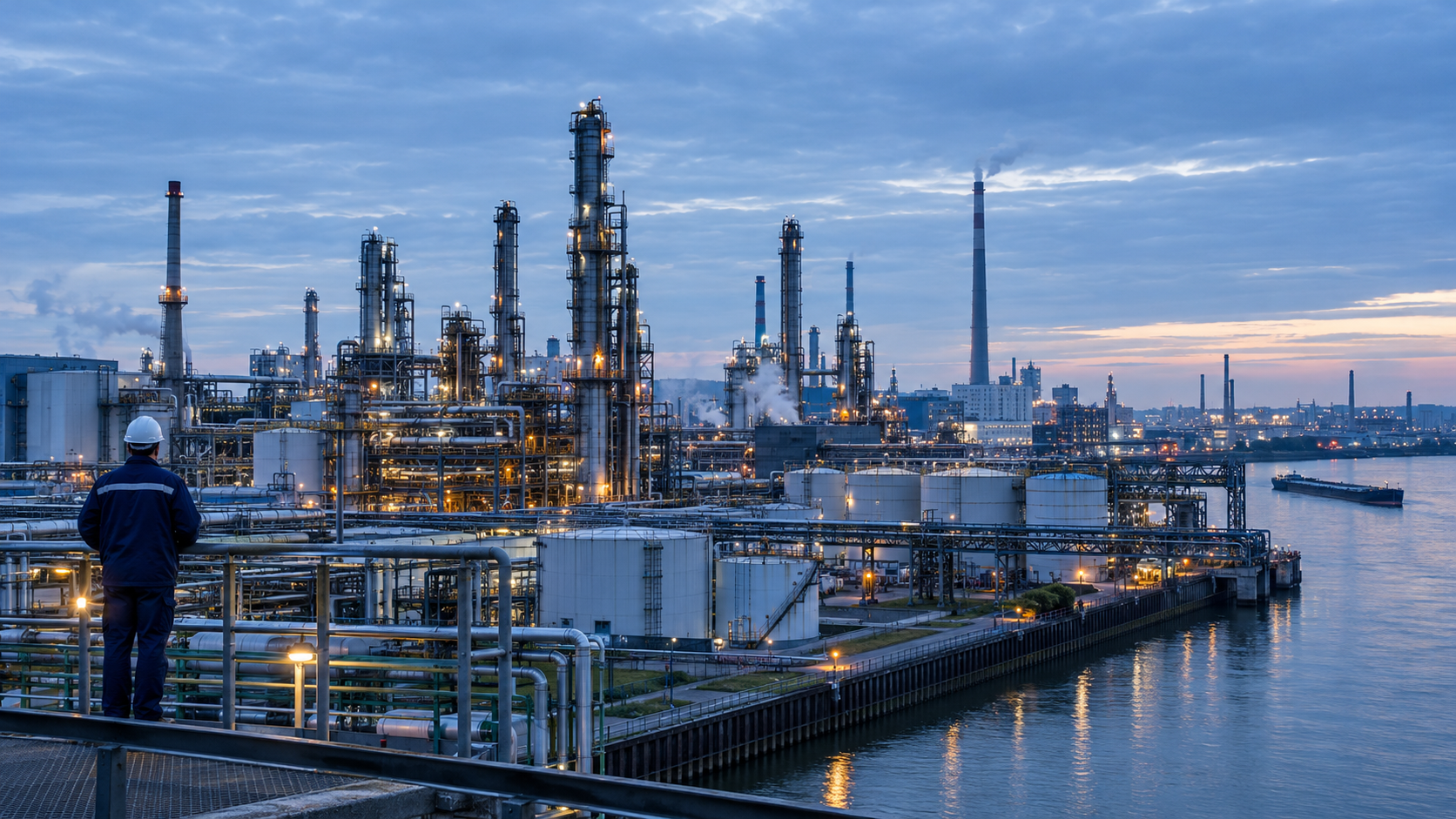
BASF is growing – and yet cutting jobs: What this means for German industry – Creative image on the topic, with AI: Xpert.Digital
BASF is earning more, but job cuts continue: How serious is the situation?
BASF is investing in Ludwigshafen and cutting jobs – does that make sense?
BASF reported higher sales and a significantly improved adjusted operating result for the third quarter of 2026. At the same time, the chemical company is continuing to cut jobs – worldwide and also at its headquarters in Ludwigshafen. This apparent contradiction illustrates why good quarterly figures alone do not mean the all-clear for Germany as an industrial location: An international corporation can become more profitable while individual sites lose jobs, tasks, or investments.
To make a fair assessment, the financial figures need to be examined more closely. Adjusted earnings increased, while unadjusted EBITDA remained at the previous year's level, and EBIT slipped into negative territory. Revenue growth was also primarily driven by higher prices rather than a comparable increase in sales volume. At the same time, one-off effects, raw material costs, and lower capital expenditures impacted the balance sheet. Therefore, the key figures don't tell a simple success story – but neither do they automatically signal impending decline.
The crucial question is whether the restructuring strengthens industrial performance in the long term or whether, in addition to jobs, important skills, investments, and added value are also lost. BASF plans to continue making significant investments in Ludwigshafen, while the restructuring is expected to last for years. Therefore, what the corporate restructuring reveals about Germany's competitiveness depends not only on how many jobs are lost, but also on whether new, economically viable production is established at the site.
The company can grow without creating new German jobs. Can Germany do the same?
The job cuts at BASF are a serious warning sign for Germany's industrial competitiveness, but not proof of inevitable decline. The crucial distinction lies between short-term improvements in business figures and the long-term ability to build new industrial value creation. While BASF achieves higher sales and a higher adjusted operating profit in the third quarter of 2026, the company continues its far-reaching restructuring.
A sound analysis must therefore avoid two hasty narratives. The first interprets every job cut as proof of imminent deindustrialization; the second views rising corporate figures as a sign that Germany is out of danger. Both perspectives overlook the fact that an international corporation can improve its economic position while individual sites lose jobs or functions. Conversely, a smaller workforce can be part of a successful modernization if productivity, industrial capacity, and new business opportunities increase simultaneously. BASF's strategy explicitly links cost reduction, organizational simplification, and the strengthening of its core businesses.
Good headlines, contradictory results
In the third quarter of 2026, BASF increased its sales by around 14 percent year-on-year to €16.4 billion. EBITDA before special items, i.e., earnings before interest, taxes, depreciation, and amortization excluding certain exceptional charges, rose by 15 percent to around €1.6 billion. At the same time, the company raised its corresponding full-year forecast to between €7.4 billion and €7.8 billion; previously, the range had been €6.9 billion to €7.7 billion.
This development is positive, but it does not justify the blanket statement that all key profit figures have improved. Unadjusted EBITDA, at around €1.2 billion, was only at the previous year's level. EBIT, which takes depreciation into account, deteriorated from €232 million to a loss of €98 million. While the bottom line showed a profit attributable to shareholders of €155 million, this too was below the previous year's figure of €172 million.
This adds an important caveat to the statement that BASF is not operating at a loss: While it holds true for net income this quarter, it does not apply to EBIT. Anyone assessing the economic viability of a capital-intensive company cannot permanently ignore the wear and tear and depreciation of its assets. Similarly, a positive global group result does not necessarily mean that every production site is generating sufficient profit. The published quarterly figures do not provide a complete, independent income statement for Ludwigshafen.
The renovation negatively impacts the result
The difference between adjusted and reported results is particularly evident in the special items. In the third quarter of 2026, these items reduced EBITDA by €437 million. This included primarily transformation expenses for restructuring, especially in Ludwigshafen, as well as the settlement of a legal dispute in the Care Chemicals division. Therefore, this total amount should neither be equated with severance payments nor attributed solely to the German headquarters.
In addition, write-downs of approximately €1.3 billion impacted EBIT, including a €318 million impairment charge in the Monomers division. Such an impairment charge does not automatically result in a corresponding cash outflow at the time of the adjustment, but it signals a lower balance sheet valuation of already tied-up assets. This is important for an industrial-economic assessment: Not only current wages and energy costs, but also the economic viability of past investments determine a company's intrinsic value.
Adjusted key performance indicators (KPIs) help to reveal recurring operational trends. However, they must not replace a holistic view. If transformation costs are incurred over several years, they must be considered when evaluating the entire restructuring process. Ultimately, a successful restructuring is demonstrated by whether its subsequent benefits outweigh the initial burdens and the loss of certain capabilities.
The increase in sales is due to prices
Sales growth was primarily driven by higher selling prices and only to a lesser extent by increased volume: BASF reports a price effect of plus twelve percent and a volume effect of plus two percent. Currency fluctuations also had a positive impact. These figures should be interpreted as contributions to sales growth and, due to rounding and other factors, should not be considered a completely exact addition to the rounded overall growth.
This composition is crucial from an economic perspective. Higher sales can reflect increased demand, but they can also reflect more expensive raw materials, a changed competitive landscape, or the passing on of increased costs. In the quarter under review, the improved revenues were offset by higher raw material prices, which, among other things, increased the amount of capital tied up in inventories. A nominal sales increase of 14 percent therefore does not necessarily translate into a correspondingly larger production volume or a comparable increase in real industrial output.
The adjusted EBITDA margin is particularly revealing: at ten percent, it remained at the same level as the prior-year quarter. BASF generated a higher absolute adjusted earnings contribution from higher sales, but did not improve the corresponding return on sales. Therefore, additional permanent employment depends not only on higher invoice amounts, but on sustainably more competitive business.
More free cash flow does not equal more growth
Cash flows also require a differentiated analysis. Cash flow from operating activities amounted to approximately €1.1 billion in the third quarter, €275 million lower than the previous year. A key reason for this was the additional €507 million tied up in inventories, primarily due to higher raw material prices. A higher inventory value, therefore, does not necessarily equate to a correspondingly larger quantity of goods available for sale.
At the same time, free cash flow increased by €125 million to €523 million. This increase was supported by lower payments for property, plant and equipment and intangible assets: these were €401 million lower than in the same quarter of the previous year, primarily due to reduced payments for Zhanjiang. The free cash flow forecast for 2026 remains unchanged at €1.5 billion to €2.3 billion.
A higher free cash flow can therefore result from lower investment costs without a corresponding increase in revenue from ongoing operations. This is not automatically negative after a period of major construction projects. However, when considering location decisions, a distinction must be made between completed investments, avoided maintenance costs, and the absence of expansions. The same short-term liquidity effect can have very different long-term economic consequences.
Geopolitical tailwinds are not a locational advantage
Part of the recent improvement is related to the consequences of the Middle East conflict: Higher prices and altered demand patterns benefited BASF's business. As early as the second quarter, the German Chemical Industry Association (VCI) reported stockpiling and temporary supply problems at competitors in Asia and the Middle East, from which some German and European manufacturers profited. A company can become more successful in the short term because other suppliers are less able to deliver, without its structural costs having improved permanently.
This relationship has a twofold effect. Supply capability during a crisis is a real economic advantage and demonstrates the value of geographically distributed production. At the same time, geopolitical tensions drive up the cost of energy and raw materials, which can put initial advantages under pressure. Accordingly, BASF management pointed to the difficult combination of lower demand and higher energy costs for the fourth quarter.
The strong quarter demonstrates adaptability, but not yet a lasting improvement for the German chemical industry. Sustainable improvement would only be evident when competitive costs, reliable sales volumes, and sufficient returns converge, even without exceptional supply disruptions. Distinguishing between temporary scarcity rent and a permanent productivity advantage is crucial for any analysis of the industry's future prospects.
Long-term staff reduction
Since the beginning of 2024, BASF has reduced its workforce by approximately 8,600 employees worldwide, according to figures published in October 2026. In the first nine months of 2026, the reduction was more than twice as high as in the entire year of 2025. These figures reflect a global trend and should not be attributed solely to the Ludwigshafen site.
For Ludwigshafen, the SWR (Southwest German Broadcasting) reported, citing the CEO, that around 350 jobs are being cut each month. If this rate were to continue unchanged for twelve months, this would theoretically equate to approximately 4,200 jobs within a year; this is a projection and not a separately confirmed annual target. According to statements made in October, the restructuring process is expected to continue until 2028 or 2029.
It is not possible to calculate a reliable cumulative reduction figure up to 2029 from this. The monthly rate of reduction can change, tasks can be affected differently, and organizational measures can take effect in several stages. Even comparing arbitrary employee numbers requires caution, as sales, outsourcing, new hires, or changes in statistical definitions can influence the figures. The published reduction figure should therefore be distinguished from an unverified difference between two total workforces.
Job protection does not safeguard every job
The new site agreement for BASF SE in Ludwigshafen is initially valid from January 1, 2026, to December 31, 2028. It will be automatically extended by two years if agreed targets for restoring profitability are met. During its term, the company will refrain from making redundancies. This protection applies to the agreed group of employees and is not a blanket guarantee for all companies and employees of the global group.
Job security and job cuts are therefore not mutually exclusive. A reduction in staff can, in principle, be achieved through voluntary agreements, departing employees, or positions that are not filled, without resorting to redundancies. In connection with the restructuring in Ludwigshafen, SWR explicitly refers to severance payments and corresponding transformation costs. Nevertheless, a socially cushioned reduction in staff permanently alters the industrial employment base if the tasks in question are subsequently eliminated.
This difference is important for the region. Avoiding the shock of layoffs makes it easier for households, businesses, and municipalities to adjust. However, it does not replace a long-term perspective for apprenticeships, career advancement, and new skilled employment. A successful social partnership must therefore extend beyond the distribution of downsizing costs and address the question of which activities at the location can experience future economic growth.
Why profit and job cuts go together
Companies don't make decisions solely based on current profits. They compare expected future returns with investment needs, risks, and alternative uses of capital. At BASF, this long-term orientation is enshrined in the CoreShift program: By 2029, the net fixed costs of the core business are to be reduced by up to 20 percent compared to the baseline year of 2024.
This does not mean that the workforce will also be reduced by 20 percent. Fixed costs encompass more than personnel, and the program focuses, among other things, on simpler organization, more standardized business processes, standardized IT, and increased use of artificial intelligence. At the same time, it affects the global positioning of core businesses and is not solely a German cost-cutting program.
A profitable company may have understandable reasons from a business perspective to reduce its workforce. However, this does not mean that every single measure is necessary or optimal. The crucial question is whether a cost-cutting measure improves long-term competitiveness or merely supports a short-term profit target. A restructuring that reduces knowledge, maintenance quality, or innovative capacity more than the actual avoidable costs would be particularly problematic.
The capital market measures differently than regions
For shareholders, the most important factor is whether the invested capital generates a reasonable return over time. For an industrial location, employment, tax base, supplier relationships, technological capabilities, and adaptability are additionally important. The fact that these perspectives can diverge is demonstrated by the combination of a global efficiency strategy and local workforce reductions at BASF.
The use of capital must also be considered. In October, BASF reaffirmed its plan to distribute at least twelve billion euros to shareholders by 2028 and simultaneously examined a potential acquisition of Evonik. This does not directly imply either underfunding of Ludwigshafen or the economic futility of the job cuts. However, it clearly demonstrates that cost reduction, investments, acquisitions, and distributions represent competing demands on financial resources.
A factual debate should therefore neither treat every dividend payout as irresponsible nor every cost-cutting measure as inevitable. Management decisions must be measured by whether they enable sustainable long-term returns and do not undermine industrial performance. Economic policy, in turn, should not attempt to maximize the returns of a single corporation, but rather create a framework within which many companies can invest productively.
The network makes Ludwigshafen special
Ludwigshafen is more than just a collection of individual chemical plants. The integrated system links production processes, energy supply, and material flows; the integration of heat between different plants reduces primary energy demand. One example is the planned use of waste heat from a steam cracker to generate steam for other production processes at the site.
This interconnectedness creates advantages but can also complicate the restructuring process. If a plant is decommissioned, the consequences for upstream and downstream processes, energy flows, and shared infrastructure must be examined. Therefore, focusing solely on individual operating results can underestimate the value of the entire system. Conversely, pointing to synergistic effects does not automatically justify the continued operation of every technically outdated or structurally uneconomical plant.
The strategic challenge lies in creating an economically viable network. The crucial point is not to continue operating as many plants as possible unchanged, but rather to connect the appropriate production chains in such a way as to maintain economies of scale, security of supply, and technological development. This makes the quality of the restructuring more important than the mere amount of cost savings.
Energy determines industrial scope
International energy price differences are among the major burdens of energy-intensive production. The International Energy Agency (IEA) projects that, for 2025, electricity prices for energy-intensive industries in the European Union will be roughly twice as high on average as in the US comparison studied, and significantly higher than in China. However, this is not an individual cost calculation for BASF: The European data refers to large consumer groups, the US end-customer comparison to Texas, and the results take into account different regional conditions and relief assumptions.
These limitations are particularly important. A wholesale electricity price is not identical to the total electricity costs of a specific power plant. Procurement contracts, consumption profiles, grid fees, levies, self-supply, and relief measures all alter the effective cost. The IEA explicitly considers assumptions regarding electricity price compensation and points out that individual companies may pay different prices.
For long-term investments, therefore, the lowest current price is not the only factor. A reliable total cost outlook over many years is crucial. A new plant must remain economically viable even when subsidies expire, energy prices fluctuate, or additional investments in climate-friendly processes become necessary. Accordingly, the German Federal Government and international institutions are linking improvements to site conditions with energy relief, infrastructure development, and an acceleration of the energy transition.
Our EU and German expertise in business development, sales and marketing

Our EU and German expertise in business development, sales and marketing - Image: Xpert.Digital
Industry focus areas: B2B, digitalization (from AI to XR), mechanical engineering, logistics, renewable energies and industry
More information here:
A thematic hub offering insights and expertise:
- Knowledge platform covering global and regional economies, innovation and industry-specific trends
- A collection of analyses, insights, and background information from our key areas of focus
- A place for expertise and information on current developments in business and technology
- A hub for companies seeking information on markets, digitalization, and industry innovations
Business strategies: How BASF is repositioning itself
The second dependency is raw material
The chemical industry requires energy not only for heat, steam, or electric drives. Raw materials such as naphtha and butane also form the material basis of petrochemical production chains; the new BASF steam cracker in Zhanjiang is specifically designed to process a variety of feedstocks. International competitiveness therefore also depends on raw material availability, procurement flexibility, and transportation routes.
A lower electricity price, therefore, does not solve all of a chemical plant's problems. If access to intermediate products worsens or transport and financing costs rise, some of the relief effect can be lost again. According to the German Chemical Industry Association (VCI), higher oil, naphtha, and gas prices burdened the industry in the second quarter of 2026. In the third quarter, BASF tied up additional cash in its inventories due to higher raw material prices.
This leads to a broader economic policy perspective. Security of supply is not just a question of available gas volumes or installed electricity generation. It also encompasses diversified supply relationships, efficient ports and waterways, and the ability to utilize different raw materials in a technically and economically viable way. Production costs arise throughout the entire network, not just at the electricity meter.
Productivity requires more than staff reductions
A smaller workforce is not automatically more productive. Productivity improves sustainably when at least the same economically relevant output is achieved with fewer or better utilized resources. BASF is addressing this within the framework of CoreShift through harmonized processes, a dedicated ERP system for its core businesses, and additional AI applications.
Such measures can simplify voting, make data reusable, and reduce duplication of effort. However, their benefits don't materialize simply with the introduction of software. Processes must actually be changed, data quality ensured, and responsibilities clarified. Therefore, in addition to digitalization, the site agreement also emphasizes training, professional development, and modern work organization.
Especially in a complex chemical plant, efficiency should not be confused with minimizing staffing levels. Experience in production, maintenance, and process control cannot be replaced at will. A responsible restructuring must therefore consider all consequential costs: avoided expenses as well as increased susceptibility to disruptions, longer response times, or lost development opportunities. The goal should be a more efficient organization, not merely a smaller one.
The chemical crisis extends beyond BASF
The industry situation confirms that the pressure does not stem solely from internal corporate decisions. According to the VCI's half-year report, German chemical and pharmaceutical production in the first half of 2026 was around three percent below the previous year's level; sales fell by one percent to 106 billion euros. At the same time, according to the association, investments declined for the third year in a row.
In the second quarter, production and sales improved compared to the previous quarter, but capacity utilization, at 73.2 percent, remained significantly below the long-term average of 83 percent cited by the German Chemical Industry Association (VCI). The association attributed a substantial part of the recovery to stockpiling and geopolitically motivated special effects. Low capacity utilization is problematic for capital-intensive companies because existing plants and shared infrastructure still need to be financed, even when production is reduced.
Official statistics also show continued pressure, without demonstrating a steady decline. In August 2026, calendar-adjusted production in energy-intensive industries was 2.1 percent lower than in the same month of the previous year and 2.9 percent lower than in the previous three-month period. This group encompasses several sectors and should not be equated with the chemical industry alone. This is precisely why a separate analysis of the corporation, the chemical industry sector, and energy-intensive industries is essential.
Not every economic upswing reaches every industry
The overall economic development provides an important counterweight to a blanket narrative of decline. In its autumn forecast from October 2026, the German government expected real economic growth of 1.3 percent for the current year. The recovery is expected to be driven primarily by robust exports and government investment in infrastructure and defense. This is a forecast and not a finalized annual result.
The Bundesbank also described a general recovery in September, although temporary challenges slowed down industry. These challenges included low water levels on the Rhine, which affected the chemical industry and increased transport costs. At the same time, job losses in the manufacturing sector continued.
A growing gross domestic product and industrial job losses can thus coexist. Public construction projects, services, and individual export sectors can expand, while certain production chains shrink. A positive overall economic average is therefore no more a guarantee of success for industry than a difficult quarter in the chemical industry is proof of economic collapse. What remains crucial is which value-creating capabilities are newly emerging and which are permanently disappearing.
Suppliers are contributing to the restructuring
The chemical industry's significance extends far beyond its own workforce. The VCI industry profile links the sector to other industries, including plastics processing, construction, automotive manufacturing, and healthcare. For 2025, the statistical definition of the chemical industry indicates approximately 342,100 employees and a turnover of €158.4 billion; pharmaceuticals are reported separately.
For a key industrial location, workforce and plant reductions therefore potentially also mean less demand for maintenance, engineering, transport, and other services. Added to this are possible effects on employee consumption and on local businesses. However, these effects are not mechanical: suppliers can gain new customers, activities can shift, and modernization projects can temporarily generate additional orders.
Therefore, it would be irresponsible to simply multiply the BASF job cut figure by a general employment multiplier. A reliable regional effect would have to consider which functions are affected, how much demand is actually lost, and what replacement activities emerge. For Ludwigshafen in particular, the challenge lies in gradually reducing dependence on a dominant employer without weakening its industrial base.
Tax revenues do not follow a simple formula
Reduced industrial employment can strain regional purchasing power and public finances. Similarly, weaker corporate profits can reduce fiscal leeway. However, this does not imply a direct, proportional relationship between a job cut and a precisely quantifiable tax shortfall. A proper assessment would have to consider income trends, corporate taxation, geographical distribution, and potential new employment opportunities together.
The greater danger lies in a longer-term feedback loop. If economic weakness hinders municipal investment, leading to a decline in infrastructure or location quality, the attractiveness for new businesses will decrease. International reform recommendations for Germany therefore explicitly emphasize the importance of efficient municipalities, digital administration, and sufficient implementation capacity for infrastructure projects.
Regional policy should therefore not be limited to managing job cuts. It must link land use, transport infrastructure, training, and business start-ups in such a way that additional economic pillars can emerge. To achieve this, it makes more sense to further develop existing industrial expertise than to rely on creating any number of replacement jobs regardless of qualifications or added value.
Research does not automatically fall behind
A common consolation is that energy-intensive production can take place elsewhere, while high-quality research remains permanently in Germany. However, this division of labor is not a given in the long run. The German Chemical Industry Association (VCI) reported in August 2026 that companies are increasingly focusing on foreign locations for future research investments, putting domestic budgets under pressure.
The scale illustrates why this point is strategically relevant: German research and development expenditures in the chemical and pharmaceutical sectors totaled approximately €16 billion in 2025. Of this, roughly €5.5 billion was allocated to chemicals and €10.5 billion to pharmaceuticals, as detailed in the industry profile. Therefore, this total should not be attributed solely to traditional chemicals or interpreted as a BASF metric.
The future hinges on combining research, application, and industrial scaling. A laboratory result alone does not create competitive production. Pilot plants, experienced engineers, customer contact, and the opportunity to test processes under real-world conditions are essential. Therefore, a location strategy focused solely on patents and research expenditures falls short, as does a policy that merely preserves existing facilities.
China is a sales market and an alternative source of capital
The BASF integrated production site in Zhanjiang, officially inaugurated in March 2026, demonstrates the scale of international competition for industrial investment. The investment amounts to approximately €8.7 billion. The majority of the products manufactured there will be delivered directly to customers in China; the project thus aligns with BASF's strategy of serving local markets through local production.
It would therefore be an oversimplification to describe every euro invested there as production directly withdrawn from Germany. Investing close to Chinese customers can strengthen market access, supply capacity, and global competitiveness. At the same time, international projects within a corporation generally compete for capital, management capacity, and technological attention. For Germany, therefore, it is not only relevant whether a plant is directly relocated, but also where the next expansion will take place.
Equally important is the risk aspect. New large-scale plants must prove themselves in the market; customer proximity does not eliminate price competition, nor regulatory or geopolitical uncertainty. Internationalization is therefore neither automatically capital flight nor a guaranteed success. For location policy, the productive question is which investments Germany can attract with its own strengths, rather than morally evaluating every foreign investment decision.
Ludwigshafen will not simply be abandoned
The site agreement argues against the idea of a complete withdrawal: BASF intends to continue investing around two billion euros annually, but at least 1.5 billion euros, in Ludwigshafen. These funds are earmarked for modernization, infrastructure, capacity expansion, and sustainable transformation. This commitment is a significant counterweight to the job cuts, but it is not yet proof of investments already made or additional net jobs created.
One specific project is the large-scale industrial heat pump, which, according to the published plan, is scheduled to be commissioned by mid-2027. It will utilize waste heat from a steam cracker and, using renewable electricity, generate up to 500,000 tons of steam annually; the planned thermal output is around 50 megawatts. The steam is primarily intended for formic acid production.
Such projects illustrate a real industrial development opportunity. The site can leverage its existing network to use energy more efficiently and integrate new processes. However, whether this translates into a sustained competitive advantage depends on investment costs, operating costs, energy supply, and sales conditions. A technical demonstration and an economically scalable business model are not the same thing.
Climate protection must work on an industrial scale
Competitiveness and emissions reduction cannot be permanently pitted against each other. Production that is more climate-friendly but not economically viable will hardly be widely scaled up. Likewise, postponing the transformation does not automatically create long-term security. The OECD therefore emphasizes the importance of a coordinated interplay between energy, innovation, infrastructure, financing, and skills development policies.
The electrification of industrial processes shifts some of the dependence on fossil fuels for electricity generation. This only results in an economic benefit if the increased efficiency and lower emissions sufficiently offset the additional investment and operating costs. The IEA explicitly points out that the economic viability of electrification depends on the specific application and the relationship between electricity and fuel prices.
For Germany, this leads to a clear conclusion: climate targets require an economically viable infrastructure. A grant approval does not replace an available grid connection, and a new technology does not replace a customer willing to pay. Industrial transformation must therefore be planned as a coherent process, encompassing development, energy supply, and demand.
Funding needs a verifiable purpose
Government support can be justified if it enables innovation, builds shared infrastructure, or finances societal benefits that are not fully reflected in individual company returns. The OECD recommends aligning industrial policy interventions with specifically identified market problems and regularly reviewing their effectiveness. At the same time, it warns against distortions and policies that primarily protect existing companies.
For energy-intensive industries, this means that relief measures should not be evaluated solely on how many existing jobs they stabilize in the short term. It is also relevant whether they trigger productive investments, accelerate modernization, and enable a sustainable cost position. If, on the other hand, the government provides unlimited support to structures without a realistic long-term perspective, it ties up resources that could generate higher economic returns elsewhere.
It would be equally problematic to leave shared infrastructure to the market when individual companies cannot fully finance its benefits. Sensible policy must therefore distinguish between financing public infrastructure and permanently absorbing corporate losses. Transparent objectives, additional investments, and verifiable results should be the determining factors, not the size or political visibility of a corporation.
Approval time is tied-up capital
Energy alone does not explain the location question. The OECD also cites high administrative burdens, slow infrastructure processes, and insufficient administrative capacity as areas for reform in Germany. These factors have an economic impact because an investment can only generate additional revenue and productivity after its implementation.
Lengthy procedures increase uncertainty and prolong the time that capital is tied up without generating any return. This does not mean, however, that environmental, safety, or participation standards are superfluous. Chemical production, in particular, demands reliable safety requirements. Rather, what makes economic sense is an administration that combines necessary inspections with clear responsibilities, digital information, and verifiable deadlines.
Effective regulation can itself be a competitive advantage: companies gain predictability, and residents and the environment receive effective protection. The choice, therefore, is not between protection and growth, but between effective rules and unnecessarily expensive procedural complexity. Industrial policy progress should be measured by whether safe projects can actually be implemented more quickly and reliably.
The conditions for new production
Under what conditions will it still be worthwhile to produce industrially in Germany in the future? The economic answer arises from the interplay of costs, productivity, customer benefits, and risk. Low wages alone are not a meaningful measure of a highly developed location. The decisive factor is whether skilled labor, efficient facilities, reliable infrastructure, and a willing consumer demand together enable sufficient returns.
For energy-intensive basic chemicals, energy and raw material costs are particularly significant; for specialized products, technological properties, customer proximity, and application expertise can be more important. This does not lead to a simple recommendation to abandon basic chemical production entirely and retain only specialty products. A well-integrated production network thrives on the connections between different production stages. Therefore, a viable specialization strategy must examine which upstream capabilities are essential for downstream value creation.
Location policy should also consider investment conditions as a whole. A tax advantage is of little use if a project doesn't receive a timely electricity connection. A well-developed infrastructure is insufficient if permits remain unpredictable or necessary qualifications are lacking. Conversely, a location can bear higher individual costs if productivity, quality, and reliability more than compensate for them. The practical challenge lies in actually delivering these advantages, rather than deriving them from past successes.
Three paths to the end of the renovation
Different developments are possible between now and the announced restructuring horizon of 2028 or 2029; a reliable forecast regarding employment or production volume cannot be derived from this. In the best-case scenario, a productive renewal will succeed: the organization will become more efficient, new facilities will improve the cost position, skills will be retained, and competitive production chains will grow. A reduction in staff would then be part of a painful but economically viable transition.
A second option would be stabilization on a smaller industrial base. Ludwigshafen would remain significant, but would have fewer jobs and potentially fewer functions. This could be successful for the corporation, while the region would need additional economic pillars. A third option would be a gradual erosion, in which first tasks, then maintenance and expansion investments, and finally related expertise would be lost.
These scenarios are not probability calculations. They illustrate why neither the current quarterly return nor the next reduction figure alone is sufficient to assess the success of the restructuring. Production volumes, capacity utilization, investment quality, innovation projects, and the ability to create new jobs in economically viable activities must also be monitored.
Germany's decisive test is new investment
The question of how long Germany's industrial sector can withstand job cuts cannot be reliably answered with a specific year. Economies do not have a fixed threshold at which a certain number of job losses automatically triggers collapse. The process becomes problematic when lost value creation is not permanently replaced by more productive activities, new companies, or additional investments.
The BASF case illustrates both the pressure to adapt and the available opportunities: an improved adjusted result, significant restructuring burdens, worldwide job cuts, and further investment plans for Ludwigshafen. The appropriate perspective therefore lies somewhere between alarmism and reassurance. Germany does not have to maintain every historically established activity unchanged, but it must create the conditions for high-quality industrial production to have a future here.
The reliable benchmark is not whether a globally operating corporation continues to maintain a German headquarters. What matters is whether it establishes new facilities, new processes, and new, economically viable operations in Germany. If companies regularly expand their future elsewhere and primarily reduce existing structures here, a corporation can remain successful while a location loses its substance. The economic policy challenge is to prevent precisely this decoupling without hindering necessary structural change.
🎯🎯🎯 Data-driven B2B industry hub as a quasi-in-house solution

The quasi-in-house solution: How Xpert.Digital closes operational gaps in B2B marketing and sales – Smart Content-Driven Business - Image: Xpert.Digital
Xpert.Digital is a data-driven B2B industry hub led by Konrad Wolfenstein . The company acts as an external, quasi-in-house solution for industrial partners, closing operational gaps in marketing, content, and sales – without requiring additional resources on the client side.
More information here:
Your global marketing and business development partner
☑️ Our business language is English or German
☑️ NEW: Correspondence in your native language!

Konrad Wolfenstein
I and my team are happy to be available to you as your personal advisor.
You can contact me by filling out the contact form here [email protected]:or simply call me at +49 7348 4088 965. My email address is
I'm looking forward to our joint project.










