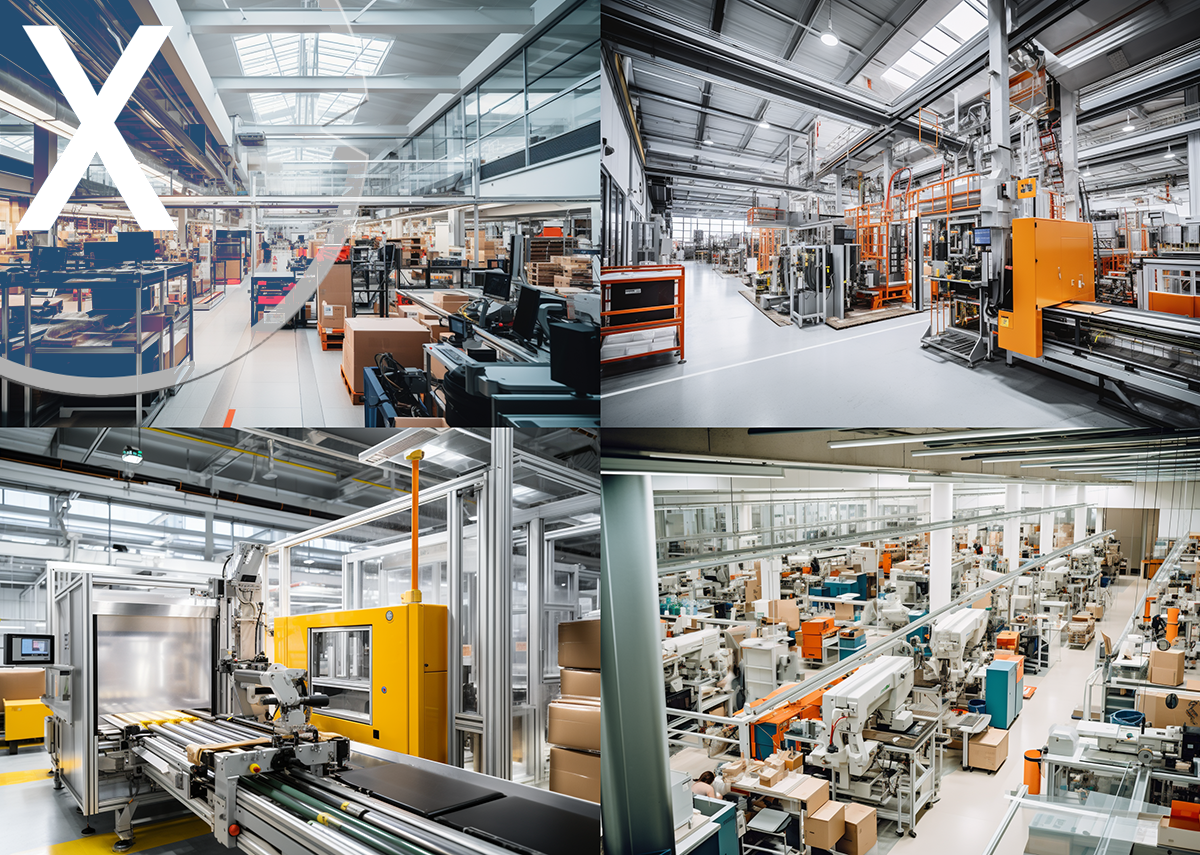
Further development in e-commerce: Cross-border B2B trading platform enables barter transactions for the first time – Image: Xpert.Digital
🚀 The evolution of e-commerce 🛒
🇩🇪 Development of digital commerce
The development of e-commerce has experienced remarkable momentum in recent years. Once limited to simple online sales between retailers and end consumers, today's digital commerce extends far into the B2B (business-to-business) sector. Here, cross-border exchange is radically revolutionizing the way companies interact, conduct business, and exchange goods. The introduction of bartering via digital trading platforms represents an innovative development in this context. Imagine a company in Germany being able to exchange its no-longer-needed mini-excavator on a platform for a modern cobot—a collaborative robot that works hand in hand with humans—from Japan. This marks nothing less than a paradigm shift in the globalized economy.
🚧 New trading models in the B2B sector
The mini excavator, which has faithfully served the construction industry for decades and is considered a workhorse in the world of construction machinery, is now finding its place in a more comprehensive, flexible, and innovative trading model. The ability to conduct direct barter transactions on a B2B platform opens up new avenues for companies to optimize their resources. It's a form of "upcycling" on an industrial scale – instead of selling or scrapping unused machines, they gain new value through direct exchange for something the company currently needs.
🤖 The rise of cobots in industry
The cobot, a symbol of advanced industrial automation, plays a leading role in the factory of the future. With its introduction into production facilities, humans and machines become partners in the work process. These robots are designed to work side-by-side with humans, assisting them and even autonomously performing complex tasks. Powered by artificial intelligence, the cobot opens new horizons in terms of efficiency and flexibility, ultimately leading to a significant increase in productivity.
🔄 Bartering returns in a modern guise
Trade, which in the past was based on currencies, is now expanding its reach through the direct exchange of goods. This system of barter is certainly not a modern invention. Even in prehistoric times, people exchanged goods and services directly, long before money was established as a medium of exchange. However, modern technology and the development of globally networked trading platforms are breathing new life into this age-old form of trade. Today, barter transactions can be supported by digital algorithms that balance supply and demand on a global scale, thus creating fair and efficient exchange conditions.
🌐 Global exchange of resources
This innovative initiative is based on the idea that the flow of goods can be made more dynamic and adapted to the constantly changing needs of businesses. Such a platform makes it possible to redistribute and optimally utilize resources not only nationally but also globally. It allows for the exchange of products and machinery that may be considered obsolete in one country or industry, but highly valued in another.
🤝 Practical examples of direct trade
In practice, this works as follows: An agricultural company in Chile that is modernizing its vehicles could list tractors it no longer needs on such a B2B platform. A winery in South Africa, which is looking for such machines, would in turn offer a cellar machine for exchange, which the Chilean company could then use. This results in a direct, value-adding exchange that saves on long transport routes and the costs of new, new equipment, and contributes to resource conservation.
🌱 Sustainability and environmental protection through bartering
But it's not just the economic aspects that are noteworthy. The environment also benefits from a more efficient use of resources. Reuse and direct exchange mean fewer new products are needed, which reduces the environmental impact of production, transport, and disposal. This promotes sustainable business practices and helps to lower CO2 emissions.
💡 Challenges and solutions
However, introducing barter in the B2B sector also presents challenges. Companies must accurately assess the true value of the goods they are offering. Before any barter transaction can take place, a thorough analysis of supply and demand, as well as the condition of the goods, is essential. Furthermore, the international nature of barter transactions can be complex in terms of transport logistics and customs formalities. This is where trustworthy trading platforms play a crucial role, providing support through transparency, user-friendliness, and the provision of reliable information and tools for conducting such transactions.
🌍 International framework and cultural aspects
For cross-border transactions, compliance with international trade agreements, local laws, and export and import regulations is also crucial. Platforms must also ensure secure and regulated exchange, which can be facilitated by integrating smart contracts and blockchain technology. Cultural differences and business practices, which can vary across the globe, should also be taken into account. A successful platform will therefore offer cultural consulting and mediation-like services to prevent misunderstandings and ensure fair business conditions.
🔗 The future of B2B bartering
Cross-border B2B barter transactions represent a significant step towards a more inclusive and sustainable global economy. They offer companies the opportunity to increase their flexibility and efficiency and, through the maximum utilization of resources, to make a sustainable contribution to protecting our environment. The bridge from traditional construction machinery like mini-excavators to innovative cobots vividly illustrates the transformation taking place in the economy through digitalization – a transformation that opens up a world full of new opportunities and synergies.
🔍👀 Note
🎭 April 1st – A day full of jokes and surprises
🎉 Origin of April Fools' Day
April 1st is a day that brings people together in many cultures worldwide, spreading cheer and amusement. It is known as the day when friends, family members, and even institutions often try to bring a smile to the faces of others through practical jokes and pranks.
But where does this unusual custom come from? The exact origin of April Fools' Day cannot be definitively proven, but there are various theories about how this day acquired its significance.
A frequently cited theory refers to the calendar reform of 1582, when Pope Gregory XIII introduced the Gregorian calendar, thus shifting the beginning of the year from April 1st to January 1st. The story goes that news traveled slowly back then, and many people didn't immediately learn of the calendar change. As a result, they clung to the old date and were ridiculed by their contemporaries. For example, they received invitations to nonexistent parties or were otherwise misled.
🎭 Global spread and traditions
Another interpretation traces April Fools' Day back to ancient celebrations like the Roman "Hilaria," which were held at the end of March in honor of the goddess Cybele. During this festival, disguises and masquerades were common – a practice not far removed from the modern April Fools' Day prank.
In France, April Fools' Day is called "Poisson d'Avril" (April fish), which possibly refers to the young fish in April that are easier to catch – an analogy to the gullible victims of April Fools' Day pranks.
🌍 April Fools' Day in different cultures
The tradition of April Fools' Day has spread worldwide over the centuries. In Scandinavia, for example, it is common to leave small notes with humorous content or to stick paper fish on people's backsides, symbolizing a mild form of teasing. In Scotland, where April Fools' Day lasts two days, the victim is called an "April Fool" on the first day, and on the second day, their backsides are covered with "Kick me" signs.
😄 April Fools' Day in the modern world
In the US and Canada, both children and adults enjoy playing pranks on each other. Media outlets and brands often ramp up their creativity to entertain audiences with fabricated stories or "revolutionary" new products, which are then revealed as jokes the next day.
🌐 Digitization of customs
With the rise of the internet and social media, April Fools' Day has reached a new dimension. Companies, celebrities, and even politicians use the internet to launch elaborate April Fools' Day pranks. Some of these pranks are so subtle and well-thought-out that they initially appear credible and are only recognizable as jokes upon closer inspection.
✨ The humorous aspect of April Fools' Day
The worldwide spread of April Fools' Day shows that human humor and the joy of community are universal values. Nevertheless, it remains a balancing act, as a successful April Fools' Day prank should be carried out in good spirits and not lead to injuries or lasting damage.
🤔 April Fools' jokes as creative outbursts
Another aspect of April Fools' Day is its use as an outlet for creativity and stress relief. Especially in today's work environment, where professionalism and efficiency prevail, April Fools' Day offers a chance to break free from the rigid routine for a moment and provides a playful counterpoint. It's an opportunity not to take oneself too seriously, to deal humorously with one's own fallibility, and to give colleagues or friends a moment of amusement.
🔄 The downside of April Fools' Day
However, April Fools' Day also has a downside. While most pranks are harmless, there are always some that go too far and have unpleasant consequences. It is therefore important to always keep the well-being of the "victims" in mind and to draw a line between fun and harassment.
📺 April Fools' jokes in the media landscape
There are also instances in history where April Fools' jokes have led to major misunderstandings. For example, in 1957, the renowned British news program Panorama broadcast a report claiming that spaghetti was being harvested in Switzerland. Numerous viewers believed these apparent facts and were astonished by the "spaghetti tree," which became one of the most famous April Fools' jokes in media history.
🤨 Critical reflection on the April Fool's joke
This example underscores the power of the media and the responsibility it bears. It also shows that people tend to believe information from seemingly trustworthy sources without further verification. In times of fake news and disinformation, April Fools' Day thus occupies an interesting position. On the one hand, it reminds us not to believe everything we see and hear and to always maintain a healthy skepticism. On the other hand, April Fools' Day serves to give us a break from the seriousness of everyday life and to celebrate the value of joy and shared laughter.
🌐 Cultural significance of April Fools' Day
In conclusion, it should be said that the tradition of April Fools' Day also demonstrates how cultural customs and human interactions can merge into a global phenomenon over centuries. Regardless of our origin or culture, the desire for connection, fun, and a sense of community unites us all.
💡 The symbol of April 1st
And although April 1st is sometimes associated with nonsense and deception, it is also a symbol of people's lightness and ability to share joy – even, or especially, when reality seems rather bleak. So, while April Fools' Day may be a small joke, it also reminds us of the larger context of human interaction. For even when life presents us with great challenges, it is the lightness of being that helps us to regain balance and perspective.
🎯🎯🎯 Benefit from Xpert.Digital's extensive, five-fold expertise in one comprehensive service package | BD, R&D, XR, PR & Digital Visibility Optimization


Benefit from Xpert.Digital's extensive, five-fold expertise in a comprehensive service package | R&D, XR, PR & Digital Visibility Optimization - Image: Xpert.Digital
Xpert.Digital possesses in-depth knowledge across various industries. This allows us to develop tailored strategies precisely aligned with the requirements and challenges of your specific market segment. By continuously analyzing market trends and monitoring industry developments, we can act proactively and offer innovative solutions. The combination of experience and expertise generates added value and provides our clients with a decisive competitive advantage.
More information here:
🏭🌍 Future of Export – Digital Platforms for Mechanical Engineering – What has global sales been like so far and how can they be boosted?


Future of Export – Digital Platforms for Mechanical Engineering – Image: Xpert.Digital
One of the best-known examples of these platforms is Alibaba. As a global wholesale portal, it connects manufacturers, suppliers, and wholesalers with potential business partners around the world.
Other well-known platforms in the B2B sector include Amazon Business, which has established itself as a professional version of the popular B2C marketplace and offers a wide range of products and services. More specialized providers, such as ThomasNet, DirectIndustry, and Wer liefert was (WLW), also offer comprehensive catalogs and are tailored to the B2B market.
More information here:
We are here for you - Consulting - Planning - Implementation - Project Management
☑️ Industry expert, here with his own Xpert.Digital industry hub featuring over 2,500 specialist articles

Konrad Wolfenstein
I would be happy to serve as your personal advisor.
You can contact me by filling out the contact form below or simply call me on +49 7348 4088 965 .
I'm looking forward to our joint project.
Write to me


Xpert.Digital - Konrad Wolfenstein
Xpert.Digital is a hub for industry focusing on digitalization, mechanical engineering, logistics/intralogistics and photovoltaics.
With our 360° Business Development solution, we support renowned companies from new business to after-sales.
Market intelligence, smarketing, marketing automation, content development, PR, mail campaigns, personalized social media and lead nurturing are part of our digital tools.
You can find more information at: www.xpert.digital - www.xpert.solar - www.xpert.plus
Keep in touch

Industrial & B2B Business Metaverse: Reduce costs with XR technology for photorealistic product images (XR 3D rendering machine)
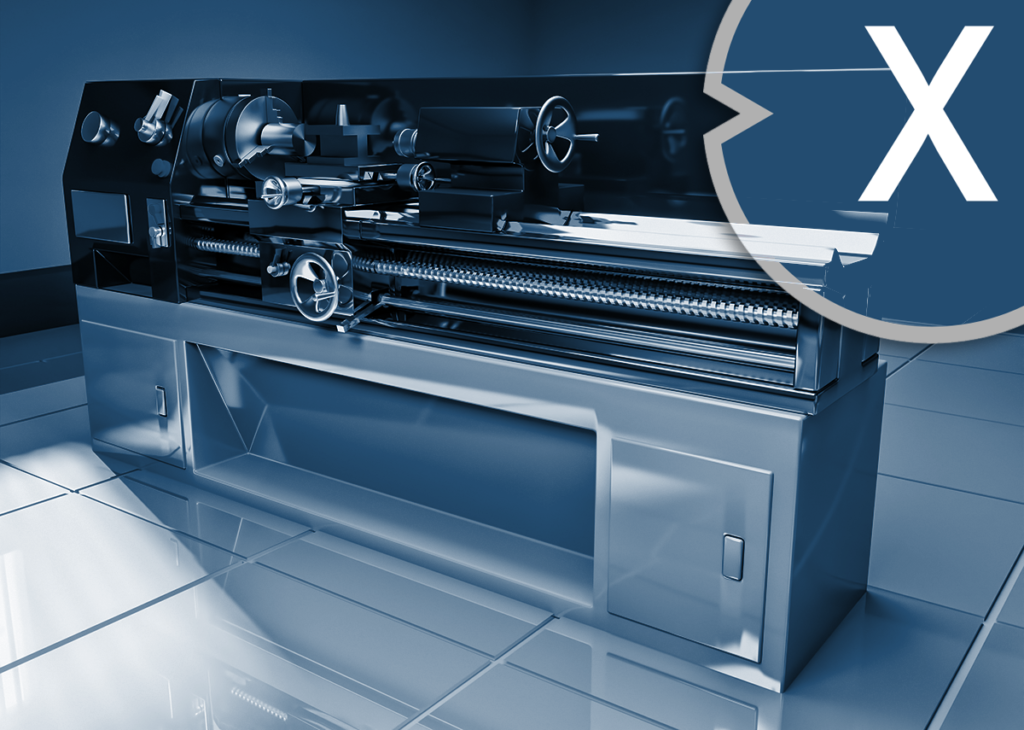
Lathe in photorealistic rendering (3D product presentation) - Image: Xpert.Digital
XR technology offers a superior solution for creating photorealistic images, allowing companies to avoid the expensive fees charged by external media agencies. It's well known that media agencies charge high prices for creating such images, as this requires expertise, specialized software, and collaboration with various specialists.
More information here: