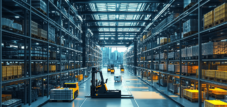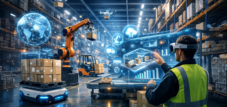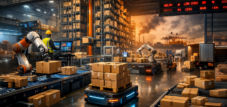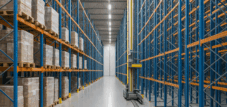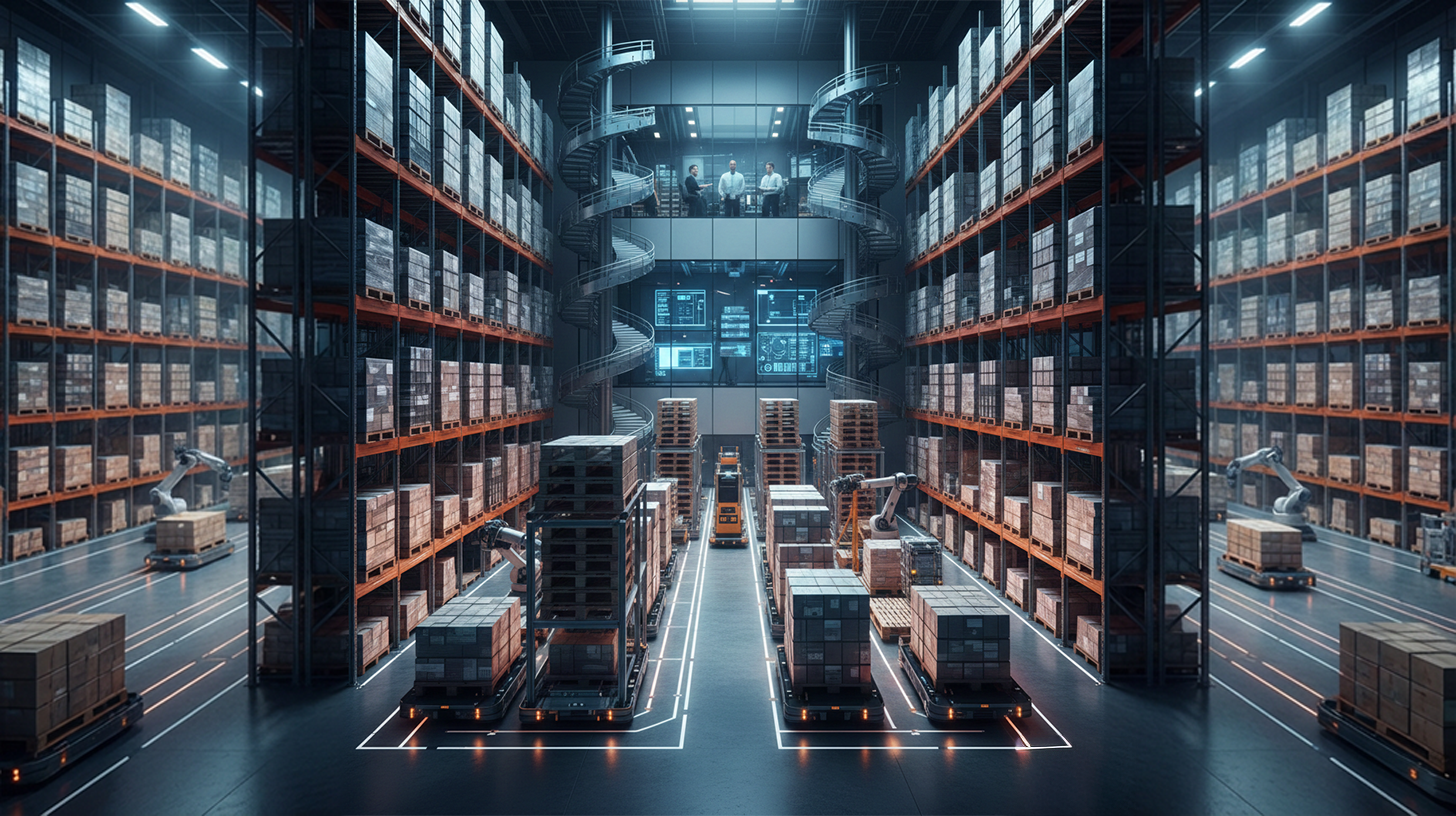
Automation transformation in pallet warehouses: Why pallet systems will dominate the future of intralogistics – Image: Xpert.Digital
ROI in under 2 years: The hard-hitting calculation behind automated pallet warehouses
Shuttle or stacker crane? The end of the manual warehouse: Why AI and pallet systems are dictating the future
What was long considered a strategic competitive advantage – the automation of warehouse processes – has transformed into a vital necessity under the pressure of global megatrends. A projected market growth of over US$8 billion by 2029 and double-digit annual growth rates paint a clear picture: the era of the purely manual warehouse is drawing to a close.
But what is driving this massive wave of investment? It's a dangerous mix of an acute shortage of skilled workers, which is already hampering almost half of all businesses in Germany, and the extreme demands of modern online retail for speed and accuracy. When there are only 72 applicants for every 100 apprenticeship positions, technology transforms from an efficiency driver into the sole means of keeping supply chains stable.
This article examines the technological and economic structure of this revolution. From the system decision between classic storage and retrieval machines and highly flexible shuttle solutions to the business calculations that often promise cost recovery in less than two years. We analyze how modern warehouse management systems (WMS) are becoming the digital nervous system of logistics through artificial intelligence and why sustainability now goes hand in hand with cost efficiency. Learn why the automation of pallet warehouses is not only an answer to the labor shortage, but also forms the foundation for the resilient, "smart" factory of the future.
When stagnation becomes the greatest threat: The economic imperative for warehouse automation
European warehouse logistics is at a crossroads. The decision for or against automation is no longer a matter of mere preference, but a question of survival. The market for warehouse automation in Europe is expected to grow to US$8.37 billion by 2029 – up from US$4.28 billion in 2024. This represents an annual growth rate of 14.40 percent. These figures show more than just a trend; they demonstrate a fundamental shift in how value creation works today.
The drivers of this development are multifaceted and mutually reinforcing. Automated storage and retrieval systems, including pallet warehouses as a key segment, already held a market share of over 26 percent in 2024. This dominance can be explained by the convergence of several economic constraints: the acute shortage of skilled workers in logistics, the dramatically increased demands of e-commerce for speed and precision, and the growing pressure to reduce costs and operate more sustainably. All of this creates a pull toward automation that hardly any company can resist.
The labor shortage has now reached critical levels. In the fourth quarter of 2024, 45 percent of warehouse operators in Germany reported that their operations were hampered by a lack of staff. In warehouse logistics, there are only 72 applicants for every 100 open apprenticeship positions, resulting in 2,000 unfilled apprenticeships in this sector alone. Forecasts are exacerbating the situation: the consulting firm Korn Ferry predicts a global skills shortage of over 85 percent for supply chains by 2030. Under these conditions, automation is becoming not merely an advantage, but a necessity for survival.
Technical design of modern pallet warehouses: Between tradition and innovation
The technology of automated pallet warehouses has developed significantly in recent years. Two main concepts dominate the market: classic storage and retrieval machines and more modern shuttle systems. Both approaches have specific economic profiles that determine which application they are best suited for.
Storage and retrieval machines are the established solution that has proven itself for decades. Modern systems, such as the viapal from viastore, handle loads of up to three tons and process up to 250 pallets per hour. At its Wassertrüdingen site, Henkel operates a fully automated high-bay warehouse with space for 22,000 pallets, achieving these performance levels. The strengths of these systems lie in their robustness, suitability for heavy and bulky goods, and the comparatively low cost per storage location for large quantities. The principle is tried and tested: one machine per aisle handles all movements, resulting in reliable and low-maintenance operation.
Shuttle systems, on the other hand, represent technological advancement. These one- and two-dimensional pallet shuttles enable denser storage, thus significantly increasing capacity. Compared to conventional equipment, shuttle systems can reduce space requirements by almost half. The crucial difference lies in their flexibility: while a storage and retrieval machine is fixed to a single aisle, multiple shuttle vehicles can operate within that aisle and move between levels. This significantly increases throughput for the same storage capacity. Furthermore, their easy expandability allows for the simple deployment of more shuttles as demand increases, without requiring any warehouse redesign.
The choice between the two systems is based on economic criteria. Storage and retrieval machines remain the more sensible option for a large number of storage locations, when speed is not a primary concern, or when handling very heavy goods. Shuttle solutions, on the other hand, are more suitable for high throughput requirements, deep storage of multiple pallets in a row, and when maximum space utilization is essential. The performance of shuttle systems is comparable, but they offer significantly greater flexibility in confined spaces.
Economic calculation: Cost structures and when the investment pays off
The business rationale for automated pallet warehouses rests on massive cost savings and efficiency gains. A simplified calculation illustrates the effects: In a manual system, costs amount to approximately €0.60 per item, while an automated system reduces these costs to €0.24. The annual savings in a medium-sized company can reach around €92,000, meaning that the investment often pays for itself within just 18 months. Studies by Deloitte confirm this, estimating the return on investment (ROI) at 18 to 24 months.
The cost reduction results from several factors. Automation reduces personnel costs by approximately 50 percent, as repetitive tasks are handled by machines. Costs due to errors are almost eliminated because the systems operate with extreme precision. Space requirements are reduced by up to 90 percent thanks to optimized storage height, which can prevent the need for expensive new buildings. The energy savings are particularly impressive: one company was able to reduce its warehouse energy consumption by almost 85 percent. Systems with energy recovery save up to 40 percent on electricity when loads are reduced.
Investment costs vary significantly depending on size. Gealan invested €16 million in a warehouse with 5,020 pallet spaces, while Biohort spent €8 million on 25,000 pallet spaces. These sums pose a particular hurdle for medium-sized businesses and require detailed analyses and long-term financing plans. Therefore, the decision to automate demands not only technical expertise but also strategic foresight regarding the company's own growth.
An alternative to new construction is "retrofitting," meaning the modernization of existing systems. This is usually more cost-effective than a complete new build. The advantages include less downtime, lower operating costs through predictable maintenance, and a longer lifespan for the technology. Providers like viastore have implemented thousands of such projects, often without disrupting ongoing operations. This phased modernization also allows companies with limited budgets to enter the automation market.
Warehouse Management Systems: The digital brain of warehouse automation
The hardware of an automated warehouse only reaches its full potential through intelligent software. Warehouse management systems have become a crucial competitive factor. According to a recent report, one-third of these systems now operate with AI support. This integration of artificial intelligence marks the shift from rigidly rule-based systems to learning, predictive systems.
Modern software centrally manages all processes from goods receipt and storage to packaging, shipping, and reordering. Solutions like "viadat" offer thousands of standard functions and are quickly ready for use. The systems are intuitive to operate and scale with evolving requirements. Seamless integration with other company programs (ERP) or transport services is achieved via interfaces.
AI functions are opening up new possibilities. Algorithms calculate patterns in data within seconds and provide forecasts for optimization. Predictive maintenance monitors machine data to prevent failures before they occur. For example, analyzing vibrations in motors can detect incipient damage early on, allowing repairs to be precisely planned instead of unexpectedly stopping operations.
Real-time data forms the basis for adaptive systems. Intelligent sensors continuously provide data on inventory levels, temperature, and the location of goods. This data is analyzed immediately and controls the processes: storage zones and robot paths adapt dynamically. The software optimizes, for example, the routes of the operating devices, avoids empty runs, and ensures even wear and tear on the warehouse. Braking energy is recovered, further reducing energy consumption.
LTW Intralogistics Solutions

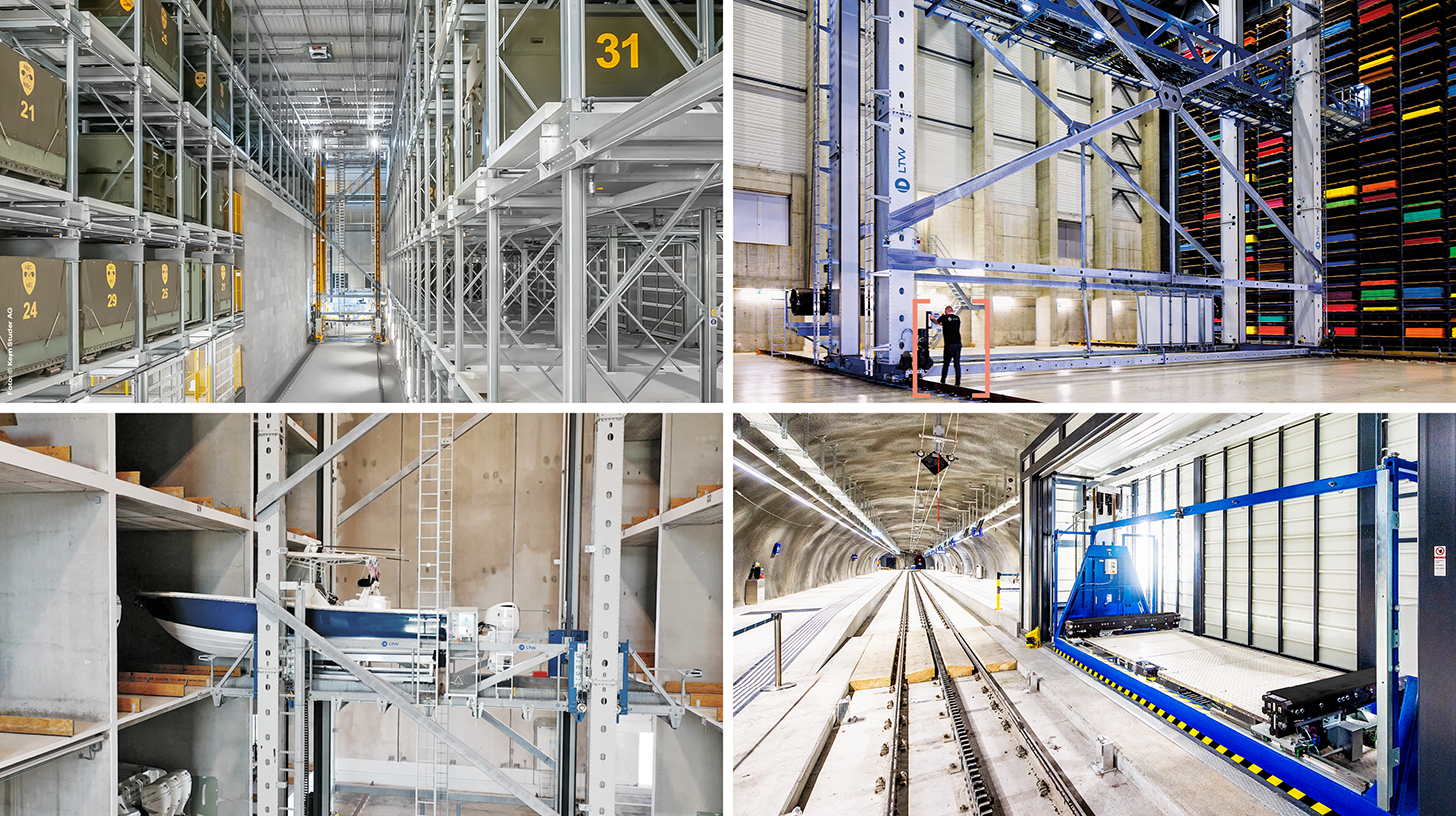
LTW Intralogistics – Engineers of Flow - Image: LTW Intralogistics GmbH
LTW offers its customers not individual components, but integrated complete solutions. Consulting, planning, mechanical and electrotechnical components, control and automation technology, as well as software and service – everything is networked and precisely coordinated.
In-house production of key components is particularly advantageous. This allows for optimal control of quality, supply chains, and interfaces.
LTW stands for reliability, transparency, and collaborative partnership. Loyalty and honesty are firmly anchored in the company's philosophy – a handshake still means something here.
Related to this:
The intelligent warehouse is here: How AI now optimizes your logistics itself
Sustainability and ESG: From cost reduction to strategic obligation
Sustainability has gone from a fringe issue to a central reason for investment. Automated warehouses offer great potential to improve companies' environmental footprint. Studies show that modern technology can help reduce CO2 emissions by up to 30 percent. Reports indicate that automation can reduce energy consumption by a quarter.
Space optimization is the biggest lever. Automated warehouses enable storage in the smallest possible space, saving up to 90 percent of floor space. Logistics processes are streamlined, saving time and effort. Smaller storage areas mean less heating and cooling requirements, as well as less lighting. Depending on the goods, fully automated warehouses often require neither heating nor lighting ("dark warehouses").
Eliminating the need for forklifts completely eliminates their CO2 emissions. The "goods-to-person" principle reduces employee movement, and equipment like forklifts becomes obsolete – along with the associated energy consumption for loading and fuel. Modern robots also utilize intelligent energy management. Automation further improves inventory management: precise data prevents overstocking, which would otherwise tie up capital and generate unnecessary storage costs.
The use of renewable energies from solar or wind power will make warehouse operations even more environmentally friendly in the future. The combination of lower energy consumption, less waste, and better land use allows companies to operate more ecologically without sacrificing productivity.
Labor market and skills shortage: When automation becomes a necessity
The shortage of personnel in the logistics sector is now threatening entire business models. Statistics paint a serious picture: almost half of all companies report problems due to a lack of skilled workers. The number of new apprenticeship contracts has fallen significantly, while many apprenticeship positions remain unfilled. As the workforce is aging on average and there are too few young people entering the field, the situation is worsening.
The consequences are serious. Without staff, the flow of goods falters, leading to supply bottlenecks. In the worst-case scenario, this results in empty shelves and production stoppages, which drives up prices. Understaffing leads to employee exhaustion and increases the risk of accidents. Rising personnel costs and lower sales can even slow economic growth in the long run.
Automation doesn't completely replace humans, but it's the only pragmatic answer to these bottlenecks. Contrary to fears of job losses, warehouses are thriving thanks to the collaboration between humans and robots. Machines take over heavy lifting, sorting, and long distances. Employees can concentrate on more important tasks that require judgment and problem-solving. This physical relief also makes warehouse jobs more attractive again.
Software amplifies this effect. Companies use technology to move more goods with their existing staff. Real-time data exchange allows warehouses to prepare precisely for arriving trucks and avoid waiting times. Assistance systems that guide users through the process via light signals or voice prompts noticeably increase employee productivity and prevent errors.
E-commerce and trade logistics: The pressure is increasing exponentially
E-commerce has raised expectations for speed and accuracy to a level that is almost impossible to achieve manually. Space constraints, seasonal peaks, short delivery times, and vast product ranges are the major challenges. To overcome these, retailers need scalable technology in their warehouses.
Automated systems, especially those that bring goods to the customer, offer significant advantages. Modern robotic systems can increase order processing fivefold compared to manual labor. Self-driving robots navigate high shelves, coordinated by intelligent software. To cover peak periods like the Christmas season, additional robots can often be easily rented – saving on expensive purchases for just a few weeks a year.
The complexity of omnichannel retail demands flexible systems. Often, a combination of manual and automated areas is the best solution. Rigid, large-scale systems are often too inflexible. A mix of different warehouse systems makes it possible to efficiently handle both in-store and online sales.
In the food retail sector, automation is crucial for freshness and efficiency. Technology, speed, and quality ensure customer satisfaction. Small, automated warehouses located near city centers (micro-fulfillment) and automated palletizing help make the expensive "last mile" to the customer and pickup services profitable. Retailers are increasingly relying on technology not only to solve current problems but also to be prepared for the future.
Industry 4.0 and digital transformation: Networking as a competitive advantage
Integrating automated warehouses into the Industry 4.0 concept creates advantages that extend beyond mere efficiency. At its core is the networking of all resources: machines, robots, and storage systems communicate with each other. They act autonomously, utilize sensor data, and control themselves situationally. The network reacts to changes in real time.
This networking in the "Smart Factory" enables profitable production even for individual customer requirements, right down to one-off production (batch size 1). Material flow is significantly improved, for example through driverless transporters that always find the best route. Intelligent planning systems ensure the optimal allocation of resources and production sequence. This allows companies to quickly switch between product variants without losing time.
Connecting enterprise resource planning (ERP) software with the Internet of Things (IoT) offers real advantages. Devices capture data in real time, enabling informed, fact-based decisions. The software can react automatically and adapt processes. Sensor data allows for predictive maintenance, minimizing unplanned downtime. Inventory levels are monitored in real time, ensuring timely reorders.
The foundation for this is the Internet of Things – everything communicates with everything else. The product itself "tells" the factory how it needs to be produced. Sensors provide data on inventory, temperature, and position. A typical example is the dynamic adjustment of storage areas or robot routes based on current data, which improves performance and accuracy.
Future prospects: Autonomous systems and artificial intelligence
Development isn't standing still; it's accelerating thanks to AI and autonomous robots. By 2025, AI-controlled robots will no longer be experiments, but the backbone of intelligent warehouses. Unlike rigid systems, they use machine learning and image recognition to adapt. They don't just execute commands—they learn and optimize themselves.
Autonomous mobile robots (AMRs) are gaining ground against traditional, track-guided systems. They navigate freely without guideposts and avoid obstacles. This makes them more flexible and easier to integrate into existing warehouses. They handle transport and assist with order picking. The fleet can be easily expanded as needed.
A new trend is mobile robots that can also grasp. They combine driving with handling and can stock shelves or pick up various items. AI-controlled grippers use camera systems to securely pack almost any item. They recognize shapes and surfaces, reducing errors and damage – a huge improvement over older systems that only used standardized packaging.
Generative AI in warehouse management software allows users to ask questions via chat and delivers faster analyses. The AI searches through vast amounts of data, recognizes patterns, and provides recommendations. It doesn't just support the system; it autonomously manages entire processes by adapting to supply and demand without human intervention.
With fast 5G networks and powerful chips, the warehouse of the future will be almost completely autonomous. Major logistics companies are already testing self-organizing warehouses. The warehouse of 2030 is being built today, and robots are at its heart. The message is clear: Whoever uses AI and robotics will shape the logistics of the future.
Resilience and supply chains: Between just-in-time and safety buffers
The automation of pallet warehouses is changing supply chain strategies. The "just-in-time" model relies on lean production and delivery precisely as needed. Inventory levels are kept to a minimum to save costs. Everything is geared towards the exact moment of consumption.
Automated warehouses support this model with high reliability and speed. Peak times are smoothed out. Modern software helps optimize these supply chains: it monitors inventory, automatically triggers orders, and accelerates material flow through intelligent technology.
At the same time, automation also enables "just-in-case" strategies, i.e., storing safety stock for emergencies. Thanks to the high storage density of automated warehouses, this is more cost-effective. Companies can thus combine both strategies: reacting quickly, as with just-in-time, but with a safety buffer.
This flexibility makes companies agile. They can quickly adapt to market changes, shorten lead times, and avoid waste. In a volatile global economy, this rapid responsiveness becomes a crucial competitive advantage.
Strategic conclusion: The imperative to act
Looking at the economy, technology, and labor market together, the picture is clear: Automated pallet warehouses are no longer a nice option, but a strategic necessity. The market is growing rapidly, driven by a fundamental shift in value creation, a shortage of skilled workers, and the pressure for greater sustainability.
The decision to automate also pays off financially. The investment often recoups its costs in under two years, while personnel, error, and energy costs decrease. At the same time, the technology offers a flexibility that would be impossible to achieve manually. AI and networked systems ensure that the warehouse is constantly learning.
Those who hesitate now risk not only competitive disadvantages but also their ability to act. The shortage of skilled workers is worsening, customers are demanding faster processes, and legislation requires greater environmental protection. Automation is not a panacea, but it is the necessary tool to address these challenges. The question is no longer whether to automate, but how quickly to implement this transformation.

Xpert.Plus Warehouse Optimization - High-bay warehouses and pallet warehouses: Consulting and planning
Your global marketing and business development partner
☑️ Our business language is English or German
☑️ NEW: Correspondence in your native language!

Konrad Wolfenstein
I and my team are happy to be available to you as your personal advisor.
You can contact me by filling out the contact form here wolfenstein@xpert.digital:or simply call me at +49 7348 4088 965. My email address is
I'm looking forward to our joint project.
☑️ SME support in strategy, consulting, planning and implementation
☑️ Creation or realignment of the digital strategy and digitization
☑️ Expansion and optimization of international sales processes
☑️ Global & Digital B2B trading platforms
☑️ Pioneer Business Development / Marketing / PR / Trade Fairs
Our global industry and economic expertise in business development, sales and marketing

Our global industry and economic expertise in business development, sales and marketing - Image: Xpert.Digital
Industry focus areas: B2B, digitalization (from AI to XR), mechanical engineering, logistics, renewable energies and industry
More information here:
A thematic hub offering insights and expertise:
- Knowledge platform covering global and regional economies, innovation and industry-specific trends
- A collection of analyses, insights, and background information from our key areas of focus
- A place for expertise and information on current developments in business and technology
- A hub for companies seeking information on markets, digitalization, and industry innovations