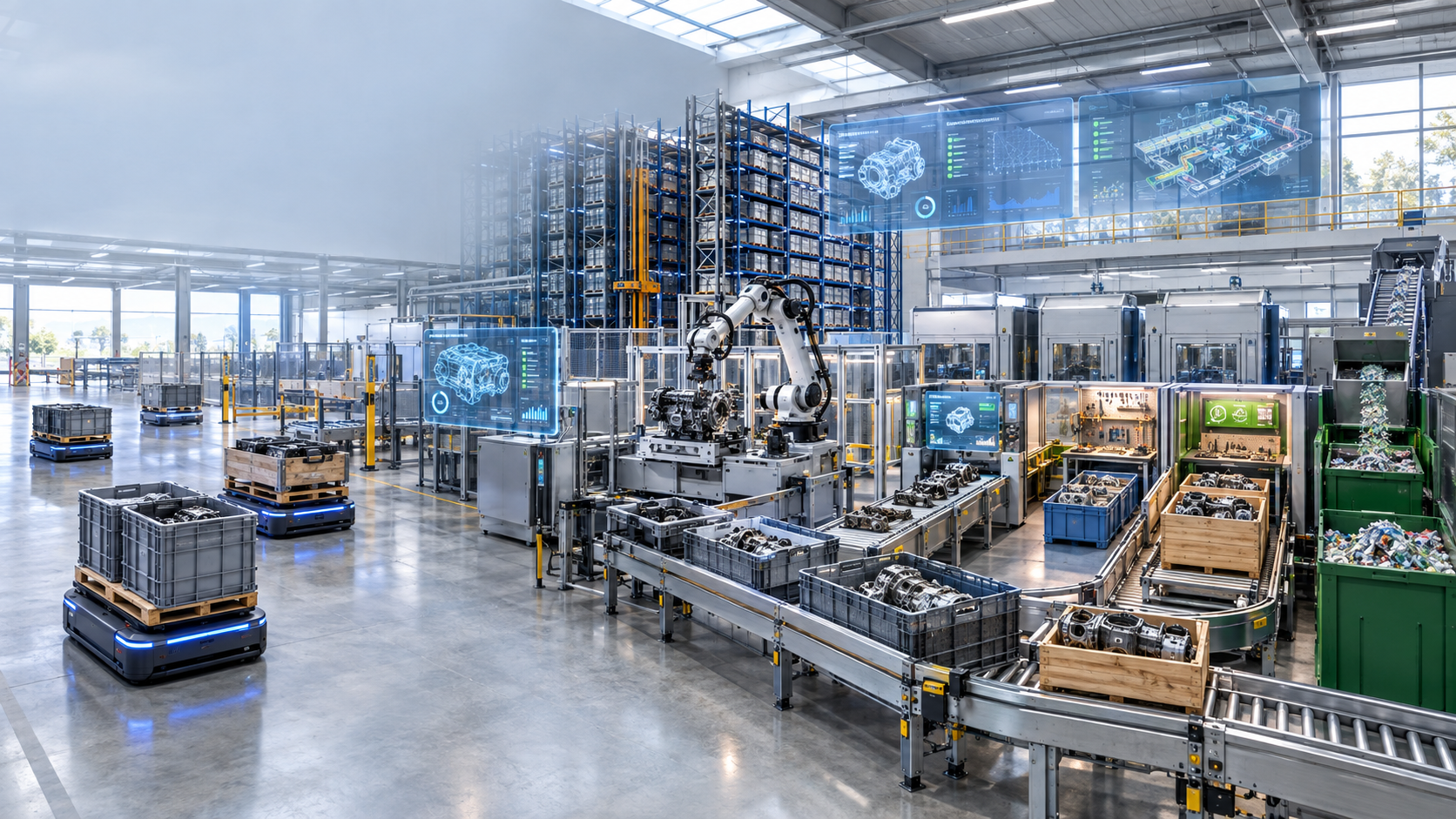
Automation and the circular economy: Two sides of the same coin? From linear to circular logistics – a creative image on the topic, using AI: Xpert.Digital
The circular warehouse: How industry benefits from the circular economy
Why the circular economy is shaping the future of industry
Circular economy meets automation: New paths in industry
In today's industry, automation is often viewed as a standalone process aimed at increasing efficiency, quality, and delivery capability. At the same time, the circular economy is perceived as a separate challenge, with the goal of reducing material consumption, waste, and emissions. This separation, however, is no longer appropriate. The circular warehouse, which integrates the principles of both automation and the circular economy, could be the key to creating a more sustainable and competitive industrial model.
Such a system integrates warehousing, production, maintenance, and returns processes, transforming intralogistics from an internal transport service provider into a control center for industrial value cycles. In a market characterized by high labor, energy, and financing costs, as well as a shortage of skilled workers, the circular warehouse offers the opportunity to compete not only through lower unit costs but also through longer service lives and closed-loop material cycles.
The integration of automation and the circular economy is therefore not only a technological challenge, but a fundamental strategic necessity for the competitiveness of German and European industry. In this context, the circular warehouse becomes an indispensable component that not only fulfills environmental responsibilities but also offers significant economic added value.
The circular warehouse as a new industrial center
Simply moving materials faster automates waste
Automation and the circular economy are still too often treated as two separate tasks in industry. Automation is intended to increase throughput, quality, and delivery reliability, while the circular economy aims to reduce material consumption, waste, and emissions. This separation is economically outdated. An automated warehouse that solely accelerates linear flows of goods from receiving through production to shipping may increase productivity, but it could also reinforce a resource-intensive business model. Conversely, a circular economy strategy without efficient tracking, sorting, inspection, return, and reuse of products and materials often remains too slow, too expensive, and too opaque to be competitive on an industrial scale.
The crucial development, therefore, lies not in simply adding robotics and recycling. It's about a new production and logistics system in which warehousing, manufacturing, maintenance, refurbishment, and take-back are interconnected. Intralogistics transforms from an internal transport service provider into the control center for industrial value cycles. It must not only provide new parts on time but also identify used components, assess their condition, separate different quality classes, and determine the most economically viable next use. Only when these decisions are made reliably, data-driven, and largely automated will an ecological objective become a scalable industrial model.
This connection is of particular strategic importance for Germany and Europe. High labor, energy, and financing costs coincide with skills shortages, weak investment, geopolitical uncertainty, and a strong dependence on imported raw materials. At the same time, Europe possesses a large installed base of high-quality machinery, a high-performing automation industry, and extensive process knowledge. This combination offers the opportunity to compete not only on lower unit costs, but also on longer service lives, higher plant availability, closed-loop material cycles, and data-driven services. The flexible circular warehouse thus becomes a building block of industrial competitiveness and not merely a measure for operational environmental protection.
Europe's industry between technological strength and investment weakness
The starting point is contradictory. Worldwide demand for industrial robots has more than doubled within a decade. By the end of 2025, around five million industrial robots were in operation in factories; in the same year, more than 600,000 new units were installed. Approximately 655,000 installations are expected for 2026 and around 806,000 for 2029. While Europe continues to have a high density of automation, its growth is slowing compared to Asia. Germany remains the largest robotics market in Europe and one of the five largest markets worldwide, but the number of new installations fell by around eight percent in 2025 to fewer than 25,000 units.
The high robot density in Germany, most recently around 449 units per 10,000 employees in the manufacturing sector, should therefore not be confused with a comprehensively modernized industry. Large automotive, electronics, and process companies often operate with highly networked systems, while many small and medium-sized enterprises (SMEs) are still characterized by media breaks, rigid conveyor technology, manual data entry, and isolated machines. This is precisely where a significant productivity lever lies, but also an investment challenge. In 2024, the European mechanical and plant engineering sector generated around €270 billion in gross value added, employed approximately three million people, and consisted of roughly 97 percent SMEs. Its technological strength thus rests on a structure that is particularly sensitive to financing costs, skills shortages, and regulatory complexity.
Added to this is the economic weakness. Real machine production in the European Union declined slightly in 2025. In Germany, real investment in equipment at the end of 2025 was around twelve percent below the 2019 level, while in the United States it had risen by about 16 percent over the same period. New orders in the German mechanical engineering sector stagnated in 2025, with domestic demand remaining particularly weak. In the machine tool industry, production fell by eight percent in 2025 to €13.6 billion; in real terms, it was around 35 percent below the peak of 2018. These figures show that the transformation is not taking place in a period of ample budgets. Automation projects must therefore deliver robust economic benefits, be financed modularly, and integrate existing facilities.
The circular economy, in particular, can improve the investment scenario. It expands the benefits of automation beyond simply reducing personnel costs. A system that simultaneously reduces waste, recycles returned goods, recovers spare parts from used components, and extends the service life of expensive equipment generates multiple sources of revenue and savings. This shifts the investment logic from an isolated rationalization project to a platform for productivity, resilience, and new services.
The warehouse becomes a hub of industrial value cycles
In a linear model, a warehouse has a relatively clear task: to balance temporal and quantitative differences between procurement, production, and sales. The most important metrics are inventory, throughput, delivery time, space utilization, and error rate. In a circular economy, this target system is no longer sufficient. Additionally, return rate, reusability, residual value, material purity, repair time, number of usage cycles, and avoided primary material use must be considered.
This changes the physical flow of materials. In addition to forward logistics, a reverse logistics system emerges for returns, reusable packaging, used products, exchange modules, tools, batteries, and production waste. These flows are more difficult to plan than new goods flows. A new part has defined dimensions, known quality, and a clearly defined storage location. A returned item can be damaged, dirty, incomplete, technically obsolete, or economically worthless. It therefore requires incoming inspection, identification, and condition classification before a decision can be made regarding reuse, repair, refurbishment, parts recovery, or material recycling.
The circular warehouse thus fulfills functions that were previously distributed across the workshop, quality control, disposal, and spare parts warehouse. It becomes a material bank and a decision point for value retention. High-quality components should not be prematurely relegated to a lower-value recycling path. A functional assembly is usually more economically valuable than the metal recovered from it. A repairable unit has a higher residual value than a shredded mixture. The central economic challenge is to preserve the highest achievable value without incurring disproportionate testing, storage, and processing costs.
For this to work, the warehouse must be able to handle different speeds. Fast-moving new parts, irregularly arriving returns, products requiring quarantine, and spare parts stored long-term follow different logics. A rigid system optimized for a single standard container and a constant volume can quickly become a bottleneck under these conditions. Flexibility is therefore not a convenience feature, but a prerequisite for circular processes.
Automation is not yet sustainability
Automation does not automatically reduce material consumption and emissions. A faster order picking system can enable more orders with shorter delivery times, but at the same time, it increases packaging consumption, returns, and transport volume. A fully automated high-bay warehouse can utilize space efficiently, but its steel construction, building technology, and consistently high energy consumption result in significant emissions. Robots, sensors, and batteries also require critical raw materials and create new recycling challenges at the end of their lifespan.
The system boundary is therefore crucial. Focusing solely on the energy consumption of a single robot might overlook avoided empty runs, reduced waste, or increased storage density. Conversely, measuring only throughput ignores a potential increase in unnecessary material movements. A sound evaluation must consider investment, operation, maintenance, material savings, floor space, transport efficiency, and lifespan together. It should also examine whether the automation system is designed for recyclability: Can modules be replaced, software updated, batteries renewed, and components refurbished?
Another risk is the so-called rebound effect. Decreasing process costs can generate additional demand and negate some of the resource savings. If returns processing becomes cheaper, this can encourage business models that tacitly factor in high return rates. If transport within the warehouse becomes virtually free, more movement may occur instead of better planning. Sustainable automation must therefore not simply accelerate an inefficient process. First, material flow, packaging, inventory strategy, and product design must be reviewed; then, the remaining efficient process is automated.
The most economically sound solution is often not the highest degree of automation, but rather the right balance between standardization, machine execution, and human decision-making. Repeatable transport, identification, sorting, and storage are particularly well-suited for automation. Ambiguous damage patterns, rare product variants, and complex repair decisions can initially remain with humans, supported by assistance systems and artificial intelligence. This creates a hybrid system that combines productivity with adaptability.
Flexible technology beats rigid full automation
For decades, traditional warehouse automation was characterized by fixed conveyor systems, stacker cranes, and lengthy planning cycles. Such systems remain useful where large quantities of standardized load carriers need to be moved reliably over many years. However, the circular economy increases product variety and uncertainty. Therefore, modular technologies are gaining importance: autonomous mobile robots, driverless transport systems, compact automated small parts warehouses, flexible sorting cells, collaborative robots, and retrofittable sensors.
Autonomous mobile robots offer a distinct advantage because their routes can be modified via software. Additional vehicles can be added as volumes increase, and new stations can be integrated without a complete infrastructure overhaul. This is valuable for recycling processes whose volume is initially difficult to predict. However, such systems are not always superior. For very high, consistent volumes, stationary conveyor technology can be more economical and energy-efficient. Furthermore, a large mobile fleet requires efficient traffic management, reliable wireless networks, and clear safety protocols.
Automated storage and retrieval systems enable high space utilization and short access times. In circular processes, they can manage tested used parts, exchange modules, and rarely needed spare parts in a space-saving manner. Their benefits increase when containers, labels, and interfaces are standardized. Problems arise when product diversity and irregular geometries complicate handling. In such cases, intelligent grippers, image recognition, and flexible load carriers can help, but they also increase investment and integration costs.
For many existing plants, retrofitting is more economically attractive than new construction. Sensors monitor the condition of existing conveyor technology, modern controls improve availability, and software connects previously isolated systems. A phased conversion reduces capital commitment and operational risk. It also prevents the premature replacement of functional technology. From a circular economy perspective, it would be contradictory to aim for sustainability solely through the complete replacement of existing systems.
Data turns returns into assets
Material cycles only function with digital information. A used part without a clear identity, maintenance history, and condition data is often disposed of as a precaution or only reused after extensive testing. In contrast, a part with documented origin, operating time, load, and repair history can be evaluated, stored strategically, and remarketed with a warranty. Data thus reduces the transaction costs of the circular economy.
The technical foundation is a combination of enterprise software and operational control. The ERP system manages commercial transactions and material master data, the warehouse management system handles inventory and storage locations, a warehouse execution system prioritizes orders and resources, and the control level coordinates robots, conveyor technology, and workstations. For circular economy operation, condition data, quality classes, CO₂ information, ownership details, and permissible recycling pathways are added. This information must not end up in separate sustainability files but must inform operational decisions.
The digital product passport provides an important framework for this. It can make technical properties, material composition, origin, repairs, recyclability, and environmental impacts accessible in a structured manner. Such a passport will become mandatory for certain batteries from February 2027. Further product groups, such as iron, steel, textiles, and construction products, are to follow. This creates a dual challenge for mechanical engineering and logistics companies: they must provide data on their own products and simultaneously develop systems that practically utilize product passport data during goods receipt, maintenance, and at the end of the product's life cycle.
A digital twin extends this transparency to the plant and process level. It virtually maps inventory, material flows, capacities, and energy consumption. This allows for the simulation of new return flows, different batch sizes, or additional processing stations before actual investments are made. This capability is particularly valuable in volatile markets. The one-time design of a warehouse for a fixed peak volume becomes less important; it is replaced by continuous adjustments based on real-world data.
Artificial intelligence can improve forecasting, image recognition, and decision support. It detects damage, estimates remaining service life, predicts return volumes, and optimizes order sequences. However, its economic value depends on data quality and process integration. A model that calculates a probability of failure but doesn't trigger a maintenance order or reserve a spare part remains a demonstration. Productive benefits only arise when analysis, decision-making, and execution are linked in a closed loop.
Reverse logistics determines the real circularity
Many circular economy strategies fail not due to technical recycling issues, but rather due to the challenges of return. Products are geographically dispersed, ownership rights are unclear, return volumes fluctuate, and transport costs are high. For low-value or bulky materials, logistics can completely consume the residual value. Therefore, companies must define how products, load carriers, and components are to be returned as early as the point of sale.
Deposit schemes, buyback guarantees, leasing, and product-as-a-service models create economic incentives for product returns. The manufacturer often retains ownership or access to the product and can better plan its residual value. This requires a reliable calculation of the return rate, useful life, and refurbishment costs. Overly optimistic assumptions lead to business models that appear circular on paper but fail to achieve sufficient returns in practice.
Network design is therefore just as important as warehouse technology. Not every returned item should be immediately transported to a central facility. Regional collection and testing centers can consolidate products, carry out simple repairs, and avoid unnecessary shipments. Central remanufacturing facilities, on the other hand, make sense when specialized knowledge, test benches, or economies of scale are crucial. A multi-stage network combines regional proximity with industrial efficiency.
Reusable packaging also requires its own management system. Pallets, plastic boxes, racks, and special load carriers represent tied-up capital. A lack of transparency and consistent return practices leads to losses, overstocking, and costly replacements. Digital identification, automated counting, and condition-based circulation control transform packaging into a predictable asset. The European reuse targets for certain transport and sales packaging, which come into effect in 2030, further increase the pressure to act.
LTW Intralogistics Solutions

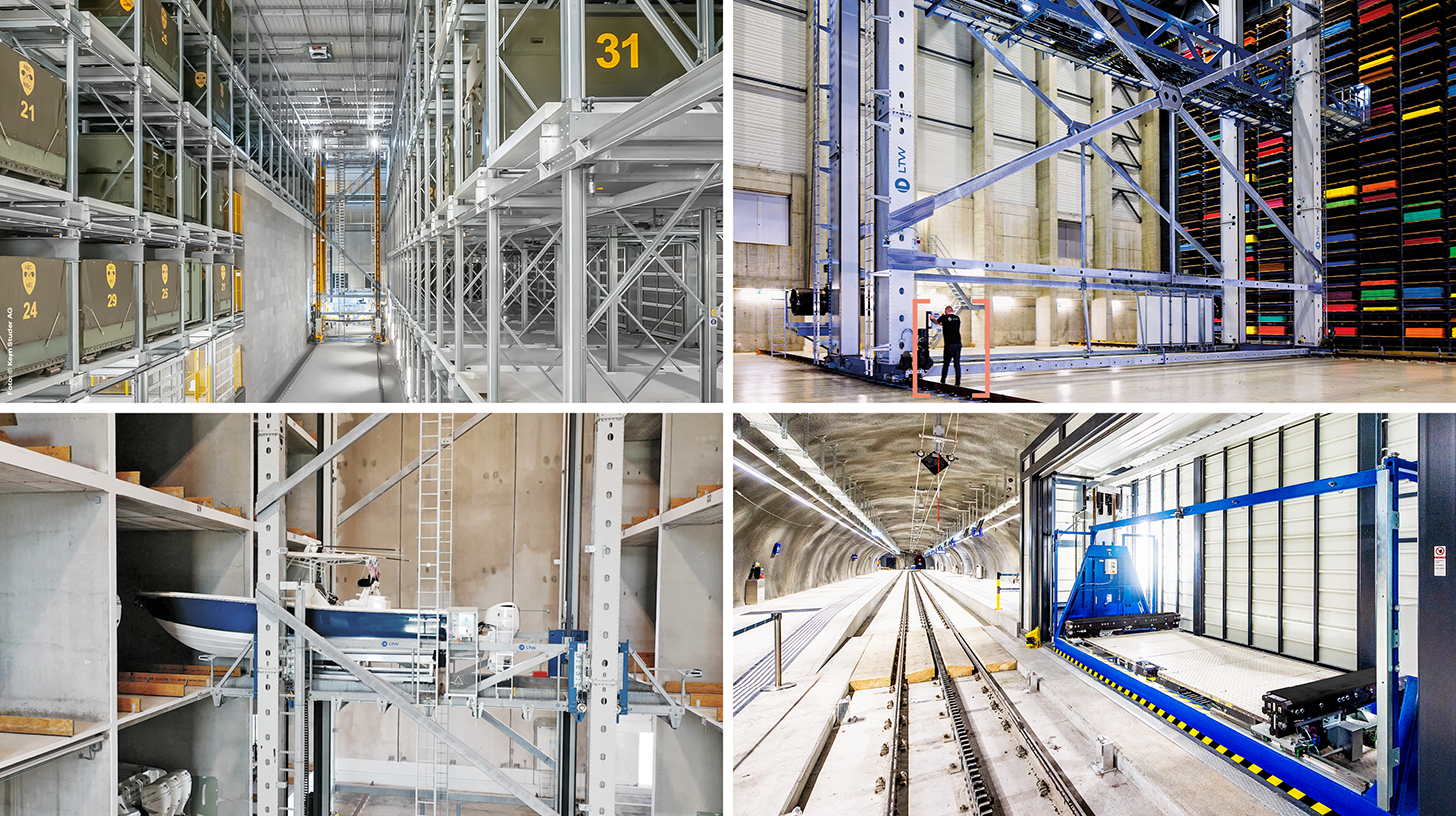
LTW Intralogistics – Engineers of Flow - Image: LTW Intralogistics GmbH
LTW offers its customers not individual components, but integrated complete solutions. Consulting, planning, mechanical and electrotechnical components, control and automation technology, as well as software and service – everything is networked and precisely coordinated.
In-house production of key components is particularly advantageous. This allows for optimal control of quality, supply chains, and interfaces.
LTW stands for reliability, transparency, and collaborative partnership. Loyalty and honesty are firmly anchored in the company's philosophy – a handshake still means something here.
Related to this:
Mechanical engineering as a provider of life cycle solutions
Mechanical engineering is becoming a provider of life cycle solutions
Mechanical engineering is both a user and an enabler of the circular economy. It consumes steel, aluminum, electronics, and plastics, but also manufactures the systems that enable other industries to use materials more efficiently, repair products, and sort waste. Its greatest opportunity lies in extending its own value creation from the one-time delivery of a machine to its entire life cycle.
Durability alone is not enough. A machine can last mechanically for twenty years and still become economically unusable after ten if its control system, software, or communication cannot be updated. Circular machine design therefore requires modular assemblies, standardized interfaces, interchangeable electronics, and documented disassembly. Wear parts must be accessible, safely separable, and readily available. At the same time, modularity must not lead to unnecessary over-engineering that increases material and costs.
Remanufacturing, the industrial reconditioning of products to a defined performance standard, has considerable potential. Model estimates predict that the European market will grow from approximately €31 billion to as much as €100 billion by 2030. Compared to new production, savings in materials, energy, and delivery time are possible, while customers receive a tested product with predictable quality. Manufacturers benefit from additional revenue and stronger customer relationships. Standardized testing procedures, spare parts availability, liability regulations, and confidence in the performance of remanufactured components are crucial.
The installed machinery base thus becomes a strategic asset. Manufacturers who digitally connect their equipment in the field can identify maintenance needs, offer upgrades, and determine suitable takeover times. The business model is shifting, in part, from sales to service contracts, availability models, or usage-based fees. Such models smooth revenues but require different accounting and professional risk management. Those who misjudge the remaining technical lifespan end up incurring costs that were previously borne by the operator.
Productivity arises from maintaining value rather than reducing staff
The economic discussion about automation is often reduced to the savings in working hours. This falls short in an aging society. Germany's working-age population could shrink significantly within a decade, while metalworking, mechanical engineering, electrical engineering, maintenance, and logistics will continue to require skilled workers. The weak economy has partially masked the acute shortage of skilled labor, but has not solved the underlying structural problem.
Automation is therefore primarily a means of using scarce labor more productively. Robots take over heavy, monotonous, and ergonomically demanding transport tasks. Automatic identification reduces search and booking efforts. Assistance systems guide employees through inspections and repairs. Skilled workers can concentrate on fault diagnosis, process improvement, and exceptional decisions. The productivity gain thus arises not only from fewer personnel per unit, but also from higher quality, reduced downtime, and better utilization of existing knowledge.
At the same time, the qualification structure is changing. More skills are needed in data analysis, robotics, maintenance, cybersecurity, and lifecycle assessment. The separation between logistics, production, IT, and sustainability is becoming less relevant because circular processes connect all areas. Companies should therefore not offer isolated training courses for individual devices, but rather develop role-based learning paths. A shift supervisor, for example, needs to understand how a prioritization logic weighs material value, delivery date, and energy consumption against each other.
The transformation also carries social risks. Simple tasks may become obsolete, while new positions require higher qualifications. Without further training, a skills mismatch arises despite staff shortages. Furthermore, automated performance measurement and AI-supported work management must not lead to opaque surveillance. Acceptance increases when employees are involved early in process design and safety concepts. A technically optimal system that is circumvented in everyday practice is economically worthless.
Energy, area and emissions must be calculated together
Logistics centers cause environmental impacts not only through their vehicles. Buildings, heating, cooling, lighting, conveyor technology, IT, packaging, and outdoor areas also contribute. A comprehensive analysis of German freight transport in 2019, including energy supply, vehicle manufacturing, infrastructure, and warehousing, yielded approximately 160 million tons of CO₂ equivalents. This was about three times the amount of direct emissions measured under the more narrowly defined climate protection framework at the time. This figure illustrates how strongly the results depend on the chosen system boundary.
Automation can consolidate storage areas, thereby reducing building volume, travel distances, and overall land use. High-bay racking, compact container storage, and demand-based retrieval improve space utilization. At the same time, additional drives and IT systems can increase energy consumption. Therefore, the absolute energy consumption of a system should not be evaluated in isolation, but rather the energy used per flawlessly processed unit, per product value retained, or per ton of primary material avoided.
Load management offers additional savings. Vehicles and stationary storage systems don't need to be charged simultaneously. Energy-intensive orders can be shifted to times with high on-site solar power generation or inexpensive grid electricity, provided delivery deadlines allow. Regenerative braking, efficient motors, and intelligent standby modes further reduce consumption. However, the greatest leverage often lies in avoiding unnecessary movements through better inventory management and order bundling.
Circular economy and climate protection are not synonymous. Local repairs can save materials, but repeated transport can make them uneconomical. Recycled materials may be more energy-intensive to process than alternative solutions. Conversely, a more energy-efficient new device can justify the premature replacement of a functioning system if the savings during operation outweigh the manufacturing costs. Therefore, decisions require lifecycle data rather than blanket rules.
The investment case requires a new total cost calculation
The classic amortization calculation for warehouse automation compares investment and operating costs with the saved labor hours. For circular systems, this model is incomplete. Additional factors to consider include avoided waste, recovered components, reduced disposal costs, lower inventory levels, longer system lifespan, improved delivery reliability, reduced procurement risk, and potential revenue from service or take-back programs.
New costs arise. These include data maintenance, product identification, additional quality checks, return transport, cleaning, disassembly, software integration, and documentation. Furthermore, returned inventory ties up capital as long as its condition remains unclear. An economically viable circular economy solution therefore requires rapid decisions at the receiving end. The longer a product remains in quarantine, the greater the space requirements, uncertainty, and loss in value.
A robust business case should depict several scenarios. The baseline scenario assumes realistic quantities, prices, and return rates. A stress scenario considers lower returns, lower material prices, or higher integration costs. A growth scenario demonstrates the benefits of modular scaling. Assumptions regarding technical lifespan and residual value are particularly critical, as even small deviations can significantly impact profitability.
Besides the return on investment, the option value of flexibility is important. A mobile or modular solution may initially appear more expensive than a permanently installed system, but it reduces the risk of miscalculations. When product mix, sales, or regulations are uncertain, the ability to adapt has real economic value. This is often underestimated in static payback calculations.
Financing and accounting also influence implementation. Leasing, robotics as a service, and usage-based models reduce initial investment but increase long-term obligations and dependencies. Companies should contractually secure interfaces, data access, and exit options. A cheap subscription can become expensive if only the provider is allowed to maintain software, spare parts, or fleet management.
Small and medium-sized enterprises need a different path to transformation
Large corporations can build their own automation, data, and sustainability teams. A medium-sized machine manufacturer or logistics service provider has to solve the same fundamental problems with significantly fewer resources. For them, a comprehensive redesign is often neither financially feasible nor organizationally manageable. The appropriate approach therefore begins with a clearly defined material flow whose economic benefits are measurable.
A sensible starting point could be the automatic return of high-value load carriers, the reuse of tested spare parts, or condition-based maintenance of critical equipment. It is crucial that the pilot project does not end up as an isolated technological island. The data model, identification, and interfaces should be designed to be scalable from the outset. Otherwise, multiple individual solutions will be created, and connecting them later will be more expensive than the original automation.
Standardization reduces costs. Uniform containers, clear quality classes, interoperable data formats, and open programming interfaces facilitate integration. Industry associations and supplier networks can establish joint take-back and reprocessing structures when individual companies have insufficient quantities. Especially with rare components, cooperation is more economically viable than a separate, closed system.
Service providers can supplement missing specialized knowledge, but process responsibility must not be completely outsourced. The company must understand which data is business-critical, how decisions are made, and what dependencies arise. Purchasing only a black box can lead to a loss of control over a core process. Especially in circular business models, part of the competitive advantage lies in knowledge about the condition, usage, and residual value of products.
Regulation shifts the parameters of competition
European policy is increasingly shifting its focus from waste management to product design, reuse, and secondary raw materials. The Ecodesign Regulation for sustainable products has been in force since July 2024. It establishes a framework for requirements regarding durability, repairability, resource and energy efficiency, and introduces the digital product passport. This will gradually make information on materials, technical performance, repairability, and recyclability a component of market access.
Packaging regulations also directly impact logistics. The new European Packaging Regulation, which generally applies from August 2026, requires that packaging be designed to be recyclable. From 2030, specific reuse requirements will come into force for certain transport and sales packaging. Companies will therefore no longer have to treat packaging merely as a consumable, but as a managed inventory with cycles, condition, and return pathways.
The Critical Raw Materials Act sets the goal, among others, of covering at least 25 percent of Europe's annual consumption of strategic raw materials through recycling by 2030. Such targets increase the demand for sorting, processing, and recovery technology. This creates new markets for the mechanical engineering sector, while simultaneously increasing the requirements for traceability and material data.
Regulation can accelerate investment, but it can also create perverse incentives. Detailed documentation requirements disproportionately burden small businesses when data has to be provided multiple times in different formats. Product passports only generate economic benefits if the data is machine-readable, interoperable, and accessible for operational decisions. A digitized PDF alone does not create a cycle. The crucial factor is whether a warehousing or repair system can automatically analyze the information.
Companies should therefore not treat regulation solely as a compliance task. Those who build up reliable product and material data early on can organize maintenance, returns, and resale more efficiently. The obligation then becomes the infrastructure for a profitable lifecycle business. Conversely, those who wait until the last possible deadline create hectic IT projects without any strategic benefit.
Resilience acquires a material core
The crises of recent years have shown that high efficiency without reserves can be vulnerable. A circular economy strengthens resilience because it opens up additional sources of supply within a company's own installed base. Remanufactured components, recovered materials, and repairable products reduce dependence on individual supplier countries. While they do not completely replace primary imports, they can mitigate bottlenecks and shorten response times.
Automated warehouses support this strategy through transparency and speed. A company needs to know which used components are available, their condition, and which products they can be released for. Without this information, the theoretical inventory remains useless. Resilience is not achieved through the highest possible inventory levels, but through available options and rapid changeover.
Nearshoring and regional cycles can reinforce each other. When production is closer to the European sales market, repatriation, repair, and refurbishment become easier. At the same time, automation increases the competitiveness of locations with higher wages. However, regionalization should not be romanticized. Some raw materials and components remain global, and small-scale local production can lose economies of scale. The goal should therefore not be autarky, but a balanced mix of global sourcing, regional capacities, and circular reserves.
Mechanical engineering can export this resilience. Systems for flexible sorting, dismantling, reprocessing, and automated storage are needed worldwide. European suppliers have opportunities if they combine mechanical quality with software, data standards, and lifecycle services. However, competition is intensifying because Asian suppliers are rapidly advancing in robotics, batteries, and scaling. Technological tradition alone does not protect a market position.
Cybersecurity and system dependency are becoming production risks
The more digitally interconnected warehouses, production facilities, and return networks become, the larger the attack surface. A failure of the warehouse management system can not only halt shipping but also block material inspection, spare parts provision, and refurbishment. Therefore, networked robots, sensors, and external cloud services must be treated as integral components of production security.
Heterogeneous existing systems pose particular risks. Older control systems often lack modern safety features but are connected to new platforms via gateways. Segmented networks, clear access rights, regular updates, and tested emergency operating procedures are essential. A fully autonomous process without a manual fallback option can result in high consequential costs in the event of malfunctions.
Data sovereignty is also a competitive factor. Product passports and service platforms contain information about usage, capacity utilization, failures, and customer processes. This data is economically valuable and, in some cases, sensitive. Contracts must stipulate who is allowed to use, share, and export it after the contract ends. Open standards reduce vendor lock-in, but do not completely solve the problem if proprietary algorithms and maintenance access remain with the supplier.
Circularity should therefore also apply to software. Systems must be updatable, migrateable, and operable in the long term. A mechanically durable machine whose operating system no longer receives security updates after a few years is not sustainable. Digital obsolescence can shorten the lifespan of industrial plants more than mechanical wear and tear.
New key performance indicators for a new production model
Companies control what they measure. Classic logistics KPIs remain important, but are no longer sufficient. A circular warehouse requires an integrated KPI system that combines productivity, capital commitment, value retention, and environmental impact. The decisive factor is not the largest number of indicators, but their suitability for concrete decisions.
At the process level, throughput time, error rate, plant availability, energy consumption per movement, and capacity utilization are relevant. For closed-loop systems, return rate, reuse rate, repair success, average number of cycles, reason for rejection, and time to condition assessment are also important. Economically significant factors include residual value achieved, avoided new procurement, remanufacturing costs, tied-up capital, and the contribution margin of circular products.
Environmental indicators should reflect the avoided use of primary materials, greenhouse gas emissions over the life cycle, waste volume, and material purity. Double counting must be avoided. A reused part must not be simultaneously counted as avoided waste, a new part saved, and recycled material without disclosing the system boundaries. Comparability requires clear methods and consistent time periods.
A particularly meaningful metric is the economic value obtained per resource used. This connects the logic of the circular economy with business management. In addition, flexibility should be measured, for example, by the time and costs required to integrate a new product type, recycling stream, or job. This reveals whether a system is efficient only today or adaptable in the future as well.
From pilot project to industrial operation
Successful implementation begins with an analysis of value losses. Where do scrap, shrinkage, unnecessary transport, lengthy search times, or premature replacements occur? Which products have a high residual value, and for which materials do return and testing costs outweigh the benefits? These questions determine which cycle should be closed first.
The process is then simplified. Variants are reduced, containers are standardized, quality classes are defined, and responsibilities are clarified. Only then does technical automation follow. This approach prevents historically grown inefficiencies from being digitally cemented. In parallel, a common data model must be developed that maps product identity, condition, ownership, and permissible next use.
The first use case should be economically relevant but manageable. Suitable examples include valuable spare parts, reusable transport racks, or clearly defined exchange modules. The operation must test under real-world fluctuations, damaged returns, and IT outages. A pilot project that only functions under ideal conditions does not provide a reliable basis for decision-making.
Following technical testing comes organizational scaling. Purchasing, development, production, sales, service, and logistics must all share common goals. If sales focuses solely on maximizing new machine revenue while service is tasked with building up take-back and refurbishment capabilities, internal conflicts will arise. Compensation and profit and loss statements must clearly reflect circular revenues and avoided costs.
Finally, the network is expanded. Suppliers provide material and condition data, customers receive incentives for returns, and logistics partners integrate return transport. Standards and contractual rules are just as important as technology. Circular economy is not a characteristic of a single factory, but a coordinated effort across the entire value chain.
Until 2035, the combination of speed and value retention will be decisive
By 2035, industrial logistics is expected to be significantly more autonomous, data-driven, and more heavily regulated. Mobile robots, automated warehouses, image recognition, and AI-supported planning will become more widely available and affordable. However, the real competitive advantage will not come from owning individual technologies. It will arise from integrating them into a business model that preserves material value across multiple lifecycles.
Europe is starting with a strong base in mechanical engineering and automation, but with insufficient investment and limited circularity. In 2023, only 11.8 percent of materials used in the European Union came from recycling; in Germany, the figure was 13.9 percent. In 2024, the EU figure rose to 12.2 percent. Progress is real, but too slow to fundamentally change resource dependency and environmental impact. At the same time, model calculations show considerable economic potential: A more consistent circular economy could further increase European GDP by 2030 and create hundreds of thousands of jobs. Such projections are not a guarantee, but they illustrate the magnitude of the potential shift in value.
The transition will create winners and losers. Manufacturers with modular products, reliable condition data, and functioning take-back networks can generate additional revenue through maintenance, refurbishment, and resale. Providers of rigid, closed systems, on the other hand, will come under pressure as customers demand flexibility, data access, and lifecycle documentation. Logistics service providers can evolve from carriers to operators of take-back and refurbishment networks. Employees will benefit from reduced ergonomic strain and more skilled tasks, but will require continuous training.
The key economic insight is this: efficiency and circularity must not be pitted against each other. A circular economy without automation remains too expensive and slow in many industrial applications. Conversely, automation without a circular strategy accelerates material consumption and increases dependencies. Only their combination creates a system that simultaneously improves throughput, resilience, and value retention.
The warehouse is at the heart of this connection. It's where physical products meet digital information, where decisions are made about reuse or loss of value, and where production and recycling can be synchronized. Anyone who continues to view the warehouse merely as a cost center overlooks its strategic role. It becomes the hub of an industry that doesn't have to be less efficient to become more sustainable, but rather becomes more productive precisely through the intelligent conservation of materials, energy, and knowledge.
Consulting - Planning - Implementation

Konrad Wolfenstein
I would be happy to serve as your personal advisor.
You can contact me at wolfenstein∂xpert.digital or
Just call me on +49 7348 4088 965 .
Your intralogistics experts

Consulting, planning and implementation of complete solutions for high-bay warehouses and automated storage systems - Image: Xpert.Digital
More information here: