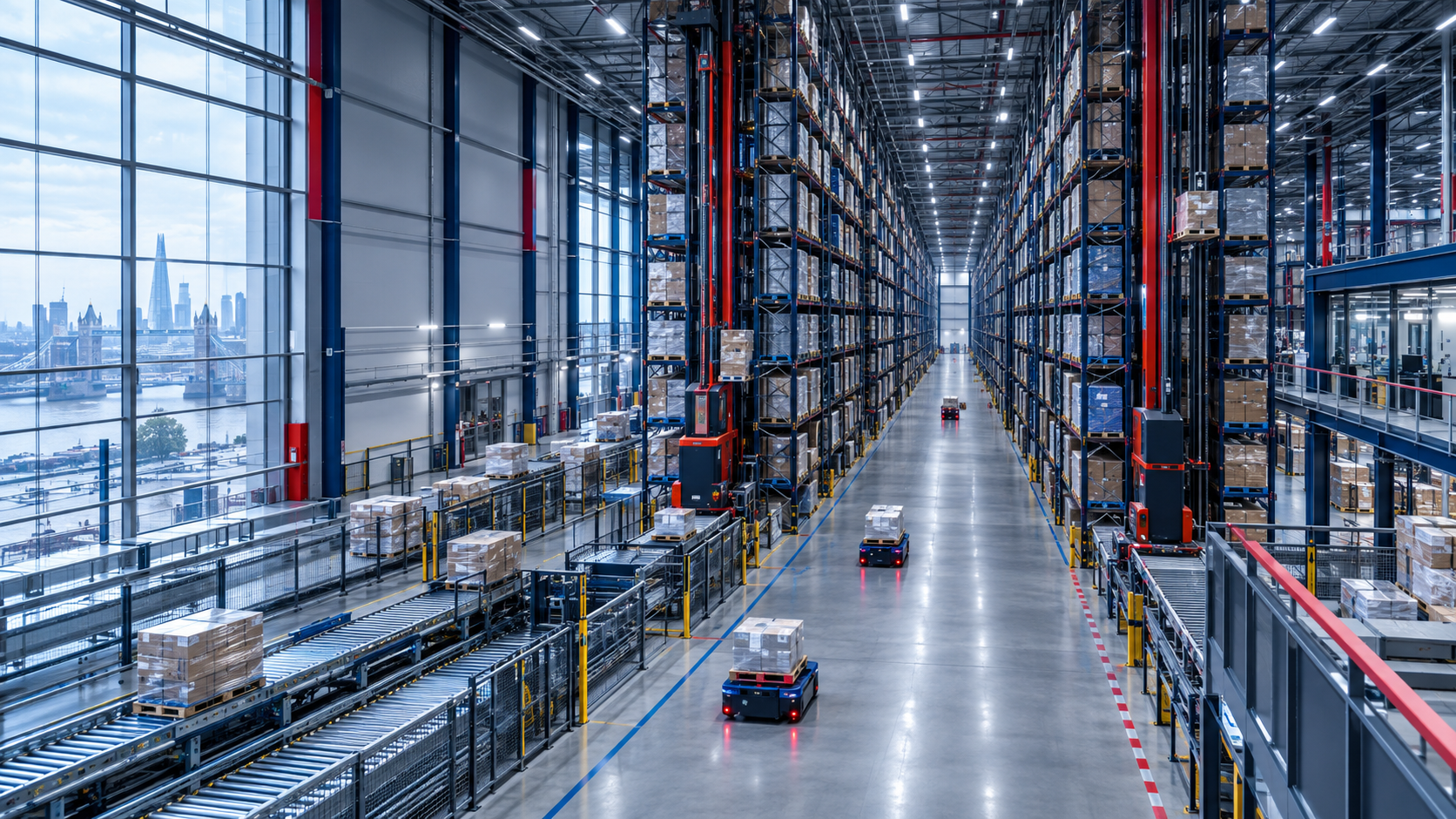
Automated warehouses and high-bay warehouses in Great Britain: The new logistics economy – creative image on the topic, with AI: Xpert.Digital
Energy efficiency and automation: The transformation of the British high-bay warehouse market
From land area growth to productivity: The development of warehousing in Great Britain
Logistics 2035: What the high-bay warehouse market holds for investors – high-bay warehouses as the key to cost reduction
The UK high-bay warehouse market is undergoing a fundamental transformation, driven by the challenges and opportunities of modern logistics. Following a pandemic-induced boom and subsequent correction, the focus has shifted from simply expanding storage capacity to the productive use of existing space. In an era dominated by rising labor costs, chronic shortages of suitable land, and high energy prices, intelligent automation of high-bay warehouses is becoming a crucial strategy for businesses. This development opens up new avenues not only for cost reduction and efficiency improvements but also for creating sustainable, future-proof logistics solutions. This analysis examines the current trends, challenges, and prospects of the UK high-bay warehouse market and illustrates how warehouse space requirements will evolve in the coming years.
Those who think of space in a purely horizontal way will lose the race for costs, capacity and delivery capability
The British market for high-bay warehouses is entering a new phase of development. After the pandemic-driven boom, the subsequent correction in the logistics real estate market, and several years of high construction, energy, and financing costs, not every additional warehouse space is automatically considered a strategic gain. The crucial factor is how much usable capacity, throughput, and supply security can be extracted from a plot of land, a building, and a kilowatt-hour of energy used. This shifts the economic focus from simply increasing floor space to more productively utilizing existing space. This is precisely where the structural opportunity for automated high-bay warehouses lies.
In this context, a high-bay warehouse is not simply a particularly tall building with racking. It is an integrated investment system comprising the supporting structure, racking technology, conveyor technology, stacker cranes or shuttle systems, sensors, power supply, fire protection, and software. Its economic value arises from the interplay of these components. The building envelope creates volume, automation transforms this volume into readily accessible storage locations, and the software controls inventory, orders, and material movements. The relevant market therefore encompasses more than just the sale of racking or cranes. It ranges from planning, construction, and system integration to warehouse management and material flow software, as well as maintenance, modernization, and long-term service contracts.
This market is particularly interesting for Great Britain because several developments are occurring simultaneously: a very high online share in retail, rising labor costs, chronic shortages of suitable logistics sites, higher demands on delivery reliability and traceability, and a growing need for temperature-controlled storage. At the same time, weak overall economic growth, high electricity prices, expensive capital, grid connection problems, and lengthy permitting processes are acting as brakes. The market is therefore neither a simple growth boom nor a stagnant niche. It is a selective investment market in which technically and economically sound projects have significantly better prospects than blanket automation programs.
A market with multiple sizes
The size of the British high-bay warehouse market cannot be reliably described with a single figure. Market studies use different definitions. Narrowly defined analyses consider only automated storage and retrieval systems (AS/RS), i.e., classic AS/RS solutions for pallets, containers, or cartons. Broader studies also include conveyor technology, sorting, mobile robots, order picking technology, warehouse execution systems, and other automation components. This results in significant differences, which stem less from conflicting market data than from differing definitions.
For the narrower UK AS/RS market, a volume of approximately US$219 million is projected for 2025. An increase to around US$264 million is expected for 2026 and to approximately US$507 million by 2035. This would correspond to average nominal growth of approximately 7.5 percent per year between 2026 and 2035. This definition closely reflects the core market for automated high-bay warehouses, but does not capture the entire project value of a building, nor all related automation solutions.
Broader estimates put the UK market for warehouse automation at well over one billion US dollars as early as 2023 and expect it to exceed three billion US dollars by 2030. Other forecasts project the market volume even higher for 2025 and anticipate growth rates in the mid-teens percentage range until the early 2030s. These figures should not be directly conflated. However, they do illustrate a common trend: automation is growing faster than total warehouse space, and the share of software, service, and robotics-related components in the overall project is increasing.
What is remarkable here is the low starting point. According to estimates from the British warehousing industry, less than 20 percent of warehouses have any significant level of automation. This figure also encompasses very different levels of automation, ranging from single conveyor lines to largely autonomous systems. The number of truly fully automated high-bay warehouses is therefore considerably smaller than the total number of warehouses in the UK. This opens up long-term retrofitting potential, but it does not mean that four-fifths of all warehouses could be automated in the short term. Many buildings are too low, too small, structurally unsuitable, only available under short-term contracts, or operationally too volatile to justify high investments.
From the land boom to the productivity question
The UK logistics real estate market has normalized after the exceptional years of 2020 and 2021. During the pandemic, retailers, parcel services, and logistics companies competed aggressively for scarce space. Afterwards, speculative new builds and returned existing properties entered the market, while companies made more cautious investment decisions. Vacancy rates rose, giving tenants more choice. However, this normalization does not signify a structural collapse in logistics demand.
For warehouses of 100,000 square feet or more, approximately 33 million square feet of space took-up were recorded in 2025. This was significantly higher than the figures for the two preceding years and also above the long-term average before the pandemic. Depending on the minimum size of the properties included, total British logistics space take-up in 2025 amounted to approximately 40.8 million square feet. At the same time, the vacancy rate in the large-scale segment was just under eight percent at the end of the year. This was higher than during the period of extreme scarcity, but not yet indicative of a widespread oversupply.
For high-bay warehouses, the qualitative composition of this vacancy is particularly relevant. Some of the available space consists of older buildings that do not meet modern requirements for ceiling height, floor load-bearing capacity, energy efficiency, power supply, yard design, and automation. Therefore, the overall market appears to offer sufficient space, while prime, automation-ready properties in suitable locations remain scarce. The growing rent gap between prime and secondary logistics properties confirms this polarization. Modern buildings command higher prices because they offer not only more space but also lower operating costs, better energy performance, and greater technical flexibility.
The key economic shift is therefore this: companies are no longer primarily renting or building square meters, but rather buying capacity. A high-bay warehouse can accommodate significantly more pallets or containers on the same footprint than a conventional hall. It can reduce walking and driving distances, manage inventory more precisely, and enable a more consistent throughput over longer operating periods. The more expensive land, buildings, and labor become, the more valuable this increased density becomes. The market for high-bay warehouses thus benefits not only from increasing volumes of goods, but also from the need to utilize existing resources more productively.
Work becomes an investment driver
The strongest economic impetus for automation currently comes from labor costs. The UK's National Living Wage for employees aged 21 and over rose to £12.71 per hour in April 2026. As early as April 2025, the employer's contribution to National Insurance had been increased from 13.8 to 15 percent, while the annual income threshold for mandatory contributions fell from £9,100 to £5,000. This disproportionately burdened particularly labor-intensive businesses with many part-time or low-wage workers.
For a warehouse, hourly wages are not the only relevant factor. Actual labor costs include social security contributions, pension contributions, surcharges for night and weekend work, vacation, sick leave, recruitment, training, personal protective equipment, and management expenses. Indirect costs also arise from employee turnover, seasonal shortages, and fluctuating productivity. In manual warehouse processes, high staff turnover can increase error rates and limit efficiency during peak periods.
Automation doesn't eliminate the need for personnel, but it does change its structure. Fewer employees move pallets or walk long picking routes. At the same time, the demand increases for mechatronics engineers, maintenance specialists, control technicians, data analysts, and experienced shift supervisors. An automated high-bay warehouse, therefore, doesn't simply replace labor with machines. It exchanges a large, frequently changing operational workforce for a smaller, better-qualified, and more technically oriented workforce, as well as for depreciation, energy, and service costs.
This shift improves efficiency, particularly where processes are standardized, volumes are high, and operating hours are long. A system that operates at low capacity only during a single shift can hardly justify its high fixed costs. In contrast, a system that runs 24/7, six or seven days a week, spreads its capital costs across significantly more operations. Therefore, food retail, consumer goods, pharmaceuticals, spare parts, production supply, and temperature-controlled logistics are particularly attractive application areas. The crucial factor is not the abstract number of jobs saved, but rather the discounted comparison of total process costs over ten to twenty years.
Online retail remains the background noise
British online retail has not returned to its previous levels following the pandemic-induced spike. The share of online sales in total retail sales averaged around 27 percent in 2025, significantly higher than the approximately 19 percent in 2019. In December 2025, more than 28 percent of retail spending was conducted online. The share remained at a similar level in 2026. This makes the UK one of the most digitized retail markets in Europe.
For high-bay warehouses, however, revenue growth alone is not the deciding factor. Online orders often consist of small shipments with many different items, short processing times, and high demands on inventory accuracy. This favors container storage, miniload systems, shuttle solutions, and compact goods-to-person concepts. Traditional pallet high-bay warehouses benefit indirectly because they provide replenishment for upstream picking areas or consolidate large inventories in national distribution centers.
The e-commerce effect is further amplified by omnichannel retailing. Retailers must supply branches, end customers, and collection points from a single inventory. This makes material flows more complex, returns more important, and inventory more fragmented. Automated warehouse technology can make this complexity more manageable, provided the software integrates all channels. An isolated high-bay warehouse without a powerful warehouse management and order control system does not solve the problem.
At the same time, online retail should not be overestimated. The extreme capacity expansion during the pandemic has shown that short-term demand peaks are not a sufficient basis for large-scale, long-term investments. Successful projects are therefore increasingly based on stable multi-year volumes, multiple sales channels, and flexible system architectures. The market is moving away from the assumption of unlimited online growth and toward resilient business models in which automation improves costs, quality, and delivery reliability even with moderate revenue growth.
The cold drives people to higher altitudes
The most visible growth area for British high-bay warehouses is frozen and refrigerated logistics. Here, space, labor, and energy costs are particularly intertwined. Cold storage facilities require expensive insulation, high-performance refrigeration systems, humidity-controlled transitions, and sophisticated security technology. Every unused cubic meter incurs long-term cooling costs without generating any storage revenue. A tall, compact, and largely enclosed facility therefore improves space and energy efficiency.
Automated storage and retrieval systems also operate under conditions where human labor is strenuous and expensive. Fewer personnel in the freezer area reduce dwell times at very low temperatures, lower safety risks, and facilitate continuous operation. Compact, multi-deep storage and controlled airlocks can limit cold loss. Industry estimates indicate that, with appropriate design, there is significant potential to reduce energy consumption compared to less dense and more open systems.
Several large-scale projects demonstrate that this is already a real investment trend. Magnavale's high-bay refrigerated warehouse in Easton reaches a height of approximately 47.5 meters and offers around 101,000 pallet spaces. The project represents an investment of more than £130 million and combines automated storage with an energy-efficient building envelope and renewable energy. Another automated high-bay deep-freeze warehouse with approximately 90,000 pallet spaces is planned for Avonmouth. NewCold is simultaneously expanding its UK capacity in Corby and Wakefield; a planned expansion phase in Wakefield alone is expected to create nearly 19,400 additional pallet spaces.
These projects are more important for the overall market than their small number would suggest. A single large warehouse ties up considerable resources in steel construction, conveyor technology, refrigeration technology, control systems, fire protection, and service. At the same time, it creates references, expertise, and standardized technical solutions. This reduces the perceived project risk for subsequent investors. The British frozen food sector is therefore likely to act as a pacesetter for particularly tall, rack-supported, and fully automated facilities.
Industry replaces trade as the driving force
A notable change in the British logistics real estate market is the increased role of industry. By 2025, manufacturing companies accounted for approximately one-third of the total take-up of large warehouse and industrial buildings. This put industry ahead of several traditional user groups in the retail and distribution sectors. This development is not solely cyclical but is also linked to the restructuring of supply chains.
Brexit, the pandemic, geopolitical tensions, and disruptions to global transport routes have exposed the costs of extremely lean supply chains. Companies are maintaining higher safety stocks of critical components, qualifying additional suppliers, and shortening selected procurement routes. This does not necessarily mean a complete relocation of production back to the UK. More likely is selective regionalization: critical parts, spare parts, and high-value intermediate products are stockpiled closer to the point of use, while standardized mass-produced goods continue to be sourced globally.
High-bay warehouses are well-suited to this strategy when storing large numbers of pallets or load carriers with reliable movement patterns. In the automotive, food, beverage, chemical, and consumer goods industries, they can connect production supply and finished goods logistics. Direct integration into factory sites is particularly attractive because land is limited there, and material flows are more predictable than in highly fluctuating shipping warehouses.
The surge in industrial demand is also changing the requirements for suppliers. Fast order picking and parcel shipping are no longer sufficient; high availability, precise sequencing, batch tracking, and secure interfaces to production systems are essential. Downtime can disrupt a production line and cause significantly higher follow-up costs than a delayed individual order. This increases the importance of redundant technology, predictive maintenance, and long-term spare parts supply.
LTW Intralogistics Solutions

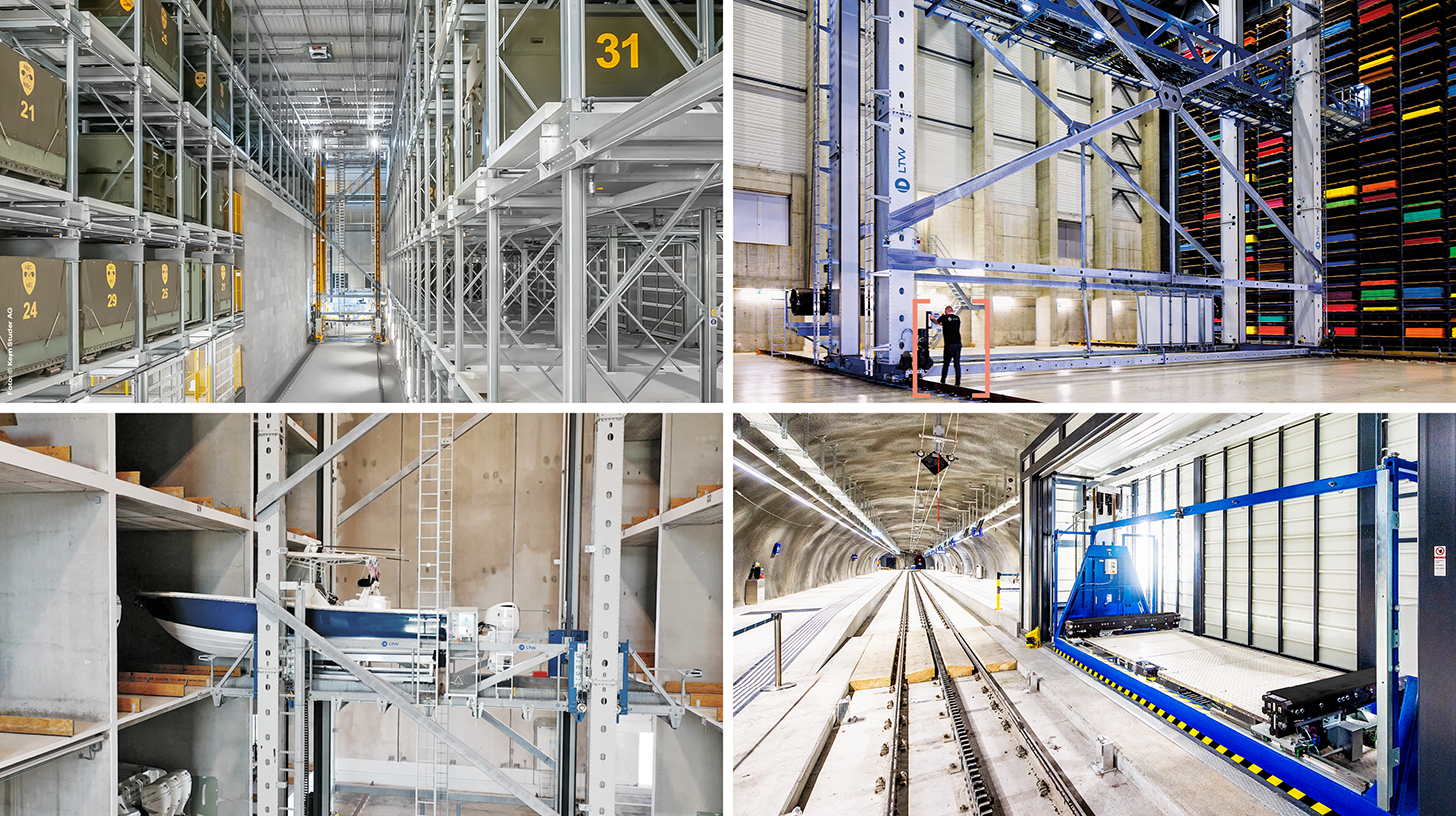
LTW Intralogistics – Engineers of Flow - Image: LTW Intralogistics GmbH
LTW offers its customers not individual components, but integrated complete solutions. Consulting, planning, mechanical and electrotechnical components, control and automation technology, as well as software and service – everything is networked and precisely coordinated.
In-house production of key components is particularly advantageous. This allows for optimal control of quality, supply chains, and interfaces.
LTW stands for reliability, transparency, and collaborative partnership. Loyalty and honesty are firmly anchored in the company's philosophy – a handshake still means something here.
Related to this:
The transformation of high-bay warehouses in the British market
Geography follows infrastructure and electricity
The geographical focus of British high-bay warehouses remains in the so-called Golden Triangle of the Midlands. From there, large parts of the population can be reached within a few hours' drive. The region connects motorways such as the M1, M6, and M42, major rail and freight corridors, and a dense network of logistics service providers, industrial companies, and a workforce. East Midlands and West Midlands therefore remain the prime locations for national distribution centers.
However, the logic behind location decisions is becoming more nuanced. Yorkshire and the Northeast often offer more affordable land and good connections to production sites and ports. The Northwest benefits from the corridors around Manchester and Liverpool. Sites along the M62 connect the East and West Coasts. In the Southwest and South Wales, additional capacity can be advantageous if companies want to reduce long commutes from the Midlands. London and the Southeast remain attractive due to purchasing power and population density, but high land prices and scarcity of land make very large, ground-level facilities difficult to construct.
It is precisely in these areas that height improves land productivity. A high-bay warehouse can utilize expensive land more intensively, but in urban or suburban areas, it more quickly encounters sight lines, neighborhood conflicts, and planning regulations. In densely populated regions, logistics projects also compete with housing developments, data centers, and other commercial uses. Sites with high-capacity power connections are particularly sought after. Since 2024, numerous sites suitable for industry and logistics in Great Britain have been secured by data center developers. This not only removes land from the warehouse market but also intensifies competition for grid capacity.
For investors, grid connection is therefore becoming an early decision criterion. While an automated high-bay warehouse doesn't necessarily require the continuous power output of a data center, it does need reliable electrical capacity for conveyor technology, charging infrastructure, cooling, heating, lighting, and IT. An inexpensive plot of land without a timely connection can be economically less valuable than a more expensive location with a guaranteed energy supply. Site selection, building design, and energy concept must therefore be integrated much earlier in the process.
Capital intensity separates winners and losers
High-bay warehouses are capital-intensive, long-term investments. For standard distribution centers in the Midlands, rough construction costs of approximately £71 to £105 per square foot are estimated for 2025 and 2026. High-end logistics buildings with automation preparation, higher floor load capacity, additional capacity, and sophisticated building technology are more likely to cost between £121 and £167 per square foot. Temperature-controlled buildings can cost approximately £167 to £230 per square foot or more. Depending on the specific requirements, the actual automation, racking technology, software, refrigeration technology, and land costs may be additional.
These ranges demonstrate why the decision cannot be based on a simple comparison of construction costs per square meter. A tall warehouse can provide the same capacity as a significantly larger conventional hall on a smaller footprint. This reduces the required land, roof, and facade areas per storage space. At the same time, requirements for foundations, tolerances, steel, fire protection, assembly, and commissioning increase. Therefore, the correct metric is not the building price, but the net present value per permanently usable unit of performance and capacity.
Financing remains a crucial factor. Rising interest rates increase capital costs and, in effect, extend the amortization period. For specialized buildings, the pool of potential future tenants may be smaller. A high-bay warehouse tailored to a specific flow of goods is more difficult to re-let than a standard warehouse. Banks and real estate investors therefore pay closer attention to creditworthiness, lease term, suitability for alternative uses, and the separation of building and technical risks.
This leads to new contract models. Owners can finance the building shell, while the user bears the cost of the automation. Logistics service providers can secure capacity through long-term customer contracts. Manufacturers and integrators offer more comprehensive service packages, modernization plans, or, in certain segments, leasing-like models. The most economically viable projects are those where the lease agreement, asset lifespan, customer retention, and financing period are aligned. A technically excellent solution can fail if the operating contract ends after five years, but the system has to be depreciated over fifteen years.
Electricity price meets energy efficiency
The UK has high industrial electricity prices by international standards. In the fourth quarter of 2025, manufacturing companies paid an average of around 16.8 pence per kilowatt-hour, excluding the Climate Change Levy. While this was less than a year earlier, it remained at a level that significantly impacts energy-intensive investments. For high-bay warehouses, this has a twofold effect.
On the one hand, storage and retrieval machines, conveyor technology, robotics, computers, and, where applicable, refrigeration systems increase electricity consumption. On the other hand, a modern system can save energy per stored or moved unit. Regenerative drives feed braking energy back into the system, intelligent controls avoid empty runs, LED lighting is reduced in unoccupied areas, and compact freezer volumes minimize heat loss. Therefore, what matters is the consumption per pallet movement, order line, or occupied storage space, and not the total electricity consumption of the site.
Rooftop photovoltaics, battery storage, and flexible operation are gaining in importance. A large logistics warehouse roof offers considerable generation space, while automation and refrigeration provide predictable loads. In deep-freeze warehouses, thermal inertia can be used to partially shift refrigeration generation to off-peak hours without compromising product temperature. Such concepts make the warehouse a more active part of the energy system.
The limiting factor is often not the annual electricity consumption, but rather the connected load and peak load. If refrigeration compressors, charging points, conveyor technology, and other consumers are operating simultaneously, the power demand can increase significantly. Good energy management smooths out these peaks. Future projects will therefore increasingly be planned with load forecasts, local generation facilities, and contractually controllable consumers. Energy expertise thus becomes an integral part of intralogistics expertise.
Technology determines the business model
The high-bay warehouse market comprises several technological sub-markets. Classic pallet AS/RS systems utilize stacker cranes in long, high aisles. They are suitable for high capacity, standardized load carriers, and reliable throughput. Multi-deep systems increase density but reduce direct access to individual pallets and require meticulous inventory management. Pallet shuttles can improve flexibility and performance in deep channels.
Miniload, shuttle, and cube storage systems dominate for cartons, containers, and small parts. They support goods-to-person order picking and a high product variety. Mobile robots and autonomous forklifts offer a more flexible alternative when building structure or volume doesn't justify a permanently installed large-scale system. Many projects employ a hybrid architecture: pallets are stored densely in high-bay racking, containers are provided via a shuttle or cube system, and mobile robots connect work areas.
This modularization is changing the market. Previously, automation was often a monolithic, large-scale project with long planning and commissioning times. Today, operators are trying to expand capacity incrementally and orchestrate individual technologies via software. This doesn't automatically reduce complexity. On the contrary: the more subsystems are involved, the more important interfaces, data quality, and clear responsibility for overall performance become.
Competition is therefore increasingly taking place at the software level. Warehouse management systems track inventory and orders; warehouse control systems manage equipment; warehouse execution systems prioritize movements and balance resources. Above all this lie analytics, simulation, and AI tools. Whoever controls the software influences throughput, scalability, and service. At the same time, operators face a dependency risk if proprietary control systems can only be maintained by the original vendor.
A fragmented supplier market
In the UK, global systems integrators, specialized technology providers, and local engineering firms compete for market share. Internationally established integrators include Dematic, Swisslog, KNAPP, TGW, SSI Schäfer, Vanderlande, Daifuku, WITRON, Mecalux, and Körber. These are joined by providers of specialized systems such as AutoStore, Exotec, Ocado, Geek+, Locus Robotics, and several manufacturers of autonomous vehicles. British integrators and software companies complement this market with local planning, retrofitting, and service.
The market structure is neither completely concentrated nor arbitrarily open. Large, rack-supported pallet high-bay warehouses require references, engineering capacity, financial stability, and long-term service. This limits the pool of serious suppliers. Competition is broader for modular robotics and container solutions. Many technology manufacturers sell through certified integrators, so brand, integration performance, and service contract must be evaluated separately.
For customers, nominal peak performance alone is not the deciding factor. More important are guaranteed throughput under realistic conditions, system availability, response times, spare parts concept, cybersecurity, scalability, and the supplier's financial viability. A cheap offer can become expensive if software maintenance, emergency support, or spare parts are lacking in the long term. Conversely, a technically over-engineered system can tie up capital unnecessarily and overwhelm the organization.
The service component will grow because the installed infrastructure is aging. Modernizing storage and retrieval machines, control systems, and safety components is often more economical than building a completely new facility. Examples from British distribution centers show that cranes and control technology can be replaced gradually while preserving essential building structures. This creates a more stable retrofit market alongside the new equipment market, one that is less dependent on individual large-scale projects.
Planning, fire protection and acceptance
The greatest project risks often lie outside the actual storage technology. Building heights of 30, 40, or almost 50 meters alter the landscape and sightlines. Municipalities assess traffic, noise, lighting, flood risk, biodiversity, and impacts on neighbors. While a smaller footprint is an ecological advantage, it doesn't guarantee approval. Especially with rack-supported silos, the building structure, racking statics, and facade must be planned together from the outset.
Fire protection is complex in tall, densely packed warehouses. Conventional sprinkler systems reach their limits depending on the type of goods, racking geometry, and building height. Deep-freeze facilities sometimes use oxygen-reduced zones to prevent fires from starting. Such systems require controlled access, airtight building envelopes, monitoring, and clear occupational safety regulations. In other projects, tiered sprinkler, smoke extraction, and fire compartmentation systems are used.
The construction phase also presents particular risks. High-precision floors, rails, racks, and conveyor technology must be installed within tight tolerances. Delays in individual trades can postpone the entire commissioning process. This is followed by software testing, load testing, ramp-up, and employee training. A warehouse is not productive upon mechanical completion; it often only reaches its target performance after a systematic start-up phase.
The economic business case therefore requires sufficient reserves. Anyone who only compares the list price of the technology and a theoretical personnel saving underestimates integration, testing, data migration, training, spare parts, and start-up losses. Successful projects calculate life cycle costs, realistic availability, and scenarios for volume deviations. They invest early in simulation and digital models, before steel is ordered and concrete is poured.
Resilience is more than efficiency
High-bay warehouses are often marketed as efficiency projects, but their strategic value increasingly lies in resilience. Automated systems deliver reproducible performance, improve inventory accuracy, and reduce reliance on short-term staffing needs. They can store safety stock in a smaller footprint, thereby making supply chains more robust. For critical industries such as food, pharmaceuticals, spare parts, and manufacturing, this reliability can be more important than maximizing short-term returns.
At the same time, automation creates new dependencies. A mechanical defect, software error, cyberattack, or power outage can paralyze large parts of operations. In a manual warehouse, a breakdown can often be improvised; in a highly integrated system, workarounds are limited. Resilience, therefore, does not arise from maximum automation, but from a balanced system of redundancy, maintenance, emergency operation, and organizational competence.
Cybersecurity is becoming an economic factor. Warehouse management systems are connected to enterprise software, suppliers, and remote maintenance services. The more interconnected they are, the larger the attack surface becomes. Operators must segment access, control updates, test backups, and contractually define responsibilities. These expenditures are not a technical add-on, but rather an integral part of operational security.
Supplier risks must also be included in the assessment. Specialized components can have long lead times, and proprietary systems create lock-in effects. A robust concept defines critical spare parts, local inventory levels, response times, and alternatives. The best system is not the one with the highest theoretical performance, but the one whose performance remains economically viable over many years.
The market until 2035
Until 2035, the outlook is more favorable for continued growth than for market saturation. The narrowly defined UK AS/RS market could more than double in volume within a decade, with average growth of around 7.5 percent. The broader automation market is likely to grow faster, as mobile robotics, software, modernization, and flexible subsystems generate additional demand. However, this dynamic will not be uniform.
In the baseline scenario, automated high-bay warehouses are growing significantly faster than the overall warehouse space. Investments are concentrated in food and frozen food, industrial supply, pharmaceuticals, large retail networks, and established logistics providers. New buildings are more frequently planned to be automation-ready, even if the complete technology is installed later. At the same time, the modernization of existing facilities is gaining importance.
A stronger growth scenario would be conceivable if financing costs fall, grid connections become available more quickly, and companies respond to rising labor costs with accelerated automation. Industrial developments, nearshoring, and stricter energy efficiency requirements could provide additional impetus. In this case, demand for tall, specialized buildings, software integration, and technical services would increase particularly sharply.
The less favorable scenario arises from persistently high interest rates, sluggish consumer spending, uncertain trade policies, and delayed permits. In this scenario, companies would more frequently opt for smaller, modular automation steps. The market would continue to grow, but less through new megaprojects and more through retrofitting, mobile robotics, and targeted bottleneck automation. Even this scenario would not represent a return to purely manual warehousing, but rather a slower and more incremental approach to automation.
The actual investment logic
The crucial question is not whether high-bay warehouses will grow in Great Britain, but which projects are economically viable. Favorable conditions exist for high and stable volumes, standardized load carriers, long-term site commitment, high land or energy costs, and a clear need for continuous operation. Applications with highly fluctuating product ranges, uncertain customer contracts, low utilization, or frequently changing packaging formats remain challenging.
Before investing, operators should therefore not start with a desired technology, but rather with the material flow. Product structure, inventory range, seasonal profiles, peak hours, returns, service levels, and growth scenarios determine the appropriate architecture. Only then should the decision be made between pallet cranes, shuttles, cube storage, mobile robotics, or a combination thereof. Prematurely committing to a single product easily leads to oversizing or a lack of flexibility.
Equally important is evaluating the location over its entire life cycle. Land price, rent, available height, network capacity, transport links, the labor market, and permitting risks must all be considered together. A taller building can save land but increases planning and construction costs. A rural location may be advantageous but result in longer transport routes and a weaker technical labor market. The optimal solution is rarely the one with the lowest individual cost.
For real estate developers, the opportunity lies in buildings that enable automation without being limited to serving only a single user. This requires sufficient height, load-bearing floors, reserves in power and data infrastructure, and a geometry that allows for multiple technical concepts. For logistics providers, the opportunity lies in shared automated capacities and long-term industry platforms. For technology providers, it lies in expanding software, services, and modernization. For investors, it lies in carefully separating real estate, operational, and technical risks.
Britain is no longer just building bigger
The British high-bay warehouse market represents a fundamental shift in warehouse economics. Space alone is no longer a sufficient growth strategy. High labor costs, a scarcity of suitable land, demanding supply chains, and the continued growth of online retail are increasing the value of automated densification. Frozen food logistics and industrial supply already demonstrate the potential extent of this transformation: buildings are becoming taller, systems more integrated, and investments more long-term.
At the same time, caution is advised. High capital commitment, expensive energy, grid bottlenecks, and planning risks are preventing a widespread automation boom. Many smaller or more volatile businesses will continue to operate more economically with conventional halls, semi-automated processes, and mobile robots. The market is therefore not growing as a uniform wave, but rather as a result of targeted investments where volume, location, and process maturity align.
The clear outlook is this: by 2035, the UK will not necessarily need more warehouse space at the same rate, but it will need significantly more technologically advanced storage capacity. The winner is not the tallest building, nor the most complex robotic system. The winners are facilities that combine capacity, energy, labor, and capital more effectively over their entire life cycle than conventional alternatives. Those who view height merely as a structural feature are misunderstanding the market. Height is becoming an economic strategy.
Consulting - Planning - Implementation

Konrad Wolfenstein
I would be happy to serve as your personal advisor.
You can contact me at wolfenstein∂xpert.digital or
Just call me on +49 7348 4088 965 .
Your intralogistics experts

Consulting, planning and implementation of complete solutions for high-bay warehouses and automated storage systems - Image: Xpert.Digital
More information here: