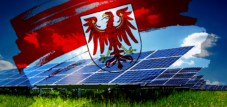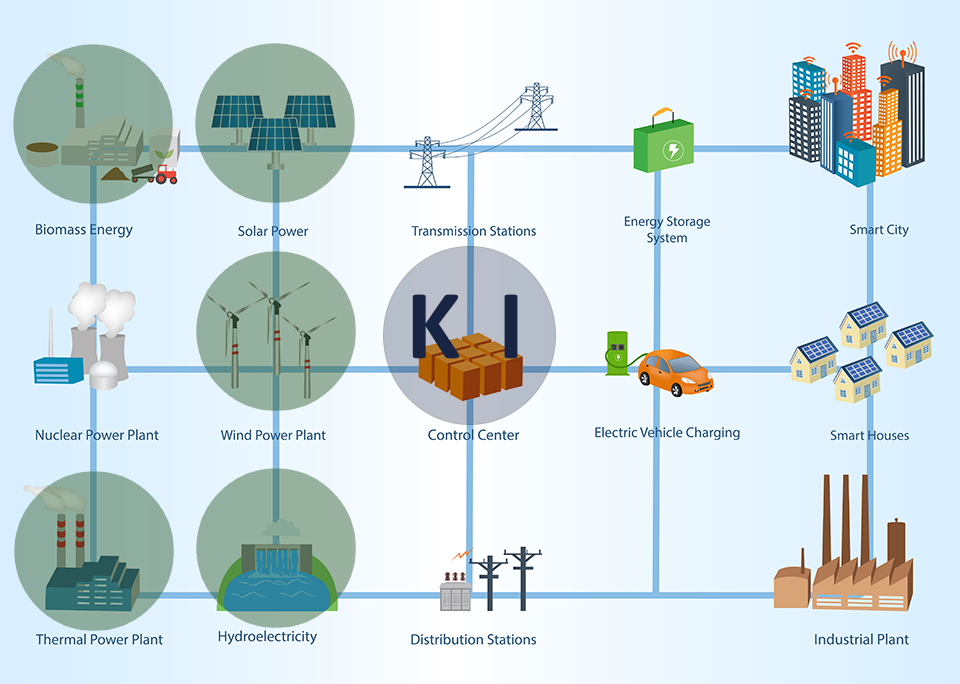

Die Künstliche Intelligenz im Bereich der Erneuerbaren Energien – @shutterstock | monicaodo
33 Jahre ist es bei mir her, als ich mit der noch jungen Disziplin „Künstliche Intelligenz“ (KI) in Berührung kam. Ich beschäftigte mich mit den KI-Programmiersprachen LISP und Prolog. Über das Universitäts-Netzwerk kam ich auch mit dem Internet in Kontakt. Zur gleichen Zeit boomte der Markt für Satellitenfernsehen. Von hier aus entwickelte ich mich im Bereich Intralogistik weiter, bis ich dann bis heute in der Photovoltaik ankam.
Mit dem FAW Ulm (Forschungsinstitut für anwendungsorientierte Wissensverarbeitung) wurde 1987 das erste eigenständige Institut für Künstliche Intelligenz gegründet. Beteiligt waren Unternehmen wie die DaimlerChrysler AG, Jenoptik AG, Hewlett-Packard GmbH, Robert Bosch GmbH und einige weitere mehr. Ich selbst war von 1988 bis 1990 als Research Assistant dabei.
In der Zwischenzeit hat die KI in vielen Bereichen Einzug gehalten, sei es in der Medizin, Juristik, Marketing oder Computerspielen. Am bekanntesten sind die maschinellen Übersetzungen, z.B. mit Google Translate oder Deepl. Bei der Analyse und Prognose von Aktienkursentwicklungen oder das Handling der Informationsflut in den Suchmaschinen.
Die Künstliche Intelligenz ist ein Teilgebiet der Informatik, das sich mit der Automatisierung von Verhaltensmustern beschäftigt, woraus sich Entscheidungshilfen ableiten lassen und es im besten Fall eigenständige, autonome Prozesse weiterführen. Es kommt zumeist dann zum Einsatz, wenn eine übergroße oder ungeordnete, aber unüberschaubare Datenmenge betreut und koordiniert werden muss.
Es ist nicht immer vom Erfolg gekrönt. So musste z.B. Amazon seine KI für die Evaluierung von Bewerbern wieder abschalten, weil das automatische Bewertungssystem Frauen benachteiligte.
Und auch bei den maschinellen Übersetzungen sind noch recht häufig grobe Klötze drinnen, die beim genaueren Hinsehen für Stirnrunzeln oder Schmunzeln sorgen.
Es ist also gar nicht so einfach mit der Künstlichen Intelligenz. Das Problem ist eigentlich nicht die Datenmenge, sondern vielmehr die richtige Zuordnung. Weil Amazon bisher vorwiegend Männer eingestellt hatte, schlussfolgerte die KI ein Leistungsdefizit bei den Frauen. Tatsächlich aber wurde weniger berücksichtigt, dass der geringe Frauenanteil in männerdominierten Berufen soziologische Ursachen hat.
Das grundlegende Problem künstlicher Intelligenzen: Die Programmierung der Algorithmen und die Ausgangsdaten sind nur so gut wie die subjektive Arbeit der Entwickler selbst, die es entwickeln und zur Verfügung stellen. Defizite in der Objektivität aufgrund individueller Emotionen und Absichten, sowie Deutungs- und Wahrnehmungsfehler der Entwickler werden von der KI übernommen, sie lernt mit ihnen und baut sie weiter aus. Kommt dann noch mangelndes Wissen über Zusammenhänge von Dingen und Prozessen (Schlüsselqualifikationen) hinzu, schließt sich der Kreis.
Mehr dazu: Künstliche Intelligenz mal einfach
Die KI braucht also viel Entwicklungszeit und Mut zu Rückschlägen, bis sich hieraus ein effizientes System entwickeln kann.
Headlines wie „Künstliche Intelligenz (KI) als Treiber der Energiewende“ oder „Wie die Logistik von der Künstlicher Intelligenz profitiert“ sind mediale Gassenhauer, die nicht im Ansatz wiedergeben, was für Entwicklung und Aufwand betrieben werden muss und dass am Anfang erst einmal die Kosten stehen, bevor die finanzielle Rentabilität sichtbar wird.
Die Künstliche Intelligenz kommt in der Energiewirtschaft bisher vor allem bei Monitoring- oder Prognoseaufgaben zum Einsatz.
Smart Grid – Intelligenter Strom
Mit steigendem Anteil von Strom aus erneuerbaren Energien wird aber deutlich, dass die KI künftig auch in großem Maßstab die Prozesse des Energiesystems steuern wird.
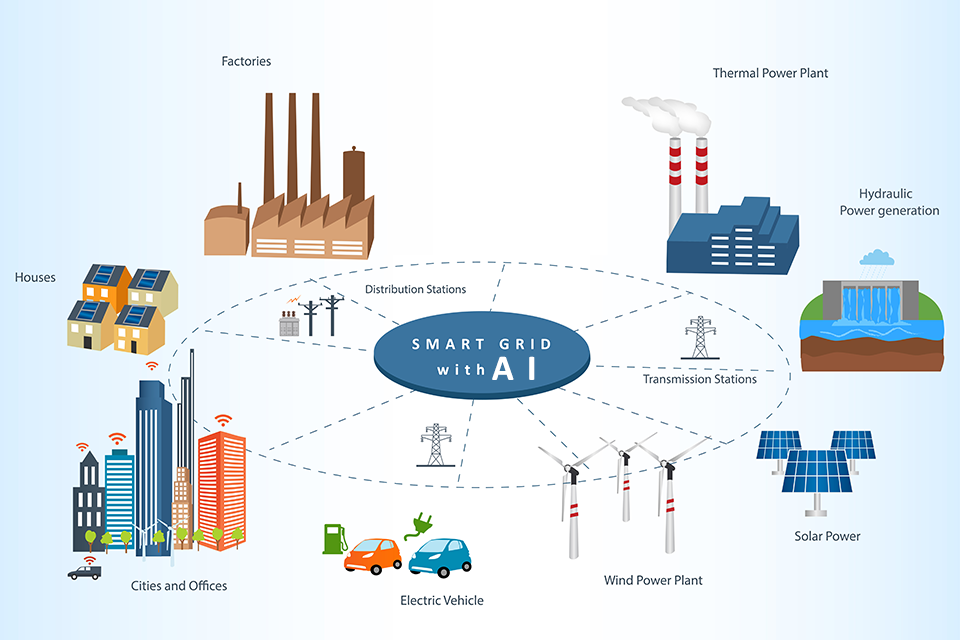
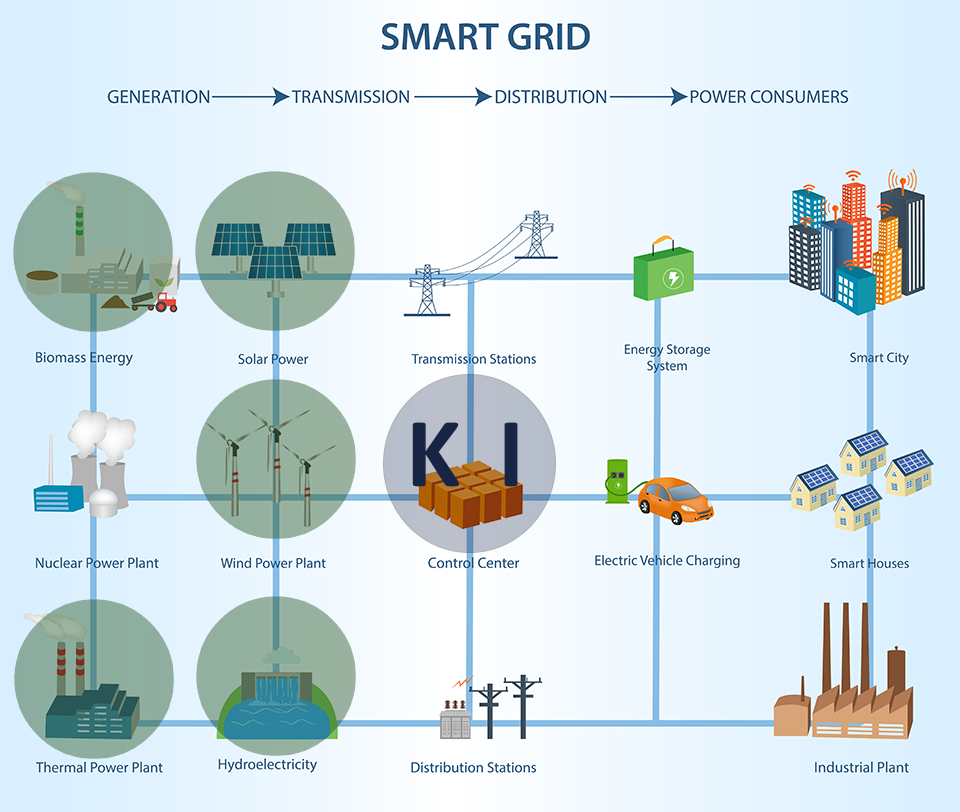
Artificial Intelligence (AI) / Künstliche Intelligenz (KI) – Smart Grid – Intelligentes Stromnetz – @shutterstock | monicaodo
Während bislang Stromnetze mit zentraler Stromerzeugung dominieren, geht der Trend hin zu dezentralen Erzeugungsanlagen. So bei der Erzeugung aus erneuerbaren Quellen wie bei Photovoltaikanlagen, solarthermischen Kraftwerken, Windkraftanlagen und Biogasanlagen. Dies führt zu einer wesentlich komplexeren Struktur, primär im Bereich der Lastregelung, der Spannungshaltung im Verteilnetz und zur Aufrechterhaltung der Netzstabilität. Kleinere, dezentrale Erzeugeranlagen speisen im Gegensatz zu mittleren bis größeren Kraftwerken auch direkt in die unteren Spannungsebenen wie das Niederspannungsnetz oder das Mittelspannungsnetz ein.
Aufbau eines intelligenten Stromnetzes
Ein intelligentes Stromnetz integriert sämtliche Akteure durch das Zusammenspiel von Erzeugung, Speicherung, Netzmanagement und Verbrauch in ein Gesamtsystem. Kraftwerke (incl. Speicher) werden bereits heute so gesteuert, dass stets genauso so viel elektrische Energie produziert wie verbraucht wird. Intelligente Stromnetze beziehen in diese Steuerung die Verbraucher sowie dezentrale kleine Energielieferanten und -speicher mit ein, sodass einerseits ein zeitlich und räumlich ausgeglichener Verbrauch (Smart Power/Intelligenter Stromverbrauch) entsteht und andererseits nicht-disponible Erzeugungsanlage (z. B. Windenergie- und PV-Anlagen) und Verbraucher (z. B. Beleuchtung) besser integriert werden können.
Durch den größeren Anteil an erneuerbaren Energien wird es wichtiger, die Schwankungen der Energieerzeugung an die Schwankungen des Energieverbrauchs anzugleichen. Neben der Möglichkeit der Speicherung von elektrischer Energie mittels Energiespeichern bzw. Speicherkraftwerken, der bedarfsgerechten Stromerzeugung z. B. durch Wasserkraftwerke oder Bioenergie, dem Ausbau von Stromnetzen zum schnellen Verteilen über eine große Fläche, gibt es auch die Möglichkeit, den Stromverbrauch dem Stromangebot anzupassen.
„Stromerzeugung aus Solar- und Windenergieanlagen macht das Versorgungssystem deutlich kleinteiliger und wetterabhängiger als der Betrieb von konventionellen Kraftwerken. Zudem muss sich der Verbrauch stärker nach dem Stromangebot richten. Die dazu nötige Flexibilität lässt sich mit der bisherigen Infrastruktur noch nicht bewältigen. Ein dezentrales System kann nur über digitale Prozesse in Echtzeit und automatisierte Entscheidungen funktionieren“, erläutert Prof. Dr. Clemens Hoffmann, Leiter des Fraunhofer IEE. Hoffmann sieht in der Digitalisierung die Basis für die nächsten Schritte der Energiewende: „Die Abstimmungs- und Entscheidungsprozesse einer dezentralen erneuerbaren Energieversorgung sind äußerst komplex. Erst durch Künstliche Intelligenz wird es möglich, unterschiedliche Systeme wie Strom- und Wärmeversorgung sowie die Mobilität über automatisierte Entscheidungen im großen Maßstab zu verbinden. Mit dem Aufbau eines Ökosystems für Kognitive Energiesysteme bringen wir die Anwendungen von KI im Energiesektor voran.“
Ein dezentrales Energiesystem braucht KI
Konkreten Bedarf für KI gibt es bereits in unterschiedlichen Bereichen der Energiewirtschaft. So geht es im automatischen Energiehandel um Systeme, die selbständig Handelsstrategien identifizieren und Käufe oder Verkäufe auslösen. Photovoltaik- und Windkraftanlagen sowie Ladestationen oder auch Elektrolyseure können mit KI ihren Betrieb optimieren und dadurch Wartungen vermeiden und die Lebensdauer erhöhen. Im Netzbereich wird die Technologie genutzt, eine Vielzahl von Informationen auszuwerten, kritische Situationen zu erkennen und deren Lösung zu unterstützen.
Das Fraunhofer IEE beschäftigt sich bereits seit 15 Jahren mit Künstlicher Intelligenz zur Vorhersage wetterabhängiger Stromerzeugung aus Sonnen-, Wind- und Bioenergie. Auch ein automatisches Handelssystem für die Strombörse EPEX Spot ist in Kassel in der Entwicklung.
Forschung für KI in der Energiewirtschaft
„Künstliche Intelligenz ist eine Schlüsseltechnologie für die weitere Entwicklung der Energiewende: Die Abkehr von der zentral organisierten und auf fossilen Energieträgern basierenden Kraftwerkswirtschaft hin zu einem Energiesystem, das auf erneuerbaren Quellen beruht, ist ein sehr komplexer Prozess, der sich nur durch intelligente Steuerung beherrschen lässt“, so Hessens Wissenschaftsministerin Angela Dorn. „Das Kompetenzzentrum für Kognitive Energiesysteme gibt Wissenschaftlerinnen und Wissenschaftlern Raum für neue Ideen und Forschungsansätze zu Innovationen in der Energiewirtschaft. Ich freue mich, dass wir den Aufbau unterstützen. Nun kommt es darauf an, die Expertise von Forscherinnen und Forschern mit starken Partnern aus der Wirtschaft zu verbinden.“
Daher entsteht in Kassel ein neues Kompetenzzentrum für Kognitive Energiesysteme. Das Forschungsprojekt zur künstlichen Intelligenz im Energiesystem sucht Partner aus Wissenschaft und Wirtschaft und sieht für den Wirtschafts- und Forschungsstandort Deutschland gute Voraussetzungen, in diesem Thema eine globale Innovationsführerschaft zu erreichen. Deshalb fördert das Land Hessen den Aufbau des vom Fraunhofer-Institut für Energiewirtschaft und Energiesystemtechnik IEE getragenen neuen Kompetenzzentrums.
Diese Einsatzfelder von KI erforscht das neue Kompetenzzentrum Kognitive Energiesysteme in Kassel, dessen Aufbau von der Hessischen Landesregierung in den Jahren 2020 bis 2022 mit insgesamt 5,8 Mio. Euro gefördert wird.
Das K-ES
Das Kompetenzzentrum Kognitive Energiesystem (K-ES) wird seit Mitte 2020 durch das Fraunhofer IEE zur Erforschung der Themen Kognitive Energiewirtschaft, Kognitive Energienetze und Kognitive Energiesystemtechnik aufgebaut. Der Entwicklungsprozess ist über zehn Jahre angelegt. Das K-ES soll ein nationales und internationales Zentrum Künstlicher Intelligenz in Forschung und Lehre werden.
Das Kompetenzzentrum Kognitive Energiesysteme (K-ES) betrachtet die Aufgaben im Energiesystem aus der KI-Perspektive und entwickelt sie in den drei Bereichen Kognitive Energiewirtschaft, Kognitive Energienetze und Kognitive Energiesystemtechnik weiter. „Ein kognitives Energiesystem bestimmt seinen Zustand anhand verfügbarer Information selbstständig und lernt, vorgegebene Ziele zu erreichen. Künstliche Intelligenz steht der menschlichen Intelligenz nicht gegenüber, sondern mit ihr in einem ständigen Austausch und unterstützt sie. Mit der Weiterentwicklung der Technologie werden sich beide Seiten verändern“, erläutert IEE-Projektleiter André Baier.
Dabei kann die Energiewirtschaft auch auf Erkenntnissen anderer Branchen aufbauen. KI verändert bereits nachhaltig die Automobilindustrie, den Einzelhandel, den Versicherungs- und Finanzsektor. Für die Energiewende mit erneuerbaren Energien und Sektorenkopplung sind die wichtigsten Digitalisierungsbereiche intelligente Erzeuger und Verbraucher, virtuelle Kraftwerke, Smart-Grid-Technologien und die Echtzeitenergiewirtschaft.
Konzepte und Anwendungen für die Wirtschaft
Das Konzept für den Aufbau des K-ES wurde vom Fraunhofer IEE entwickelt. Die Initiative geht bereits auf eine Vereinbarung aus dem Koalitionsvertrag der Hessischen Landesregierung zurück. Nun hat die Aufbauphase begonnen. Dabei geht es primär darum, ein Ökosystem für Innovationen zu schaffen und eine Community von Experten zu bilden. Das neue Kompetenzzentrum wird Teil des gerade in Bau befindlichen Campus des Fraunhofer IEE in Kassel und ergänzt das Forschungsspektrum für die Transformation der Energiesysteme.
Im ersten Schritt werden Räumlichkeiten und die IT-Infrastruktur mit einem Cloudsystem eingerichtet. Im Anschluss entsteht eine digitale Plattform, über die sich Partner aus Wirtschaft und Forschung austauschen können. Der Schwerpunkt der Startphase liegt dabei auf der Rekrutierung von Wissenschaftlern und dem Aufbau von Kompetenzen. „Unser Anliegen ist es, Wissenschaftler zu verbinden, die ein gemeinsames Ziel vor Augen haben, unabhängig davon, an welchem Ort der Welt die Experten zuhause sind“, so Baier.
Bis zur geplanten offiziellen Gründung des Kompetenzzentrums steht zudem die Akquise von Partnern und Anwendungsprojekten aus der Wirtschaft im Vordergrund. Denn eine enge Verbindung mit der Energiebranche ist Teil des Konzepts: Zu den Dienstleistungen des K-ES für Energieunternehmen zählen Beratung und Konzeptionsstudien über Prototypen bis hin zu schlüsselfertigen Systemen. „Wir freuen uns über Bewerbungen von Forschern und Unternehmen gleichermaßen, denn so ein Ökosystem lebt von der Vernetzung zwischen Theorie und Praxis“, betont Hoffmann.
Das Ziel: Eine Community von internationalem Renommee in Deutschland
In den nächsten zehn Jahren ist geplant, dass sich am K-ES rund 100 Experten mit den Disziplinen Data Science, Advances in Machine Learning, Recommender Systems und Digital Innovation Management beschäftigen. Derzeit sind 15 Mitarbeiter am Fraunhofer IEE in diesen Themenfeldern tätig. Anspruch der neuen Einrichtung ist, eine der führenden Communities für KI in der Energiewirtschaft in Deutschland zu werden.
Um der hohen Internationalität der KI-Forschung Rechnung zu tragen, bietet das Kompetenzzentrum auch Gastwissenschaftlern aus der ganzen Welt die Möglichkeit der Mitwirkung. „Durch die spezielle Trainings-Infrastruktur, eine entsprechende Hard- und Software sowie einen umfassenden Modell- und Datenbestand können wir effizient und standortübergreifend KI-Forschung für das Energiesystem betreiben“, erläutert der wissenschaftliche Leiter des K-ES, Christoph Scholz, die vorhandenen Möglichkeiten.
Weltweit wird intensiv an der Entwicklung von KI gearbeitet. Deutschland hat bisher deutlich weniger für eine entsprechende Forschung ausgegeben als die Wettbewerber USA und China. Im Zuge des Corona-Zukunftspakets der Bundesregierung sollen nun 5 Mrd. Euro bis 2025 in KI investiert werden. „Bei KI im Energiesystem hat Deutschland als Wirtschafts- und Forschungsstandort gute Voraussetzungen, eine globale Innovationsführerschaft zu erreichen. Dazu ist es wichtig, dass alle Stakeholder das Thema gemeinsam voranbringen“, so Hoffmann.
Kognitive Systeme
Ein kognitives System ist ein digitales System mit Schnittstellen zwischen der digitalen Welt und der Umwelt, das Dinge wahrnehmen und verstehen, sowie daraus Schlüsse ziehen und lernen kann. Kognitive Systeme sind in der Lage, selbstständig Lösungen für menschliche Aufgabenstellungen zu erarbeiten. Sie können mit anderen digitalen Systemen interagieren und kooperieren, Kontexte interpretieren und sind anpassungsfähig.
Kognitive Systeme werden in zunehmend vielen Bereichen eingesetzt und stellen beispielsweise die grundlegende Technologie für selbstfahrende Kraftfahrzeuge, intelligente persönliche Assistenten, die Industrie 4.0 und das Internet der Dinge dar. Ein typisches Merkmal solcher Systeme ist, dass sie in kurzer Zeit große Datenmengen verarbeiten können und in ein übergeordnetes System eingebettet sind (System von Systemen). In diese Technologie wurden bis 2020 weltweit mehrere zehn Milliarden Euro investiert.
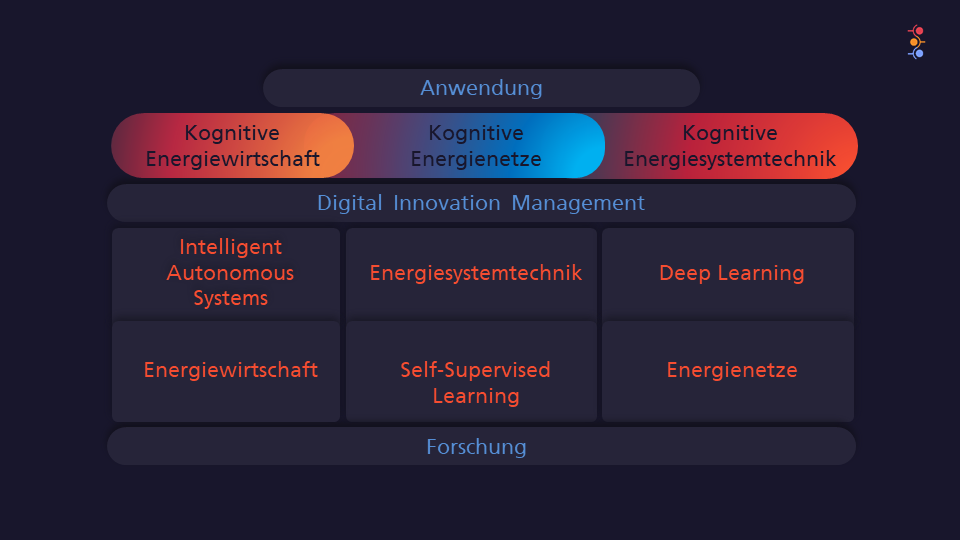
© Fraunhofer IEE – Anwendung – Kognitive Systeme
Ein Kognitives System kann seinen eigenen Zustand und den seiner Assets anhand verfügbarer Informationen selbstständig bestimmen und durch die Fähigkeit zur Adaption lernen, vorgegebene Ziele selbstständig zu erreichen. Kognitive Energiesysteme sind eine Schlüsseltechnologie für die Energiewende. Anwendungen in der Stromwirtschaft finden sich im Bereich der Netzführung und dem Management von Erzeugung und Verbrauch.

© Fraunhofer IEE – Energie-Avatar – Kognitive Systeme
Innerhalb des Ökosystems für Kognitive Energiesysteme wird für die verschiedenen Marktrollen der Zugang zu KI erleichtert. Die Aufgaben von Anlagen-, Messstellenbetreibern, Bilanzkreisverantwortlichen und Direktvermarktern werden so weit automatisiert, dass sie selbstständig ablaufen. Das Modell des „Energie-Avatar“ (siehe oben) veranschaulicht, wie einfach ein „Häuslebauer“ mit seiner Solaranlage am Energiemarkt teilnehmen kann, wenn alle Prozesse automatisiert sind. Der Energie-Avatar wird derzeit in Zusammenarbeit der Fraunhofer-Institute IEE und IOSB-AST entwickelt.
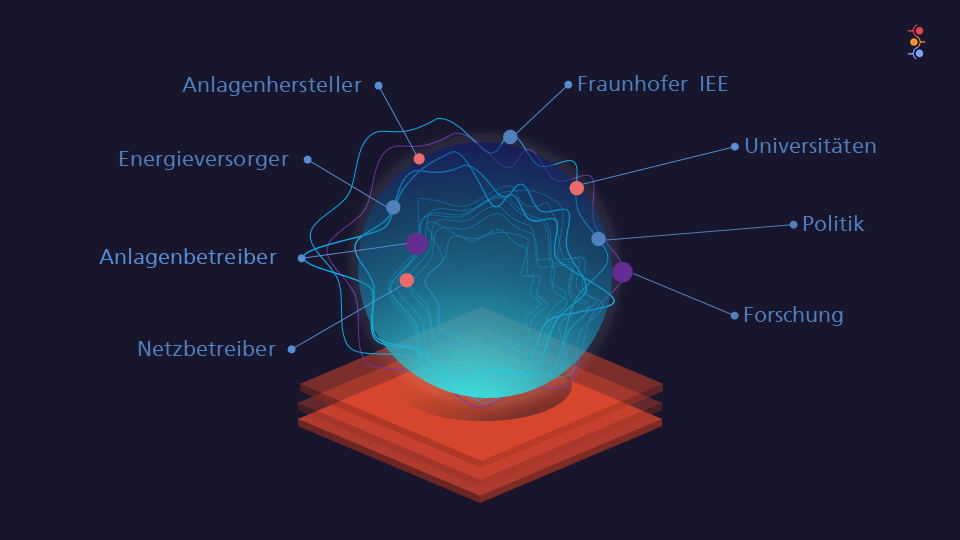
© Fraunhofer IEE – Ökosystem – Kognitive Systeme
Eine enge Verbindung mit der Energiebranche ist Teil des Konzepts: Zu den Dienstleistungen des K-ES für Energieunternehmen zählen Beratung und Konzeptionsstudien über Prototypen bis hin zu schlüsselfertigen Systemen. Das Ökosystem lebt von der Vernetzung zwischen Theorie und Praxis.
Automation und Autonomisierung. Lesen Sie dazu hier mehr: „CO2 Neutralität – Von Amazon lernen“
► Kontaktieren Sie mich oder diskutieren Sie mit mir auf LinkedIn
Für die Zukunft wird entscheidend sein, wie wir die Infrastruktur unserer Schlüsselindustrien sichern!
Hierbei bekommen drei Bereiche einer besonderen Bedeutung zu:
- Digital Intelligence (Digitale Transformation, Internet Access, Industrie 4.0 und Internet of Things)
- Autonome Stromversorgung (CO2 Neutralität, Planungssicherheit, Sicherheit für die Umwelt)
- Intralogistik/Logistik (Voll-Automatisierung, Mobilität von Gütern und Menschen)
Xpert.Digital liefert Ihnen hier aus der Smart AUDA Reihe
- Autonomisierung der Energieversorgung
- Urbanisierung
- Digitale Transformation
- Automatisierung der Prozesse
immer wieder neue Informationen, die regelmäßig aktualisiert werden.


In Kontakt bleiben