Website icon Xpert.Digital

Europe's way to technological sovereignty through AI-based automation: An analysis of the Kiro 2024 recommendations

Europe's way to technological sovereignty through AI-based automation: An analysis of the Kiro 2024 recommendations

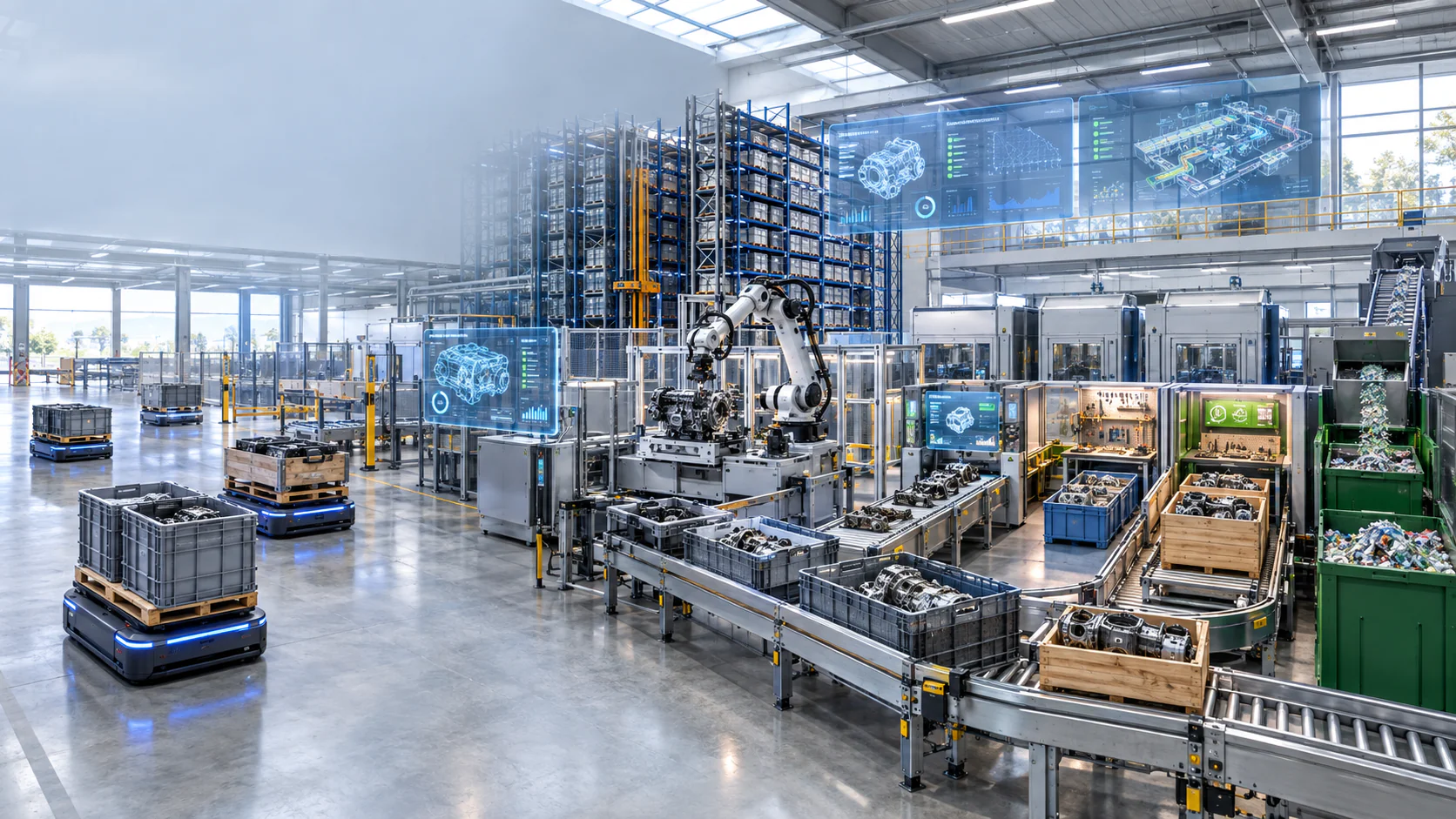
Europe's path to technological sovereignty through AI-based automation: An analysis of the KIRO 2024 recommendations – Image: Xpert.Digital

KIRO Strategy: Europe's Path to Leadership in AI and Robotics

KIRO Strategy: Europe's Path to Leadership in AI and Robotics

The KIRO (Artificial Intelligence and Robotics) recommendations, published in June 2024, mark a turning point in European technology policy. Emerging from a high-level conference under the auspices of the German Federal Ministry of Education and Research (BMBF) and the German Federal Ministry for Economic Affairs and Climate Action (BMWK), these recommendations establish a comprehensive framework aimed at sustainably securing Europe's competitiveness in the global race for artificial intelligence and robotics. The 127-page strategy paper is more than just a collection of proposals; it is a detailed roadmap that links industrial policy initiatives with regulatory innovations. The overarching goal is ambitious but essential: to significantly reduce the technological gap with the leading nations in this field, especially China and the United States, by 2030.

Strategic pillars of the KIRO 2024 recommendations

The KIRO recommendations are divided into various strategic fields of action that are designed to be interconnected and mutually reinforcing. These fields of action form the foundation for a coherent and effective European AI and robotics strategy.

1. Establishment of a pan-European network of AI and robotics clusters

A key proposal of KIRO 2024 is the creation of seven cross-industry Clusters of Excellence by 2026. These clusters are conceived as technological hubs intended to bridge the gap between Central and Eastern Europe. However, their role extends far beyond mere networking. They are to become dynamic innovation centers that:

Concentrate and share research infrastructures

The plan envisions the establishment of a total of 20 AI test centers. These centers will not be isolated laboratories, but rather replicate realistic production environments. Companies, particularly small and medium-sized enterprises (SMEs), will have the opportunity to test AI and robotics technologies under real-world conditions without having to make large initial investments. These test centers will be equipped with state-of-the-art hardware and software and will pool expert knowledge to support companies in implementing and optimizing AI solutions. The concentration of resources and expertise in these centers is intended to unlock synergies and accelerate knowledge transfer.

Actively promote SME integration

A crucial aspect of the cluster strategy is the targeted integration of SMEs. The recommendations envision a "plug-and-play" model for AI modules into existing automation solutions. This model aims to make it easier for SMEs to integrate AI technologies into their existing production processes without having to undertake complex and costly new developments. Standardized interfaces and modular architectures are intended to make AI solutions more accessible and adaptable. In addition to technical solutions, consulting and support services are also planned for SMEs to assist them in identifying use cases, selecting suitable technologies, and training their employees.

Setting and promoting European standards

The KIRO recommendations emphasize the need to develop European standards for AI-powered robotics systems. A European quality label is to be established by the third quarter of 2025, certifying the quality, safety, and ethical aspects of AI robotics products and systems. This label is intended not only to serve as a quality mark for European products but also as a basis for harmonized European regulation in this area. The development of standards is crucial to ensuring interoperability, reducing barriers to market access, and strengthening consumer and business trust in AI technologies. European standardization should also contribute to shaping global standards and anchoring European values ​​and norms in the development and application of AI and robotics technologies worldwide.

A concrete example of an existing initiative pointing in this direction is the “RoX” ecosystem (Robotics X.0), launched in 2024. This network already connects over 300 industry partners and 47 research institutions, demonstrating the potential of cross-sector collaboration and knowledge exchange in the field of robotics and automation. RoX serves as a blueprint and inspiration for the development of the planned KIRO clusters.

2. Accelerating technology transfer from research to application

The KIRO recommendations analyze the speed of technology transfer in Europe and find that it takes an average of 5.2 years for AI and robotics innovations to reach market maturity in Europe. In comparison, this process takes only 2.8 years in China. This discrepancy jeopardizes the competitiveness of European companies. To accelerate technology transfer, the following measures are proposed:

Patent law reform in favor of AI innovations

The recommendations call for the introduction of a “fast-track” patent system specifically for AI-based automation solutions. This accelerated process is intended to enable innovators to protect their inventions more quickly, thereby shortening the innovation cycle. The complexity of AI patents also necessitates specialized expertise within patent offices. Therefore, it is proposed that dedicated AI expert teams be established within patent offices, possessing the necessary expertise to examine AI patent applications efficiently and appropriately. A reform of patent law should also incentivize open-source innovation and promote the dissemination of AI technologies without neglecting the protection of intellectual property.

Tax incentives for research collaborations

To intensify collaboration between SMEs and research institutions, a research premium of 150% for SME collaborations is proposed. This tax incentive aims to make it more attractive for SMEs to invest in research and development in the fields of AI and robotics and to benefit from the expertise of research institutions. The research premium is intended to cover not only direct research costs but also indirect costs such as personnel costs and investments in research infrastructure. The funding is designed to be unbureaucratic and easily accessible to avoid burdening SMEs with administrative hurdles. In the long term, this measure is expected to lead to stronger networking between science and industry and strengthen Europe's position as a hub for innovation.

Venture capital offensive for AI and robotics

Access to venture capital is crucial for startups and innovative companies in the fields of AI and robotics. The KIRO recommendations aim to mobilize €20 billion in private venture capital by 2027. To achieve this goal, government guarantees for venture capital funds are proposed. These guarantees are intended to reduce the risk for private investors and encourage them to invest in AI and robotics startups. The venture capital initiative will not only focus on early-stage financing but also include growth financing for companies in later stages of development. In addition to financial incentives, measures to improve the investment climate in Europe are also planned, such as simplifying company formation and reducing bureaucratic hurdles for investors.

A positive example of successful technology transfer is the German transfer center ZEN-MRI. Since its founding in 2023, ZEN-MRI has successfully guided 17 AI and robotics startups to market maturity. This center serves as a model for other initiatives and demonstrates how targeted support and expertise can pave the way from research to commercial application.

Synergies with the EU AI Act and existing initiatives

The KIRO 2024 recommendations are closely aligned with the risk-based approach of the EU AI Regulation (Articles 5-9 AI Regulation). They adopt this approach and extend it with specific criteria for the manufacturing sector. For example, a mandatory AI audit every 24 months is required for industrial robots in risk class III. These audits are intended not only to verify the technical safety of the systems but also to consider ethical aspects, particularly with regard to autonomous decision-making algorithms. The KIRO recommendations thus contribute to addressing the ethical and societal implications of AI technologies in manufacturing and to ensuring that the use of AI is responsible and in line with European values.

At the same time, the recommendations integrate key elements of the VDMA Robotics Action Plan. The VDMA (German Engineering Federation) has already developed a comprehensive strategy for robotics in Germany. The KIRO recommendations adopt this strategy and extend it to the European level. Specific objectives adopted from the VDMA Action Plan and reinforced in the KIRO recommendations include:

Increased robot density

The goal is to increase robot density from 219 to 350 robots per 10,000 employees in the manufacturing industry by 2030. Robot density is considered an important indicator of the level of automation and the competitiveness of an economy. Increasing robot density is intended to boost productivity, reduce production costs, and improve working conditions. The KIRO recommendations outline various measures to achieve this goal, including investment incentives, technology consulting, and training programs.

Reduction of energy costs in production

The recommendations propose subsidizing AI-optimized production facilities at €0.08/kWh. Energy efficiency is a key issue for European industry, for both environmental and economic reasons. AI technologies offer significant potential for increasing energy efficiency in production processes. Intelligent control and optimization can reduce energy consumption and conserve resources. Subsidizing AI-optimized facilities is intended to incentivize companies to invest in energy-efficient technologies and thus contribute to achieving European climate targets.

Doubling of public research funding

The KIRO recommendations call for a doubling of public funding for AI and robotics research to €500 million per year from 2026 onwards. A strong research base is the foundation for technological innovation and competitiveness. The increased funding should enable the advancement of basic and applied research in AI and robotics, the development of new technologies, and the training of highly skilled professionals. Research funding should encompass both public research institutions and private companies and focus on strategic priority topics of particular importance to European industry.

Technological priorities and use cases

The KIRO recommendations identify specific technological priorities and use cases that are of central importance for the future development of AI-based automation in Europe.

1. Autonomous AI agents in production

Self-learning robot controllers are identified as a key technology for the industry of the future. The recommendations propose targeted funding measures in the following areas:

Generative AI for motion planning

The use of Large Language Models (LLMs) for real-time adaptation of robot paths should be promoted. Generative AI models have the potential to revolutionize robot programming. Instead of laboriously programming robot movements manually, generative AI models can generate robot paths in real time and adapt them to changing environmental conditions. This enables more flexible and efficient production processes, especially in environments with high variability and small batch sizes.

Multi-agent systems

The networking of at least five robots with decentralized decision logic is defined as a target. In complex production environments, the collaboration of multiple robots is often necessary. Multi-agent systems enable robots to communicate autonomously with each other, coordinate tasks, and make decisions decentrally. This leads to more robust and flexible production systems that can dynamically adapt to changing requirements. The KIRO recommendations call for the promotion of research and development in this area to improve the performance and reliability of multi-agent systems in production.

Embodied AI

Hardware-software co-design for energy-efficient AI chips in robotics controllers is highlighted as a key area of ​​innovation. AI applications in robotics require significant computing power. Conventional computer architectures are often inefficient and energy-intensive for real-time applications in robotics. Embodied AI takes a holistic approach, developing hardware and software together from the outset to create energy-efficient and high-performance AI chips for robotics controllers. This is particularly important for mobile robots and applications in resource-constrained environments.

A pilot project at KUKA, a leading robot manufacturer, has already demonstrated that AI-generated program code can achieve cycle time reductions of up to 37%. This example illustrates the enormous potential of autonomous AI agents for increasing efficiency and flexibility in production.

2. Human-Machine Collaboration 4.0

Specific measures to promote human-machine collaboration 4.0 are proposed for assistive robotics in care and assembly:

Emotional AI interfaces

The goal is to integrate affective computing into 30% of all service robots by 2027. Service robots that work in direct interaction with humans must be able to recognize human emotions and respond appropriately. Affective computing focuses on developing AI systems that can recognize, interpret, and express emotions. Integrating emotional AI into service robots aims to increase public acceptance and trust in these technologies and make human-machine interaction more intuitive and pleasant.

Adaptive security systems

ML-based collision avoidance with a reaction time of <50 ms is defined as a technological requirement. In human-robot collaboration, safety is of paramount importance. Adaptive safety systems based on machine learning can analyze the environment in real time and dynamically adjust the robot's behavior to avoid collisions. A reaction time of less than 50 milliseconds is crucial to ensuring safety in dynamic work environments where humans and robots share the workspace.

Skill transfer platforms

AR-supported robot training by skilled workers should be promoted. Programming and operating robots requires specialized expertise. AR-supported training platforms can enable skilled workers to train robots intuitively and efficiently without requiring extensive programming knowledge. Augmented Reality (AR) overlays virtual elements onto the real world to support the learning process and illustrate complex concepts. Skill transfer platforms help address the shortage of skilled workers in the field of robotics and increase the acceptance of robots in the workplace.

The BMBF-funded project “RA3” has already demonstrated that the use of skill transfer platforms can reduce robot training times by up to 63%. This result underscores the potential of Human-Machine Collaboration 4.0 to increase efficiency and flexibility in various application areas.

Economic and educational policy implications

The KIRO recommendations have far-reaching economic and educational policy implications that extend beyond the purely technological sphere.

1. Labor market transformation and skills development

The recommendations forecast a net increase of 1.2 million jobs by 2030, which, however, is closely linked to comprehensive training measures. To successfully manage the labor market transformation, the following measures are proposed:

AI certification requirement for technical professions

For 75% of technical professions, mandatory AI certification is to be introduced by 2028. The rapid spread of AI technologies requires new skills and qualifications in many professional fields. Mandatory AI certification is intended to ensure that professionals possess the necessary knowledge and skills to work with AI systems and utilize the potential of AI technologies in their respective fields. The certification will be modular and cover different competency levels to meet the diverse requirements of various professions.

Modular continuing education with micro-degrees

The introduction of 40 “micro-degrees” in AI and robotics at vocational schools is planned. Modular continuing education programs with micro-degrees will allow for flexible and needs-based professional development in specific areas of AI and robotics. These short, focused courses are ideal for working professionals who want to expand their skills quickly and efficiently without having to complete a lengthy university degree. The micro-degrees will be developed in close collaboration with industry to ensure that the content meets current and future job market demands.

Ethical AI certification for engineering degree programs

Mandatory curricula for ethical AI certification are planned for engineering degree programs starting in the winter semester of 2025/26. Engineers play a key role in the development and implementation of AI technologies. It is therefore crucial that they not only possess technical expertise but also a strong ethical awareness and the ability to reflect on the societal impact of their work. Mandatory curricula for ethical AI certification are intended to ensure that future engineers are able to develop and use AI technologies responsibly and in accordance with ethical principles.

2. Industrial value chains and productivity

Model calculations show that the implementation of the KIRO recommendations could have significant positive effects on industrial value creation in Europe by 2030:

Productivity increase in the automotive industry

A productivity increase of 14% is expected in the automotive industry through AI-optimized logistics robots. The automotive industry is a key economic sector in Europe, heavily influenced by automation and robotics. AI-optimized logistics robots have the potential to significantly improve the efficiency and flexibility of production processes in the automotive industry. Through intelligent control and optimization, material flows can be optimized, lead times shortened, and storage costs reduced.

Increasing energy efficiency in manufacturing

A 23% reduction in electricity consumption is projected for AI-controlled assembly lines. Energy efficiency is a key issue for the manufacturing industry. AI-controlled assembly lines can optimize energy consumption by intelligently managing production processes and avoiding unnecessary energy losses. This not only contributes to lower operating costs but also to reducing the industry's environmental impact.

Resource savings through predictive AI controls

Predictive AI controls are expected to reduce material waste by 18%. These controls can monitor production processes in real time and detect anomalies or potential errors early on. This reduces material waste, improves product quality, and lowers scrap rates. Resource conservation is not only relevant from an economic perspective, but also with regard to sustainability and the responsible use of natural resources.

Challenges and critical success factors

Despite the ambitious goal of increasing Europe's market share in industrial robots from 32% to 45% by 2030, the KIRO recommendations identify four key challenges that are crucial for the success of the strategy:

1. Regulatory fragmentation

Differing AI certification procedures in 14 EU member states hinder market access and the scaling of AI solutions. Harmonised European regulation in the field of AI and robotics is essential to create a single market for AI products and services and to avoid competitive disadvantages for European companies. The KIRO recommendations call for increased cooperation among EU member states in developing and implementing AI standards and certification procedures.

2. Data availability

Only 38% of manufacturing SMEs utilize industrialized data pools. Data is the fuel for AI systems. Access to high-quality data is crucial for the development and application of powerful AI solutions. The KIRO recommendations emphasize the need to improve data access for SMEs and promote the use of data pools. This requires measures to create data infrastructures, standardize data interfaces, and foster data exchange between companies and research institutions.

3. Cybersecurity

57% of AI robotics systems lack real-time monitoring for attack detection. Cybersecurity is an increasingly important issue in industrial automation. AI robotics systems are potential targets for cyberattacks that can lead to production outages, data theft, or sabotage. The KIRO recommendations call for strengthening cybersecurity in AI robotics systems and developing real-time monitoring systems for attack detection. This requires investment in cybersecurity technologies, the development of security standards, and raising awareness of cybersecurity among companies.

4. Acceptance gap

42% of employees are skeptical about AI-driven decision-making. The acceptance of AI technologies in the workplace and in society as a whole is crucial for the success of the KIRO strategy. Skeptical attitudes and reservations about AI-driven decision-making can hinder the implementation and use of AI systems. The KIRO recommendations emphasize the need to promote the acceptance of AI technologies through transparent communication, participatory development processes, and consideration of ethical aspects. This requires open dialogue with the public, the involvement of employee representatives, and the development of AI systems that meet people's needs and values.

Possible solutions to these challenges include:

European Robotics GPAI (General Purpose AI)

An open-source platform for SMEs aims to facilitate access to AI technologies and enable the development of their own AI solutions. The platform will provide standardized AI modules, tools, and resources that SMEs can use to implement AI applications in their production processes. The platform's open-source nature is intended to foster innovation and collaboration and reduce reliance on proprietary technologies.

KIRO Security Certificate

A combined functional safety and cyber resilience assessment aims to ensure a comprehensive level of safety for AI robotics systems. The certificate is designed to guarantee that AI robotics systems are both functionally safe and protected against cyberattacks. This combined assessment is intended to leverage synergies and increase the efficiency of the certification process. The KIRO safety certificate is to be established as a European standard, strengthening the confidence of businesses and the public in the safety of AI robotics systems.

Participatory development

Mandatory citizen participation in publicly funded AI projects aims to increase public acceptance and ensure that AI technologies are developed in line with citizens' values ​​and needs. Citizen participation should take place at various stages of project development, from conception to implementation. Involving citizens is intended to create transparency and trust and ensure that AI technologies are used for the benefit of society.

Implementation roadmap and monitoring

The implementation of the 94 KIRO 2024 recommendations follows a three-stage plan that defines a clear timeframe and measurable milestones:

Phase 1 (2025-2026)

  • The EU KIRO Agency will be established in Brussels with 250 employees. The agency will serve as the central coordinating body for the implementation of KIRO recommendations and will promote cooperation between EU member states, industry, and research institutions. The agency will have a budget of €47 million to finance initial initiatives and projects.
  • The “AI-for-Robotics” Cluster of Excellence has been launched with a budget of €47 million. The cluster will serve as a flagship project for the cluster strategy outlined in the KIRO recommendations and will intensify collaboration between research institutions and companies in the fields of AI and robotics. The cluster will focus on strategic priority topics and develop innovative solutions to the challenges of AI-based automation.
  • The KIRO quality seal is being piloted in 300 companies. The pilot phase aims to test the quality seal in practice, gather feedback from companies, and optimize the certification process. The pilot project will ensure that the quality seal is relevant, practical, and effective, and that it is accepted by both companies and consumers.

Phase 2 (2027-2028)

  • Widespread implementation of adaptive AI curricula in vocational schools across the EU. These curricula aim to ensure that future skilled workers possess the necessary competencies to work with AI technologies and leverage the potential of AI-based automation. This widespread implementation will help address the skills shortage in AI and robotics and strengthen the competitiveness of European industry in these fields.
  • The goal is to achieve a 50% market share for European manufacturers of service robots. The service robot market is growing rapidly and offers significant opportunities for European companies. The KIRO recommendations aim to position European manufacturers in this growth market and strengthen their competitiveness against international rivals. This requires targeted support measures for research and development, assistance with the market launch of new products and services, and the creation of a favorable regulatory environment for service robots. A focus on ethical considerations and human-machine collaboration should become a unique selling point for European service robots.
  • A breakthrough in neuromorphic AI chips for real-time control is expected. Neuromorphic chips, which mimic the human brain, promise a significant increase in energy efficiency and computing power compared to conventional computer architectures. Energy-efficient and responsive AI chips are crucial for real-time applications in robotics, particularly in autonomous systems and human-machine collaboration. The KIRO recommendations call for promoting research and development in the field of neuromorphic chips to secure a technological edge for European companies in this promising area. This breakthrough is expected to lay the foundation for a new generation of intelligent and energy-efficient robotics systems.

Phase 3 (2029-2030)

  • The full implementation of the European Robotics Data Space is the stated goal. The European Robotics Data Space aims to create a secure and trustworthy platform for exchanging and sharing robotics data. This data space will enable companies, research institutions, and other stakeholders to exchange data efficiently and in compliance with data protection regulations, thereby accelerating innovation, developing new business models, and strengthening the competitiveness of the European robotics industry. Implementing the data space requires the development of common standards, protocols, and governance models to ensure interoperability and data security.
  • A 35% cost reduction for AI robotics systems through economies of scale is targeted. As AI robotics systems become more widespread and widely accepted, economies of scale are expected to be realized, leading to a significant reduction in production costs. This cost reduction should make AI robotics systems accessible to a broader range of companies, particularly SMEs, and further improve their competitiveness. The KIRO recommendations include measures to promote the market penetration of AI robotics systems and to support companies in implementing and using these technologies.
  • Establishing Europe as a leading market for ethical AI certification is a key strategic goal. Europe aims to position itself as a pioneer in ethical and responsible AI development and application. The KIRO recommendations envision the further development and international recognition of the KIRO seal of approval for ethical AI robotics systems. This seal is intended not only to serve as a quality mark for European products but also as a basis for global standards and norms in the field of ethical AI. Establishing Europe as a leading market for ethical AI certification is intended to strengthen consumer and business trust in AI technologies and differentiate the competitiveness of European companies in the global market.

Monitoring and progress control

An independent monitoring consortium led by the Fraunhofer IPA (Institute for Manufacturing Engineering and Automation) is tasked with the annual progress monitoring of the implementation of the KIRO recommendations. This consortium will regularly produce reports assessing implementation progress, identifying challenges, and, where necessary, recommending adjustments to the strategy. The first progress report is expected in March 2026 and will provide a comprehensive overview of the status of KIRO implementation. The monitoring consortium will work closely with the EU KIRO Agency, EU Member States, industry, and research institutions to ensure a transparent and objective assessment of progress. The annual progress reports will serve as a basis for the further development of the KIRO strategy and ensure that the set targets are achieved.

KIRO 2024 as a catalyst for Europe's technological sovereignty

The consistent and swift implementation of the KIRO 2024 recommendations has the potential to increase Europe's share of the global AI and robotics market from its current 19% to an impressive 31% by 2030. However, this ambitious rise is not automatic; it requires a concerted effort from all stakeholders. Crucial to success will be the ability to optimally leverage the synergies between the EU AI Act, the VDMA's robotics initiative, and the KIRO guidelines, and to integrate them into a coherent European strategy.

Initiatives such as the Robotics Institute Germany (RIG) and the planned KIRO certification agency are promising first steps in this direction. They create institutional structures that make it possible to combine Europe's traditional strengths in basic research with the practical expertise of European industry. This combination of scientific excellence and industrial application is a key competitive advantage for Europe, which the KIRO recommendations aim to further strengthen.

It remains to be seen whether Europe will succeed in forging a truly coherent and effective European AI and robotics strategy from the formulated recommendations. This strategy must not only generate innovation and economic growth, but also simultaneously ensure the social acceptance of AI technologies and place ethical standards at its core. The KIRO 2024 recommendations offer a promising roadmap for this path. Whether Europe will successfully embark on this path depends on the determination and commitment of all stakeholders to pursue the formulated goals and consistently implement the necessary measures. Europe's technological sovereignty in the field of AI and robotics is at stake – and the KIRO 2024 recommendations could prove to be the crucial catalyst for achieving and securing this sovereignty in the long term. The success of the KIRO initiative will not only shape Europe's economic future, but also have a lasting impact on the global landscape of technology development and application.


We are there for you - advice - planning - implementation - project management

☑️ SME support in strategy, consulting, planning and implementation

☑️ Creation or realignment of the digital strategy and digitalization

☑️ Expansion and optimization of international sales processes

☑️ Global & Digital B2B trading platforms

☑️ Pioneer Business Development


Konrad Wolfenstein

I would be happy to serve as your personal advisor.

You can contact me by filling out the contact form below or simply call me on +49 89 89 674 804 (Munich) .

I'm looking forward to our joint project.


Write to me

 
Xpert.Digital - Konrad Wolfenstein

Xpert.Digital is a hub for industry with a focus on digitalization, mechanical engineering, logistics/intralogistics and photovoltaics.

With our 360° business development solution, we support well-known companies from new business to after sales.

Market intelligence, smarketing, marketing automation, content development, PR, mail campaigns, personalized social media and lead nurturing are part of our digital tools.

You can find out more at: www.xpert.digital - www.xpert.solar - www.xpert.plus

Keep in touch

Exit the mobile version