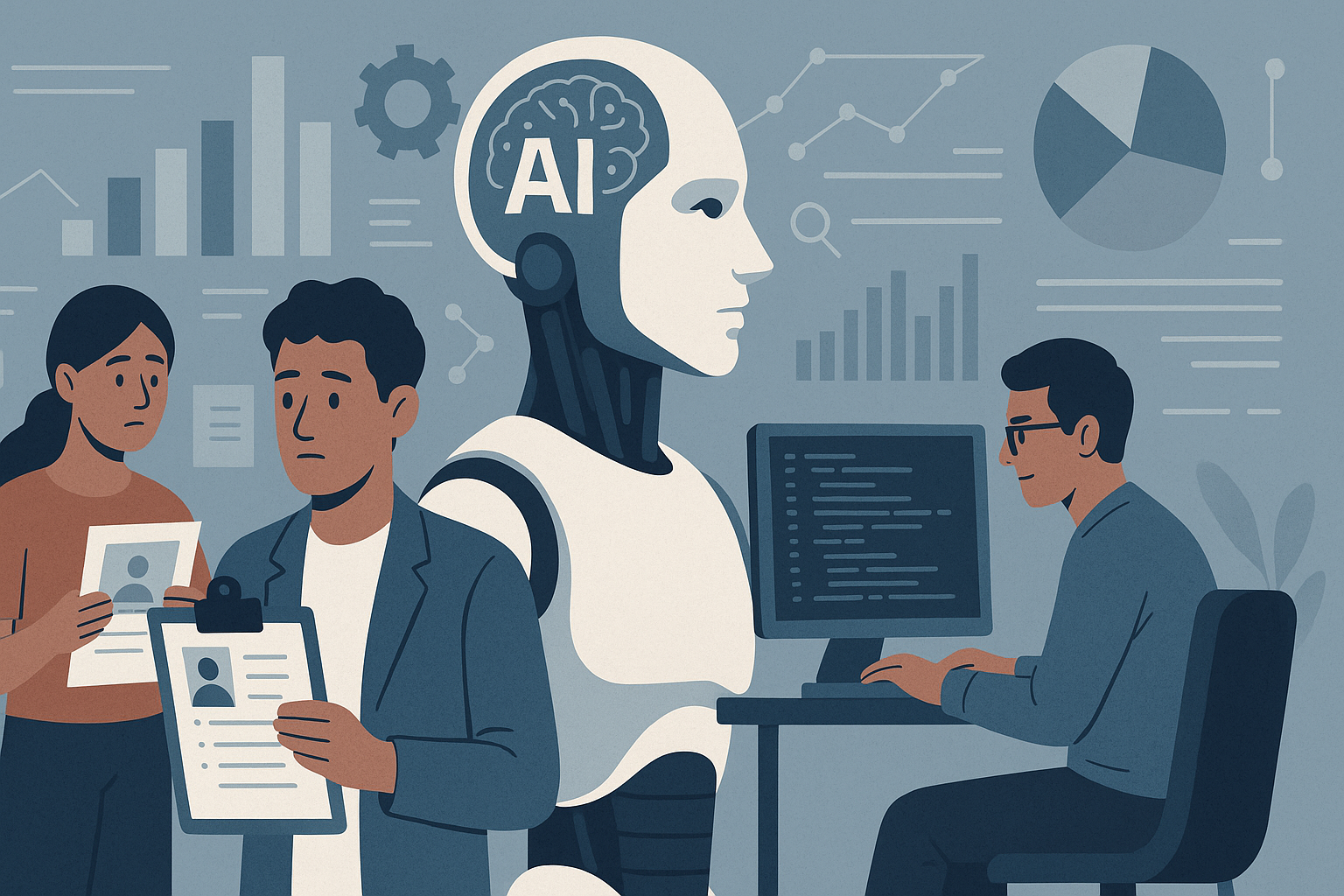
Entry-level jobs and software developers: Artificial intelligence and its impact on the job market – Image: Xpert.Digital
The future of work: Why education needs to be rethought
Artificial intelligence and the transformation of the labor market: Entry-level jobs and software development in transition
The rapid development of artificial intelligence is leading to a fundamental reshaping of the labor market, with entry-level positions and software development roles being particularly affected by disruptive changes. Current studies show that by 2030, approximately 3 million jobs in Germany will be significantly impacted by AI, while new professional fields are simultaneously emerging. This transformation is not uniform: while traditional entry-level positions are becoming increasingly automated, new, highly skilled roles are emerging that require AI expertise. At companies like Amazon, software developers report fundamentally altered work processes, with AI assistants already generating 30 percent of the code and drastically increasing work speed. This development raises fundamental questions about the future of traditional career paths and necessitates a comprehensive reassessment of education and training strategies.
Related to this:


The disruption of entry-level jobs
Threat to traditional entry positions
The impact of artificial intelligence on entry-level jobs is already clearly evident across various economic sectors. Aneesh Raman, Chief Economic Opportunity Officer at LinkedIn, warns of a fundamental disruption to the traditional career ladder, as AI increasingly threatens the types of positions that have historically served as entry points for young professionals. This development is particularly worrying because it affects the "bottom rung of the career ladder," thus disrupting the traditional path into a professional career.
Huy Nguyen, Chief Education and Career Development Advisor at Intelligent, explains that entry-level roles are particularly at risk, as these are the easiest to replace with AI. Many university graduates are typically hired for positions involving information-related tasks such as research, data collection, customer service, and general office support. While these activities are essential for young professionals to gain practical experience, they are also the easiest to automate with AI systems.
The situation is exacerbated by the decline in available internships. Of the companies surveyed, 86 percent stated that they continue to offer internships despite technological advancements; however, five percent have already stopped filling internship positions because AI has taken over the tasks of interns. This development is particularly problematic, as internships traditionally serve as an important bridge between higher education and entering the workforce.
Impact on Generation Z
Generation Z is at the heart of this disruption, as they are currently entering or about to enter the job market. In a recent survey by Handshake, 62 percent of final-year students familiar with AI tools expressed concerns about the impact of these technologies on their job prospects—a significant increase from 44 percent in 2023. Computer science students are particularly pessimistic: 28 percent describe themselves as “very pessimistic” about their career prospects in the current economic climate, compared to 18 percent the previous year.
The data from Handshake illustrates the challenges: By March 2024, prospective graduates had submitted 21 percent more applications than in the previous year, while at the same time, job postings on the platform had decreased by 15 percent. This discrepancy between supply and demand intensifies competitive pressure and makes entering the workforce increasingly difficult for young people.
Software development in transition: The Amazon example
Changing work processes at tech giants
Amazon serves as a paradigmatic example of the transformation of software development through AI. The company has strongly pushed its development teams to integrate AI into their workflows, increasing output targets and reducing tolerance for delays. One Amazon engineer reported that his team is roughly half the size it was last year, yet is expected to deliver the same volume of code by leveraging AI tools.
In his recent note to shareholders, CEO Andy Jassy emphasized that generative AI offers significant benefits to businesses in terms of productivity and cost savings. He highlighted the need to work faster, as competitors could gain an advantage if Amazon is unable to meet customer needs "as quickly as possible," specifically mentioning coding as an area where AI will "change the standards.".
The pace of development cycles has changed dramatically. One engineer noted that developing a new website feature used to take several weeks, but now often needs to be completed within a few days. This acceleration is made possible by AI-assisted coding and the reduction of meetings for feedback and brainstorming.
From development to monitoring
A fundamental shift is evident in the changing role of software developers: from active programmers to monitors and reviewers of AI-generated code. Many Amazon engineers use AI assistants that suggest lines of code, and the company recently introduced AI tools capable of autonomously generating large portions of code. One engineer described these tools as "frighteningly good," yet many developers are hesitant to adopt them because they require extensive review, and they prefer to maintain more control over their work.
Simon Willison, an AI enthusiast and experienced programmer, comments: “It’s more fun to write code than to review it. Being assigned to code review is rarely the most enjoyable part of the job. With the use of these tools, it becomes the bulk of the workload.” This shift from development to review makes engineers feel like mere spectators in their own roles.
Matt Garman, CEO of Amazon Web Services, predicted this development in an internal conversation, forecasting that in 24 months most developers might no longer be programming. This prediction points to a fundamental redefinition of the role of software developers, who will need to focus more on customer requirements and strategic considerations.
Related to this:

Global Perspectives: India as a Case Study
Threat to the demographic dividend
India offers a particularly striking example of the disruptive impact of AI on national growth strategies. The US investment bank Bernstein warns in a dire report that "the rise of AI threatens to wipe out all the benefits of India's demographic dividend." Around 500 million Indians aged five to 24 are expected to enter the labor market in the next 20 years.
The traditional assumption that "more young people = more jobs = more growth" is no longer valid, as artificial intelligence can perform many of these jobs faster, cheaper, and more accurately than humans. The Indian service sector—IT outsourcing, business process management, and knowledge work—is particularly affected, employing over ten million people, many of whom belong to the top 25 percent of earners in the country.
The Bernstein report explicitly warns: “AI subscriptions, which cost only a fraction of the price of Indian entry-level professionals, can perform their tasks with greater precision and speed.” The problem is exacerbated by the fact that the transition to AI requires very little investment – unlike automation in industry.
Structural challenges in the IT sector
The transformation is already evident in India's IT hiring practices. In fiscal year 2024, IT companies hired between 60,000 and 70,000 entry-level professionals – the lowest hiring rate in two decades. As AI automates routine tasks such as programming and testing, companies are increasingly prioritizing skilled mid-level professionals, particularly in AI and machine learning.
A particularly troubling aspect is the innovation paradox: While India boasts one of the highest rates of AI skills among its workforce and thousands of AI startups globally, it has a scarcity of relevant patents. India registers only 0.2 percent of all AI patents worldwide – compared to 61 percent from China and 21 percent from the US. This discrepancy between talent and innovation highlights the structural challenges in transforming traditional business models.
🎯🎯🎯 Benefit from Xpert.Digital's extensive, five-fold expertise in one comprehensive service package | BD, R&D, XR, PR & Digital Visibility Optimization


Benefit from Xpert.Digital's extensive, five-fold expertise in a comprehensive service package | R&D, XR, PR & Digital Visibility Optimization - Image: Xpert.Digital
Xpert.Digital possesses in-depth knowledge across various industries. This allows us to develop tailored strategies precisely aligned with the requirements and challenges of your specific market segment. By continuously analyzing market trends and monitoring industry developments, we can act proactively and offer innovative solutions. The combination of experience and expertise generates added value and provides our clients with a decisive competitive advantage.
More information here:
The job market of the future: AI is revolutionizing office, service, and software sectors
Cross-industry transformation
Administrative and clerical work
The McKinsey study identifies administrative sectors as being particularly affected by AI changes. More than half of all job changes caused by AI (54 percent) in Germany involve office jobs in the administrations of companies and public institutions. Germany, along with Italy, is particularly affected because administrative support roles account for a large share of total employment.
The Institute for Employment Research (IAB) determined that in 2022, 38 percent of employees subject to social security contributions already worked in occupations where at least 70 percent of the tasks could potentially be performed by AI. A surprising finding of the study is that AI is most likely to take over tasks currently performed by highly skilled workers. This finding contradicts previous scientific findings that assumed AI would primarily replace tasks performed by employees with low or medium qualifications.
Call center and customer service
The call center sector is showing a differentiated development. According to its own figures, the industry employs more than half a million people in Germany. While simple telephone inquiries can already be answered by chatbots, experts like Michael Egelseer from the German Association for the Digital Economy see a limited role for AI: "AI can only take over simple tasks.".
At Leipzig-based TAS AG, AI functions as an assistant for customer advisors. For example, while a customer reports damage to their household contents, the bot searches for the relevant insurance policy and indicates whether the stolen bicycle is covered. Kai Zuchold, the company's head of technology, emphasizes, however, that the AI serves to support human employees, not to replace them.
Telecommunications: A balance between humans and machines
Deutsche Telekom is pursuing a "human-centered" approach to AI integration. Claudia Nemat emphasizes that AI-based technologies should benefit people and not harm them. The company consciously continues to rely on human workers and, for example, has service teams specializing in providing telephone support to elderly people with technical questions.
Deutsche Telekom uses AI for both customers and employees. An AI-based chatbot can answer non-standard questions, such as roaming costs in different countries. For employees, there's an "Employee Concierge" bot that assists fiber optic planners without requiring them to sift through 9,000 pages of PDF documentation. These applications demonstrate how AI can increase efficiency without completely replacing human workers.
Related to this:

New professional fields and qualification requirements
Emergence of AI-specific roles
Despite the disruption of traditional jobs, new, lucrative career fields are emerging around artificial intelligence. By 2035, around 1.3 million jobs in Germany will be changed or replaced by automation and AI-based technologies; at the same time, however, new jobs and professions such as AI manager and AI consultant are being created.
The demand for qualified AI experts is rising sharply, leading to a shortage in the job market. According to Stepstone, demand has already increased by around 50 percent between 2019 and 2023. Companies are advertising significantly more AI jobs, and AI experts can expect above-average salaries. According to Stepstone, data scientists earn a median salary of €67,000 per year, with annual salaries of €90,000 and more possible for those with professional experience.
Five key roles have established themselves as being in particularly high demand: AI specialists who develop AI models for real-world applications; machine learning engineers who specialize in technical implementation; data scientists for data analysis and interpretation; AI ethics experts for responsible AI development; and prompt engineers who focus on optimizing communication with AI systems.
Changing qualification requirements
A study conducted by Deloitte shows that the majority of companies expect generative AI to influence their talent strategies within two years. The adaptation of workflows and the retraining of employees are key considerations. Generative AI will increase the value of certain technical and interpersonal skills, while other skills will become less important.
According to McKinsey, the demand for technical skills will increase significantly, by 25 percent in Europe alone. But social and emotional skills will also be in greater demand (+12 percent). This trend suggests that future workers will need both technical AI skills and enhanced human abilities.
Entirely new skills and job profiles will be required in an AI-driven work environment. Instead of traditional professions like graphic designers or copywriters, the demand will increase for employees who can effectively "communicate with AI." At the same time, new challenges will arise, such as critically examining AI-generated concepts and developing and implementing AI strategies.
Related to this:

Expert assessments of the future of work
Optimistic perspectives
Andrew Ng, founder of Google Brain and professor at Stanford University, takes an optimistic view of AI-driven changes in the job market. He doesn't believe AI will completely replace jobs, arguing: "If 20 to 30 percent of jobs are automated, that means the job will still exist. It also means that AI won't replace people, but perhaps people who use AI will replace people who don't.".
Ng is confident that automation will only help companies find new opportunities for innovation. If companies discover they can perform a task 1,000 times cheaper using AI, they're likely to invest in performing that task 10,000 times. "What I've seen is that it's nice to save money, but there's only so much money you can save. But growth has no limit, no upper limit," he explains.
Mark Quinn, who lost his job due to AI, nevertheless shares an optimistic outlook. Quinn worked for a generative artificial intelligence startup and led a team monitoring bot responses. As AI improved, the company found it could operate with a smaller, more efficient group. Although Quinn lost his job, he doesn't believe this was a sign of imminent job losses due to bots.
Warning voices
Gary Hamel, a visiting professor at London Business School, is more skeptical about the predictability of AI's impact: "Part of it is that we really don't know." The lack of a solid consensus among technology and business experts on the effects of AI demonstrates just how many questions remain unanswered.
Demis Hassabis, CEO of Google DeepMind, warns of significant changes in the next five to ten years. He encourages teenagers to engage intensively with artificial intelligence and describes it as the defining technological force of our time. "Over the next five to ten years, I think we'll find what usually happens with major new technological disruptions: some jobs will be disrupted. But new, more valuable, and often more interesting jobs will be created.".
The Institute for Public Policy Research (IPPR) paints a bleak picture in a worst-case scenario: around eight million people in Great Britain could lose their jobs due to AI. The researchers speak of a "jobs apocalypse" if this scenario were to occur. According to their findings, AI would primarily displace women, younger workers, and low-wage earners, as their jobs would be most affected by automation.
Timeframe and speed of changes
Experts largely agree that the changes have already begun and will accelerate in the coming years. Lawrence Katz, a labor economist at Harvard University, describes current developments as an "acceleration for knowledge workers" and compares them to the shift from manual labor to factories in the 19th and 20th centuries.
The International Monetary Fund warned in January that AI could affect 60 percent of all jobs in the US and exacerbate wealth inequality. Mustafa Suleyman, CEO of Microsoft's internal AI division, predicted that the technology would create a large number of "very disaffected" office workers who would be forced out of their jobs. "Undoubtedly, many office jobs will look very different in the next five to ten years," Suleyman said.
Job shifts due to AI: What companies and countries need to learn
Analysis of current developments shows that artificial intelligence is already fundamentally changing how work is organized and performed, with entry-level jobs and software development being particularly affected. This disruption is not a singular event, but a continuous transformation process that impacts different industries and skill levels to varying degrees. While traditional entry-level positions are increasingly being automated, thus disrupting the classic career path, new, highly skilled roles are simultaneously emerging that require AI expertise.
The challenges facing Generation Z are particularly significant as they enter a job market where traditional learning paths and internship opportunities are dwindling. The Amazon example illustrates how even highly skilled fields like software development are evolving from creative, problem-solving roles to supervisory and auditing ones. This shift raises fundamental questions about professional identity and job satisfaction.
At the same time, countries like India demonstrate that entire national growth strategies can be jeopardized by AI disruption, particularly when they rely on providing a workforce for tasks that are now automatable. The emerging new professions necessitate a fundamental reorientation of education and training systems, with both technical AI skills and enhanced human capabilities such as creativity and emotional intelligence gaining importance.
Experts' forecasts range from optimistic growth scenarios to warnings of massive job losses, highlighting the uncertainty and complexity of the impending transformation. Crucially, this disruption will depend on proactive education, training, and social policies that ensure the benefits of the AI revolution are widely distributed rather than exacerbating existing inequalities. The next five years will be considered a critical period in which the course for the future of work will be set.
We are here for you - Consulting - Planning - Implementation - Project Management
☑️ SME support in strategy, consulting, planning and implementation
☑️ Creation or realignment of the digital strategy and digitization
☑️ Expansion and optimization of international sales processes
☑️ Global & Digital B2B trading platforms
☑️ Pioneer Business Development

Konrad Wolfenstein
I would be happy to serve as your personal advisor.
You can contact me by filling out the contact form below or simply call me on +49 7348 4088 965 .
I'm looking forward to our joint project.
Write to me


Xpert.Digital - Konrad Wolfenstein
Xpert.Digital is a hub for industry focusing on digitalization, mechanical engineering, logistics/intralogistics and photovoltaics.
With our 360° Business Development solution, we support renowned companies from new business to after-sales.
Market intelligence, smarketing, marketing automation, content development, PR, mail campaigns, personalized social media and lead nurturing are part of our digital tools.
You can find more information at: www.xpert.digital - www.xpert.solar - www.xpert.plus
Keep in touch