
AI glasses in focus: Can wearables replace smartphones? How wearables are changing industry, medicine, and everyday life – Image: Xpert.Digital
More than just gadgets: The development of smart glasses with artificial intelligence – An analysis of trends and future prospects
Smart glasses, AI glasses and the future of wearable technology: A deep insight
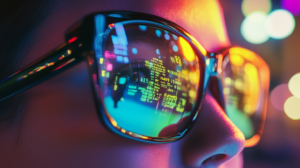
The world of wearable technology is currently experiencing an exciting period of innovation and transformation. At the heart of this development are smart glasses and AI glasses, devices that promise to fundamentally change how we interact with the digital and real worlds. What was once considered science fiction is now becoming reality, driven by advances in areas such as artificial intelligence, miniaturization, and display technology. However, with the potential for groundbreaking changes come challenges, particularly regarding data privacy, security, and public acceptance.
Related to this:


A fiercely competitive market: Who will win the race?
The smart glasses market is anything but static. It's more like a dynamic battlefield where established tech giants and emerging specialists vie for dominance. Names like Meta, Samsung, Apple, and Google are ubiquitous, but companies like Vuzix, RayNeo, Solos, and Halliday are also entering the market with innovative approaches.
Particular attention is being paid to the duel between Samsung and Meta. Both companies appear to be investing immense resources in developing their own smart glasses, with rumors of prototypes and patent applications fueling the imaginations of tech enthusiasts. It is speculated that Samsung, known for its expertise in display technology and mobile devices, is aiming for seamless integration of its smart glasses into its existing ecosystem. Meta, on the other hand, with its deep roots in the world of social media and the metaverse, is likely to focus on immersive experiences and social interaction.
Apple's strategy, however, seems somewhat less clear. While the company undoubtedly possesses the technological know-how and design expertise to play a leading role in the smart glasses market, Apple appears to be wavering between different approaches. Reports suggest that the development of a lightweight, everyday AR headset may have been discontinued, while the company continues to work on the Vision Pro, a significantly more complex and expensive mixed-reality headset. It's conceivable that Apple wants to test the acceptance and potential of the Vision Pro first before entering the market for lighter smart glasses. Another possibility is that Apple is still internally evaluating various concepts to ensure that any potential product meets the company's high standards.
Chinese manufacturers are also increasingly pushing into the market. Xiaomi, known for its aggressive price-performance ratio, is reportedly planning to launch its own smart glasses in early 2025. This could further intensify competition and increase price pressure on established manufacturers.
Technology in focus: AI, AR and miniaturization
Technological development in the field of smart glasses is rapid and diverse. Three key areas stand out in particular: artificial intelligence (AI), augmented reality (AR), and the miniaturization of hardware.
AI is no longer just a buzzword; it's an integral part of many new smart glasses. Features like real-time translation, intelligent assistants, and live support are made possible by AI algorithms. Imagine traveling to a foreign country and your smart glasses translating every conversation into your native language in real time. Or receiving step-by-step instructions while cooking from a virtual assistant that responds to your voice and answers your questions.
The integration of AI assistants like ChatGPT and Meta AI into smart glasses opens up entirely new possibilities for interaction and information access. Users can ask questions, delegate tasks, and retrieve information without having to take their smartphone out of their pocket. The glasses thus become an intelligent assistant that is constantly present and ready to help.
Besides AI, augmented reality (AR) also plays a crucial role. AR glasses overlay digital information onto the real world, thus expanding our perception and interaction with our environment. Unlike virtual reality (VR), which creates a fully immersive digital environment, AR overlays reality with digital elements.
Miniaturizing the technology is another major challenge. To make smart glasses suitable for everyday use, they must be lightweight, comfortable, and unobtrusive. This requires the development of mini laser modules, micro-LED projectors, and other miniaturized components. Advances in materials science and manufacturing technology play a crucial role in this.
The type of display also varies considerably. Some smart glasses only offer simple notifications, while others can project virtual 100-inch displays. Retinal projection technology, in which images are projected directly onto the retina, is particularly interesting because it could potentially be used for vision correction.
Another important factor is battery life. Smart glasses that only last a few hours are not very suitable for everyday use. Therefore, manufacturers are working intensively on energy-efficient components and innovative battery technologies.
Gaming is also an important application area, especially for AR glasses. By overlaying digital elements with the real world, immersive gaming experiences can be created that go far beyond what is possible on a conventional screen.
Areas of application: From everyday life to medicine
The applications of smart glasses are diverse and range from everyday use to sports and outdoor activities, as well as industry, logistics and medicine.
Many manufacturers aim to transform smart glasses into intelligent everyday companions that can partially replace smartphones. Imagine being able to answer calls, read messages, navigate, and take photos without having to take your phone out of your pocket. The glasses thus become an extension of your natural senses, enabling more seamless interaction with the digital world.
In the realm of sports and outdoor activities, smart glasses can offer valuable information and support. Meta and Oakley, for example, have announced a collaboration to develop smart glasses specifically for athletes. These glasses could display performance data such as speed, heart rate, and distance in real time, provide navigation instructions, and even offer the ability to take photos and videos hands-free.
In industry and logistics, smart glasses can improve efficiency and safety. Amazon, for example, is experimenting with smart glasses for delivery drivers to optimize order picking and package delivery. ProGlove offers glove scanners with displays for warehouse logistics, freeing up employees' hands and increasing accuracy.
AR glasses are also increasingly used in medicine. In surgery, for example, they can display additional information about the patient, helping the surgeon with navigation and decision-making. In anesthesia, they can be used to monitor vital signs and manage medications.
Data protection and security: A balancing act
The potential of smart glasses also brings with it significant data privacy concerns. Models with cameras, in particular, raise questions about privacy and the protection of personal data. The ability to identify and record individuals without their knowledge is a sensitive issue that must be handled carefully.
There are reports of hacked smart glasses that can be misused to spy on individuals. This underscores the need for robust security measures to protect user data and prevent unauthorized access.
Manufacturers must provide transparent information about what data is collected, how it is used, and how user privacy is protected. Furthermore, users should have the ability to control data collection and adjust their privacy settings.
Current models and products: An overview
The market for smart glasses is diverse, and there are a number of models that are currently available or will be launched soon.
Ray-Ban Meta Smart Glasses are currently very popular and are considered by many to be a key driver of the smart glasses market. They offer a combination of style, functionality, and user-friendliness and are particularly popular with fashion-conscious consumers.
The Asus AirVision M1 offer a virtual 100-inch display, making them ideal for watching movies, playing games and other content.
The Solos AirGo V integrate ChatGPT and thus compete directly with the Ray-Ban Meta Smart Glasses.
In addition, there are a number of AR glasses from manufacturers such as Xreal and Lenovo, which focus on different areas, from gaming to productivity.
The Meta Orion is presented as Meta's first true AR glasses and is intended to take the possibilities of augmented reality to a new level.
Related to this:
Future developments and forecasts: A look into the crystal ball
The future of wearable technology looks promising. Besides smart glasses, other wearables such as smartwatches, smart rings, and AI-based devices are also being further developed.
There is a trend towards the convergence of AR and VR technologies in mixed-reality headsets. These devices combine the advantages of both technologies, enabling both immersive VR experiences and the overlaying of reality with digital elements.
Mark Zuckerberg predicts a future where almost everyone wears AI-powered glasses. This vision may seem futuristic, but it reflects the belief that smart glasses have the potential to fundamentally change how we interact with technology.
Some even see AI wearables as a potential replacement for the smartphone. While this is still a long way off, it suggests that wearables will play an increasingly important role in our digital lives.
An exciting, but also challenging future
The market for smart glasses and AR glasses is in flux. The technology is developing rapidly, with AI playing a central role. Data privacy concerns and the need for miniaturization are key challenges that must be addressed.
Competition among manufacturers is fierce, and it remains to be seen which models will ultimately prevail. One thing is certain, however: smart glasses and AR glasses have the potential to change our world. Whether they can establish themselves as mass-market products depends on a number of factors, including price, design, functionality, data privacy, and public acceptance. The next few years will show whether smart glasses truly become an indispensable part of our everyday lives or whether they remain a niche product for tech-savvy enthusiasts.
Related to this:
Your global marketing and business development partner
☑️ Our business language is English or German
☑️ NEW: Correspondence in your native language!

Konrad Wolfenstein
I and my team are happy to be available to you as your personal advisor.
You can contact me by filling out the contact form here wolfenstein@xpert.digital:or simply call me at +49 7348 4088 965. My email address is
I'm looking forward to our joint project.