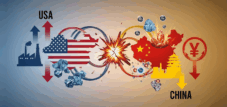
AI: The answer lies in a consistent focus on what China cannot systemically deliver – Image: Xpert.Digital
Battle of the Algorithms: How EU data protection is becoming a billion-dollar advantage in China
AI as a geopolitical economic power: China between catching up and innovation leadership
DeepSeek & Co.: The secret strategy behind China's rapid AI miracle
Artificial intelligence is shaping the economic and geopolitical world order of the 21st century – and the epicenter of this upheaval is currently in China. While the West is still debating regulations and hardware shortages, Beijing is orchestrating an unprecedented AI industrialization driven by gigantic investments, government will, and radical efficiency. Models like DeepSeek impressively demonstrate that the Chinese market is not only catching up, but redefining the rules of the game through drastically reduced training costs. This creates immense pressure for innovation for European companies. Those who want to survive in China must face a ruthless competition based on cost and speed. But within this very threat lies an unexpected strategic opportunity: The growing need for data security, transparency, and compliance makes Western standards perhaps the most valuable differentiator. The following analysis shows why Europe's perceived weakness in regulation could become a decisive competitive advantage and how companies can master this strategic balancing act.
Whoever controls the algorithms controls the future – and Europe is watching
Artificial intelligence is no longer just a technology – it has become the central battleground of 21st-century geopolitical competition. Nowhere else is this transformation taking place as dramatically, as rapidly, and with such far-reaching economic consequences as in China. For European companies operating in China or serving customers there, this presents a twofold challenge: On the one hand, they must respond to a rapidly changing competitive landscape characterized by massively upgraded Chinese competitors. On the other hand, these very changes offer a structural opportunity for those who introduce Western AI solutions with the right quality attributes to the Chinese market.
China's AI industrialization – more than an investment boom
The sheer scale of China's AI expansion can hardly be overstated. The core artificial intelligence industry in China reached a production value of over 1.2 trillion yuan in 2025, equivalent to approximately US$172 billion. The Chinese Ministry of Industry and Information Technology counts over 6,000 companies actively operating in the AI sector. According to forecasts by Chinese market researchers, the market volume of the AI industry is expected to grow to 1.73 trillion yuan by 2035, representing a 30.6 percent share of the global market.
Behind these figures lies a state-orchestrated effort of unprecedented scale. In 2024, Beijing mobilized a $47.5 billion investment package to strengthen its domestic semiconductor industry. A 60 billion yuan national AI investment fund was established and put into operation. The country's computing power reached 1,590 EFLOPS in 2025. Alibaba alone plans to invest approximately $52 billion in cloud and AI infrastructure over the next three years. ByteDance has budgeted for expenditures exceeding 150 billion yuan in 2025. Tencent increased its AI investments to $10.7 billion in 2024.
Compared to the US tech giants, China still lags behind – Alphabet, Amazon, Meta, and Microsoft together invested $106 billion in the first half of 2024. But what increasingly distinguishes China is not just the volume, but the efficiency. DeepSeek's R1 model, released in January 2025, exemplified how Chinese companies, under pressure from Western chip export restrictions, have developed their own form of innovation efficiency: The model was trained for an estimated $6 million – OpenAI's GPT-4 is said to have cost over $100 million to train. The market reaction was immediate: Nvidia's market capitalization plummeted by $589 billion in a single day – the largest single-day loss in the history of the US stock market.
From the laboratory to the factory floor – AI as an industrial multiplier
What distinguishes China's AI development from previous technological waves is the speed of its industrial penetration. The integration of artificial intelligence into manufacturing processes in China is no longer a company-level pilot project, but a state-led transformation strategy. The Chinese Ministry of Industry and Information Technology has adopted a work plan for the deep integration of the Industrial Internet and AI, aiming to equip at least 50,000 companies with new industrial networks by 2028. By 2027, the penetration rate of intelligent end devices and AI agents in key sectors is projected to exceed 70 percent; by 2030, it is expected to be more than 90 percent.
The measurable successes of this strategy are already impressive. At a flagship high-volume production factory, manufacturing costs have decreased by 58 percent, production efficiency has increased by 50 percent, and delivery times have been reduced by 33 percent. At Procter & Gamble's Huangpu plant in Guangzhou, the integration of AI and digital twin systems led to a 30 percent reduction in inventory and a 15 percent reduction in logistics costs, while achieving 99 percent on-time delivery over three years. A textile factory in Suzhou was able to increase its order response time by 40 percent through AI-supported process monitoring.
By the end of 2025, more than 30 percent of manufacturing companies with an annual turnover of at least 20 million yuan had implemented AI technologies. In 2024, China installed more than half of the world's newly installed industrial robots—more than Japan, the US, and South Korea combined. Intelligent industrial AI agents covered more than 70 percent of all application scenarios in pioneering factories, resulting in over 6,000 models for various applications. These figures do not describe a distant future, but rather an industrial revolution already underway.
The strategic logic behind the will of the state
To understand China's determination in expanding its AI capabilities, one must grasp the strategic depth of these ambitions. Beijing's New Generation AI Development Plan, adopted in 2017, set clear milestones: parity with the West by 2020, breakthroughs by 2025, and global leadership by 2030. These goals are being systematically implemented. In August 2025, China unveiled the AI Plus Initiative, which anticipates the 15th Five-Year Plan (2026–2030) and views AI as a central driver of a so-called "intelligent economy," alongside big data and quantum technologies.
At the World AI Conference in Shanghai in July 2025, Chinese Premier Li Qiang unequivocally outlined China's geopolitical agenda: China aims to assume global leadership in open-source AI and is prepared to share technology with developing countries. Simultaneously, he criticized the bottleneck caused by limited chip supplies, signaling that dependence on Western hardware was recognized as a strategic weakness. China is therefore systematically driving the development of its own semiconductor industry: companies like SMIC and Hua Hong Semiconductor are developing alternatives to Nvidia chips, and Huawei has already presented an AI chip manufactured by SMIC.
Chinese models, often released as open source on platforms like Hugging Face, undercut Western solutions by up to 50 percent in cost. An MIT study found that Chinese open-source models are now more popular overall in terms of downloads than US technologies. Moonshot AI's Kimi K2.5 model is said to nearly match Anthropic's Claude Opus in some benchmarks—at a fraction of the cost, roughly one-seventh. These cost advantages are not a short-term phenomenon, but rather the result of a systematically enforced efficiency strategy born out of the pressure of US export restrictions.
Innovation pressure on foreign companies – more than just cost competition
For European companies operating in China, these developments pose a fundamental challenge. AI expert and CEO of the German Technology & Engineering Corporation, Karlheinz Zuerl, aptly describes the psychological reality in Chinese leadership circles: Large segments of top management assume that AI will fundamentally impact their business. Many are simply afraid that their company could disappear from the market within a few years if they don't invest heavily in automation and artificial intelligence. It is the fear of not using AI – not of using it – that drives Chinese managers.
This fear translates into measurable behavioral changes: According to an Accenture study, 87 percent of surveyed Chinese business leaders planned to increase their AI investments by 2025. 72 percent of Chinese executives believe that AI implementation is progressing faster than expected. Approximately 85 percent of Chinese employees already use AI-based tools in their work – the highest rate worldwide. 62 percent of employees prefer to turn to AI tools rather than human colleagues when problems arise. These penetration rates have direct consequences for foreign competitors: Anyone wanting to survive in the Chinese market must prepare for competitors who can respond more quickly to customer needs, scale more cost-effectively, and drastically shorten their innovation cycles.
Chinese providers can develop and scale AI applications at a fraction of previous costs, giving them massive efficiency and innovation advantages. When Chinese providers offer AI services at prices 20 to 40 times lower than comparable Western solutions, European providers come under significant pressure to recalculate their own services, form new alliances, or offer lower prices. This cost competition is not a temporary phenomenon—it is structural in nature.
Regulation as a double-edged sword
The regulatory frameworks for AI diverge fundamentally between China and Europe – with far-reaching strategic implications for both sides. Since 2023, China has been developing a layered regulatory model that sets requirements for generative AI, algorithm oversight, and data localization. With the reform of the Cybersecurity Law on January 1, 2026, Beijing has now officially enshrined AI in law as both a strategic asset and a security risk. The reform increases the maximum fines for operators of critical infrastructure from 1 million to 10 million RMB and establishes extraterritorial jurisdiction – Chinese authorities can now also take action against foreign companies whose activities affect Chinese security interests. In parallel, the State Council is planning China's first national AI law, which aims to consolidate data protection, algorithm oversight, computing capacity governance, and supply chain regulation into a single set of rules.
On the other hand, there is Europe's central regulatory instrument, the EU AI Act, which was originally scheduled to come fully into force in August 2026 but has now been postponed under pressure to December 2027. While leading Western AI companies are forced to divert engineering resources and capital into compliance activities, Chinese, state-backed competitors operate without a comparable regulatory burden in their domestic market and are aggressively expanding into markets where US firms face the most severe regulatory restrictions. The Information Technology & Innovation Foundation (ITIF) notes that these discriminatory foreign regulations weaken Western AI competitiveness from the outside while simultaneously strengthening China's position.
Nevertheless, it would be premature to view this regulatory divergence solely as a disadvantage for European companies. Regulation creates a dimension of differentiation that can certainly be used as a competitive advantage – if it is interpreted and utilized correctly.
🎯🎯🎯 Data-driven B2B industry hub as a quasi-in-house solution


The quasi-in-house solution: How Xpert.Digital closes operational gaps in B2B marketing and sales – Smart Content-Driven Business - Image: Xpert.Digital
Xpert.Digital is a data-driven B2B industry hub led by Konrad Wolfenstein . The company acts as an external, quasi-in-house solution for industrial partners, closing operational gaps in marketing, content, and sales – without requiring additional resources on the client side.
More information here:
The Western trust advantage: How Europe is conquering new markets in the AI race
The Western trust advantage – an underestimated strategic asset
Herein lies the crucial strategic paradox: precisely where China is demonstrating its greatest AI prowess, the very weaknesses that Western providers can exploit as a differentiating factor also emerge. This is because China's AI ecosystem is characterized by specific features that raise legitimate concerns among certain Chinese corporate clients – particularly in the B2B segment, in multinational supply chains, and in export-oriented industries.
Chinese AI models are subject to targeted content censorship even during training. They must be registered with the state, are subject to ideological conformity requirements, and process data under a legal framework that grants state actors extensive access rights. This creates a real dilemma for Chinese companies operating internationally and needing to meet the compliance requirements of European or American customers: They must use AI systems whose trustworthiness and data protection standards are scrutinized by their own customers abroad.
Europe and Canada are taking a different approach, granting consumers rights similar to intellectual property rights over their own personal data. Companies operating under GDPR are forced to be more creative with less data—paradoxically leading to higher data quality and greater user trust. For many European companies, trust, data protection, and ethical AI are not merely legal requirements, but competitive advantages. Solutions that violate these principles not only risk legal sanctions, but also fail to meet the codes of conduct and reputational standards that European companies have painstakingly built.
Chinese corporate clients operating internationally—such as export-oriented manufacturers, global logistics providers, or corporations listed on European stock exchanges—have a genuine interest in AI solutions that comply with Western data protection and compliance standards. Western providers can offer a positioning here that no Chinese competitor can replicate: transparent, compliant with data protection regulations, independent of government access claims, and demonstrably operated according to Western governance standards.
Three segments, three opportunity profiles for European providers
The opportunities for European companies to position Western AI as a competitive advantage in China are concentrated in three strategic segments.
The first segment comprises export-oriented Chinese companies that are active in Western markets or have raised capital there. For these players, Western AI is not an option, but often a regulatory necessity. They must be able to demonstrate that their data processing complies with the GDPR, that their AI systems do not contain hidden government backdoors, and that their customer data is protected from unauthorized access. European providers who can provide this proof enjoy a structural advantage.
The second segment comprises highly regulated industries where process reliability and explainability of AI decisions are crucial: medical technology, financial services, industrial automation in the area of safety-critical systems, and pharmaceuticals. While the Chinese market in these sectors is dominated by domestic suppliers, the quality requirements of multinational corporations and their supply chains create niches for European solutions that combine specific domain expertise with proven standards of trustworthiness.
The third segment comprises Chinese companies integrated as suppliers in German or European value chains. These players are increasingly under pressure from their Western clients to implement AI systems with transparent decision-making processes and compliant data protection standards. Western providers who optimize their solutions to meet these interface requirements can act as intermediaries here – offering a value proposition that no Chinese competitor can credibly imitate.
Compliance as an ecosystem – the structural hurdles for Western providers
As real as the opportunities are, so too are the structural challenges. Since 2021, China has built a complex, layered regulatory framework for AI, comprising three core laws: the Cyber Security Law (CSL), the Data Security Law (DSL), and the Personal Information Protection Law (PIPL). The 2026 reform of the CSL harmonized these three layers of law, providing the Cyberspace Administration of China (CAC) with a unified and powerful enforcement toolkit.
For foreign providers wanting to offer generative AI services in China, this means: algorithm registration with the CAC, pre-launch security assessments, mandatory disclosure of AI-generated content, and ideological compliance requirements for training data. Many of these requirements are not only operationally demanding for Western providers but also culturally problematic – especially the requirement to moderate content according to ideological criteria and maintain a corresponding local presence and moderation teams.
Added to this is the data localization principle: under certain conditions, data from Chinese users may only be stored on servers in China. This poses significant architectural challenges for European companies whose AI infrastructure is based on European clouds. The solution often lies in local joint ventures or technology partnerships with Chinese companies – which in turn raises new questions about intellectual property protection and data control. This balancing act between local compliance and Western data protection standards is the central strategic tension that European AI providers must address when doing business in China.
Europe's positioning in the triangle of powers
Europe's position in the global AI race is sobering, but not hopeless. The US dominates in terms of the most powerful Foundation models and investment volume. China is winning in applied efficiency and government coordination. Europe remains far behind with only a handful of globally competitive models – Mistral AI from Paris is the European exception with a globally competitive model and a €1.2 billion investment in a data center in Sweden.
The KPMG AI Index from early 2026 confirms that the US dominates the race for AI capabilities and investment volume. The EU Commission has responded with a legislative package intended to make Europe more independent in chips, cloud computing, and AI. Initiatives like OpenEuroLLM and the Centre for AI Excellence in Paris send signals – but given that Chinese AI already accounts for 48 percent of global equity investment, European reactions appear more like structural catching up than a genuine counter-strategy.
Nevertheless, this positioning presents a genuine strategic opportunity. Europe could play a different role than the US and China: the trusted application layer in areas where reliability, explainability, and data protection are more important than a raw number of parameters. Healthcare AI, industrial AI, logistics AI, financial AI in highly regulated contexts: these are fields in which European companies are world-class and where European regulation is not a handicap but a mark of quality. This positioning can be operationalized in the China market.
Strategic recommendations for European companies
The present analysis allows for the derivation of concrete strategic conclusions that go beyond the usual consulting clichés.
The first and most fundamental recommendation is this: Don't see the Chinese AI landscape as a threat to be defended against, but rather as a market accelerator that creates new demand segments. The faster Chinese companies adopt AI, the greater the need will be for specialized, trustworthy, industry-specific AI solutions that Chinese general-purpose providers cannot meet.
European companies should stop introducing their own AI solutions in China without first understanding that Western AI algorithms developed in America do not work well in the Chinese market. The right strategy is to first develop a company-wide AI strategy and then implement it using tools that are available or suitable there – but always with a clear differentiation logic based on Western quality and trust standards.
For AI solutions that process sensitive corporate data, a strict data localization and governance strategy is essential. Critical data belongs on European infrastructure – regardless of whether regulatory obligations require it. This is risk management, not a bureaucratic exercise. At the same time, companies need provider diversification that allows them to switch providers without having to rebuild their entire AI architecture.
Collaborations with Chinese AI providers cannot be ruled out entirely – especially for rapid scaling in local markets and for data-intensive applications, a partnership with local players can be beneficial. A prerequisite is thorough legal and technical due diligence to ensure data protection, intellectual property protection, and compliance with EU and Chinese law. Any supplier, integrator, or service provider wishing to succeed must demonstrate clear technological or ethical unique selling points – be it in transparency, quality, fairness, or the sustainability of AI.
The structural question that decides
China has not only caught up in terms of investment volume and model density – it has changed the rules of the game. DeepSeek has demonstrated that efficiency breakthroughs can come from unexpected directions. Chinese AI studies now account for roughly half of all the latest AI research on the arXiv research platform. Almost a third of the world's leading AI experts originally come from China. The assumption that Western technological leadership in AI is structurally secure is no longer tenable.
What remains is a nuanced assessment: China is a competitor that has clear advantages in certain dimensions – cost efficiency, speed of scaling, state coordination, industrial penetration. In other dimensions – trustworthiness, data protection, independence from state interests, transparency of decision-making processes – the structural advantage lies with the West. The strategically relevant question for European companies is therefore not: How do we compete with Chinese AI providers on their playing field? But rather: How do we define a playing field in which our strengths are structurally superior?
The answer lies in a consistent positioning towards what China cannot systemically provide – and what certain segments of the Chinese market nevertheless urgently need: AI that can be trusted.
Your global marketing and business development partner
☑️ Our business language is English or German
☑️ NEW: Correspondence in your native language!

Konrad Wolfenstein
I and my team are happy to be available to you as your personal advisor.
You can contact me by filling out the contact form here wolfenstein@xpert.digital:or simply call me at +49 7348 4088 965. My email address is
I'm looking forward to our joint project.
☑️ SME support in strategy, consulting, planning and implementation
☑️ Creation or realignment of the digital strategy and digitization
☑️ Expansion and optimization of international sales processes
☑️ Global & Digital B2B trading platforms
☑️ Pioneer Business Development / Marketing / PR / Trade Fairs
📈🚀 From visibility to trust 👀🤝 Your scalable path with Xpert.Digital


From visibility to trust: Your scalable path with Xpert.Digital - Image: Xpert.Digital
In industrial B2B, sustainable business relationships rarely emerge overnight. They develop step by step – through visibility, professional relevance, recurring touchpoints, and growing trust. Xpert.Digital's 4-stage model addresses precisely this: It offers a structured path that begins with a manageable entry point and can evolve into deeper collaboration in business development if needed.
Instead of relying on loud marketing promises, this model puts the relationship at the forefront. Companies start with clearly defined, easily calculable measures and then decide, based on their own experience, how far they want to expand the collaboration. A key factor for this undisturbed trust-building process: The platform completely avoids annoying advertising ads, so the editorial focus remains solely on the companies' expertise.
More information here: