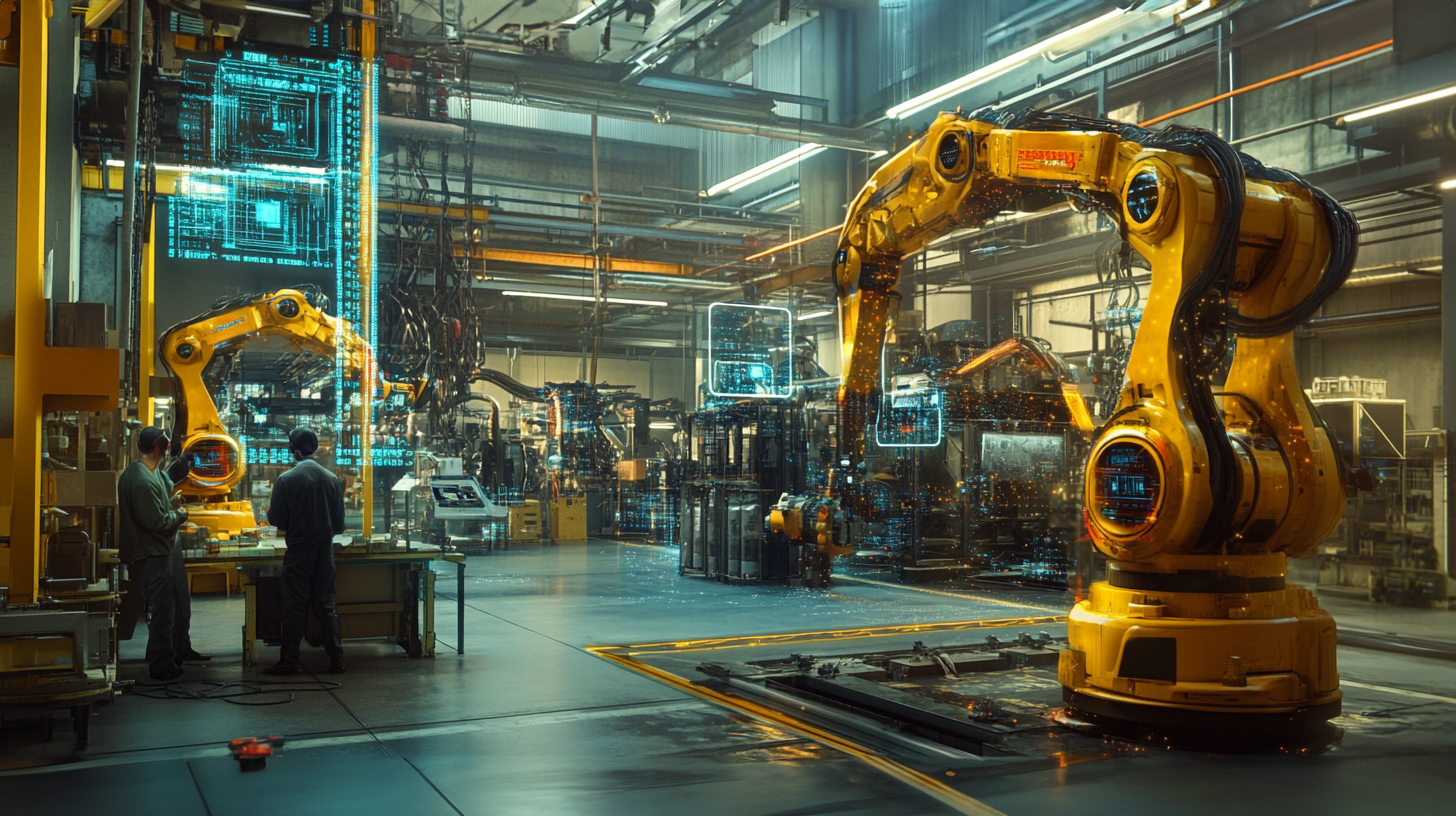
Smart Machine: Intelligent mechanical engineering and industry with AI agents: Algorithm-controlled, software-based systems – Image: Xpert.Digital
Artificial intelligence agents in focus: How companies optimize mechanical engineering and production
Use of AI agents in mechanical engineering and industry
The rapid development of artificial intelligence (AI) has triggered an enormous boost in almost all industries in recent years. Mechanical engineering and industrial production, in particular, benefit greatly from this technology. AI agents offer companies the opportunity to optimize their processes, increase productivity, and simultaneously reduce operating costs. But what exactly are AI agents, and how do they contribute to the transformation of mechanical engineering and industry?
What are AI agents?
AI agents are software-based systems controlled by algorithms that are capable of acting autonomously, making decisions, and solving problems. They are often based on machine learning, a subset of AI, and can continuously improve their capabilities by analyzing large datasets. In an industrial context, these agents are specifically designed to take over complex tasks that previously required human intervention.
A typical example of AI agents is a predictive maintenance system that analyzes data from sensors in machines to detect wear or potential failures early on. This proactive approach minimizes downtime and extends the lifespan of the machines.
The advantages of AI in mechanical engineering
The use of AI agents in mechanical engineering offers numerous advantages. One of the most important is the ability to automate processes. AI agents can efficiently and precisely take over repetitive tasks that are often tiring and error-prone for human workers. This allows employees to concentrate on strategic and creative activities.
Other benefits include:
- Increased efficiency: By using AI, production cycles can be optimized and resources utilized more effectively. For example, AI agents analyze manufacturing processes in real time and suggest adjustments to reduce material consumption.
- Quality improvement: AI systems can detect production errors faster and more accurately than traditional quality controls. This leads to a significant reduction in the scrap rate.
- Flexibility: Modern production environments require a high degree of flexibility to adapt quickly to market changes. AI agents enable production lines to be dynamically reconfigured, thus allowing for a faster response to new requirements.
Application examples in industry
1. Predictive Maintenance
A key application of AI agents in mechanical engineering is predictive maintenance. Sensors on machines continuously collect data such as temperature, vibrations, and pressure. AI agents analyze this data in real time and recognize patterns that could indicate an impending failure. This allows maintenance work to be planned and unplanned downtime to be avoided.
2. Supply chain optimization
AI agents also play a crucial role in logistics. They help make supply chains more efficient by generating demand forecasts, optimizing inventory levels, and planning transport routes. In a world where supply chains are becoming increasingly complex, such systems offer an invaluable competitive advantage.
3. Robotics and Automation
In manufacturing, AI-controlled robots are no longer a vision of the future. These robots can not only execute pre-programmed movements, but also learn independently through the use of AI and adapt to new tasks. This enables flexible automation that was previously unthinkable.
4. Digital Twin
The digital twin is another example of the successful use of AI agents. It is a virtual representation of a physical machine or system. By simulating processes, AI agents can identify potential weaknesses and suggest optimizations before changes are implemented in the real world.
Challenges in the use of AI agents
Despite the numerous advantages, there are also challenges that companies must overcome when using AI agents in mechanical engineering and industry. These include:
Data security
Since AI systems rely on large amounts of sensitive data, protecting this information is of the highest priority. A data breach could have serious consequences for the company.
Implementation complexity
Integrating AI agents into existing systems is often complex and requires specialized knowledge. Companies need to invest in training their employees and adapting their infrastructure.
Employee acceptance
The use of AI can trigger uncertainty among employees, especially if there are fears that jobs are at risk due to automation. Transparent communication and the involvement of the workforce in the change process are crucial here.
An exciting trend is the combination with AI
The future of mechanical engineering and industrial production will undoubtedly be shaped by AI technologies. AI agents are expected to become even more intelligent and versatile. An exciting trend is the combination of AI with other groundbreaking technologies such as the Internet of Things (IoT) and blockchain.
- IoT and AI: By connecting IoT devices with AI agents, companies can create a fully networked production environment. This enables even more precise data collection and analysis.
- Blockchain and AI: Blockchain technology can be used to improve traceability and security in the supply chain. AI agents could analyze this data and thus make even more informed decisions.
Furthermore, AI agents will be able to act not only based on historical data but also on scenario models. This opens up entirely new possibilities for minimizing risks and seizing opportunities.
The use of AI agents in mechanical engineering and industry is a game-changer. From predictive maintenance and supply chain optimization to flexible automation – the potential is virtually limitless. At the same time, companies must keep challenges such as data security, implementation complexity, and employee acceptance in mind. However, with the right strategy and a clear focus on innovation, companies can benefit from the countless opportunities that AI agents offer.
The future belongs to the companies that have the courage to use this transformative technology and continuously evolve. Artificial intelligence will not only revolutionize mechanical engineering, but also the way we think about and design industrial processes.
🔄📈 B2B trading platform support – Strategic planning and support for export and the global economy with Xpert.Digital 💡


B2B trading platforms - Strategic planning and support with Xpert.Digital - Image: Xpert.Digital
Business-to-business (B2B) trading platforms have become a critical component of global trade dynamics and thus a driving force for exports and global economic development. These platforms offer significant advantages to companies of all sizes, especially SMEs—small and medium-sized enterprises—which are often considered the backbone of the German economy. In a world where digital technologies are increasingly prominent, the ability to adapt and integrate is crucial for success in global competition.
More information here:
The use of AI agents in mechanical engineering and industry: Algorithm-controlled, software-based systems
Diverse applications in mechanical engineering and industry
The potential applications of AI agents in mechanical engineering and industry are wide-ranging and constantly evolving. Some of the most important areas of application are:
Intelligent production planning and control
AI agents analyze vast amounts of data from production processes to identify bottlenecks, predict maintenance needs, and optimize production workflows. They can autonomously make adjustments to maximize efficiency, reduce lead times, and optimize resource utilization. Instead of manually creating production plans, which are often static and inflexible, AI agents can develop dynamic plans that adapt in real time to changing conditions, such as raw material availability, machine breakdowns, or shifts in demand forecasts. For example, "AI-powered systems can optimize the sequence of production steps to minimize setup times and improve material flow.".
Predictive maintenance
Machine failures can lead to significant production losses and high costs. AI agents analyze sensor data from machines and systems to detect anomalies that indicate impending defects. By identifying potential problems early, maintenance can be proactively planned and carried out before a breakdown occurs. This results in reduced downtime, lower repair costs, and a longer lifespan for the equipment. "By continuously monitoring vibration patterns, temperature data, and noise levels, AI agents can detect subtle changes that might escape human observers," enabling early intervention.
Quality control
Ensuring high product quality is a central concern in mechanical engineering and industry. AI agents can be used in inspection processes to check products for errors and defects. They analyze images, videos, and other data to detect deviations from quality standards—with a speed and accuracy that often surpasses human inspectors. "This ability to identify even the smallest defects, which might be invisible to the human eye, makes a crucial contribution to reducing scrap and increasing customer satisfaction." Furthermore, the agents continuously learn from the inspection data, thus improving their detection capabilities over time.
Robotics and Automation
AI agents play a crucial role in the advancement of robotics and automation in industry. They enable robots to take on more complex tasks that go beyond simple, repetitive movements. With the help of AI, robots can understand their environment, adapt to changing situations, and work safely alongside humans. "Intelligent robot arms, controlled by AI agents, can, for example, perform complex assembly tasks, precisely position components, and react flexibly to unforeseen obstacles." This leads to further automation of production processes, a reduction in manual labor, and increased productivity.
Supply chain optimization
The supply chain is a complex network of processes and stakeholders. AI agents can help manage this complexity by analyzing data from various sources, such as inventory levels, transportation logistics, and demand forecasts. They can identify bottlenecks and inefficiencies in the supply chain and suggest optimizations, such as selecting the best transportation routes, adjusting order quantities, or predicting delivery delays. "By intelligently analyzing market data and logistics information, AI agents can help reduce inventory costs, shorten delivery times, and improve the supply chain's responsiveness to change.".
Product development and design
AI agents can support engineers and designers in developing new products. By analyzing performance data from existing products, customer feedback, and market trends, they can provide valuable insights that inform the design process. They can also support generative design tools, where AI algorithms automatically generate design suggestions that meet specific requirements and constraints. "These AI-supported design processes enable the faster and more efficient development of innovative and optimized product solutions.".
Personalization and customer interaction: AI agents can also create added value in the area of customer relationship management. They can process customer inquiries, provide technical support, and offer personalized recommendations. "Chatbots based on AI agents can answer customer questions around the clock, take orders, and help solve problems." This improves customer satisfaction and relieves the burden on human employees.
Use of AI agents
The use of AI agents in mechanical engineering and industry offers a multitude of advantages:
- Increased efficiency and productivity: By automating tasks, optimizing processes, and reducing downtime, AI agents contribute to a significant increase in efficiency and productivity.
- Cost reduction: Optimizing processes, reducing waste, predictive maintenance and improved resource utilization lead to significant cost savings.
- Improved quality: Precise quality control by AI agents helps to improve product quality and reduce errors.
- Increased safety: In hazardous work environments, AI-controlled robots can take over tasks that would be risky for humans. Furthermore, AI agents can detect safety hazards and issue warnings to prevent accidents.
- Innovation and competitive advantages: The use of AI agents enables companies to develop innovative products and services and secure a competitive advantage.
- Improved decision-making: AI agents can analyze large amounts of data and make informed decisions based on facts and analysis.
Despite the numerous advantages, there are also challenges and considerations when using AI agents:
- Data requirements: AI agents need large amounts of high-quality data to learn and function effectively. Collecting, preparing, and securing this data can be challenging.
- Complexity and integration: The implementation of AI agents can be complex and often requires integration with existing systems and processes.
- Costs: Developing and implementing AI agents can be very expensive. Ethics and social impact: The use of AI agents raises ethical questions, particularly regarding job losses and how to deal with algorithms whose decisions may not always be transparent. It is important that "the development and use of AI systems are transparent and accountable in order to build trust and minimize potential negative social impacts.".
- Security: AI systems can be vulnerable to attacks and manipulation. It is important to implement appropriate security measures to ensure the integrity and reliability of AI agents.
- User acceptance and training: The successful implementation of AI agents requires employee acceptance and the provision of appropriate training to enable them to use the new technologies. "Involving employees in the implementation process and clearly communicating the benefits of AI systems are crucial for successful acceptance.".
The future of AI agents in mechanical engineering and industry
In the future, AI agents are expected to become even more intelligent, autonomous, and versatile. They will be able to take on even more complex tasks, adapt better to changing environments, and collaborate more closely with humans. "The convergence of AI with other technologies such as the Internet of Things (IoT) and the cloud will open up new possibilities for the use of intelligent agents in industry.".
Some future trends include:
- Enhanced learning: AI agents will learn through interaction with their environment and continuously improve their skills without relying on explicit programming.
- Federated learning: AI agents will be able to learn from data distributed across various devices and systems without the need for centralized data storage. This is particularly relevant for companies handling sensitive data.
- Explainable AI (XAI): It is becoming increasingly important that the decisions of AI agents are comprehensible and understandable in order to build trust and address ethical concerns.
- Swarm intelligence: The collaboration of multiple AI agents will make it possible to solve complex problems that a single agent could not handle.
- Edge computing: AI agents are deployed directly on devices and machines, instead of relying on central servers. This enables faster response times and reduces dependence on network connectivity.
AI agents are a transformative force in mechanical engineering and industry. They offer enormous potential for increasing efficiency, reducing costs, improving quality, and fostering innovation. Although there are challenges in implementation and deployment, the advantages clearly outweigh them. Companies that adopt this technology early and make the necessary investments will secure a decisive competitive advantage and significantly shape the future of production. The continuous development of AI technology will further expand the application possibilities of AI agents in the coming years and fundamentally change the industrial landscape.
We are here for you - Consulting - Planning - Implementation - Project Management
☑️ SME support in strategy, consulting, planning and implementation
☑️ Creation or realignment of the digital strategy and digitization
☑️ Expansion and optimization of international sales processes
☑️ Global & Digital B2B trading platforms
☑️ Pioneer Business Development

Konrad Wolfenstein
I would be happy to serve as your personal advisor.
You can contact me by filling out the contact form below or simply call me on +49 7348 4088 965 .
I'm looking forward to our joint project.
Write to me


Xpert.Digital - Konrad Wolfenstein
Xpert.Digital is a hub for industry focusing on digitalization, mechanical engineering, logistics/intralogistics and photovoltaics.
With our 360° Business Development solution, we support renowned companies from new business to after-sales.
Market intelligence, smarketing, marketing automation, content development, PR, mail campaigns, personalized social media and lead nurturing are part of our digital tools.
You can find more information at: www.xpert.digital - www.xpert.solar - www.xpert.plus
Keep in touch