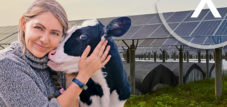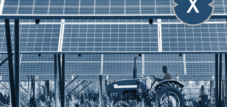
Agri-PV Building Law & Privileged Status of Agri-PV Systems or Agri-Photovoltaics – Image: Xpert.Digital
Agriculture and energy production in harmony in Lower Saxony: The opportunities of the new agri-PV privilege
Agriculture Minister Miriam Staudte welcomes the preferential treatment of agri-PV systems under 2.5 hectares in outdoor areas
The Minister of Agriculture of Lower Saxony, Miriam Staudte, expressed her support for the new preferential treatment of agri-PV systems under 2.5 hectares in rural areas, as stipulated in Section 35, Paragraph 9 of the German Building Code. This preferential treatment allows agricultural businesses to construct photovoltaic systems on agricultural land without complex planning procedures, provided the systems do not exceed 2.5 hectares and are spatially and functionally integrated with an agricultural or forestry operation.
Agri-PV systems – The pioneering combination of energy production and agricultural use
The combination of agricultural land use and renewable energy generation through photovoltaic systems, also known as agri-PV systems, opens up new perspectives for sustainable and efficient land use. This innovative form of dual use allows farmers to produce renewable energy without having to restrict their agricultural activities. The agri-PV systems can be erected on stilts or frames above the agricultural crops, thus allowing the land beneath the modules to continue to be used for agriculture.
Bifacial systems with east and west orientation – A sensible approach
Agriculture Minister Staudte emphasizes the importance of bifacial agri-PV systems, which are oriented east and west. This specific orientation of the modules allows for efficient use of both morning and afternoon sunlight, thus maximizing energy yield. Bifacial modules are able to absorb light from both sides, enabling them to utilize solar radiation more efficiently than conventional single-sided solar modules. This results in higher electricity generation per installed kilowatt peak and increases the economic viability of the systems.
Advantages of low land use and advantages during drought periods
A key advantage of agrivoltaic systems lies in their low land requirement. Compared to conventional ground-mounted solar installations, they require significantly less space because they can be installed above agricultural crops. This preserves more agricultural land, which is particularly important in densely populated regions and in times of land scarcity.
Another interesting aspect is the positive impact of agrivoltaic systems during periods of drought. The slight shading of agricultural land by the PV modules can help to reduce soil temperature and decrease moisture evaporation. This can lead to better water retention in the soil during dry and hot periods, thus stabilizing crop yields.
Contribution to a more even utilization of the electricity grid
The east- and west-facing orientation of bifacial agri-PV systems also has a positive impact on grid utilization. Conventional solar modules typically generate their peak power output at midday, when solar irradiance is strongest. This leads to a so-called midday peak, which can strain the power grid. Bifacial systems, on the other hand, supply electricity in the morning and evening, when consumption tends to be higher, allowing solar energy to be used directly. As a result, the decentralized energy generation of agri-PV systems contributes to a more even load on the power grid and can help avoid bottlenecks.
Significance of the new outdoor area privilege
The newly introduced preferential treatment for agri-PV systems under 2.5 hectares in rural areas provides a significant legal boost to the promotion of agri-PV in Germany. By exempting agricultural businesses from the complex planning process, the permitting process for constructing such systems is considerably simplified. This incentivizes farmers to produce renewable energy while continuing to use their agricultural land efficiently.
Until now, comparable preferential treatment was only available for ground-mounted solar installations along highways and multi-track railway lines. Extending this preferential treatment to agri-PV systems sends a clear signal of recognition for the importance of this technology for the energy transition and climate protection. Promoting agri-PV systems as an innovative form of land use can help advance decentralized energy generation in rural areas while simultaneously reducing land consumption.
Outdoor area privilege for agri-PV systems under 2.5 hectares
The preferential treatment of agri-PV systems under 2.5 hectares in outdoor areas offers a promising opportunity for agriculture to make a valuable contribution to sustainable energy production and simultaneously future-proof its operations. It is hoped that many farmers will seize this opportunity and thus make an important contribution to the energy transition in Germany.

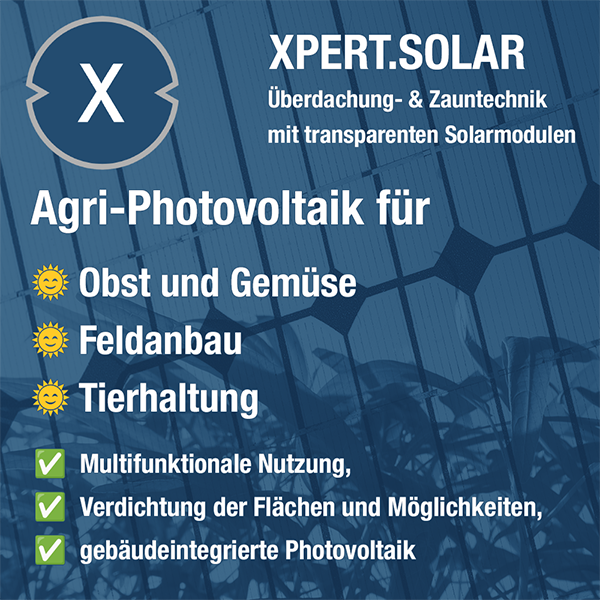
Semi-transparent solar modules for agri-PV are already in use
Semi-transparent solar modules are already being used in a research facility of the "Model Region Agri-Photovoltaics Baden Württemberg".
More information here:
Plan your solar system for the most common applications conveniently online with our solar system planner!
With our user-friendly solar system planner, you can design your individual solar system online. Whether you need a solar system for your home, your business, or for agricultural purposes, our planner allows you to consider your specific requirements and develop a customized solution.
The planning process is simple and intuitive. You simply enter the relevant information. Our planner takes this information into account and creates a customized solar system that meets your needs. You can try out different options and configurations to find the optimal solar system for your application.
Furthermore, you can save your plan to review it later or share it with others. Our customer service team is also available to answer any questions and provide support to ensure your solar system is optimally planned.
Use our solar system planner to design your individual solar system for the most common applications and accelerate the transition to clean energy. Get started now and take an important step towards sustainability and energy independence!

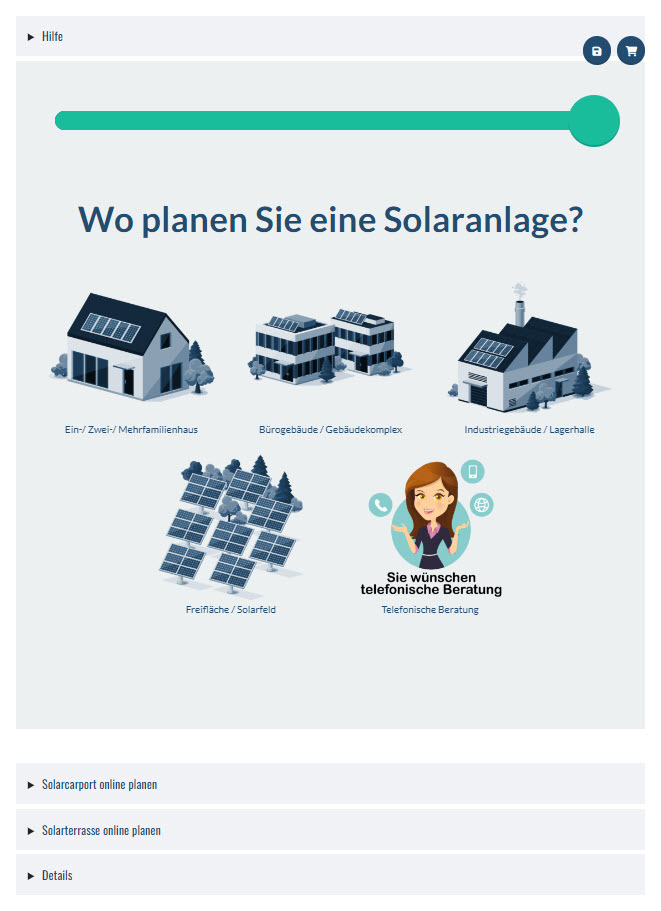
The solar system planner for the most common applications: Plan your solar system online here - Image: Xpert.Digital
More information here:
📣 Energy-efficient renovation and new construction, consulting, planning and implementation for industry, retail and municipalities
Our experienced team supports you in optimizing your buildings to reduce energy consumption and promote sustainable energy use with photovoltaics. We analyze your individual needs and develop customized concepts that are both economically and ecologically sound. Whether it's the energy-efficient renovation of existing buildings or the construction of new, energy-efficient structures, we are here to help. Industrial plants, retail buildings, and municipal facilities can reduce their energy costs, minimize their environmental impact, and simultaneously improve the comfort and efficiency of their buildings with our tailored solutions.
👨🏻 👩🏻 👴🏻 👵🏻 Energy-efficient renovation and new construction, consulting, planning and implementation for private households
We offer comprehensive support for private households in the energy-efficient renovation and new construction of buildings with photovoltaics. Our experienced team is at your side to assist you with consulting, planning, and implementing your sustainable energy solutions. We analyze your energy consumption, identify potential savings, and develop customized concepts to improve your energy efficiency. From improving building insulation and installing energy-efficient windows and doors to installing photovoltaic and solar thermal systems – we guide you step by step to make your home more energy-efficient and environmentally friendly. Trust in our expertise and benefit from the numerous advantages that energy-efficient renovation and the use of renewable energies offer. Together, we'll create a sustainable future for your home.
Press release regarding the statement by Lower Saxony's Minister of Agriculture, Miriam Staudte

Lower Saxony's Minister of Agriculture, Miriam Staudte – Image: Sven Brauers (brauers.com/), Miriam Staudte c BRAUERS-Anschnitt, CC BY-SA 4.0
Statement by Lower Saxony's Minister of Agriculture, Miriam Staudte, on the new preferential treatment of agri-PV systems under 2.5 hectares in rural areas under building law (§ 35 Paragraph 9 of the German Building Code)
: "This preferential treatment of agri-PV systems finally provides the necessary legal impetus to advance this pioneering combination of energy production and agricultural use. I welcome the federal government's decision and would be pleased if many farms seize this opportunity for dual use. The use of vertical, bifacial systems, oriented east and west, is particularly beneficial. They require little land, and during periods of drought, slight shading can even lead to better yields. Furthermore, they promote a more even distribution of electricity across the grid, as they do not produce a midday peak like conventional solar modules, but primarily supply electricity in the mornings and evenings."
Preferential treatment means that separate planning approval by local authorities will no longer be necessary to authorize agri-PV system if it is smaller than 2.5 hectares and is spatially and functionally connected to an agricultural or forestry operation. A comparable preferential treatment previously only existed for ground-mounted solar installations along highways and multi-track railway lines.
The advantages of agri-PV systems for energy production and agriculture
In recent years, the integration of photovoltaic systems into agricultural operations has become a promising trend. The decision in Lower Saxony to prioritize agri-PV systems provides a necessary legal boost for combining energy production with agricultural use. The new regulations eliminate the need for separate permits for agri-PV systems under 2.5 hectares if they are functionally integrated with agricultural or forestry operations. This step encourages the use of vertical, bifacial installations oriented east-west, as they require less space and can even deliver better results during periods of drought. Furthermore, these installations promote a more even load on the electricity grid, as they primarily generate energy in the mornings and evenings, thus avoiding the typical midday peak observed with conventional solar installations.
Agri-PV systems and agriculture: A symbiotic relationship
Agri-PV systems offer a fascinating way to combine agriculture and energy production. By installing solar panels on agricultural land, farmers can not only produce clean energy but also increase their productivity. Installing solar panels on arable land or pasture opens up new revenue streams for farmers, as they can now provide not only food but also clean energy for the community.
The advantages of vertical, bifacial installations
The decision to promote vertical, bifacial agri-PV installations oriented east-west is based on several key advantages. First, these installations require less land compared to conventional solar installations, which are mounted horizontally. This allows farmers to continue their agricultural activities on the same land and prevents valuable arable or pasture land from being used exclusively for energy production.
Secondly, bifacial solar panels are able to capture light from both sides, resulting in increased energy production. This is particularly advantageous in regions with high reflectivity or snow-covered ground, as the panels can also capture light reflected from below.
Contribution to grid stability and peak load management
The timing of energy generation from agri-PV systems offers another important advantage. By concentrating their energy production in the morning and evening hours, these installations help reduce the peak loads that typically occur during midday with conventional solar power plants. This contributes to a more stable overall grid load and facilitates energy demand management.
Agri-PV systems and water efficiency
An interesting aspect of agri-PV systems is their potential positive impact on water efficiency in agriculture. Since these installations require less land, they allow for better irrigation and water use on the remaining agricultural land. This is particularly important in arid regions where water scarcity is a challenge.
Agriculture and energy production
Agri-PV systems represent a promising way to harmonize agriculture and energy production. By prioritizing these systems and promoting vertical, bifacial installations oriented east-west, we can support both the environment and farmers. Integrating high-quality solar modules onto agricultural land opens up new opportunities for a sustainable future where we can generate clean energy while simultaneously increasing agricultural productivity.
Shadow benefits during droughts: The importance of agri-PV systems for farmers
The importance of agri-PV systems for energy production in agriculture
Agri-PV systems, also known as agricultural photovoltaics, play a significant role in energy production in agriculture. The integration of energy generation and agricultural use is a highly important issue, and the Minister from Lower Saxony emphasizes the importance of agri-PV systems in this context. This innovative technology allows farms to utilize solar panels in a vertical bifacial orientation, facing east-west. A notable advantage is that these installations require little space and can even provide shading benefits during periods of drought. Furthermore, agri-PV systems are characterized by a more even distribution of electricity to the grid, with the main power generation occurring in the morning and evening hours. This new legal decision allows for the simplified approval of agri-PV systems up to 2.5 hectares in size in conjunction with farms, further promoting the use of renewable energy in agriculture.
Advantages of agri-PV systems
1. Sustainable energy production
The implementation of agri-PV systems represents a significant step towards sustainable energy production in agriculture. By using agricultural land for the installation of solar panels, farmers can not only meet their own energy needs but also make a valuable contribution to society's energy supply. The increased use of renewable energies helps to reduce dependence on fossil fuels and thus lowers the emission of climate-damaging CO2 in the long term. Agri-PV systems therefore make an important contribution to global climate protection.
2. Efficient use of space
Installing vertically oriented agri-PV systems requires minimal space on agricultural land. This allows farmers to continue their agricultural activities while simultaneously generating renewable energy. Given the often limited availability of agricultural land, efficient land use is crucial, and agri-PV systems contribute to optimizing this land use, thereby promoting sustainable energy production.
3. Shadow benefits during droughts
Another significant advantage of agri-PV systems is their ability to provide shade during periods of drought. The solar panels not only generate electricity but also provide shade for agricultural crops. This has a positive impact on the microclimate of the fields and helps reduce water consumption. This aspect can be particularly important during droughts and positively influence agricultural production.
The importance of even current distribution
Agri-PV systems are distinguished by a special characteristic: the more even distribution of electricity into the grid. By being oriented and focusing on morning and evening energy generation, they offer a power distribution that counteracts peak load times. This relieves the strain on the electricity grid and ensures a more stable and efficient energy supply. A reliable electricity supply is crucial for a sustainable energy future, and agri-PV systems make a valuable contribution in this regard.
Simplified approval procedures
The recent legal decision to allow simplified approval of agri-PV systems under 2.5 hectares in conjunction with agricultural operations is a significant step towards promoting renewable energy in agriculture. This measure will make it easier for farmers to install such systems and thus contribute to sustainable energy production. This not only promotes the expansion of renewable energy but also strengthens agriculture as a key player in the energy transition and contributes to the diversification of energy sources.
Sustainable energy generation and efficient space use
Agri-PV systems represent a promising and innovative solution for successfully combining energy production and agricultural use. The Minister rightly emphasizes the importance of this technology for a sustainable future. Its advantages, such as sustainable energy production, efficient land use, shading benefits during droughts, consistent power distribution, and simplified permitting processes, make agri-PV systems a key player in promoting renewable energy in agriculture. This step is crucial for addressing the challenges of climate change and shaping a green and sustainable future.
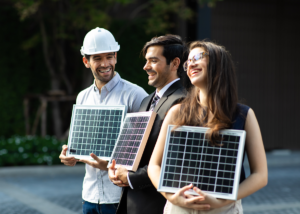
- Planning photovoltaics on warehouses, commercial buildings and industrial buildings
- Industrial plant: Planning a photovoltaic open-field system or open-area system
- Planning solar power systems with photovoltaic solutions for freight forwarding companies and contract logistics
- B2B Solar Systems and Photovoltaic Solutions & Consulting
☑️ Construction and consulting for photovoltaic open-field systems
☑️ Solar park planning ☑️ Agri-photovoltaic implementations
☑️ Solar ground-mounted systems with dual-use solutions
Xpert.Solar is your ideal partner for the planning, consulting, and construction of ground-mounted photovoltaic systems and agri-photovoltaic projects, thanks to our many years of experience and expertise in the solar energy sector. Xpert.Solar has an experienced team of professionals who offer farmers and investors tailored solutions. From site analysis and financial and legal advice to technical implementation and monitoring, Xpert.Solar provides its clients with professional and reliable support to ensure successful and sustainable project implementation.

Konrad Wolfenstein
I would be happy to serve as your personal advisor.
You can contact me by filling out the contact form below or simply call me on +49 7348 4088 965 .
I'm looking forward to our joint project.
Write to me


Xpert.Digital – Konrad Wolfenstein
Xpert.Digital is a hub for industry focusing on digitalization, mechanical engineering, logistics/intralogistics and photovoltaics.
With our 360° Business Development solution, we support renowned companies from new business to after-sales.
Market intelligence, smarketing, marketing automation, content development, PR, mail campaigns, personalized social media and lead nurturing are part of our digital tools.
You can find more information at: www.xpert.digital – www.xpert.solar – www.xpert.plus
Keep in touch