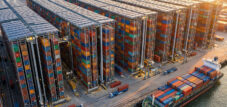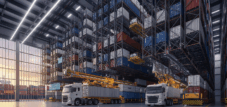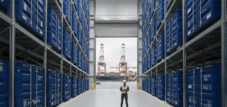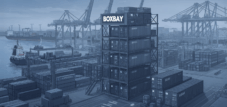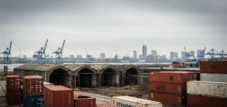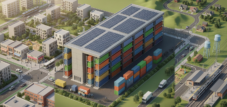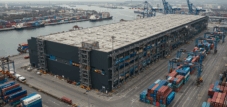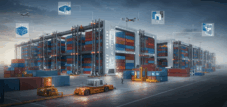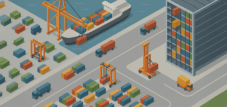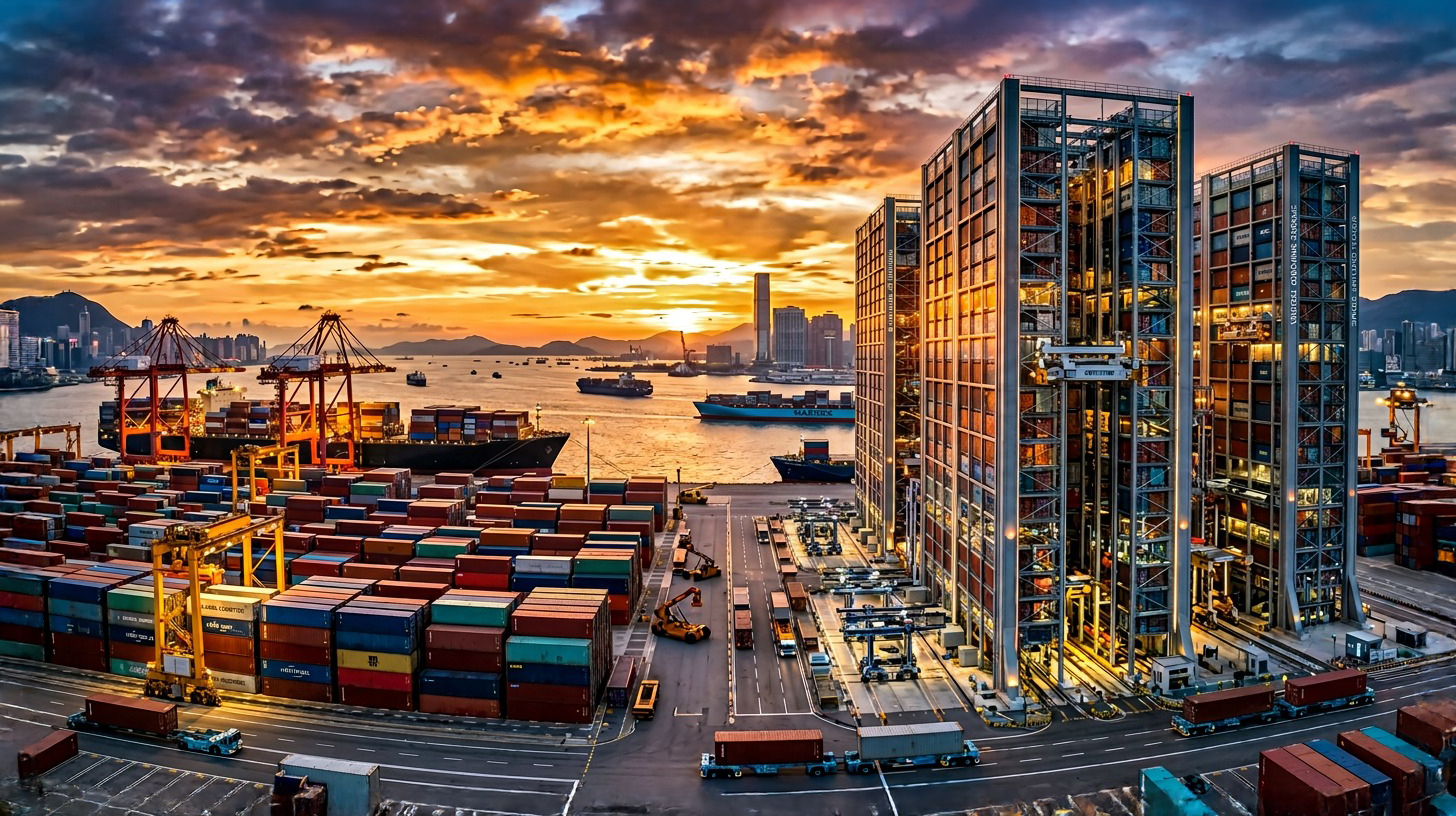
Acute space shortage in global port logistics: The vertical solution with gigantic high-bay warehouses for containers – Creative image: Xpert.Digital
End of the crane era: Why traditional container ports will soon be history
16 floors for steel boxes: How gigantic high-bay warehouses are saving global logistics
Global port logistics is facing its biggest transformation since the invention of the standardized container in 1956. As ships on the world's oceans become ever larger and cargo volumes break new records year after year, terminals are reaching their absolute capacity limits. Space is simply running out. The existing system of horizontal stacking, proven for decades, is increasingly becoming an inefficient bottleneck, consuming time, money, and immense amounts of energy. The solution to this global space problem is now literally rising: fully automated high-bay container warehouses promise to drastically reduce space requirements, eliminate the need for cumbersome restacking, and massively increase efficiency. From successful pilot projects in the Middle East and initial multi-billion-dollar investments in London to the global automation race between Asia, the USA, and Europe – the verticalization of ports is no longer just a technological vision, but an economic and physical necessity that will forever change global trade.
Why container terminals as we know them will be history in ten years
Global logistics is on the cusp of a paradigm shift comparable in its significance to the introduction of the standardized container in 1956. For more than six decades, steel boxes have been stacked horizontally, moved, and relocated, and for more than six decades, this fundamental principle has remained essentially unchanged. But the limits of this system have been reached. The world's ports, through which more than 90 percent of global trade flows, are suffocating under their own success. Ships are getting bigger, space remains the same, and the pressure on terminals increases with each record year of container throughput. In 2025, the Port of Shanghai alone handled 55.06 million TEU, an increase of 6.9 percent compared to the previous year. The answer to this global space problem is now literally rising: the high-bay container warehouse.
The fundamental conflict of modern port logistics
The traditional container terminal operates on a principle that is as simple as it is inefficient. Containers are stacked in rows, side by side and a maximum of six layers high, using gantry cranes or reach stackers. Anyone needing a specific container from the bottom layer must first restack all the containers above it. In practice, these so-called unproductive restacking operations account for between 30 and 60 percent of all container movements at a terminal. This means that a significant portion of resources, energy, and time is not used for the terminal's actual purpose—transporting goods from ship to shore and vice versa—but simply for moving containers within the warehouse.
This problem is exacerbated exponentially with the increase in ship size. Ultra-large container ships, capable of carrying up to 24,000 TEU, unload enormous quantities of containers at a single port call, requiring temporary storage. At the same time, the average dwell time of containers at terminals has increased due to supply chain issues. Terminals therefore need more buffer capacity, but the necessary space is lacking. This paradox between increasing storage density and decreasing operational efficiency is the fundamental conflict driving the entire industry.
The principle of vertical storage
The solution comes from a technology that has been standard in general cargo and pallet logistics for decades: the high-bay warehouse. Applied to container logistics, this means that steel boxes are no longer stacked on top of each other, but stored side by side in individual racking compartments of a massive steel structure. Each container has its own space, the racking structure bears the entire weight, and an automated storage and retrieval system, a so-called stacker crane, moves the containers in and out along the racking aisles.
The decisive advantage is immediately apparent: Each individual container is directly accessible without having to move another one. Restacking is completely eliminated. Storage capacity on the same footprint triples, and space consumption is reduced by up to 70 percent. Furthermore, the systems are fully automated and electrically powered, which drastically reduces energy consumption compared to diesel-powered reach stackers and minimizes emissions.
From pilot project in Dubai to industrial reality
The history of container high-bay warehouses in their current form is inextricably linked to the name Boxbay, a joint venture between the global port operator DP World and the German SMS group from Düsseldorf.
However, the idea of vertical container handling dates back even further: its true predecessor was the so-called container hangar system from Japan, which emerged in the 1990s as a concept for space-saving container storage in densely populated port areas. This early system used a steel frame-based structure with laterally movable beams, but proved too complex for widespread industrial use due to the control technology available at the time and its high costs. The basic idea – to stack containers vertically and make them individually accessible – nevertheless formed the technological foundation upon which later developments like Boxbay could build.
Related to this:

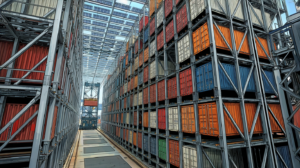
Boxbay eventually developed a system capable of storing containers on up to eleven levels within a steel frame structure. The technical core consists of fully automated storage and retrieval machines operating at speeds of up to 22 container movements per hour, and an innovative underground pallet conveyor system connecting the various storage aisles.
The pilot plant was built at Terminal 4 of the Port of Jebel Ali in Dubai and commissioned in 2020. It had a capacity of 792 containers and completed more than 63,000 container movements during the test phase. The results exceeded expectations and proved the technology's viability. Based on the collected operational data, design modifications were implemented, which both increased performance and significantly reduced investment costs for future plants.
In October 2025, the decisive step was taken that finally moved the technology from the pilot stage to large-scale implementation. Boxbay received an order worth almost €100 million to build an automated high-bay warehouse in the Port of London Gateway. This facility will reach a new dimension: 16 stories high, spread across 10 storage aisles, equipped with 15 stacker cranes and a capacity of 27,000 TEU. On the water side, the system is expected to handle more than 200 container movements per hour, thus operating 65 percent more efficiently than conventional solutions.
LTW Intralogistics Solutions
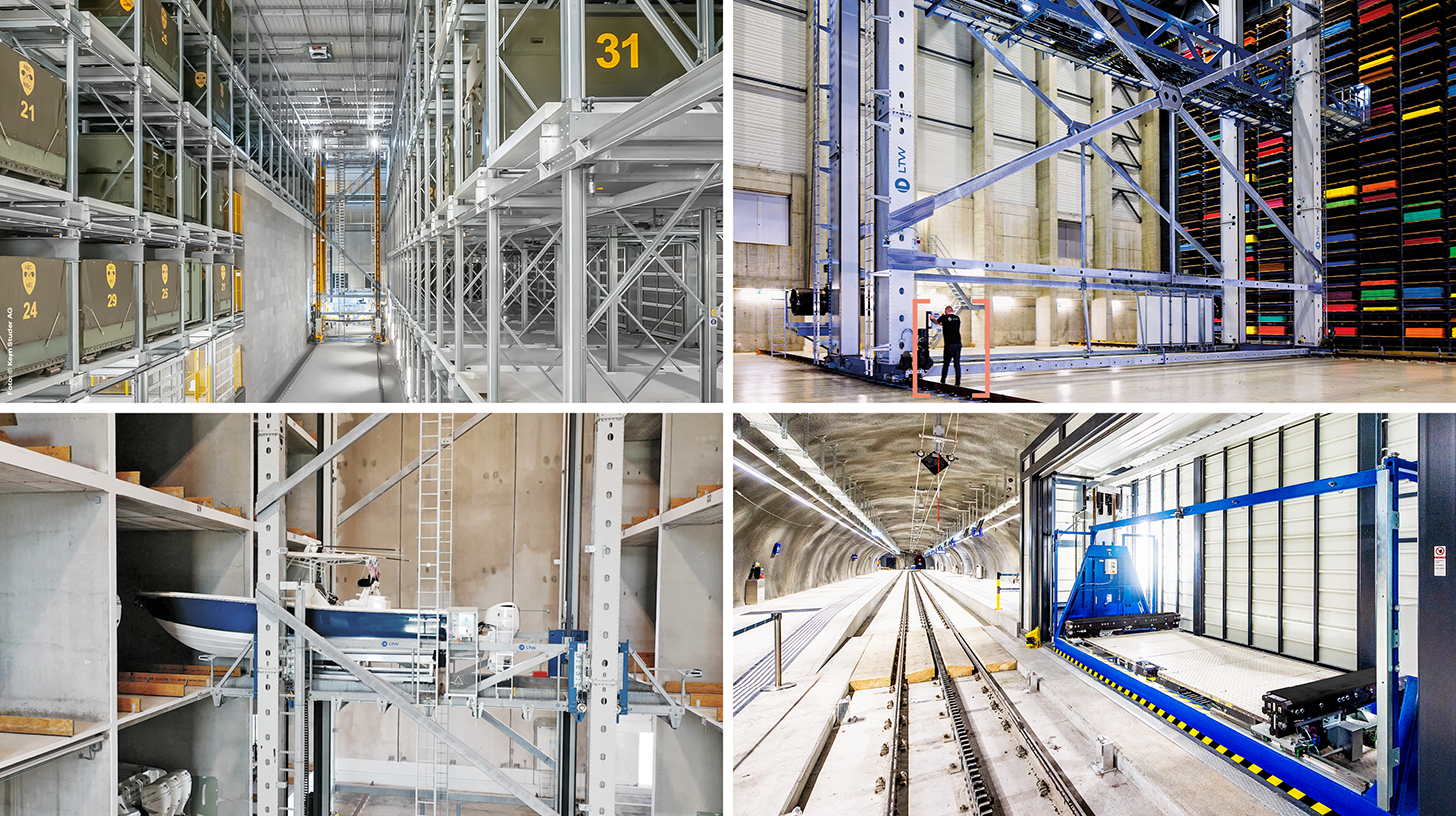
LTW Intralogistics – Engineers of Flow - Image: LTW Intralogistics GmbH
LTW offers its customers not individual components, but integrated complete solutions. Consulting, planning, mechanical and electrotechnical components, control and automation technology, as well as software and service – everything is networked and precisely coordinated.
In-house production of key components is particularly advantageous. This allows for optimal control of quality, supply chains, and interfaces.
LTW stands for reliability, transparency, and collaborative partnership. Loyalty and honesty are firmly anchored in the company's philosophy – a handshake still means something here.
Related to this:
Skyscrapers for containers: No space, no staff, and why port logistics is now thinking vertically
The empty container problem as a door opener
A particularly revealing detail of the London facility is that it was primarily designed for empty containers. At first glance, this might seem like a niche application, but it actually addresses one of the biggest pain points in global port logistics. Virtually every port worldwide struggles with the storage and management of empty containers, and few have efficient solutions. Empty containers occupy enormous areas at conventional terminals, incur high costs, and tie up resources that are then unavailable for handling loaded containers. Vertical storage of empty containers thus frees up space for more productive use and improves overall terminal operations.
The global race for port automation
The automation of container terminals is not a trend limited to a few pioneers. The market for automated container terminals was valued at US$11.3 billion in 2025 and is projected to grow to US$22.4 billion by 2035, representing an average annual growth rate of 7.9 percent. However, the motivations for these investments vary considerably by region.
In the US, an acute and structural labor shortage is driving automation. The 25 largest US container ports handle 96 percent of all TEUs and operate a total of 570 ship-to-shore gantry cranes, 248 of which are state-of-the-art Super Post-Panamax cranes. Investing in automation here is a pragmatic necessity.
China is pursuing a fundamentally different strategy. The Port of Shanghai, which has topped the world rankings for 16 consecutive years, has set a milestone with its fully automated terminal in Yangshan. There, more than 130 driverless vehicles move across the quays, transporting containers between crane bridges and storage areas, while only nine people monitor the processes in a central control room. China is driving automation forward with governmental force and strategic five-year plans to secure its technological dominance in the maritime sector.
Singapore is building Tuas Port, a highly automated mega-terminal that, upon its completion in the 2040s, is expected to handle more than 65 million TEU annually. Meanwhile, Europe is pursuing a phased modernization approach. At the HHLA Container Terminal Altenwerder in Hamburg, the first remotely controlled container cranes have been integrated into regular operations since February 2026. By 2030, all 14 cranes are to be replaced by highly automated models, remotely controlled from a central office building. The DigiRemote2030 project has already retrained around 70 crane operators to become remote controllers.
Europe's lag and the strategic dimension
The ranking of the world's largest container ports clearly illustrates the geopolitical dimension of port logistics. Seven Chinese ports are among the top 10, along with Singapore, Busan in South Korea, and Dubai. The first European port, Rotterdam, follows in 11th place. Antwerp is in 13th place, and Hamburg ranks 27th. Together, Rotterdam, Antwerp, and Hamburg handled approximately 35 million TEU last year, while Shanghai alone processed 55 million TEU.
This lag isn't just a matter of cargo throughput. It's a question of investment readiness, regulatory frameworks, and strategic foresight. While Asian ports are investing billions in fully automated systems, European ports often struggle with union resistance to automation, lengthy permitting processes, and structural underinvestment in maritime infrastructure. High-bay container warehouses offer Europe a chance to at least partially close this gap, as they maximize performance in a limited space—precisely the problem European port cities are grappling with.
What's coming: The fully networked, AI-controlled terminal landscape
The future of container terminals extends far beyond the mere introduction of high-bay warehouses. The next stage of evolution is the complete digitalization and networking of all terminal processes through artificial intelligence, the Internet of Things, and predictive analytics. AI algorithms will be able to calculate the optimal storage location for each individual container in real time, based on its planned pickup time, destination, weight, and the terminal's current capacity utilization.
Autonomous vehicles, so-called Automated Guided Vehicles (AGVs), are already handling horizontal transport between the quayside and the storage system. At Hamburg's Burchardkai terminal, the first large ships are being processed using AGVs, and the conversion to automated container transport on the waterside is scheduled to be fully implemented by mid-2026. Combined with vertical storage in high-bay warehouses, this creates a fully automated process from ship to road or rail.
What's happening: The slow death of the conventional container yard
Conventional container yards with their reach stackers and rubber-tired gantry cranes won't disappear overnight. Installed capacities are enormous, amortization cycles are long, and the transition requires massive investment. But the trend is irreversible. Increasing efficiency demands, falling costs for automation technology, and growing pressure on port emissions are creating an economic environment in which traditional horizontal storage will no longer be competitive in the long run.
For ports in densely populated regions like Europe and parts of Asia, vertical integration is not an option, but a necessity. The alternative would be horizontal expansion, and this space simply doesn't exist in the metropolitan areas where most major ports are located. Containers will therefore grow vertically. Not because the technology is available, but because physics and economics dictate it. The question is no longer whether, but only how quickly.
Consulting - Planning - Implementation

Konrad Wolfenstein
I would be happy to serve as your personal advisor.
You can contact me at wolfenstein∂xpert.digital or
Just call me on +49 7348 4088 965 .
Your container high-bay warehouse and container terminal experts
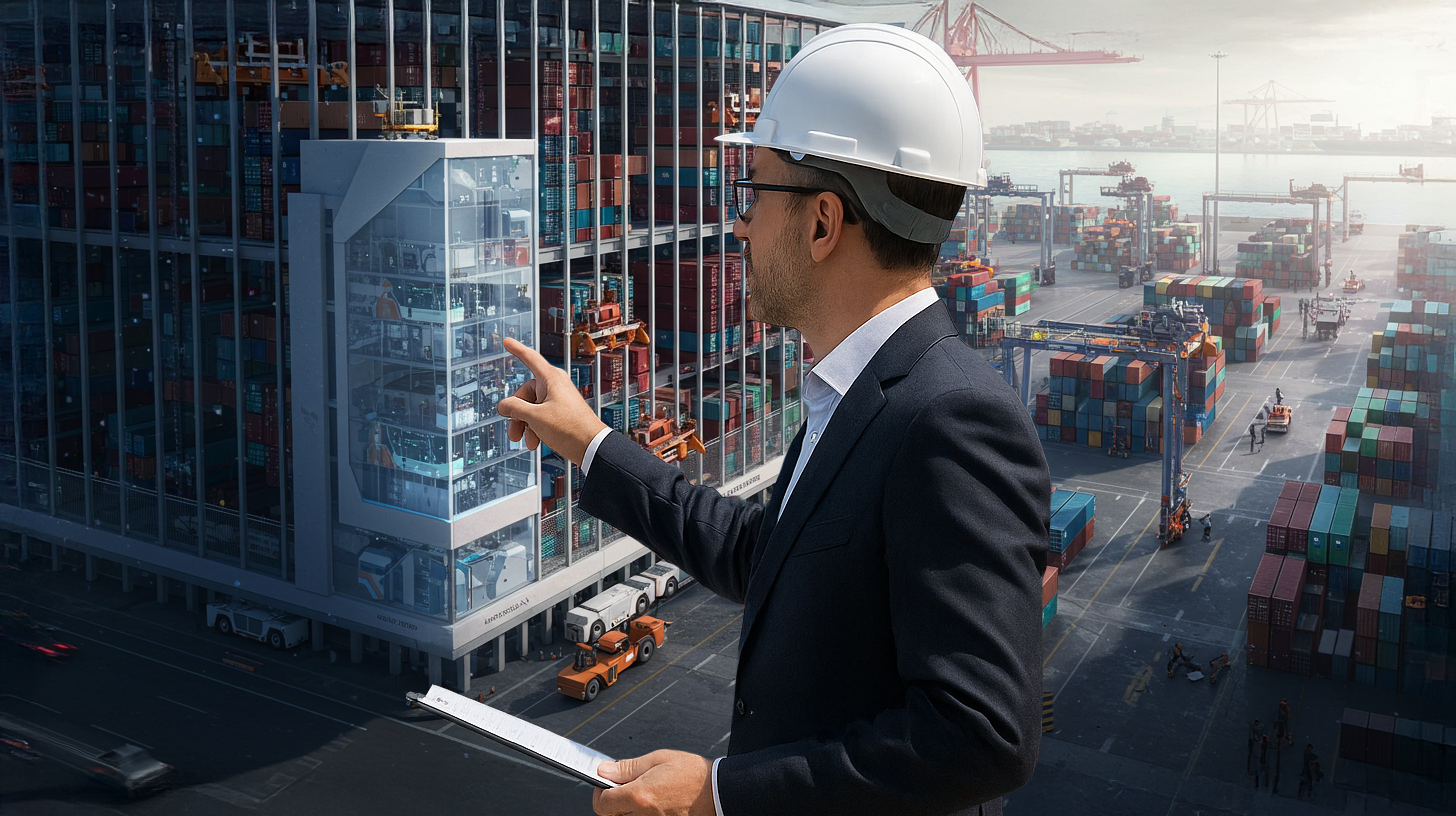
Container high-bay warehouses and container terminals: The logistical interplay – expert advice and solutions - Creative image: Xpert.Digital
This innovative technology promises to fundamentally change container logistics. Instead of stacking containers horizontally as before, they will be stored vertically in multi-story steel racking structures. This not only allows for a drastic increase in storage capacity within the same area, but also revolutionizes all processes at the container terminal.
More information here: