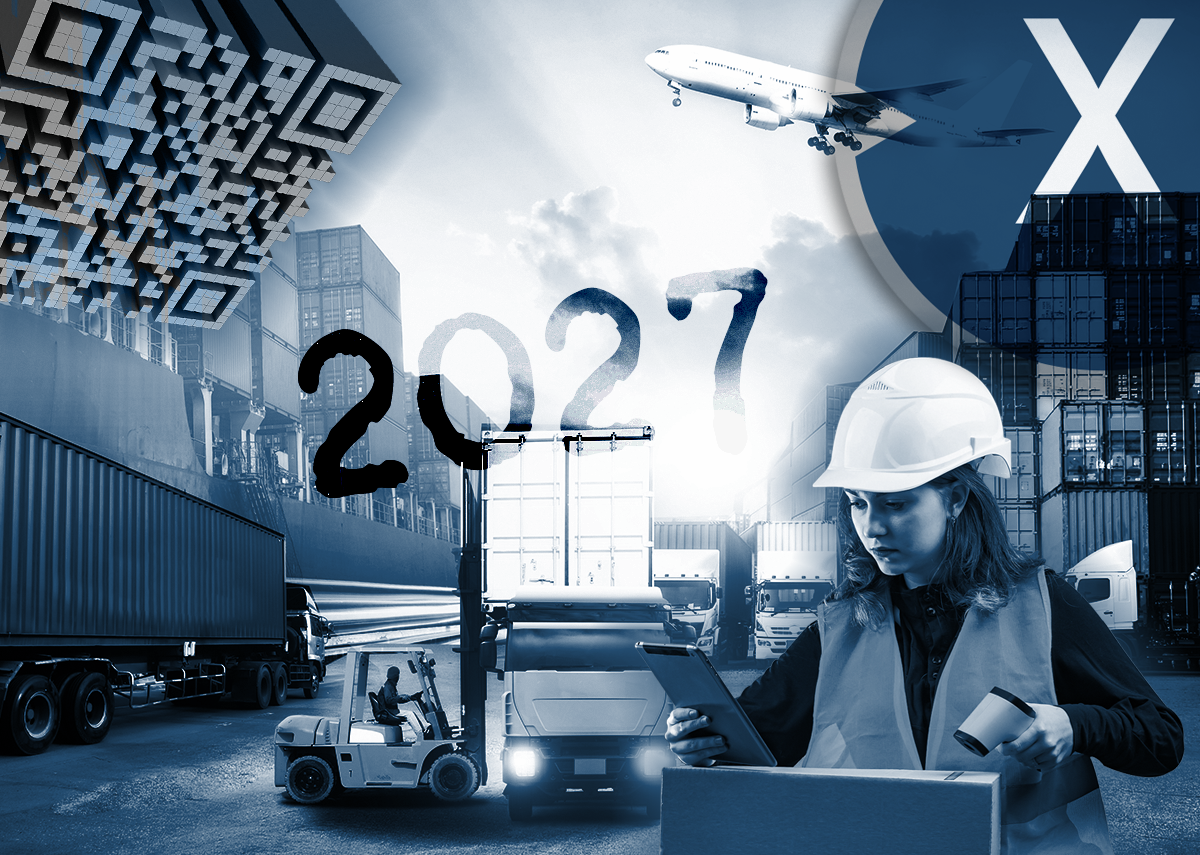
How 2D matrix code is transforming intralogistics and global logistics into real-time – Image: Xpert.Digital
The future of 2D barcodes in retail
The retail industry is preparing for a groundbreaking change with the potential to fundamentally revolutionize how products are tracked and recorded globally. Under the name "Sunrise 2027," the industry plans to replace the traditional 12-digit barcode, consisting of vertical lines printed on packaging, with a two-dimensional, web-enabled 2D barcode. This innovative move is being coordinated by the non-profit organization GS1, which is responsible for the global standardization of barcodes. Specifically, in the US, the existing Universal Product Code (UPC) barcodes will be replaced by a new 2D type that encodes information both horizontally and vertically. The ultimate goal of this initiative is to have only 2D barcodes accepted at checkouts worldwide by 2027.
The advantages of the 2D barcode
The transition to 2D barcodes offers numerous advantages for retailers and consumers. Compared to the traditional 1D barcode, which can only store limited information, the 2D barcode allows for the encoding of a larger amount of data. By integrating horizontal and vertical information, it becomes possible to store detailed product information, including production date, expiration date, batch number, and origin, in a single code. This significantly improves product traceability, enabling retailers to track shipments more accurately, manage inventory more efficiently, and ensure product safety.
Another advantage of the 2D barcode lies in its web-enabled nature. The integration of web-based functions allows consumers, as well as retailers and logistics providers, to access extended information and real-time data. Using smartphone apps or dedicated scanners, consumers can retrieve detailed product information, such as nutritional information, product reviews, manufacturer details, and even sustainable origin certifications. This improved transparency fosters trust and enables consumers to make informed purchasing decisions.
The role of GS1 and the global implementation
GS1, the organization behind barcode standardization, plays a crucial role in coordinating the global implementation of 2D barcodes in the retail sector. As an international organization with members from various industries, GS1 ensures a smooth and consistent transition to 2D barcodes. GS1 works closely with retailers, manufacturers, logistics providers, and regulatory bodies to establish uniform standards and guidelines.
The rollout of the 2D barcode is being implemented gradually and includes training, information campaigns, and technical support for participating companies. Coordinating this global initiative is a complex task, as there are numerous stakeholders and technologies that must be considered. Collaboration between GS1 and the participating companies is crucial to ensuring a smooth transition and the achievement of the desired objectives.
The impact on Unified Commerce and Omnichannel
The introduction of the 2D barcode will undoubtedly have an impact on unified commerce and omnichannel retailing. By integrating web-enabled features, the 2D barcode opens up new possibilities for retailers to offer seamless shopping experiences across various channels. Consumers can research products online, scan them in-store to obtain further information, or conveniently order them from home. This seamless integration of online and offline channels strengthens customer loyalty and creates consistent brand experiences.
Additionally, the 2D barcode enables improved product traceability throughout the entire supply chain. By integrating real-time data into the 2D code, retailers and logistics providers can track the exact location and status of products at any time. This allows for more efficient inventory management, more precise delivery scheduling, and faster responses to any supply chain issues.
➡️ The global “Sunrise 2027” initiative marks a significant step in the evolution of barcodes in retail. The transition from traditional 1D barcodes to 2D barcodes will improve product traceability, increase transparency, and enable a seamless shopping experience across multiple channels. GS1 plays a crucial role in coordinating this global initiative and is working closely with companies from various industries. While the switch to 2D barcodes presents technical and logistical challenges, it also offers significant opportunities for retailers, the supply chain, and consumers. The 2D barcode will undoubtedly play a vital role in improving efficiency, transparency, and customer engagement in retail, ushering in a new era of shopping.
The 2D barcode refers to the matrix code or 2D matrix code
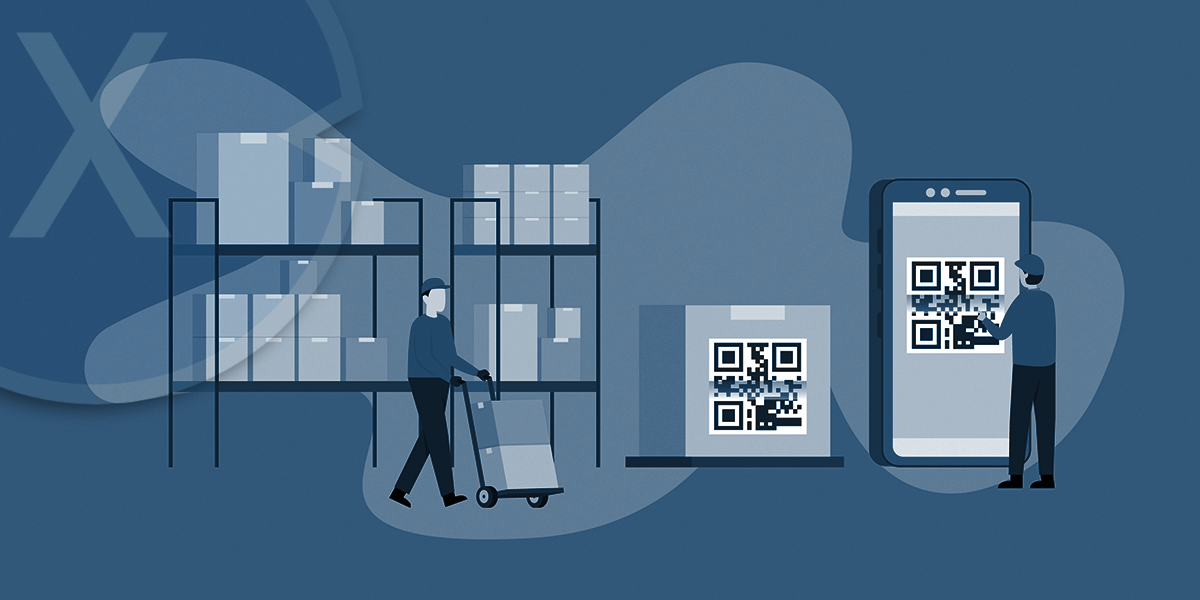
Intelligent Smart Scan Surface Cameras & 2D Matrix Code – Image: Xpert.Digital / Creativa Images|Shutterstock.com
The term "2D barcode" usually refers to a matrix code. A matrix code is a two-dimensional code consisting of square modules that encodes information both horizontally and vertically. Unlike the traditional 1D barcode, which consists only of vertical lines, the matrix code can store a larger amount of data and allows for more precise and versatile information encoding. The matrix code is an evolution of the barcode and is often referred to as a 2D barcode or 2D barcode.
The introduction of the barcode (1D barcode) in 1973 already revolutionized global logistics once before
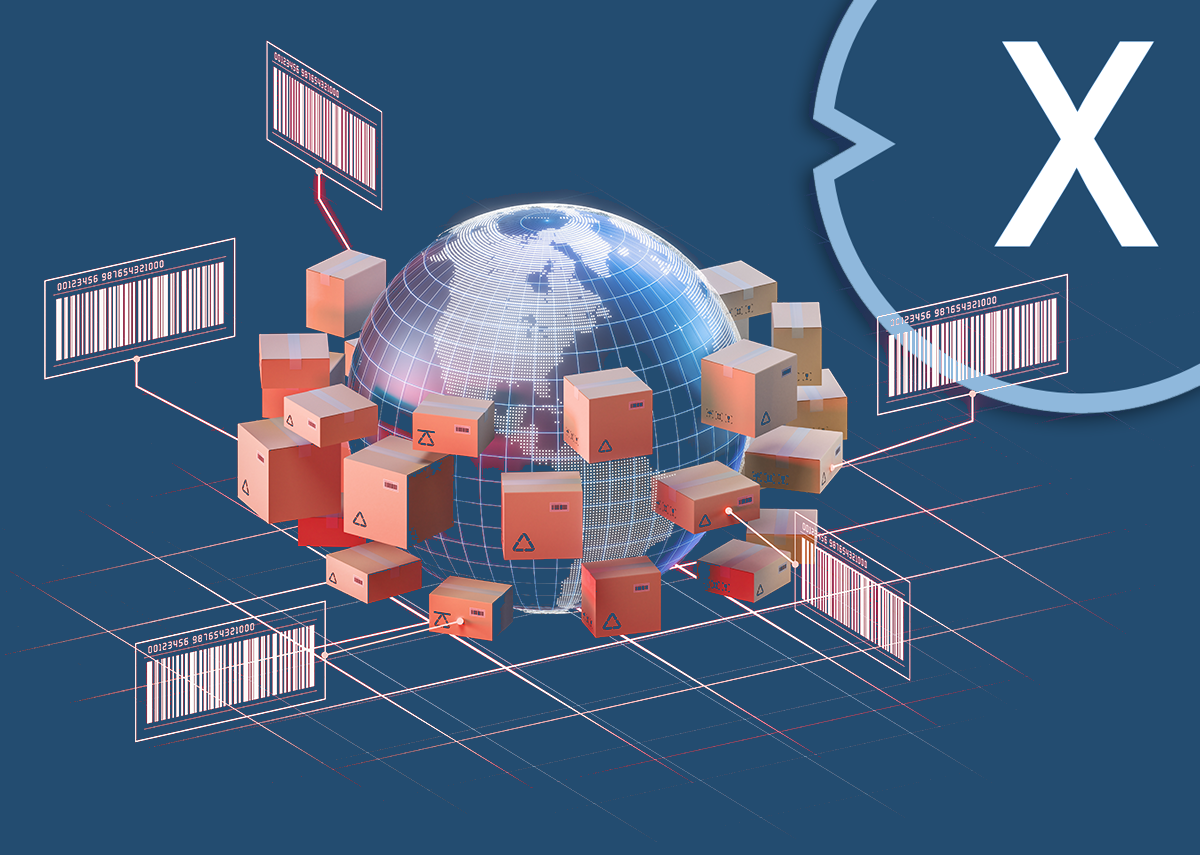
The 1D barcode revolutionized global logistics – Image: Xpert.Digital / Vink Fan|Shutterstock.com
The barcode has revolutionized global logistics in several ways:
Improved inventory management
By using barcodes, companies can manage their inventory more effectively. Each product is assigned a unique barcode that can be scanned to automatically update the inventory. This enables faster and more accurate inventory tracking and reduces the risk of overstocking or understocking.
More efficient goods distribution
Barcodes help speed up the flow of goods and reduce error rates. When each product is assigned a barcode, shipping labels can be printed quickly and easily, which speeds up order processing and reduces the risk of shipping errors.
Improved traceability
Barcodes enable companies to track the whereabouts of products in the supply chain, from manufacturing to sale. This is particularly important for tracing products in the event of recalls or product quality issues.
Automation of business processes
The use of barcodes has helped automate business processes by reducing manual data entry and enabling the use of automated scanners and readers. This has led to increased efficiency and productivity in the logistics industry.
➡️ Barcodes have revolutionized the logistics industry by enabling faster, more efficient, and more accurate processing of goods. The technology has helped increase productivity and reduce costs, which in turn has led to greater customer satisfaction and improved business competitiveness.
Here are some of the effects of barcodes on logistics:
Automation and efficiency
The use of barcodes has drastically reduced manual data entry. Employees can simply scan products and inventory instead of manually entering information. This has led to significant automation and increased efficiency in logistics. Barcodes enable faster and more accurate data capture, resulting in quicker order processing, improved inventory control, and an optimized supply chain.
Real-time data availability
Barcodes enable real-time tracking of products throughout the entire supply chain. When a product is scanned, the corresponding information becomes available immediately. This allows companies to monitor the exact location, inventory, and status of their products and react to changes in real time. Real-time data improves transparency, planning, and forecasting, enabling faster and more effective decision-making in logistics.
Inventory management and tracking
Barcodes enable precise inventory management and product tracking. By scanning barcodes, companies can update inventory in real time, reduce stockouts, and maintain accurate stock records. Precise product tracking also allows for the rapid identification of bottlenecks or supply chain issues and the implementation of appropriate measures.
Error reduction and quality control
Barcodes minimize human error in data entry and processing. Automating data capture reduces errors caused by manual input or reading mistakes. This leads to improved quality control and a reduction in logistics errors. Accurate product data capture and its assignment to specific orders or customers contribute to increased customer satisfaction and a lower error rate.
Efficient tracking of deliveries
Barcodes enable efficient shipment tracking. By scanning barcodes, shipments can be tracked in real time, allowing companies to monitor the status and location of packages. This makes it possible to provide customers with accurate information about the delivery status and to identify and resolve potential delays or problems early on.
➡️ The success of the barcode lay in its ease of use, widespread acceptance, and ability to improve efficiency, accuracy, and transparency in logistics. By implementing barcodes, companies were able to optimize their operations, reduce costs, increase customer satisfaction, and drive the entire logistics industry forward. The barcode has become a fundamental tool in logistics and has helped revolutionize global trade and supply chains.
What are the problems with barcodes that can be solved by switching to matrix codes?
Barcodes undoubtedly have many advantages and are an effective tool for improving logistics. However, there are some challenges associated with barcodes, and these could be resolved by switching to matrix codes.
Here are some problems with the barcode:
Limited data capacity
A barcode can only store a limited amount of information. Encoding extensive or complex data in a conventional barcode can be difficult. This can lead to limitations in traceability or the accurate recording of product information.
Readability
Barcodes are prone to reading errors. Dirt, damage, or distortion can impair a barcode's readability and lead to data capture errors. Difficulties can arise particularly in poor lighting conditions or when using poorly printed barcodes.
Limited display options
Barcodes are limited in their appearance and offer little scope for displaying brand identity or additional information. They are restricted to simple combinations of lines and numbers and cannot contain graphic or multidimensional elements.
Matrix codes, such as 2D matrix codes, offer potential solutions to these problems:
Extended data capacity
Matrix codes can offer significantly greater data capacity than traditional barcodes. They can store more extensive information, including text, numbers, graphics, and even links to online content. This enables more detailed traceability and a more comprehensive capture of product information.
Improved readability
Matrix codes are generally more robust and offer better readability than traditional barcodes. Their structure, consisting of a matrix of dots, makes them less susceptible to damage or distortion. This increases accuracy and reliability in data capture.
Enhanced display options
Matrix codes offer greater flexibility in terms of appearance and presentation. They can be created in various shapes and sizes and provide space for graphic elements or additional information. This allows companies to better represent their brand identity and provide additional information to consumers.
➡️ Switching to matrix codes would therefore improve data capacity, readability, and display options, meeting the requirements for more precise, versatile, and robust identification. This could further improve traceability, inventory management, and overall efficiency in logistics.
To what extent will the 2D matrix code, when it globally replaces the 1D barcode and is implemented in 2027, change Unified Commerce and Omnichannel?
The transition from 1D barcode to 2D matrix code has already begun and will have an impact on the areas of Unified Commerce and Omnichannel.
Extended product data
2D matrix codes can store larger amounts of data than 1D barcodes. This enables more detailed product information, such as batch numbers, serial numbers, expiration dates, and other specific details. In unified commerce and omnichannel environments, this can help customers access more product information across different channels and thus make more informed purchasing decisions.
Improved traceability
The 2D matrix code enables better product traceability. By storing unique identification numbers and other information, companies can track a product's entire lifecycle, from manufacturing and the supply chain to sale to the customer. This allows for more effective inventory management and traceability, which in turn can lead to an improved customer experience in unified commerce and omnichannel environments.
More efficient product tracking
The 2D matrix code enables faster and more accurate product data capture. Employees in warehouses, logistics centers, and stores can scan and track products more efficiently using 2D scanners or smartphones. This allows for real-time inventory updates and smoother supply chain operations. In unified commerce and omnichannel environments, this enables companies to ensure better inventory control and more efficient fulfillment.
Improved personalization and interaction
The 2D matrix code can also be used for personalized offers and interactions. By scanning the code, customers can access specific offers, recommendations, or information tailored to their individual needs. In unified commerce and omnichannel environments, this can lead to a personalized and customized customer experience by delivering relevant and targeted content to customers across various channels.
Simplified payment processes
2D matrix codes can also be used for mobile payment services and digital wallets. Customers can scan the code to make payments quickly and securely without having to manually enter credit card information. This can simplify the checkout process and make payments more convenient in unified commerce and omnichannel environments.
➡️ The transition to 2D matrix codes is therefore expected to further improve unified commerce and omnichannel by enabling better product information, traceability, inventory tracking, personalization, and payment processing. Businesses can leverage the advantages of the enhanced code format to optimize the customer experience and streamline operations.
Why is it so important that products can be traced more easily? What exactly is this needed for?
Improved product traceability is of great importance in various sectors of the economy
Quality assurance and product safety
Traceability enables companies to monitor and ensure the quality of their products. In the event of quality problems or recalls, companies can quickly and accurately identify which products are affected and take appropriate measures to guarantee consumer safety.
Compliance with regulations and standards
Many industries have legal regulations and standards that require complete product traceability. This applies particularly to sectors such as food, pharmaceuticals, and medical devices, where product safety and quality are paramount. Traceability allows companies to demonstrate that their products meet the required standards and comply with legal requirements.
Effective quality management and troubleshooting
Traceability enables companies to identify and efficiently correct errors or defects in their products. When a problem occurs, companies can trace the exact manufacturing process, the materials used, and other relevant information to determine the cause of the problem and take appropriate measures to prevent similar incidents in the future.
Supply chain optimization
Traceability plays a crucial role in optimizing the supply chain. By accurately tracking products throughout the entire supply chain, companies can monitor the location, status, and condition of products in real time. This enables more efficient inventory management, improved planning and forecasting, faster responses to changes in demand, and ultimately, an optimized supply chain.
Consumer trust and transparency
Traceability helps build consumer trust. Customers want to know where their products come from, how they were manufactured, and what ingredients they contain. Transparent traceability allows companies to provide consumers with more accurate and comprehensive information about their products, thereby strengthening customer trust and loyalty.
➡️ Improved product traceability enables better quality control, safety, regulatory compliance, supply chain efficiency, and consumer confidence. It is a crucial tool for ensuring product integrity, minimizing risks, and increasing customer satisfaction.
No-Line Commerce, Unified Commerce and Omnichannel - the differences
No-line commerce, unified commerce, and omnichannel are closely related concepts that refer to the integration of different sales channels in retail. Although they share similarities, there are also differences in their emphasis and approach
1. No-Line Commerce
The term "no-line commerce" refers to the shift in retail where the traditional distinction between online and offline channels is being eliminated. The goal is to offer a seamless shopping experience, regardless of the channel through which customers interact with the company. The focus is on integrating various sales channels to provide customers with a smooth shopping experience.
2. Unified Commerce
Unified Commerce goes a step further than No-Line Commerce and refers to the complete integration of all a company's sales channels and systems. It's about creating a single platform that enables the seamless synchronization and management of orders, inventory, customer data, and other relevant information. Unified Commerce aims for centralized data storage to ensure a consistent customer experience across all channels.
3. Omnichannel
Omnichannel commerce refers to the concept of seamlessly integrating and collaborating different sales channels to offer customers a consistent and holistic shopping experience. It's about connecting the channels so that customers can, for example, research products online, view them in-store, and then order online, or they can shop online and pick up or return products in-store. The main goal is to offer customers flexibility and convenience and ensure a seamless shopping experience across different channels.
➡️ The differences between these concepts lie in their emphasis and scope. No-Line Commerce focuses on integrating and blurring the lines between channels, while Unified Commerce concentrates on the comprehensive integration of systems and data. Omnichannel Commerce emphasizes the seamless collaboration of channels to provide customers with a consistent experience. Despite their differences, all three concepts aim to offer customers a seamless and smooth shopping experience across various channels.
Therefore, it would be incorrect to say that unified commerce is better than omnichannel, or vice versa. Both concepts have their own advantages and are geared towards different aspects of the customer experience in retail. The choice between unified commerce and omnichannel depends on a company's individual goals, resources, and business models.
Unified Commerce aims for complete integration and synchronization of all a company's sales channels and systems. It seeks to create a central data repository and ensure seamless collaboration across channels, resulting in a unified and consistent customer experience. Unified Commerce can be particularly beneficial for companies with numerous sales channels, complex business processes, or extensive product ranges. It enables efficient data management, inventory control, and customer engagement across all channels.
Omnichannel commerce focuses on the seamless integration and collaboration of various sales channels to offer customers a consistent shopping experience. It allows customers to switch flexibly between channels, giving them the option to research products online, view them in-store, and then order online, or vice versa. Omnichannel commerce emphasizes customer convenience and ease of use. It is particularly advantageous when a company has a strong presence across multiple channels and aims for seamless integration between online and offline experiences.
➡️ It's important to note that unified commerce and omnichannel are not mutually exclusive concepts. In fact, they can often go hand in hand, and many companies pursue a strategy that combines elements of both approaches to leverage their respective benefits. Ultimately, the choice between unified commerce and omnichannel should be aligned with a company's specific needs and business objectives. It's crucial to consider individual requirements and resources to achieve the best possible solution for customer experience and business success.
➡️ The term "no-line commerce" was coined to describe the shift in retail where the traditional distinction between online and offline channels is being eliminated. Instead, various sales channels are seamlessly connected to offer customers a seamless shopping experience. "Omnichannel commerce" describes the concept similarly but refers more specifically to the seamless integration and collaboration of various sales channels, including physical stores, online shops, mobile apps, social media, and more. The goal is to provide customers with a consistent and holistic shopping experience, regardless of the channel they use to interact with the company. In omnichannel commerce, the various channels are integrated so that customers can, for example, research products online, view them in-store, and then order online, or they can shop online and pick up or return the products in-store. The main objective is to offer customers flexibility and convenience and ensure they have a seamless shopping experience across different channels without any discrepancies or inefficiencies. The term "omnichannel commerce" emphasizes the importance of an integrated and consistent customer experience across all channels, while "no-line commerce" focuses on the blurring of boundaries between channels, ensuring a seamless shopping experience regardless of the channel chosen. Both terms ultimately describe the trend toward a holistic and omnichannel retail shopping experience.
Omnichannel or multichannel?
Omnichannel and multichannel are two terms frequently used in sales and marketing. They describe different approaches to interacting with customers across various channels. Here are the fundamental differences:
Multichannel refers to providing sales and communication channels through which customers can interact with a company. These can include physical stores, online shops, call centers, social media, or mobile apps. In a multichannel approach, these channels are often separate and operate independently. Customers can switch between channels, but there may not be seamless integration or continuity between them. For example, a customer might search for a product online but then purchase it in a physical store.
Omnichannel, on the other hand, goes a step further. It refers to an integrated and seamless customer experience across all channels. In the omnichannel approach, the various channels are interconnected, offering consistent communication and interaction. For example, customers can search for products online, add them to their shopping cart, and pick them up later in-store, or vice versa. Customer information, such as the shopping cart contents and purchase history, is synchronized across all channels to provide a personalized experience.
Although omnichannel is seen as an evolved form of multichannel, this doesn't necessarily mean that multichannel is obsolete. Multichannel can still be beneficial, especially for companies that are just starting out or have limited resources. It depends on the specific needs of the business and its target audience. However, omnichannel is increasingly seen as more important, as customers expect a seamless and consistent experience across all channels. Companies are investing more heavily in omnichannel strategies to increase customer satisfaction and gain a competitive edge.
No-Line Commerce - what you should know
No-line commerce is a retail concept that blurs the lines between online and offline shopping. The term "no-line" refers to the lack of a clear dividing line between online and offline.
In traditional e-commerce, products are sold exclusively through online channels, while in brick-and-mortar retail, sales take place in physical stores. No-line commerce, on the other hand, combines and seamlessly integrates the advantages of both sales channels.
In no-line commerce, customers can research products online, compare prices, and place orders. However, they also have the opportunity to experience, touch, and try out the products in a physical store before deciding to buy. No-line commerce thus offers a seamless integration of online and offline experiences.
An example of no-line commerce is click-and-collect, where customers order online and then pick up the products in the physical store. This allows customers to combine the convenience of online shopping with the immediate availability and personal contact of brick-and-mortar retail.
Another example is the option to return or exchange online orders in physical stores. Customers can return products they purchased online to the physical stores, offering flexibility and convenience.
No-line commerce aims to leverage the advantages of both channels to create a seamless and holistic shopping experience. Companies implementing no-line commerce offer their customers greater flexibility, choice, and convenience, while simultaneously strengthening brand loyalty.
It is important to note that no-line commerce requires a strategic approach to successfully integrate online and offline channels. Companies must adapt their sales and logistics processes to ensure seamless communication and coordination between channels. This often requires the use of technologies such as customer relationship management (CRM) systems, inventory management systems, and integrated e-commerce platforms.
No-line commerce is a response to changing customer needs and expectations in a digital world. Customers want to shop flexibly and enjoy the advantages of both traditional and online retail. Companies that successfully implement no-line commerce have the opportunity to strengthen customer loyalty, reach new target groups, and increase their competitiveness.
Unified Commerce - what you should know
Unified Commerce refers to the comprehensive and seamless integration of various sales channels and systems to create a unified and consistent shopping experience for customers. It's about overcoming the boundaries between different sales channels such as brick-and-mortar stores, online shops, mobile applications, and social media.
In traditional retail, distribution channels were often separate, leading to inconsistencies in product range, pricing, and customer experience. Unified Commerce aims to eliminate this fragmentation and seamlessly connect all distribution channels.
Unified Commerce allows customers to research products online, try them out in a store, and then purchase them online or offline. Transactions, inventory, and customer data are synchronized in real time across all channels to ensure a consistent experience. This enables customers to seamlessly switch between channels without any loss of information or inconsistencies.
To enable unified commerce, the integration of various backend systems is required, such as e-commerce platforms, point-of-sale systems, warehouse management systems, and customer databases. By integrating these systems, companies can provide consistent, real-time information about products, orders, and customers.
Unified Commerce offers businesses a range of advantages. These include improved customer satisfaction, as customers receive a consistent shopping experience across various channels. Businesses can also benefit from better use of customer information to provide personalized offers and recommendations. Furthermore, Unified Commerce enables businesses to manage inventory more efficiently and bring new products to market faster.
Unified Commerce is about overcoming the fragmentation and inconsistencies between different sales channels and creating a seamless, consistent and smooth shopping experience for customers.
Another 'revolution' and complete market changes are on the horizon!
How XR technologies (Extended, Augmented, Mixed and Virtual Reality) and metaverse concepts will change no-line commerce, unified commerce and omnichannel in the coming years
XR technologies (Extended Reality, Augmented Reality, Mixed Reality and Virtual Reality) have the potential to significantly change no-line commerce, unified commerce and omnichannel in the coming years:
Improved customer experience
XR technologies offer an immersive experience that allows customers to experience products and services in a completely new way. Augmented Reality (AR), for example, lets customers view and test products in their real-world environment before buying them. Virtual Reality (VR) allows customers to visit virtual stores and explore products in a virtual setting. This improves customer loyalty and increases satisfaction.
Personalized shopping experiences
XR technologies enable retailers to create personalized shopping experiences. By capturing customer data and preferences, AR and VR applications can provide tailored product suggestions and recommendations. Customers can create and customize their own virtual spaces to showcase products according to their individual needs.
Virtual stores and marketplaces
XR technologies enable the creation of virtual stores and marketplaces in the metaverse. Merchants can showcase and sell their products in a virtual environment where customers can interact with other users. This opens up new possibilities for marketing and selling products, especially niche products or those requiring an immersive presentation.
Integrating XR into physical stores
XR technologies can also be used in physical stores to enhance the customer experience and promote no-line commerce. Retailers can implement AR applications to provide customers with information about products, special offers, and personalized recommendations. By using VR, retailers can create virtual fitting rooms or product presentations that offer customers unique experiences.
Social Interaction in the Metaverse
The concept of the metaverse involves an immersive virtual world where people can interact and communicate. Through XR technologies, customers can interact with other users in virtual stores, marketplaces, or social spaces. This social component can strengthen customer loyalty and create a sense of community.

Augmented & Extended Industrial Metaverse – Xpert Reality / Showrooms Agency – Planning Office
Xpert's visionary Industrial Metaverse is a digital parallel universe that promises its users an immersive experience through Extended Reality (XR). It represents a potential business design of the future, enabling seamless interaction between the digital and analog worlds. Many companies are exploring the potential of the Metaverse, with some using virtual reality technology to create virtual showrooms and boost sales. The Metaverse extends across all devices, including wearables, smartphones, laptops, tablets, and smart home devices, and its connection to the real world is fluid.
More information here:
➡️ XR technologies and the concept of the metaverse, including no-line commerce, unified commerce, and omnichannel, will continue to evolve in the coming years, creating new opportunities for retailers to engage customers, offer personalized experiences, and increase sales. However, this is also expected to bring challenges regarding data privacy, security, and creating seamless integration between the various technologies.

Xpert.Plus Warehouse Optimization - High-bay warehouses and pallet warehouses: Consulting and planning
Xpert.Plus – industry expert, here with its own 'Xpert.Digital Industry Hub' in the field of mechanical engineering with over 1,000 specialist articles
Xpert.Plus is a project by Xpert.Digital. We have many years of experience in supporting and consulting on warehouse solutions and in warehouse optimization, which we combine under Xpert.Plus in a large network.

Konrad Wolfenstein
I would be happy to serve as your personal advisor.
You can contact me by filling out the contact form below or simply call me on +49 7348 4088 965 (Munich) .
I'm looking forward to our joint project.
Write to me


Xpert.Digital – Konrad Wolfenstein
Xpert.Digital is a hub for industry focusing on digitalization, mechanical engineering, logistics/intralogistics and photovoltaics.
With our 360° Business Development solution, we support renowned companies from new business to after-sales.
Market intelligence, smarketing, marketing automation, content development, PR, mail campaigns, personalized social media and lead nurturing are part of our digital tools.
You can find more information at: www.xpert.digital – www.xpert.solar – www.xpert.plus
Keep in touch