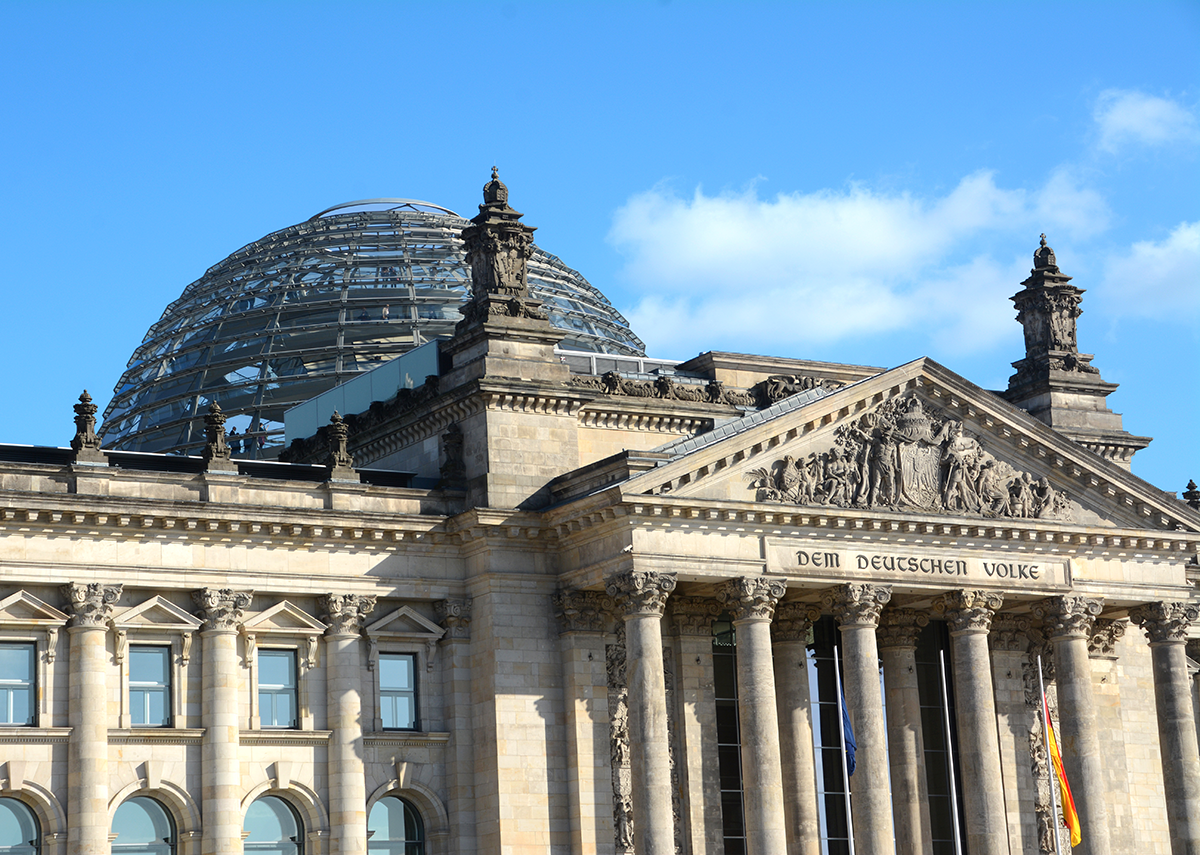
Reichstag building – seat of the German Bundestag – Image: EnricoAliberti ItalyPhoto|Shutterstock.com
The reduction of VAT on solar power systems in Germany to 0% (zero tax rate) from January 1, 2023, is now a mere formality. This applies to both the installation and purchase of photovoltaic systems and energy storage units up to 30 kWp. The VAT exemption for solar power systems is good news for the solar industry and climate policy.
The zero percent rule is an important step towards further strengthening photovoltaics in Germany and advancing the expansion of renewable energies. Solar power systems are a climate-friendly and clean investment in the future. The VAT exemption makes photovoltaics even more attractive and affordable.
The current progress in the federal legislative process
The federal legislative process is a three-stage process in which the draft law is debated in the Bundestag and subsequently either adopted or rejected.
The first stage, the so-called first reading, serves to debate the political significance of the proposed law and its objectives.
➡️ Debate in the Bundestag on the Federal Government's draft for an Annual Tax Act 2022 – 14 October 2022 (Friday)
In the second stage, the second reading, the bill is referred to the committees for consideration. Here, the draft law is examined in detail. The lead committee then presents a version of the bill, which is debated in plenary in the third and final stage, the third reading. At this stage, any member of parliament can propose further amendments.
➡️ The Finance Committee adopted the 2022 Annual Tax Act at its meeting on Wednesday (November 30, 2022).
The third reading is the last opportunity to propose amendments to draft legislation. Only parliamentary groups or at least five percent of the members of parliament can submit such amendments. These amendments may only concern provisions that were changed or newly added during the second reading. After the third reading, the Bundestag votes on the draft legislation.
➡️ In its third reading on December 2, 2022 (Friday), the German Bundestag held its final deliberations on the Annual Tax Act.
Once a law has been passed in the Bundestag, it must be sent to the Bundesrat immediately.
The Basic Law fundamentally distinguishes between laws requiring consent and laws subject to objection. If the Bundesrat (Federal Council) withholds its consent to a law requiring consent, the legislative proposal fails. In the case of a law subject to objection, the Bundestag (Federal Parliament) can, under certain conditions, override an objection from the Bundesrat.
➡️ Approval by the Federal Council on December 16 (Friday) is considered certain. The federal government has taken up the appeal from the states, particularly regarding income tax, to make the operation of small photovoltaic systems legally tax-exempt.
Once the final stage of the legislative process has been successfully completed, the Federal Government only needs to countersign it and have it confirmed again by the Federal President. After that, it is published in the Federal Law Gazette.
The current development

Tax exemption: Tax boost for solar expansion now approved by the Bundestag!
Related to this:
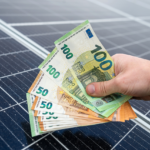
Top selling point for solar installers: No more tax on solar systems
Related to this:
Zero tax rate: Does 0% VAT billing equal VAT exemption?
The planned zero VAT rate is something completely new in German VAT law. This means that deliveries and installations of these systems will be taxed at a rate of 0% starting next year. In other words, there will be no VAT, or rather, the VAT rate will be 0%. We are familiar with a similar (but entirely different) reduced VAT rate of 7% for food, books, and newspapers.
Background information:
The standard VAT rate is 19 percent. Certain services are taxed at a reduced rate of 7 percent according to Section 12 Paragraph 2 of the German VAT Act (UStG) or are exempt from VAT according to Section 4 of the UStG. The standard rate of 19 percent has been in effect since January 1, 2007, and the reduced rate of 7 percent since July 1, 1983. In addition, Section 24 of the UStG provides for average rates for agricultural and forestry businesses, which can be 5.5 percent or 10.7 percent. Furthermore, Section 23 of the UStG provides for average rates derived from these two rates for agricultural and forestry businesses, as well as certain companies and corporations.
The zero tax rate will now apply from 2023 onwards to installations and deliveries of solar modules, including electricity storage systems, to operators if the PV system is installed on or near private residences as well as public and other buildings.
In the future, it will be the responsibility of the solar installer or seller to determine whether the 0% or 19% VAT regulation applies. This can be done either through written prior confirmation from the customer that they will not be operating a system larger than 30 kWp and/or by providing proof via the market master register
⚠️ A solar system, energy storage unit, or completed installation that has already been purchased cannot be retroactively invoiced using the zero VAT rate. Logically, with the zero VAT rate, there is also no longer any possibility or need to claim a VAT refund.
⚠️ If the purchase and commissioning via a specialist company for the year 2022 has not yet been completed and advance payments have already been made, the commissioned company can still correct the 19% VAT calculated for 2022 accordingly in the final invoice for 2023.
⚠️ The fixed point in time for commissioning is, in addition to the confirmation from the solar installer, the entry in the market master data register.
There is a reporting obligation for the market master data register for both solar power plants and electricity storage systems – each separately
Every new plant must be registered in the market master data register within one month of commissioning.
You must register each electricity-generating system individually. This also includes battery storage . If you operate a photovoltaic system with battery storage, you must register both the solar panels and the battery storage separately .
More information can be found here:
📣 Solar solutions for industry, retail and municipalities
Everything from a single source, specifically designed for solar solutions for large parking areas. Refinance or offset your future costs with your own electricity generation.
👨🏻 👩🏻 👴🏻 👵🏻 For private households
We're local! We provide consultation, planning, and installation services. We have attractive solar solutions for you, from your roof and patio to your parking space
🎯 For solar installers, plumbers, electricians and roofers
Consultation and planning including a non-binding cost estimate. We connect you with strong partners in photovoltaics.
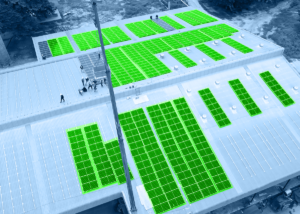
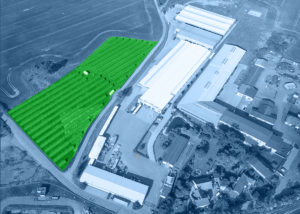


- Planning photovoltaics on warehouses, commercial buildings and industrial buildings
- Industrial plant: Planning a photovoltaic open-field system or open-area system
- Planning solar power systems with photovoltaic solutions for freight forwarding companies and contract logistics
- B2B Solar Systems and Photovoltaic Solutions & Consulting
That's why you should choose Xpert.Solar for your photovoltaic system consultation, planning and installation: Rooftop solar systems with electricity storage, solar terraces and/or solar carports!

Konrad Wolfenstein
I would be happy to serve as your personal advisor.
You can contact me by filling out the contact form below or simply call me on +49 7348 4088 965 .
I'm looking forward to our joint project.
Write to me



Xpert.Digital – Konrad Wolfenstein
Xpert.Digital is a hub for industry focusing on digitalization, mechanical engineering, logistics/intralogistics and photovoltaics.
With our 360° Business Development solution, we support renowned companies from new business to after-sales.
Market intelligence, smarketing, marketing automation, content development, PR, mail campaigns, personalized social media and lead nurturing are part of our digital tools.
You can find more information at: www.xpert.digital – www.xpert.solar – www.xpert.plus
Keep in touch