XR Tech Duel of AR Glasses Technology – Meta's Orion glasses and TDK's Full-Color Laser Module (FCLM) – Creative image: Xpert.Digital
🚀💡 Innovations in AR: Meta vs. TDK - A technology duel
👓🤖 From micro-LEDs to laser modules: The AR technology race
The main difference between the micro-LED projectors and silicon carbide lenses in Meta's AR glasses and TDK's full-color laser module (FCLM) lies in their differing approaches to image projection, the technologies employed, and the resulting benefits for the user experience. Both companies are pursuing different technological approaches to overcome the challenges of augmented reality (AR) and offer users an immersive and comfortable experience.
💡🔬 Metas Micro-LED projectors and silicon carbide lenses
Meta uses micro-LED projectors in combination with innovative silicon carbide lenses to project images directly onto the lenses of the glasses. This technology enables high light refraction, which directly impacts image quality and the clarity of the field of vision. The silicon carbide lenses allow for efficient light focusing and precise control of the image display. Meta's use of micro-LEDs is characterized by high efficiency and brightness, which is particularly advantageous in bright environments, as the images remain clearly visible even in strong ambient light.
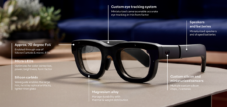
Choosing silicon carbide as the lens material offers several advantages. Silicon carbide has a higher refractive index than conventional glass, allowing it to focus and refract light more effectively, resulting in more precise image rendering. It is also more durable and lighter than glass, contributing to a lighter headset and increased wearing comfort. This combination of properties makes silicon carbide an ideal material for applications where optical clarity and robustness are crucial. Meta's AR glasses, codenamed Orion, achieve a field of view of approximately 70 degrees using this technology, which is considered very large compared to other AR glasses on the market. A wider field of view enables more intense immersion and a more expansive display of virtual content within the real world.
A key advantage of micro-LED projectors is that they enable precise image projection onto the lenses without the need for additional optical components such as mirrors or other lens elements.
This contributes to the glasses' compact size and reduces mechanical complexity. The micro-LEDs are capable of ensuring high image quality in terms of both brightness and color accuracy. Precise color reproduction and high contrast are particularly important features of this technology, as they create a realistic image and allow users to clearly distinguish between real and virtual content.
☄️🌈 TDK's Full Color Laser Module (FCLM)
Unlike Meta, TDK takes a radically different approach with its Full-Color Laser Module (FCLM). Instead of projecting the image onto a lens, TDK's FCLM projects the laser light directly onto the user's retina. This technology is based on planar waveguide (PLC) circuits that effectively mix the laser light without the need for optical components such as lenses or mirrors. Direct projection onto the retina allows users to perceive both the real world and virtual content simultaneously and sharply, without having to shift focus. With this, TDK addresses one of the biggest challenges of conventional AR glasses: the problem of constantly switching focus between the real and virtual worlds.
A key advantage of FCLM technology is the ability to display a clear image regardless of the user's visual acuity.
Because the laser light is projected directly onto the retina, the image is equally sharp for all users, regardless of their individual visual acuity. This is a significant advantage over conventional AR solutions, where eyeglass wearers often struggle to achieve an optimal viewing experience. Furthermore, the FCLM module offers an exceptional color depth of 16.7 million colors, guaranteeing impressive visual quality and enabling a vibrant rendering of virtual content. The viewing angle is also wider compared to previous modules, contributing to a more immersive user experience.
Weighing just 0.38 grams, the FCLM is one of the most compact and lightweight modules of its kind, making it ideal for use in sleek, minimalist AR glasses. Its small size and light weight allow AR glasses equipped with TDK's FCLM to be manufactured with a particularly slim design, significantly increasing their everyday usability.
🌟 Comparison between Meta's Micro-LED projectors and TDK's Full-Color Laser Module
🚀💡 To better understand the comparison between Meta's micro-LED projectors with silicon carbide lenses and TDK's full-color laser module (FCLM), it's essential to examine their respective functionalities, material advantages, technical limitations, and specific applications in detail. Both technologies are pioneering in the field of augmented reality (AR), but their differences highlight the different priorities they set during development and the user needs they address.
🔍 1. Projection technology
Meta relies on micro-LED projectors that project images directly onto the glasses' specially designed silicon carbide lenses. This approach utilizes a micro-sized light-emitting diode (LED) to project high-resolution images into the user's field of vision. Micro-LEDs are considered extremely efficient and offer low energy consumption, which is particularly important for wearable devices like AR glasses. They produce bright, high-contrast images and are optimized for visibility both indoors and in brightly lit environments. The use of micro-LEDs also eliminates the need for additional mirrors or lenses to project the image onto the glasses. This reduces the number of components and allows for a lighter design.
TDK uses a different technology: the Full-Color Laser Module (FCLM). Instead of projecting the image onto a lens, the FCLM sends the image directly onto the user's retina. This direct laser projection creates the image directly in the eye, without a lens obstructing the field of vision. This so-called "retina projection" requires minimal adjustment of the glasses and ensures consistent image quality regardless of the user's individual prescription. Unlike Meta's approach, TDK's module requires no additional optical elements for image transmission, as the lasers themselves project the image onto the retina.
🔦 2. Lens material
Meta uses silicon carbide as the lens material, which is characterized by its high refractive index and robustness. Silicon carbide has a higher refractive index than glass, resulting in a more focused beam of light. This material property is crucial for image quality, as it allows for more precise refraction and focus of the light. Silicon carbide is also a very lightweight and durable material, making the glasses robust and comfortable. Another advantage is its thermal stability: silicon carbide is temperature-resistant, ensuring that the device remains stable even during extended use.
TDK does not require lenses in the conventional sense, as the projection occurs directly onto the retina. This technology eliminates the need for a physical lens in front of the eye, thus reducing the optical limitations that could arise from the material and shape of the lens. This has the advantage of allowing the glasses to be designed even more compact and lighter, increasing wearing comfort and enabling a more discreet look.
🎯 3. Field of vision
The field of view is a key aspect in the user experience of AR glasses, as it determines how much virtual information the user can perceive in their environment.
Meta's silicon carbide lenses and micro-LED projectors offer a field of view of approximately 70 degrees. This is an impressive figure in the AR world and allows for a wide display of information. A wider field of view provides greater immersion, as the user can perceive more content at once. However, a wide field of view combined with high resolutions can also lead to increased energy consumption, which in turn affects battery life. Meta has therefore struck a balance between field of view and energy efficiency that should be sufficient for many applications without requiring excessively frequent charging.
TDK states that its FCLM offers a "greater field of view" compared to previous models. Because the projection is made directly onto the retina, the field of view is theoretically more flexible and can be expanded depending on the glasses model. Directional retinal projection allows for more dynamic control of the user's field of view. This could potentially allow TDK to further increase the field of view in future models without compromising image quality.
🎨 4. Image quality and color reproduction
Image quality and color reproduction are also crucial factors for a realistic and immersive AR experience.
Meta achieves high image quality through the use of micro-LEDs, which produce a very clear and detailed image. LEDs inherently offer high brightness and color fidelity, enabling precise color reproduction in various lighting conditions. The high refractive index of the silicon carbide lenses ensures a particularly sharp and clear image. One advantage of LED technology is its ability to deliver high color depth, resulting in more vibrant and natural colors that enhance the AR experience.
TDK uses laser light for color reproduction, achieving an exceptional color depth of 16.7 million colors. Lasers have higher coherence than LEDs, meaning that the light is emitted in narrower wavelength bands, thus producing very precise colors. This enables extremely detailed images and vibrant colors. Because the laser projection is directed straight onto the retina, image quality remains consistent even for users with visual impairments. The FCLM can therefore deliver sharp and high-contrast images regardless of individual visual acuity.
📏 5. Size and weight
Meta has created a lightweight and robust design by using micro-LEDs and silicon carbide lenses, but still requires an external computing module. To enable the slim design, some of the computing power is offloaded to an external device called the "Compute Puck." This puck is compact enough to fit in a pocket, but the need for an additional device could be a limitation for some users, as it could restrict mobility, especially when a wireless connection needs to be maintained over short distances.
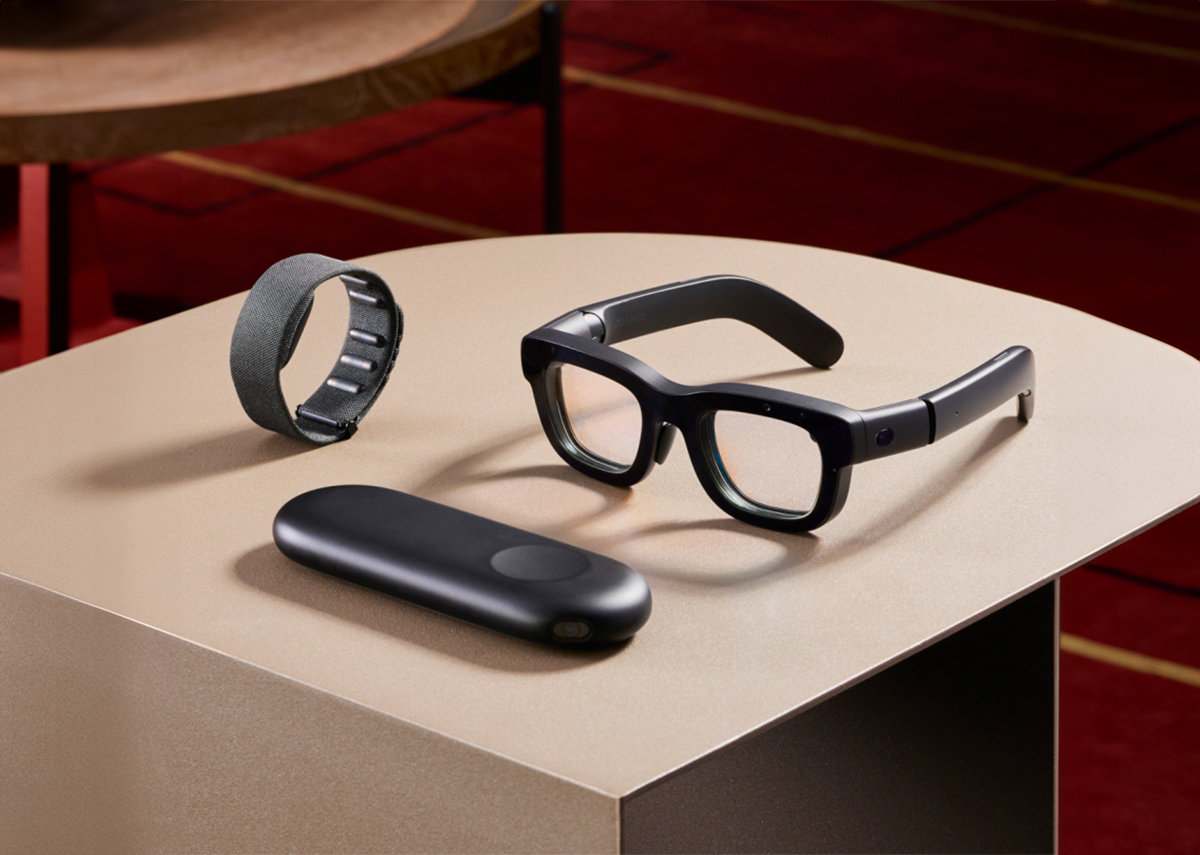
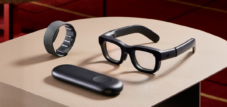
The glasses must be paired with a "neural armband" (left) and a wireless compute puck (center) – Image: Meta
TDK, on the other hand, has developed the FCLM, an extremely compact module weighing only 0.38 grams, which allows for integration into particularly slim and lightweight glasses. Since the FCLM module does not require an additional optical processing unit, the entire AR glasses can be designed very compactly, increasing their suitability for everyday use. Especially for users who want to wear AR glasses for extended periods or for outdoor activities, TDK offers a lighter and less bulky alternative.

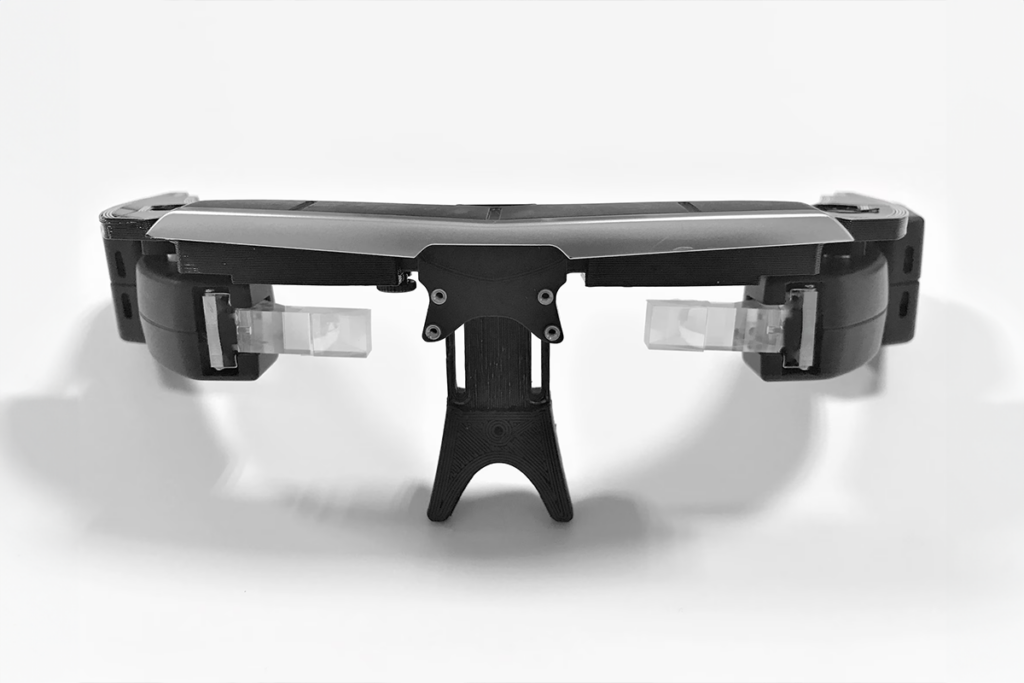
Advances in XR technology for the metaverse, AR and VR glasses: Full-color laser for 4K smart glasses from TDK – Image: TDK
🎯 6. Scope and target group
Meta's technology, featuring micro-LED projectors and silicon carbide lenses, is designed for users who place great value on visual precision and a wide field of view. This makes Meta's glasses ideal for applications requiring detailed information display across a broader field of view, such as industrial production, design, or technical training. The glasses can serve as a tool for visualizing complex data and supporting precise work.
TDK's FCLM, on the other hand, appeals to users who rely on consistently sharp image display without focus shifts and prefer a particularly compact and lightweight design. The FCLM could be especially suitable for consumer applications, such as everyday use for navigation, messaging, and displaying digital information in the real world. For users who want to wear their glasses frequently and in various contexts, TDK offers a flexible and practical solution.
💡 Exciting technologies, exciting solutions
Both technologies impressively demonstrate how differently the requirements for AR glasses can be met and offer interesting perspectives for the future of augmented reality. While Meta's approach focuses on a high degree of visual realism and a large field of view, TDK's solution offers a lighter and more flexible alternative with image quality that remains constant regardless of the user's visual acuity.
The choice between the two technologies will depend heavily on the individual needs and specific application of the users. In the future, however, hybrid approaches could be developed that combine the advantages of both technologies – for example, a system that combines a wide field of view with a compact design and retina projection.
🗒️ Xpert.Digital: A pioneer in the field of Extended and Augmented Reality

Finding the right Metaverse agency, planning office, or consulting firm - Image: Xpert.Digital
🗒️ Finding the right Metaverse agency, planning office, or consulting firm – Search and search: Top Ten Tips for Consulting & Planning
More information here:
🚀🕶️ Our comparison review: New technology in the field of augmented reality
💡 Meta's ORION AR glasses: Progress and challenges
Meta has established itself as a pioneer in the world of AR with the development of the ORION AR glasses. The ORION glasses aim to elevate the AR experience by allowing users to experience and interact with virtual content directly in their environment. A key component of this technology is the Compute Puck – an external device required for processing and controlling the AR content. This Compute Puck is a portable computer offering high computing power and is specifically optimized for processing the large amounts of data necessary for rendering realistic AR content. However, the need for an additional device also presents a certain limitation, as users must carry the Compute Puck with them at all times, which can impact comfort and mobility. While the Compute Puck's computing power is impressive and may be sufficient for demanding AR applications, the requirement for an external device remains a drawback that reduces the appeal of the ORION AR glasses in certain areas.
🔍 TDK's Full-Color Laser Module: A compact solution
In contrast, TDK offers a significantly more compact and efficient solution for smart glasses and AR glasses with its Full-Color Laser Module (FCLM). TDK has developed an innovative module that enables the display of color-intensive and high-resolution content without the need for external devices. The TDK Full-Color Laser Module (FCLM) utilizes laser technology that allows for lifelike color reproduction and an exceptional visual experience. This technology not only creates impressive image quality but also makes the module exceptionally compact and lightweight. As a result, the FCLM is ideally suited for mobile and wearable applications where weight and size are critical factors.
🌟 Versatility and energy efficiency of the FCLM
TDK's FCLM is not limited to displaying realistic images; it also opens up new possibilities for integrating AR content into everyday applications. The module's compact design enables the development of smart glasses that are virtually indistinguishable from regular glasses, thus ensuring high user acceptance. These smart glasses could be used, for example, in retail, industry, or education, where they could display additional information directly in the field of vision for employees and customers. Through the seamless integration of AR content, the FCLM has the potential to become a key component of digital transformation across numerous industries.
🔋 Energy efficiency and image quality of TDK's FCLM
Another advantage of TDK's FCLM is its energy efficiency. While conventional AR glasses often struggle with limited battery life due to the significant resources required for image processing and rendering AR content, the FCLM is designed to operate with minimal energy consumption. This extends usage time and reduces reliance on a constant power supply, a crucial factor, especially in mobile applications. The FCLM's energy efficiency is not only environmentally friendly but also cost-effective, as it reduces the frequency of charging and extends battery life.
🎨 Impressive image quality of the FCLM
In terms of image quality, TDK's FCLM is equally impressive. The laser technology enables a display free from the limitations of traditional screens. Colors appear more vibrant and realistic thanks to the laser technology, and contrast and brightness are also significantly higher than with other technologies. This makes the FCLM particularly interesting for applications where precise color representation is crucial, such as in medicine, design, or cartography. Users experience AR content that blends seamlessly into the real world, creating a highly immersive experience. This realistic rendering effect could play a key role in the future development of AR technologies, as users increasingly demand higher quality and authenticity from content.
🔄 Versatility and integration with XR technologies
Another aspect that makes the FCLM a favorite for the development of XR technologies and AR glasses is its versatility. The module can be flexibly integrated into various devices and could therefore be used in a wide range of applications. Whether in industry for maintenance work, in logistics for displaying inventory, or in healthcare to support doctors and nurses – the possibilities are virtually limitless. This flexibility and ease of integration make the FCLM a future-proof solution that can support companies from a wide variety of industries in implementing their digital strategies.
🏆 Summary: TDK's FCLM vs. Meta's ORION AR glasses
In summary, TDK's full-color laser module (FCLM) offers significant advantages over Meta's ORION AR glasses. Its independence from an external device, compact and lightweight design, excellent image quality, and high energy efficiency make the FCLM the ideal choice for mobile and user-friendly AR applications. While Meta's ORION AR glasses are undoubtedly an impressive product with high computing power, their reliance on the Compute Puck remains a drawback, limiting user flexibility and comfort. TDK's FCLM, on the other hand, allows for seamless integration into everyday life and offers image quality that leaves little to be desired.
Ultimately, choosing the right AR device or module depends on the specific requirements and application. However, for companies seeking a straightforward and user-friendly solution, TDK's FCLM should be an extremely attractive option. Given the rapid pace of development in AR and XR technology, the FCLM could pave the way for a new generation of smart glasses with the potential to fundamentally transform everyday life and the workplace.
We are here for you - Consulting - Planning - Implementation - Project Management
Industry Hub Blog
An industry hub blog is a digital platform where content related to specific industries, sectors, or business areas is published. The term "hub" refers to a central location or meeting point where relevant information, news, insights, and resources are made available to professionals, entrepreneurs, investors, and other interested parties in a particular industry. An industry hub blog serves as an information source and discussion forum, connecting the community, sharing knowledge, and keeping track of the latest developments in the respective industry.

Konrad Wolfenstein
I would be happy to serve as your personal advisor.
You can contact me by filling out the contact form below or simply call me on +49 7348 4088 965 .
I'm looking forward to our joint project.
Features of an Industry Hub Blog
Industry-specific content
An industry hub blog focuses on a specific industry or economic sector. The published content covers topics relevant to professionals and those interested in that industry.
Latest news
The blog offers current news and updates on developments, trends, market events and happenings in the respective industry.
Expertise and insights
Industry hub blogs offer expertise, insights, and analysis from experts and industry insiders. This information can help develop a deeper understanding of the challenges and opportunities within the industry.
Best practices and tips
The blog can provide best practices, advice, and tips for companies and professionals in the industry. This can range from business strategies to technology trends.
Networking and community building
Readers often have the opportunity to leave comments and participate in discussions. This creates an online community of like-minded people who can exchange ideas and network with each other.
Resources and tools
Industry hub blogs can provide links to useful resources, tools, guides, and reports relevant to the industry.
Events and conferences
The blog can also provide information about upcoming industry events, conferences, trade fairs and webinars.
Write to me


Xpert.Digital - Konrad Wolfenstein
Xpert.Digital is a hub for industry focusing on digitalization, mechanical engineering, logistics/intralogistics and photovoltaics.
With our 360° Business Development solution, we support renowned companies from new business to after-sales.
Market intelligence, smarketing, marketing automation, content development, PR, mail campaigns, personalized social media and lead nurturing are part of our digital tools.
You can find more information at: www.xpert.digital - www.xpert.solar - www.xpert.plus
Keep in touch