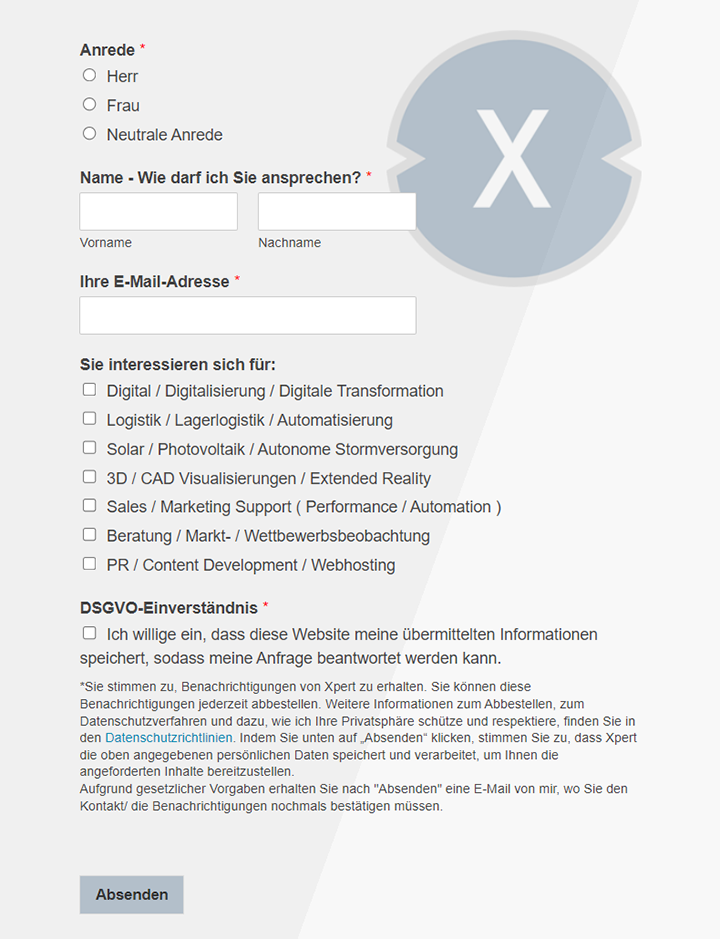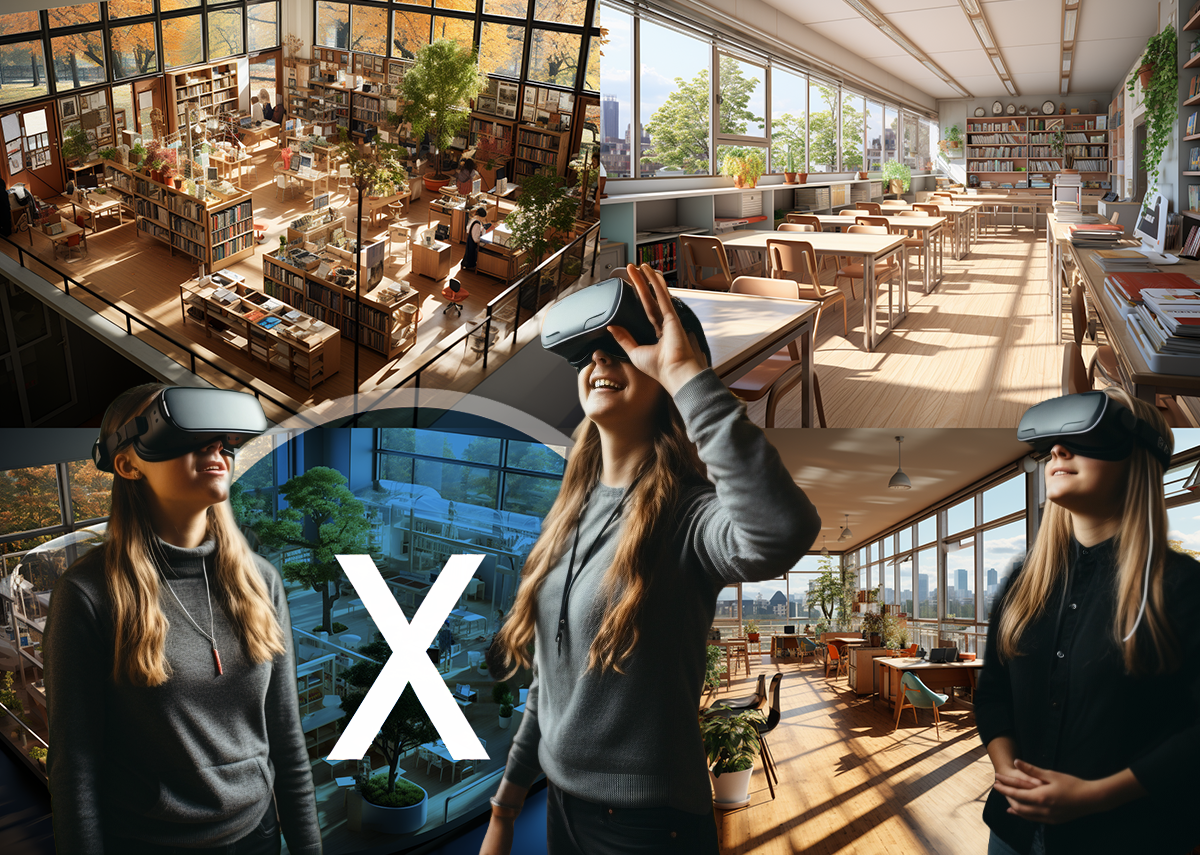
Extended Reality and XR applications that deliver added value for schools and educational institutions – Image: Xpert.Digital
🎓🔮 Extended Reality and XR applications that deliver added value for schools and educational institutions - Will 2024 be the year of the breakthrough for Extended Reality (XR)?
A new chapter seems to be opening in the world of technology: 2024 is shaping up to be the year in which Extended Reality (XR) may finally achieve its long-awaited breakthrough in the education sector. XR, an umbrella term encompassing Virtual Reality (VR), Augmented Reality (AR), and Mixed Reality (MR), has the potential to revolutionize learning environments and reshape the concept of traditional teaching.
👓 VR in the classroom
VR allows students to immerse themselves in completely artificial environments, while AR overlays real-world scenarios with digital information. MR combines both worlds, enabling interaction with digital objects in a real-world setting. These technologies offer a unique opportunity to make learning more interactive, engaging, and effective.
🏛️ History lessons and VR
Imagine a history lesson where students can explore ancient Rome through VR glasses. They walk through virtual streets, visit the Senate, and practically feel the atmosphere of the Roman Forum. This immersive experience could spark interest and contribute to a deeper understanding of historical events.
🔬 AR in Biology
Or consider biology classes where students use AR to explore human anatomy by viewing and interacting with a 3D model of the human body directly in the classroom. This could illustrate and improve the understanding of complex biological processes.
💡 The benefits of XR in educational institutions
The added value of XR technologies for educational institutions is obvious. They can increase student engagement and motivation, offer personalized learning, and enable experiences that extend beyond the classroom. They are particularly interesting for the field of so-called "experiential learning," where knowledge is conveyed through direct experiences and encounters, not just through reading texts or watching videos.
🚧 Obstacles and challenges
Despite their great potential, XR applications are not yet widespread in schools. Reasons for this include high costs, technical challenges, and a lack of high-quality educational content. Furthermore, integrating such technologies into curricula and providing appropriate teacher training is a critical step that has yet to be taken.
📈 Technological developments
However, a look at the progress in XR technology shows that these hurdles are becoming increasingly surmountable. Hardware is becoming more affordable and user-friendly. The development of content platforms specifically designed for the education market is on the rise. Globally operating tech companies and startups are investing heavily in the development of XR applications for educational institutions. Professional development for teachers is also gaining importance, aiming to equip them with the necessary knowledge and skills for using XR technology in the classroom.
🌀 XR and ethical considerations
Integrating XR into the curriculum is not trivial; it requires careful planning and alignment with learning objectives. Ethical guidelines must also be observed, for example, regarding data protection or the mental health of students. Nevertheless, XR technology offers enormous opportunities for education. Besides increased interactivity and clarity, the ability to differentiate and individualize learning is a particularly compelling advantage. XR technologies make it possible to address the individual learner and their needs, support different learning styles, and make learning more engaging overall.
🌐 XR and social skills
Furthermore, XR promotes collaboration and teamwork by enabling students to work together on virtual projects, whether they are in the same room or in different locations. In an increasingly globalized world, this can help students develop important social and intercultural skills.
🔮 Future prospects and vision
If the challenges mentioned above are successfully addressed, XR technology could fundamentally change the way we learn. The breakthrough in 2024 will determine how quickly this visionary technology moves from a niche product to the mainstream in schools and educational institutions worldwide. The future of XR in education is marked by great anticipation, and scientists, educators, technology developers, and policymakers are working together to make the vision of an enhanced, improved, and interactive learning environment a reality.
📣 Similar topics
- 📚 XR in the classroom: Will 2024 revolutionize education?
- 🎓 Virtual learning environments: How XR could change learning
- 👓 Breakthrough for XR technology: New era in schools in 2024?
- 🌐 Immersive Education: The Future with VR, AR and MR
- 🔬 Experiential Learning: XR in Biology and History
- 🛠️ Challenges and opportunities: XR applications in schools
- 👨🏫 Teacher training: Key to the success of XR in the classroom
- 🤝 XR and teamwork: Developing intercultural skills
- 🎨 Individualized Learning: XR Technology and the Personalization of Education
- ✨ VR glasses in the classroom: Experience ancient Rome up close
#️⃣ Hashtags: #ExtendedReality #EducationalTechnology #ImmersiveLearning #XRinSchools #DigitalEducation
📚🏫🕶️ Virtual Reality: VR glasses in the classroom – North Rhine-Westphalia leads the way

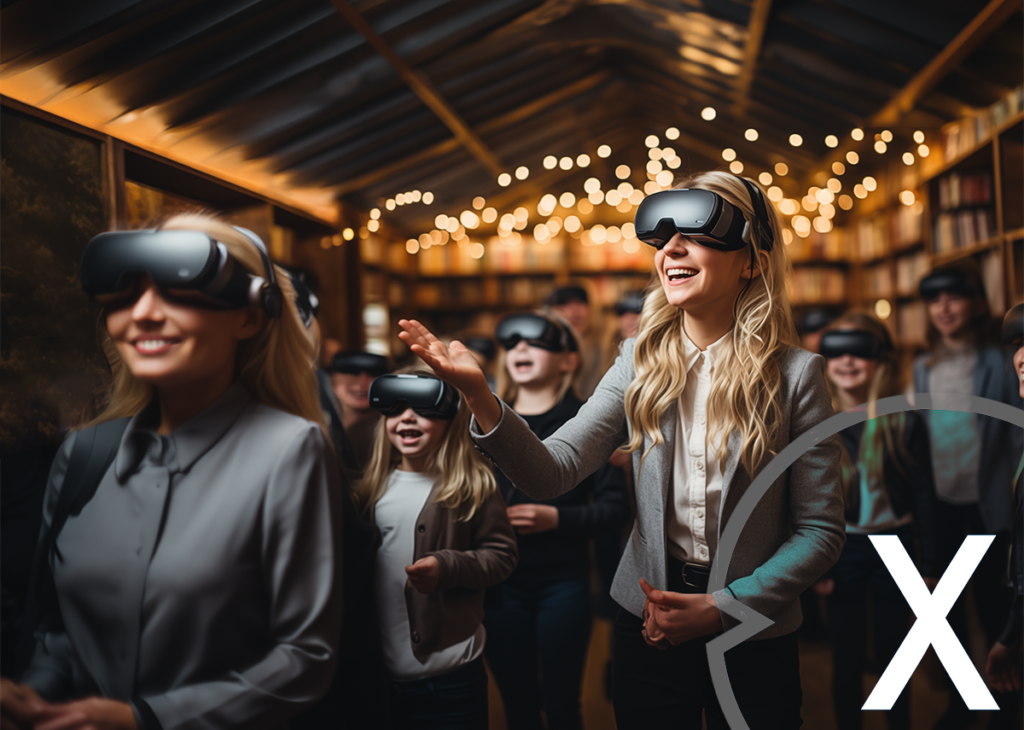
AI & XR 3D Rendering Machine: Virtual Reality in the Classroom – Image: Xpert.Digital
The use of virtual reality (VR) in teacher training in North Rhine-Westphalia represents a progressive development in education. Following the successful pilot project, the plan is now to test this technology more broadly and integrate it into everyday classroom practice. Future teachers will work with VR headsets during their training to explore and utilize their potential for interactive and multidimensional teaching.
More information here:
🌀 Experience-based learning in the digital age: Metaverse and Extended Reality (XR)
🦾 Introduction to the Metaverse and XR
The concept of experiential learning takes on a new dimension in connection with the Metaverse and Extended Reality (XR). Both technologies offer innovative ways to design learning experiences through direct interaction and immersion. The Metaverse represents a virtual world or space created by the merging of various digital platforms and technologies, such as Virtual Reality (VR) and Augmented Reality (AR). Here, users can interact, communicate, and gather experiences, much like in the physical world.
🌐 Extended Reality in an educational context
Extended Reality is an umbrella term for all immersive technologies, including VR, AR, and Mixed Reality (MR), that augment reality or create an entirely new reality. In an educational context, these technologies enable a deeper engagement with learning content through direct experience and action, rather than passive consumption.
🎓 Practical application of experiential learning
Experiential learning in the context of the metaverse and XR takes place where theoretical knowledge is supplemented and deepened through practical application and personally experienced processes. For example, learners can conduct experiments in virtualized laboratories, travel through time and space to relive historical events, or interactively explore complex mechanisms and systems.
✅ Benefits of learning in XR environments
The advantages of experiential learning in XR environments are manifold. Increased interactivity and immersion can boost learner motivation. Complex topics are easier to convey because they become visually tangible and can be better retained through "learning by doing.".
⚙️ Integration and design of learning activities
However, integrating experiential learning into the metaverse and XR environments requires careful planning and design of learning activities. A balance must be maintained between playful elements and educational goals to ensure that users are not only engaged but also genuinely educated through their experiences.
🤔 Ethical and practical challenges
The challenges are not only technical or financial in nature, but also include ethical questions. Creating authentic, non-manipulative experiences in the metaverse, distinguishing between virtual and physical reality, and user data privacy are all topics that play a role in the discussion surrounding experiential learning in the metaverse and XR.
🏫 Educational opportunities through experience-based learning
From an educational perspective, experiential learning in the Metaverse and XR environments offers an exceptional opportunity to make curriculum content more engaging and relevant for learners. In the Metaverse, students can engage in role-playing scenarios that foster social skills, empathy, and teamwork.
🤲 Supporting lifelong learning
Furthermore, the combination of Metaverse and XR supports lifelong learning. Continuing education and professional training can be designed to be accessible regardless of time and location.
🚀 Future developments in personalized education
Future developments could enable even greater personalization of learning, for example through artificial intelligence (AI) that adapts learning paths to the individual pace and specific needs of the learners.
🌟 The transformative power of experiential learning
Experiential learning, particularly in relation to the metaverse and extended reality, has the potential to fundamentally change how we learn, teach, and deliver information. With technological advancements, it is becoming increasingly important to develop teaching methods that maximize the unique benefits of these new virtual environments while also addressing ethical and practical considerations.
📣 Similar topics
- 🌐 A new dimension of learning: Experience-based in the Metaverse
- 🎓 XR in education: Immersion as a teaching tool
- 🤖 AI and personalized learning in the metaverse
- ✨ Interactive learning: The advantages of VR and AR in education
- 🌟 Metaverse in schools: Virtual field trips and role-playing games
- 🔬 Virtual labs and simulations: The future of learning
- 🩺 Medical students and XR: Risk-free surgical training
- 🚀 Learning without borders: Global collaboration in the metaverse
- 🕹 Balancing play and education in XR learning environments
- 🛡 Ethical aspects of learning in virtual realities
#️⃣ Hashtags: #ExperienceBasedLearning #MetaverseAndEducation #ExtendedReality #VirtualTeachingMethods #ImmersiveTechnology
🗒️ Xpert.Digital: A pioneer in the field of Extended and Augmented Reality
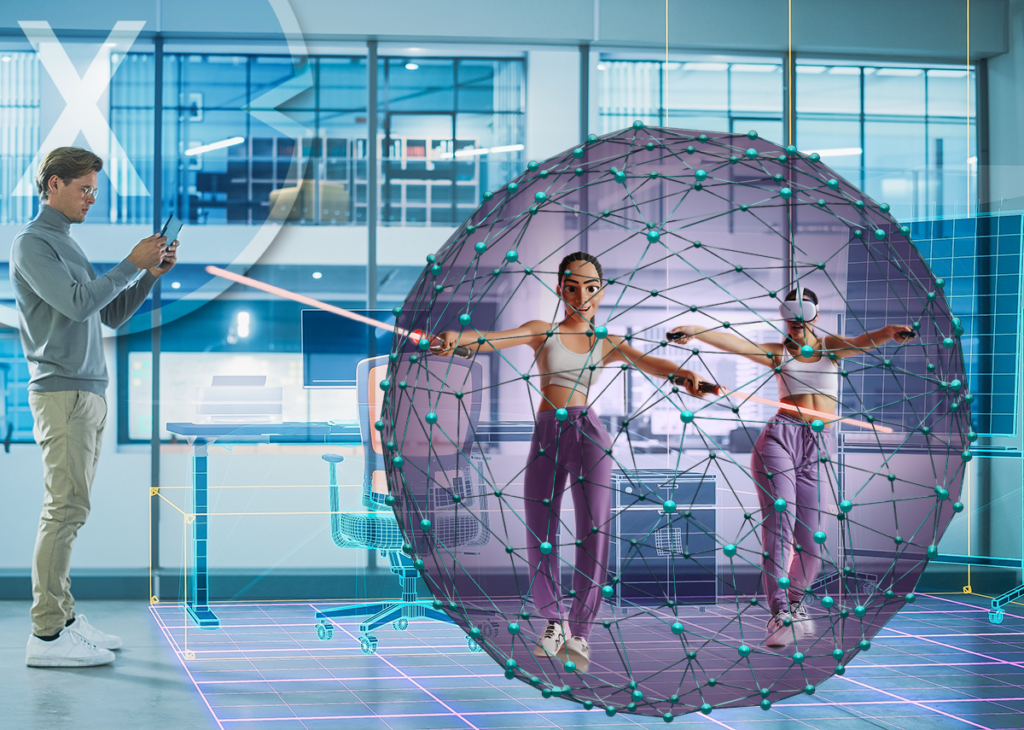
Finding the right Metaverse agency, planning office, or consulting firm - Image: Xpert.Digital
🗒️ Finding the right Metaverse agency, planning office, or consulting firm – Search and search: Top Ten Tips for Consulting & Planning
More information here:

Industrial & B2B Business Metaverse: Reduce costs with XR technology for photorealistic product images (XR 3D rendering machine)

Lathe in photorealistic rendering (3D product presentation) - Image: Xpert.Digital
XR technology offers a superior solution for creating photorealistic images, allowing companies to avoid the expensive fees charged by external media agencies. It's well known that media agencies charge high prices for creating such images, as this requires expertise, specialized software, and collaboration with various specialists.
More information here:
We are here for you - Consulting - Planning - Implementation - Project Management
Xpert.Digital - Pioneer Business Development
Smart Glasses & AI - XR/AR/VR/MR industry expert
Consumer Metaverse or Metaverse in general
If you have any questions, require further information or advice, please feel free to contact me at any time.

Konrad Wolfenstein
I would be happy to serve as your personal advisor.
You can contact me by filling out the contact form below or simply call me on +49 7348 4088 965 .
I'm looking forward to our joint project.
Write to me


Xpert.Digital - Konrad Wolfenstein
Xpert.Digital is a hub for industry focusing on digitalization, mechanical engineering, logistics/intralogistics and photovoltaics.
With our 360° Business Development solution, we support renowned companies from new business to after-sales.
Market intelligence, smarketing, marketing automation, content development, PR, mail campaigns, personalized social media and lead nurturing are part of our digital tools.
You can find more information at: www.xpert.digital - www.xpert.solar - www.xpert.plus
Keep in touch