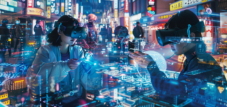
VR, AR and MR in a global comparison: Regional focuses, technical milestones and current XR market developments – Image: Xpert.Digital
Technology in transition: Why VR, AR and MR will change the world together
Virtual, Augmented, or Mixed Reality? A global look at opportunities and challenges
Extended Reality (XR) encompasses technologies that digitally enhance our perception of the real world or even completely replace it with virtual scenarios. Key facets include Virtual Reality (VR), Augmented Reality (AR), and Mixed Reality (MR). While VR immerses users in entirely virtual worlds, AR combines the real environment with superimposed information or objects. MR goes a step further, linking both spheres so that users can interact with virtual and real elements in real time.
The rapid development of these technologies opens up diverse applications in almost all areas of life: from realistic simulation in medicine and interactive marketing concepts in retail to virtual business meetings that overcome geographical distances. Companies worldwide are investing heavily in research, development, and infrastructure. Tech giants from the USA and China are racing for the leading position, while countries like South Korea, Japan, and Germany are driving forward pioneering pilot projects. Despite all the opportunities and potential, technical hurdles such as expensive hardware and a lack of standardization must be overcome. At the same time, ethical and societal questions are coming into sharper focus: How do we ensure data protection? How do we prevent manipulation? And what are the social consequences of reality and virtuality increasingly blurring?
One thing is certain: XR is more than a short-lived trend. Virtual Reality, Augmented Reality, and Mixed Reality are here to stay – and they will fundamentally change our work, our everyday lives, and our leisure time in the coming years.
Related to this:
What is meant by "Augmented Reality" (XR)?
The term "Extended Reality" (XR) encompasses technologies such as Virtual Reality (VR), Augmented Reality (AR), and Mixed Reality (MR). All three variants share the common feature of seamlessly embedding digital content into our physical environment or allowing us to fully immerse ourselves in virtual worlds. This alters or expands our perception, enabling diverse applications in entertainment, industry, medicine, and many other fields.
What are the differences between Virtual Reality (VR), Augmented Reality (AR), and Mixed Reality (MR)?
- Virtual Reality (VR): Here, you are completely immersed in a computer-generated world. A headset and special controllers or sensors enable an immersive experience in which the real environment is completely blocked out.
- Augmented Reality (AR): Digital supplementary information is superimposed onto the real environment in real time, often via smartphones or AR glasses. Typical examples include the overlay of navigation instructions, interactive elements, or product information.
- Mixed Reality (MR): This approach merges the real and virtual environments even more seamlessly, allowing virtual objects to be spatially integrated into the field of vision and enabling interaction with both levels. MR combines the advantages of VR and AR by achieving both immersion and integration into the real environment.
What are the applications of Virtual Reality (VR) beyond gaming and entertainment?
- Training and simulation: VR enables cost-effective and safe training scenarios for complex processes, for example in medicine, the military or aerospace.
- Therapies and rehabilitation: In psychology, VR is used for exposure therapy (e.g. against acrophobia or spider phobia), while in rehabilitation, movement sequences can be trained playfully.
- Virtual meetings and events: Companies use VR for conferences, seminars and collaboration across national borders.
- Culture and travel: Virtual museum visits, city tours or exotic travel destinations can be made more easily accessible with VR – also for people with limited mobility.
What challenges currently exist in VR?
- Cost: High-quality VR headsets are still often expensive.
- Comfort: The devices can be heavy and unwieldy, and some users also suffer from "cybersickness" (nausea, dizziness).
- Content: The range of high-quality and varied applications must continue to grow.
- Acceptance: For VR to be successful in the long term, the technology and content must be so convincing that broad user groups feel addressed.
Why is Augmented Reality (AR) growing so fast and what are its most important areas of application?
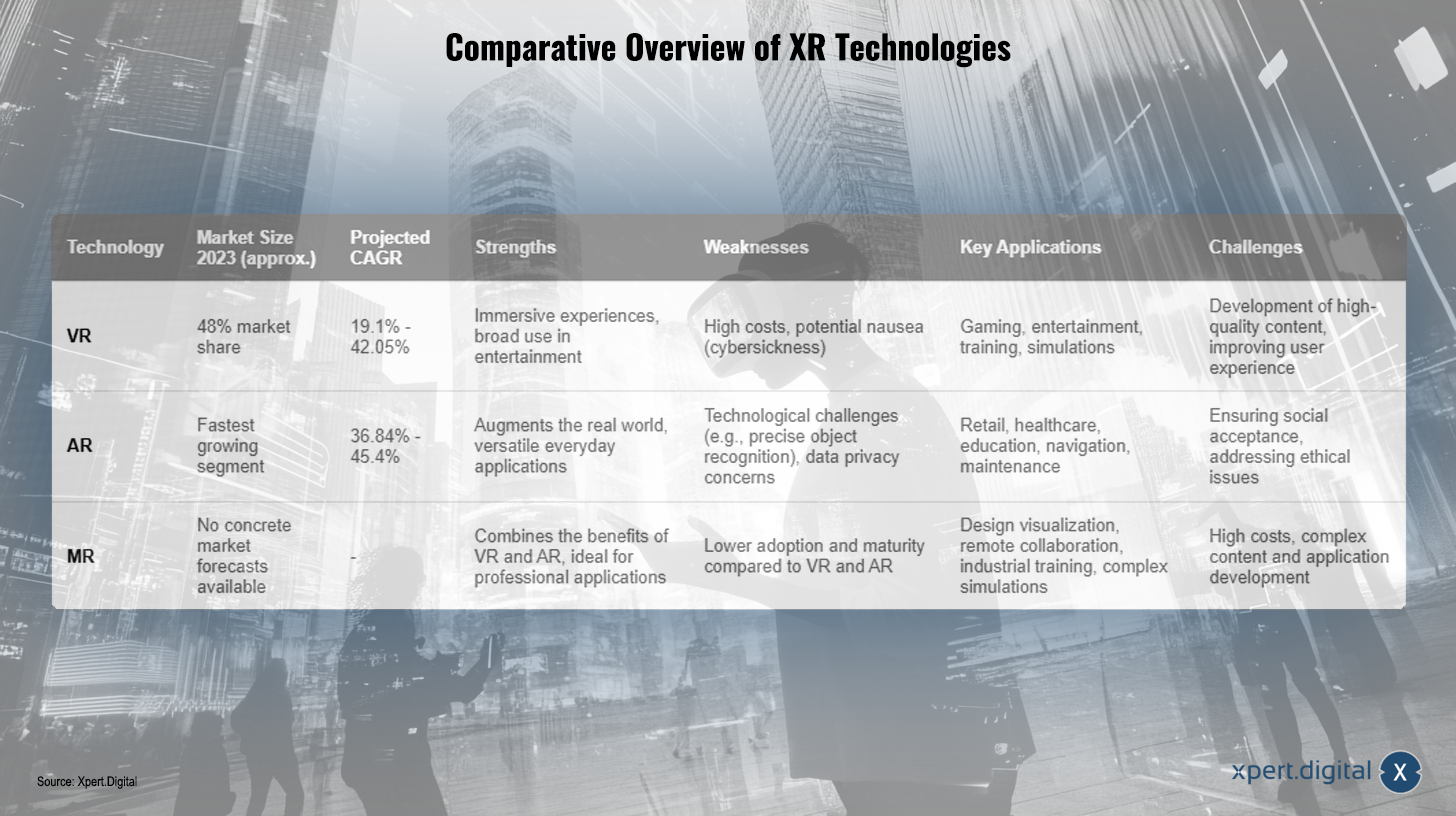
Summary comparison of XR technologies VR, AR and MR – Image: Xpert.Digital
AR has the advantage that almost every modern smartphone has a camera and sufficient processing power to offer basic AR functions. This makes it easy for many users to get started. Typical applications include:
- Retail and marketing: Virtual product try-on, 3D representation of furniture in one's own home, or interactive advertising campaigns.
- Education: Vivid knowledge transfer, e.g. by showing historical scenes or anatomical illustrations directly in the classroom.
- Industry and trade: AR glasses enable maintenance and repair instructions to be displayed in the field of vision, thereby reducing sources of error and accelerating work processes.
- Navigation and outdoor experiences: Real-time display of signposts, information on points of interest or danger zones increases comfort and safety while traveling.
What is Mixed Reality (MR) and why is it considered particularly groundbreaking?
Mixed Reality combines the strengths of VR and AR. Users can integrate virtual 3D objects into their real-world environment and interact with both levels. This enables applications such as:
- Design visualization: Architects and engineers can realistically represent planned models or components.
- Remote collaboration: Globally distributed teams work together on virtual 3D projects in an MR environment.
- Interactive training and simulations: Medical procedures or complex work steps can be practiced realistically.
- However, MR requires powerful hardware and software, which is why it is currently mainly used in specialized areas.
Which countries play a leading role in the development and dissemination of XR technologies?
- USA: Large technology companies such as Microsoft, Apple or Google are investing heavily in AR and MR solutions; VR benefits from a booming gaming industry.
- China: Focusing on rapid growth, 5G and future 6G network expansion, and an open-minded consumer base. Government and private sector are driving VR/AR development in education, healthcare, and entertainment.
- Japan: Formerly a pioneer in the gaming sector, today increasingly using XR in medicine, tourism and manufacturing.
- South Korea: A very tech-savvy country with support for 6G and a strong focus on gaming, e-sports, and military cooperation.
- Indonesia: Primarily leverages the rapidly growing smartphone penetration and passion for mobile gaming for AR applications.
- Brazil: Dynamic start-up scene with pilot projects in agriculture, education and industry.
- Europe (with examples from France and Germany): EU funding programs strengthen VR, AR and MR; in Germany, Industry 4.0 plays a major role, while France focuses on immersive technologies in research and culture.
What factors are crucial for the success of VR, AR, and MR?
- Technological advancements: Powerful processors, high-resolution displays, precise sensors and low latencies are essential.
- Content and applications: Without compelling apps, games, learning and work applications, the potential remains untapped.
- Cost and accessibility: If hardware prices fall and it becomes suitable for mass production, its distribution increases enormously.
- Ease of use: User-friendly devices and intuitive operation are crucial to reducing barriers to entry.
- Social acceptance: Data protection, privacy, and society's willingness to adopt new technologies are key factors.
- Ethical and legal aspects: Rules to protect against abuse, misinformation and surveillance are important to build trust in XR.
Why is there often talk of a "coexistence" of VR, AR and MR, instead of a single dominant technology?
VR, AR, and MR each have specific strengths and applications. VR impresses with its intense immersion (e.g., in gaming and simulation), AR scores points with real-time context-aware information (e.g., navigation, retail), while MR is particularly helpful for interactive 3D models and complex industrial tasks. Instead of replacing each other, they complement one another and are expected to coexist. In the long term, hybrid forms could emerge in which headsets or systems can flexibly switch between VR, AR, and MR modes.
What role does the "metaverse" play in this context?
The metaverse represents a possible future digital world in which virtual and real realms merge. VR, AR, and MR are the key technologies for realizing this vision. Here, people could enter immersive environments to work, learn, shop, or communicate. At the same time, the metaverse places high demands on:
- Standardization (compatibility of devices and applications),
- Content (breadth and quality of the offer),
- Data protection and security (protection of personal information) and
- Infrastructure (fast networks such as 5G/6G and sufficient computing power).
Related to this:
- XR Technology: The Metaverse Winter – Rethinking, Immersing Yourself Anew, and Setting the Right Goals with Extended & Virtual Reality
- Metaverse Development: A Comparison Between Consumer, Customer, E-Commerce (V-Commerce) and Industrial Metaverse
What challenges need to be solved to enable the wider use of XR technologies?
- Standardization: Uniform technical standards facilitate compatibility and operation.
- Diverse content: XR can only convince the mass market with a wide range of useful, exciting, or cost-effective solutions.
- Data protection and security: Users must have trust in the technology, for example through clear regulations for handling data and measures against manipulation or misuse.
- Infrastructure: A smooth, low-latency XR experience requires high-performance internet connections and energy-efficient systems across the board.
- Cultural acceptance: Skepticism and potential social impacts (e.g., digital detox) must be addressed and dealt with responsibly.
How do experts view the economic significance of XR?
Many forecasts predict that XR technologies will create enormous economic value in the coming years. From healthcare and education to Industry 4.0, VR, AR, and MR could together generate several hundred billion to well over a trillion US dollars in added value. Furthermore, new job profiles and specializations (XR designers, metaverse architects, etc.) will emerge, offering significant job potential.
What is the conclusion regarding the future of VR, AR, and MR?
- A single “winning technology” is unlikely: VR, AR and MR will coexist and cross-fertilize each other.
- Each system has its strengths: VR for immersion, AR for everyday life, MR for demanding industrial solutions.
- Technological advances, decreasing costs, and more content will promote its spread.
- In parallel, the metaverse is emerging as an overarching platform in which these technologies merge.
- Those providers and users who are innovative, invest early, and take ethical and social factors into account will be successful.
Overall, XR is expected to become an integral part of the digital transformation, which will sustainably shape our working world, our everyday life and our leisure time.
🗒️ Xpert.Digital: A pioneer in the field of Extended and Augmented Reality

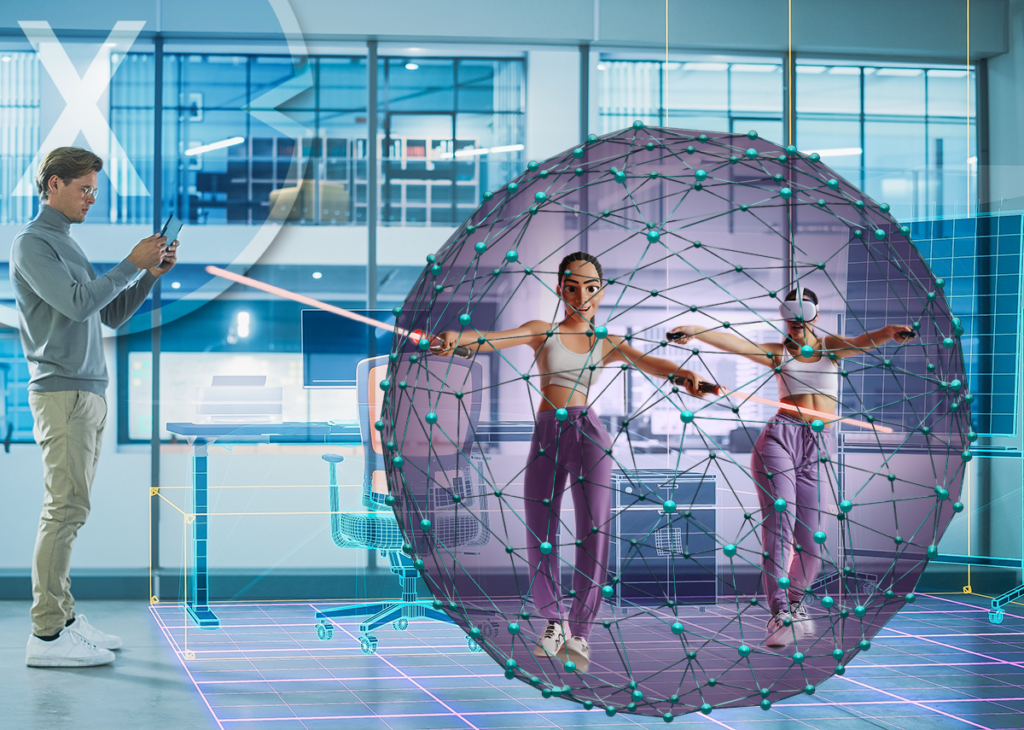
Finding the right Metaverse agency, planning office, or consulting firm - Image: Xpert.Digital
🗒️ Finding the right Metaverse agency, planning office, or consulting firm – Search and search: Top Ten Tips for Consulting & Planning
More information here:

We are here for you - Consulting - Planning - Implementation - Project Management
☑️ SME support in strategy, consulting, planning and implementation
☑️ Creation or realignment of the digital strategy and digitization
☑️ Expansion and optimization of international sales processes
☑️ Global & Digital B2B trading platforms
☑️ Pioneer Business Development

Konrad Wolfenstein
I would be happy to serve as your personal advisor.
You can contact me by filling out the contact form below or simply call me on +49 7348 4088 965 .
I'm looking forward to our joint project.
Write to me


Xpert.Digital - Konrad Wolfenstein
Xpert.Digital is a hub for industry focusing on digitalization, mechanical engineering, logistics/intralogistics and photovoltaics.
With our 360° Business Development solution, we support renowned companies from new business to after-sales.
Market intelligence, smarketing, marketing automation, content development, PR, mail campaigns, personalized social media and lead nurturing are part of our digital tools.
You can find more information at: www.xpert.digital - www.xpert.solar - www.xpert.plus
Keep in touch