
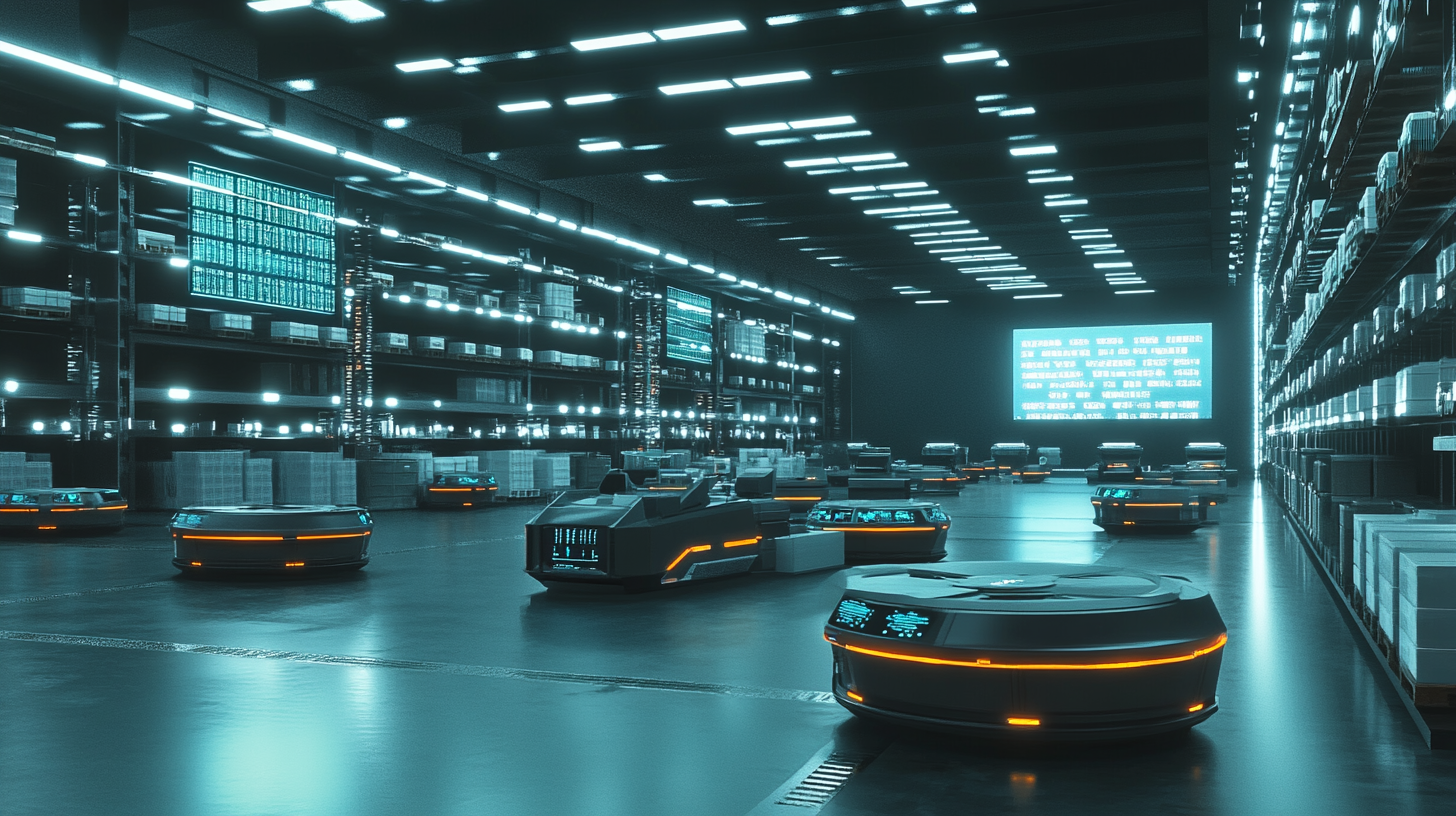
Autonomous Mobile Robots (AMR) - Image: Xpert.Digital
Autonomous Mobile Robots (AMR)
Autonomous mobile robots (AMRs) are highly advanced, self-driving machines that can move and operate in defined environments without human control. This innovative technology is revolutionizing various industries, from logistics and manufacturing to retail.
Functioning and technology
AMRs utilize a combination of advanced technologies to navigate autonomously:
- Sensors and cameras: Enable the perception of the environment
- Artificial intelligence and machine learning: For decision-making and adaptation
- SLAM technology: For simultaneous localization and mapping
Unlike Automated Guided Vehicles (AGVs), which follow fixed paths, AMRs can navigate freely and avoid obstacles.
Areas of application
AMRs are used in various sectors:
- Logistics and warehousing: Transport of goods, inventory management
- Manufacturing: Material transport, assembly support
- Retail: Shelf restocking, product localization
- Healthcare: Medication transport, disinfection
- Agriculture: Harvesting assistance, soil analysis
Advantages
The use of AMRs offers numerous advantages:
- Flexibility: Adapting to changing production environments
- Efficiency improvement: Optimization of workflows and resource utilization
- Safety: Reduction of workplace accidents through precise sensor technology
- Scalability: Easy expansion of the robot fleet as needed
- Collaboration: Effective cooperation with human employees
Future prospects
The development of AMRs is progressing rapidly. Future trends include:
- Improved AI integration: For even more autonomous decision-making
- Expanded areas of application: e.g. in agriculture and construction
- Enhanced human-robot interaction: Through natural language processing and emotion recognition
Autonomous mobile robots represent a significant advance in automation technology and are expected to play an increasingly important role in various industries.