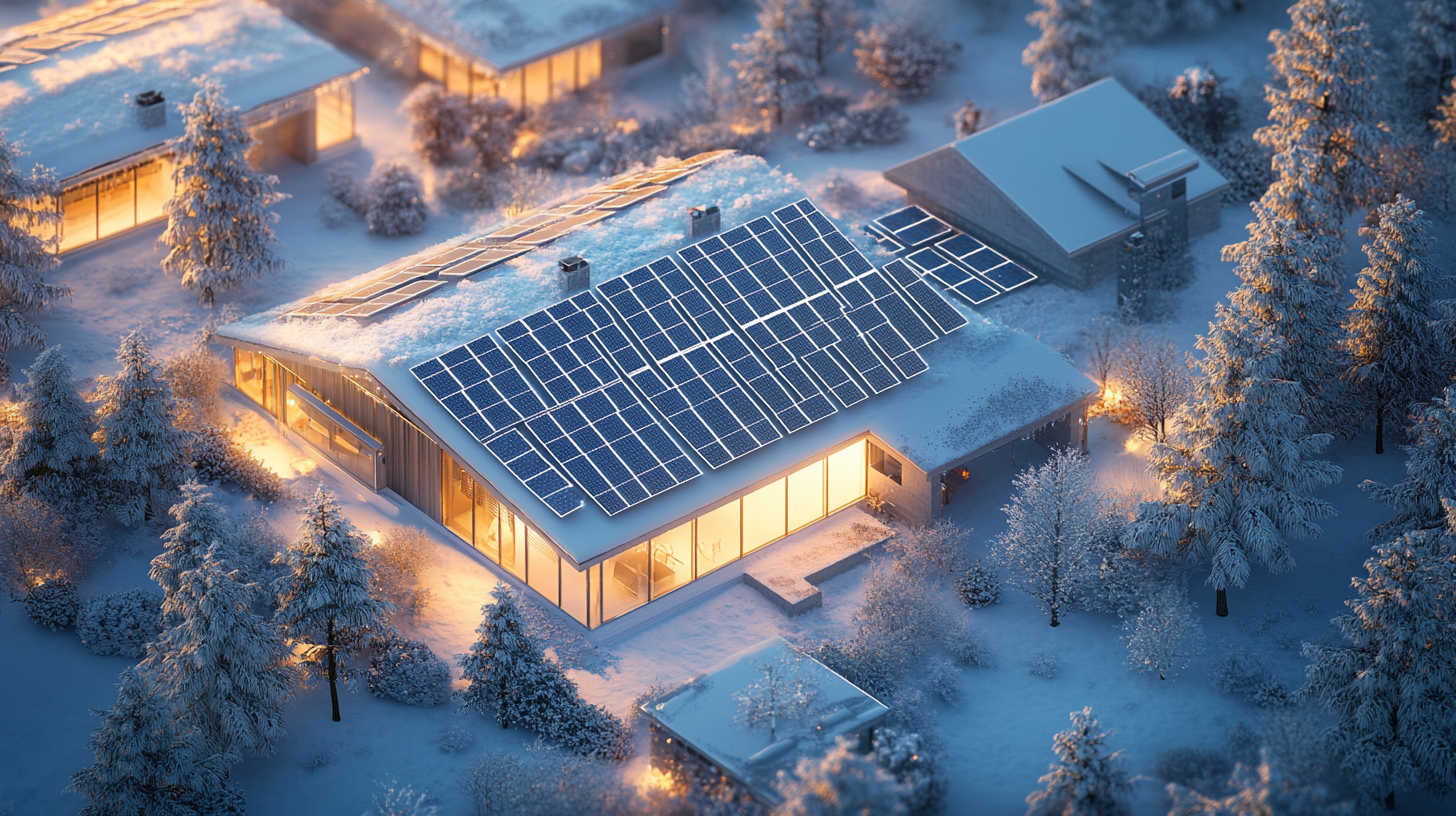
Winter strategy for PV systems during the 'dark months': Optimization potential through energy storage, microinverters and sizing – Creative image: Xpert.Digital
🌞🔋 The so-called "dark months" for photovoltaic (PV) technology
🌧️❄️ The so-called "dark months" for photovoltaics (PV) refer to the time of year when solar power yields decrease significantly due to lower solar irradiance and shorter daylight hours. This period typically falls during the winter months, from October to March, with yields being lowest from December to February. Nevertheless, it has been shown that even during this period, PV systems can make a considerable contribution to the energy supply – provided the conditions are optimal.
During the winter months, which run from October to March, photovoltaic (PV) systems typically generate only about 20 to 30 percent of their annual electricity yield. The impact of seasonal factors on yield is particularly evident in December, January, and February. During these "dark months," a PV system contributes an average of only 7.5 percent to the total annual yield. The reasons for this reduction are manifold and can be attributed to several physical and weather-related factors:
🌥️💡 Reasons for lower solar yields in winter
- Shorter daylight hours: In the winter months, the sun shines for significantly fewer hours per day than in summer. This inevitably leads to a limited period in which the modules can generate electricity.
- Low sun angle: The sun's angle is considerably lower in winter. This means that the sun's rays strike the Earth at a shallower angle, reducing the intensity of the radiation. Less intense solar radiation also means a lower energy yield.
- Cloud cover and diffuse light conditions: Especially in winter, overcast days and diffuse light conditions are common. This reduces the direct sunlight required for efficient power generation.
- Snow and ice: In regions with harsh winters, snow covering solar panels can temporarily block electricity production completely. Ice buildup on the panels presents an additional challenge.
Related to this:
🛠️⚡ Technological adjustments and optimization opportunities
Despite these challenges, modern PV systems demonstrate their ability to supply valuable energy even in winter. Thanks to technological innovations and sophisticated system designs, efficiency is constantly increasing. There are various ways to maximize electricity yield during the winter months:
Efficient energy storage
Energy storage systems are a crucial factor in increasing the efficiency of PV systems in winter. Excess electricity generated during the day can be stored in batteries and used in the evening hours when demand is often highest.
Use of microinverters

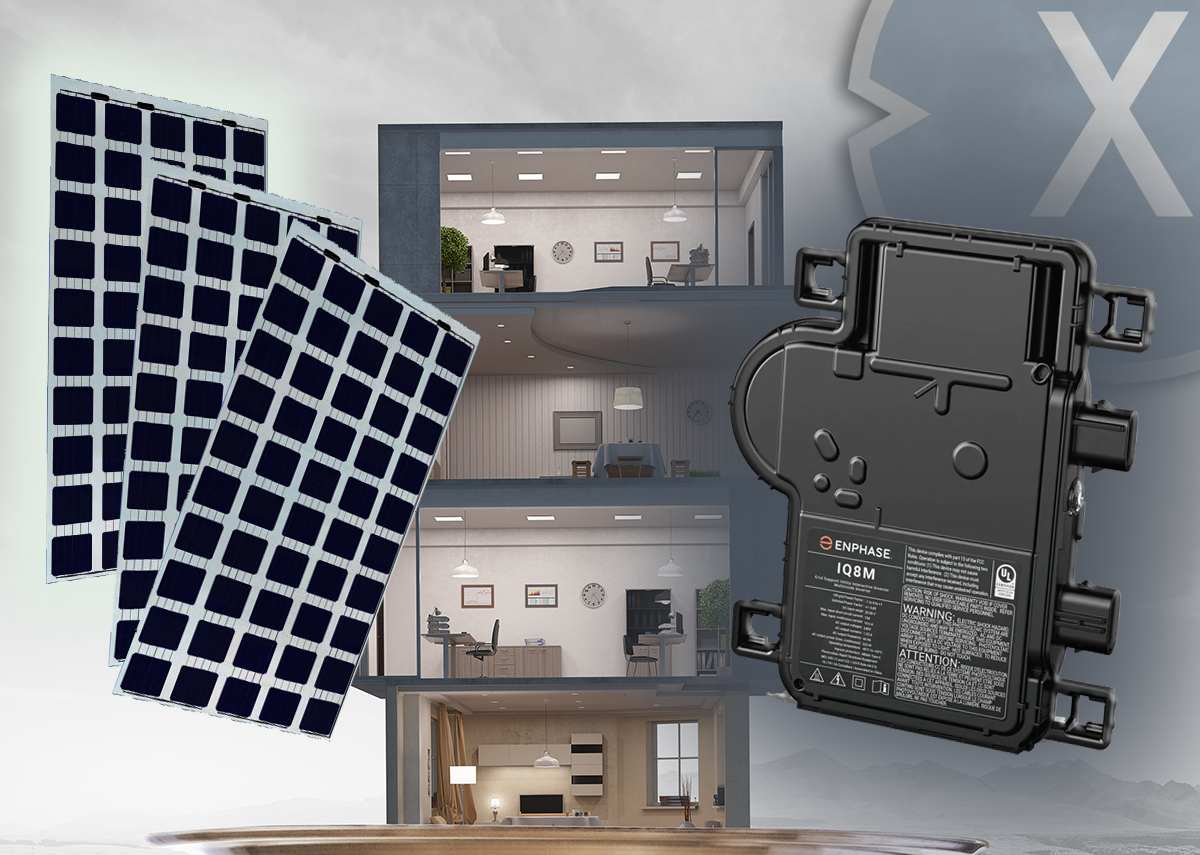
Decentralized and modular plug & play solar system with microinverters – Image: Xpert.Digital / Xpert.Solar
A key aspect of maximizing the efficiency of PV systems, especially when individual modules are shaded or covered in snow, is the use of microinverters, such as those from Enphase. Unlike conventional string inverters, where multiple modules are connected in series and the weakest module affects the performance of the entire string, microinverters allow each module to operate independently. This means that shading or power losses in one module do not affect the performance of the rest of the system.
By using microinverters, the overall performance of the PV system can be optimized, even if individual modules are affected by snow, dirt, or shade. This is particularly advantageous in the winter months when the sun is lower in the sky and shading from surrounding objects is more frequent.
Related to this:
Furthermore, microinverters offer the advantage of more flexible system planning and expansion. Since each module operates individually, systems can be more easily adapted to specific conditions and expanded as needed. They also enable detailed monitoring at the module level, which simplifies troubleshooting and maintenance.
Interesting facts about photovoltaic modules
A common misconception is that solar panels are less efficient in cold weather. In fact, the opposite is true: photovoltaic modules operate more efficiently at lower temperatures than at higher ones. High temperatures can reduce the electrical output of the modules, while cool conditions improve electrical conductivity and thus increase output. This means that a considerable amount of electricity can be generated on sunny winter days despite low temperatures.
Innovative technologies and intelligent solutions help maximize solar yields in winter. Besides microinverters, these include, for example, bifacial solar modules that utilize both direct and reflected light, or tracking systems that monitor the sun's position and thus optimize irradiance. Cleaning the modules of snow and dirt can also significantly improve performance.
The reflection of sunlight by snow can also have positive effects. In snow-covered landscapes, the albedo effect increases the irradiance reaching the modules. This can lead to increased power generation, provided the modules themselves are not covered in snow. Here, the advantages of microinverters come into play, as they maximize the power output of unshaded modules.
The orientation of the solar panels also plays a crucial role. While a south-facing system typically achieves the best annual yields, a slight east or west orientation can help increase electricity production in the morning or evening hours. This can be particularly advantageous in winter when the sun is lower in the sky and daylight hours are limited.
Snow removal and maintenance
In regions with heavy snowfall, it is advisable to regularly remove snow from the solar panels to avoid unnecessarily restricting electricity production.
To minimize the impact of snow, solar panels can be installed at a steeper angle. This makes it easier for the snow to slide off the panels. Some homeowners also choose to clear their panels of snow manually or with special equipment to ensure continued power generation.
💡🌨️ Photovoltaics: A worthwhile investment even in winter
Many homeowners underestimate the potential of photovoltaic (PV) systems, even during the winter months. Modern systems can generate enough electricity for self-consumption even with low levels of sunlight. The combination with a storage system is particularly important, as it allows the system to cover a household's base load. Base load refers to the continuous energy demand generated by appliances such as refrigerators, heating pumps, and routers.
A frequently asked question is whether investing in a solar power system makes sense given the reduced yields in winter. The answer is a resounding "yes." While yields are higher in the summer months, the increasing energy efficiency of modern systems means that enough electricity is generated even in winter to cover at least a portion of one's own energy needs. Furthermore, renewable energies not only offer ecological advantages but also help to reduce energy costs in the long term and lessen dependence on fossil fuels.
❄️☀️ The underestimated power of the winter sun
Contrary to the widespread belief that solar panels are inefficient in cold temperatures, studies show that photovoltaic modules actually perform better at low temperatures than in extreme heat. The physical properties of solar cells mean that their output increases slightly under cooler conditions. Thus, a clear, cold winter sun on a cloudless day can deliver surprisingly good results.
What's particularly interesting here is the fact that even on cloudy days or in diffuse light, a certain amount of electricity can be generated. Thanks to technological advancements in cell technology, many PV systems can deliver acceptable performance even with low levels of solar radiation. This makes them a reliable energy source, even in the months when the sun rarely shines.
🌍🔄 Solar power systems as part of a sustainable energy system
Integrating solar power systems into a comprehensive energy management system is a crucial step towards a climate-neutral energy supply. In addition to traditional rooftop PV systems, other technologies such as heat pumps, intelligent control systems, and the use of wind or biomass energy also play a role. Ideally, these technologies work together to achieve maximum energy efficiency.
The role of storage technologies is particularly relevant here. With the help of modern battery systems, households can not only ensure their energy supply in the evenings, but also improve grid stability by feeding surplus electricity into the public grid. This is especially important in the winter months when energy demand is higher due to heating use and longer periods of darkness.
Related to this:
- Renewable energies: Now it all depends on energy storage systems
- Blog: Electricity storage, battery storage and energy storage
🌟🔋 Photovoltaics in winter is more than a stopgap
The so-called "dark months" for photovoltaics are by no means a reason to question the installation of a PV system. While yields are significantly lower during this time than in the summer months, with the right measures and technologies, a valuable contribution to the energy supply can still be made in the winter months.
Modern solar power systems are more efficient than many people realize – even under cloudy skies or snow. Combined with energy storage, optimized module technologies, and thoughtful orientation, they can not only cover a household's base load but also contribute to long-term energy cost reductions. Those who also opt for an integrated energy management system can benefit from renewable energy year-round.
The importance of photovoltaics in winter will continue to grow in the future, as both technological advancements and government subsidies support the expansion of solar energy. It is therefore worthwhile to take advantage of the possibilities offered by modern PV systems and contribute to a sustainable energy supply – not only in summer, but also during the "dark months". 🌤️
📣 Similar topics
- 🌞 Efficiency of PV systems even in winter
- ❄️ Solar power in the “dark months”: Is it worth it?
- 💡 Energy supply through photovoltaics despite low sunlight
- 🌍 Climate protection in winter: Solar systems as a sustainable solution
- ⚡ Maximum energy yield despite winter conditions
- ⚙️ Technological optimizations for PV systems during dark months
- 🌬️ Energy from diffuse light: Photovoltaics in winter
- 🔋 Battery and storage solutions for solar power in winter
- 🧹 Solar panel maintenance: How snow and shading affect yield
- 🎯 Strategies for increasing yields during the winter months
#️⃣ Hashtags: #Photovoltaics #SolarEnergy #RenewableEnergies #WinterOperation #ClimateProtection
Plan your solar system for the most common applications conveniently online with our solar system planner!
With our user-friendly solar system planner, you can design your individual solar system online. Whether you need a solar system for your home, your business, or for agricultural purposes, our planner allows you to consider your specific requirements and develop a customized solution.
The planning process is simple and intuitive. You simply enter the relevant information. Our planner takes this information into account and creates a customized solar system that meets your needs. You can try out different options and configurations to find the optimal solar system for your application.
Furthermore, you can save your plan to review it later or share it with others. Our customer service team is also available to answer any questions and provide support to ensure your solar system is optimally planned.
Use our solar system planner to design your individual solar system for the most common applications and accelerate the transition to clean energy. Get started now and take an important step towards sustainability and energy independence!

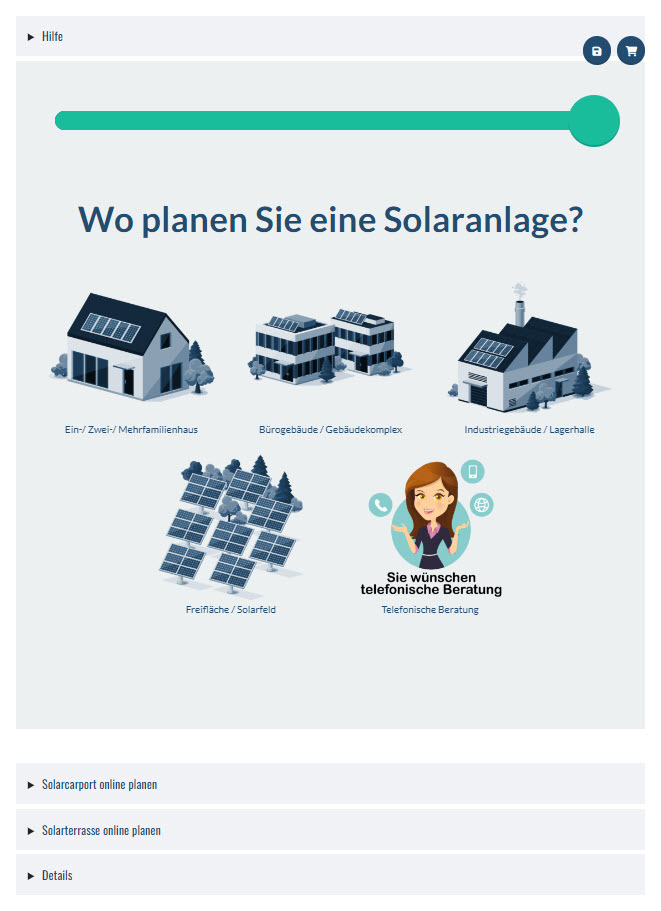
The solar system planner for the most common applications: Plan your solar system online here - Image: Xpert.Digital
More information here:
🌞 The economic viability of photovoltaic systems (PV systems)
🌍 The economic viability of photovoltaic (PV) systems should not be judged solely on the yields generated during the summer months. Rather, the overall return over the entire year and the system's lifespan are crucial. Even though electricity production is lower in winter, it still contributes to reducing electricity costs and supports the achievement of sustainability goals.
🌟 Value of solar power in winter
It's important to consider that electricity prices tend to be higher in the winter months due to increased energy consumption. During this time, self-generated solar power can be particularly valuable. Every kilowatt-hour generated from renewable energy sources makes a significant contribution to reducing CO₂ emissions and protecting the climate. Using solar energy reduces dependence on fossil fuels and promotes a more environmentally friendly energy supply.
💪 Robustness and longevity of modern PV systems
Modern PV systems are designed to withstand a wide range of weather conditions. They are robust and durable, making them a long-term investment. Maintenance requirements are generally low, as many systems are equipped with monitoring systems that continuously monitor operation and raise an alarm in case of problems. Microinverters offer additional benefits by providing detailed data at the module level, enabling early detection of performance deviations.
📈 Lifespan and economic benefits
The lifespan of photovoltaic (PV) systems is typically 25 years or more. Over this period, the electricity yields accumulate considerably, even though the winter months are less productive. Considering the total costs over the system's lifetime, the overall economic effect is positive. The initial investment costs are recouped through savings on electricity bills and potential feed-in tariffs.
🔋 Independence from fluctuating electricity prices
Another significant advantage of PV systems is independence from fluctuating electricity prices. Generating your own electricity allows you to protect yourself against rising energy costs. This offers not only financial benefits but also a degree of autonomy from energy suppliers. The option of storing excess energy in battery systems further increases this independence.
🚀 Technological advances and innovations
Photovoltaic technology has made significant progress in recent years. New materials and production methods have led to more efficient solar modules that can generate more energy from the same surface area. Furthermore, innovative energy storage solutions enable better use of the generated electricity by storing surplus power and releasing it when needed.
🌍 Contribution to the energy transition
Photovoltaic systems play a central role in the energy transition towards a sustainable energy supply. They contribute to increasing the share of renewable energies in the energy mix and thus reducing dependence on fossil fuels. By expanding solar energy, countries can achieve their climate goals and simultaneously increase their energy security.
🌿 Social and environmental benefits
Besides the economic aspects, photovoltaic systems also offer social and environmental benefits. They create jobs in the research, development, production, and installation of solar technologies. Furthermore, they promote awareness of environmentally friendly technologies and contribute to improved air quality.
In summary, photovoltaic systems are not only an economically sound investment, but also make a significant contribution to climate protection and sustainable development. Their ability to generate clean energy while simultaneously reducing dependence on fossil fuels makes them an indispensable component of a future-proof energy supply.
📣 Similar topics
- 📣 The future of energy: Why PV systems are indispensable
- 🌞 Solar power in winter: An underestimated climate savior
- 💡 Independence through self-generated electricity: PV systems as a solution to fluctuating electricity prices
- 🚀 Progress through innovation: Technological developments in PV systems
- 🌿 Energy transition and climate protection: The role of photovoltaics
- 🔋 Battery storage as the key to energy autonomy
- 🛡️ Durable and robust: The construction of modern PV systems
- 🌍 Profitability meets sustainability: PV systems as an investment
- ⚡ Renewable energies in everyday life: How photovoltaics creates jobs
- ✨ Clean energy for a greener future
#️⃣ Hashtags: #RenewableEnergy #Photovoltaics #ClimateProtection #Sustainability #EnergyTransition
We are here for you - Consulting - Planning - Implementation - Project Management
☑️ Construction and consulting for photovoltaic open-field systems
☑️ Solar park planning ☑️ Agri-photovoltaic implementations
☑️ Solar ground-mounted systems with dual-use solutions
Xpert.Solar is your ideal partner for the planning, consulting, and construction of ground-mounted photovoltaic systems and agri-photovoltaic projects, thanks to our many years of experience and expertise in the solar energy sector. Xpert.Solar has an experienced team of professionals who offer farmers and investors tailored solutions. From site analysis and financial and legal advice to technical implementation and monitoring, Xpert.Solar provides its clients with professional and reliable support to ensure successful and sustainable project implementation.

Konrad Wolfenstein
I would be happy to serve as your personal advisor.
You can contact me by filling out the contact form below or simply call me on +49 7348 4088 965 .
I'm looking forward to our joint project.
Write to me


Xpert.Digital - Konrad Wolfenstein
Xpert.Digital is a hub for industry focusing on digitalization, mechanical engineering, logistics/intralogistics and photovoltaics.
With our 360° Business Development solution, we support renowned companies from new business to after-sales.
Market intelligence, smarketing, marketing automation, content development, PR, mail campaigns, personalized social media and lead nurturing are part of our digital tools.
You can find more information at: www.xpert.digital - www.xpert.solar - www.xpert.plus
Keep in touch