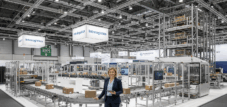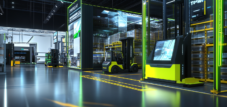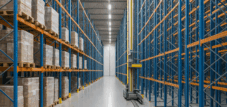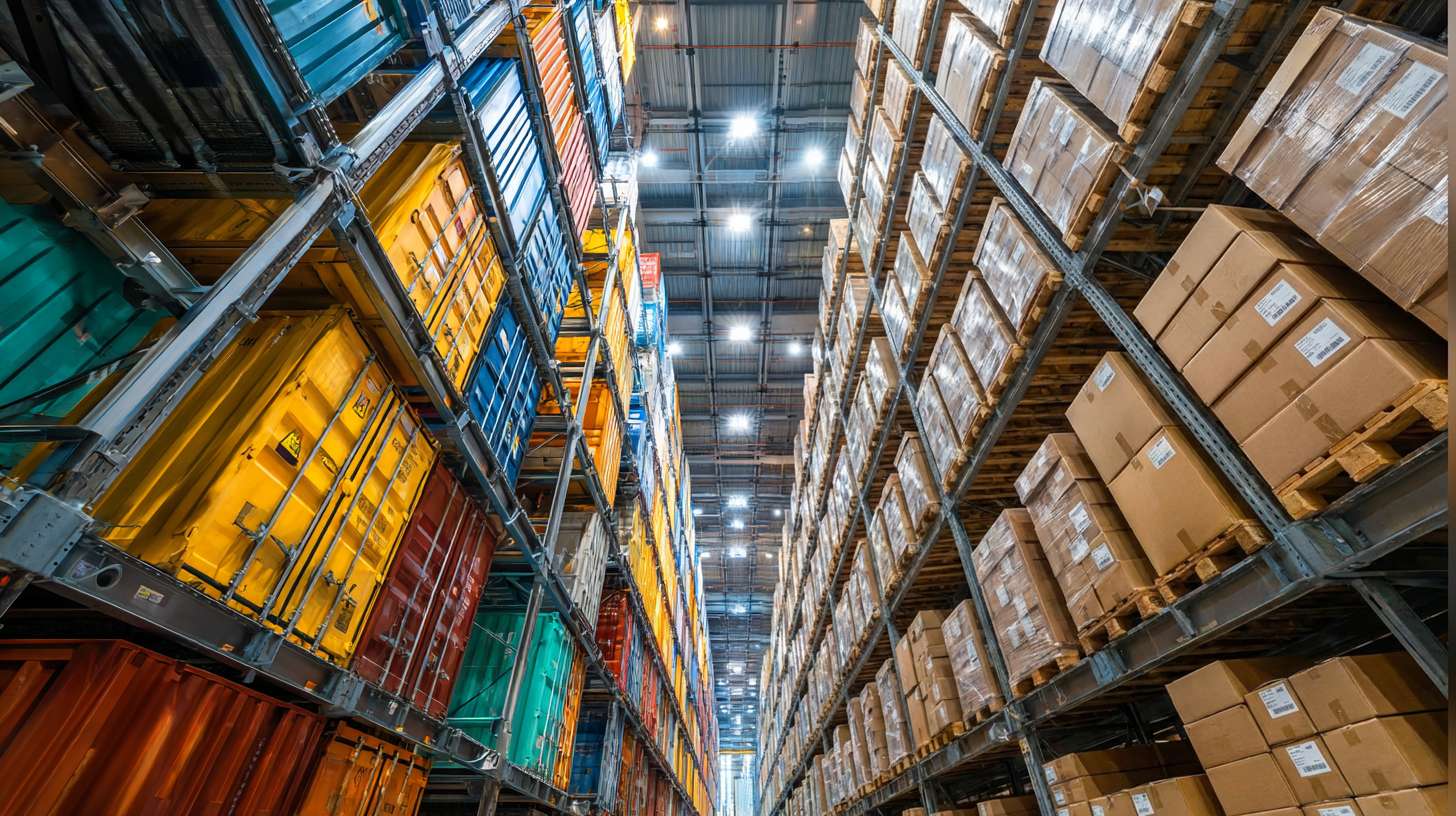
LogiMAT 2026 with “Passion for Details” – Why floor space has become too precious for storage – Creative image: Xpert.Digital
From port to shelf: The new era of fully automated space logistics
The Vertical Revolution: How space constraints and precision are reinventing logistics
We are at the end of an era. For decades, global logistics followed a simple credo: growth requires space. But the model of endless horizontal expansion – from giant container terminals to sprawling distribution centers on greenfield sites – has reached its physical and economic limits. Exploding land prices in hotspots like Stuttgart and Rotterdam, coupled with a dramatic shortage of skilled workers, are forcing a radical paradigm shift. The industry's answer is no longer "wider," but "higher" and "smarter."
In the run-up to LogiMAT 2026, a trend is emerging that extends far beyond mere warehouse technology: the vertical integration of the entire supply chain. What has long been standard practice inland as high-bay pallet storage is now conquering the world's seaports as revolutionary "high-bay storage." This fusion of port and inland logistics promises a seamless, fully automated chain in which space is maximized and human intervention is minimized.
But steel and height alone are not enough. Under the guiding principle of "Passion for Details," the upcoming LogiMAT trade fair will demonstrate that the profitability of these gigantic systems is determined at the microcosm. It is the renaissance of precision mechanics, the precision of sensors, and the choreography of mobile robots that transform static shelving units into highly profitable machines.
The following article analyzes this historic turning point. It explores why the container high-bay warehouse is considered a "game changer," how mobile robotics is replacing rigid conveyor belts, and why investments in vertical automation often achieve a return on investment in less than five years. Read on to discover why land has become too valuable for storage and how the future of logistics lies in the details.
Related to this:

The era of horizontal expansion is over: The vertical integration of the global supply chain
Global logistics is at a historic turning point, characterized far less by new means of transport than by a fundamental redefinition of space itself. For years, logistics followed the principle of extensive land use: enormous container terminals in ports, sprawling distribution centers on greenfield sites, and extensive buffer warehouses. But this model of horizontal expansion is increasingly colliding with harsh economic and environmental realities. Land prices in logistics hotspots like Stuttgart, Munich, and the port areas of Hamburg and Rotterdam are skyrocketing, while the availability of industrial space is plummeting. At the same time, demographic change, manifested in an acute shortage of skilled workers, is forcing a shift away from labor-intensive processes.
Against this backdrop, the high-bay warehouse is evolving from a purely intralogistics solution into a global organizational principle. It's no longer just the pallet storage area in the distribution center that's growing vertically. The true revolution, currently marking the "future of global logistics," is the transfer of this high-bay logic to the sea freight container itself. The fusion of the classic automated pallet warehouse (HBW) inland and the innovative container high-bay storage (HBS) in seaports creates a seamless, vertical supply chain. This development is accompanied by a technological maturity that will be celebrated at LogiMAT 2026 under the motto "Passion for Details." The focus is no longer on the brute-force mechanics, but on the sophisticated sensors, data integrity, and precise control systems that make such gigantic machines economically viable.
The following section presents an in-depth economic analysis of this transformation. It highlights why the combination of container high-bay warehouses and pallet high-bay warehouses, supported by mobile robotics, represents the dominant model of the future.
Micro-precision as a macro-lever: The renaissance of precision mechanics
Technological evolution in intralogistics has reached a level of maturity where pure performance improvements – faster, higher, further – no longer represent the primary leap in innovation. Instead, the focus is shifting to the qualitative integration of systems. The guiding principle of LogiMAT 2026, "Passion for Details," is far more than a marketing slogan; it is the answer to the increasing complexity of automated warehouse environments. In a modern high-bay warehouse, whether for pallets or containers, profitability is no longer determined by the steel structure, but by the intelligence of the components.
From an economic perspective, this focus on details is a direct lever for reducing operating expenses (OPEX). A high-bay warehouse is a closed system where any inefficiency incurs exponential costs. A sensor that saves milliseconds in the positioning of a storage and retrieval machine adds up to significant throughput increases in 24/7 operation. The "LogiMAT Premieres" therefore highlight components that extend maintenance intervals and minimize energy consumption. Predictive maintenance, i.e., proactive maintenance based on detailed condition data from motors and gearboxes, is becoming the standard to increase the availability of these expensive capital goods to near 100 percent.
This attention to detail also extends to sustainability. Since modern high-bay warehouses, particularly those using containers, are often emission-free and electrically operated, the focus is on regenerative braking and intelligent load distribution. Software algorithms that place heavy loads on lower levels to save energy during lifting are examples of such details that, in total, significantly improve the CO2 balance and reduce energy costs. The shift away from large, integrated systems towards "finely crafted features" reflects the understanding that the hardware (the racking) is commoditized, while the added value lies in the sensors and control systems.
Choreography of Autonomy: When Statics Learns to Walk
A high-bay warehouse is by definition static – a gigantic monolith of steel. The flexibility demanded by modern supply chains only arises through connectivity. Here, a radical transformation is taking place through the integration of mobile robotics. The "Mobile Robotics User Forum" at LogiMAT underscores that automated guided vehicles (AGVs) and autonomous mobile robots (AMRs) are no longer simply feeders, but represent the necessary dynamic complement to the static warehouse structure.
The economic relevance of this symbiosis is immense. In traditional warehouses, rigid conveyor systems (roller conveyors, chain conveyors) were the norm. These are expensive to install, require intensive maintenance, and create a physical barrier within the warehouse, making later modifications extremely costly. AMRs, on the other hand, offer a scalable investment (capex). A company can start with just a few robots and expand the fleet in parallel with revenue growth. This significantly reduces the investment risk compared to fixed conveyor systems.
Furthermore, AMRs enable the decoupling of processes. While the storage and retrieval machine in the high-bay warehouse is optimized for maximum vertical efficiency, the robots handle the horizontal distribution to the picking zones. This separation allows the high-bay warehouse to operate as a "black box"—dark, unventilated, and extremely densely packed—while the robots serve as the interface to humans. For investment decision-makers, a direct comparison of these technologies at the trade fair is essential, as the compatibility between the warehouse management system (WMS) of the high-bay warehouse and the robot fleet management system determines overall efficiency.
LTW Intralogistics Solutions
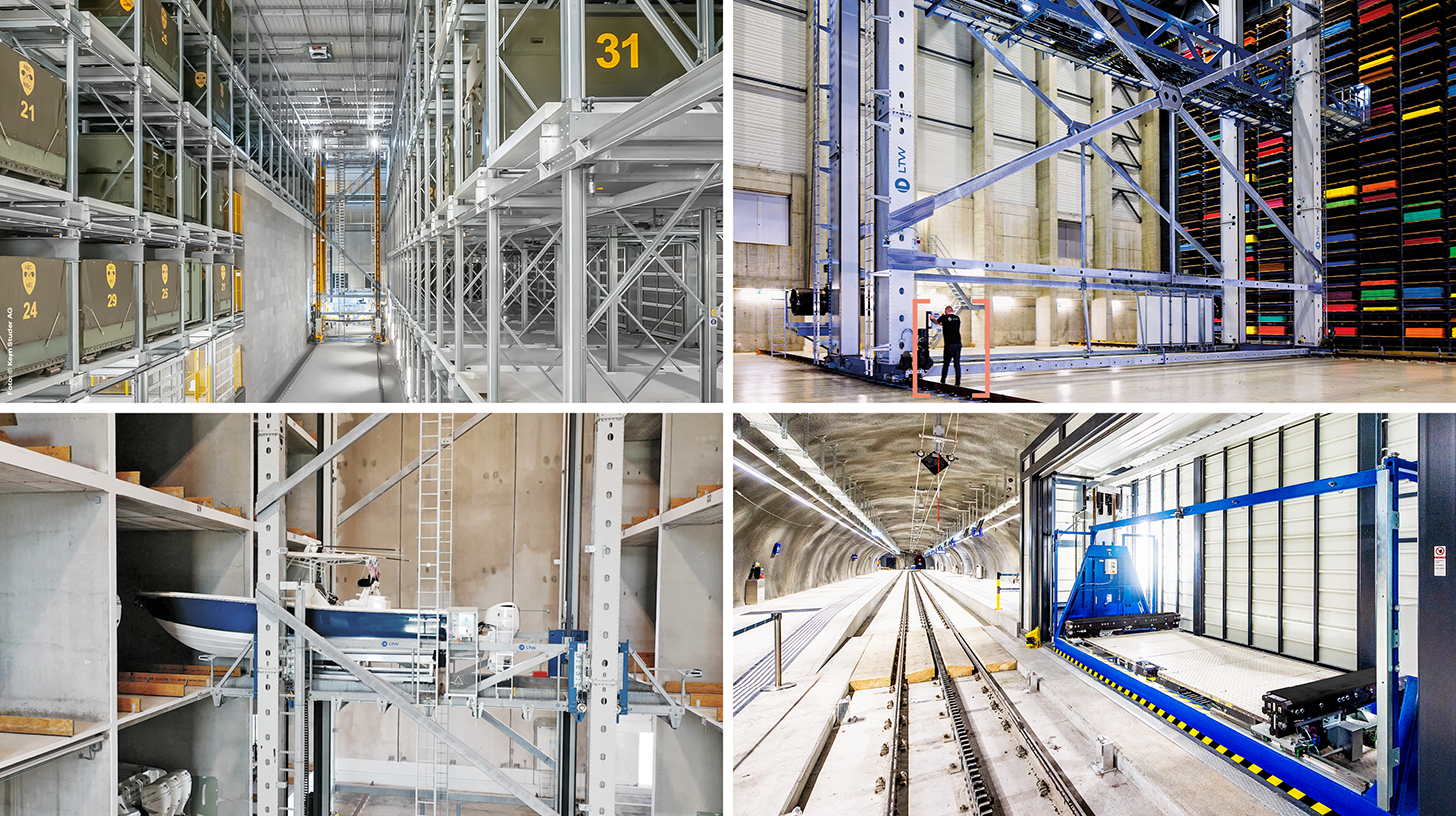
LTW Intralogistics – Engineers of Flow - Image: LTW Intralogistics GmbH
LTW offers its customers not individual components, but integrated complete solutions. Consulting, planning, mechanical and electrotechnical components, control and automation technology, as well as software and service – everything is networked and precisely coordinated.
In-house production of key components is particularly advantageous. This allows for optimal control of quality, supply chains, and interfaces.
LTW stands for reliability, transparency, and collaborative partnership. Loyalty and honesty are firmly anchored in the company's philosophy – a handshake still means something here.
Related to this:
Passion for Details: AI, density and automation for the high-performance logistics center of the future
Navigating the digital jungle: The currency of clarity
The complexity of modern logistics systems presents investors and planners with a paradox: never before have there been so many technological options, yet never has choosing the "right" system been more difficult. LogiMAT's strategy of requiring exhibitors to communicate their Unique Selling Points (USPs) in detail is a response to this overwhelming challenge. In a market that is projected to grow to over US$2.1 billion for pallet racking in Germany alone by 2035, simply promising "quality" is no longer sufficient.
The question "What detail makes a solution unique?" forces suppliers to quantify the concrete economic benefits of their innovation. Is it the special coating on the wheels that reduces abrasion and thus fine dust in the warehouse? Is it the AI algorithm that cuts empty runs by 15 percent? This level of detail serves to minimize risk for the buyer. Investments in high-bay warehouses often run into the tens or hundreds of millions of euros. Incorrect decisions are disastrous. Proactive guidance through targeted communication creates transparency and enables decision-makers to compare solutions not only based on price, but also on the Total Cost of Ownership (TCO).
Related to this:
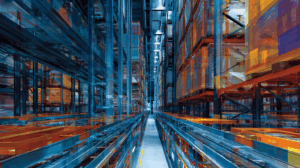
The economics of vertical integration: The container high-bay warehouse as a game changer
To support the thesis that container and pallet high-bay warehouses are the future, one must look at the most disruptive trend in current logistics: container high-bay storage in seaports. Until now, ISO containers in ports have been stacked flat (block storage), handled by rubber-tired gantry cranes (RTGs). This method has significant economic disadvantages, which high-bay storage eliminates.
The core problem of conventional port storage is so-called "shuffling" (restacking). If a container is needed that is located beneath three others, these must first be moved. This results in up to 60 percent unproductive crane movements, wasting time and energy and causing wear and tear on the equipment. The container high-bay warehouse transfers the logic of the intralogistics small parts warehouse to 40-foot shipping containers. Each container is located in its own rack space and is accessible via random access. Restacking is completely eliminated.
The economic implications are revolutionary:
First, storage capacity triples on the same footprint. Where conventional methods allow a maximum of six containers to be stacked on top of each other, high-bay racking enables 11 to 16 levels. In ports like Jebel Ali, Singapore, or Hamburg, where expansion is either physically impossible or prohibitively expensive, this densification is the only path to growth.
Second, land use decreases by up to 70 percent. This is crucial given the scarcity of logistics space in Europe and rising rents in prime locations.
Third, operating costs are drastically reduced. Studies show cost savings of up to 65 percent per container movement due to the elimination of diesel vehicles (van carriers) and the removal of unproductive moves.
The pallet high-bay warehouse: The answer to the shortage of space and labor.
What the container is to the port, the pallet is to the distribution center. Here, too, the same macroeconomic factors are driving the trend toward automated high-bay warehouses (HBWs). The market for pallet racking in Germany is robust and growing steadily, driven by e-commerce and the need for warehousing as a buffer against volatile supply chains.
The economic viability calculation of an automated pallet high-bay warehouse compared to a manual flat warehouse has shifted dramatically in recent years. Previously, high investment costs (Capex) of 5 to 20 million euros were considered a barrier. Today, rising land prices and wages are forcing a reassessment. A manual warehouse requires a lot of space and a large workforce (forklift drivers). An high-bay warehouse requires little space and hardly any personnel.
The ROI (Return on Investment) for such systems is often less than five years today, sometimes even as low as three. An example illustrates this: A conventional terminal requires approximately 9 to 12 forklift drivers for 8,000 movements. An automated system accomplishes this with 2 to 3 operators, who then only monitor the process. Given the skilled labor shortage, which, according to logistics experts, will not ease until 2025 and beyond, automation is no longer just an option, but a survival strategy. Companies simply cannot find enough staff to operate manual warehouses in three shifts. The high-bay warehouse runs 24/7 without breaks, sick leave, or fluctuations in performance.
In addition, the HRL (High-Risk Warehouse) enables inventory security and accuracy that is unattainable manually. In times of just-in-time and just-in-sequence production, the information that a part is available is almost as valuable as the part itself. Automated HRL guarantees this data quality.
The symbiosis: A continuous vertical chain
The vision for the "future of global logistics" lies in linking these two systems. In the future, a container will be stored in a high-bay container warehouse in Shanghai, loaded fully automatically onto the ship, unloaded fully automatically in Rotterdam, and (if necessary) temporarily stored. After transport inland, the contents will be removed and fed into a high-bay pallet warehouse or an automated small parts warehouse (AS/RS).
This chain is characterized by:
Complete digitalization: Since every storage space in the high-bay warehouse (whether in a port or factory) is digitally managed, the flow of goods is transparent.
Maximum density: At every node in the supply chain, space is used to the maximum cubic capacity. We can no longer afford to store air economically.
Minimal human interaction: Humans transition from the role of "box mover" to the role of dispatcher and technician. This also aligns with the recruiting trends at LogiMAT, which target qualified technicians and IT specialists.
Logistics is growing skyward: Here's what's behind the new mega-warehouses.
The transformation of logistics from flat to three-dimensional is irreversible. Container and pallet high-bay warehouses are the architectural answers to the resource scarcity of the 21st century. They resolve the conflict between increasing consumption (volume growth) and limited space (urban sprawl).
The guiding principle of LogiMAT 2026, "Passion for Details," is the key to operationalizing these giants. It is the details—AI-driven path optimization, the millimeter-precise grippers, the seamless integration of mobile robots—that transform steel structures into highly profitable logistics machines. Anyone still investing in flat, manual warehouse structures today is betting against the macroeconomic trends of urbanization, wage growth, and rising land prices. The future belongs to those who have the courage to build densely and master complexity through precise details. The logistics of the future will no longer be spread out horizontally, but vertically—intelligently, automatically, and with a passion for the smallest detail.

Xpert.Plus Warehouse Optimization - High-bay warehouses and pallet warehouses: Consulting and planning
We are here for you - Consulting - Planning - Implementation - Project Management
☑️ Our business language is English or German
☑️ NEW: Correspondence in your native language!

Konrad Wolfenstein
I and my team are happy to be available to you as your personal advisor.
You can contact me by filling out the contact form here wolfenstein@xpert.digital:or simply call me at +49 7348 4088 965. My email address is
I'm looking forward to our joint project.