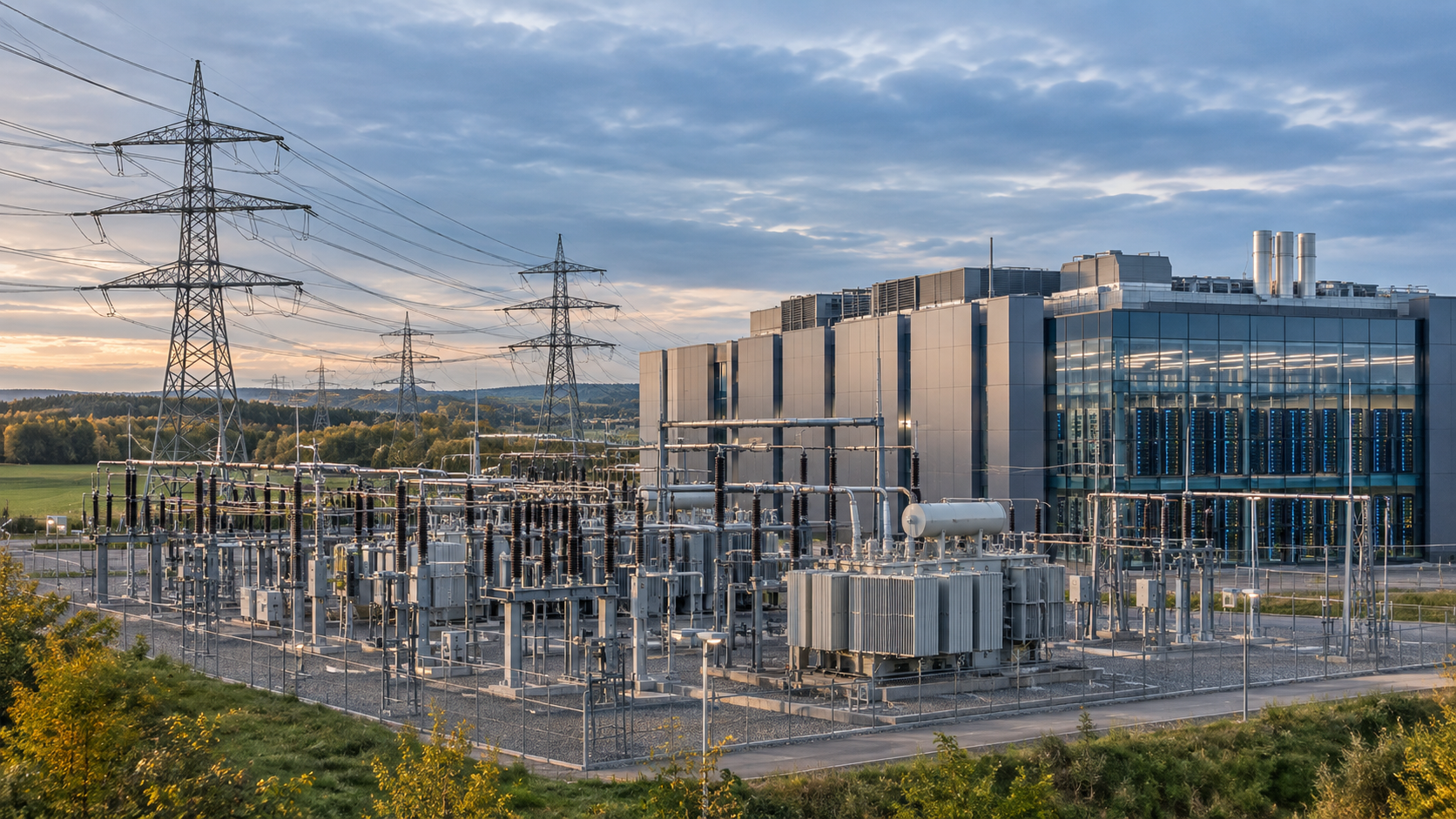
87 gigawatts of connection requests and the AI boom in Germany: Why the electricity grid is becoming a crucial location factor – creative image on the topic, with AI: Xpert.Digital
Billions for data centers – but is Germany's power grid sufficient for the AI boom?
Germany's AI future depends on the power grid – and not just on the price of electricity
Data centers need more electricity: What Germany's grid bottlenecks mean for AI
Germany aims to remain competitive internationally in artificial intelligence and digital technologies. However, billions of euros in investments in data centers, cloud services, and AI applications are not enough: without sufficiently powerful power grids, new facilities cannot be connected to the grid on time. According to current forecasts, the electricity demand of German data centers and smaller IT installations could rise to as much as 70 terawatt-hours by 2035. At the same time, connection requests from data centers to E.ON's German grid companies have totaled around 87 gigawatts since 2024 – an impressive figure, but one that does not necessarily equate to guaranteed demand. The crucial factor is not just the total amount of electricity available, but whether the necessary capacity can be provided at each location in a timely manner. This makes the power grid a key factor for Germany's digital competitiveness: it plays a decisive role in determining where data centers are built, how quickly investments are implemented, and whether the AI boom is met with a robust infrastructure.
Germany's AI future hinges on the power grid
Billions spent on artificial intelligence are of little use if there is no internet connection
Germany faces a new industrial policy test. While companies plan to invest billions in artificial intelligence, cloud services, and digital business models, a seemingly conventional infrastructure is moving into the spotlight of competition: the power grid. High-performance chips, available land, or financially strong investors are no longer the sole determining factors for where new data centers are built. Increasingly, the decisive factor is whether sufficient electrical power can be provided reliably and on time at a specific location.
This represents a fundamental shift. For a long time, digitalization was primarily viewed as a software issue. In reality, it relies on a capital-intensive physical infrastructure of data centers, power lines, substations, transformers, cooling systems, and communication networks. With the rise of artificial intelligence, the economic importance of this material foundation is growing. Digital competitiveness and energy infrastructure can therefore no longer be considered separately.
Germany boasts a reliable power supply, significant industrial users, and an established data center market. At the same time, the anticipated expansion of digital infrastructure is intensifying competition for regionally available network capacity. This does not necessarily imply the failure of the location, nor does it guarantee a smooth growth path. The crucial factor will be whether it succeeds in transforming its inherent strengths into genuinely usable connectivity options.
A digital growth trend is becoming an energy-economic phenomenon
The electricity demand of German data centers and smaller IT installations is estimated at around 23 billion kilowatt-hours for 2026. This corresponds to 23 terawatt-hours. As a clear comparison, one can consider the annual electricity consumption of approximately 6.5 million households. However, this comparison only illustrates the amount of energy. The technical requirements of a large data center differ considerably from those of a comparable number of private households.
By 2030, consumption is expected to rise to 35 to 38 terawatt-hours. Compared to 2026, this represents an increase of approximately 52 to 65 percent. The forecast range for 2035 is 56 to 70 terawatt-hours. This would mean that consumption would increase roughly 2.4 to 3 times within nine years. These are forecasts, not fixed consumption figures. Nevertheless, they illustrate how drastically the demands on the energy system could change.
The absolute increase is also considerable. Between 2026 and 2035, it would amount to between 33 and 47 terawatt-hours annually, depending on the development path. This would mean that the electricity system would not only have to secure current operations, but also accommodate a consumption volume significantly exceeding the total current demand of this sector.
An important distinction needs to be made: These figures do not solely describe the electricity consumption of artificial intelligence. They encompass data centers and smaller IT installations in general. Cloud applications, traditional business software, data storage, and other digital services are also included. The AI boom is accelerating this growth, but it should not be equated with total consumption.
Why sufficient electricity supply does not guarantee a connection
The debate easily becomes misleading if electricity generation and grid connection are equated. A country may generate or procure sufficient electrical energy over the course of a year and still be unable to connect additional large loads at certain locations. The decisive factors are the local grid structure, the available transformer capacity, existing reserves, and the resilience of upstream grid levels.
A data center doesn't need electricity abstractly somewhere in the European market area, but rather at a specific transfer point. Numerous technical components stand between the power generation plant and the servers. If just one of these links is overloaded, expanding an existing site can be just as difficult as constructing a new one.
This creates a spatial coordination problem. Investors prefer locations with suitable land, fiber optic connections, proximity to customers, and a qualified workforce. However, the available network capacity at these locations does not necessarily align with these preferences. An economically attractive location may be unfavorable from an energy perspective. Conversely, a location that is suitable from a network perspective may have other disadvantages.
The assessment by EnBW CEO Georg Stamatelopoulos, that connection options must be examined on a case-by-case basis, therefore describes the core of the problem. The national discussion about sufficient electricity supply does not replace a regional connection assessment. For companies, what ultimately matters is not Germany's theoretical supply capacity, but the reliably achievable connection of their specific project.
🎯🎯🎯 Data-driven B2B industry hub as a quasi-in-house solution


The quasi-in-house solution: How Xpert.Digital closes operational gaps in B2B marketing and sales – Smart Content-Driven Business - Image: Xpert.Digital
Xpert.Digital is a data-driven B2B industry hub led by Konrad Wolfenstein . The company acts as an external, quasi-in-house solution for industrial partners, closing operational gaps in marketing, content, and sales – without requiring additional resources on the client side.
More information here:
Why sufficient electricity supply does not guarantee a connection
Gigawatts are not terawatt hours
The scale of investment interest is particularly evident in the connection requests to E.ON's German grid companies. According to company figures, requests from data centers have totaled approximately 87 gigawatts since 2024. For comparison, a German peak load of around 76 gigawatts is cited. The requested capacity would thus be roughly 14 percent higher than this benchmark.
This comparison is impressive, but requires explanation. Gigawatts describe electrical power at a specific point in time. Terawatt-hours describe an amount of energy over a period of time. Therefore, a requested connection capacity cannot be directly equated with a projected annual consumption. This would require additional assumptions about capacity utilization, operating time, and actual implementation.
Even more important is the distinction between an inquiry and an investment decision. Follow-up inquiries can concern alternative locations for the same project. Projects can be delayed, scaled down, or canceled altogether. Furthermore, an early inquiry does not necessarily reflect a confirmed customer need.
The 87 gigawatts are therefore not reliable evidence that an additional load of this magnitude will arise in the short term. Rather, they are an indicator of the enormous pressure on connection assessments and infrastructure planning. Those who treat all inquiries as guaranteed demand risk overinvestment. Those who dismiss them as mere speculation may be underestimating a structural growth spurt.
The connectivity problem affects far more than just data centers
The overload of connection processes is not solely due to artificial intelligence. According to available data, the number of network connection requests from the German E.ON network operators has almost quintupled since 2020, reaching approximately 380,000. This total should not be interpreted as the number of data center projects. It reflects the significantly broader strain on the connection organization.
Economically, this brings together several transformation processes. New consumers and new producers must be integrated into a system whose technical and administrative capacities cannot grow indefinitely. Even if individual projects involve different levels of voltage, they sometimes compete for the same planning resources, skilled personnel, and upstream operating equipment.
This transforms the connection processing itself into a productive infrastructure service. Digital processes, standardized data sets, and transparent processing statuses can help avoid unnecessary loops. However, they do not replace transformers or power lines. Administrative modernization and physical expansion must therefore occur in parallel.
This is crucial for economic policy assessment: Preferential treatment of data centers alone would not solve the fundamental bottleneck. It could merely shift it between sectors. What is needed is a system that enables new digital demand without systematically disadvantaging industrial electrification, housing construction, or other economically important projects.
Why long-term network planning suddenly uses much larger numbers
The changed expectations are also reflected in the assumptions for long-term grid development. While the 2023 scenario framework still assumed a power demand of 50 terawatt hours for data centers in 2045, the current draft of the scenario framework, according to available information, reaches up to 143 terawatt hours in 2027.
The upper order of magnitude is thus almost three times the previous estimate. However, this increase should not be interpreted as a precise prediction. Scenarios describe possible development paths and provide a basis for network calculations. The draft network development plan for 2027 includes different paths for 2040 and 2045; its assumptions are not equivalent to investments already realized.
This creates a difficult conflict of priorities for network operators. If expansion waits until demand is fully secured, new connections may be available too late. Conversely, if every optimistic projection is anticipated, underutilized infrastructure and additional financial burdens are likely.
The economically sound answer lies between these extremes. Planning must consider multiple demand trends and allow for expansions to be implemented gradually, if possible. Land, routes, and expansion options can be secured early on, while particularly capital-intensive expansion phases can be tied to more reliable indicators. Foresight and risk mitigation are not mutually exclusive but must be managed together.
The true location price consists of more than just the electricity tariff
For data center operators, the electricity price is important. However, it only represents one part of the site costs. Connection costs, construction time, financing, cooling, operational reliability, and the economic consequences of potential delays must also be considered. A low electricity tariff becomes less attractive if operations cannot begin for years.
This gives time its own price. Capital already tied up generates no planned returns during a delay. Customers may switch to competitors. Technical concepts may need to be revised before commissioning. Furthermore, with rapidly advancing hardware development, the risk increases that investment and construction plans will no longer align.
A reliably available connection can therefore be more valuable than a theoretically cheaper but uncertain location. For investors, the overall cost calculation over the entire lifespan is what counts. This also includes how credible promised deadlines are.
Germany should therefore not discuss its competitiveness solely in terms of international electricity price comparisons. Equally important is the question of how quickly and reliably a site decision can be translated into a fully operational data center. A transparent roadmap for implementation can be more economically valuable than a non-binding prospect of future cost reductions.
North Rhine-Westphalia demonstrates the opportunities and limitations of settlement policy
In February 2024, Microsoft announced investments of €3.2 billion in expansion
📈🚀 From visibility to trust 👀🤝 Your scalable path with Xpert.Digital

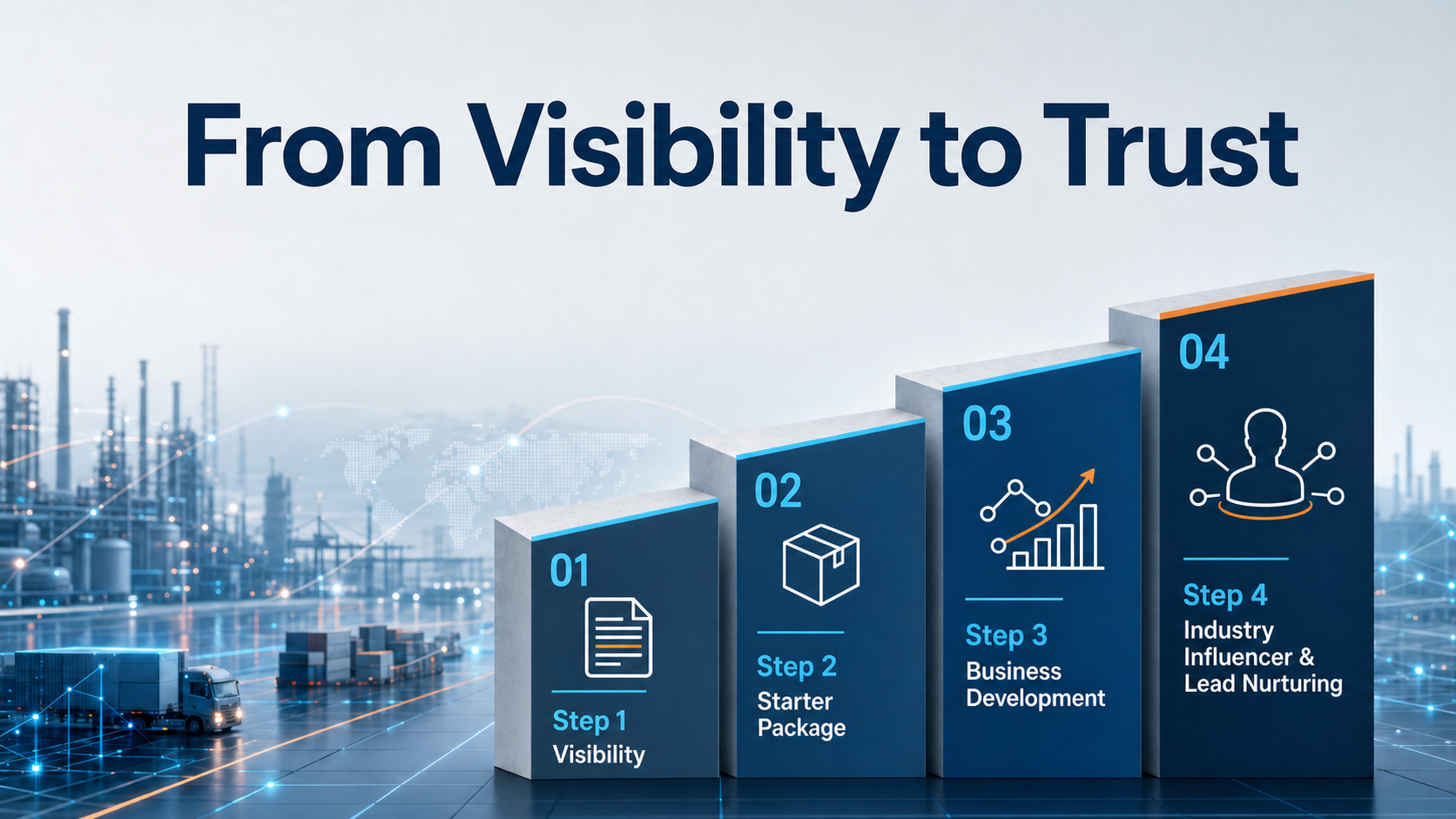
From visibility to trust: Your scalable path with Xpert.Digital - Image: Xpert.Digital
In industrial B2B, sustainable business relationships rarely emerge overnight. They develop step by step – through visibility, professional relevance, recurring touchpoints, and growing trust. Xpert.Digital's 4-stage model addresses precisely this: It offers a structured path that begins with a manageable entry point and can evolve into deeper collaboration in business development if needed.
Instead of relying on loud marketing promises, this model puts the relationship at the forefront. Companies start with clearly defined, easily calculable measures and then decide, based on their own experience, how far they want to expand the collaboration. A key factor for this undisturbed trust-building process: The platform completely avoids annoying advertising ads, so the editorial focus remains solely on the companies' expertise.
More information here:
Your global marketing and business development partner
☑️ Our business language is English or German
☑️ NEW: Correspondence in your native language!

Konrad Wolfenstein
I and my team are happy to be available to you as your personal advisor.
You can contact me by filling out the contact form here wolfenstein@xpert.digital:or simply call me at +49 7348 4088 965. My email address is
I'm looking forward to our joint project.