+++ Where the €17.50 broadcasting fee goes +++ The broadcasting fee in figures +++ 2017: Broadcasting fee set to rise significantly +++ Germans also want to vote on the broadcasting fee +++ Revenue from broadcasting fees remains constant +++
Broadcasting fees – Image: Sine wave|Shutterstock.com
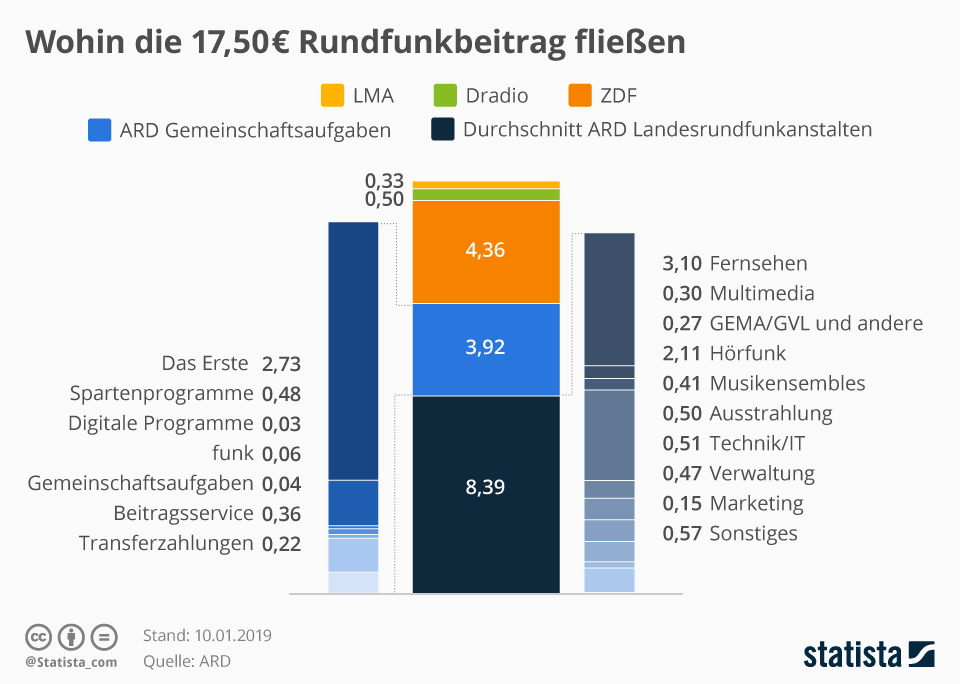
Where the €17.50 broadcasting fee goes
Every household in Germany (with a few exceptions) pays €17.50 for public broadcasting. This fee funds not only ARD, ZDF, and Deutschlandradio, but also the state media authorities, the regulatory body for private broadcasting and telemedia services. The graphic shows how the fee is distributed among the individual institutions. The largest share, €8.39, goes to the ARD regional broadcasting corporations. A further €3.92 is used for joint ARD projects. ZDF receives €4.36, Deutschlandradio receives €0.50, and €0.33 goes to the state media authorities, according to ARD databased on average usage in 2016/2017.

Where the €17.50 broadcasting fee goes – Image: Statista
The broadcasting fee in figures
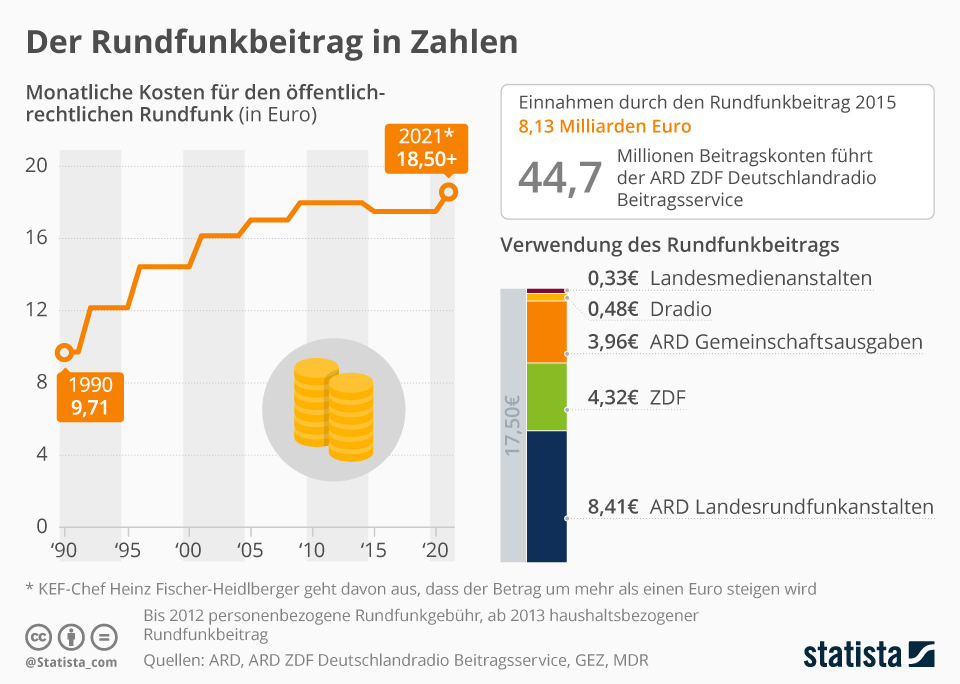
The broadcasting fee could rise to over €18.50 in the future. Currently, each household pays €17.50 for public radio and television services. The broadcasting fee collection service manages a total of 44.7 million accounts, which together generate over €8 billion annually for the broadcasters. ARD and ZDF are the biggest beneficiaries.
The broadcasting fee in figures – Image: Statista
2017: Broadcasting fee to increase significantly
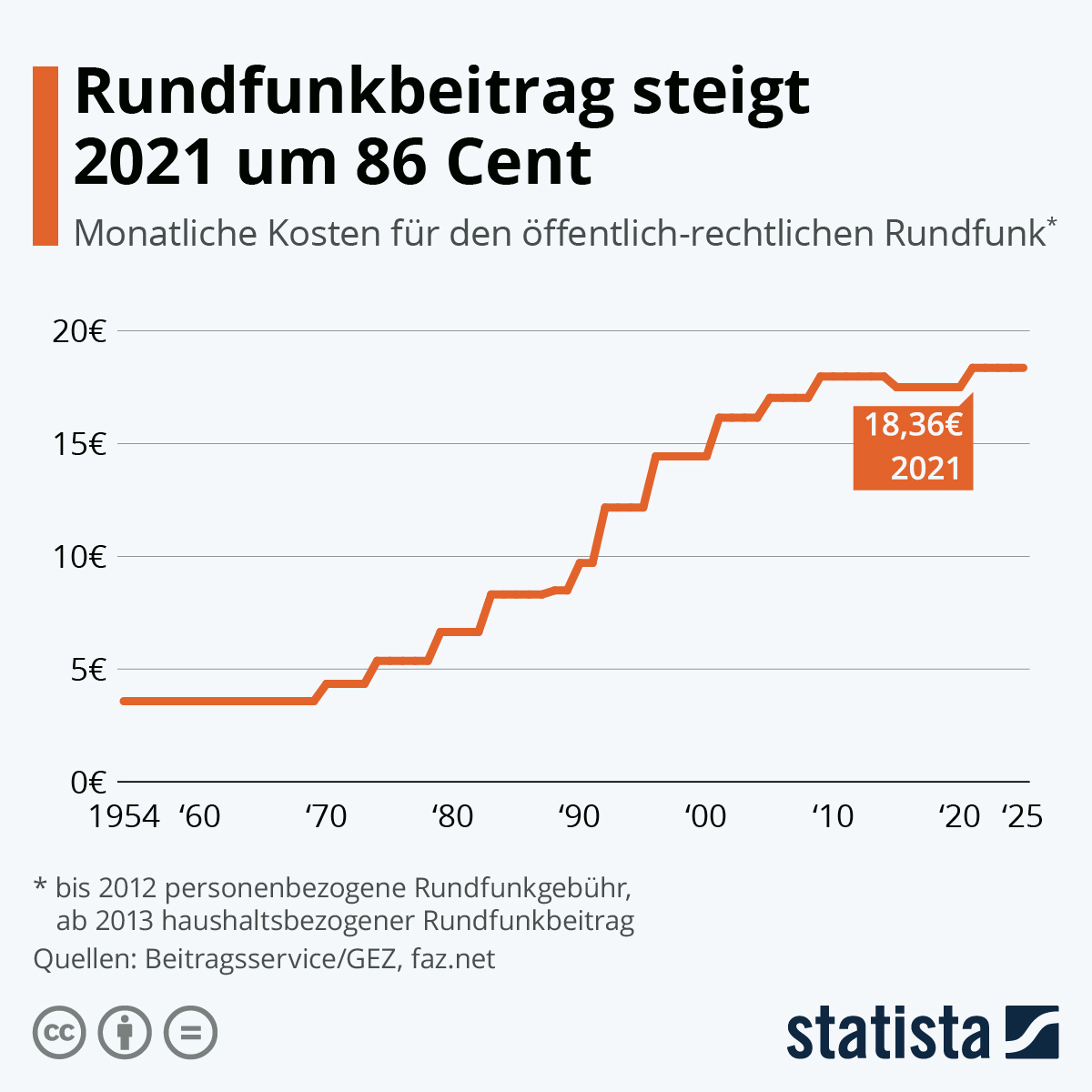
In April 2016, the Commission for the Financial Requirements of Public Broadcasters (KEF) recommended reducing the broadcasting fee by 30 cents. The KEF has since revised its calculations. Commission chairman Heinz Fischer-Heidlberger told MDR that he expects the fee to increase by more than one euro. Fischer-Heidlberger cites rising costs – including those for media libraries and online services – as the reason for this development. Currently, the broadcasting fee collection service generates over eight billion euros annually for the broadcasters.
Broadcasting fee increases by 86 cents in 2021 – Image: Statista
Germans also want to vote on the broadcasting fee
In Switzerland, citizens recently voted decisively against abolishing broadcasting fees in a referendum. Meanwhile, Germans would also like to vote on the financing of their public broadcasting service, as a recent YouGov shows. 76 percent of respondents are in favor of a direct vote on whether the broadcasting fee should continue to exist in Germany. The most important reason for abolishing it is the fee amount. Others feel their interests or opinions are not reflected in the programming of public broadcasting. If the fee is retained, 74 percent of respondents consider a maximum fee of ten euros to be appropriate.
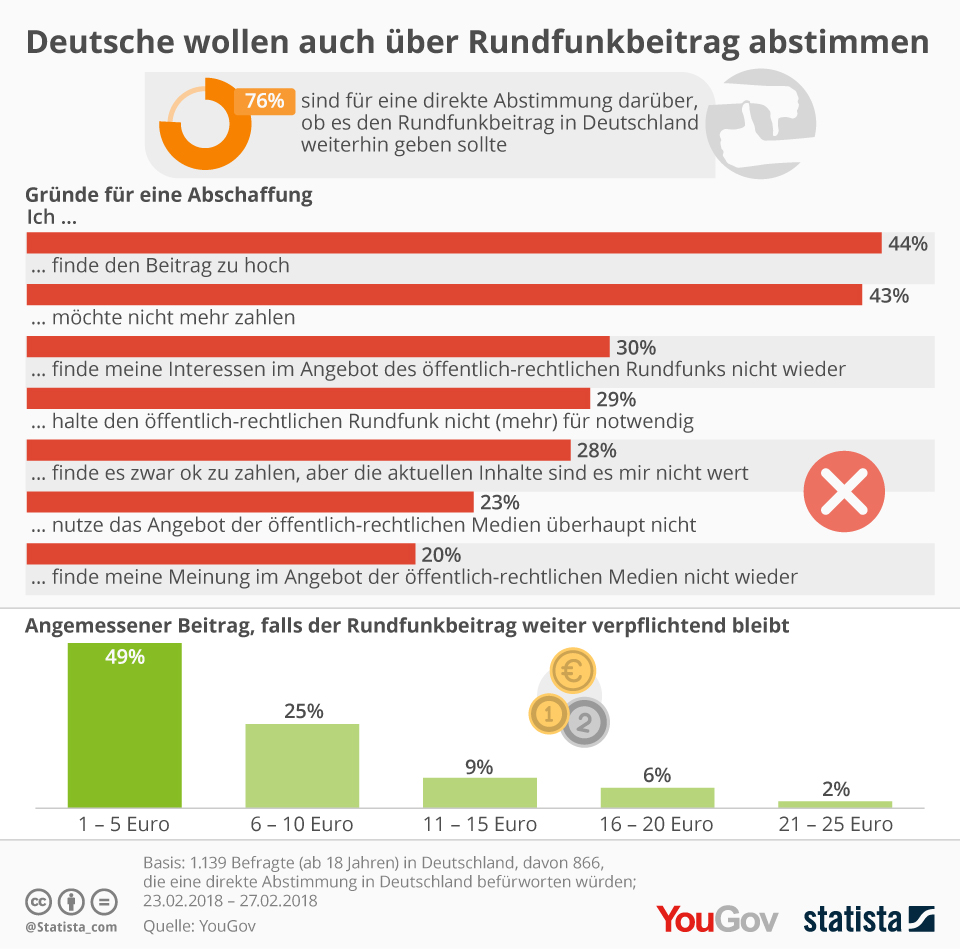
Germans also want to vote on the broadcasting fee – Image: Statista
Revenue from broadcasting fees remains constant
Revenue from the broadcasting fee (formerly GEZ until 2012) remained almost constant in 2017 compared to the previous year. The ARD, ZDF, and Deutschlandradio contribution service – a slight decrease of 0.05 percent. As the Statista graphic shows, revenue has risen steadily since 2005, exceeding €8 billion in 2014/15. In total, the contribution service recorded 45 million contribution accounts for 2017, of which just over 39 million were for private residences. The remaining accounts comprised businesses, hotels, vacation rentals, and motor vehicles.
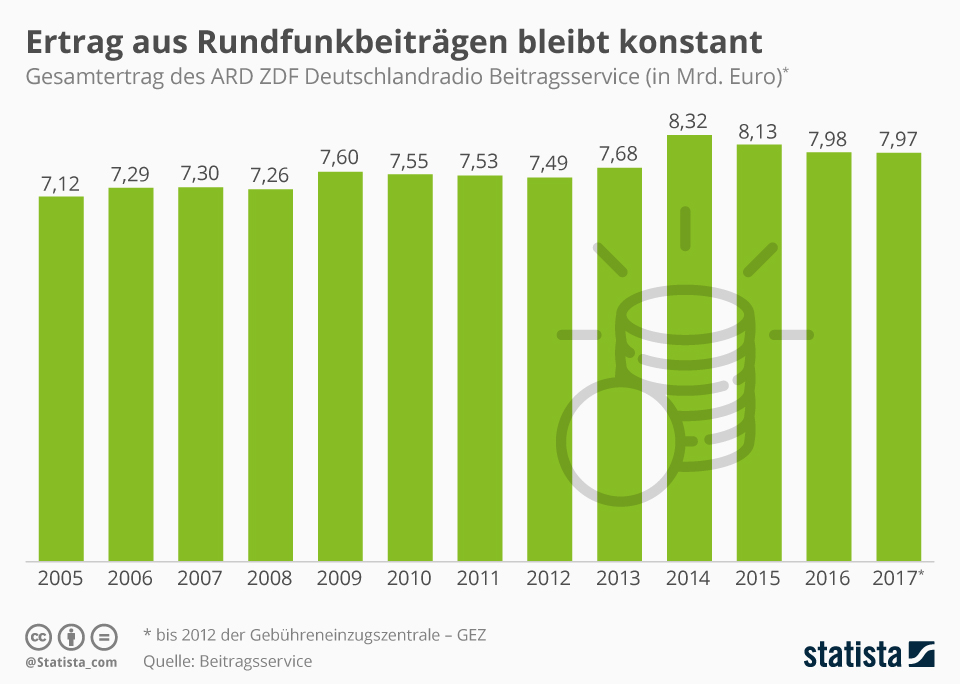
Revenue from broadcasting fees remains constant – Image: Statista
Keep in touch