Some people understand digitization to mean simply revising the website (relaunch) with integrated marketing automation.
This assumption, however, is insufficient and too simplistic. The term digitization, in its original sense, refers to the conversion of analog values into digital formats. Digitization has undergone a long development process.
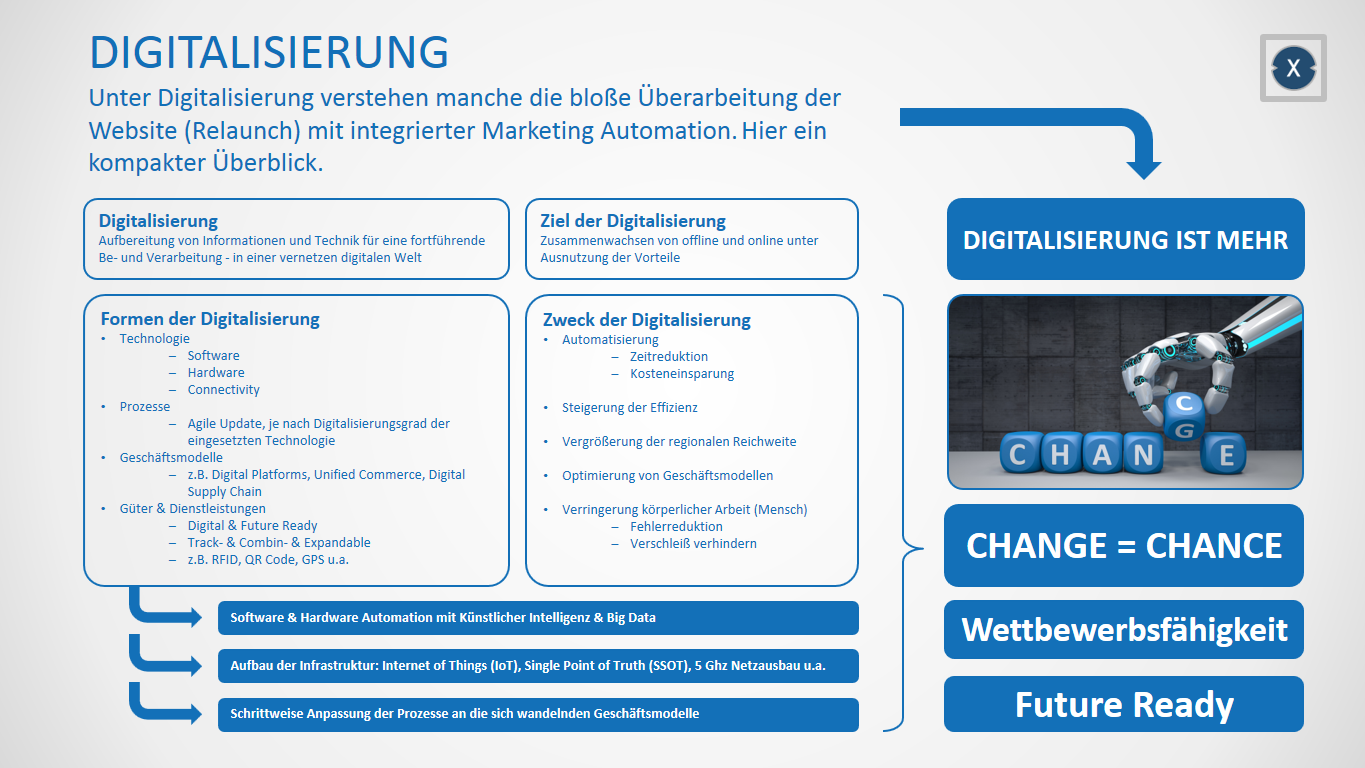
What do you understand by digitalization?
Digitization, as it originated, had the purpose of storing information digitally and making it available for electronic data processing. Historically, it usually began with an analog medium (e.g., tape recording, record).
In science, however, digitization in the sense of the change of processes (process digitization) and procedures due to the use of digital technologies (digital revolution, digital transformation) has become a cross-cutting topic in many disciplines.
Interfaces to the physical world
With regard to process digitization, interfaces to the outside world are of particular importance: Digital information is output on analog devices or attached to physical goods so that it can be read again by people or by the same machine at a later time, or by other machines.
This includes not only classic techniques such as the output of digital information on carrier materials such as paper using human-readable letters and numbers (and their conversion back by OCR) but also specialized techniques such as barcodes, 2D codes (e.g. QR codes) or wireless information carriers that can be read without line of sight or electrical connection (e.g. RFID, "radio-frequency identification").
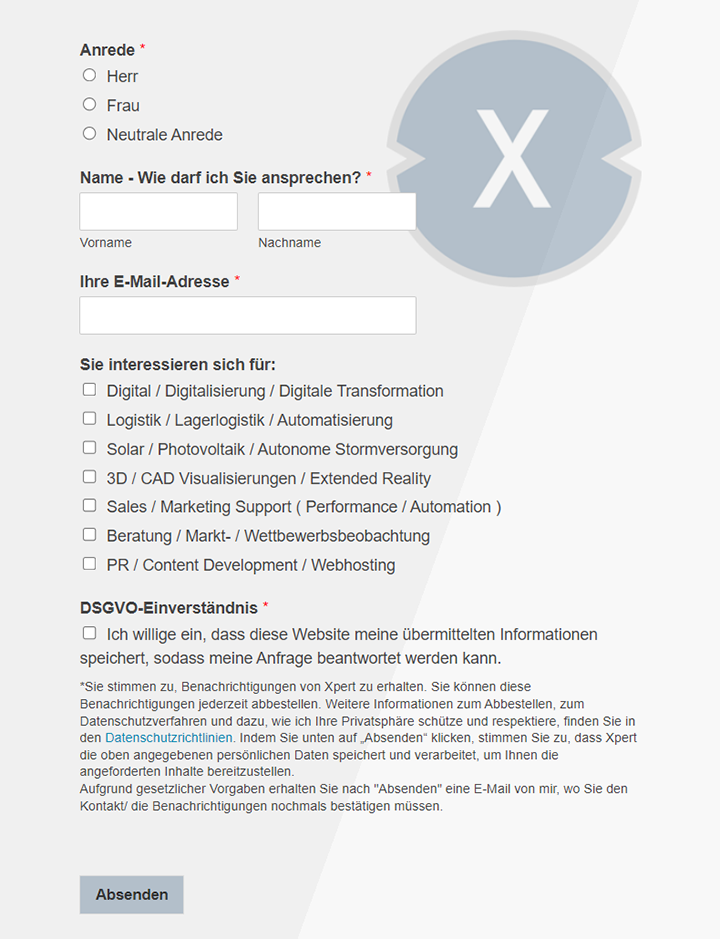
The digitization of transport and logistics includes, for example, digitally controlled warehouse technology, driverless transport systems, autonomous driving, navigation systems and digital traffic management systems.
Whether in measurement technology, healthcare, or production technology (e.g., using CNC machines or 3D printing), the fundamental advantages of digitalization lie in the speed and universality of information dissemination. Thanks to cost-effective hardware and software for digitalization and ever-increasing networking via the internet, new opportunities are emerging rapidly.
Reasons for digitization
- Digital data allows for use, processing, distribution, indexing and reproduction in electronic data processing systems
- Digital data can be processed, distributed, and copied by machines, and therefore faster
- They can be searched (even word by word)
- The storage space requirement is significantly lower today
- Even with long transport routes and after multiple processing steps, errors and distortions (e.g., noise superposition) are minimal compared to analog processing or can be completely eliminated
- Long-term archiving
The more one delves into digitalization, the more apparent the complexity of the entire topic becomes. The major challenge is to fully grasp and implement digitalization => Digital Transformation. If only certain aspects of digitalization are considered or omitted, then no genuine digital transformation takes place, and its positive effects and advantages can be lost.
Without questioning existing business models, without planning processes (degree of digitization of the respective areas) and without fully thought-out steps in the digitization of goods and services, digital technology will not be able to manage the digital transformation on its own.
To return to the initial example: Without further search engine optimization and other marketing measures, a new website and marketing automation won't generate any additional leads! While these measures help simplify the process, speed it up, and make it easier for third parties to process, without further measures and integrations, such as with an enterprise resource planning (ERP) system, it remains a theoretical exercise, and everything stays the same.
Digital business transformation
Digital transformation (also known as "digital change") refers to an ongoing process of change, which, as the Digital Revolution, affects society as a whole and, in economic terms, specifically businesses. The basis of digital transformation is digital technologies, which are being developed at an ever-increasing pace, thus paving the way for yet more new digital technologies.
In a narrower sense, digital transformation is often defined as the change process within a company triggered by digital technologies or the resulting customer expectations (Digital Business Transformation). However, digital transformation goes much further and beyond this. It is a change process that affects a multitude of aspects of our society and does not end with businesses.
Digital business transformation, through the opportunities and potential of digital media and the internet, fundamentally changes the foundation of every company in its strategy, structure, culture, and processes. This impacts the organization through change management (a topic within the IT Infrastructure Library – ITIL) . With digital business transformation, companies address the changes of the digital age. As a conceptual evolution, digital business transformation is derived from the English term "business transformation," which refers to the development of new business opportunities and the implementation of new business models by a company.
Digital Business Transformation also deals with the planning, management, optimization, and implementation of a company's value chain in the digital age. The focus is on identifying the impact of digitalization on existing business models, revenues, revenue streams, and a company's differentiating characteristics in the market.
There is no universally accepted definition of digital business models. In the broadest sense, they are business models whose value-creating activities rely on digital technologies. Oliver Gassmann defines them somewhat more narrowly as "internet-based value propositions based on intelligent value chains." Due to constant advancements in digital technologies and/or changing expectations, the potential digital business models are also continuously evolving.
These ever-accelerating and ongoing changes to business models and their processes, along with their respective levels of digitalization, necessitate the use of experts with comprehensive know-how in the digital world of tomorrow (or: industry know-how).
Keep in touch