In times of increasing competition and advancing globalization, many companies focus on boosting productivity. However, other important areas are often neglected in the process. One such area is reliable fire protection. This can have disastrous consequences, as fires can quickly lead to existential losses for businesses. Comprehensive fire protection covering all areas is therefore essential, because in commerce and industry, the risk of fire is not limited to production. Over a third of all major fire damage occurs in warehouses and logistics areas. This is hardly surprising, given the wide variety of fire hazards present in a typical warehouse
- Pallets stacked tightly together with goods and parts
- highly flammable products or packaging
- Tall and closely spaced shelving units create a chimney effect in the event of a fire (especially in high-bay warehouses)
All these factors represent dangerous fire accelerants that can quickly cause a fire to spiral out of control. The causes of such a warehouse fire are equally varied:
- Defects in electrical systems
- Welding work
- heat
- Spontaneous combustion of stored raw materials or products
- Employees who smoke
- arson
Many of these hazards can be eliminated by using closed, high-density storage systems with access control and airlocks. If the systems are also equipped with automatic fire protection, the risk to the building, stored equipment, and goods is further reduced.
Fire detection
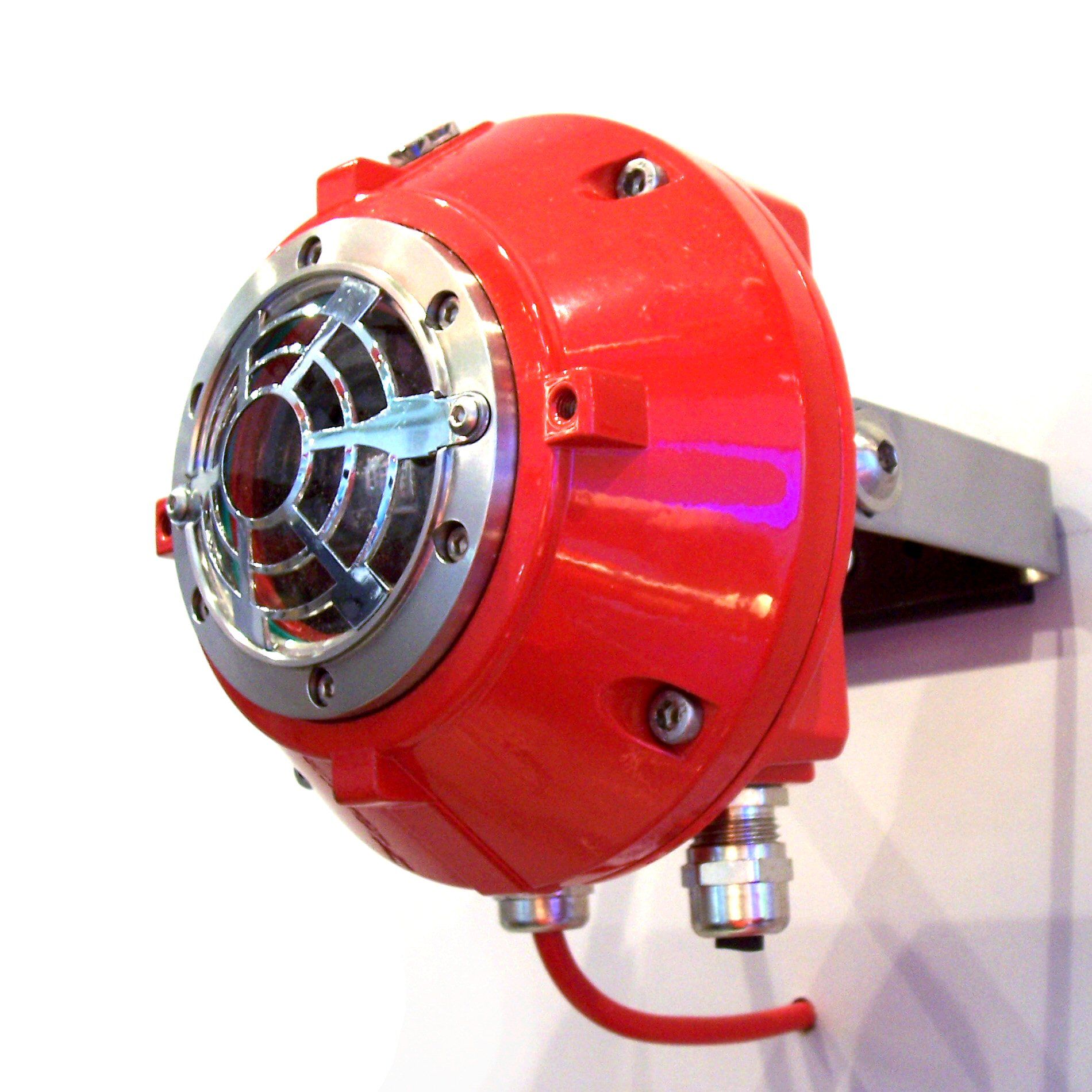
modern fire alarm (Source: Wikipedia)
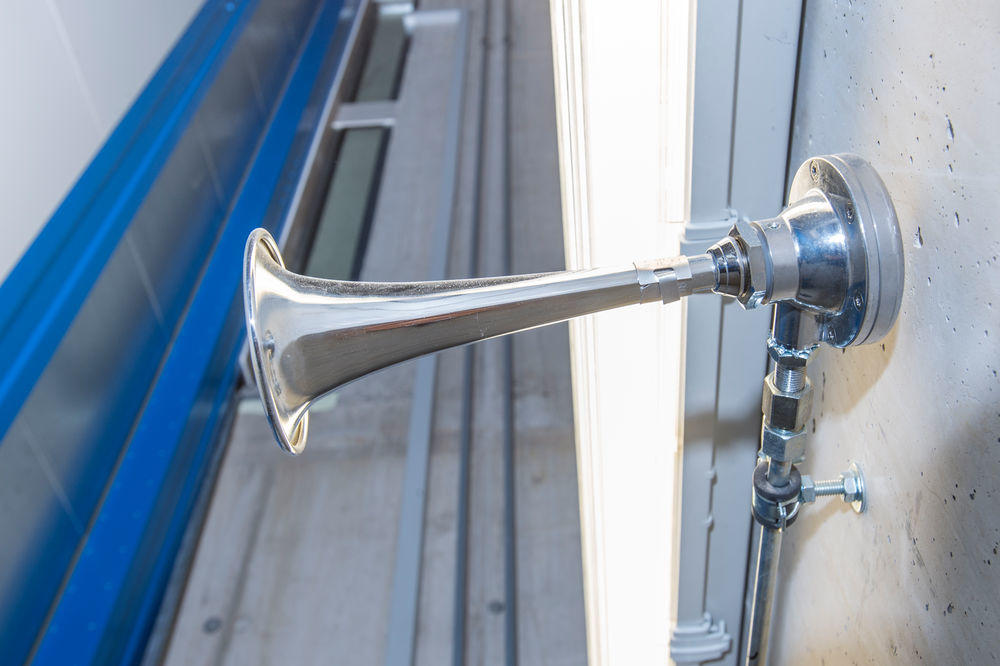
But even the best fire suppression system is of little use if the fire isn't detected in time. A fire has many faces: flames, smoke, heat, and gas emissions. The right detectors and fire alarms are crucial for early fire detection. Depending on the industry, a wide variety of industrial fire alarms can be used. Whether in a clinically clean environment or a dirty, hot production process, these robust devices have a broad range of applications and can be used under the harshest conditions, both indoors and outdoors. Smoke aspiration systems are also commonly used. With their highly precise air analysis, they detect even the smallest airborne contaminants and immediately sound the alarm in the event of a fire.
Once this has occurred, various extinguishing methods can be employed. The choice of method depends on the storage system used and the goods stored. For example, high-bay warehouses are often protected by sprinkler systems because their size makes it difficult to flood them quickly enough with sufficient gas. In contrast, damage from extinguishing water is particularly serious for sensitive parts and materials, which makes the use of gas sensible. Therefore, there is no one-size-fits-all fire protection solution for logistics facilities, as the structural conditions must also be taken into account.
Gas – Extinguishing without residue
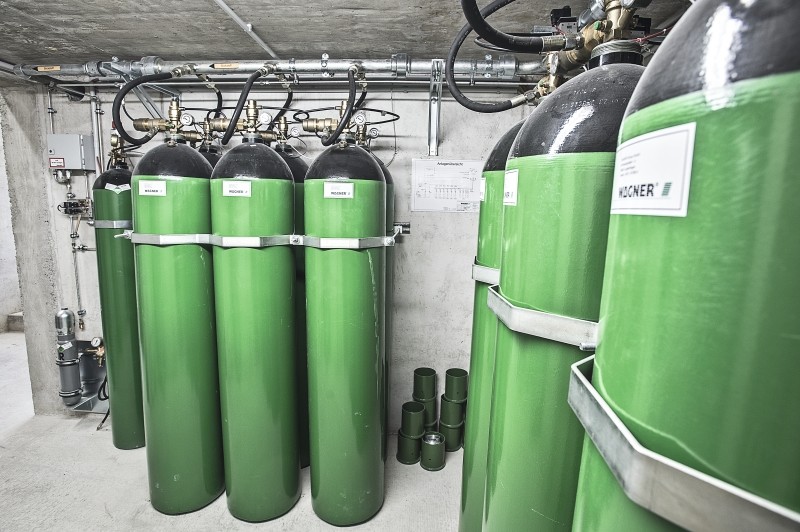
In this area, intralogistics manufacturer Kardex Remstar, together with fire protection experts from the WAGNER Group developed a solution for its vertical shuttle and paternoster systems that relies on the use of gas for fire extinguishing. (Research on Security trade fair 2016, Wagner Group with Kardex)
Residue-free and low-reactivity
High-density storage in self-contained shuttle systems necessitates the earliest possible fire detection, as this is the only way to identify and extinguish a fire in its initial stages. The early detection system provides continuous monitoring by analyzing the intake air for smoke particles. If the particle concentration exceeds the predefined limit, the system triggers an audible and visual alarm. The fire is then extinguished immediately, protecting the storage equipment and goods. This is achieved through the use of nitrogen. In the event of a fire, nitrogen is introduced into the storage unit at low pressure through diffuser tubes. This rapidly and evenly reduces the oxygen content within the unit, extinguishing the fire.
The automatic flooding is triggered with a time delay to allow people to leave the danger zone. An additional holding flood prevents a possible reignition. During this process, the oxygen concentration is kept low for at least ten minutes to effectively prevent reignition.
Gas extinguishing system with nitrogen
In addition to the inert gas nitrogen, carbon dioxide is frequently used. Systems based on carbon dioxide are characterized by their wide range of applications. As a natural component of ambient air, carbon dioxide is an inexpensive and readily available extinguishing agent that is non-conductive. Due to its special properties, it can be used to protect not only enclosed spaces but also open areas. Carbon dioxide fire suppression systems require very little storage space, making them ideal for installation even in small logistics areas.
Integrated water extinguishing systems
Water-based systems are also widely used. Besides their application in high-bay warehouses, as already mentioned, they can also be used in conventional racking systems. The use of particularly flat sprinklers allows for the integration of water-based fire suppression systems even in narrow racks. These sprinklers feature a flat spray pattern, which ensures smaller distances between the sprinkler and the stored goods, thus maximizing shelf space for the items being stored.
Even in deep-freeze warehouses, water can be used as an extinguishing agent under certain circumstances. ESFR (Early Suppression Fast Response) dry sprinklers are particularly suitable here, as they operate in freezing temperatures down to -40 degrees Celsius. To prevent the sprinkler pipes from freezing, they only fill with water when the extinguishing process is triggered.
These are just a few examples illustrating the diverse range of effective fire protection measures available in intralogistics facilities. It therefore seems advisable in every case to consult an expert to select the most suitable measure for each individual situation. Ideally, a fire will then be prevented altogether, or at least extinguished quickly and without causing damage.
Fire protection measures in the company
For all companies, effective fire safety management is a prerequisite for successful fire protection. This includes, among other things, a published, publicly accessible fire safety policy, escape and rescue plans, and fire suppression measures. Furthermore, it is advisable to clarify the following points:
- Designation of suitable fire safety and first aiders as well as fire safety officers
- Strict adherence to fire safety regulations
- Regular fire drills for employees
- Easily identifiable, easily accessible escape routes and emergency exits
- Regular maintenance of fire protection systems
- Establishing direct contact with the fire department
Keep in touch