


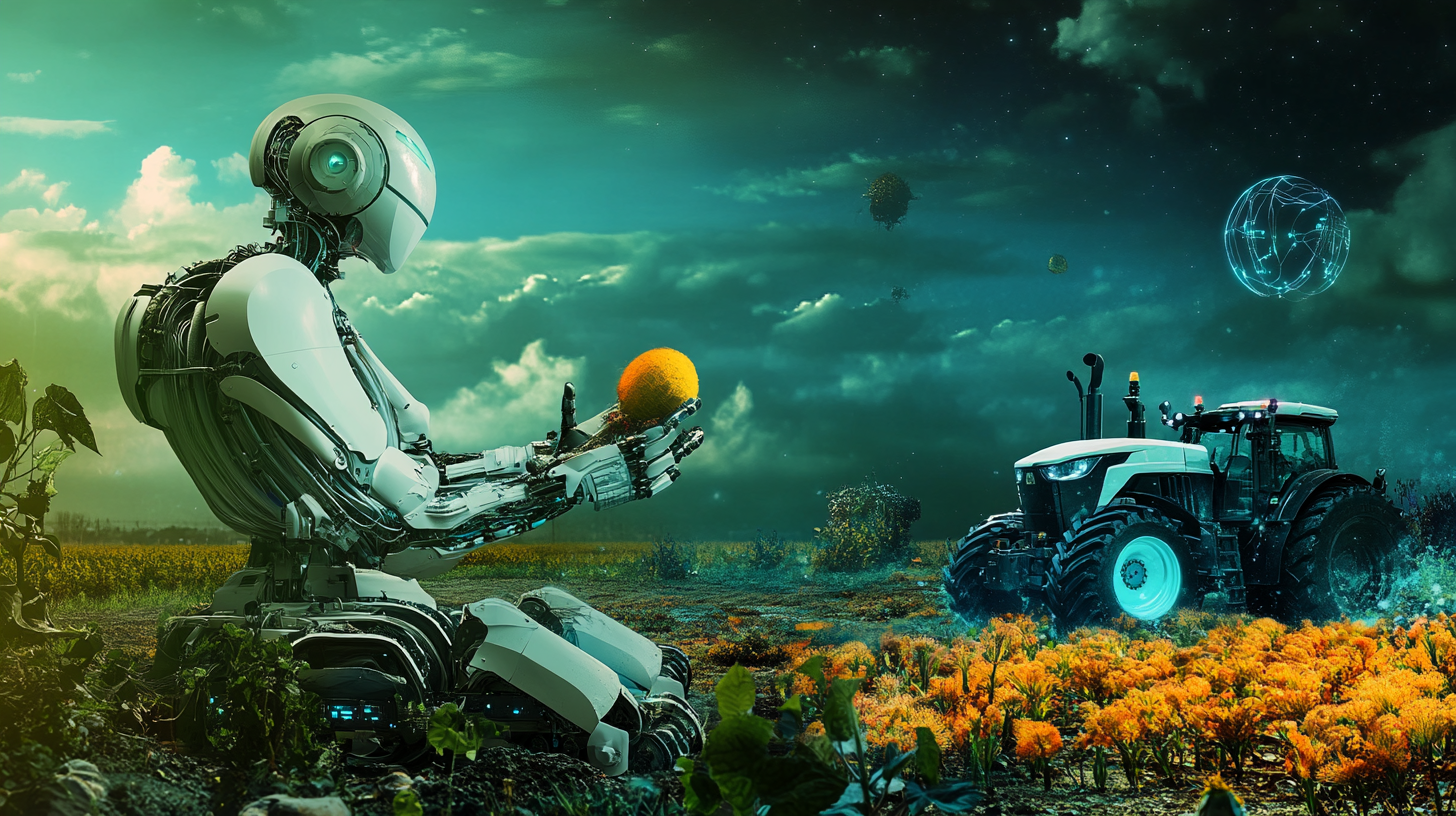
Humanoid robots, agricultural robotics and underwater robotics: What AI, sensors and digital twins make possible – Image: Xpert.Digital
From underwater to agriculture: The diverse applications of modern robotics
The future of robotics and automation: innovations and trends
Robotics and automation technology are undergoing a revolutionary transformation. Advances in artificial intelligence (AI), machine learning, sensor technology, and hardware design are driving the development of powerful and versatile robotic systems. From humanoid robots and autonomous agricultural machinery to underwater robotics, it is clear that automation is increasingly permeating all areas of life and the economy. This article provides a comprehensive overview of the latest innovations, challenges, and future prospects in robotics.
Humanoid Robots: The Evolution of Human-Like Machines
Unitree Robotics sets new standards
The Chinese company Unitree Robotics has developed the H1, currently the most powerful humanoid robot. The H1 measures 180 cm in height, weighs 47 kg, and reaches an impressive top speed of 5 m/s – a world record for humanoid robots.
Key features:
- AI-driven motion planning: The H1 uses NVIDIA-based simulation platforms to autonomously learn complex movement sequences such as climbing stairs, carrying loads (up to 30 kg) and dynamic balance control.
- Deployment flexibility: Thanks to its human-like anatomy, it can be seamlessly integrated into existing industrial and logistical infrastructures, such as warehouses or production halls.
- Cost efficiency: With an entry-level price of approximately €23,000 for smaller models (G1 series), Unitree demonstrates that humanoid robots can become economically viable.
Potential applications of humanoid robots
- Industrial automation: Assembly and manufacturing work where flexibility is required.
- Logistics and warehousing: Autonomous movement of goods in warehouses and distribution centers.
- Care and assistance: Support in the healthcare sector, especially in the care of elderly people.
- Disaster relief: Rescue operations in dangerous environments such as burning buildings or radioactively contaminated zones.
Agricultural robotics: Automated harvesting and sustainable production
Bonsai Robotics: Visionsteer technology for autonomous agriculture
Agriculture faces major challenges: increasing labor shortages, stricter environmental regulations, and the need for greater efficiency. Bonsai Robotics offers Visionsteer, an innovative, AI-powered autonomy solution for agricultural machinery.
Revolutionary features:
- GPS-independent navigation: Thanks to intelligent camera systems and sensor fusion, the system can also work precisely in challenging environments such as orchards, where GPS is often unreliable.
- Increased efficiency: Automated harvesting machines can reduce labor by up to 60%, while simultaneously collecting valuable data to optimize plant growth.
- Sustainability: Pilot projects, such as the solar-powered Davegi robot, demonstrate how sustainable technologies and agricultural production can be linked.
Other applications in agriculture
- Autonomous fertilization and spraying robots: Reduction of pesticide use through precise application.
- AI-powered weed control: Robots that mechanically remove weeds reduce the need for herbicides.
- Drones for field data analysis: AI-powered drones analyze plant growth, soil moisture, and pest infestation.
Underwater robotics: Automated deep-sea operations
Nauticus Robotics and Leidos: Autonomous Underwater Technology
The oceans play a crucial role in the economy, from fishing to energy production. The partnership between Nauticus Robotics and Leidos promotes the development of autonomous underwater robots for the inspection and maintenance of deep-sea facilities.
Key innovations:
- Aquanaut robot: This hybrid of AUV (autonomous) and ROV (remotely controlled) can perform inspections, repairs and data collection at depths of up to 1,500 m without human intervention.
- ToolKITT software: An AI-powered platform analyzes sensor data in real time for monitoring underwater pipelines or offshore wind farms.
- Cost reduction: The use of these technologies can reduce operating costs by up to 70% while drastically reducing CO₂ emissions.
Possible applications
- Oil and gas industry: Maintenance of deep-sea pipelines and drilling platforms.
- Ocean research: Autonomous mapping and environmental monitoring.
- Recovery and rescue operations: underwater rescue operations and wreck searches.
Technological Foundations of Robotics
Artificial intelligence as the driving force behind robotics
- Generative AI: Enables the intuitive programming of robots through natural language input.
- Real-time optimization: AI algorithms dynamically improve robot movements, for example in cobots or mobile manipulators.
Digital Twins
- Virtual simulation: Digital twins reduce development times and lower testing costs by up to 50%.
- Precise error analysis: Prediction and resolution of potential problems in product development.
Mobile manipulators
- Industry 4.0: The combination of mobility and precision enables new applications in maintenance and manufacturing.
- Logistics: Use in automated warehouses for object handling.
What's next?
The increasing integration of AI, automation, and modular hardware will revolutionize numerous industries. The main challenges lie in scalability and cost reduction to achieve widespread market penetration.
Future developments could include:
- Self-learning humanoid robots: Adaptive systems that autonomously improve human interactions.
- Collaborative robotics: Cobots that work together with humans even more safely and efficiently.
- Quantum AI in robotics: Faster and more powerful decision-making in autonomous systems.
Robotics is evolving from a complementary technology to an essential component of global industry and society – with immense potential for the future.
Related to this:
Your global marketing and business development partner
☑️ Our business language is English or German
☑️ NEW: Correspondence in your native language!

Konrad Wolfenstein
I and my team are happy to be available to you as your personal advisor.
You can contact me by filling out the contact form here wolfenstein@xpert.digital:or simply call me at +49 7348 4088 965. My email address is
I'm looking forward to our joint project.