Warehouse retrofit and automation in the USA – Over 80% of warehouses currently lack any automation – Image: Xpert.Digital
The pulse of warehouses: A look at the automation challenges in the USA
The transformation of warehouses: A look at automation
The beating arteries of modern commerce and logistics—warehouses—are on the cusp of a profound transformation. While the digital revolution has reshaped many areas of our lives and businesses, warehouse automation—particularly in the United States—is lagging behind. Recent data paints a surprising picture: More than 80% of warehouses in the US currently operate without any form of automation. This figure may seem paradoxical given technological advancements and the increasing demands for speed and efficiency. However, a closer look at the reasons for this reluctance and the emerging trends reveals a fascinating dynamic.
Related to this:
The current state of automation
Industry analyses strongly demonstrate that the majority of American warehouses still rely on traditional, manual processes. An alarming 80% of warehouses lack any automation whatsoever. This finding aligns with global observations, which paint a similar picture, showing that a comparably high percentage of warehouses worldwide remain unautomated. Looking at the past decade, only about 15% of warehouses have been mechanized, while advanced automation technologies have only been implemented in a small segment of approximately 5%. These figures highlight the enormous potential for automation in this sector, and the coming years are likely to be marked by significant changes.
Reasons for the hesitant introduction
The reasons for the slow adoption of automation so far are numerous and complex. Although the advantages of automation – such as increased efficiency, reduced error rates, and relieving employees of repetitive tasks – are obvious, there are obstacles that have prevented many companies from making larger investments.
Lack of expertise as an obstacle
A key factor is the lack of expertise. A significant number of companies, specifically around 28%, report that they lack the necessary internal skills to successfully plan, implement, and operate automation projects. Integrating new technologies requires specialized knowledge in areas such as robotics, software development, and data analytics. Many companies, particularly small and medium-sized enterprises (SMEs), lack the relevant experts or the resources to develop these skills.
Integration difficulties
Another significant obstacle is integration difficulties. Almost a quarter of companies (approximately 25%) see challenges in seamlessly integrating new automation solutions into their existing warehouse environments and IT systems. Warehouses are often complex systems with established processes and infrastructures. Integrating new technologies requires careful planning and can lead to disruptions in ongoing operations, which many companies are wary of. Compatibility with existing warehouse management systems (WMS) and other operational software systems is a crucial factor in this regard.
Costs as a decisive factor
The costs should not be underestimated. The initial investment costs for automation technologies can be substantial and represent a significant hurdle for many companies, especially smaller players with limited financial resources. Acquiring robots, conveyor systems, automated storage systems, and the necessary software requires substantial capital expenditures. In addition to the direct purchase costs, there are also expenses for installation, implementation, maintenance, and employee training. The amortization period for such investments can also be a factor that leads to reluctance.
Other influencing factors
In addition to these primary hurdles, other factors also play a role. Skepticism towards new technologies and a certain inertia when it comes to changing established processes can also contribute to companies' hesitancy regarding automation. Sometimes, there is also a lack of a clear understanding of the long-term benefits and the return on investment (ROI) of automation projects. Furthermore, there are concerns about the flexibility of automated systems and their adaptability to changing requirements in warehouse operations. Another aspect is the worry about employee jobs, even though studies show that automation tends to lead to a shift in tasks and the creation of new, more skilled jobs rather than massive job losses. Last but not least, data privacy concerns and the security of networked automation systems also play a role in the decision-making process.
But the signs point to change. Despite the currently low automation rate, a significant upswing is expected in the coming years. Various forecasts indicate substantial growth in the warehouse automation market.
Forecast for warehouse automation in the USA
By 2027, approximately 26% of warehouses in the US are expected to have some form of automation. This represents a significant increase from the 18% recorded at the end of 2021. This forecast underscores the increasing momentum and growing interest in automation solutions.
Related to this:
Global Warehouse Automation Market
The global market for warehouse automation is also expected to expand significantly in the coming years. Experts estimate that the market volume will grow to approximately US$35 billion by 2025. This corresponds to an impressive average annual growth rate of around 12% between 2021 and 2024.
Development in North America
The development in North America is particularly noteworthy. The warehouse automation market in this region is projected to grow from US$7.5 billion in 2024 to a remarkable US$23.2 billion in 2031. This corresponds to an annual growth rate of approximately 17.4%. These figures clearly demonstrate that North America, and the USA in particular, will be a key driver of growth in warehouse automation.
Drivers of automation
These positive prospects are fueled by various factors. The e-commerce boom and the associated increased demand for fast and efficient deliveries are forcing companies to optimize their warehouse processes. Consumers today expect their orders to be processed ever faster, which is hardly manageable without automation.
Labor shortage as a challenge
Another crucial factor is the increasing labor shortage in the logistics sector. It is becoming ever more difficult to find qualified employees for strenuous and repetitive tasks in the warehouse. Automation offers a way to close these gaps and reduce dependence on human labor.
Complexity of warehouse processes
The increasing complexity of warehouse processes, resulting from greater product variety and smaller batch sizes, also demands smarter and more efficient solutions. Manual processes are increasingly reaching their limits in this regard.
Technological developments
Not to be forgotten are the ongoing technological developments in robotics, artificial intelligence (AI), and machine learning. These technologies enable increasingly sophisticated and flexible automation solutions that can better adapt to the dynamic requirements of warehouse operations.
Competitive pressure and efficiency improvements
Increasing competitive pressure is also forcing companies to improve their efficiency and reduce costs. Automation offers a clear competitive advantage in this regard.
Technologies in warehouse automation
The technological landscape of warehouse automation is diverse and dynamic. A number of innovative technologies are driving the transformation of the sector:
- Automated guided vehicles (AGVs) and autonomous mobile robots (AMRs): These intelligent vehicles take over the transport of goods within the warehouse, optimize routes, and reduce the need for manual handling. AMRs are characterized by their ability to navigate autonomously and avoid obstacles.
- Order picking robots: These robots are able to pick individual items from shelves and precisely assemble orders. They utilize advanced image recognition and gripping technologies.
- Automated storage and retrieval systems (AS/RS): These systems automate the storage and retrieval of goods and optimize space utilization in the warehouse. They are particularly efficient in high-bay warehouses.
- Drones: Drones are increasingly being used for inventory tasks and monitoring stock levels. They offer a fast and efficient way to survey large warehouse areas.
- Warehouse Management Systems (WMS): These software systems form the brain of the automated warehouse. They control and optimize all warehouse processes, from goods receipt to shipping.
- Artificial intelligence (AI) and machine learning: AI algorithms are used to analyze warehouse processes, predict demand, optimize routes, and improve the performance of robots.
Advantages of warehouse automation
The advantages of warehouse automation extend far beyond mere efficiency gains. They range from cost reductions through decreased personnel requirements and lower error rates, to increased speed and accuracy in order processing, and improved workplace safety through the use of robots in hazardous environments. Furthermore, automation enables better utilization of warehouse space and higher throughput. Employee satisfaction can also increase, as robots take over repetitive and physically demanding tasks, allowing employees to focus on more challenging activities. Last but not least, automation provides valuable data and insights that can be used to further optimize warehouse processes.
Challenges in implementation
However, implementing warehouse automation also presents challenges. The complexity of the implementation requires careful planning and expertise. The need for qualified personnel to operate and maintain the automated systems is increasing. Data protection and data security are also important aspects that must be considered. A phased implementation and effective change management are crucial for the success of automation projects.
Outlook on the future of warehouse automation
Technologies are expected to become increasingly flexible and adaptable. Human-robot collaboration will play an ever-greater role. AI-powered systems will further optimize and automate warehouse processes. Sustainability will also become more important, as energy-efficient automation solutions can help reduce the environmental footprint of warehouses.
Despite its current limited adoption, warehouse automation in the US is poised for significant growth. The urgent need for increased efficiency, the challenges of labor shortages, and continuous technological advancements will accelerate the adoption of automation solutions in warehouses in the coming years. The transformation of the warehouse landscape has begun and will fundamentally change how goods are stored and moved.
LTW Intralogistics Solutions

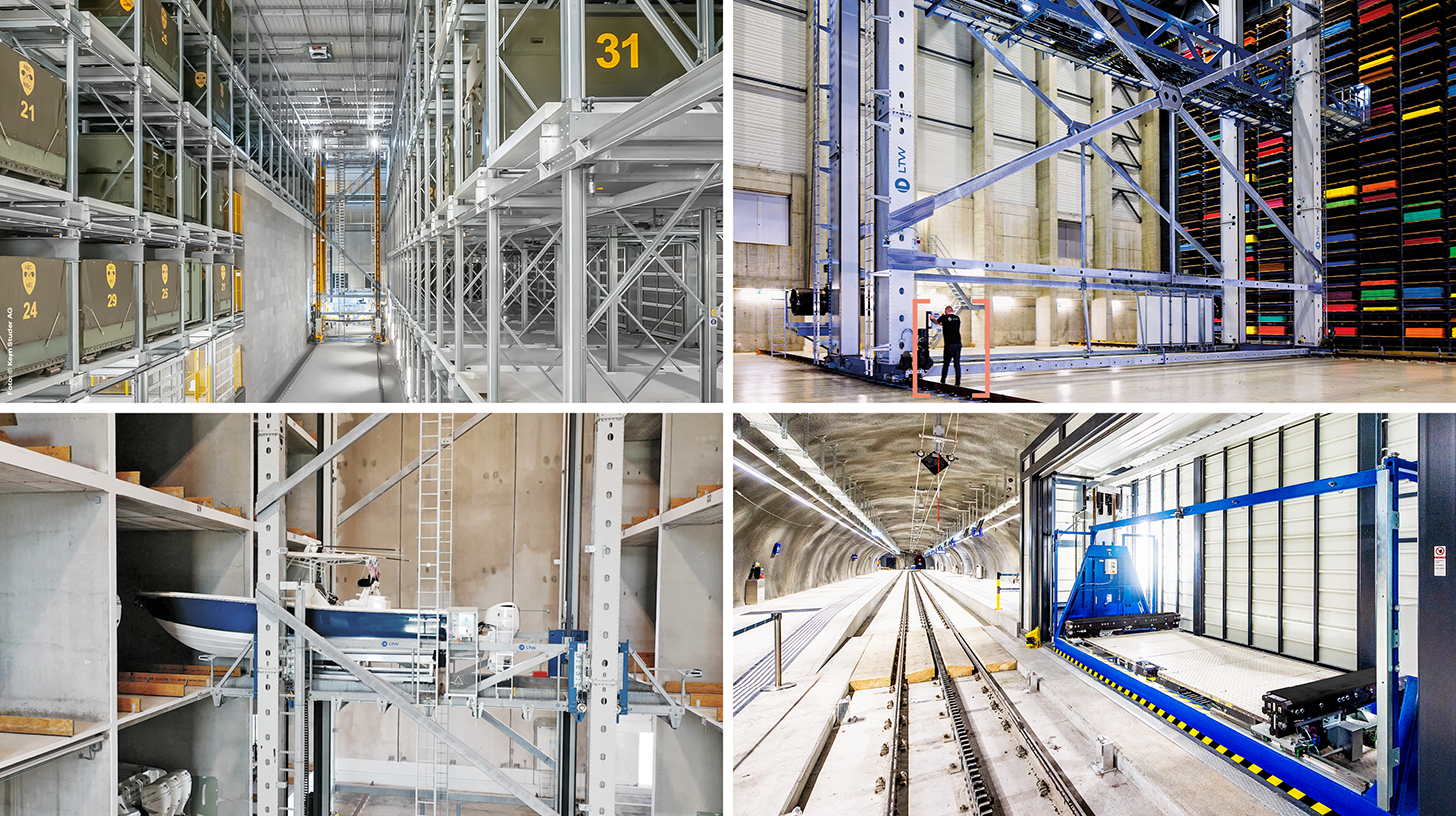
LTW Intralogistics – Engineers of Flow - Image: LTW Intralogistics GmbH
LTW offers its customers not individual components, but integrated complete solutions. Consulting, planning, mechanical and electrotechnical components, control and automation technology, as well as software and service – everything is networked and precisely coordinated.
In-house production of key components is particularly advantageous. This allows for optimal control of quality, supply chains, and interfaces.
LTW stands for reliability, transparency, and collaborative partnership. Loyalty and honesty are firmly anchored in the company's philosophy – a handshake still means something here.
Related to this:
We are here for you - Consulting - Planning - Implementation - Project Management
☑️ SME support in strategy, consulting, planning and implementation
☑️ Creation or realignment of the digital strategy and digitization
☑️ Expansion and optimization of international sales processes
☑️ Global & Digital B2B trading platforms
☑️ Pioneer Business Development

Konrad Wolfenstein
I would be happy to serve as your personal advisor.
You can contact me by filling out the contact form below or simply call me on +49 7348 4088 965 .
I'm looking forward to our joint project.
Write to me


Xpert.Digital - Konrad Wolfenstein
Xpert.Digital is a hub for industry focusing on digitalization, mechanical engineering, logistics/intralogistics and photovoltaics.
With our 360° Business Development solution, we support renowned companies from new business to after-sales.
Market intelligence, smarketing, marketing automation, content development, PR, mail campaigns, personalized social media and lead nurturing are part of our digital tools.
You can find more information at: www.xpert.digital - www.xpert.solar - www.xpert.plus
Keep in touch