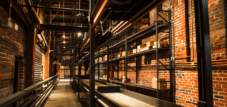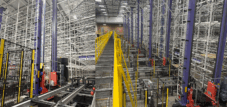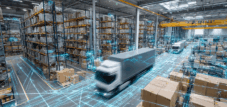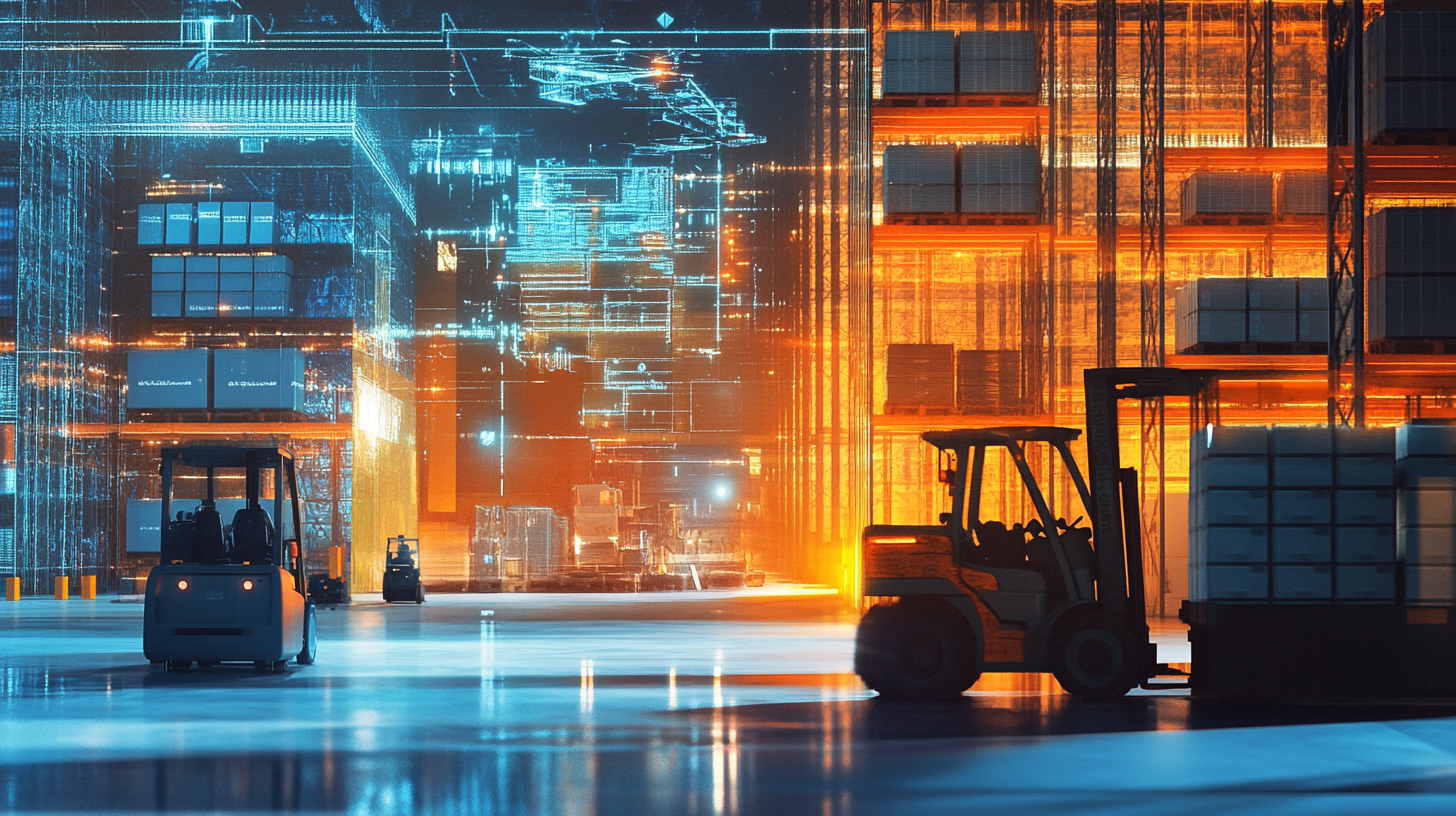
Warehouse at its limit? Warehouse automation: Warehouse optimization vs. retrofit – The right decision for your warehouse – Image: Xpert.Digital
Strategic decisions in logistics: How to find the ideal solution between optimization and retrofit
Future-oriented warehouse logistics: The central question between optimization and modernization
The decision between warehouse optimization and retrofitting presents companies with a significant strategic challenge. Both approaches offer specific advantages and are suitable for different scenarios. A thorough analysis is crucial to ensuring the long-term efficiency, competitiveness, and sustainability of a warehouse. This article comprehensively examines the differences, advantages, and applications of warehouse optimization and retrofitting, provides practical recommendations, and offers fascinating insights into modern warehouse logistics.
Warehouse optimization: Increased efficiency through improvements
Warehouse optimization focuses on refining existing processes within the current infrastructure. It is ideal when the basic warehouse structures and technical systems are still functional but can be made more efficient through targeted adjustments. This is particularly true for well-maintained facilities that do not require extensive modernization.
Related to this:
When is warehouse optimization worthwhile?
Warehouse optimization is particularly suitable in the following situations:
- Good condition of the infrastructure: The existing systems and facilities are technically intact and only require minor adjustments.
- Minimal investment: No extensive technological upgrades are required.
- The goal is to increase efficiency: The focus is on optimizing existing processes and thereby saving time, costs and resources.
- No serious disruptions: Operations are running largely smoothly, and optimization measures can be carried out during ongoing operations.
Measures for warehouse optimization
Warehouse optimization encompasses a variety of measures that can be adapted as needed. The most common optimization approaches include:
1. Implementation or improvement of a warehouse management system (WMS)
- A modern warehouse management system (WMS) offers improved inventory overviews, optimizes warehouse processes, and increases transparency.
- Example: By automating warehouse movements, shortages can be reduced and inventory can be managed more efficiently.
2. Optimization of the warehouse layout
- An intelligent redesign of the layout reduces walking distances, improves space utilization and facilitates order picking.
- Practical: Frequently used items are placed closer to the picking zones.
3. Employee training
- Well-trained employees are more productive, make fewer mistakes, and are more motivated.
- Additionally: Managers should regularly schedule feedback sessions to identify potential areas for improvement from the employees' point of view.
4. Integration of mobile technologies
- Mobile devices such as scanners or smart glasses can simplify and accelerate work processes.
- Advantages: Real-time information is available, which minimizes errors and improves ergonomics.
5. Improve energy efficiency
- The use of energy-saving lighting or optimized heating and cooling systems contributes to cost reduction.
Retrofit: Modernization with foresight
A retrofit goes beyond mere optimization and includes the modernization of existing systems as well as the integration of new technologies. The goal is to increase performance, extend the service life of the systems, and future-proof the warehouse.
When is a retrofit necessary?
A retrofit is particularly useful if:
- Outdated systems: The technology is no longer up-to-date and causes frequent malfunctions.
- High operating costs: Inefficient systems lead to excessive energy and maintenance costs.
- Spare parts problems: Spare parts for outdated components are difficult to obtain or are very expensive.
- New technologies are required: automation or digitization should be integrated.
- Security risks exist: The existing systems no longer meet current standards.
Advantages of a retrofit
- Cost efficiency: Compared to a new building, a retrofit can save 30 to 70% of the costs.
- Extended lifespan: A retrofit can extend the lifespan of the systems by 10 to 15 years.
- Increased availability: Replacing critical components increases system availability by over 20%.
- Performance increase: New technologies increase throughput by up to 30%.
- Sustainability: Modern components reduce energy consumption and can integrate sustainable energy sources such as solar energy.
- Technological integration: Technologies such as artificial intelligence (AI) or augmented reality (AR) promote efficiency and flexibility.
Exemplary retrofit measures
- Automation systems: Driverless transport systems (AGVs) and robotic order picking systems can be introduced.
- Security updates: Installation of new security systems such as light curtains or emergency shutdowns.
- Energy optimization: Replacing inefficient motors or cooling systems.
Decision process: Warehouse optimization or retrofit?
Choosing between warehouse optimization and retrofitting requires a structured approach. Here are the essential steps:
- Condition analysis: Conduct a comprehensive analysis of the warehouse condition to identify weaknesses. Document the results and prioritize the necessary actions.
- Life cycle assessment: Analyze which phase of the life cycle the assets are in. Components at the end of their life cycle should be prioritized for modernization.
- 3. Needs analysis: Define the current and future requirements for the warehouse. Take industry trends and strategic company goals into account.
- Cost-benefit analysis: Calculate the return on investment (ROI) for optimization and retrofit. Consider costs, savings, and potential efficiency improvements.
- Minimizing business interruptions: Plan measures to minimize disruption to ongoing operations. Simulation tools can help evaluate different scenarios.
- Employee training: Involve your employees in the process and ensure adequate training. This promotes the acceptance and efficiency of the measures.
Related to this:
The right choice for your company
The decision between warehouse optimization and retrofitting depends on long-term strategy and the current state of the warehouse. Warehouse optimization is suitable when existing systems are functioning well and only minor adjustments are needed. It is a cost-effective method for improving existing processes. Retrofitting, on the other hand, offers a sustainable solution for outdated systems and enables the integration of modern technologies. With a thorough analysis, clear objectives, and strategic planning, companies can make the optimal decision to future-proof and competitively manage their warehouse logistics.
LTW Intralogistics Solutions
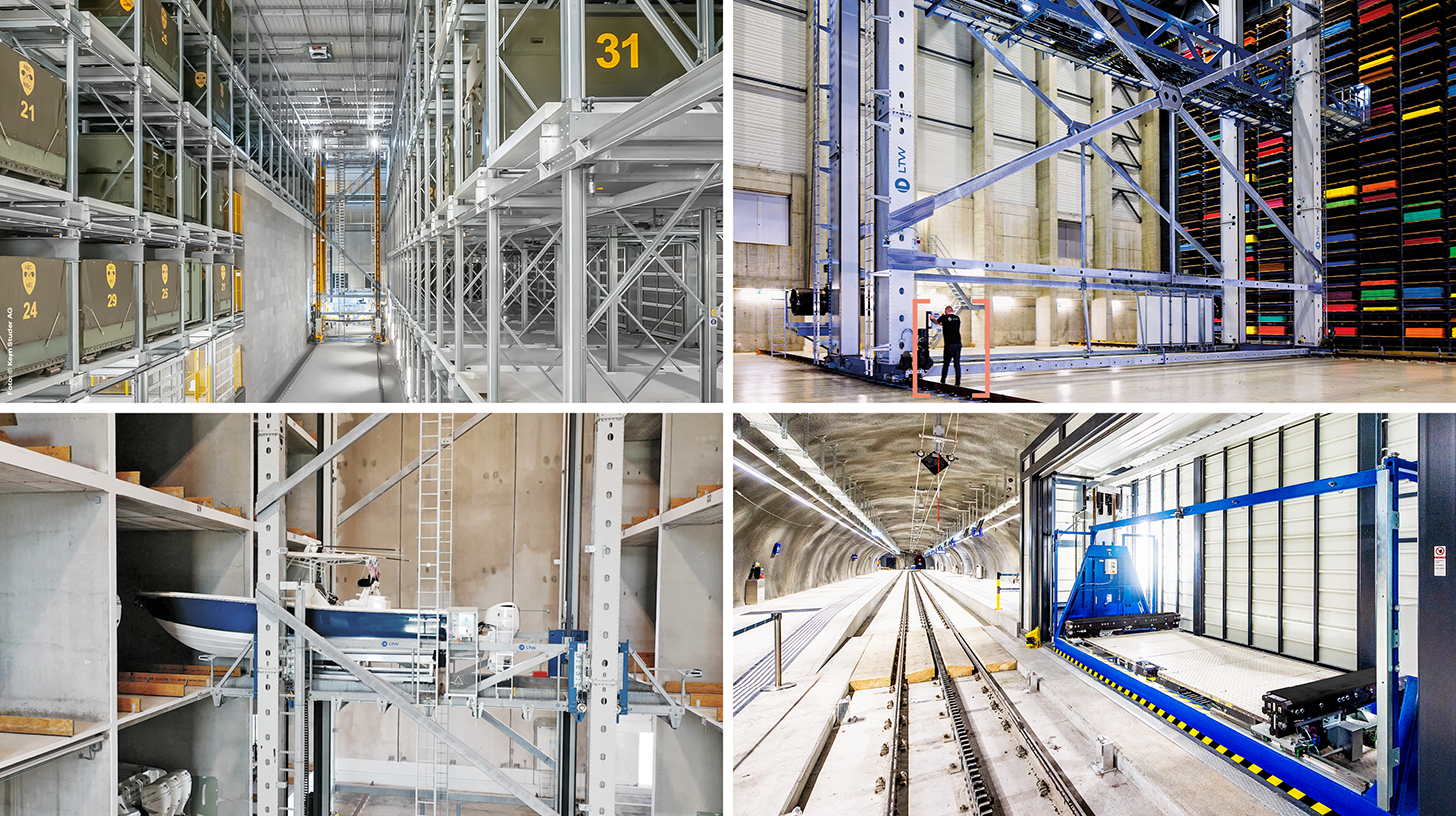
LTW Intralogistics – Engineers of Flow - Image: LTW Intralogistics GmbH
LTW offers its customers not individual components, but integrated complete solutions. Consulting, planning, mechanical and electrotechnical components, control and automation technology, as well as software and service – everything is networked and precisely coordinated.
In-house production of key components is particularly advantageous. This allows for optimal control of quality, supply chains, and interfaces.
LTW stands for reliability, transparency, and collaborative partnership. Loyalty and honesty are firmly anchored in the company's philosophy – a handshake still means something here.
Related to this:
Warehouse optimization versus retrofit: The right decision for your warehouse - detailed and background analysis
Warehouse strategy of the future: Retrofit or optimization – which approach suits your company?
Deciding whether warehouse optimization or a retrofit is the more effective solution for your warehouse depends on a multitude of factors. Both approaches offer distinct advantages and are best suited to different scenarios. This comprehensive article highlights the essential aspects that should be considered when making this decision to ensure the long-term efficiency and competitiveness of your warehouse. The goal is to set the course for future-oriented warehousing that meets both current and future requirements.
Related to this:
- Global warehouse automation: A comparison between the USA, China and South Korea – in the USA, 80% of warehouses are still manual!
- Warehouse automation worldwide: A comparison between Germany, Japan, France, Spain, Italy, Poland and the Czech Republic
Warehouse optimization: Increasing efficiency in existing systems
Warehouse optimization focuses primarily on improving established processes and increasing efficiency within the existing infrastructure. It represents a suitable option if the warehouse's basic structure and mechanics are still in good condition and only minor adjustments or improvements are needed. The aim is to leverage existing potential and refine processes without making fundamental changes.
When is warehouse optimization the right choice?
Warehouse optimization proves sufficient if:
- The existing warehouse infrastructure is in sound condition. This implies that the basic systems and structures are functional and reliable.
- Only minor adaptations or improvements are required. It's not about replacing outdated technology, but about fine-tuning existing processes.
- The main focus is on increasing the efficiency of current processes. The goal is to make optimal use of existing resources and minimize waste.
- Extensive technological upgrades are not absolutely necessary. The focus is on process improvement, not on implementing entirely new technologies.
Detailed measures for warehouse optimization
Warehouse optimization encompasses a wide range of measures aimed at maximizing warehouse performance within the given constraints.
Implementation or improvement of the warehouse management system (WMS)
A modern and efficient warehouse management system (WMS) forms the backbone of any optimized warehousing operation. It enables precise inventory control, optimizes warehouse processes from receiving to shipping, and increases transparency across all warehouse activities. Digitally mapping the warehouse streamlines processes, reduces errors, and enhances responsiveness to changing demand. A detailed analysis of the warehouse's specific requirements is crucial for selecting the right WMS or optimally configuring an existing system and adapting it to current needs. This may include implementing additional modules for features such as yard management or route planning.
Optimization of warehouse layout and workflows
A well-designed layout of storage areas and racking systems can significantly reduce employee walking distances and maximize space utilization. Analyzing item frequencies and sizes plays a crucial role in optimizing item placement. Implementing principles such as "Fast Moving Consumer Goods" (FMCG) storage in easily accessible areas or creating chaotic storage systems controlled by a warehouse management system (WMS) can considerably reduce picking times. Designing ergonomic workstations also contributes to increased efficiency by reducing employee strain and thus boosting productivity.
Training and better management of employees
Well-trained and motivated employees are a crucial factor for efficient warehousing. Regular training on new processes, technologies, and safety regulations is essential. Clear task allocation and effective communication channels help increase productivity and minimize error rates. The introduction of key performance indicators (KPIs) and feedback mechanisms can further boost employee motivation and contribute to continuous improvement in work performance. Furthermore, implementing shift planning systems that optimally distribute workloads can increase efficiency.
Introduction of mobile devices or smart glasses for process support
The use of mobile data capture devices (MDCs) or innovative technologies such as smart glasses enables faster and more accurate warehouse processes. Employees have real-time information on stock levels, storage locations, and order details directly at their fingertips, which reduces picking times and increases accuracy. Smart glasses also offer the advantage of keeping the hands free, which is particularly beneficial for complex picking tasks. Integrating these technologies into the warehouse management system (WMS) enables seamless data transfer and reduces administrative overhead.
Further measures for warehouse optimization
Analysis and optimization of order picking processes
Various picking strategies, such as item-oriented, order-oriented, or batch-oriented picking, can be implemented or optimized depending on requirements and warehouse structure. The introduction of pick-by-voice or pick-by-light systems can also increase efficiency and accuracy.
Implementation of cross-docking
This method reduces the storage time of products by preparing incoming goods directly for shipment without intermediate storage.
Optimization of packaging processes
Selecting the right packaging materials and sizes, as well as automating packaging processes, can reduce costs and increase efficiency.
Introduction of Lean Management principles
The application of Lean methods such as 5S or Kanban can help to identify and eliminate waste and to continuously improve processes.
Using data analysis for process optimization
Analyzing warehouse data can provide valuable insights into inefficient processes and reveal potential areas for improvement. By analyzing throughput times, picking routes, and error rates, targeted optimization measures can be derived.
Retrofit: Modernization for increased performance and future-proofing
A retrofit, on the other hand, involves the targeted modernization of existing systems and the integration of new technologies. The scope can range from replacing individual components to a complete overhaul of the entire warehouse system. A retrofit becomes necessary or advisable when the system is outdated, experiences recurring malfunctions, spare parts are difficult to obtain, or operating costs rise significantly due to inefficiencies. It is a strategic decision to ensure the long-term performance and competitiveness of the warehouse.
When is a retrofit the right choice?
A retrofit is necessary or advisable if:
- The system is outdated and frequently causes malfunctions or downtime. This indicates that the existing technology has reached its performance limits and reliability is no longer guaranteed.
- Spare parts are difficult to obtain or very expensive. This is often a sign that the installed components are nearing the end of their product lifecycle and can lead to significant maintenance costs.
- Operating costs rise sharply due to inefficiencies. Outdated equipment often consumes more energy and requires more maintenance, which drives up operating costs.
- Security risks exist or new security standards need to be met. A retrofit can help increase warehouse safety and comply with legal requirements.
- A significant performance increase is required. If the existing system can no longer meet the growing demands, a retrofit is often the only way to increase capacity and throughput.
- The goal is to integrate new technologies or automation solutions. A retrofit makes it possible to integrate modern technologies such as robotics or artificial intelligence into the existing system to increase efficiency and flexibility.
The many advantages of a retrofit
A retrofit offers a number of significant advantages over a complete new build:
Cost efficiency
A retrofit is generally significantly more cost-effective than a complete new build and can, according to estimates, save 30 to 70 percent of the costs of a new system. This allows companies to achieve significant modernization with less financial outlay.
Extending lifespan
Modernizing key components can extend the system's lifespan by an estimated 10 to 15 years. This not only conserves resources but also postpones the need for a costly replacement.
Increased plant availability
A targeted retrofit can often increase plant availability by more than 20 percent. By replacing vulnerable components and implementing more reliable technologies, downtime is minimized and productivity is maximized.
Increased performance and throughput
The implementation of new technologies as part of a retrofit can lead to performance and throughput increases of 10 to 30 percent. This enables companies to handle growing order volumes and shorten delivery times.
Improved energy efficiency
Modern components and systems contribute significantly to improved energy efficiency. This not only reduces operating costs but also helps protect the environment. The integration of intelligent control software can further optimize energy consumption.
Integration of sustainable energy sources
A retrofit can enable the integration of sustainable energy sources such as solar power. This not only reduces energy costs in the long term but also strengthens the company's image in terms of sustainability.
Integration of advanced technologies
A retrofit opens up the possibility of integrating modern technologies such as artificial intelligence (AI) or augmented reality (AR). AI can be used, for example, to optimize warehouse processes or for predictive maintenance, while AR applications can support employees in order picking and maintenance work.
Automation for greater efficiency and flexibility
Integrating automation technologies such as automated guided vehicles (AGVs) or robotic order picking systems can significantly increase warehouse efficiency and flexibility. These technologies enable 24/7 operation and reduce reliance on manual labor.
Phased implementation to minimize interruptions
Companies can implement retrofits in phases to minimize disruption to ongoing operations and spread investment costs over a longer period. This allows for gradual modernization without significantly impacting daily operations.
Contribution to sustainability
Modernizing equipment through retrofitting can improve energy efficiency, reduce waste, and thus make a valuable contribution to a company's sustainability goals. This includes, for example, replacing old lighting systems with energy-efficient LEDs or optimizing heating and cooling systems.
Decision-making: Step by step to the optimal solution
Deciding between warehouse optimization and a comprehensive retrofit requires careful analysis and consideration of various factors. The following steps will help you find the optimal solution for your company:
Comprehensive plant analysis
A detailed examination of all bearing components and parts is essential to accurately determine their current condition and performance. This analysis helps identify the areas with the greatest potential for improvement and prioritize the necessary retrofit measures. The results of this analysis are documented in a clear and concise format and serve as a solid basis for further decision-making. Based on the analysis results, specific recommendations can be made regarding which components should be modernized to achieve the desired performance increase.
Product life cycle assessment of the installed components
It is crucial to determine the current stage of the product lifecycle for all installed products, both hardware and software. Components nearing the end of their lifespan are naturally more prone to failure, which inevitably leads to increased downtime and associated higher maintenance costs. A detailed analysis of the lifespan of each component allows for precise determination of the optimal time for modernization. This analysis should also consider the availability of spare parts and the long-term maintainability of the system. It is advisable to clearly define future requirements for the warehouse and assess whether the existing components can continue to meet these requirements. Experts recommend actively soliciting feedback from customers and employees to evaluate satisfaction with the existing components and gain valuable insights into potential areas for improvement.
Analysis of current and future business requirements
A thorough assessment and analysis of current business requirements for the warehouse is essential for precisely defining the necessary functions and capacities. Equally important is the early identification of future trends and developments in your industry and their potential impact on your warehouse logistics. Define your company's strategic goals and examine in detail how the warehouse can make a crucial contribution to achieving these goals. Creating a comprehensive requirements analysis that describes all necessary warehouse functions and capacities in detail provides the appropriate framework for subsequent optimization or planned retrofit. It is vital to validate this requirements analysis with key stakeholders to ensure that the documented requirements truly align with needs and expectations.
Preparation of a detailed cost-benefit analysis
Create precise and detailed cost estimates for various optimization and retrofit scenarios. Consider not only the initial purchase costs, but also installation costs, ongoing operating expenses, and maintenance and repair costs. For each scenario, determine the return on investment (ROI) and compare the economic viability of the different options. Don't forget to include potential cost savings from improved energy efficiency and reduced downtime in your calculations. A comprehensive total cost of ownership (TCO) analysis can provide valuable insights in this regard.
Consideration of the impact on ongoing operations
Carefully analyze the potential impact of the planned measures on ongoing operations. Plan the implementation in such a way as to minimize operational disruptions. Using simulation tools can be helpful in modeling various retrofit scenarios and predicting their impact on warehouse performance in advance. Also consider the necessary employee training to ensure a smooth transition. Furthermore, assess the potential impact on delivery times and customer satisfaction. In many cases, a well-planned retrofit can even be carried out during ongoing operations without significantly disrupting daily routines. An impressive example of this is the modernization and expansion of the high-bay warehouse at KSB, which resulted in a remarkable 25 percent increase in performance while simultaneously significantly reducing production and delivery times.
Risk assessment and management
Identify potential risks associated with both options and develop strategies to minimize those risks. This may include technical risks, logistical challenges, or even resistance within the workforce.
Employee involvement
Involve your employees in the decision-making process early on. Their knowledge and experience are valuable and can help find the best solution and increase acceptance of change.
External Expertise
If necessary, consult external experts to obtain a neutral and well-founded assessment. Consultants with experience in warehouse logistics can provide valuable support in analysis and planning.
The right choice for long-term success
The final decision between warehouse optimization and a comprehensive retrofit ultimately depends on the specific requirements, available budget, and long-term goals of the respective company. Careful planning and detailed analysis of all relevant factors are crucial to making the right choice and ensuring sustainable success.
A retrofit offers the opportunity to significantly extend the lifespan of the equipment, sustainably increase performance, raise efficiency to a new level, and seamlessly integrate innovative technologies. The initially higher investment costs can be quickly recouped through long-term savings and improved competitiveness. Warehouse optimization, on the other hand, represents a more cost-effective and faster option, especially if the existing equipment is still in good condition and only minor adjustments or improvements are required. By specifically optimizing processes and workflows, warehouse efficiency can be noticeably increased and operating costs can be significantly reduced.
It is essential to focus on the company's individual needs and strategic goals and to base decisions on a sound and comprehensive analysis. A strategic approach to warehouse optimization and modernization is key to securing the warehouse's long-term efficiency and competitiveness and successfully meeting the challenges of a constantly changing economy. Investing in a future-proof warehouse is an investment in the success of the entire company.

Xpert.Plus Warehouse Optimization - High-bay warehouses and pallet warehouses: Consulting and planning
We are here for you - Consulting - Planning - Implementation - Project Management
☑️ SME support in strategy, consulting, planning and implementation
☑️ Creation or realignment of the digital strategy and digitization
☑️ Expansion and optimization of international sales processes
☑️ Global & Digital B2B trading platforms
☑️ Pioneer Business Development

Konrad Wolfenstein
I would be happy to serve as your personal advisor.
You can contact me by filling out the contact form below or simply call me on +49 7348 4088 965 .
I'm looking forward to our joint project.
Write to me


Xpert.Digital - Konrad Wolfenstein
Xpert.Digital is a hub for industry focusing on digitalization, mechanical engineering, logistics/intralogistics and photovoltaics.
With our 360° Business Development solution, we support renowned companies from new business to after-sales.
Market intelligence, smarketing, marketing automation, content development, PR, mail campaigns, personalized social media and lead nurturing are part of our digital tools.
You can find more information at: www.xpert.digital - www.xpert.solar - www.xpert.plus
Keep in touch