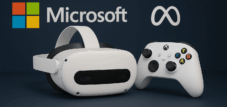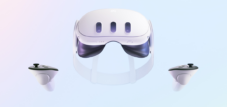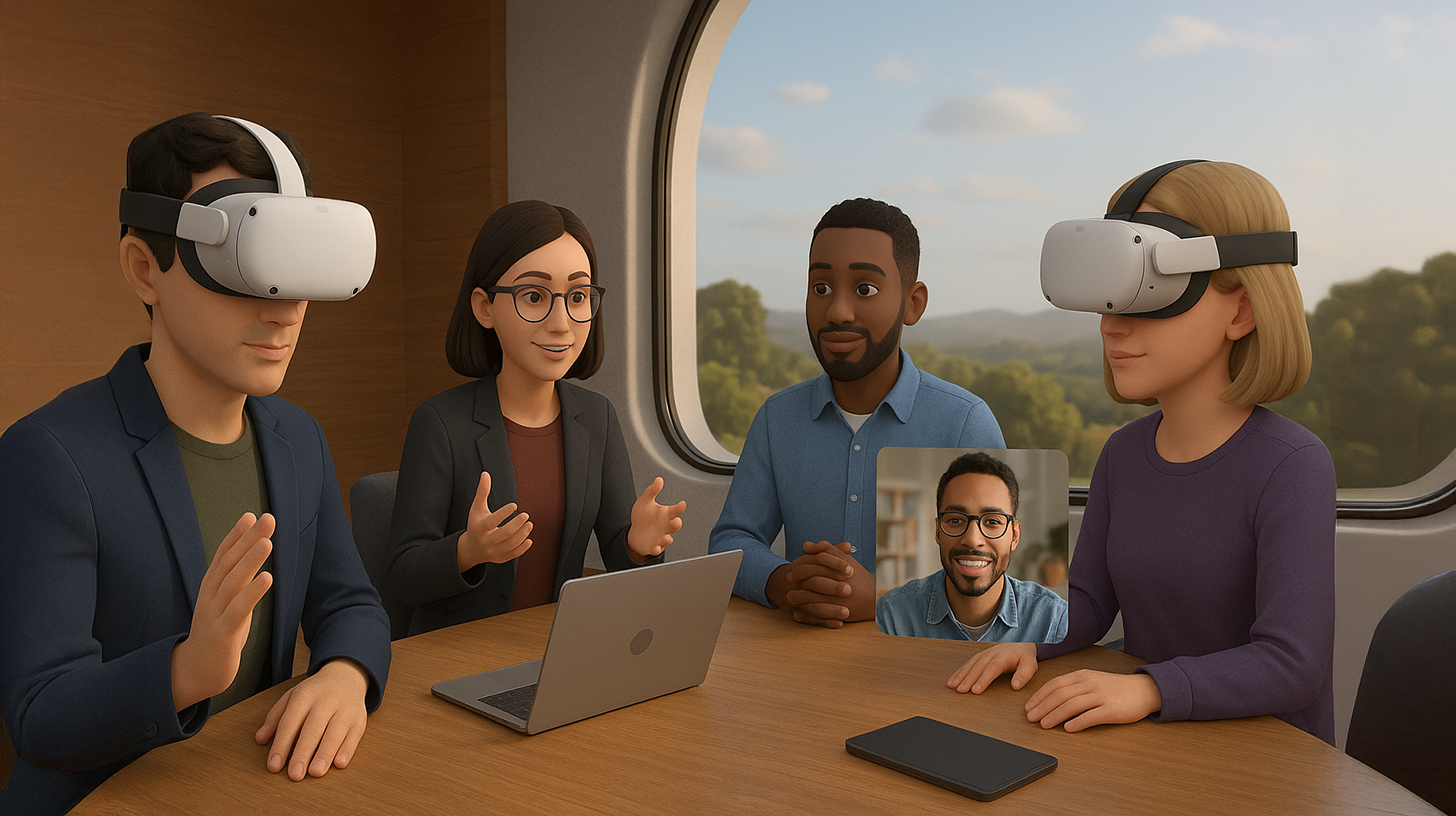
The exciting development of video communication with Zoom: Meta Quest enables virtual meetings with VR avatars – Image: Xpert.Digital
Zoom brings virtual reality to video conferencing: Meta Quest makes it possible
Virtual presence becomes real: Zoom app for Meta Quest fundamentally changes video conferencing – The next step in the evolution of remote work
The way we communicate and collaborate has changed dramatically in recent years. What was once considered a futuristic vision is now a tangible reality: With the new Zoom app for Meta Quest, users can now participate in video conferences as virtual avatars. This development marks a significant milestone in the evolution of digital communication and opens up new dimensions for collaboration across distances.
Related to this:

The new era of virtual presence
The integration of Zoom into the Meta Quest ecosystem represents a seamless extension of the already familiar Zoom Workplace app, which millions of people use daily on their smartphones, tablets, and desktop computers. The key difference, however, lies in the presentation method: instead of a conventional video image, Quest users appear in meetings as animated, three-dimensional avatars. This technology utilizes Meta's proprietary avatar technology, which has been developed and refined over many years.
This feature is available across the entire MetaQuest product family. Owners of the latest Quest 3 and Quest 3S, as well as users of the older Quest 2 and the professional Quest Pro, can use the new Zoom app. This broad compatibility ensures that a large user base has access to this innovative form of communication.
Technical basics and functionality
The Meta Quest 3 represents the current state of VR technology for consumers. Weighing just 515 grams and equipped with the powerful Qualcomm Snapdragon XR2 Gen 2 processor, it offers an impressive technical foundation. The two LCD displays with a resolution of 2,064 x 2,208 pixels per eye ensure a sharp and immersive visual experience. The 110-degree horizontal and 96-degree vertical field of view create a natural sense of presence in virtual environments.
A standout feature of the Meta Quest 3 is its advanced passthrough technology. Two 4-megapixel RGB cameras and a depth sensor enable the real-time, full-color display of the surrounding environment. This feature is particularly important for the new Zoom app, as it allows users to keep an eye on their physical surroundings during meetings. The passthrough resolution is ten times higher than that of the Quest 2 and three times higher than that of the Quest Pro, resulting in a significantly more realistic representation of the outside world.
The Zoom app itself is now a standalone application, no longer requiring Meta's Horizon Workrooms. This significantly simplifies access and makes it more intuitive to use. After downloading it from the Meta Horizon Store and logging in with their existing Zoom account, users can immediately create or join meetings. The app appears as a window within the virtual environment, enabling multitasking and seamless integration into the workflow.
Related to this:


The development of meta-avatars
The development of meta-avatars is a story of continuous improvement and adaptation to user needs. The current avatars used in the Zoom app represent a new generation of digital stand-ins. They are characterized by more refined facial features, more realistic proportions, and a greater variety of customization options. Users can choose from different face shapes and fine-tune individual parameters such as jaw or chin size. Even details like the angle of the ears can be adjusted.
Of particular note is the improved body rendering. The new avatars allow for the realistic representation of various body types, from slim to muscular, with all intermediate gradations. This inclusivity ensures that more people can see themselves reflected in their virtual representations. The avatars deliberately retain a comic-book style, which addresses an important psychological aspect: they avoid the so-called uncanny valley effect, in which overly realistic, but imperfect, digital humans are perceived as unsettling or repulsive.
The avatars are animated in real time and based on the user's movements. The Meta Quest Pro, which features additional sensors for face and eye tracking, even transfers facial expressions and gaze direction to the avatar. This results in more natural and expressive communication. The other Quest models lack this technology, which is why their avatars display less nuanced facial expressions. However, all devices support hand tracking, allowing users to put down their controllers and emphasize their words with natural hand movements and gestures.
Advantages of virtual presence
Using VR avatars in meetings offers a number of advantages that go beyond the capabilities of traditional video conferencing. A key aspect is the enhanced sense of presence. Participants often report feeling more connected and engaged in VR meetings than in traditional video calls. The three-dimensional representation and the ability to move around in a shared virtual space create a sense of closeness that two-dimensional screens cannot convey.
A practical advantage is the preservation of privacy while maintaining a personal presence. Not everyone wants to or can be camera-ready at all times. Perhaps you work in a cluttered environment, are having a bad day, or simply don't want colleagues to see into your private space. VR avatars offer an elegant solution: You are present and actively participate in the meeting without having to worry about your appearance or background.
The reduction of distractions is another significant advantage. In an immersive VR environment, the usual distractions of working from home—be it smartphones, incoming emails, or household chores—are eliminated. This leads to greater concentration and more productive meetings. Studies show that productivity in virtual collaboration environments can increase by up to 25 percent.
For companies with globally distributed teams, VR meetings open up new possibilities for collaboration. While time zone differences remain, the quality of interaction improves significantly. Teams can meet in virtual spaces specifically designed for different types of meetings – from informal brainstorming sessions to formal conference rooms. The ability to record meetings and relive them later in VR offers additional flexibility for team members who cannot attend in person.
Related to this:

Challenges and limitations
Despite all its advantages, VR meetings still face some challenges. The cost of VR headsets remains a significant hurdle for many individuals and companies. While the Meta Quest 3, with a starting price of around €550 for the basic model, is considerably cheaper than professional VR solutions, the costs quickly add up when equipping an entire team.
The technical requirements extend beyond the hardware itself. A stable and fast internet connection is essential for smooth VR meetings. Delays or connection drops can significantly impair the experience and lead to frustration. Furthermore, using VR technology requires a certain adjustment period. Not all users feel comfortable in the virtual environment immediately, and some initially experience symptoms such as dizziness or nausea, known as motion sickness.
The battery life of the headsets presents another practical limitation. With approximately two to two and a half hours of use per charge, longer, uninterrupted meeting marathons are not possible. This necessitates careful planning and potentially investment in additional batteries or charging stations.
One particularly debated aspect is the quality of the avatars compared to other systems. While Meta's comic-style avatars serve their purpose and avoid the uncanny valley effect, they appear significantly less realistic in direct comparison to Apple's Persona system on the Vision Pro. Apple has taken a different approach with its photorealistic avatars, which, while delivering more impressive visual results, also puts the headset in a completely different league, with a price tag of $3,499.
Comparison with the competition
The development of VR avatars and virtual meeting solutions is not unique to Meta. Apple has presented a technologically impressive, albeit expensive, alternative with its Vision Pro and Persona system. Apple's Personas are created by scanning the face with the headset's built-in cameras and offer a significantly more realistic representation. With the update to visionOS 26, these avatars were improved considerably once again, featuring more detailed skin textures, more realistic hair, and a full side profile view.
The fundamental difference between the approaches lies in their philosophy: While Meta focuses on accessibility and broad availability, Apple aims for the highest possible quality. This is reflected not only in the price but also in the technical implementation. Apple's system utilizes more advanced sensors and greater processing power to achieve photorealistic results. However, Meta has already announced that it is working on its own photorealistic codec avatars, which could close the gap with Apple in the future.
Besides Meta and Apple, there are other providers of VR meeting solutions. Platforms like MeetinVR, Spatial, Engage, and Horizon Workrooms each offer their own approaches and features. MeetinVR, for example, focuses on business applications and offers specialized rooms for different meeting types. Spatial, on the other hand, allows any 3D content to be brought into the virtual space, which is particularly interesting for creative and technical teams.
🗒️ Xpert.Digital: A pioneer in the field of Extended and Augmented Reality

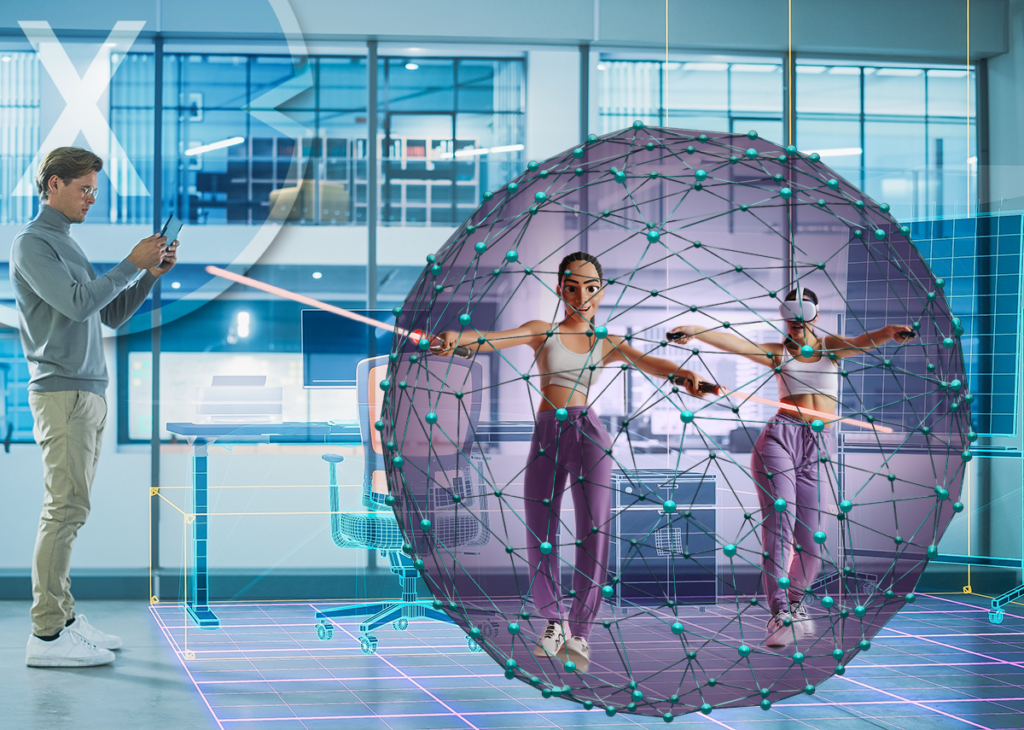
Finding the right Metaverse agency, planning office, or consulting firm - Image: Xpert.Digital
🗒️ Finding the right Metaverse agency, planning office, or consulting firm – Search and search: Top Ten Tips for Consulting & Planning
More information here:
From product presentations to team building: These practical VR applications are fundamentally changing companies
Practical applications in the business world
The applications of VR meetings in the business world are diverse and extend far beyond simple team meetings. Companies use the technology for virtual product presentations, allowing customers to experience new products in an immersive environment. For example, the car manufacturer Volvo successfully used VR to present its XC90 model, enabling prospective buyers to virtually sit in the vehicle and experience a test drive.
VR meetings are opening up new dimensions in the field of training and professional development. Virtual training rooms make it possible to teach complex processes and procedures realistically, without requiring participants to be physically present. This is particularly valuable for companies with globally distributed locations or for training courses that would normally require expensive travel.
Creative teams are using VR environments for brainstorming sessions and design reviews. The ability to view, manipulate, and discuss three-dimensional objects together is revolutionizing collaboration in fields such as architecture, product design, and engineering. Designers can present their designs in their original size, and all participants can walk around the object and view it from different perspectives.
VR meetings are also finding innovative applications in sales. Virtual showrooms make it possible to present product portfolios impressively without having to send physical samples. Customers can experience products in different configurations and environments, leading to more informed purchasing decisions.
Related to this:
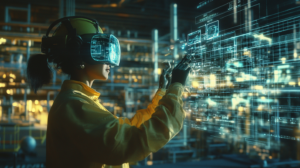
The social dimension of virtual encounters
An often underestimated aspect of VR meetings is their social component. In times of increasing remote work and geographically dispersed teams, informal interactions play a crucial role in team cohesion. VR environments can partially bridge this gap by providing virtual break rooms, coffee kitchens, or lounges where colleagues can meet informally.
The ability to share experiences in VR creates new forms of team building. Virtual team-building events, from escape rooms to collaborative games, foster cohesion and communication in ways that would be impossible in traditional video conferences. Companies report increased employee satisfaction and improved team dynamics through regular VR interactions.
Especially for new employees, VR can offer valuable support during onboarding. Virtual office tours, meet-and-greets with colleagues, and immersive introductions to the company culture help them settle in more quickly and become part of the team, even if they are physically far away.
Data protection and ethical considerations
With the increasing use of VR technology for professional purposes, data protection and ethical issues are also coming into focus. Creating avatars requires biometric data, and more advanced systems even require detailed facial scans. The handling of this sensitive information must be carefully regulated to prevent misuse.
Companies need to develop clear guidelines for using VR meetings that address both technical and social aspects. This includes questions such as: When is VR appropriate and when is it not? How can we ensure that all team members can participate equally, even if they don't have access to VR technology? How will recordings of VR meetings be handled and stored?
The issue of digital fatigue is also relevant. While VR meetings can offer more immersive experiences, they are also more mentally and physically demanding than traditional video conferences. Companies must ensure that the use of VR does not lead to additional strain, but rather provides genuine added value.
A look into the future
The integration of Zoom into MetaQuest is just the beginning of a development that will fundamentally change the way we work and communicate. Technology is evolving rapidly, and several trends are already emerging.
The focus is on improving avatar technology. Meta is already working on photorealistic codec avatars that will further blur the line between virtual and real presence. In the future, these could be so convincing that conversation partners will hardly be able to distinguish whether they are interacting with a real person or an avatar.
The integration of artificial intelligence will make VR meetings even more powerful. AI-powered real-time translations could overcome language barriers, while intelligent assistants could moderate meetings, create minutes, and coordinate follow-ups. The possibility of sending AI-generated avatars to meetings as representatives, capable of acting and reporting independently, is already being explored.
Hardware is becoming increasingly lighter, more powerful, and more affordable. Future headsets could be the size of regular glasses while still offering full VR functionality. Battery life will improve, and wireless technologies will enable even more seamless experiences.
One particularly exciting aspect is the merging of VR and AR (Augmented Reality) into mixed reality experiences. The Meta Quest 3 is already taking initial steps in this direction with its advanced passthrough technology. In the future, meetings could take place where some participants are physically present, while others appear in the room as holograms.
Societal impact
The widespread adoption of VR meetings will not only change the world of work but also have societal impacts. Reducing business travel contributes to lowering CO2 emissions and supports sustainability goals. Studies show that virtual meetings generate up to 99 percent less CO2 emissions than in-person meetings involving travel.
Democratizing access to high-quality communication tools can also reduce social inequalities. People in remote areas or with mobility limitations gain better opportunities to participate in economic life. Small businesses can communicate with global partners on an equal footing without having to spend large sums on travel.
However, we must also keep in mind the risks of an increasingly virtualized society. The loss of direct human interaction can have social and psychological consequences that are not yet fully understood. Balancing virtual and real-world presence will be one of the major challenges of the coming years.
Related to this:

Practical tips for getting started
For companies and individuals looking to venture into VR meetings, there are some practical considerations. First, it's important to determine which types of meetings would benefit most from VR. Creative brainstorming sessions, product presentations, and team-building events are particularly well-suited, while routine status updates might not justify the use of VR.
Choosing the right hardware is crucial. While the Meta Quest 3 offers good value for money, factors such as comfort, battery life, and available software should also be considered. For businesses, it can be beneficial to start with a pilot project and test the technology with a small group.
The rollout should be gradual and accompanied by appropriate training. Not all employees will be immediately enthusiastic, and it's important to take concerns seriously and offer alternatives. Hybrid meetings, where some participants use VR and others join via traditional methods, can be a good interim solution.
A new dimension of collaboration
The introduction of the Zoom app for MetaQuest marks a significant milestone in the evolution of digital communication. VR meetings with avatars are no longer a distant vision of the future, but an available technology that can be used today. Despite existing challenges, the potential benefits outweigh the risks: more intensive collaboration, a better work-life balance, reduced travel costs, and new creative opportunities.
The technology is still in its early stages of development, and the coming years will be crucial in determining how VR meetings become established in the workplace. Improvements in avatar technology, the integration of AI, and the development of lighter and more powerful hardware will make its use even more attractive.
For companies and individuals investing in this technology today, there is an opportunity to be pioneers of a new way of working together. The ability to communicate and collaborate effectively in virtual environments is increasingly becoming a key skill in the digitized world of work.
The vision of a future where geographical distance no longer affects the quality of collaboration is drawing closer. MetaQuest and the new Zoom integration are important steps on this path. It is now up to us to use these technologies responsibly and combine the best of both worlds – the virtual and the real – to create a more productive, inclusive, and sustainable future of work.
We are here for you - Consulting - Planning - Implementation - Project Management
☑️ SME support in strategy, consulting, planning and implementation
☑️ Creation or realignment of the digital strategy and digitization
☑️ Expansion and optimization of international sales processes
☑️ Global & Digital B2B trading platforms
☑️ Pioneer Business Development

Konrad Wolfenstein
I would be happy to serve as your personal advisor.
You can contact me by filling out the contact form below or simply call me on +49 7348 4088 965 .
I'm looking forward to our joint project.
Write to me


Xpert.Digital - Konrad Wolfenstein
Xpert.Digital is a hub for industry focusing on digitalization, mechanical engineering, logistics/intralogistics and photovoltaics.
With our 360° Business Development solution, we support renowned companies from new business to after-sales.
Market intelligence, smarketing, marketing automation, content development, PR, mail campaigns, personalized social media and lead nurturing are part of our digital tools.
You can find more information at: www.xpert.digital - www.xpert.solar - www.xpert.plus
Keep in touch