

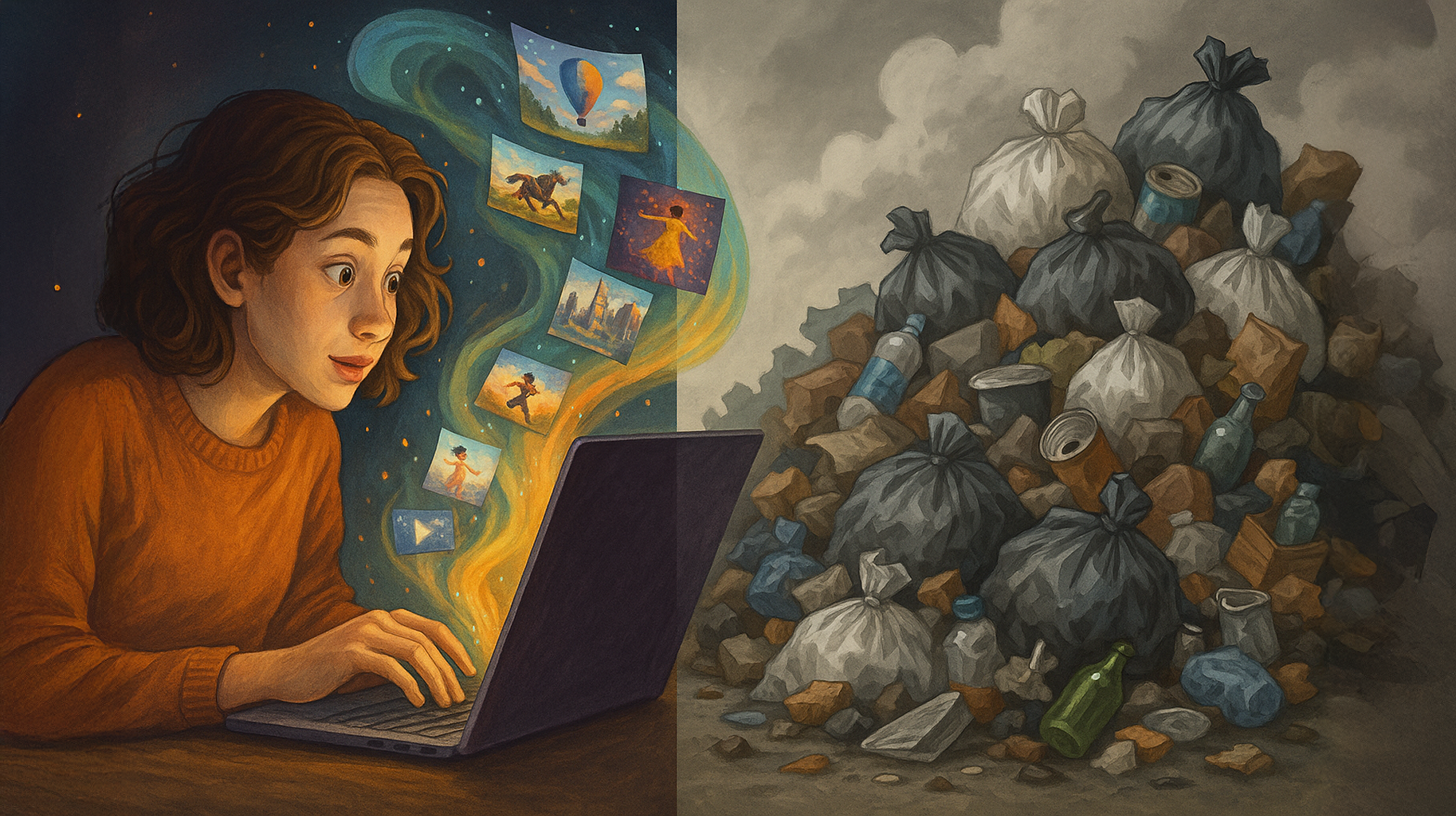
Creative miracle or wasteland? What OpenAI's new video AI Sora 2 means for us all – Image: Xpert.Digital
OpenAI's frontal assault: How the new video AI Sora 2 is now challenging YouTube and Instagram
Anyone a Hollywood star? The end of reality? Reality or fake? This new app can insert you into any video – here's what you need to know
The tech world is eagerly awaiting OpenAI and its latest development: Sora 2, an artificial intelligence that creates not only stunningly realistic videos from simple text commands, but complete audiovisual scenes with matching sound and synchronized dialogue. This innovation marks a turning point in digital media production and simultaneously raises fundamental questions for our society. The controversial "cameo" function, which allows real people to be seamlessly integrated into artificial worlds, is particularly noteworthy and has sparked a heated debate.
The release of Sora 2 is a prime example of the two sides of the AI coin. On the one hand, there's the unprecedented democratization of creativity: complex video productions, previously reserved for high-budget studios, are suddenly accessible to everyone. This opens up unimagined possibilities for artists, content creators, and storytellers. On the other hand, immense risks lurk. The danger of deceptively realistic deepfakes, misused for disinformation, defamation, or political manipulation, has never been greater. Critics also warn of a flood of low-quality content, the so-called "AI slop," which threatens to displace high-quality, human creativity in the digital space.
The central question running through all discussions is: Where is the line between creative freedom and irresponsible misuse? How can we harness the opportunities of this technology without downplaying its dangers? The following text illuminates these complex issues in the form of neutral questions and answers, in order to comprehensively contextualize the technology, the ethical challenges, and the profound societal consequences of Sora 2.
What is Sora 2 and why is it causing such a stir? Sora 2 and the future of AI video creation
What exactly is Sora 2 and why is it considered a milestone in AI-powered video production?
Sora 2 is the latest AI video app from the California-based company OpenAI. Based on a powerful text-to-video model, the application is currently available for iOS devices in the US and Canada. Users can generate highly complex and stylistically diverse video clips from simple text input. Crucially, this tool not only demonstrates rapid advancements in AI-driven visual conversion but also enables the creation of suitable audio tracks and dialogue. For many, Sora 2 symbolizes the democratization of video production, but its profound creative possibilities also pose new challenges to society's perception of reality and identity.
The technology behind Sora 2: Innovation leap or risk?
What technological advancements does OpenAI present with Sora 2, and how does the app differ from previous AI video models?
Sora 2 introduces a technological innovation that goes far beyond the original concept. While the first generation merely generated video content from text input, Sora 2 expands this approach by integrating sound and synchronized dialogue. The model understands physical interactions significantly better and can convincingly depict realistic scenes. The improved control of movement and facial expressions ensures an unprecedented level of plausibility and expressiveness in the resulting clips. However, this advancement is not only a step forward in terms of creativity, but also a potential risk regarding manipulation and deception.
The Cameo function: Between creativity and the deepfake debate
What is the Cameo feature in Sora 2 and why is it considered controversial?
The "Cameo" feature is the centerpiece of Sora 2, allowing users to seamlessly integrate recordings of real people—face and voice—into AI-generated scenes. In practice, this means that anyone who gives their consent can be virtually placed in any narrative context, be it on the moon, in historical settings, or in fantasy worlds. OpenAI emphasizes the creative freedom and new possibilities for expression offered by this feature, but critics point to the associated risks of trivializing deepfake technology. The ability to virtually transport oneself or others into almost any scenario raises fundamental ethical and social questions about digital identity and authenticity. The potential manipulation of images for humorous, but also problematic, clips is a central point of contention.
Security and control: How does OpenAI protect against misuse?
What security mechanisms has OpenAI implemented to protect against misuse?
To curb the potential misuse of the technology, OpenAI employs several safeguards. A key requirement for the Cameo feature is the explicit consent of the individual, which can be revoked at any time. If consent is withdrawn, the relevant clips are to be removed from the platform immediately. Additionally, Sora 2 clearly identifies each video production, both through visible watermarks and invisible C2PA metadata that indicates AI generation in the background. OpenAI thus positions itself as a pioneer in transparency and control, but the question remains how effective these safeguards actually are on the open internet, especially given the speed at which content can be disseminated today.
Democratization of video production: curse or Segen?
Is Sora 2 a tool for greater creative freedom, or does it threaten a flood of low-quality content?
OpenAI is promoting the release of Sora 2 as a step towards democratizing video creation. Anyone with access to the app can now produce videos that were previously reserved for professionals or studios. Critics, however, warn of a flood of so-called "AI slope" content: low-quality, irrelevant, or even manipulative videos that could inundate the online information space and displace genuine human creativity. The term "AI slope" vividly describes this concern and has become symbolic of the fear that high-quality content will be lost in a sea of AI-generated mediocrity. The debate surrounding Sora 2 exemplifies how closely intertwined opportunities and risks are when introducing new creative technologies.
Deepfakes and digital identity: What are the societal consequences?
What impact do deepfake technologies like Sora 2 have on our understanding of digital identity and authenticity?
Deepfakes are leading to a profound shift in the perception of authenticity and identity. Tools like Sora 2 make it possible to create believable artificial representations of real people – including voice and facial expressions. The boundary between reality and fiction is blurring. This poses major challenges for society, as both individual identities and public truths are becoming increasingly manipulable. Professor Jose Marichal warns that a crisis of trust could be looming: When the credibility of images, videos, and audio material is fundamentally called into question, two extremes are plausible – skepticism towards everything that appears real or a naive acceptance of artificially created facts. In both cases, the foundations of social communication and information are shaken.
A new dimension of digital transformation with 'Managed AI' (Artificial Intelligence) - Platform & B2B solution | Xpert Consulting


A new dimension of digital transformation with 'Managed AI' (Artificial Intelligence) – Platform & B2B solution | Xpert Consulting - Image: Xpert.Digital
Here you will learn how your company can implement customized AI solutions quickly, securely and without high entry barriers.
A managed AI platform is your all-inclusive, worry-free solution for artificial intelligence. Instead of dealing with complex technology, expensive infrastructure, and lengthy development processes, you receive a ready-made solution tailored to your needs from a specialized partner – often within just a few days.
The key advantages at a glance:
⚡ Rapid implementation: From idea to ready-to-use application in days, not months. We deliver practical solutions that create immediate added value.
🔒 Maximum data security: Your sensitive data stays with you. We guarantee secure and compliant processing without sharing data with third parties.
💸 No financial risk: You only pay for results. High upfront investments in hardware, software, or personnel are completely eliminated.
🎯 Focus on your core business: Concentrate on what you do best. We take care of the entire technical implementation, operation, and maintenance of your AI solution.
📈 Future-proof & scalable: Your AI grows with you. We ensure continuous optimization and scalability, and flexibly adapt the models to new requirements.
More information here:
Sora 2: The Attack on Instagram Reels and YouTube Shorts
Competition and market position: How do other companies react to this?
In what way is Sora 2 an attack on established social media platforms like Meta and Google?
The development and release of Sora 2 is not just a technological innovation, but also a strategic move in the competitive landscape. OpenAI is positioning itself directly against established platforms like Meta (with Instagram Reels) and Google (with YouTube Shorts), which have thus far dominated the short-video market. AI-powered video production could contribute to the creation of new content formats and even more dynamic clips, putting traditional platforms under pressure. Current discussions in the tech press, such as on Techmeme, therefore primarily view the launch of Sora 2 as an attack on the market position of Meta and Google and analyze the potential consequences for the structure of the online video market.
Creativity versus manipulation: Where is the line?
What opportunities and risks does the release of Sora 2 present for the creative design of video content?
Sora 2 opens up a wealth of new creative possibilities: from realistic science fiction scenes and the staging of historical events to surreal comedy clips, anything is possible. The speed and variety with which users can generate clips is impressive. At the same time, there is a risk that the line between harmless fun videos and deliberate manipulation will become blurred. The ability to authentically embed people in any scene not only calls into question privacy and personal rights, but also offers opportunities for misuse – for example, in the form of defamation, cyberbullying, or even political propaganda. The technology therefore requires responsible use and a societal awareness of the consequences.
Society and information spaces: The danger of disinformation
How might Sora 2 affect the quality and credibility of online information?
With the ability to create AI-generated videos anytime and in any quantity, the risk of an information overload of potentially misleading or false content is growing. Labeling videos as AI-generated may be an important criterion, but it does not protect against the rapid, viral spread of emotionally appealing clips that manipulatively portray news, people, or events. This presents politicians, experts, and public institutions with the challenge of ensuring the distinction between fact and fiction. If the online information space becomes cluttered and unreliable, society loses trust in the digital public sphere, which can have far-reaching political and social consequences.
Opportunities and risks for art, media and society
What opportunities does Sora 2 offer for art and media, and what fundamental problems can arise from it?
The opportunities lie in expanding the creative toolkit for artists and media professionals. While visual and narrative experiments become significantly more accessible and diverse, space simultaneously opens up for innovative journalistic and artistic formats. New storytelling concepts, experimental film techniques, and interactive modes of presentation are conceivable, previously only achievable with considerable effort. The risks, however, primarily stem from the increasing difficulty in controlling one's own representation, the blurring of privacy and copyright protection, and the accelerated spread of misinformation. Thus, art and media will find themselves even more firmly caught in the tension between creative freedom and digital responsibility in the future.
Law and regulation: How should deepfakes and AI content be dealt with?
What legal and regulatory approaches are needed to govern the use of tools like Sora 2?
The use of deepfake technology raises complex legal questions. Key issues include personality rights, data protection, and copyright. While consent to the cameo function is a first step, binding standards are needed internationally to prevent misuse and protect the rights of those affected. Developing clear regulations for labeling AI-generated content, for platform liability, and for rapid intervention mechanisms is essential. Policymakers and regulators are called upon to accompany technological progress with clear laws while simultaneously ensuring that innovation is not stifled.
Ethics and responsibility: Who bears the responsibility for AI-generated content?
Who is ultimately responsible for the consequences of the mass distribution of AI-generated videos?
Responsibility lies on several levels. On the one hand, platforms like OpenAI must provide technical and organizational safeguards. On the other hand, users bear a significant degree of personal responsibility. They decide which content they create, share, and consume. Societal responsibility also arises from the fact that technology influences and potentially redefines cultural norms and values. In the future, ethical standards and educational programs must be established to ensure a thoughtful and responsible approach to AI-generated content.
The future of Sora 2 and AI-powered media production
How could Sora 2 influence changes in media, society, and communication?
Sora 2 exemplifies the profound transformation that AI-powered technologies are triggering in media production. The barrier-free creation of sophisticated video content is likely to lead to new media formats, narrative styles, and creative practices. The societal challenges will primarily lie in maintaining clarity regarding the authenticity of content, preventing manipulation, and strengthening digital literacy. In the future, AI video tools like Sora 2 could help foster crucial skills in evaluating and classifying multimedia content while simultaneously opening up new aesthetic and communicative dimensions.
The balance between innovation and social responsibility
How can a balance be maintained between technological progress and social responsibility?
The invention of Sora 2 and similar AI tools necessitates an ongoing societal debate about the value and risks of new technologies. Innovation requires room for experimentation and creative application, while societal responsibility demands prevention, education, and regulation. A balance can only be achieved if transparency, education, and oversight are given equal weight alongside technological progress. This requires the participation of all stakeholders: policymakers, businesses, scientists, the media, and society itself.
What remains after the launch of Sora 2?
What fundamental questions does the release of Sora 2 raise for society and the media landscape?
The release of Sora 2 highlights the opportunities and risks of a new era of digital video production. While openness, innovation, and democratization are considered key advantages, manipulation, loss of identity, and credibility issues are the other side of the same coin. Society's engagement with AI-powered media requires a reflective, critical, and responsible discourse, the further development of legal and ethical standards, and the strengthening of media literacy at all levels.
With the introduction of Sora 2, society faces a crucial crossroads: Will the technology be used primarily as a creative tool, or will the risks and challenges outweigh the benefits, forcing a profound shift in how we handle digital information? The answer to this question will significantly shape the communication culture of the coming years.
Your AI transformation, AI integration and AI platform industry expert
☑️ Our business language is English or German
☑️ NEW: Correspondence in your native language!

Konrad Wolfenstein
I and my team are happy to be available to you as your personal advisor.
You can contact me by filling out the contact form here wolfenstein@xpert.digital:or simply call me at +49 7348 4088 965. My email address is
I'm looking forward to our joint project.
☑️ SME support in strategy, consulting, planning and implementation
☑️ Creation or realignment of the AI strategy
☑️ Pioneer Business Development
Our global industry and economic expertise in business development, sales and marketing
Our global industry and economic expertise in business development, sales and marketing - Image: Xpert.Digital
Industry focus areas: B2B, digitalization (from AI to XR), mechanical engineering, logistics, renewable energies and industry
More information here:
A thematic hub offering insights and expertise:
- Knowledge platform covering global and regional economies, innovation and industry-specific trends
- A collection of analyses, insights, and background information from our key areas of focus
- A place for expertise and information on current developments in business and technology
- A hub for companies seeking information on markets, digitalization, and industry innovations