Used warehouse logistics equipment – Image: Xpert.Digital / Baloncici|Shutterstock.com
Without a doubt, modern equipment for the efficient handling of intralogistics processes in warehouses is ideally suited to the constant stresses and demands of continuous operation. The robust construction of horizontal carousel storage systems or vertical storage lift systems is designed for a long service life, which, in addition to their efficiency in process handling, makes them a system solution increasingly sought after by companies.
However, this very durability also makes it attractive to the used machinery market; the devices can usually be dismantled relatively quickly and reassembled at a different location. The software that controls them is also designed for easy integration into existing warehouse management systems.
Buy used machinery at a lower price
So what are the pros and cons of buying a used machine? Why not simply buy the required warehouse shuttle used?
For our analysis, we first turn to the factors in favor of older devices:
- The robust construction ensures a long service life for these machines. Designed for demanding and heavy-duty warehouse use, these devices are so ruggedly built that they can easily function flawlessly under full load for many years. Furthermore, regular maintenance extends the lifespan of the equipment and allows for the early detection and repair of any potential damage. Should individual parts show signs of wear, they can usually be replaced without difficulty. From a functional standpoint, there is therefore little to argue against purchasing a used machine, provided it undergoes regular maintenance and a final technical inspection before purchase.
- Modern storage systems are mostly modular in design, which allows for relatively straightforward disassembly, transport to another facility, and reassembly. The only potential stumbling block might be the available space, if the model, custom-sized for the previous user, doesn't fit perfectly into the new environment. For example, suboptimal use of vertical space could result in wasted storage capacity.
- Modern warehouse systems are equipped with their own control software. However, this software can be easily integrated into the buyer's existing ERP solutions and used just as effectively. Therefore, from an IT perspective, there are no objections to acquiring and using used machinery.
- While the three points described above essentially constitute the prerequisites for the smooth and successful integration of older systems into one's own warehouse logistics, the investment amount comes into play as a crucial factor. Compared to the more expensive new equipment, significant cost savings can be achieved by purchasing a used system. A number of suppliers operate in the market, dealing in used warehouse equipment and subjecting it to a comprehensive check-up before sale to ensure its functionality.
📦 Automation in horizontal storage for logistics managers and warehouse managers
Do you need expert support in implementing your requirements? Do you have questions about Smart Factory, Smart Logistics, or digitalization?
🏬 Warehouse optimization and automation for industry, production and trade
Automating warehouses and supply chains is a key element of warehouse optimization. We can help you with that.
🛒 E-commerce warehousing solutions for returns, fast shipping (same-day delivery), and error-free order picking
E-commerce has specific requirements, and competition is constantly intensifying. It's no coincidence that e-commerce is considered a driving force behind market changes. Our strength lies in our digital expertise, which enables us to deliver innovative solutions and implementations.
The purchase price is not the deciding factor
However attractive the investment in a used machine, a paternoster lift or a horizontal storage system may be for the reasons mentioned, there are decisive reasons in favor of buying a new device.
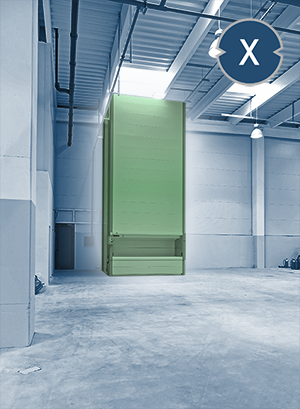
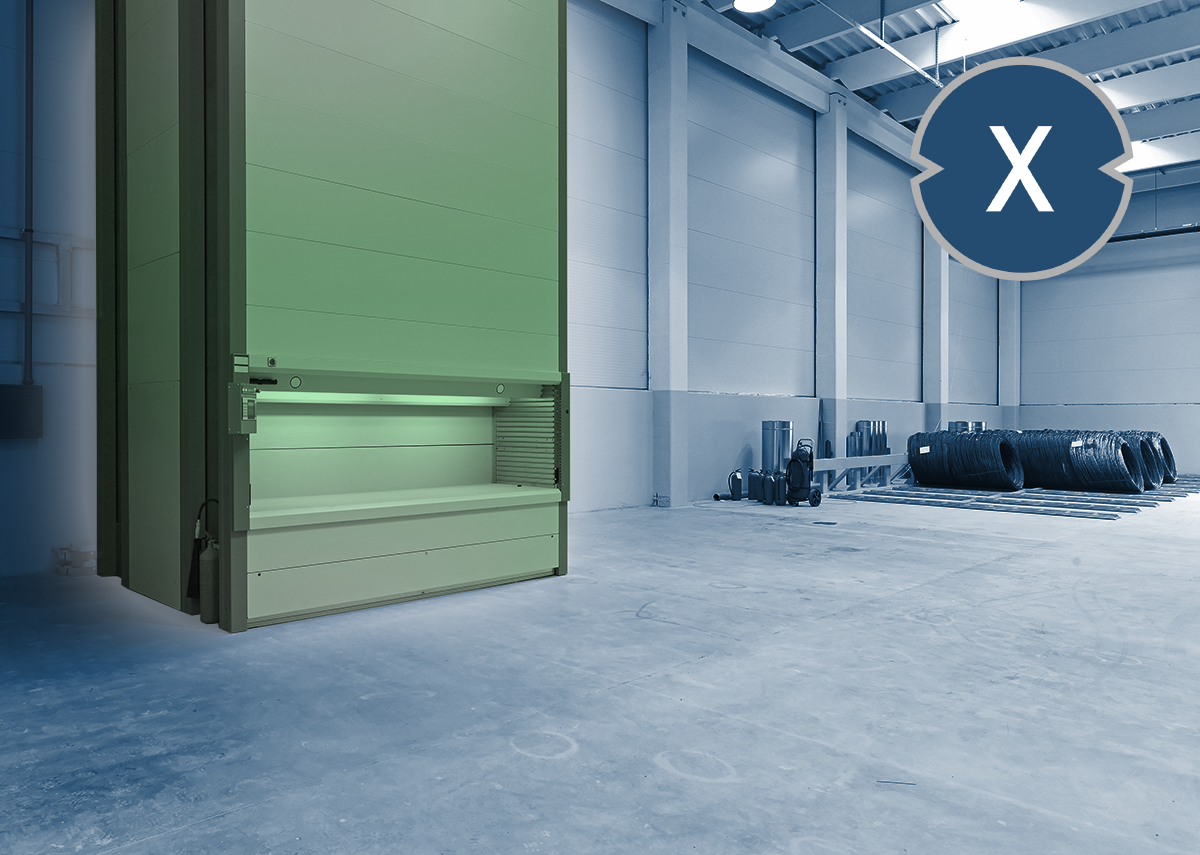
Used machine storage lift – Image: Xpert.Digital / Baloncici|Shutterstock.com
- First of all, the price difference is lower than some customers might expect. The main reason for this is the low depreciation of these long-term storage systems. Since wear and tear is minimal with proper use and spare parts are readily available for most components, the aforementioned value-preserving factors influence the purchase price. Users of older machines therefore carefully calculate whether a new purchase is worthwhile. If there are no major changes to internal logistics processes and the product range or sales structure remains constant, there are few reasons for regular replacement, as might be the case with a vehicle fleet. Consequently, the market for used equipment is limited, which further drives up prices.
- Modern storage systems are largely modular in design, allowing them to be precisely tailored to the buyer's specific process requirements. This includes adapting the system to the spatial constraints of the warehouse, as well as adding software packages and settings, for example, for handling electronic components with which the unit is equipped. Buyers of new storage systems can therefore customize the solution to their exact needs. Conversely, buyers of used systems will have to accept compromises in terms of the system's usability and thus its productivity if it doesn't precisely match their specifications – which is likely to be the case in very few instances.
- Technological progress doesn't stop at dynamic storage systems. Therefore, the long lifespan of the entire system must always be weighed against its productivity compared to a new product. What may once have been perfectly optimized is, if not obsolete, then at least capable of improvement just a few years later. The rapid development of software-based control systems, made possible by increasingly faster processors, leads to ever more precise and efficient equipment. The design of the equipment is also changing, as increasingly robust, yet much lighter and more durable materials can be used, which has a positive effect on wear and tear. New equipment thus always has a productivity advantage over older models, which, in a cost-benefit analysis for purchasing storage equipment, favors buying new.
- However well-made and maintained used models may be, they are still more susceptible to wear and tear. The associated higher costs for more frequent servicing and the purchase of spare parts also negatively impact the overall cost-effectiveness of used systems.
- In the rarest of cases are older devices still covered by the manufacturer's warranty, which is offered on new products. Associated services such as free service by the manufacturer's specialists or the replacement of defective components are therefore not available for used machines. Besides the higher costs, this also necessitates greater administrative effort for researching, purchasing, and installing the new parts.
- After the purchase, the machine undergoes a precise installation, supervised on-site by the manufacturer's specialists. They ensure that the equipment is perfectly integrated into the new environment and that smooth operation is guaranteed. This step is not required for older models.
- Before purchasing new equipment, a thorough check is carried out to ensure that the customer's existing ERP system is fully compatible with the software of the new warehouse equipment. Only when the machine control system integrates seamlessly with the customer's warehouse management software will the new equipment operate effectively.
- The foundation of acquiring a new system is a trusting partnership between buyer and manufacturer. This partnership benefits the buyer even if no problems arise with the purchase. In addition to dedicated contacts for all questions concerning the equipment or its integrated software, the manufacturer also provides after-sales service and training as part of the additional services offered by the manufacturer, unlike a middleman.
- In addition, there is the considerable markup charged by intermediaries, which consists of costs for transporting and inspecting the used equipment, as well as their profit margin. Combined, this results in a higher price that significantly reduces the price advantage of the cheaper investment. In comparison, the difference to the purchase price of a new warehouse system is not as large as expected.
- The purchase price can be spread out through monthly payments. Manufacturers often offer leasing solutions for this purpose, which drastically reduces the initial investment. It's an affordable option for those who are hesitant about the high upfront costs of buying a new vehicle. Such leasing offers are usually not available from intermediaries.
In conclusion, it is always advisable to contact the intralogistics provider with the equipment of your choice directly before purchasing to clarify the terms of a new acquisition. Comparisons have shown that this is often the more efficient solution in the medium and long term. It is often only during such expert consultations that prospective customers realize the process accelerations and productivity gains that can be achieved through the use of dynamic storage and retrieval systems. And it is precisely these advantages that make a new purchase appear more cost-effective overall. This is hardly surprising given that the return on investment (ROI) is typically between 12 and 24 months.
Logistics consulting: Xpert.Plus for planning and consulting in the field of warehouse logistics for carousel storage systems and vertical lift systems
Xpert.Plus is a project by Xpert.Digital. We have many years of experience in supporting and consulting on warehouse solutions and in warehouse optimization, which we combine under Xpert.Plus in a large network.

Konrad Wolfenstein
I would be happy to serve as your personal advisor.
You can contact me by filling out the contact form below or simply call me on +49 7348 4088 965 (Munich) .
I'm looking forward to our joint project.
Write to me


Xpert.Digital – Konrad Wolfenstein
Xpert.Digital is a hub for industry focusing on digitalization, mechanical engineering, logistics/intralogistics and photovoltaics.
With our 360° Business Development solution, we support renowned companies from new business to after-sales.
Market intelligence, smarketing, marketing automation, content development, PR, mail campaigns, personalized social media and lead nurturing are part of our digital tools.
You can find more information at: www.xpert.digital – www.xpert.solar – www.xpert.plus
Keep in touch