Website icon Xpert.Digital

More than half is solar: 33.3 GW – The USA is building 64 GW of new power plants – and breaking with its past

More than half is solar: 33.3 GW - The USA is building 64 GW of new power plants – and breaking with its past

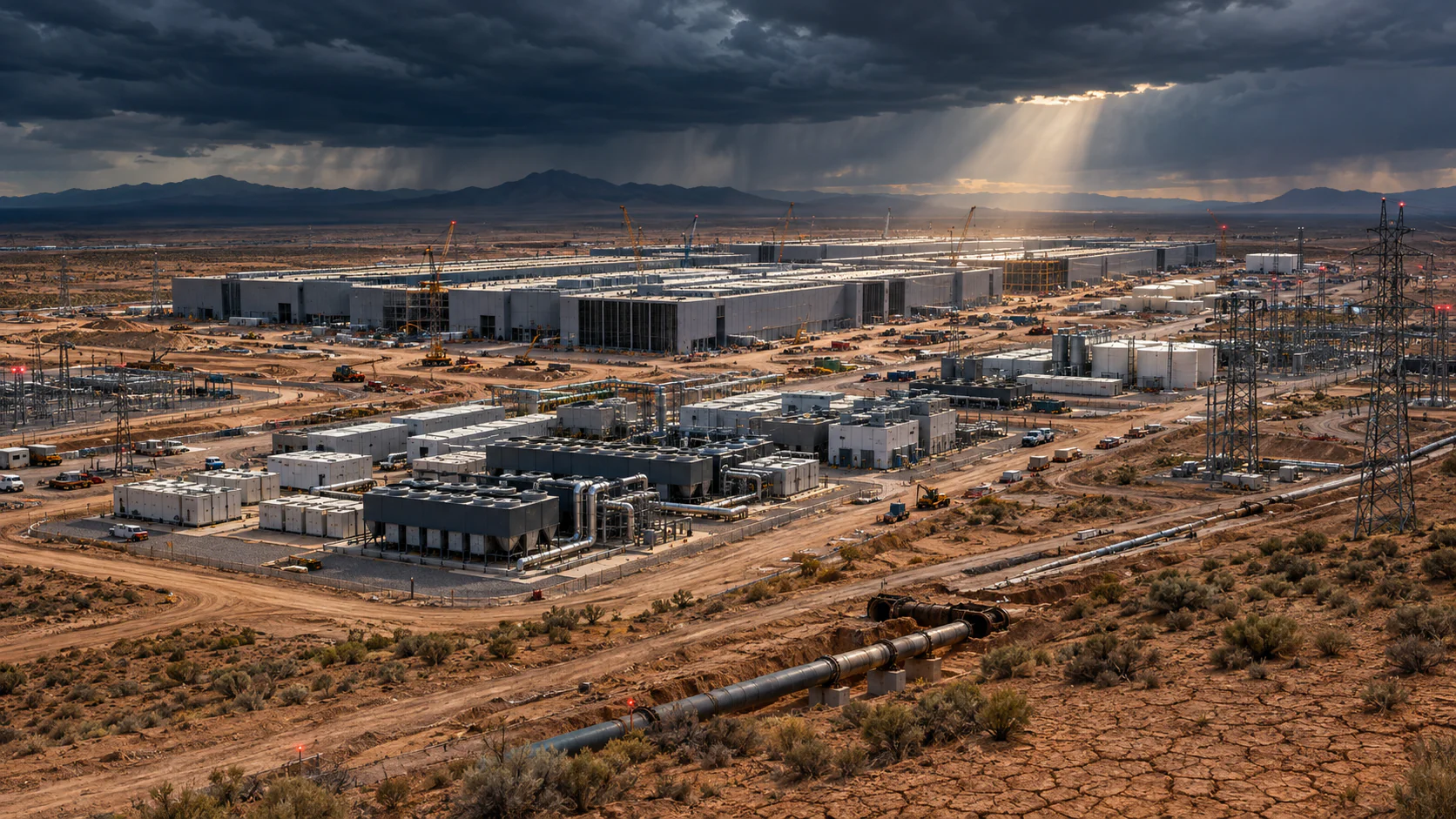
More than half is solar: 33.3 GW – The USA is building 64 GW of new power plants – and breaking with its past – Creative image: Xpert.Digital

Trump's coal push fails: Why America's energy market simply ignores him

### Blackout averted: How simple home storage systems suddenly saved the American power grid ### Not politics, but money decides: The real reason for America's explosive solar boom ### The silent revolution: How Texas transformed from an oil state into a global solar superpower ### The end of the coal era? These figures prove the unstoppable rise of renewables in the USA ###

Texas' silent revolution: From oil state to global solar superpower – how renewables are ending the coal era in the USA

While political rhetoric in Washington under President Trump loudly advocates for a renaissance of fossil fuels, the American energy market in 2025 paints a completely different and unambiguous picture. A profound transformation is underway, driven not by political ideology, but by fundamental market mechanisms and economic common sense. The latest data from the US Energy Information Administration impressively demonstrates this shift: Of the 64 gigawatts (GW) of newly planned power plant capacity, over half (33.3 GW) is attributable to photovoltaics. This solar boom is complemented by explosive growth in battery storage (18.3 GW), while not a single new installation is planned for coal or nuclear power.

Surprisingly, at the forefront of this revolution is the traditional oil state of Texas, which, with over 20 GW of installed solar capacity, has become the undisputed champion of the American energy transition. At the same time, coal-fired power is experiencing a historic decline, with over 8 GW of planned shutdowns this year alone. This development demonstrates that the American energy transition has become an economic reality that can no longer be halted by political obstacles – driven by falling costs, increasing demand from large corporations, and the technological maturity of solar and storage solutions.

How will the American energy market develop in 2025?

The US energy market is undergoing a historic transformation in 2025. While President Trump's political rhetoric promotes fossil fuels, the market tells a completely different story. According to current data from the US Energy Information Administration, a total of 64 gigawatts of new utility-scale capacity is expected in 2025, with renewable energies showing absolute dominance.

Of these 64 GW, 33.3 GW are attributable to photovoltaics, representing more than half of all new capacity. Battery storage follows with 18.3 GW, wind energy with 7.8 GW, and only 4.7 GW for gas-fired power plants. It is noteworthy that no new coal-fired or nuclear power plant installations are planned for 2025.

What role does Texas play in the solar revolution?

By 2025, Texas had become the undisputed solar champion of the USA. With an installed solar capacity of 20.7 GW, the Lone Star State could already cover 27.7 percent of the peak demand in the ERCOT grid with solar energy. This figure doubles the starting point from 2023 and positions Texas as a global powerhouse for renewable energies.

In the first half of 2025, 27 percent of the newly installed solar capacity in the US was located in Texas, equivalent to 3.2 GW. Developers plan to install another 9.7 GW in Texas in the second half of the year. These figures demonstrate that Texas is not only participating in, but leading, the American energy transition. By 2030, Texas could have over 50 GW of solar capacity, which would fundamentally transform the energy landscape.

How rapidly is the battery storage market expanding?

The battery storage market is experiencing explosive growth in 2025. In the first half of the year, 5.9 GW of battery storage capacity was already installed, representing 26 percent of the total new capacity. Approximately half of these installations were located in Arizona or California.

Texas plans to add a total of 7.0 GW of battery storage capacity by 2025, with the majority expected to go online in the second half of the year. The US battery storage market was valued at $106.7 billion in 2024 and is projected to grow to $1.49 trillion by 2034, representing an average annual growth rate of 29.1 percent.

This development is particularly noteworthy because battery storage systems are already performing critical infrastructure functions. On June 24, 2025, decentralized battery systems prevented widespread power outages when companies like Sunrun fed over 340 megawatts from home storage systems into the grid. In California, around 325 megawatts were available within two hours, and this was after 7 p.m., when solar production was already declining sharply.

What will happen to coal-fired power plants in the USA?

American coal-fired power is in irreversible decline. 8.1 GW of coal-fired power plant capacity is scheduled to be decommissioned in 2025, representing 4.7 percent of the total US coal fleet. This marks a significant increase from 2024, when only 4.0 GW was decommissioned.

The largest coal-fired power plants scheduled to be decommissioned in 2025 are the 1,800-megawatt Intermountain Power Project in Utah, the JH Campbell plant in Michigan with 1,331 MW, and Brandon Shores in Maryland with 1,273 MW. Coal-fired power plants account for 71 percent of the decommissioned capacity, followed by gas-fired power plants with 19 percent.

Interestingly, some planned shutdowns have been postponed or canceled. Over 3.6 GW of the originally planned shutdowns have been postponed, including major plants such as Brandon Shores and the VH Braunig power plant in Texas. These postponements are primarily for grid stability reasons, not for economic reasons related to the coal industry.

How is the market reacting to Trump's fossil fuel agenda?

Despite President Trump's "Drill, Baby, Drill" rhetoric, the US energy market largely ignores political signals favoring fossil fuels. Market dynamics speak volumes: Renewable energies have become economically superior and are prevailing regardless of political preferences.

While Trump declared a “national energy crisis” and excluded wind and solar power from his definition of “energy,” even though they already account for over 14 percent of American electricity generation, his administration also issued several emergency orders to keep coal-fired power plants online, as in the case of the J.H. Campbell power plant in Michigan, whose shutdown was postponed by 90 days.

These interventions, however, cannot halt the fundamental market shift. Even under Trump-friendly conditions, private capital continues to flow primarily into renewable energies, as these are more economically attractive. While US investments in renewable energy did fall by 36 percent in the first half of 2025 compared to the second half of 2024, this is mainly attributable to uncertainties regarding future tax breaks.

What economic factors are driving the energy transition?

The American energy transition is primarily driven by economic factors, not environmental policy. Solar and wind power have now become more cost-effective than coal and gas-fired power plants, which is driving private investors and utilities toward renewable energies regardless of political preferences.

Corporate America plays a crucial role. Large technology companies like Meta, Amazon, and Verizon secured 55 percent of contracted solar projects in the first quarter of 2025 to support their growing energy needs and climate goals. These long-term power purchase agreements provide developers with the necessary planning security for large-scale investments.

The decline in solar technology costs continues. The US solar market was valued at $29.68 billion in 2022 and is projected to grow at an average annual rate of 13.7 percent through 2030. At the same time, battery storage costs continue to fall, facilitating the integration of renewable energy.

How is the solar industry developing regionally?

The regional development of the US solar industry shows clear focal points. Besides Texas as the dominant force, other states have established themselves as important solar locations. California continues to lead in decentralized solar installations with 255 MWdc in the first quarter of 2025, although this was the lowest quarter since 2020.

Florida, Ohio, Indiana, and California rounded out the top five states for utility-level solar installations, accounting for over 65 percent of quarterly installations. Puerto Rico and Florida followed California in residential solar installations.

The regional concentration reflects both natural advantages (sunlight, available land) and political and economic factors. Arizona and California dominate in battery storage, while Texas leads in both solar and storage.


New: Patent from the USA – Install solar parks up to 30% cheaper and 40% faster and easier – with explanatory videos!

New: Patent from the USA – Install solar parks up to 30% cheaper and 40% faster and easier – with explanatory videos! - Image: Xpert.Digital

At the heart of this technological advancement is the deliberate departure from conventional clamp fastening, which has been the standard for decades. The new, more time- and cost-effective mounting system addresses this with a fundamentally different, more intelligent concept. Instead of clamping the modules at specific points, they are inserted into a continuous, specially shaped support rail and held securely. This design ensures that all forces occurring—be they static loads from snow or dynamic loads from wind—are evenly distributed across the entire length of the module frame.

More about it here:


Solar boom vs. politics: Market-driven energy transition, grid and trade challenges

What challenges does the solar industry face?

Despite its dramatic growth, the US solar industry faces significant challenges. Trade uncertainties stemming from tariffs on solar panels from Southeast Asia and potential changes to federal tax credits are creating planning uncertainty.

The residential solar market is showing signs of weakness. In the first quarter of 2025, only 1,106 MWdc were installed, the lowest figure since the third quarter of 2021. This represents a 13 percent decline compared to the previous year. High interest rates, economic uncertainty, and consumer reluctance to make large purchases are dampening demand.

The grid infrastructure cannot keep pace with rapid growth. ERCOT in Texas is struggling with increasing congestion problems, particularly in areas with high renewable energy deployment. Connection delays and curtailment risks are leading to regulatory discussions about grid access reforms.

How will the energy transition affect jobs?

The energy transition is creating new jobs, while traditional energy sectors are losing employment. In 2023, the US solar industry employed 279,447 people, while the battery sector had 34,891 employees in 292 companies and generated total revenue of $52 billion.

The US expanded its solar module manufacturing capacity by 8.6 GW in the first quarter of 2025, marking the third-largest quarter for new manufacturing capacity. This surge in production came from eight new or expanded factories in Texas, Ohio, and Arizona. US solar cell production capacity doubled to 2 GW in the first quarter with the opening of a new factory in South Carolina.

At the same time, jobs are being lost in the coal industry. The planned power plant closures affect not only the jobs directly at the plants, but also upstream and downstream industries. Wyoming, Montana, and other coal-dependent states must adapt their economic structures.

What role do state versus federal politics play?

A fascinating aspect of the American energy transition is the discrepancy between federal policy and state and local initiatives. While the Trump administration promotes fossil fuels and hinders renewable energies, many states are implementing their own climate goals.

California, New York, Illinois, and other states have ambitious decarbonization goals and their own incentive programs for renewable energy. These state initiatives create markets and planning certainty that partially offset nationwide policy uncertainties.

Texas demonstrates that the energy transition can work even without explicit climate policy. The state relies primarily on market forces and has created ideal conditions for renewable energies through deregulated electricity markets. Paradoxically, the result is one of the most aggressive energy transitions worldwide in a traditionally oil- and gas-friendly state.

How is energy supply security changing?

The integration of solar and battery storage is fundamentally changing American energy security. While critics emphasize the intermittent nature of renewable energies, practical experience by 2025 shows that combinations of solar and batteries can already perform system-critical functions.

The event of June 24, 2025, was a turning point: battery storage prevented widespread power outages and took over functions traditionally reserved for fossil fuel reserve power plants. This refutes the argument that renewable energies jeopardize security of supply.

At the same time, the Trump administration and local authorities are creating new uncertainties by artificially keeping coal-fired power plants alive. The J.H. Campbell power plant in Michigan was slated for closure but continued operating under an emergency order, even though a natural gas power plant was available as a replacement. Such interventions can jeopardize grid stability rather than ensure it, as old, poorly maintained plants block more reliable, modern alternatives.

What are the global implications of the American energy transition?

The American energy transition has far-reaching global implications. As the world's second-largest economy, the US influences technological development, supply chains, and investment flows worldwide. Texas' solar growth alone exceeds the total installed capacity of many countries.

Despite Trump's withdrawal from international climate agreements, American companies and states are continuing decarbonization. This sends mixed signals to international partners, but also demonstrates the resilience of market mechanisms to political interference.

China continues to dominate supply chains for solar technology and batteries, exacerbating American energy security concerns. The US is therefore investing heavily in domestic production capacity, as demonstrated by the doubling of solar cell manufacturing in the first quarter of 2025.

What does this development mean for energy prices?

The energy transition is affecting American energy prices in complex ways. In the short term, transition phases and grid modernizations can lead to price increases, but in the long term, renewable energies are significantly reducing costs.

Solar and wind power have virtually zero marginal costs, since sun and wind are free. This is increasingly leading to negative electricity prices during peak production times in markets with a high share of renewables. Texas has already experienced several episodes of negative prices, putting pressure on traditional power plant operators.

Battery storage systems can smooth out this price volatility by absorbing surplus electricity during periods of low prices and releasing it during periods of high prices. This stabilizes the grid and creates new business models for energy service providers.

How will the technology continue to develop?

Technological development continues to accelerate. Solar module efficiencies are steadily increasing while costs are falling. Battery technology is improving in energy density, lifespan, and safety. Tesla, for example, is developing four new versions of its 4680 battery cells for different applications.

Hybrid projects that combine solar power and battery storage are becoming the standard. Projects like Danish Fields, Hornet, and Roadrunner in Texas demonstrate how these combinations improve grid flexibility and enable demand-driven power delivery.

Digital technologies are revolutionizing energy management. Artificial intelligence optimizes battery discharge, predicts solar production, and coordinates decentralized energy resources. This enables more complex and efficient energy systems.

What long-term trends are emerging?

Several long-term trends will shape the American energy landscape. The transition to a more decentralized energy system continues, with millions of rooftops, battery storage systems, and electric vehicles being connected to a smart energy grid.

Electromobility will fundamentally change energy demand. While EVs create additional electricity demand, their batteries can also function as mobile storage and contribute to grid stabilization. Vehicle-to-grid technologies are on the verge of a commercial breakthrough.

Sector coupling between electricity, heat, and transport is intensifying. Electrification of heating, industry, and transport creates new synergies and efficiency potentials. Heat pumps, electric vehicles, and hydrogen production are increasingly being coupled with renewable electricity generation.

Market overwhelms politics

The development of American photovoltaic and coal-fired power plants in 2025 impressively demonstrates how market mechanisms can overcome political preferences. Despite a fossil fuel-friendly Trump administration, renewable energies dominate new installations, accounting for over 50 percent of the planned 64 GW capacity.

Texas is leading this revolution, with 12.9 GW of new solar capacity planned for 2025 alone and an already installed base of 20.7 GW. Battery storage is becoming critical infrastructure and is already preventing widespread power outages. Coal-fired power is in irreversible decline, with 8.1 GW of planned decommissioning compared to zero new coal-fired power plants.

This transformation is happening not for ideological reasons, but for economic ones. Solar and wind energy have become more cost-effective than fossil fuel alternatives, corporate America is driving demand through long-term power purchase agreements, and technological advances in batteries are solving the intermittent problem.

While political uncertainties can dampen investment in the short term, as demonstrated by the 36 percent decline in US renewable energy investment in the first half of 2025, they cannot halt the fundamental shift. The American energy transition has become an unstoppable economic reality that will continue regardless of election results.


Look, this little detail saves up to 40% installation time and costs up to 30% less. It's from the USA and patented.

NEW: ready -to -mount solar systems! This patented innovation accelerates your solar construction massively

The heart of ModuRack 's innovation is its departure from conventional clamp fastening. Instead of clamps, the modules are inserted and held in place by a continuous support rail.

More about it here:


Your partner for business development in the field of photovoltaics and construction

From industrial roof PV to solar parks to larger solar parking spaces

☑️ Our business language is English or German

☑️ NEW: Correspondence in your national language!


Konrad Wolfenstein

I would be happy to serve you and my team as a personal advisor.

You can contact me by filling out the contact form or simply call me on +49 89 89 674 804 (Munich) . My email address is: wolfenstein xpert.digital

I'm looking forward to our joint project.


☑️ EPC services (engineering, procurement and construction)

☑️ Turnkey project development: Development of solar energy projects from start to finish

☑️ Location analysis, system design, installation, commissioning as well as maintenance and support

☑️ Project financier or placement of investors

Exit the mobile version