


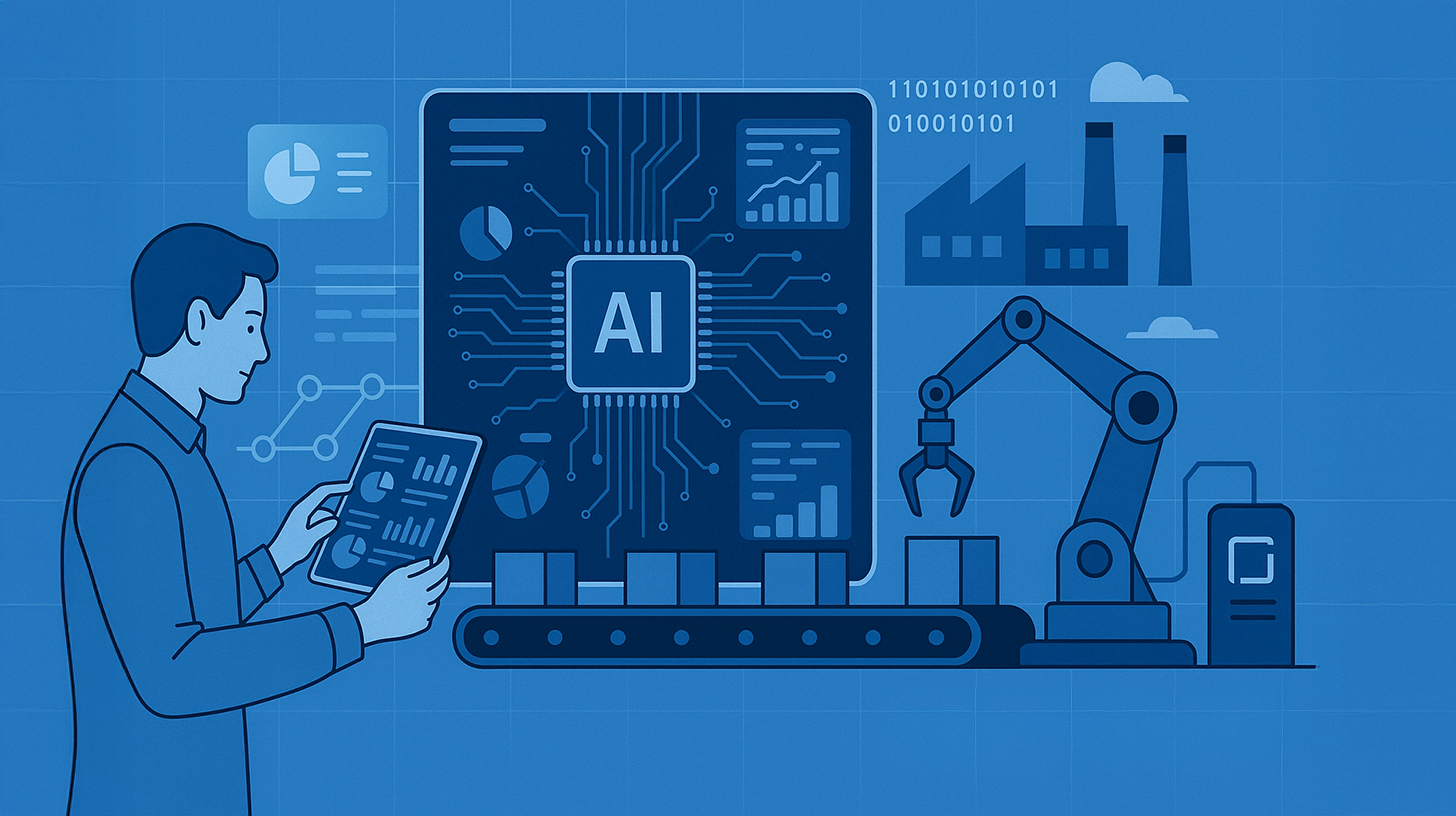
The turnkey enterprise AI platform: AI-powered industrial automation
The "blueprint" approach: How complex enterprise AI projects are possible for German companies within a short time
The end of compromises: When artificial intelligence makes tomorrow's production possible today
The fourth industrial revolution has long since reached Germany, but a gap exists between Industry 4.0 visions and reality, a gap that only a few companies have successfully closed. With Unframe.AI, an AI technology company is entering the German industrial landscape, promising to close this gap within days or weeks. The company's blueprint approach turns traditional implementation strategies on their head and makes AI-powered automation accessible, something that previously required months or years of development. While German machine manufacturers and production companies are still struggling with the integration of isolated AI solutions, Unframe.AI demonstrates how comprehensive automation solutions can be implemented in just a few days or weeks.
Related to this:

Digital transformation meets industrial reality: A technological introduction
German industry faces a technological paradox: On the one hand, 42 percent of German industrial companies are considered AI pioneers, already using artificial intelligence in production. On the other hand, 46 percent grapple with the fear that Germany could miss out on the AI revolution. This discrepancy reveals the core challenge of modern industrial automation: While the technology has long been available, its practical implementation often fails due to organizational, financial, or technical hurdles.
AI-powered industrial automation describes the integration of machine learning, neural networks, and autonomous decision-making systems into productive manufacturing processes. Unlike traditional automation, which is based on predefined rules, AI-driven systems learn continuously and adapt dynamically to changes. This ability to optimize autonomously fundamentally distinguishes modern smart factories from conventional production facilities.
Unframepositions itself as a turnkey enterprise AI platform, enabling companies to develop customized AI solutions for virtually any industrial use case. Founded in Cupertino in 2024, with offices in Tel Aviv and Berlin, the company generated millions of dollars in recurring revenue in its first year of operation and collaborates with Fortune 500 companies. The core of its success lies in its blueprint approach: customers describe their use case, Unframe creates a detailed technical specification, and transforms it into fully functional, enterprise-ready software via its platform.
The relevance of this development for German industry cannot be overstated. Germany, a nine-time world export champion with a manufacturing sector that generates 33 percent of national revenue, is under enormous pressure to innovate. According to expert estimates, productivity in Germany could increase by up to 3.3 percent annually through automation until 2030. At the same time, AI offers the potential to compensate for demographic change: Reproductive AI is estimated to save around 3.9 billion working hours by 2030.
This analysis examines how Unframe.AI's technological approach could influence the German industrial landscape, what opportunities and risks arise, and how AI-supported automation will develop in the coming years. It evaluates both the technical innovation of the Blueprint approach and its practical applicability in German production environments.
From the loom to artificial intelligence: A chronological overview
The history of industrial automation in Germany is characterized by continuous waves of innovation, each resulting in fundamental changes to the production landscape. The first industrial revolution, beginning in 1760, brought about mechanical production facilities and steam-powered machines. The second revolution, around 1870, introduced electricity and assembly line production, while the third revolution, from the 1970s onward, was characterized by electronics and early automation technologies.
Germany coined the term "Industry 4.0" at the 2011 Hannover Messe trade fair, establishing a concept that has since gained worldwide recognition. This fourth industrial revolution is based on the intelligent networking of cyber-physical systems, the Internet of Things (IoT), and comprehensive data analysis. A key characteristic of Industry 4.0 is the merging of physical systems with digital technologies, leading to self-regulating and autonomous business processes.
The breakthrough of artificial intelligence in industrial automation can be attributed to several key events. The turning point was the launch of ChatGPT in 2022, which reached one million users in just five days and triggered a wave of investment in AI projects across various industries. This success highlighted for the first time the potential of generative AI for practical applications and led to a reassessment of AI technologies in industrial contexts.
The development of specialized industrial AI quickly followed this breakthrough. While generative AI primarily focused on text processing and communication, industrial companies rapidly recognized its potential for production-specific applications. Image processing, condition monitoring, and predictive maintenance, in particular, benefited from advances in AI development.
Unframe.AI emerged from this dynamic in 2024, founded by former Noname Security founder Shay Levi. The company identified a key market gap: While AI technologies were becoming increasingly mature, companies lacked practical ways to quickly implement these technologies into their existing systems. Unframe 's blueprint approach addresses precisely this challenge by bridging the gap between available technology and practical application.
The timeline also reflects the accelerated pace of innovation: While previous industrial revolutions took decades to become widespread, AI integration is occurring in significantly shorter timeframes. German companies that hesitate today risk facing decisive competitive disadvantages tomorrow. This realization is reflected in current investment patterns: 31 percent of manufacturing companies are already using AI technologies, and another 20 percent are planning to implement them.
Historical analysis makes it clear that the current AI revolution cannot be viewed in isolation, but rather as a logical continuation of the German tradition of automation. Unframe's approach represents a new level of quality: instead of years-long development cycles, the platform enables the implementation of AI solutions in days, reflecting the accelerated pace of innovation in the digital age.
Architecture of Intelligence: The Central Mechanisms and Building Blocks
Unframe.AI's technological foundation is based on a modular platform architecture that differs fundamentally from traditional software development approaches. At its core is the Blueprint approach, an innovative method for transforming business requirements into functional AI solutions. This approach eliminates the traditional phases of requirements analysis, software architecture, and implementation, replacing them with an automated generation process.
The platform features four core technical building blocks that work seamlessly together. The first building block comprises advanced search and reasoning capabilities that transform unstructured enterprise data into searchable, structured information. This functionality enables industrial companies to access decades of accumulated domain knowledge that was previously hidden in emails, reports, and legacy systems.
The second component focuses on automation and AI agents. These autonomous systems execute complex workflows and make proactive decisions based on real-time data. In industrial environments, for example, these agents can optimize maintenance intervals, perform quality control checks, or make supply chain decisions without requiring human intervention.
The abstraction and data processing component forms the third technical building block. Unframe.AI transforms unstructured content such as sensor data, machine logs, or production documentation into usable structured formats. This capability is particularly relevant for German industrial companies, which often have heterogeneous IT landscapes with various data formats and legacy systems.
The fourth component comprises modernization functions that transform legacy systems into AI-native software. This functionality addresses one of the biggest challenges facing German industrial companies: the integration of modern AI technologies into existing production environments without requiring disruptive system changes.
Edge computing plays a central role in the Unframe.AI architecture, even though the company is primarily designed as a cloud platform. Industrial applications often require real-time processing with sub-millisecond latency. Edge computing brings data processing closer to sensors and production equipment, enabling critical decisions to be made without delays caused by network transmissions.
Unframe's security architecture follows a zero-trust principle. Customer data never leaves the secure corporate environment, as the platform can be deployed in both private clouds and on-premises. This architectural decision is particularly relevant for German industrial companies, which are subject to strict data protection regulations and must protect sensitive production data.
Another technical innovation lies in the platform's integration capabilities. Unframe.AI can connect to virtually any system: ERP systems like SAP, manufacturing execution systems (MES), databases, and even unstructured data sources. This universal connectivity eliminates one of the biggest implementation hurdles in traditional AI projects.
The modular architecture also enables iterative development and continuous optimization. Changes to business requirements can be immediately reflected in the software through adjustments to the blueprint, without requiring costly reprogramming. This flexibility is crucial for German industrial companies that must compete in dynamic markets and react quickly to changing requirements.
Transformation in practice: Meaning and application in today's context
The practical application of Unframe's technology in the German industrial landscape is already showing measurable results. Industrial customers have achieved productivity gains in the tens of millions through the platform. These successes are not based on theoretical models, but on concrete implementations that have an operational impact within just a few days.
IT operations have established themselves as the dominant application area. A comprehensive survey of 235 decision-makers in large companies identified IT operations as the most impactful AI application, cited by 50 percent of respondents. Unframe.AI automates complex IT service management workflows that previously required manual processing. Emails are automatically converted into tickets, service level agreements are assigned and routed to the appropriate teams, while managers receive real-time insights into the processing status.
Quality assurance benefits significantly from AI-supported image processing systems. Modern production lines operate at speeds that overwhelm human quality control. AI systems continuously analyze camera images and identify microscopic defects or deviations in real time. This technology enables German manufacturers to raise their quality standards while simultaneously reducing scrap and rework.
Predictive maintenance represents another key area of successful AI implementation. Sensor data from production facilities is continuously analyzed to identify wear or potential failures before they occur. German machine manufacturers use this technology both for their own production facilities and as a service offering for their customers. For example, an AI system can analyze vibration patterns in rotating components and predict maintenance needs with an accuracy that enables preventive interventions without incurring unnecessary maintenance costs.
Integration into existing SAP landscapes is a critical success factor for many German companies. Unframe.AI can aggregate data across multiple SAP systems and enable cross-system queries. This capability is particularly relevant for large German industrial groups with historically grown, heterogeneous SAP landscapes.
A concrete application example illustrates the transformation of quotation processes. A global technology distributor fully automated its sales quotation process with AI, reducing processing time from 24 hours to just a few seconds. This increase in efficiency allows the company to handle significantly more customer inquiries and react more quickly to market changes.
The solution's scalability is evident in its use by Fortune 500 companies across various industries. From insurance companies and banks to real estate corporations, large enterprises utilize Unframefor diverse automation tasks. This versatility demonstrates that the platform is not limited to specific industries but can function as a universal automation solution.
The speed of implementation fundamentally distinguishes Unframe.AI from traditional IT projects. While classic AI implementations require months or years, Unframesolutions can be deployed productively in just a few days. This time saving results from the blueprint approach, which eliminates the lengthy phases of requirements analysis, system design, and programming.
🤖🚀 Managed AI Platform: Faster, safer & smarter to AI solutions with UNFRAME.AI
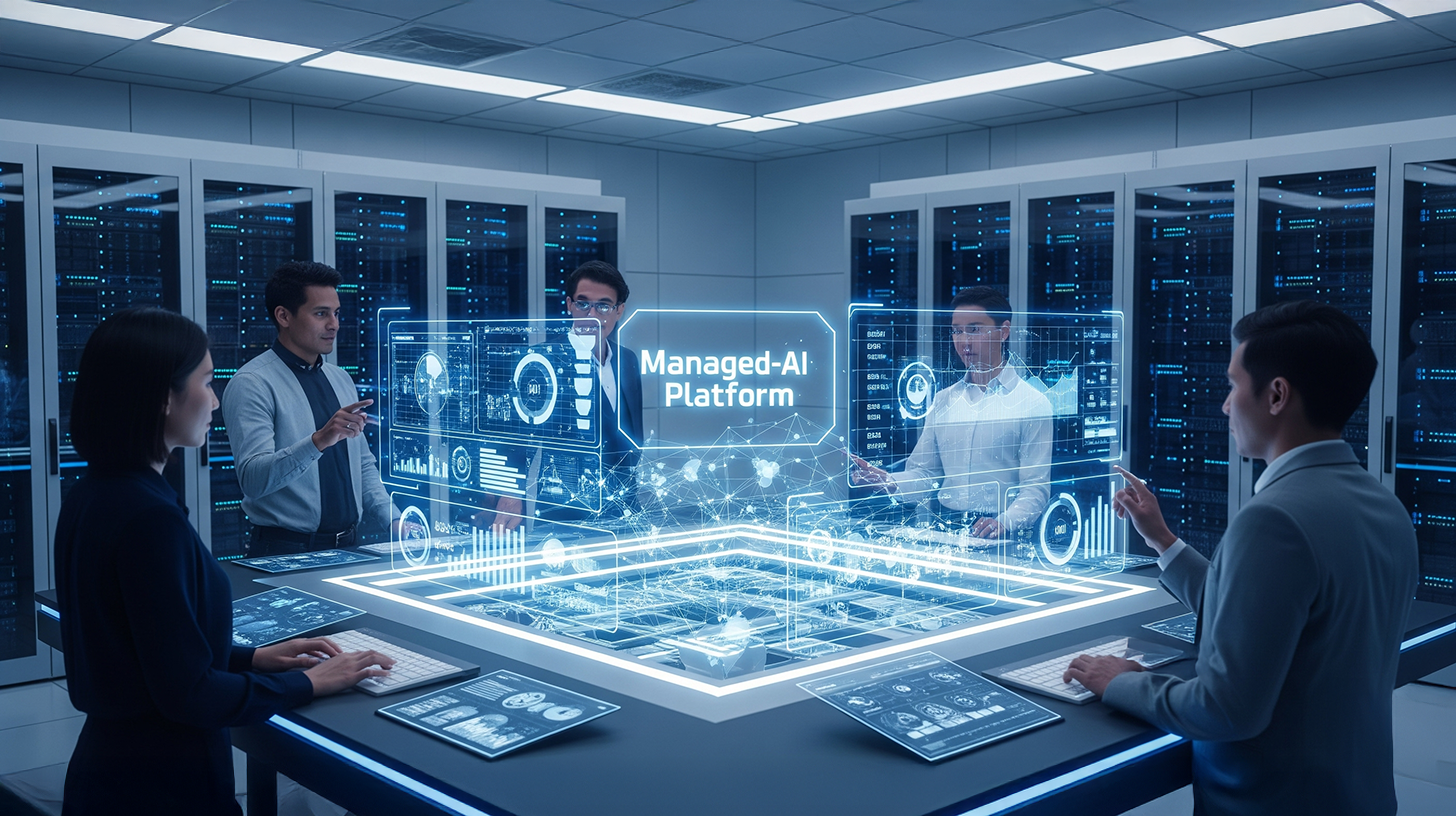
Managed AI Platform - Image: Xpert.Digital
Here you will learn how your company can implement customized AI solutions quickly, securely and without high entry barriers.
A managed AI platform is your all-inclusive, worry-free solution for artificial intelligence. Instead of dealing with complex technology, expensive infrastructure, and lengthy development processes, you receive a ready-made solution tailored to your needs from a specialized partner – often within just a few days.
The key advantages at a glance:
⚡ Rapid implementation: From idea to ready-to-use application in days, not months. We deliver practical solutions that create immediate added value.
🔒 Maximum data security: Your sensitive data stays with you. We guarantee secure and compliant processing without sharing data with third parties.
💸 No financial risk: You only pay for results. High upfront investments in hardware, software, or personnel are completely eliminated.
🎯 Focus on your core business: Concentrate on what you do best. We take care of the entire technical implementation, operation, and maintenance of your AI solution.
📈 Future-proof & scalable: Your AI grows with you. We ensure continuous optimization and scalability, and flexibly adapt the models to new requirements.
More information here:
Proactively manage supply chains: AI reduces bottlenecks and emergency procurement
From theory to reality: Concrete use cases and illustrations
The practical application of Unframe's Blueprint approach is best illustrated through detailed case studies from German industry. These examples demonstrate how theoretical concepts are transformed into measurable business results.
Proactive supply chain management in the automotive industry
The first use case comes from the automotive industry and involves a German premium car manufacturer with complex supply chains. The company faced the challenge of coordinating over 2,000 different suppliers while balancing delivery dates, quality standards, and cost optimization. Traditional ERP systems offered data collection but lacked intelligent analysis or proactive recommendations.
Unframe.AI implemented an AI solution that analyzes historical delivery data, weather data, traffic information, and suppliers' production capacities in real time. The system predicts delivery delays up to two weeks in advance and automatically suggests alternative suppliers or adjusted production plans. Within the first six months, average delivery time decreased by 15 percent, while emergency procurement fell by 40 percent. Implementation took only eight days, from the initial requirements analysis to going live.
Intelligent process optimization in the chemical industry
The second example comes from the chemical industry and focuses on optimizing complex reaction processes in a large-scale plant. A leading German chemical producer operates facilities that must monitor hundreds of different chemical parameters around the clock. Even the slightest deviations can lead to quality problems, safety risks, or costly overproduction. Traditional process control systems react to predefined thresholds but cannot recognize complex patterns between different parameters.
The Unframe.AI solution continuously analyzes sensor data on temperature, pressure, pH values, flow rates, and chemical composition. Machine learning algorithms identify subtle correlations between these parameters and can predict process deviations up to four hours before they occur. The system automatically optimizes reaction conditions and maximizes yield with minimal energy consumption. After one year of operation, production efficiency increased by 8 percent, while energy consumption was reduced by 12 percent. At the same time, unplanned downtime decreased by 60 percent.
The technical implementation was achieved via an edge computing infrastructure that runs AI models directly in the production environment. This ensures real-time responses even during network outages and increases system resilience. Integration with existing distributed control systems (DCS) was accomplished via standardized OPC UA protocols, eliminating the need for any modifications to the critical control infrastructure.
Accelerating the bidding process in German mechanical engineering
A third example from the manufacturing industry demonstrates its application at a German machine manufacturer in Baden-Württemberg. The company produces customized production systems and struggled with the complexity of individual requirements. Each customer inquiry required extensive technical assessments, feasibility studies, and cost calculations, often taking several weeks. In fast-paced markets, this delay regularly resulted in lost orders.
Unframe.AI developed an intelligent quotation system that automatically analyzes customer technical requirements and compares them with the company's 25 years of mechanical engineering expertise. The system automatically assesses feasibility, identifies potential technical risks, and generates detailed cost estimates. It draws on a knowledge base comprised of thousands of historical projects, design drawings, calculations, and case studies.
The implementation fundamentally transformed the bidding process: the average processing time dropped from three weeks to two days, while the accuracy of cost forecasts increased by 25 percent. The company can now handle significantly more inquiries and achieves a higher success rate in tenders. Within the first year, order intake increased by 30 percent, primarily due to the accelerated responsiveness.
These case studies illustrate common success patterns: All implementations leverage existing data sets and expert knowledge, but transform them into proactive, self-learning systems through AI. The blueprint architecture enables an implementation speed that surpasses traditional IT projects by orders of magnitude.
Related to this:

Intelligence meets the future: Expected trends and potential upheavals
The development of AI-supported industrial automation is facing fundamental transformations that go beyond isolated improvements and will reshape entire industries. Forecast analyses reveal converging trends that could fundamentally change the German manufacturing landscape by 2030.
Edge computing is set to become the dominant architecture for industrial AI applications. While current solutions still rely heavily on cloud computing, data processing is increasingly shifting directly to production facilities. German machine manufacturers are already developing AI-enabled controllers that can run neural networks directly on the hardware. This decentralization enables real-time decisions with latency of less than one millisecond and simultaneously reduces dependence on network connections.
The convergence of digital twins and AI will revolutionize industrial simulations. German companies are investing heavily in digital twins of their production facilities, which serve as virtual testbeds for AI algorithms. This combination makes it possible to train and test AI models in secure virtual environments before deploying them in critical production systems. By 2027, it is expected that 75 percent of large German companies will be using digital twins for AI training.
Prescriptive maintenance is replacing predictive maintenance and marks the next evolutionary step. While current systems forecast maintenance needs, future AI systems will generate concrete recommendations for action and implement them automatically. An intelligent production plant will not only warn that a warehouse might fail in three days, but will automatically order spare parts, schedule maintenance technicians, and adjust production plans accordingly.
The emergence of AI ecosystems will end the isolation of individual automation solutions. German research institutions are already developing modular AI platforms that seamlessly integrate various manufacturers and applications. These ecosystems will establish standardized interfaces and common data models, significantly simplifying the integration of different AI solutions.
Explainable AI is becoming a regulatory necessity, particularly in Germany with its stringent compliance requirements. The black-box nature of current AI systems is unsustainable in the long term, as companies and regulatory authorities will demand transparent decision-making processes. German AI researchers are working intensively on methods that make complex neural networks interpretable without compromising their performance.
The integration of quantum computing will find its first practical applications in industrial automation starting in 2028. German research institutions and companies like IBM Germany are developing quantum algorithms for optimization problems in production. This technology will enable revolutionary improvements, particularly in solving complex scheduling problems and optimizing supply chains.
Autonomous production systems are gradually becoming a reality. German car manufacturers are already experimenting with factories that can operate entirely without human intervention. These "lights-out factories" use AI for all production decisions, from material planning to quality control. By 2030, an estimated 15 percent of German industrial production will take place in such autonomous environments.
The democratization of AI development will empower German companies to develop their own AI solutions. Low-code and no-code platforms, similar to the Unframe.AI approach, will enable engineers without programming skills to create AI applications. This development will significantly accelerate the pace of innovation in German companies.
Sustainability is becoming a central optimization goal for AI-supported systems. German companies are under enormous pressure to reduce their CO2 emissions. AI systems are increasingly being optimized for energy efficiency and resource conservation, thus synergistically combining increased productivity with environmental protection.
Synthesis of Transformation
The analysis of Unframe's AI-powered industrial automation reveals an ambivalent picture of technological disruption, one that presents both exceptional opportunities and significant risks for the German industrial landscape. The fundamental innovation of the blueprint approach lies not in the underlying AI technology, but in the radical acceleration of implementation cycles, which compresses traditional IT project durations from months to days.
The platform's technological strengths are undeniable: its modular architecture, universal integration capabilities, and the ability to leverage existing company data without complex data migration address key pain points for German industrial companies. The productivity gains already achieved in the tens of millions at Fortune 500 companies demonstrate the solution's practical potential. Particularly noteworthy is its ability to integrate seamlessly into established SAP landscapes, a crucial factor for many German corporations.
Nevertheless, the identified risks have the potential to undermine the promised benefits. The lack of traceability of AI-supported decisions clashes with German compliance requirements and quality standards. The speed of implementation can lead to hasty decisions that carry operational risks. Cybersecurity risks increase with each additional networked AI system and require highly specialized expertise that is scarcely available on the German labor market.
The strategic importance for Germany as an industrial location is considerable. With 42 percent of industrial companies already using AI and another 35 percent in the planning phase, Germany is in a favorable starting position. At the same time, there is a risk that the slow pace of implementation will lead to competitive disadvantages compared to more agile competitors. Unframe's approach could close this implementation gap and enable German companies to realize their AI ambitions more quickly.
The economic implications extend beyond individual companies. The projected productivity increases of up to 3.3 percent annually until 2030 could be crucial in compensating for demographic change and the shortage of skilled workers. At the same time, automation carries the risk of social upheaval if transformation processes are not designed in a socially responsible manner.
Future developments point to an increasing convergence of various technologies: Edge computing, digital twins, quantum computing, and explainable AI will form integrated solutions. German companies investing in AI automation today are positioning themselves for this technological convergence. Unframe's Blueprint approach could serve as an integration platform, seamlessly combining different technologies.
The assessment yields a nuanced conclusion: Unframerepresents a significant technological advancement with the potential to accelerate industrial automation in Germany. However, the technology is not a panacea and requires careful strategic planning, appropriate risk management, and responsible implementation. German companies should view the technology as one component of their digital transformation, not as a complete solution.
Ultimately, success will depend on how well German companies manage to harmonize technological possibilities with their specific requirements for quality, security, and compliance. Unframe.AI offers a promising foundation for this, but its full potential can only be realized through well-thought-out strategic application.
Download the Enterprise AI Trends Report 2025 from Unframe
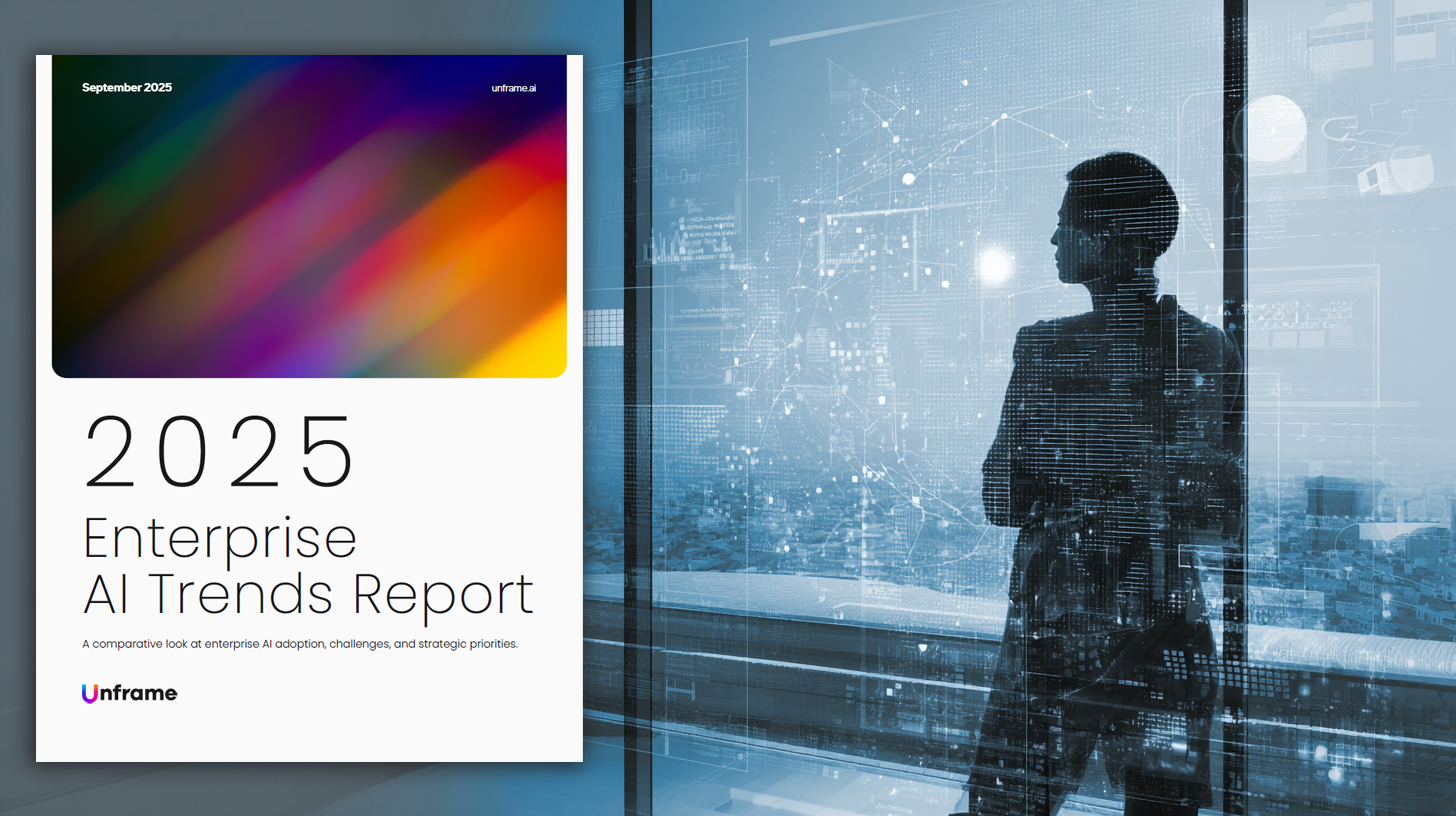
Download the Enterprise AI Trends Report 2025 from Unframe
Click here to download:
Consulting - Planning - Implementation

Konrad Wolfenstein
I would be happy to serve as your personal advisor.
You can contact me at wolfenstein∂xpert.digital or
Just call me on +49 7348 4088 965 .