
Transformation through crisis: Why hidden champions are now focusing on "systemic order acquisition" – Image: Xpert.Digital
The redesign of industrial procurement in the age of AI and digitalization
Why industrial companies need to radically rethink their order procurement
The industrial economy is at a historic turning point, yet many companies still operate according to the rules of the last century. The image of the jovial sales representative, product brochure in hand and charming, hoping to close a deal in the purchasing manager's anteroom, is fading into nostalgia. The reality in the offices of machine manufacturers and industrial suppliers is sobering: the phones remain silent, the appointment calendars emptier. But this is not a temporary dip in demand; it is the symptom of a fundamental systemic breakdown.
While analog methods often still dominate on the seller's side, purchasing departments on the other side have long since undergone a technological and strategic metamorphosis. Driven by geopolitical tensions, fragile supply chains, and a data deluge that is virtually impossible to manage without artificial intelligence, purchasing has transformed from a cost manager into a strategic value creation center. Studies from McKinsey to the World Economic Forum confirm that the modern B2B buyer makes data-driven, digital, and risk-oriented decisions. They no longer demand colorful catalogs, but rather seamless ERP integrations, resilience testing, and real-time availability.
This article examines the profound transformation of industrial market demand. We analyze why marketing and sales as separate silos are obsolete and must be replaced by an integrated "order acquisition" process. From the unstoppable integration of AI agents that autonomously conduct negotiations to the new currency of "geopolitical security," learn why mere digitalization is insufficient and how leaders must now restructure their organizations not only to survive in the age of algorithmic decision-making but to emerge as winners from the crisis.
Related to this:


When classical models reach their limits: The profound transformation of market demand
The industrial economy is undergoing a fundamental transformation that extends far beyond superficial digitalization. Potential customers are no longer queuing outside the offices of mechanical engineering companies. This reality is not the result of declining demand, but rather the symptom of a profound shift in how organizations make their procurement decisions. The classic sales practices that have worked for decades are undergoing rapid structural change, driven by technological innovations, geopolitical tensions, and the increasing professionalization of the purchasing function.
The McKinsey study "Transforming Procurement Functions for an AI-Driven World" vividly illustrates this transformation: Companies today manage 50 percent more purchasing volume per employee than they did five years ago. This doesn't mean that procurement professionals have become more productive, but rather that the demands placed upon them have fundamentally intensified. Procurement departments have evolved from mere cost centers to strategic value creation hubs. In this context, traditional sales models that rely on personal relationships, spontaneous customer visits, and informal networks are losing relevance. Instead, highly professionalized procurement organizations are emerging that prioritize data, transparency, and systematic decision-making processes.
Mechanical engineering and industry in general are not exempt from this development. On the contrary, they are among the sectors where the transformation is most evident. The reasons are manifold and interdependent. First, the increasing complexity of supply chains means that buyers can no longer make decisions based on gut feeling. They must assess supplier risks, identify supply chain vulnerabilities, and factor in geopolitical factors. A study by the World Economic Forum shows that approximately 64 percent of respondents expect a fragmented global order by 2035. This is driving companies to diversify their supplier base, develop local sourcing strategies, and implement continuous risk monitoring. Salespeople who rely solely on product brochures and personal charm cannot meet these demands.
Secondly, procurement itself has achieved a new status as a business function. Purchasing managers no longer talk about percentage cost savings, but about strategic value creation. A power equipment manufacturer was able to reduce costs by 11 percent by restructuring its purchasing organization and aligning its sourcing group with product development. A cruise line saw significant improvements in on-time deliveries from suppliers after reorganizing its purchasing structure. These success stories demonstrate that procurement is no longer just about managing costs, but is increasingly understood as a driver of business results.
Procurement organizations at leading companies have long since internalized this insight. Two-thirds of companies have divided their procurement work into strategic and transactional processes. This separation allows high-quality talent to focus on strategic tasks, while routine work is increasingly handled by automation and artificial intelligence. Transactional activities, on which procurement professionals previously devoted 70 percent of their time, are automated by intelligent systems. The freed-up capacity allows procurement professionals to concentrate on strategic negotiations, supplier evaluation, and innovative sourcing solutions. One pharmaceutical company was able to recover more than $10 million in overlooked value in less than a month by using generative AI in an audit operation.
The consequence of this development is clear: companies that fail to keep pace in procurement systematically lose competitiveness. The next wave of automation could make purchasing processes 25 to 40 percent more efficient, particularly through agent-based AI systems that can interpret data, make decisions, and act independently. Companies that do not actively shape this transformation but merely react to it will fall significantly behind in two to three years.
Digitalization as a survival factor: Why marketing and sales alone are no longer enough
The traditional approach that marketing and sales are sufficient to secure orders has lost its core value. While marketing and sales still retain their importance, they are now merely components of a much broader system that requires the integration of data, intelligence, and operational capabilities. This realization is not new, but many companies in the mechanical engineering sector have not yet fully grasped it.
Digital transformation in the industrial sector is characterized by several parallel trends. First, 73 percent of B2B buyers already have a preferred purchasing method: they want to buy online rather than from sales representatives. This applies not only to small deliveries but also to complex, high-value industrial equipment. This is a fundamental shift in behavior that is undermining traditional sales models. At the same time, it turns out that 83 percent of B2B buyers already use digital platforms for their purchases, while 87 percent would be willing to pay a premium for a convenient and user-friendly online purchasing experience.
In parallel, 65 percent of new sales in the industrial sector are online transactions. This differs significantly from the baseline figure of 45 percent in 2018. Several factors have contributed to this acceleration. Firstly, the COVID-19 pandemic has accelerated forced digitalization. Secondly, it has also played a role in the economic constraints under which many purchasing professionals operate. When a buyer needs to compare three suppliers, obtain pricing information, and check availability, they want to do so quickly and regardless of location. A seller who fails to meet these needs will be replaced by one who does.
This shift is particularly relevant for mechanical engineering and industrial companies. Half of all purchasing organizations (52 percent) still do not have fully implemented "procure-to-pay" platforms. For small businesses, this figure rises to 70 percent. This means that the traditional sales process, where a salesperson arrives at an office with a product brochure and negotiates with the purchasing manager, no longer works for many organizations. Meanwhile, the buyer is already online, researching alternatives, comparing prices, and trying to automate their purchasing processes.
The lack of digital infrastructure at many manufacturers simultaneously represents a gigantic business opportunity for those who can fill this gap. Companies that fully digitize their sales processes, present their products in user-friendly online catalogs, enable automated quote generation, and offer seamless integration with their customers' ERP systems will become preferred partners. This transformation is not only a technical but also a strategic requirement.
But simply digitizing without understanding the business logic and the needs of buyers is pointless. A common mistake is that companies quickly build an e-commerce website but forget that B2B purchasing is often complex and requires tailored solutions. A buyer in the manufacturing industry is not only interested in product-specific information, but also in comparison options, individualized pricing based on purchase volume, supplier reviews, and integration with their existing IT infrastructure. A seller with only a static website fails to meet these requirements.
Related to this:


Artificial intelligence and data analysis as a strategic tool for success
The integration of artificial intelligence into procurement processes is no longer a thing of the future, but a present reality. Forty percent of procurement functions have already begun using generative AI. At the current pace, this figure will likely exceed 70 percent within two years. This is not just a matter of automation, but a fundamental transformation of decision-making in purchasing organizations.
AI applications in procurement span the entire purchasing cycle. Let's start with invoice reconciliation: AI systems can automatically check whether an incoming invoice matches the purchase order and delivery note. This isn't particularly exciting, but it saves time and reduces human error. Moving on to contract auditing: AI can analyze contracts, identify risks, flag compliance issues, and highlight structural weaknesses. This is significantly more valuable, as it reveals optimization opportunities that would otherwise go unnoticed.
The more strategic application lies in sourcing automation. With the help of AI, buyers can semi-automatically send out requests for proposals (RFPs), automatically analyze and evaluate offers, and compare suppliers. The system can independently develop a structure from informal requirements, compare supplier interfaces, and then automatically draft contracts with customized service level agreements and key performance indicators. This reduces the manual effort, which previously took weeks, to just days.
Another critical area is supplier evaluation and risk monitoring. AI systems can continuously monitor supplier data, check financial health, track delivery performance, collect quality metrics, and assess geopolitical risks. For example, if a supplier operates in a region experiencing geopolitical tensions or if their financial metrics deteriorate, the system will automatically generate an alert. This allows the buyer to take proactive measures instead of reactively managing crises.
AI-powered negotiation is another frontier. Companies like Pactum are developing AI bots that can conduct supplier negotiations. For example, a company can tell a bot: “Negotiate the next payment terms for this product category with these five suppliers. Maximum 60 days payment, but try to get 45.” The bot then conducts negotiations automatically, simulates scenarios, and identifies optimization opportunities that human negotiators would miss.
Even more strategic is the use of AI for market intelligence and strategic procurement decisions. AI systems can analyze internal and external market data, assess supplier capabilities, understand market conditions, consider risk factors, and then recommend optimal procurement approaches. This isn't simply a matter of analyzing a data set, but rather a complex analysis that combines human intuition with algorithmic processing. The results are significant: buyers who rely on such systems make better decisions, faster, and with fewer resources.
The efficiency gains are considerable. The reduction of manual processing times for routine tasks is well-documented in the literature. Faster purchasing cycles allow companies to react more flexibly to market changes. But most importantly, it's about resource allocation: people can focus on strategic initiatives instead of wasting their time on data entry and manual checks.
This has significant implications for machine manufacturers and industrial companies. They must not only understand that their customers are using AI in procurement, but also that these systems influence their purchasing decisions and supplier selection. A supplier who is not integrated into these AI systems is less visible to AI-powered buyers. A supplier who does not make their data available or whose systems do not communicate with the customer's procurement systems will be disadvantaged in supplier evaluations. This is a competitive factor that new vendors must understand.
Local and economic contexts: The geopolitical dimension of procurement
Procurement is not just a business process, but also a political one. This is a reality often ignored in traditional sales literature, but it is crucial for machine manufacturers and industrial companies. The World Economic Forum warns that state-based armed conflicts are the top risk for 2025, and that almost a quarter of global experts consider this the most serious challenge.
This has concrete consequences for procurement. First, geopolitical tensions are affecting trade routes and the flow of goods. US-China relations are being shaped by new tariff policies. A study shows that 36 percent of procurement managers identify the US-China trade conflict as the primary factor causing supply chain problems. This means that buyers are increasingly looking for alternative sourcing locations, developing nearshoring strategies, and diversifying their supplier base. The traditional supplier from only one region is becoming less attractive than the supplier who offers regional alternatives.
Secondly, geopolitical tensions are leading to increased interest in critical raw materials and their availability. Governments in the Asia-Pacific region are implementing strategies to secure access to critical minerals. This is driving companies to rethink their supply chains and develop new sourcing approaches. For machine manufacturers, this means that their customers are increasingly asking: "Where does the material in your machine come from?" or "Are your supply chains affected by geopolitical risks?" A vendor who cannot answer these questions loses credibility.
Third, geopolitical uncertainty has made supply chain disruption the “new normal.” The CIPS Pulse Survey shows that concerns about supply chain disruptions reached record levels in the second quarter of 2025. Ninety-four percent of Fortune 1000 companies have experienced supply chain disruptions due to geopolitical factors. This means that buyers are looking for suppliers that offer resilience—not just cost efficiency. A supplier who offers only the lowest price but operates in a geopolitically fragile region is less attractive than a supplier who is slightly more expensive but offers regional diversity and redundancy.
The economic interrelationships are equally complex. European consumers are cutting back on spending and are more selective. In the US, consumers are more anxious but more optimistic about their personal finances. For B2B machine manufacturers, this translates into different market dynamics across regions. A vendor must understand these regional differences to offer relevant solutions. A machine manufacturer offering only a one-size-fits-all solution model will lose out to competitors who develop tailored approaches for regional needs.
Inflation is another critical factor. While concerns about inflation fell from 59 percent in the first quarter to 41 percent in the second quarter of 2025, worries about commodity price volatility, energy costs, and input cost inflation remain elevated. Buyers must therefore pay closer attention to hedging strategies, long-term contracts with price guarantees, and innovative cost optimization opportunities. Sellers who can offer such options have added value.
🎯🎯🎯 Benefit from Xpert.Digital's extensive, five-fold expertise in one comprehensive service package | BD, R&D, XR, PR & Digital Visibility Optimization

Benefit from Xpert.Digital's extensive, five-fold expertise in a comprehensive service package | R&D, XR, PR & Digital Visibility Optimization - Image: Xpert.Digital
Xpert.Digital possesses in-depth knowledge across various industries. This allows us to develop tailored strategies precisely aligned with the requirements and challenges of your specific market segment. By continuously analyzing market trends and monitoring industry developments, we can act proactively and offer innovative solutions. The combination of experience and expertise generates added value and provides our clients with a decisive competitive advantage.
More information here:
Rethinking order acquisition: How data-driven business development models are transforming industrial companies
Integrating business development with strategic knowledge: A new business model
Lead generation is not simply marketing and sales. Rather, it is the systematic, data-driven, and analytical identification, evaluation, and conversion of business opportunities, taking into account market dynamics, customer requirements, and internal operational capabilities. This requires a comprehensive integration of skills that traditional organizations often lack.
The classic model was: Marketing writes ads, Sales makes cold calls and holds meetings, Operations fulfills the order. This is linear and separates functions. The new model is: Strategic Intelligence informs Lead Generation, Lead Generation informs Product Development, Product Development informs Operations, and Operations feeds data back into Strategic Intelligence. This is circular and integrated.
What does this mean in concrete terms? A properly structured procurement department begins with a systematic analysis of market dynamics. Which industries are growing? Which companies are investing in new equipment? Which countries or regions have the highest investment budgets? These are not marketing questions, but strategic analytical questions. They require access to market data, financial information, investment trends, and geopolitical analyses.
The next step is identifying qualification opportunities. This means not only knowing that an industry is growing, but also knowing which specific companies within that industry are the best fit for your own solutions. This requires detailed knowledge of customer organizations: their production facilities, their investment plans, their existing supplier relationships, their budgets, and their decision-making processes. A mechanical engineering company that knows that the automotive industry in the Baden-Württemberg region is investing €250 million in new production lines, and that it also knows which specific companies are making these investments, which decision-makers are involved, and what existing supplier relationships exist, has a tremendous competitive advantage.
The third step is multi-channel acquisition. Not all business comes from personal relationships. Many come from digital channels, tender processes, intermediaries, or referrals. A professional sales organization must systematically utilize all these channels. This requires investment in SEO to ensure potential clients find the company when researching online. It requires investment in content marketing to demonstrate thought leadership. It requires participation in tenders and bidding processes. It requires cultivating relationships with intermediaries. It requires monitoring market acquisition opportunities.
The fourth step is data integration. Every contact, every conversation, every offer should be recorded in a centralized CRM system. This enables a 360-degree view of customer relationships. Has this customer made a purchase in the past? Who is the decision-maker? Which products are relevant? When is the ideal time for outreach? This data is only valuable if it is systematically analyzed. And this leads to integration with AI systems for lead qualification, timing optimization, and personalized communication.
The fifth step is leadership integrity. A successful order acquisition organization needs management that understands order acquisition is not a department that handles sales, but a strategic function that directly drives business results. Management must define KPIs that measure not only activities (number of calls, number of meetings) but also results (orders won, revenue, profit margin). Management must equip the order acquisition organization with the necessary resources, technologies, and talent. Management must integrate order acquisition across functional boundaries: with product management, operations, and financial planning.
This represents a fundamental paradigm shift for many mechanical engineering and industrial companies. The traditional sales organization is hierarchical, transactional, and salesperson-centric. The new order acquisition organization is data-driven, process-centric, and customer-centric. This requires not only new tools and technologies but also a cultural transformation.
Related to this:
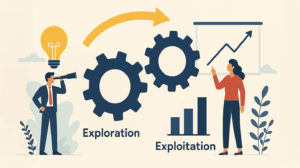
Market opportunities in crisis mode: How companies can benefit from change
Paradoxically, crises often create the best business opportunities. The transformation of order acquisition is not a crisis in the classical sense—it is not a natural disaster or a collapse—but rather a restructuring of the business model. And this restructuring will create winners and losers.
The losers are companies clinging to traditional models. 43 percent of manufacturers still use manual, Excel-based processes for configuration, pricing, and quote generation. 62 percent still rely on manual consultation to guide solutions. Nearly half of all manufacturers still use static product catalogs. These companies will systematically lose out to competitors who have digitized these processes.
The winners are companies that actively shape the transformation. A manufacturer of lightweight building materials that realigned its sales approach and restructured its operating model achieved a 65 percent margin increase. A fastening technology manufacturer that built customer query lists and implemented campaign trigger logic achieved 15 percent sustainable sales growth while simultaneously reducing selling costs.
The specific opportunities presented by crises are manifold. First, the digitalization of customer purchasing organizations creates new demands on suppliers. Suppliers who quickly provide digital interfaces, offer user-friendly online ordering systems, and enable seamless ERP integration will become preferred partners. Second, geopolitical volatility is driving customers to diversify their supplier base. Suppliers who offer regional alternatives, have a local presence, and demonstrate geopolitically resilient supply chains will win new contracts. Third, the complexity of modern procurement is creating demand for specialized consulting expertise. Suppliers who can support their customers not only with products but also with strategic consulting knowledge will build deeper relationships.
A classic example is the automotive industry. An automotive manufacturer invests €250 million in new production lines in Baden-Württemberg. This presents an opportunity for machine manufacturers. However, a machine manufacturer offering only a standard product competes on price. A machine manufacturer who understands that this manufacturer is digitizing, managing supply chain complexity, and mitigating geopolitical risks, and who then offers customized solutions – this machine manufacturer not only wins the contract but becomes a strategic partner.
The practical implementation of this transformation is not trivial. It requires investment in people, technologies, and processes. But the alternative—waiting and hoping that the market will change on its own—is not a strategy, but a gamble.
Complex leadership management as a success factor
Leadership in order acquisition is fundamentally different from that in traditional sales organizations. While traditional sales organizations are hierarchical and individualistic – the star salesperson is the hero – order acquisition organizations must be systemic and collaborative. This requires a different leadership mindset.
First, management must understand that order acquisition is not an activity, but a system. A system has inputs (market data, customer requirements, internal capacity), processes (qualification, acquisition, conversion), and outputs (orders, revenue, profit). To manage the system, management must define the outputs and then configure the processes and inputs accordingly. This is not traditional sales management, which focuses on individuals, but system management, which focuses on processes.
Secondly, leadership must define KPIs that measure systemic performance. Classic sales KPIs include pipeline, win rate, and average deal size. These aren't wrong, but they are incomplete. A professional sales organization should also measure: market qualification (how much market have we identified?), pipeline quality (how many leads in our pipeline are actually qualified?), time-to-close (how quickly are we converting?), cost-per-acquisition (how efficient is our sales acquisition?), and customer lifetime value (which customers have we acquired that will be valuable in the long term?). These metrics give a management team a holistic understanding of performance.
Third, management must work across functional boundaries. Order acquisition cannot be conducted in isolation. It must be coordinated with product management (are the products relevant to the market?), with operations (can we deliver what we sell?), and with finance (which orders are profitable?). This requires a governance structure that facilitates communication and coordination.
Fourth, leadership must invest in talent. Lead generation is not a job for generalists. It requires analytical thinking, business acumen, sales instinct, and strategic thinking. The best lead generation professionals are often hybrids: they have a sales background but also a data science understanding; they have a technology understanding but also a business strategy understanding. Talent with these profiles is rare and must be developed and retained.
Fifth, leadership must understand technology as a strategic enabler. It's not about selecting the latest tools, but about strategically deploying technology to achieve business acquisition goals. A CRM system is only as good as the data it receives. An AI solution is only as good as the training data and clear use cases. Leadership must ensure that technology investments are aligned with business processes.
This is a different leadership approach than traditional sales management. It requires a deeper understanding of processes, data, and systems. It also requires a different culture: not individual heroism, but systems thinking; not intuition, but data; not heroism, but discipline.
Related to this:

The path to transformation: Practical steps and implementation
The transformation into a professional order procurement organization is not a one-off event, but an iterative process. Companies that have successfully completed this process exhibit a common pattern: They start with the basics, then scale systematically, and continuously optimize.
The first step is the foundational assessment: Where does the company stand today? What order acquisition processes do we have? What technologies do we use? What talent do we have? What data do we have? This assessment should be honest and detailed. Only by understanding where you stand can you plan where you want to go.
The second step is setting objectives: What do we want to achieve? This should be specific, measurable, and realistic. Classic objectives could be: "We want to increase order acquisition efficiency by 30 percent, measured as revenue per order acquisition person," or "We want to reduce our time-to-close by 50 percent," or "We want to increase the margin per order by 10 percent.".
The third step is defining the roadmap: How do we get from here to there? What short-term measures (0-6 months) are necessary? What medium-term measures (6-12 months)? What long-term measures (12+ months)? The roadmap should set priorities and show realistic sequences.
The fourth step is implementation. This is often the most difficult part, as it requires changes to processes, technologies, and people. A common mistake is for companies to try to change everything at once. This leads to being overwhelmed and ultimately to failure. Successful companies start with pilot projects in one market or customer segment, learn, optimize, and then scale.
The fifth step is continuous monitoring and optimization. Order acquisition performance should be reviewed regularly. Are we on track? What bottlenecks are we seeing? What are we learning? What can we optimize? This shouldn't be an annual review, but rather an ongoing process.
A common challenge is organizational complexity. Many companies have sales organizations that are geographically fragmented or organized by product line. Transforming order acquisition often requires reorganization. This is a sensitive issue because it affects people and careers. But without organizational alignment, successful transformation is difficult.
Another challenge is change management. People are creatures of habit and resist change. When veteran salespeople suddenly have to use CRM systems, or when new KPIs mean their traditional way of working is no longer rewarded, resistance arises. Successful implementation requires a structured change management program: clear communication of the vision, training and support, adjustments to incentive structures, and support during the transition.
The future of procurement: scenarios and implications
The future of procurement will likely be even more complex and technologically advanced. Several developments are emerging.
First, automation will continue to advance. In five years, agent-driven AI systems could be able to autonomously manage entire sourcing cycles: automatic detection of sourcing opportunities, intelligent wave planning, self-executing RFx processes, autonomous supplier selection, dynamic pricing models, and continuous performance monitoring. People would be freed from transactions and could focus entirely on strategy.
Secondly, data integration will become profound. "Digital twin" models of suppliers are being developed that simulate their business operations, financial health, and risk profiles. Buyers would not only understand supplier data but also understand it within scenario models: What happens if this supplier loses a factory? What happens if raw material prices rise by 20 percent? These scenario models would enable resilience planning.
Third, the geopolitical dimension is becoming more explicit. Buyers will not only evaluate suppliers based on cost and quality, but also on their geopolitical risk score. A supplier with a 5 percent cost advantage could have a 15 percent geopolitical risk discount if they operate in a geopolitically fragile region. This would drive sourcing decisions.
Fourth: Supplier collaboration is becoming more strategic. It will no longer be about negotiating costs, but about creating shared value. Suppliers who support their customers with innovations, proactively solve problems, and build supply chain resilience will become strategic partners rather than mere transaction partners.
This has implications for machine manufacturers and industrial companies. They not only need to transform their procurement organizations but also rethink their supplier strategies. A machine manufacturer that can support its customers with deep strategic knowledge, that offers digital integrations, that provides geopolitical resilience, will not compete as a supplier but sell as a strategic partner. This is not sales; this is business development on a completely new level.
Our EU and German expertise in business development, sales and marketing

Our EU and German expertise in business development, sales and marketing - Image: Xpert.Digital
Industry focus areas: B2B, digitalization (from AI to XR), mechanical engineering, logistics, renewable energies and industry
More information here:
A thematic hub offering insights and expertise:
- Knowledge platform covering global and regional economies, innovation and industry-specific trends
- A collection of analyses, insights, and background information from our key areas of focus
- A place for expertise and information on current developments in business and technology
- A hub for companies seeking information on markets, digitalization, and industry innovations
Consulting - Planning - Implementation

Konrad Wolfenstein
I would be happy to serve as your personal advisor.
You can contact me at wolfenstein∂xpert.digital or
Just call me on +49 7348 4088 965 .