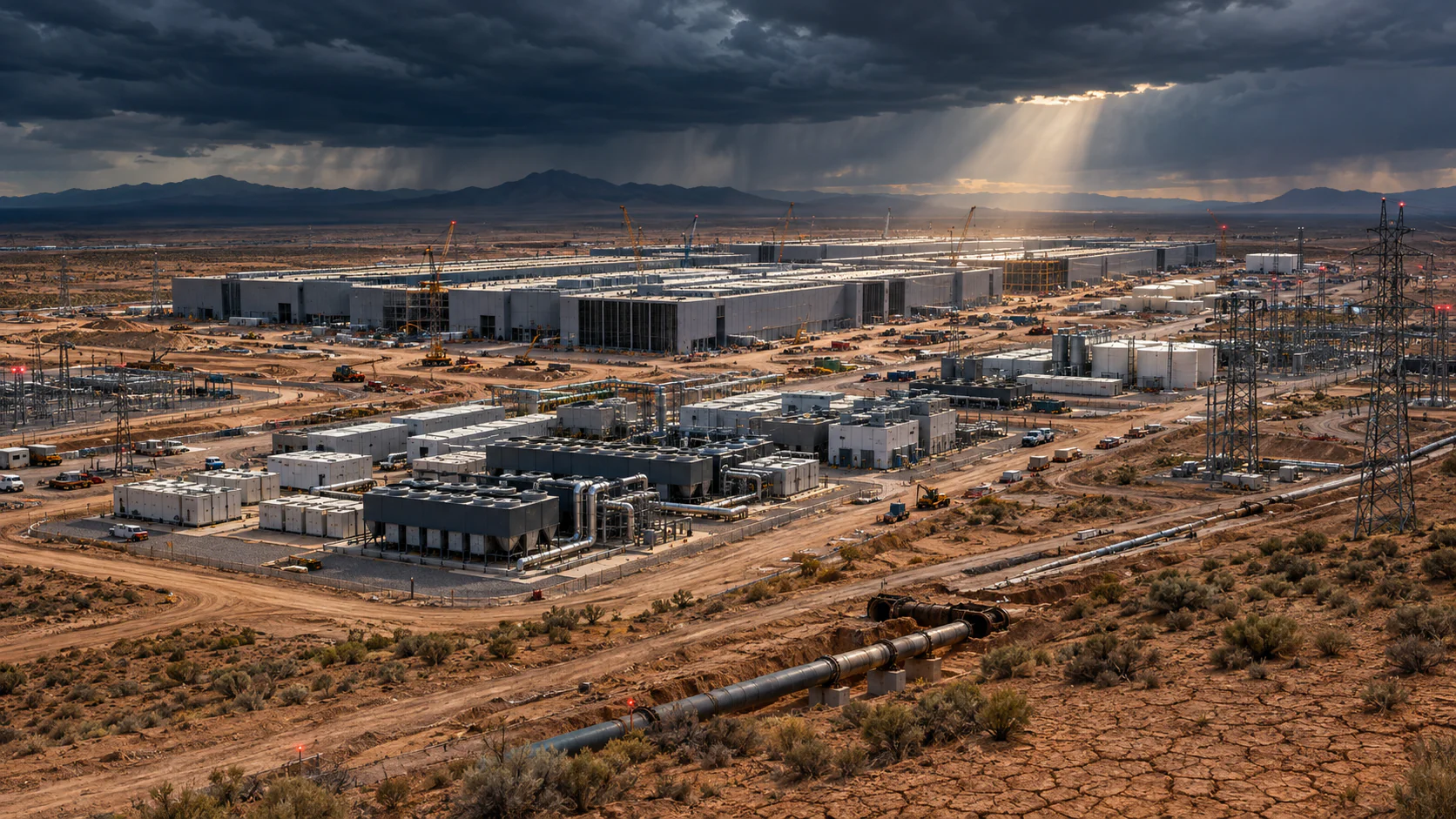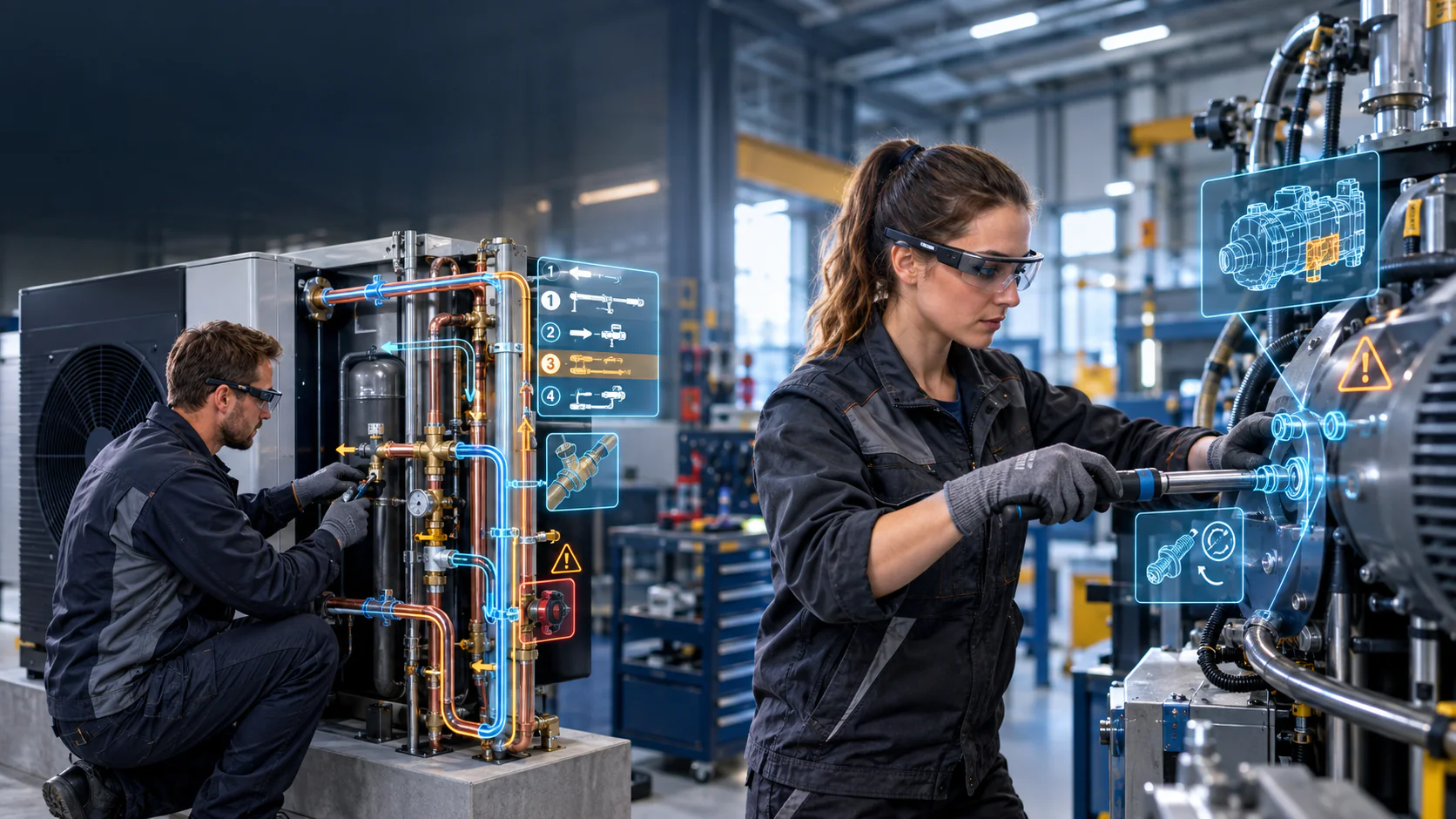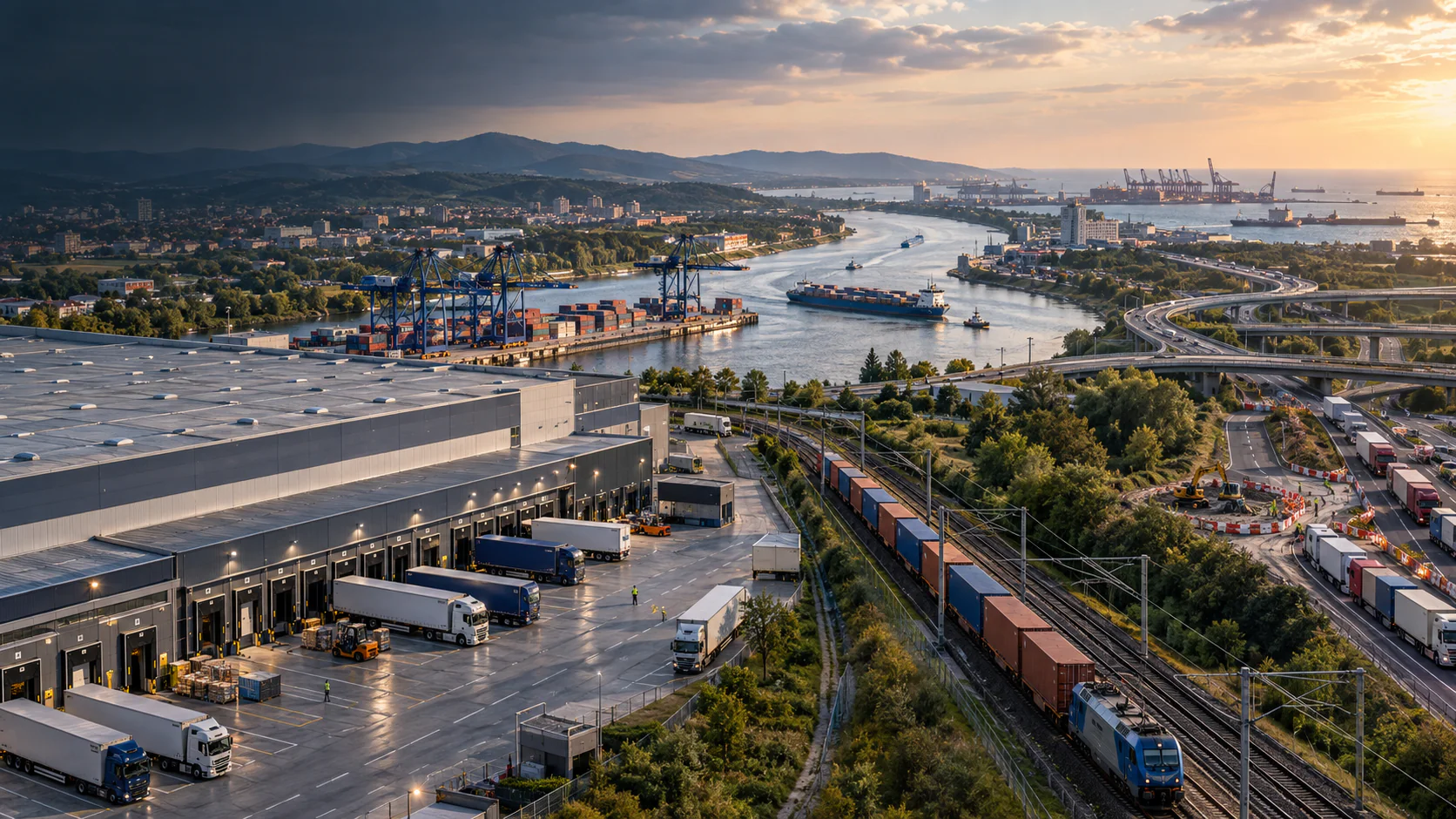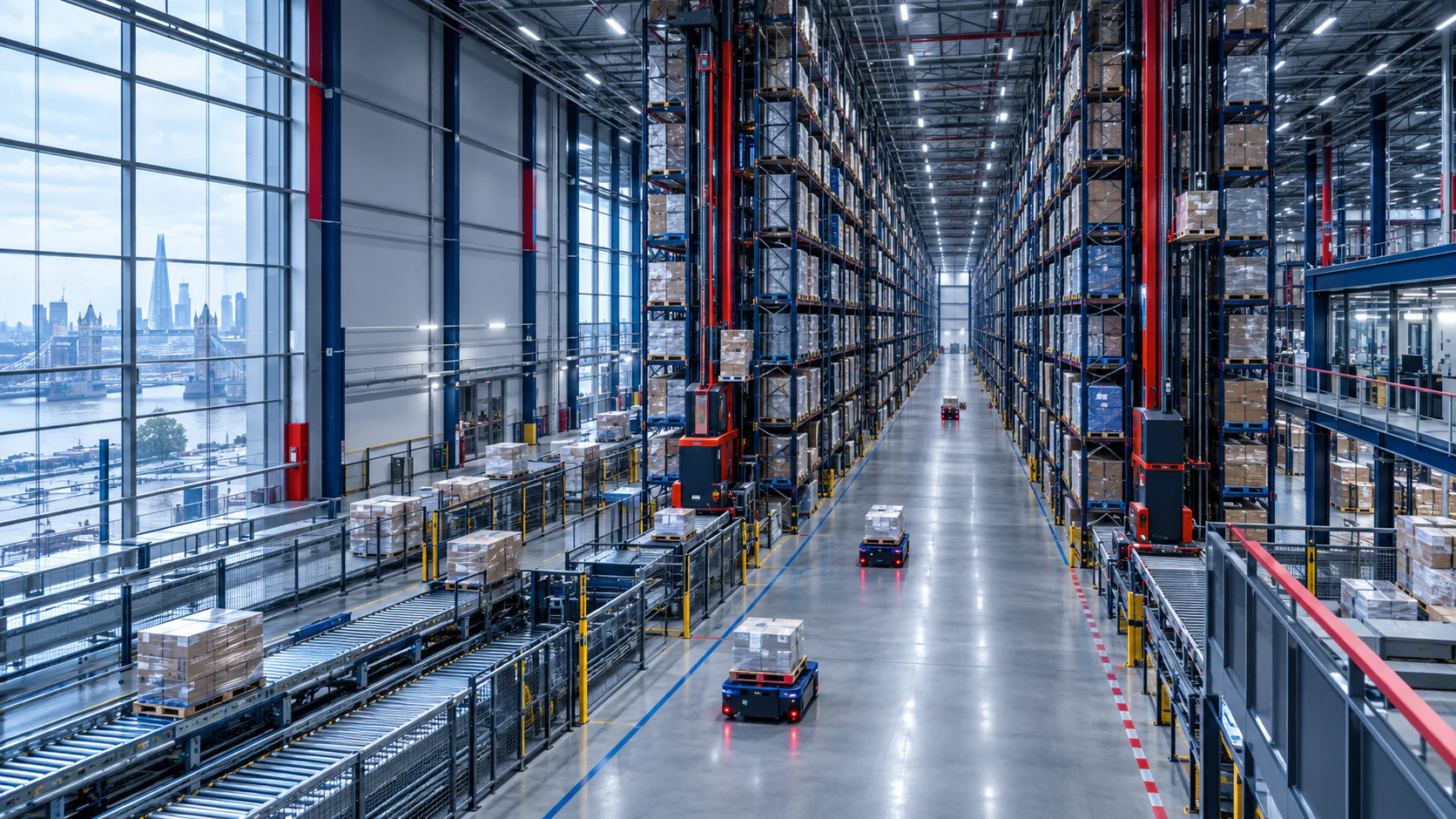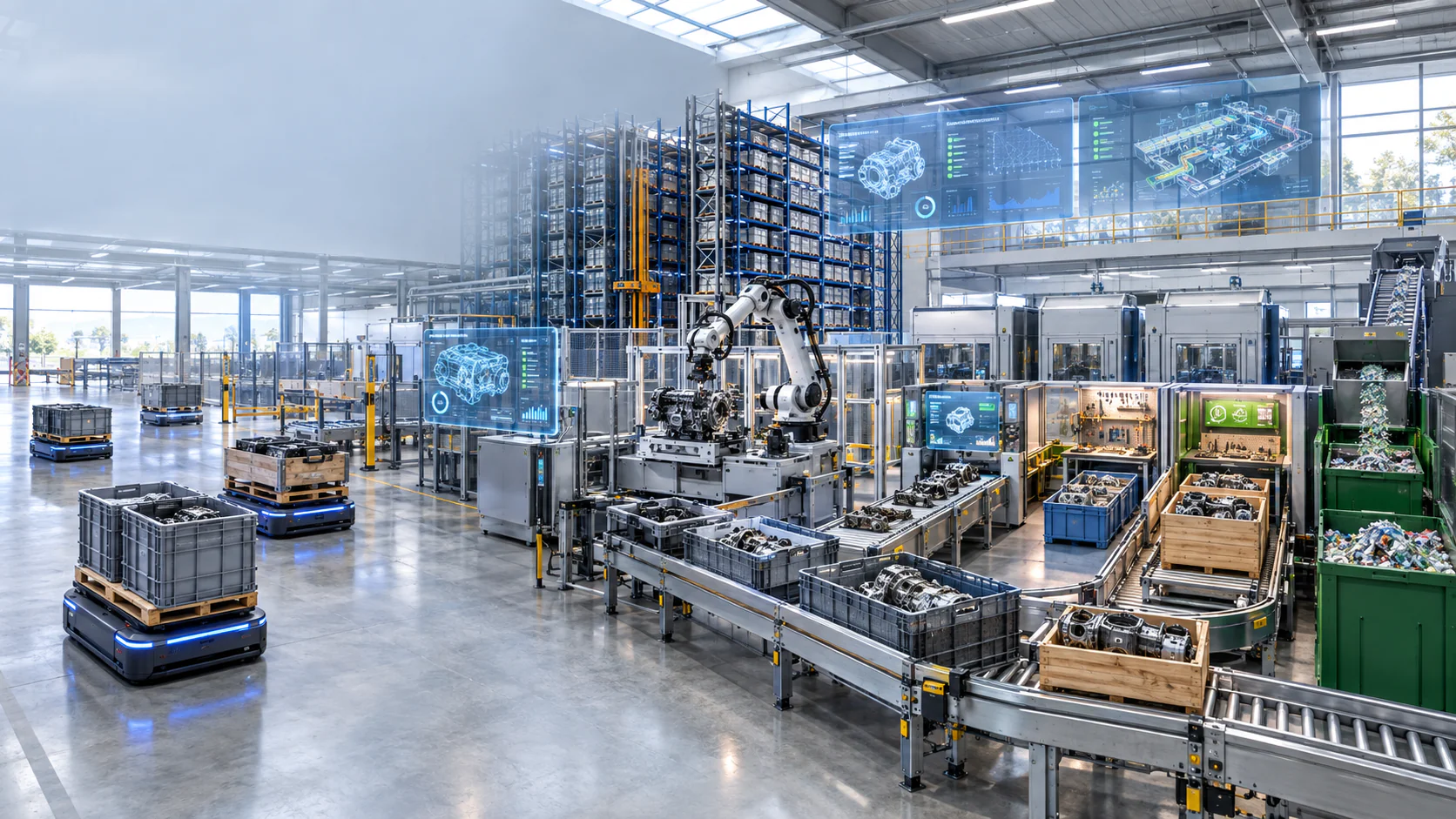
The transformation of warehouse technology: High-bay warehouses as drivers of modern intralogistics – Creative image: Xpert.Digital
German industry is transforming high-bay warehouses through massive automation investments.
High-bay warehouses are becoming the heart of the German logistics transformation
The German industrial landscape is currently undergoing an unprecedented transformation in warehouse technology. High-bay warehouses are evolving from specialized niche solutions to indispensable components of modern logistics strategies. This transformation is driven by two key factors: massive investments in new storage capacities and the increasing automation of warehouse processes.
Strong growth and investment: The boom in high-bay warehouses
German companies' willingness to invest in modern high-bay warehouses is reaching new heights. Across all sectors, companies are recognizing the strategic importance of efficient storage systems for their competitiveness. Digitalization and sustainability are the driving forces behind this development, with robot-controlled systems and intelligent software playing a central role.
Industry diversity in high-bay warehouse investments
The range of investing companies is remarkable. In the food and beverage industry, the Martin Bauer Group is a prime example. The company constructed a 31-meter-high, silo-style high-bay warehouse with over 10,000 pallet spaces and five aisles. A special feature of this warehouse is its inerting system for fire protection, which reduces the oxygen content by adding nitrogen.
The surge in investment in the pharmaceutical industry is also considerable. Losan Pharma is building an innovative logistics center in Eschbach with a fully automated high-bay warehouse that will serve both as a raw material warehouse for production and as a shipping warehouse. Commissioning is planned for the end of 2026, with the high-bay warehouse being constructed as a self-supporting silo and connected to the production and packaging areas by automated guided vehicles (AGVs).
Capacity expansion and modernization
The investments primarily target three areas: capacity expansion, efficiency improvements, and future-proofing. BENEO, a manufacturer of functional ingredients, invested €7.7 million in a new high-bay warehouse at its Offstein site with a capacity of more than 8,500 Euro pallets. This investment quadrupled the company's storage capacity while significantly reducing transport distances.
Modernizing existing facilities also plays a key role. GEALAN invested around €14 million in a fully automated high-bay warehouse in Tanna, equipped with 5,020 storage locations and a payload of 1,700 kg per cassette. The system achieves a throughput of up to 70 cassette changes per hour.
Automation and Technology: The Digital Transformation of Warehouse Technology
The automation of high-bay warehouses has evolved from an option to a necessity. With Industry 4.0 and the rapid developments in sensors and intelligent technology, as well as market growth in e-commerce and food delivery, warehouse automation is experiencing significant growth.
Storage and retrieval machines as the heart of automation
Storage and retrieval machines (SRMs) are rail-guided vehicles used to stock high-bay warehouses, handling the storage and retrieval of pallets, containers, and bins. These computer-controlled systems automatically travel to the desired location and store or retrieve goods. The machines can move across the entire height and length of a warehouse, thus significantly increasing the overall productivity of the facility.
The operating principle is based on three directions of movement: the direction of travel is designated as the x-axis, the vertical lifting direction as the y-axis, and the lateral aisle direction as the z-axis. Modern storage and retrieval machines operate fully automatically and receive all information through the integrated warehouse management system.
Pallet shuttle systems for maximum efficiency
Pallet shuttle systems are revolutionizing compact storage. These semi-automated, high-performance compact storage systems use an electrically powered shuttle to transport pallets to and from the racking channels. This technology enables greater storage capacity and increased throughput compared to other compact storage solutions.
The efficiency gain is considerable: Modern pallet shuttles achieve high speeds thanks to frequency-controlled electric drives. A pallet shuttle requires only 0.5 to 0.7 seconds per meter for the storage or retrieval process. Shuttle systems can utilize up to 95 percent of the storage area of a channel storage system.
AutoStore systems: Innovation in small parts storage
AutoStore systems represent the pinnacle of automation in small parts storage. These ultra-compact goods-to-person picking systems utilize a grid structure, saving space for walkways and driveways. AutoStore robots traverse the top of the grid at speeds of up to four meters per second, storing and retrieving bins.
The advantages are considerable: companies can quadruple their storage capacity without needing a new building and increase their output tenfold without hiring new staff. The system enables lower personnel costs through increased employee efficiency and higher picking performance through the goods-to-person principle.
Warehouse Management Systems as a Digital Nervous System
Warehouse Management Systems (WMS) form the digital nervous system of modern high-bay warehouses. These software solutions help companies manage and control daily warehouse operations, from the moment goods are received until they are shipped. WMS systems offer real-time visibility of the entire inventory and integrate with other technologies such as barcode scanning, RFID tagging, and robotics.
The effectiveness of modern WMS systems is evident in concrete results: Pets Corner improved picking efficiency by 38 percent, while Rapid Electronics achieved an on-time-in-full rate of 99.6 percent. Virgin Wines was even able to reduce inventory by 24 percent, resulting in cost savings of £2.6 million.
SAP Extended Warehouse Management, as a specialized solution, offers flexible, automated support for efficient warehouse management. The system enables centralized control of all goods movements and provides tools for monitoring warehouse activities.
Industry-specific applications and success stories
Food and beverage industry
The food industry benefits particularly from modern high-bay warehouses, as they must meet specific requirements for controlled environmental conditions and efficient warehouse management for products with varying shelf lives. Westfalia Europe has been developing, building, and maintaining outstanding automated high-bay warehouses for the food industry since 1971, including fresh produce storage, deep-freeze storage down to -35°C, and ambient temperature storage.
Polish snack manufacturer Lajkonik uses a high-bay warehouse with automated reach trucks to meet growing demand. The system increases storage capacity without requiring additional personnel and combines automation with manual transport.
Pharmaceutical and healthcare industry
The pharmaceutical industry is subject to strict regulatory requirements and needs storage systems that meet the highest quality and safety standards. Kyberg Pharma operates a 16,000-square-meter pharmaceutical logistics center with 3,000 racking locations and 3,800 pallet spaces. All products are stored and shipped according to GDP standards, with strict temperature control between 15 and 25°C for regular goods and 2 to 8°C for sensitive products.
Automotive industry
The automotive industry, with its complex supply chains and just-in-time production processes, particularly benefits from modern high-bay warehouses. Volkswagen operates a body shop in Wolfsburg that temporarily stores around 1,000 car bodies in an area of approximately 40 by 70 meters. The company modernized its stacker crane positioning systems to improve efficiency and accuracy.
Xpert partner in warehouse planning and construction
Strategies for the transformation of intermodal transport solutions: Rail as the key to the future
Technological innovations and future trends
Digital twins and data analysis
The use of digital twins presents a great opportunity for logistics. These virtual replicas of objects or processes simulate how their counterparts will actually behave. This allows potential errors to be avoided before they occur, and processes are optimized without the need for real-world testing on physical objects.
Human-machine collaboration
The integration of artificial intelligence and human knowledge enables more efficient operational processes in areas such as logistics planning and route management. The goal is for technology to handle the majority of data processing and analysis, while human experts make strategic decisions.
Autonomous Mobile Robots and Driverless Transport Systems
Automated guided vehicles (AGVs) and autonomous mobile robots (AMRs) are revolutionizing internal logistics. While AGVs require guidance via wires or belts, AMRs are robots with intelligent navigation and greater flexibility. These systems enable routine material deliveries and increase the flexibility of warehouse processes.
Economic advantages and increased efficiency
Cost savings and ROI
Automated warehouses significantly increase the efficiency of logistics processes. Companies that have invested in automation have seen productivity increases of up to 50 percent, as well as a considerable reduction in lead times. AutoStore systems typically pay for themselves in about 4.5 years, despite the higher initial investment costs.
Space optimization and area efficiency
High-bay warehouses built using silo construction can reach heights of up to 45 meters, thus offering optimal space utilization. Mecalux was able to store up to 15,000 pallets in a high-bay warehouse on just 3,500 square meters – a feat impossible in a conventional warehouse. This space optimization results in significant cost savings on land and construction.
Error reduction and quality improvement
Automated systems significantly reduce human error. Centrado benefited from a 40 percent reduction in picking errors through the use of Körber WMS. Automation enables error-free workflows and improved inventory management.
Sustainability and environmental aspects
Energy efficiency and green technologies
Sustainable warehouse technology reduces energy consumption and operating costs through more efficient equipment and lighting. Optimized processes and the use of renewable energy sources such as solar panels enable companies to minimize their environmental impact. LED lighting systems and smart energy management systems regulate electricity consumption according to current needs.
Circular economy and material efficiency
High-bay warehouses built using silo construction are demountable because the structure essentially consists of racks whose elements are assembled or bolted together. This allows for easy dismantling and the reuse of numerous components. This feature supports the principles of the circular economy and reduces waste.
Challenges and solutions
Skills shortage and automation
The shortage of skilled workers in the logistics sector is driving automation. In the US, for example, with an unemployment rate of 4 percent, there is a significant shortage of warehouse workers, forcing companies to automate. Similar trends are also evident in Germany, where companies are reducing their dependence on available labor through automation.
Integration and standardization
The increasing number of industrial trucks presents challenges in integrating various proprietary solutions. Flexible hardware, high-performance IT infrastructures, and standardized communication protocols such as VDA 5050 are essential for successful implementation.
Investment costs and financing
High interest rates increase the cost of investments in warehouse technology, but this is more than offset by the reduction in capital commitment costs. Intelligent systems reduce inventory levels and thus significantly lower financing costs.
Future outlook and market development
Technological advancement
The future of intralogistics will be shaped by the shift from reactive to proactive and process-integrated logistics. Increasing automation through robotics, combined with digital twins, creates transparency and enables self-organizing processes.
Market investments and growth potential
Amazon is investing €10 billion in Germany alone to expand its logistics network and will create 4,000 new jobs in three new logistics centers by the end of 2024. These investments are primarily focused on research and development, logistics, and customer service.
International developments
The US warehouse automation market is experiencing double-digit growth, driven by high capital costs, large inventory levels, and a shortage of skilled workers. These developments reflect global trends and demonstrate the enormous growth potential of the industry.
The transformation of the camp landscape
The German warehousing landscape is undergoing a fundamental transformation. High-bay warehouses are evolving from specialized solutions to standard components of modern logistics strategies. The combination of massive investments, advanced automation, and sustainable technologies is setting new standards for efficiency, quality, and cost-effectiveness.
The success stories of companies like GEALAN, Martin Bauer Group, and Losan Pharma demonstrate that investments in modern high-bay warehouses are not only justified by cost savings and increased efficiency, but also create strategic competitive advantages. The integration of technologies such as stacker cranes, pallet shuttles, AutoStore systems, and intelligent warehouse management systems enables companies to respond flexibly to market demands while simultaneously achieving their sustainability goals.
The future of intralogistics will be shaped by further automation, intelligent networking, and sustainable technologies. Companies investing in modern high-bay warehouses today are optimally positioning themselves for the challenges and opportunities of the coming years. The vertical revolution in warehouse technology is not just a technological advancement, but a strategic imperative for the competitiveness of German industry in the global market.
Xpert.Plus warehouse optimization - high-bay warehouses such as pallet warehouses consulting and planning
We are there for you - advice - planning - implementation - project management
☑️ SME support in strategy, consulting, planning and implementation
☑️ Creation or realignment of the digital strategy and digitalization
☑️ Expansion and optimization of international sales processes
☑️ Global & Digital B2B trading platforms
☑️ Pioneer Business Development
I would be happy to serve as your personal advisor.
You can contact me by filling out the contact form below or simply call me on +49 89 89 674 804 (Munich) .
I'm looking forward to our joint project.
Xpert.Digital - Konrad Wolfenstein
Xpert.Digital is a hub for industry with a focus on digitalization, mechanical engineering, logistics/intralogistics and photovoltaics.
With our 360° business development solution, we support well-known companies from new business to after sales.
Market intelligence, smarketing, marketing automation, content development, PR, mail campaigns, personalized social media and lead nurturing are part of our digital tools.
You can find out more at: www.xpert.digital - www.xpert.solar - www.xpert.plus