

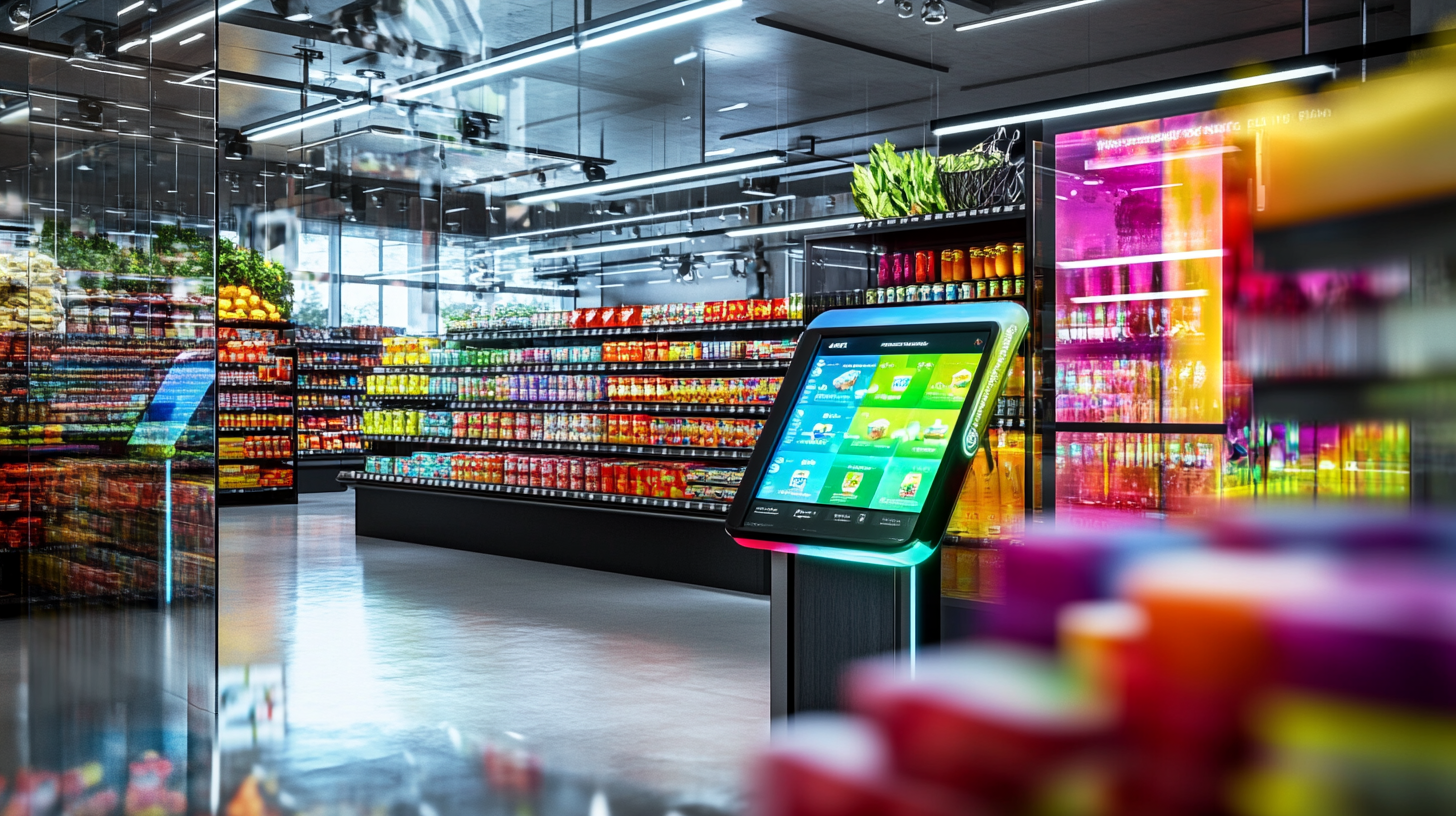
Which industries benefit most from touchscreen technologies – from retail and healthcare to manufacturing? – Image: Xpert.digital
Industries that benefit most from touchscreen technologies
Touchscreen technologies have had a revolutionary impact on numerous industries in recent years. These technologies not only improve efficiency but also offer intuitive user interfaces that appeal to both customers and employees. From retail and healthcare to manufacturing, the applications are diverse and wide-ranging. The following sections will introduce the industries that benefit most from these innovations and how touchscreens add value within them.
Related to this:
Retail and gastronomy
In retail and hospitality, touchscreens have fundamentally changed the way businesses interact with their customers.
retail
Touchscreen solutions create a seamless customer experience that impresses with its speed and ease of use:
- Self-service kiosks: Customers can scan products, pay themselves and avoid queues.
- Interactive displays: Digital shop windows or product catalogs offer the opportunity to view products, read details and discover offers.
- Cash register systems: Point-of-sale touchscreen systems make the payment process intuitive and efficient.
gastronomy
In the catering industry, touchscreen technologies simplify the entire process from ordering to serving:
- Digital menus: Guests can browse menus on tablets and place orders directly.
- Ordering systems in the kitchen: Orders are automatically transmitted to the kitchen, reducing errors and speeding up workflows.
- Self-service: Customers can order and pay at kiosks, which is becoming increasingly popular, especially in fast-food restaurants.
Manufacturing and industrial sector
Industry has evolved towards digitalization and automation with touchscreen technologies. These technologies have become indispensable, especially in the context of Industry 4.0.
- Human-machine interaction: Touchscreen control panels offer intuitive interfaces that make even complex processes easy to control.
- Machine control: Precise control options for production machines increase efficiency and reduce downtime.
- Maintenance and diagnostics: Interactive touchscreen diagnostic programs enable technicians to quickly identify and resolve problems.
- Flexibility: Customizable touchscreen interfaces allow companies to dynamically adapt and optimize workflows.
healthcare
Touchscreens play a crucial role in healthcare for modernizing processes and improving the patient experience.
- Electronic Health Records (EHR): Touchscreen devices allow healthcare professionals to quickly access patient data and update information.
- Medical devices: Imaging technologies such as ultrasound or MRI machines use touchscreens for control and analysis.
- Telemedicine: Touchscreens facilitate the use of video consultations, remote diagnoses and monitoring devices.
- Patient experience: Self-service kiosks in clinics allow for registration and reduce waiting times.
Financial services
The financial industry has integrated touchscreen technologies to increase customer convenience while simultaneously making processes more efficient.
- ATMs: Touchscreens offer intuitive operation for cash withdrawals, transfers and other banking services.
- Mobile banking: Smartphones and tablets with touchscreens are revolutionizing the way customers manage their finances.
- Advisory systems: Interactive displays in bank branches present personalized financial offers and support advisory discussions.
automotive industry
In the automotive industry, touchscreen technologies have created new opportunities for both vehicle users and manufacturers.
- Infotainment systems: Large displays offer features such as navigation, multimedia, and vehicle information.
- Control and diagnostics: Touchscreens in workshops enable quick diagnostics and maintenance of vehicles.
- Production: Touchscreen solutions optimize production lines and improve manufacturing efficiency.
Education
In the education sector, touchscreen technologies have contributed to a transformation of the teaching and learning experience:
- Interactive whiteboards: These replace traditional blackboards and create a dynamic environment for collaborative learning.
- E-learning: Tablets and computers with touchscreens enable personalized learning platforms.
- Self-study kiosks: Located in libraries or learning centers, these kiosks offer access to extensive information resources.
Consumer electronics
Consumer electronics is probably one of the most visible industries where touchscreen technologies have become an integral part of everyday life.
- Smartphones and tablets: These devices have revolutionized the way people communicate, work, and play.
- Gaming: Touchscreen-based games and interactive arcade games are popular with both children and adults.
- Smart Home: Touchscreens in intelligent household appliances such as thermostats, lighting controls or security systems ensure user-friendly operation.
New opportunities through future developments
The future of touchscreen technology promises further innovations that will optimize existing industry applications and open up new areas of use. Some potential developments include:
- Haptic feedback systems: Touchscreens with tactile feedback that provide a physical response to input.
- Enhanced Reality Integration: Combining touchscreens with Augmented Reality (AR) for immersive experiences.
- Flexible and portable use: Ultra-thin and flexible touchscreens that adapt to different surfaces.
- AI-powered customization: Systems that personalize touchscreen content based on user behavior and preferences.
Touchscreen technologies have fundamentally changed the way businesses operate and interact with customers. Their versatility and ease of use have made them an indispensable tool in virtually every industry. With further technological advancements, the potential of touchscreens will continue to grow, creating new opportunities to optimize processes, reduce costs, and deliver innovative user experiences.
Related to this: