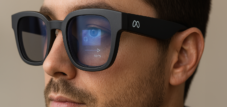
Too smart for Europe? America celebrates them, the EU excludes them: The bitter dispute over Meta's new AI glasses – Image: Xpert.Digital
$799, but not for Europe: Why you can't buy Meta's new display glasses here
Meta's revolutionary Ray-Ban: Why Europe is missing out on the next big tech trend
Due to battery and AI legislation: EU blocks Meta's most important technology of the decade
In the fall of 2025, Meta unveiled a technological sensation: the "Ray-Ban Display," which brings artificial intelligence and a head-up display directly into our field of vision, allowing us to interact with the digital world using simple hand gestures. In the US, the smart glasses have long been a bestseller, selling millions of units, with customers even paying absurd black market prices. However, the European market has been left out entirely for the time being. The reason is not a technical failure, but a regulatory thicket. The strict EU battery regulations and the new AI law effectively make selling the high-tech wearable impossible in the European Union. While American and Asian markets are ushering in the future of wearables, Europe risks falling behind in the next major technological milestone due to well-intentioned but inflexible legislation. A closer look at the conflict between innovation, consumer protection, and overregulation.
Meta's AI glasses fail due to European regulations: When regulation stifles innovation
European regulations are blocking the future at the bridge of the nose
The "Meta Ray-Ban Display" glasses are a milestone in wearable technology – but for now, they remain an American privilege in the European Union. Two regulatory heavyweights stand in the way of the US corporation: the new EU Battery Directive and the strict requirements of the European AI law. What might seem like a technical detail, upon closer inspection, reveals itself as a fundamental tension between consumer protection, climate policy, and technological innovation. And this tension has one identifiable loser: the European consumer.
A product that changes the world – just not in Europe
In September 2025, Meta Platforms unveiled the Ray-Ban Display at its annual Connect event, the first truly practical smart glasses with an integrated head-up display. The price: $799 including the Neural Band, a wristband that uses surface electromyography to capture muscle signals at the wrist, enabling revolutionary gesture control. Embedded in the lens is a liquid crystal-on-silicon microdisplay that projects information directly into the user's field of vision via a geometrically reflective waveguide – a technology developed by Schott and optimized for AR applications by Lumus.
The device weighs around 68 to 70 grams – slightly more than regular sunglasses, but a remarkable feat considering the technology inside. Beneath the casing lies a Snapdragon AR1 Gen 1 processor, 32 gigabytes of storage, and a 960 mWh battery. The battery is located in the front bridge of the glasses, glued in place with high-performance adhesive, and, according to iFixit's teardown report, practically irreparable – almost all the components were assembled in such a way that disassembly without physical damage is virtually impossible. This very aspect of irreparability is not only technically but also legally relevant, as the European Union has other plans for such devices.
The tailwind from America – and the silent wall in the West
While Europe waits for the glasses to arrive, the US market has welcomed them with open arms. Meta and its partner EssilorLuxottica sold more than seven million smart glasses in 2025 – a threefold increase compared to the two million devices sold in 2023 and 2024 combined. In the first half of 2025, the global smart glasses market grew by 110 percent, driven primarily by models from Meta and Ray-Ban. In the second half of the year, growth accelerated to 139 percent compared to the previous year.
Meta's market share increased from 73 percent in the first half of 2025 to 82 percent in the second half. Of all smart glasses shipped worldwide, 88 percent were so-called AI glasses with speakers, microphones, and cameras. Market researchers at IDC expect around 16 million smart glasses to be sold worldwide in 2026, and as many as 23 million units in 2027.
Demand in the US was so overwhelming that Meta paused its planned international expansion into France, the UK, Italy, and Canada in January 2026. Originally, a European launch would have been realistic no earlier than the third quarter of 2026. However, the regulatory developments of spring 2026 fundamentally changed this assessment.
The Battery Ordinance: A well-intentioned law with collateral damage
The new EU Battery Regulation formally entered into force on August 17, 2023. Its central element: From February 18, 2027, batteries in portable electronic devices – including explicitly small lithium-based batteries in wearables – must be removable and replaceable by the end user. Battery replacement must be possible using standard tools without damaging the device or the battery. Devices that do not meet this requirement may no longer be sold in the EU after this date.
The intention behind this regulation is understandable and fundamentally sound: devices should remain repairable, their lifespan should be extended, and the amount of electronic waste should decrease. These goals fit perfectly into the European Commission's "Sustainable Product Strategy." However, the law was clearly not written with smart glasses in mind. While exceptions exist for medical devices and underwater equipment, there are none for miniaturized wearables such as smart glasses, smartwatches, or earbuds—at least not yet.
For Meta, this represents a serious design problem. The Ray-Ban Display's 960 mWh battery is permanently installed, secured with high-performance adhesive, and so technically integrated into the extremely compact housing that user-friendly replacement according to current product design standards is simply impossible. The engineers optimized every millimeter of the bridge of the glasses to accommodate the chip, display, battery, and cameras. Experts believe that a compartment for a removable battery would significantly impair the device's ergonomics, weight, and energy efficiency. Furthermore, there are concerns about heat generation with replaceable modules—a serious safety issue in such a small housing.
Meta could technically launch the glasses in the EU before February 18, 2027 – but would have to withdraw them immediately afterward or radically redesign them. A product cycle of less than a year for such a complex and capital-intensive hardware device is hardly economically viable. Meta is therefore currently in active discussions with the European Commission and is seeking a categorical exemption for wearables – a regulation that would apply not only to its own smart glasses, but also to glasses, smartwatches, earbuds, and similar wearable devices. Manufacturers like Apple or Samsung might be able to circumvent the regulations for their smartphones via a quality exemption – namely, if the battery still retains at least 83 percent of its original capacity after 500 full charge cycles and at least 80 percent after 1,000 cycles. This path seems less certain for glasses with a 960 mWh battery.
🗒️ Xpert.Digital: A pioneer in the field of Extended and Augmented Reality


Finding the right Metaverse agency, planning office, or consulting firm - Image: Xpert.Digital
🗒️ Finding the right Metaverse agency, planning office, or consulting firm – Search and search: Top Ten Tips for Consulting & Planning
More information here:
Between mandatory batteries and GDPR: Why smart glasses have little chance in the EU
The AI law: When data protection becomes an obstacle to innovation
Alongside the battery issue, European AI regulation is causing Meta considerable concern. The EU AI Act, which came into force in August 2024 and is being implemented gradually, creates a comprehensive legal framework for the use of artificial intelligence in the EU. This is particularly relevant for the Ray-Ban Display because Meta explicitly markets the device as AI glasses. The core function that distinguishes the Ray-Ban Display from all previous models is its multimodal, real-time analysis: The camera integrated into the glasses sees what the wearer sees, and the AI identifies objects, translates texts, recognizes people, and displays contextual information directly on the screen. It is precisely this function that pushes the boundaries of European data protection law. The processing of third-party biometric data—that is, the recognition of faces without their explicit consent—falls under the strict special protection rules of the GDPR and the AI Act.
Even with its first-generation smart glasses, Meta was only able to activate a portion of the AI functions in the EU. Furthermore, the training of AI models with user data from the EU has been repeatedly blocked by European regulatory authorities, structurally hindering the personalization of AI functions on European devices compared to the US. At the end of 2025, EU authorities even launched formal investigations against manufacturers of so-called agentic AI wearables. US Ambassador Andrew Puzder brought the scale of the conflict to light in March 2026 when he announced that the Ray-Ban Display would not be available in the EU under the current conditions.
Supply bottlenecks as a third obstacle
In addition to structural regulatory hurdles, there is a third, technical-industrial challenge: Producing Ray-Ban Displays is complex and manufacturing capacity is limited. While EssilorLuxottica has announced plans to expand production to 20 to 30 million units per year in the future, current demand in the US significantly exceeds production capacity. At CES 2026 in Las Vegas, Meta confirmed its strategic retreat to the domestic market and abandoned the international expansion originally planned for early 2026. The gray market reacted immediately: Resale prices climbed significantly above the original price of $799.
Meta, Google, Apple – they're all in the same network
The regulatory hurdles don't just affect Meta. Google has announced its re-entry into the smart glasses market, and Apple is also reportedly working on its own wearable projects. Both companies will face the same requirements for a potential market launch in Europe: the EU Battery Directive, the AI Act, and the GDPR. Chinese providers like Xiaomi and Alibaba are also positioning themselves. For European consumers, this means they are not only cut off from the best technology, but also risk the market passing them by, leaving Europe a technological backwater in the next major platform shift.
The economic dilemma: protection versus prosperity
The deeper economic question is: How much regulatory protection is sensible if it leads to European consumers and businesses being excluded from innovative products? The EU Battery Regulation was designed with good intentions. But reality shows that regulation not tailored to specific device categories often creates unintended collateral damage. A battery replacement requirement that makes sense for a 150-gram smartphone may simply be physically and structurally impossible to implement for a 70-gram pair of glasses with an integrated display and AI chip without fundamentally altering the device.
Reality Labs, the Meta segment that encompasses smart glasses, generated $2.21 billion in revenue in 2025, but simultaneously recorded an operating loss of $19.19 billion. Meta is investing heavily in this area because the company sees smart glasses as the next major computing platform after the smartphone. Structurally, the company cannot afford to permanently ignore the European market – it is large and has significant purchasing power. But as long as the regulatory framework remains unclear, Europe will remain on the sidelines.
Third generation already in development – and it too will cause problems
While the dispute over the display variant continues, Meta and EssilorLuxottica are already working on the third generation of the "Ray-Ban Meta" smart glasses. The internal development, codenamed Apparel and Bellini, focuses on features such as Super Sensing, improved processors, and up to 20 to 30 percent longer battery life. The third generation is expected to be unveiled at Meta Connect 2026. However, these devices will also encounter EU regulations: Super Sensing is nothing more than an advanced form of multimodal environmental analysis – and thus directly affected by EU data protection regulations on biometric processing.
A plea for pragmatic regulation
A pragmatic solution would be a category-specific exemption for miniaturized wearables such as smart glasses, smartwatches, and in-ear headphones—provided that manufacturers can demonstrably meet stringent quality and lifespan requirements for their batteries. In parallel, a clearly defined framework for AI functions in consumer wearables is needed, one that considers both the protection of personal data and the industry's capacity for innovation. Other major technology nations—the US, China, Japan, and South Korea—regulate less and develop faster. If Europe isn't careful, it won't be able to keep up with the next platform shift. The US ambassador has made it clear: Ray-Ban Display will not be available in the EU. This should give European regulators pause for thought.
Your global marketing and business development partner
☑️ Our business language is English or German
☑️ NEW: Correspondence in your native language!

Konrad Wolfenstein
I and my team are happy to be available to you as your personal advisor.
You can contact me by filling out the contact form here wolfenstein@xpert.digital:or simply call me at +49 7348 4088 965. My email address is
I'm looking forward to our joint project.