The study “The State of AI in Warehousing” reveals: Why AI investments in warehousing pay off after just 2 years – Creative image: Xpert.Digital
ROI Check: How AI massively increases productivity in the warehouse (and reduces costs) - What 90% of successful warehouse operations are doing differently today
The era of experimental technologies is over: How artificial intelligence is redefining modern warehousing.
For a long time, artificial intelligence (AI) in warehousing was considered a futuristic experiment or an exclusive tool for a few tech giants. But a new, comprehensive study now paints a completely different picture: We are in the midst of a fundamental transformation in which AI has become an indispensable foundation for competitive supply chains.
The recent study "The State of AI in Warehousing," conducted by warehouse technology specialist Mecalux in collaboration with the Intelligent Logistics Systems Lab (ILS) at the renowned Massachusetts Institute of Technology (MIT), provides impressive data on this topic. Based on the experiences of over 2,000 professionals from 21 countries, the report shows that the technology has long since outgrown its infancy. Nine out of ten warehouses are already using AI-supported solutions – no longer just in isolated pilot projects, but as an integral part of their daily operations.
The study's findings refute persistent myths and reveal the enormous potential of intelligent logistics. Contrary to fears that automation would destroy jobs, companies report increasing employee satisfaction and even an increase in staff. At the same time, the economic indicators are compelling: with an average payback period of only two to three years, investments in AI and machine learning prove to be extremely efficient drivers of productivity and cost reduction.
But development doesn't stop there. While traditional machine learning is already optimizing processes like order picking and maintenance, generative AI is poised to bring the next wave of innovation. It promises not only to predict problems but also to proactively develop solutions.
This report highlights the current maturity level of the market, analyzes the specific competitive advantages of AI, and shows which strategic steps companies must now take to remain resilient and profitable in an increasingly complex and volatile global economy.
What does the current study “The State of AI in Warehousing” show?
The new study, "The State of AI in Warehousing," was conducted by Mecalux, a leading provider of warehouse technology and logistics software, in collaboration with the Intelligent Logistics Systems Lab (ILS) at the Massachusetts Institute of Technology. This comprehensive research is based on responses from over 2,000 supply chain and warehousing professionals operating in 21 countries. The study's findings paint a clear picture: Artificial intelligence and machine learning have long since moved beyond the status of experimental tools and have become key drivers of productivity, precision, and workforce development in warehousing. The study demonstrates that warehouse operators worldwide are no longer in the phase of isolated pilot projects but are increasingly implementing AI in their everyday operations.
How mature is the current market for AI solutions in warehouse operations?
The market for AI solutions in warehouse operations has reached an impressive level of maturity. According to the study, more than nine out of ten warehouses use some form of AI or advanced automation. This demonstrates not only a high adoption rate but also the industry's confidence in these technologies. Particularly noteworthy is that more than half of the surveyed companies report operating with increasing or full automation. This high rate of automation is especially pronounced among large companies with complex logistics networks and multiple distributed locations. The transition from pilot projects to full implementation is also evident in the fact that warehouses no longer view AI as merely an experimental solution but as an established component of their daily operations. This maturity allows companies to leverage accumulated experience and best practices.
What specific applications of AI are used in warehouse operations?
The practical application of AI in warehouse operations spans several key operational functions. Order picking, also known as pick-and-pack, is among the most common applications, as AI systems can optimize routes and reduce error rates. Inventory optimization is another critical area of application, where AI uses predictive models to manage inventory more efficiently and avoid overstocking. A particularly important application area is the maintenance of equipment and machinery. Here, AI enables preventive maintenance through condition monitoring, minimizing downtime and extending the lifespan of equipment. Work planning also benefits significantly from AI systems, which create optimal deployment plans for personnel, taking efficiency and employee satisfaction into account. Another application area is security monitoring, where AI-supported systems can detect and monitor potential security risks. These diverse applications demonstrate that AI not only improves a single function but transforms the entire warehouse system.
What competitive advantages does AI implementation bring?
According to Javier Carrillo, CEO of Mecalux, smart warehouses outperform their competitors in three key dimensions: volume, precision, and adaptability. Companies investing in AI are not only faster at processing orders and inventory movements, but also demonstrate improved accuracy in their operations. Furthermore, they become more resilient to market volatility and more flexible in adapting to changing demands. This combination of increased speed, greater accuracy, and enhanced adaptability enables companies to respond more quickly to market changes and better serve their customers. Carrillo emphasizes that these companies not only deliver better results in the short term, but are also more predictable and better equipped to weather economic fluctuations in the long run. This is particularly important in a global supply chain facing increasingly complex challenges.
What is the return on investment for AI implementation in warehouses?
The return-on-investment metrics for AI implementations in warehouses are remarkably positive, according to the study. Most of the companies surveyed are allocating between 11 and 30 percent of their warehouse technology budget to AI and machine learning initiatives. Particularly encouraging is the fact that these investments typically pay for themselves within two to three years. This relatively short payback period demonstrates that the investments quickly lead to measurable results. The positive ROI can be attributed to several specific improvements. One of the most important is increased inventory accuracy, which minimizes warehouse management errors and reduces costly error fees. Furthermore, AI leads to immediate performance improvements, measured in increased throughput and optimized processes. Work efficiency increases through better planning and resource utilization, and the reduction in errors directly contributes to cost savings. These measurable improvements form the basis for the rapid return on investment.
What factors drive companies to invest in AI solutions?
The drivers for AI investment in warehouse operations are diverse and reflect the challenges of modern supply chain management. A primary factor is the cost savings achieved through more efficient operations. Rising customer expectations play an equally important role, as modern customers expect faster deliveries and greater reliability. Labor shortages in many regions have become a critical driver, as companies leverage AI to handle higher volumes with fewer personnel. Sustainability goals are a growing driver, as AI can reduce energy consumption and waste. Finally, competitive pressure is a constant motivator, as companies fear being overtaken by AI-equipped competitors. This combination of economic, operational, and strategic reasons explains why AI investment in warehousing is so widespread.
What challenges arise when expanding AI solutions?
Despite the progress and positive results, companies still face significant challenges in scaling AI implementations. According to Dr. Matthias Winkenbach, director of the ILS lab at MIT, the most difficult part lies not in development or initial implementation, but in the final stage of integration: the seamless integration of people, data, and analytics into existing systems. This is a crucial point, as many companies have to work with legacy systems that were not designed for AI integration. Among the biggest obstacles is the lack of technical expertise in many warehouse operations, which have traditionally not been tech-centric. System integration presents a technical challenge, as new AI systems must communicate with older machines and software. Data quality is an often underestimated issue, because AI systems are only as good as the data they are trained on, and many companies struggle with fragmented or incomplete data sources. Implementation costs are also a barrier, especially for smaller companies with limited IT budgets. These challenges reflect the considerable effort required to connect advanced AI tools with existing legacy systems.
What factors help companies overcome AI challenges?
Despite the challenges, the study shows that companies have a solid foundation to overcome them. According to the surveyed companies, they have a robust base in data and project management, which provides a good foundation for AI implementations. The companies identified several accelerators for the ongoing trend toward AI adoption. The use of appropriate tools is crucial, as specialized software solutions can facilitate integration. Clear roadmaps help companies structure their AI adoption and align stakeholders. Larger budgets are necessary to cover implementation costs and avoid premature project termination. More internal expertise is essential, as employees with AI experience can implement more quickly and avoid pitfalls. Furthermore, corporate culture is important for overcoming resistance and fostering a mindset of innovation. Organizations that combine these factors find it easier to successfully implement and scale AI.
Will AI implementation put jobs at risk?
A key point addressed by the study is the widespread fear that automation and AI will lead to massive job losses. The report clearly refutes these fears and paints a different picture. According to the research, AI does not replace people, but rather increases productivity and job satisfaction, and opens up new employment opportunities. This is a crucial finding that contradicts the popular narrative of massive job losses due to automation. More than three-quarters of the companies surveyed, or about 75 percent, saw a measurable increase in employee productivity after implementing AI. Even more importantly, these implementations also led to increased job satisfaction, suggesting that employees find their work less repetitive and more fulfilling. Even more impressive is the fact that more than half of the companies surveyed, or over 50 percent, reported increasing their workforce after implementing AI. This suggests that AI-powered warehouse operations are growing faster and require more skilled workers to fill newly created positions.
LTW Intralogistics Solutions

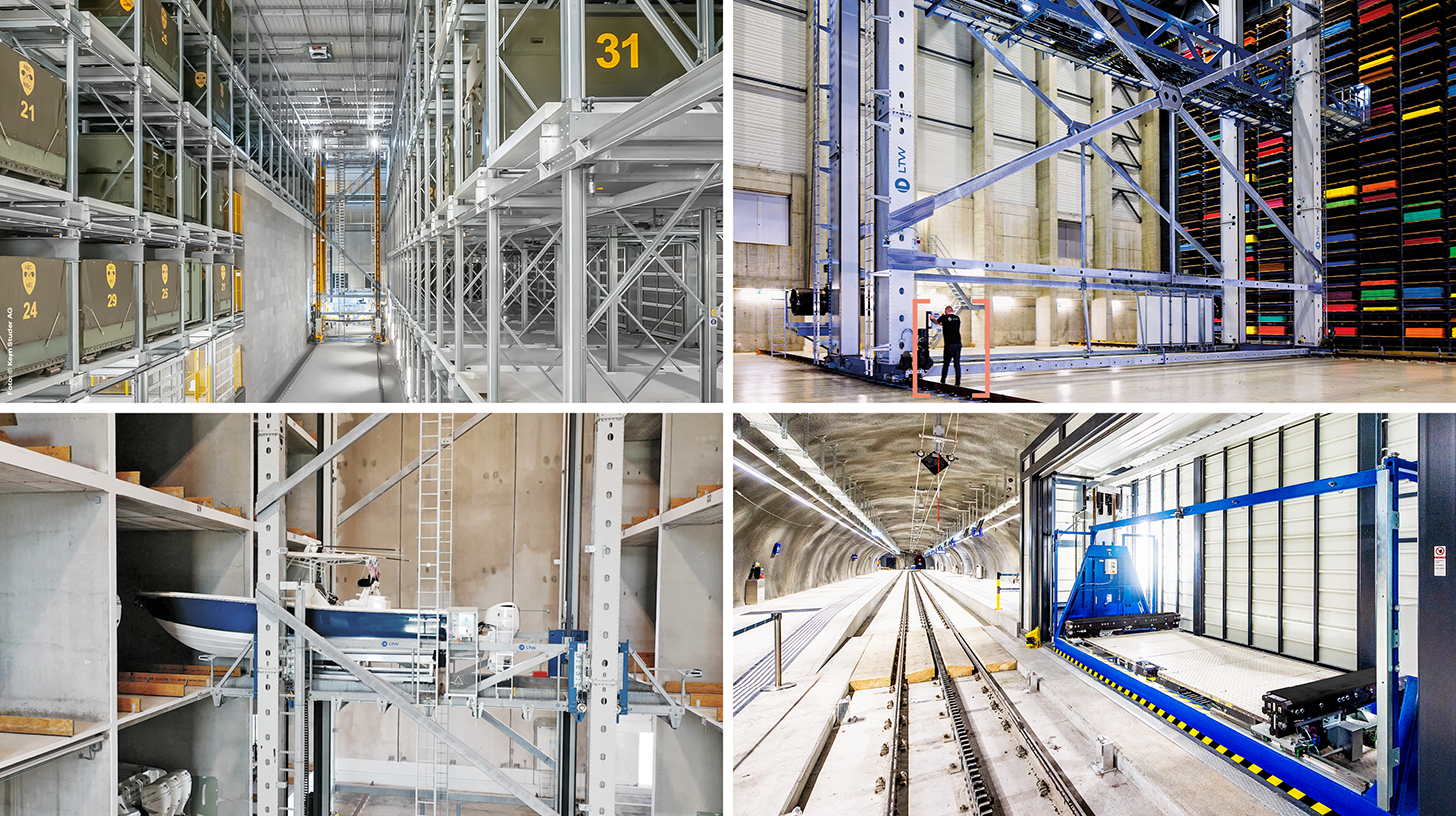
LTW Intralogistics – Engineers of Flow - Image: LTW Intralogistics GmbH
LTW offers its customers not individual components, but integrated complete solutions. Consulting, planning, mechanical and electrotechnical components, control and automation technology, as well as software and service – everything is networked and precisely coordinated.
In-house production of key components is particularly advantageous. This allows for optimal control of quality, supply chains, and interfaces.
LTW stands for reliability, transparency, and collaborative partnership. Loyalty and honesty are firmly anchored in the company's philosophy – a handshake still means something here.
Related to this:
Generative AI in warehousing: From forecasting tool to strategic decision-making partner
How are companies planning their AI investments for the future?
Companies' future plans regarding AI are ambitious and demonstrate strong confidence in the technology. Nearly all surveyed companies plan to further expand their use of AI over the next two to three years. This consistent forward-looking approach shows that companies view AI not as a one-off implementation, but as an ongoing development. A striking indication of this confidence is that 87 percent of the surveyed companies plan to increase their AI budgets in the future. This strongly suggests that companies are not only satisfied with their current AI investment, but also understand that further investment is necessary to remain competitive. Even more impressive is the fact that 92 percent of companies are already implementing or planning new AI projects. This demonstrates that AI implementation is no longer the exception, but the rule. These figures point to a rapidly evolving ecosystem in which companies are continuously seeking new ways to leverage AI to optimize their operations.
What role does generative AI play in modern warehouse operations?
According to the study, the next wave of AI innovations will lie in the area of decision-making technologies, particularly generative AI. Companies describe generative AI as the most valuable method in modern logistics centers and appreciate its diverse applications. One application is automated documentation, where generative AI can automatically create and update documents, reducing manual work. Warehouse distribution optimization is another application, where generative AI can suggest innovative distribution patterns that traditional approaches would not consider. Process design also benefits from generative AI, which can develop new and more efficient process designs. A particularly technical application is code generation for automation systems, where generative AI can automatically write code to control warehouse management systems and robotics. According to Dr. Matthias Winkenbach, there is an important distinction between traditional machine learning and generative AI.
How do traditional machine learning and generative AI differ in logistics?
Dr. Matthias Winkenbach from MIT points to a fundamental distinction that is crucial for understanding the future of AI in warehouses. Traditional machine learning is highly effective at predicting problems. These models can analyze which conditions lead to machine damage, delivery delays, or safety issues and provide early warnings to companies. This enables preventative measures that save costs and minimize downtime. Generative AI, on the other hand, works differently by actively assisting in the development of solutions. It can suggest new ways to optimize processes or solve problems in innovative ways. While traditional machine learning says, "There will be a problem," generative AI says, "Here are five ways we can fix the problem." These complementary strengths mean that an optimally equipped warehouse operation should utilize both technologies. This is why companies today view generative AI as the biggest driver of value creation in warehouses. It enables companies not only to react to problems but also to proactively identify and implement improvements.
How are AI systems changing the fundamental way warehouse operations work?
AI is leading to a fundamental transformation in how warehouse operations function, going beyond individual optimizations. Intelligent warehousing is no longer based on fixed, unchanging processes, but on adaptive systems that can adjust to new conditions. A storage and retrieval machine in a traditional warehouse follows predetermined routes and routines, while an AI-equipped machine optimizes its route in real time based on the current warehouse status. This not only leads to efficiency gains but also to reduced wear and tear and a longer equipment lifespan. Machine condition monitoring is another area undergoing fundamental change. Instead of regular preventative maintenance based on fixed intervals, systems can monitor the actual condition of machines and only perform maintenance when necessary. This is particularly important for bottleneck machines like storage and retrieval machines, whose downtime can incur significant costs. Data collection and analysis are becoming more central than ever, as data is the "oil" that keeps AI systems running. Companies must invest in robust data infrastructures to benefit from AI.
What investments beyond the software are necessary?
While much attention is focused on AI software, successful implementation requires investment in several other areas. Data infrastructure is fundamental, as AI requires high-quality data. This may necessitate investments in sensors, IoT devices, and data management systems to capture relevant data. IT infrastructure needs to be modernized to support the computing power required by modern AI systems. Cloud services will become essential for many organizations, as on-premises infrastructure is often insufficient. Employee development is crucial, as staff need training to work with and benefit from new systems. Management systems must be adapted to support the integration of people and machines in AI-powered environments. Finally, organizational change management is important, as AI is transforming traditional roles and responsibilities. Organizations that understand this broader investment perspective are more likely to succeed.
How can small and medium-sized warehouses implement AI?
The study focuses on larger operations but suggests that AI is becoming accessible to smaller businesses as well. The key is to start with scalable solutions that don't require massive upfront capital. Cloud-based AI services allow smaller companies to leverage AI capabilities without owning extensive IT infrastructure. Partnering with AI providers can help smaller businesses benefit from expertise and experience without having to build everything in-house. A focused approach, starting with one or two use cases, can generate successes that encourage further buy-in. With a payback period of two to three years, small gains can quickly translate into ROI if a phased approach is taken. It's also important to seek guidance from providers with experience working with warehouses of a similar size to set realistic expectations.
What sustainability aspects are associated with AI implementation?
Sustainability is increasingly becoming a key driver for AI investments in warehouses. Optimized routes through AI systems lead to reduced energy consumption by machines and lower transportation costs for goods between storage locations. Intelligent inventory management reduces overstocking and the associated storage costs and waste. Improved inventory tracking prevents spoilage and waste, especially important for perishable goods. Optimized space utilization means that warehouses require less space for the same volume, saving energy costs for heating, cooling, and lighting. Reduced labor requirements through automation can mean fewer people need to be transported, which also reduces emissions. These sustainability aspects are not only good for the environment but also appeal to increasingly conscious customers and can help companies achieve ESG goals.
What does the future of warehousing look like?
Based on the study's findings, a future is emerging in which AI is not optional, but central to competitive warehouse operations. Companies that fail to invest in AI will increasingly struggle to keep pace with AI-powered competitors. The next two to three years will be crucial, as the winners and losers of this transformation are likely to emerge. The role of employees will transform, with fewer repetitive tasks and a greater focus on monitoring, optimization, and problem-solving. New job profiles will emerge as traditional warehouse jobs disappear. Companies that invest in retraining their workforce will be better positioned. Global supply chains will become more agile and responsive to disruptions, leading to more resilient systems. Companies that build their supply chain intelligence will gain a competitive edge. The integration of various AI technologies, from predictive analytics to generative AI, will become the norm. Finally, data privacy and cybersecurity will become increasingly critical as warehouse operations become more reliant on data streams. Companies that take these security aspects seriously will be less vulnerable to cyber threats.
How should companies plan their AI transformation process?
A structured approach to AI transformation is essential for success. The first step should be a thorough analysis of the status quo to understand which processes need optimization and where AI can deliver the greatest value. Defining clear KPIs (Key Performance Indicators) is important for measuring success. Building a dedicated AI team with the necessary skills is crucial, as AI implementation requires specialized knowledge. Prioritizing quick wins can generate early successes that secure support and budget for larger projects. Collaborating with external experts and vendors can reduce implementation risks and accelerate the process. Communicating with employees about planned changes is important to reduce resistance and increase acceptance. Regularly reviewing and adjusting the strategy based on results ensures that organizations remain agile and can adapt their plans. Finally, a long-term perspective should be adopted, as AI transformation is not a one-off project but an ongoing development.
The essentiality of AI in modern warehouse management
The study "The State of AI in Warehousing" by Mecalux and MIT makes it clear that we are at a pivotal point in the evolution of warehousing. AI is no longer a future technology, but a forward-looking technology already deployed in most modern warehouse operations. The benefits are clear and measurable: improved efficiency, faster return on investment, and the creation of new jobs instead of job losses. Companies investing in AI now are positioning themselves not only for short-term competitive advantages, but also for long-term competitiveness. The challenges are real, but surmountable with the right strategy, the right tools, and the right mindset. For warehouse operators, the question is no longer whether to implement AI, but how quickly and comprehensively they can do so to remain competitive and future-proof their businesses.
Your global marketing and business development partner
☑️ Our business language is English or German
☑️ NEW: Correspondence in your native language!

Konrad Wolfenstein
I and my team are happy to be available to you as your personal advisor.
You can contact me by filling out the contact form here wolfenstein@xpert.digital:or simply call me at +49 7348 4088 965. My email address is
I'm looking forward to our joint project.
☑️ SME support in strategy, consulting, planning and implementation
☑️ Creation or realignment of the digital strategy and digitization
☑️ Expansion and optimization of international sales processes
☑️ Global & Digital B2B trading platforms
☑️ Pioneer Business Development / Marketing / PR / Trade Fairs
🎯🎯🎯 Benefit from Xpert.Digital's extensive, five-fold expertise in one comprehensive service package | BD, R&D, XR, PR & Digital Visibility Optimization

Benefit from Xpert.Digital's extensive, five-fold expertise in a comprehensive service package | R&D, XR, PR & Digital Visibility Optimization - Image: Xpert.Digital
Xpert.Digital possesses in-depth knowledge across various industries. This allows us to develop tailored strategies precisely aligned with the requirements and challenges of your specific market segment. By continuously analyzing market trends and monitoring industry developments, we can act proactively and offer innovative solutions. The combination of experience and expertise generates added value and provides our clients with a decisive competitive advantage.
More information here:
Our global industry and economic expertise in business development, sales and marketing

Our global industry and economic expertise in business development, sales and marketing - Image: Xpert.Digital
Industry focus areas: B2B, digitalization (from AI to XR), mechanical engineering, logistics, renewable energies and industry
More information here:
A thematic hub offering insights and expertise:
- Knowledge platform covering global and regional economies, innovation and industry-specific trends
- A collection of analyses, insights, and background information from our key areas of focus
- A place for expertise and information on current developments in business and technology
- A hub for companies seeking information on markets, digitalization, and industry innovations