Intralogistics: Automation as a matter of survival – The silent transformation in the warehouse has already begun – Image: Xpert.Digital
The future belongs to smart warehouses – those who don't participate will be driven out of the market
A $40 billion market: Those who don't automate now will fall behind
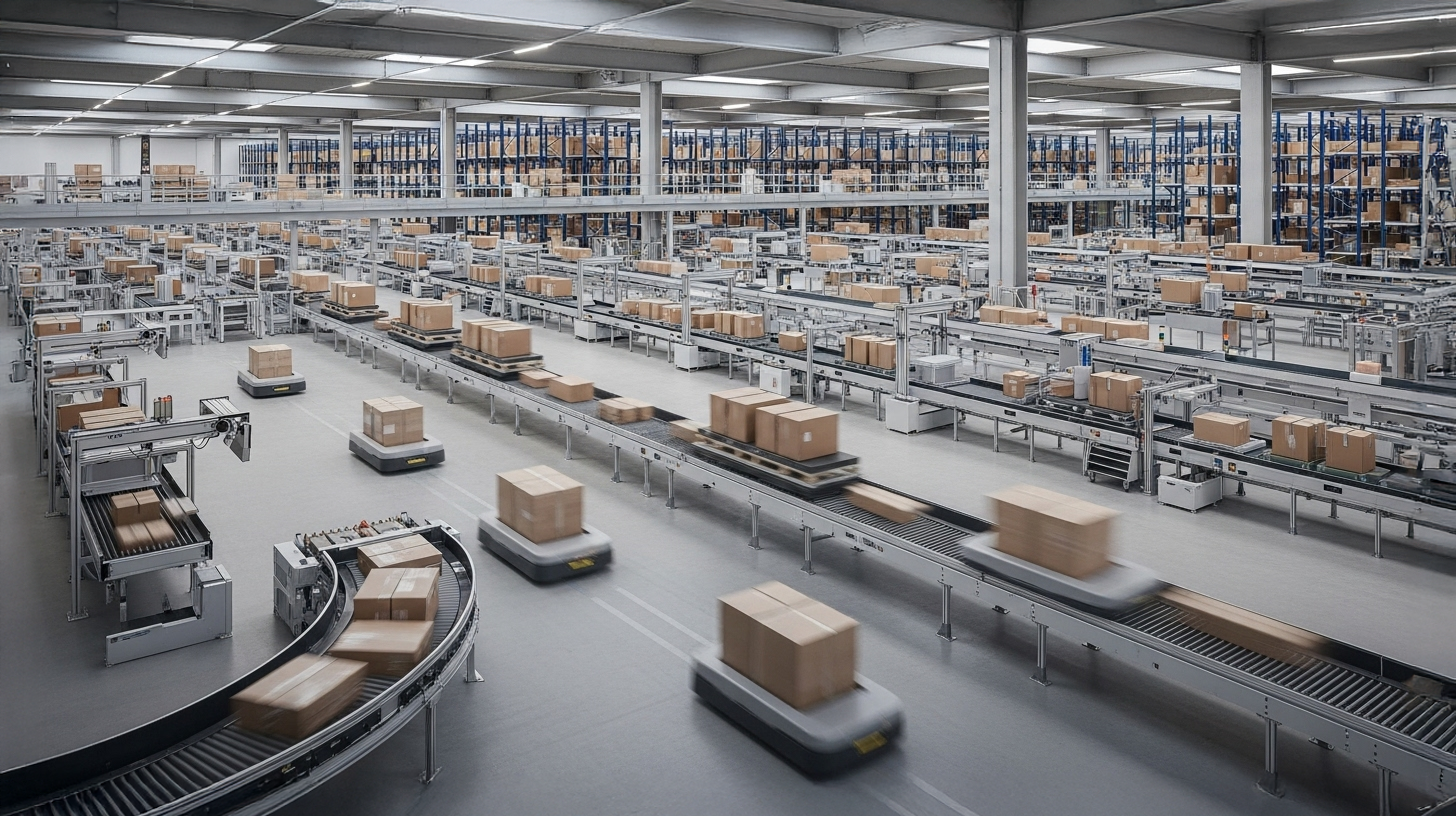
Behind the scenes of global trade, a quiet but unstoppable transformation is underway. Intralogistics, the often invisible nervous system of our economy, is at a crucial turning point: Automation is no longer a future option, but an immediate matter of survival. Driven by artificial intelligence, autonomous robots, and the Internet of Things, traditional warehouses are transforming into highly efficient, data-driven ecosystems. While pioneers like Amazon and IKEA are already maximizing the efficiency of their operations, German companies are facing immense competitive pressure – particularly from China. This transformation is more than just a technological upgrade; it is a strategic necessity that will determine the future viability of entire companies. From the logistical masterpieces of antiquity to the self-learning systems of tomorrow, this article explores why smart warehouses will define the winners of the digital economy and what challenges and opportunities they present.
The transformation of internal logistics
The term "intralogistics," which was only defined as an independent economic sector by the VDMA (German Engineering Federation) in 2003, encompasses the organization, control, execution, and optimization of internal material flow, information flows, and goods handling. While traditional companies are still debating whether to automate, market leaders have long since begun implementing fully autonomous systems. The German intralogistics sector generated a production volume of €27.7 billion in 2024, demonstrating its central importance to the modern economy.
Historical roots of modern innovation
The history of intralogistics stretches back further than the relatively recent term suggests. Even the construction of the pyramids presented complex logistical challenges, requiring the transport of granite blocks weighing tons over hundreds of kilometers. In antiquity, military organizations developed systematic approaches to the transport of materials and personnel, which can be considered early precursors of modern logistics concepts. Around 900 AD, the Byzantine Emperor Leontos VI described the tasks of logistics as the "calculation of space and time" and the "movement and distribution of armed forces.".
The industrial development of intralogistics began with the invention of the shipping container in 1956 by Malcolm P. McLean, which led to an enormous increase in global trade flows. However, the industry made its decisive leap forward in the 1960s with the introduction of the first high-bay warehouses. In 1962, Bertelsmann presented Germany's first automated high-bay warehouse in Gütersloh. This innovation arose from increased customer demands regarding delivery service and speed and marked the beginning of the systematic automation of internal processes.
Despite these early successes, intralogistics was viewed until the 1990s as a classic component of overall logistics, encompassing only transport, handling, and storage. It was only with increasing globalization and intensifying competitive pressure that companies recognized the enormous potential of internal optimization for substantial cost savings.
The technological building blocks of modern automation
Modern intralogistics is based on the networking of various technological components, which only achieve their full effect in combination. Material flow encompasses all processes involved in the extraction, processing, and distribution of physical goods within specific production, storage, and transport areas. These areas can include various stages between goods receipt and goods dispatch: inspection, storage, processing, conveying, handling, assembly, collection, distribution, sorting, order picking, and packaging.
The foundation today is formed by intelligent warehouse management systems (WMS), which are continuously optimized through artificial intelligence and machine learning. These systems analyze large volumes of movement, inventory, and order data in real time, recognize patterns, and predict bottlenecks or peak demand. The dynamic route planning of automated guided vehicles (AGVs) reacts flexibly to changes in the warehouse environment and automatically optimizes storage strategies and material flows.
Autonomous mobile robots (AMRs) play a key role, differing from conventional automated guided vehicles (AGVs) in their flexible navigation. While AGVs operate like trams on predefined routes, AMRs behave like taxis, capable of spontaneously changing their route. They utilize advanced navigation and localization systems such as SLAM (Simultaneous Localization and Mapping) to orient themselves in their environment and can detect and avoid obstacles.
The Internet of Things (IoT) is revolutionizing data collection and real-time analysis in logistics. From intelligent inventory monitoring through sensor-equipped shelves and real-time tracking via RFID to monitoring temperature-sensitive areas, these applications significantly increase process transparency and efficiency. Fully digitized logistics systems based on IoT-supported digital twins can achieve efficiency gains of 30 to 50 percent compared to traditional setups.
Current market dynamics and competitive pressure
The German intralogistics sector is under enormous pressure to transform. Total export volume fell by 5 percent to €19.8 billion in 2024 compared to the previous year, while the sector experienced a 9 percent decline in orders. At the same time, China has risen to become the world's leading exporter with an export volume of €26.8 billion, while Germany ranks second with €20.8 billion.
This development is reflected in current performance: Automated systems operate around the clock without breaks and are less prone to human error. They lead to a significant increase in throughput rates and a reduction in lead times. Through automation, companies can reduce personnel costs and simultaneously increase productivity while reducing error rates.
The logistics robotics market is growing at an annual growth rate of 17 percent and is expected to reach US$21 billion by 2029. The use of autonomous mobile robots and collaborative robots, which interact seamlessly with human workers, is increasing particularly rapidly. The AMR market is currently valued at US$20.3 billion and is projected to rise to US$40.6 billion by 2028.
Expert partner in warehouse planning and construction

AMR vs. AGV: Why autonomous robots are the future
Practical examples of successful automation
The practical implementation of modern intralogistics concepts is impressively demonstrated in various industries. IKEA Components automated its warehouse in Malacky, Slovakia, with twelve three-sided storage and retrieval machines and pallet conveyor systems from Mecalux. The automation process was carried out in four stages without interrupting operations. As a result, the company can now complete 99 percent of orders successfully and on time.
At the IKEA distribution center in Jarosty, a MiR500 autonomous mobile robot works closely with warehouse workers. The AMR can move pallets and other goods weighing up to 500 kg, taking over monotonous and strenuous transport tasks. During testing, the robot covered over 60 km, successfully completed 180 missions, and transported over 1,500 empty pallets. The AMR technology proved significantly more cost-effective than AGV forklifts, saving approximately half the costs.
Amazon's logistics center in New Jersey showcases state-of-the-art technology for warehousing and order picking. There, non-value-adding tasks are handled by robots. Incoming goods in large quantities are automatically broken down into smaller units by unloading robots. An army of intelligent, AI-controlled robots transports the chaotically arranged warehouse shelves to the picking stations of human employees.
Unilever achieved a throughput of 600,000 units per day by automating its 42,000-square-meter distribution center with Addverb technology. The end-to-end automation system enables deliveries to 28,000 small grocery stores within 24 hours. PepsiCo increased productivity by 31 percent through its partnership with Addverb, thanks to the dynamic allocation of picking locations for order picking and putaway operations.
Challenges and limitations of automation
Despite the impressive success stories, automation in intralogistics also presents significant challenges. A key criticism is the potential loss of jobs, as automated systems can replace human workers. This leads to layoffs, particularly in low-wage sectors, and can cause social tensions.
The high initial investment costs represent a significant hurdle for many companies. Automated solutions require higher investment costs than manual solutions, even though these are recouped after a certain period through lower unit and operating costs as well as reduced space requirements. Furthermore, the complexity of the systems necessitates highly qualified personnel for maintenance and operation.
Common problems in intralogistics include confusing routes within warehouses or factories, congestion, intersections, and inefficient transport movements, as well as a lack of transparency regarding the utilization of conveyor systems. Long throughput and idle times due to extended waiting periods in buffer zones and a lack of prioritization of inbound and outbound operations lead to inefficiencies. Overloaded or inefficiently utilized storage areas due to unbalanced occupancy and circulating inventory block valuable storage space.
Synchronizing different technologies and systems also presents challenges. Increasing specialization is leading to the deployment of more and more driverless transport systems from various manufacturers, which often cannot operate seamlessly together. This heterogeneity complicates process automation and results in inefficiencies.
Future trends and technological developments
The future of intralogistics is shaped by several megatrends. Artificial intelligence is evolving from an experimental tool to a fundamental requirement for competitive companies. By 2025, AI-supported systems will not only recognize patterns and generate forecasts, but also make independent decisions and implement optimizations.
Autonomous mobile robots (AMRs) represent the next evolutionary stage of driverless transport systems. Unlike traditional AGVs, which require fixed pathways, AMRs navigate completely autonomously through the warehouse using sensors, cameras, and AI. The advantages lie in their flexibility without rigid routes, their easy adaptation to new layouts, their scalability through on-demand expansion of AMR fleets, and their cost reduction through fewer manual transport operations and optimized material flows.
Sustainability is becoming a crucial competitive factor. Green intralogistics means using energy-efficient machines and vehicles, optimizing routes and warehousing, and reducing packaging materials. Automated transport systems that rely on renewable energy sources such as solar power or battery-powered electric motors minimize environmental impact. By using data analytics and optimization algorithms, companies can optimize their inventory levels and determine the most efficient routes.
Digital twins are revolutionizing the planning and operation of logistics systems. These virtual representations of real-world logistics processes use real-time data to simulate, analyze, and optimize operations. By combining real-time data, artificial intelligence, and IoT technologies, logistics processes can be monitored, simulated, and optimized. This allows bottlenecks to be identified early, processes to be made more efficient, and costs to be significantly reduced.
Interoperability is becoming the key to efficient logistics. Standardized hardware and software solutions enable the seamless operation of mixed robot fleets from different manufacturers. The VDA 5050 standard describes the interfaces between the control level and automated guided vehicles (AGVs) and allows the integration of vehicles from different manufacturers into a single system.
Strategic importance for the economy
Intralogistics has evolved from a supporting function to a strategic competitive factor. German companies such as the KION Group and Jungheinrich AG rank second and third worldwide among the largest manufacturers of industrial trucks. KION generated revenue of €5.8 billion in the first half of 2025, while Jungheinrich achieved €2.7 billion.
The industry employs around 140,000 people in Germany, and employment figures are steadily rising. At the same time, the job requirements are fundamentally changing. Automation is not leading to the displacement of jobs, but rather to a shift towards tasks that demand creativity and expertise. New professional fields are emerging, such as the combination of logistics and mechatronics, while employees are becoming section managers responsible for all logistical activities within a production section.
Intralogistics is the backbone of almost every sector, and its services are indispensable for a modern society. It enables companies in various industries to operate both locally and globally. A functioning and sustainable supply chain is a key success factor for most businesses, as resources are finite and must be used responsibly.
Automation in intralogistics is no longer a future trend, but a business necessity. Companies that miss this transformation risk not only competitive disadvantages, but also their long-term market viability. The combination of technological innovation, sustainable solutions, and strategic personnel development determines success or failure in the digital economy. Those who don't automate will truly be left behind.

Xpert.Plus Warehouse Optimization - High-bay warehouses and pallet warehouses: Consulting and planning
We are here for you - Consulting - Planning - Implementation - Project Management
☑️ SME support in strategy, consulting, planning and implementation
☑️ Creation or realignment of the digital strategy and digitization
☑️ Expansion and optimization of international sales processes
☑️ Global & Digital B2B trading platforms
☑️ Pioneer Business Development

Konrad Wolfenstein
I would be happy to serve as your personal advisor.
You can contact me by filling out the contact form below or simply call me on +49 7348 4088 965 .
I'm looking forward to our joint project.
Write to me


Xpert.Digital - Konrad Wolfenstein
Xpert.Digital is a hub for industry focusing on digitalization, mechanical engineering, logistics/intralogistics and photovoltaics.
With our 360° Business Development solution, we support renowned companies from new business to after-sales.
Market intelligence, smarketing, marketing automation, content development, PR, mail campaigns, personalized social media and lead nurturing are part of our digital tools.
You can find more information at: www.xpert.digital - www.xpert.solar - www.xpert.plus
Keep in touch