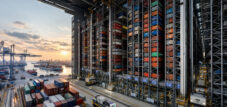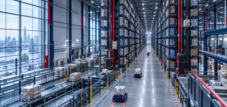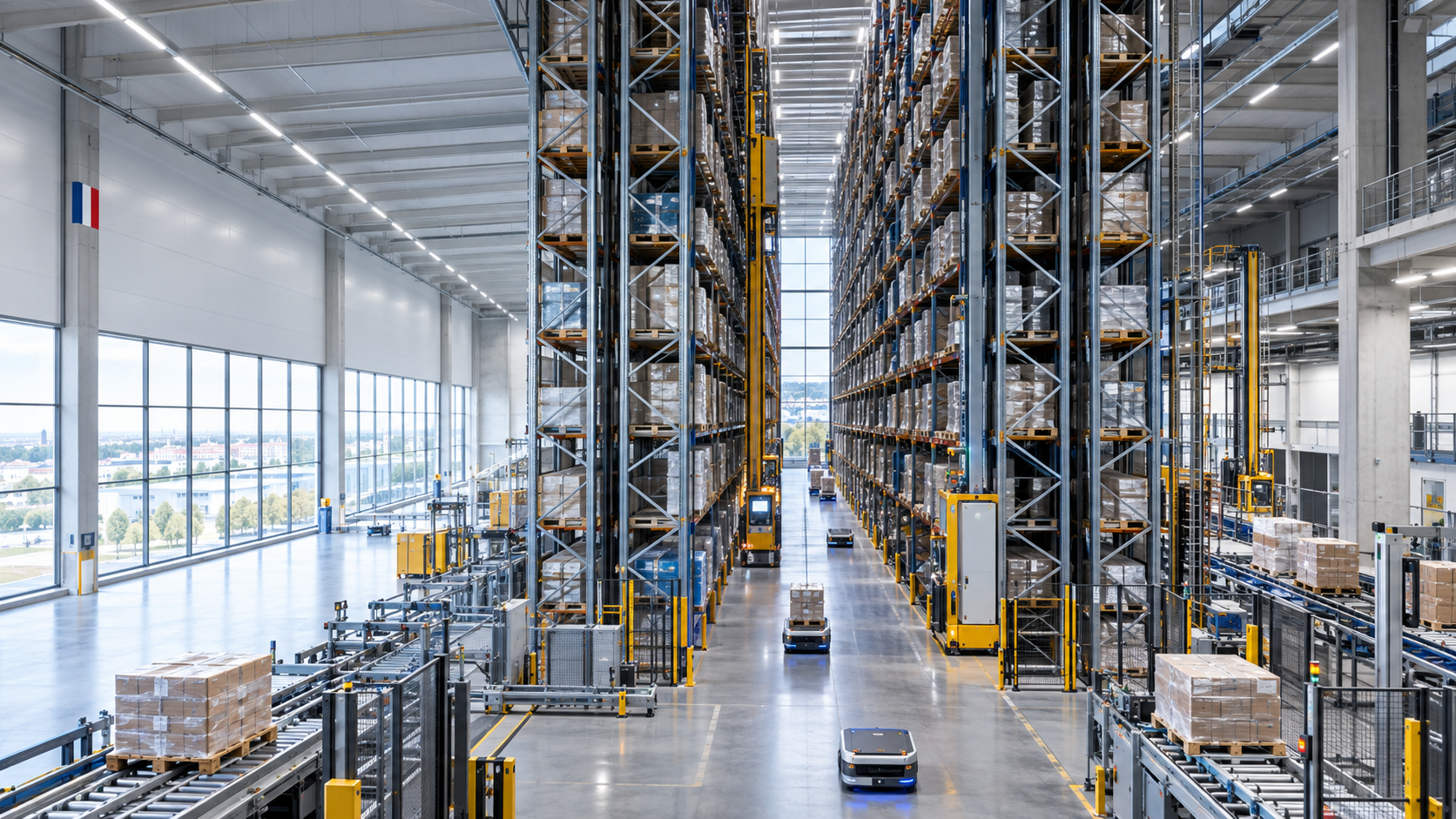
Market analysis: The rise of automated high-bay warehouses in France – Creative image on the topic, using AI: Xpert.Digital
Automation in the logistics sector: France's high-bay warehouses are growing ever taller
Structural change in logistics: France's high-bay warehouses in focus
Energy efficiency and technology: The new trend in the French high-bay warehouse market
The high-bay warehouse market in France has changed significantly in recent years and is facing an exciting transformation. With rising land prices and increasing demands for efficiency and automation, the traditional mindset, focused solely on available space, is no longer sufficient. Instead, technological innovations and the intelligent use of existing resources are gaining importance. In this context, the high-bay warehouse market is becoming increasingly value- and technology-driven, which is having a lasting impact not only on how warehouse space is used but also on the entire logistics landscape of the country. The challenge lies in making better use of existing space, integrating automated systems, and simultaneously meeting rising quality standards. This article examines the current trends, opportunities, and challenges in the French high-bay warehouse market and shows how the industry can adapt to these dynamic changes.
France's high-bay warehouse market is growing vertically
Space is becoming scarce, labor is becoming expensive, supply chains are becoming more nervous: Anyone in France who continues to think only in terms of square meters will fall behind.
A market caught between stagnation and structural change
The French market for high-bay warehouses is in a contradictory phase. On the one hand, demand for large logistics properties has cooled considerably compared to the exceptionally strong years during and immediately after the pandemic. Companies are making more cautious decisions, financing has become more challenging, and political and economic uncertainty is weighing on investments. On the other hand, there is increasing structural pressure to make better use of warehouse space, automate goods flows, and upgrade existing sites technologically. While these opposing forces are slowing down short-term transaction volume, in the medium and long term they strengthen precisely those solutions that enable higher storage density and productivity.
For high-bay warehouses, the decisive factor is therefore not solely the number of square meters of logistics space newly leased or constructed. More important is the proportion of investments directed towards automated, energy-efficient, and space-saving systems. A stagnant or only slowly growing real estate market can simultaneously generate a dynamic market for stacker cranes, conveyor technology, shuttle systems, warehouse management software, and modernization services. France is thus evolving from a volume-driven warehouse market to a more value- and technology-driven one.
The economic logic is clear: when land, permits, construction costs, and personnel become more expensive or harder to obtain, the value of every additional usable cubic meter increases. High-bay warehouses transform building height into storage capacity. In their automated form, they replace long travel distances with precise machine movements, reduce the space required per pallet, and stabilize performance even with fluctuating staff availability. The market is therefore not growing despite the economic downturn, but partly precisely because of the need to use scarcer resources more productively.
What belongs to the high-bay warehouse market
A reliable market analysis must clearly define the term "high-bay warehouse." In practice, the spectrum ranges from tall, manually or semi-automatically operated pallet racks to fully automated, self-supporting silo structures with stacker cranes. This also includes container storage, shuttle systems, automated small parts warehouses, conveyor systems, palletizers, automated guided vehicles (AGVs), and the software layers WMS, WCS, and WES. Not all automated storage systems are high-bay warehouses, and not every high-bay warehouse is fully automated.
Of particular relevance to economic development is the sub-market of automated storage and retrieval systems (AS/RS). Market studies estimate the French AS/RS market at approximately US$190 million to US$320 million by 2025, depending on the definition used. This considerable range is not simply a measurement error, but rather the result of differing definitions. Some surveys only consider the actual storage technology, while others include software, control systems, integration, service, and related robotics. Forecasts up to 2030 and 2035 predominantly indicate annual growth of around 7 to 9 percent. Broadly defined markets for smart warehousing or logistics automation are reported as significantly larger, reaching billions of dollars depending on the methodology.
This leads to an important point: A single market figure cannot fully describe the French high-bay warehouse market. The agreement between different surveys regarding the overall trend is more meaningful. Nearly all available market indicators predict that automated warehouse technology will grow faster than the overall French economy and likely also faster than the existing stock of logistics space. Revenue per newly constructed square meter is expected to increase because modern facilities incorporate more technology, software, fire protection, energy infrastructure, and data integration.
France's broad logistical base
France boasts a large and geographically diverse inventory of warehouses. At the end of 2024, there were approximately 3,900 warehouses and logistics platforms in mainland France, each with a minimum area of 10,000 square meters. Together, they comprised roughly 93 million square meters of storage space, 2.3 percent more than the previous year. The inventory is particularly concentrated in Hauts-de-France, Île-de-France, and along major north-south transport routes. The Lille–Paris and Paris–Lyon–Marseille axes, as well as connections to Belgium, Germany, Spain, Italy, and the seaports, form the backbone of the market.
This scale creates significant modernization potential. A large portion of the existing facilities was designed according to a logic that prioritized low land costs, manual order picking, and ample circulation space. Today, higher service demands, smaller order sizes, shorter delivery times, and stricter sustainability requirements are changing the economic benchmarks. While many older warehouses remain usable for simple block storage or regional distribution, they are losing their appeal compared to buildings that can be automated.
At the same time, large logistics facilities continue to be built. It is striking that particularly large new buildings account for a disproportionate share of the increase in floor space. Of the large warehouses newly recorded in 2024, a considerable proportion were buildings with at least 40,000 square meters of floor space. This has two implications for the high-bay warehouse market. Large platforms offer sufficient throughput to justify high investments in automation. Simultaneously, political resistance to further land sealing is growing, which is increasing the importance of multi-story buildings, densification, and vertical storage concepts.
Weak demand for space, increasing pressure for quality
The French logistics real estate market lost momentum in 2025 and at the beginning of 2026. The nationwide vacancy rate rose to just over 6 percent during 2025. In the first quarter of 2026, only around 351,000 square meters of logistics space were transacted, more than 60 percent less than in the same quarter of the previous year and also more than 60 percent below the average of the preceding five years. These figures initially suggest that an expansive new construction cycle is unlikely.
However, the decline in high-bay warehouses requires a more nuanced assessment. Standardized existing buildings and older warehouses are under greater pressure than modern, high-performance facilities in prime locations. Users are no longer exclusively relocating to larger buildings, but are instead exchanging inefficient spaces for more efficient ones. This so-called "flight to quality" means that the total occupied area is growing only slowly, while investments in the quality of the space already in use can increase. Automation capabilities, sufficient power supply, durable floors, greater building heights, fire protection, data connectivity, and expansion possibilities are becoming crucial location factors.
The weak market simultaneously increases the negotiating power of tenants outside the most competitive prime locations. This can facilitate investments in automation if landlords are willing to undertake structural modifications, extend rent-free periods, or contribute to the technical equipment. Conversely, short lease terms make financing permanently installed high-bay racking systems more difficult. In practice, long-term leases, user-specific project developments, and sale-and-leaseback structures are therefore becoming more important. The economic value of an automated warehouse lies not only in the building itself, but in the closely integrated combination of property, technology, and operational processes.
Online retail remains a driver of volume
French online retail reached a revenue of €196.4 billion in 2025, representing a 7 percent increase in sales of products and services. The number of online transactions rose to approximately 3.2 billion, while the average order value decreased. This shift is particularly relevant for warehouse logistics: more orders with a lower average order value increase operational pressure more than purely price-driven revenue growth. Each additional order generates additional processes for checking, picking, packing, sorting, and shipping.
French online retail sales increased by approximately 4 percent in 2025, reaching over €76 billion. Online sales accounted for roughly 12 percent of total retail sales. This indicates continued growth potential, and e-commerce is no longer an isolated niche channel. Retailers operate brick-and-mortar stores, marketplaces, click-and-collect services, home delivery, and returns management within integrated networks. These omnichannel structures increase inventory movements and necessitate precise, real-time inventory control.
For traditional pallet high-bay warehouses, however, e-commerce is not an automatic guarantee of growth. Many online orders consist of single items and are processed using container or shuttle systems. Nevertheless, the pallet warehouse remains central because it provides replenishment for order picking, smooths out seasonal peaks, and consolidates imported goods. Hybrid systems are particularly attractive: Pallets are stored in high-bay warehouses in a compact manner, automatically retrieved, and transferred to container, carton, or unit load processes. Growth thus occurs less in isolated racking aisles and more in networked, integrated systems.
Industry and food as more stable pillars
The French market cannot be reduced to trade and parcel logistics. The country has a broad industrial base in food processing, aerospace, automotive, chemicals, pharmaceuticals, cosmetics, building materials production, and consumer goods manufacturing. High-bay warehouses located near production facilities serve a different function than e-commerce hubs. They buffer material flows, connect production stages, ensure batch traceability, and enable the planned transport of finished goods.
Industries with standardized load carriers, high turnover rates, and a reliable base volume are particularly well-suited for high-bay warehouses. Paper, packaging, beverages, dairy products, frozen foods, building materials, and industrial components often meet these criteria. A French example is an automated, 37-meter-high pallet warehouse in Saint-Quentin with approximately 25,000 pallet spaces on a footprint of just 6,000 square meters. Another project in Port-Saint-Louis combines two automated storage areas with a total of around 17,000 pallet positions. Such facilities demonstrate that high-bay warehouses are not merely a real estate product but are directly integrated into production and distribution strategies.
Refrigerated and frozen food logistics also offers excellent opportunities. Every cubic meter of refrigerated space is expensive, and poor space utilization permanently increases energy consumption. Automated high-bay warehouses reduce the volume of refrigerated goods per pallet, limit door openings, and allow for dark, sparsely staffed operating areas. The investment required is high, but the energy and personnel savings are realized over many years. Given the strength of France's agricultural and food sectors, this segment is an important, albeit project-based, growth driver.
Labor becomes an argument for automation
French warehouse logistics faces a dual staffing challenge. On the one hand, simple, physically demanding shift work is difficult to fill. On the other hand, there is a shortage of skilled workers in mechatronics, robotics, data analysis, IT security, and maintenance. Automation, therefore, does not eliminate the need for personnel, but rather changes its composition. Fewer employees move pallets manually, while more qualified staff monitor systems, troubleshoot malfunctions, and optimize software processes.
For investment calculations, the hourly wage alone is not the deciding factor. Recruitment costs, employee turnover, training, sick leave, temporary work allowances, and quality defects must also be included in the calculation. An automated high-bay warehouse can operate around the clock with predictable output. It also reduces the risk of accidents in narrow aisles and relieves employees of heavy or repetitive movements. These advantages cannot be fully reflected in simple wage savings, but they significantly impact service quality and operational safety.
The downside is a new dependence on specialized knowledge. If control engineers, spare parts, or software expertise are lacking, a minor malfunction can block large parts of the material flow. Operators therefore require redundancies, preventive maintenance, remote service, spare parts concepts, and robust emergency procedures. The shortage of skilled workers thus accelerates automation while simultaneously limiting its implementation speed. Suppliers who can provide technology, software, training, and long-term service from a single source gain a strategic advantage.
Land policy makes heights more valuable
France aims to achieve net-zero soil sealing by 2050. As an interim goal, the consumption of natural, agricultural, and forestry land is to be halved by 2030 compared to the previous decade. The specific implementation remains politically contentious and varies regionally, but the direction is clear: new large-scale logistics developments on greenfield sites must be more strongly justified.
For high-bay warehouses, this policy fundamentally improves relative economic efficiency. A 30- to 40-meter-high automated pallet warehouse can provide a capacity on a small footprint that would require several times more land for a conventional warehouse. This not only saves land space, but shorter internal routes also reduce the need for lighting, traffic lanes, and manual transport. In a country where municipalities increasingly assess the establishment of large logistics centers based on job creation, traffic, and land use, capacity per square meter is becoming a politically relevant factor.
However, height is not an automatic advantage when it comes to permitting. Tall buildings alter the landscape, cast shadows, and can encounter resistance from local residents. Furthermore, requirements for structural engineering, wind load, fire safety, and emergency escape plans increase. Therefore, comprehensive site planning is crucial. Brownfield sites, former industrial areas, and existing logistics parks often offer better opportunities than undeveloped land. Future market opportunities lie not only in the construction of spectacular new silos but also in the densification and reorganization of already developed areas.
Fire protection determines the technical architecture
France's regulations for covered warehouses containing flammable goods have a significant impact on high-bay racking projects. Depending on the storage volume, building size, use, and type of material, regulations for classified facilities apply. Key requirements include fire compartments, fire-resistant partitions, automatic detection, smoke extraction, fire water supply, fire brigade accessibility, and, in many cases, automatic sprinkler systems.
Under certain conditions, the regulations permit storage cells of up to 12,000 square meters with automatic fire suppression. Heights exceeding 23 meters are also generally possible if additional conditions are met and specific fire protection documentation is provided. This opens up design possibilities for modern high-bay warehouses, but increases planning effort and lead time. Early coordination between the operator, system integrator, building planner, fire protection engineer, insurer, and authorities is therefore a crucial factor for success.
Automated warehouses present unique challenges. Dense shelving units, plastic containers, lithium-ion batteries, packaging materials, and hard-to-reach fire hazards can exacerbate the risk. Intermediate levels, conveyor penetrations, and technical shafts must be integrated into the fire protection concept. Ceiling sprinklers alone are often insufficient; additional sprinklers within the racks may be necessary. Fire protection is therefore not an additional expense added later, but rather an integral part of the system design that directly impacts capacity, rack geometry, and cost-effectiveness.
LTW Intralogistics Solutions

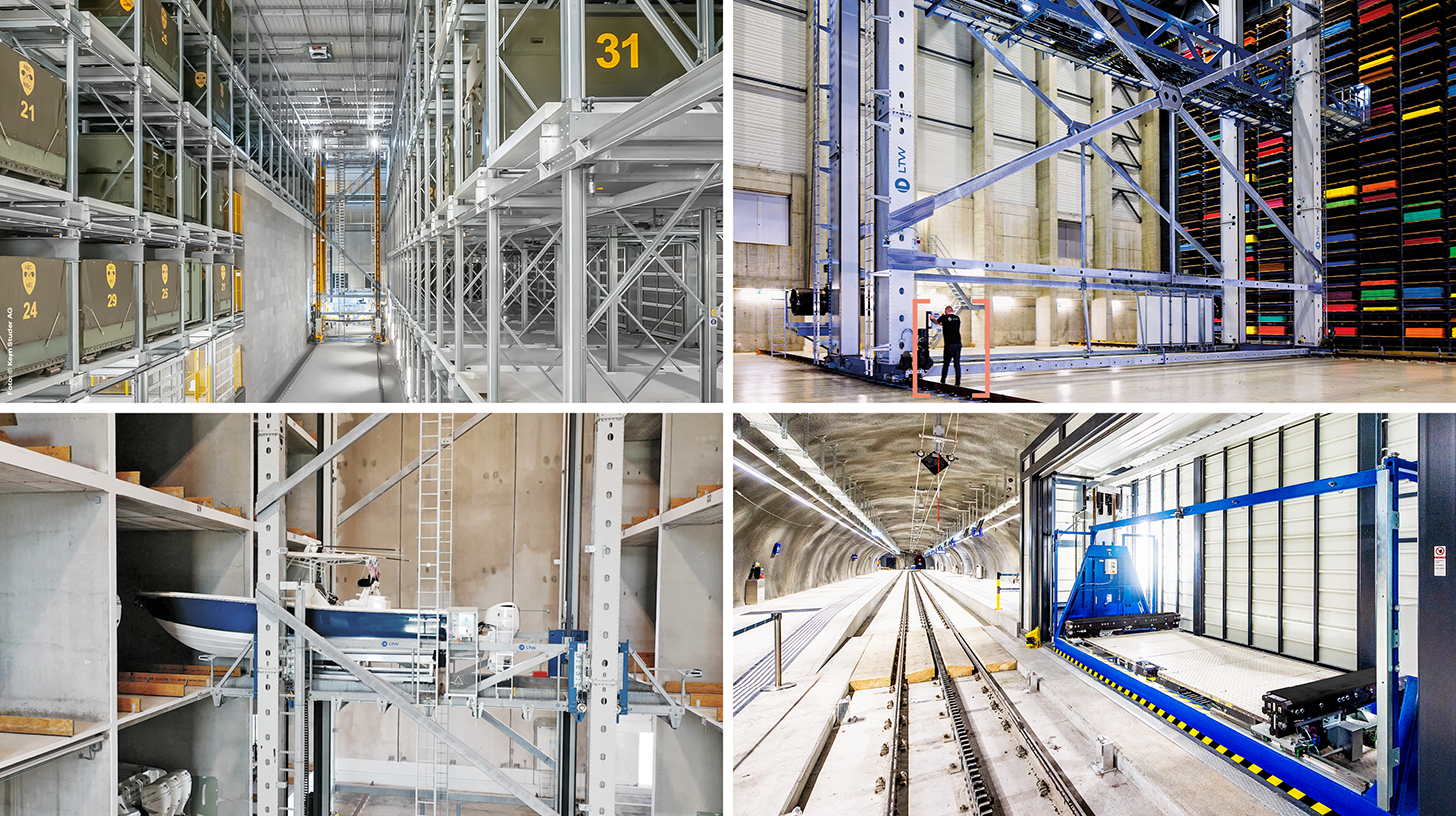
LTW Intralogistics – Engineers of Flow - Image: LTW Intralogistics GmbH
LTW offers its customers not individual components, but integrated complete solutions. Consulting, planning, mechanical and electrotechnical components, control and automation technology, as well as software and service – everything is networked and precisely coordinated.
In-house production of key components is particularly advantageous. This allows for optimal control of quality, supply chains, and interfaces.
LTW stands for reliability, transparency, and collaborative partnership. Loyalty and honesty are firmly anchored in the company's philosophy – a handshake still means something here.
Related to this:
Innovative approaches to automation in high-bay warehouses
Energy becomes a cost and location factor
Automated high-bay warehouses require electricity for storage and retrieval machines, conveyor technology, robotics, control systems, servers, air conditioning, and, if necessary, refrigeration systems. France generally offers favorable conditions for this. The average electricity price for businesses in 2025, excluding VAT, was approximately €148.80 per megawatt-hour, roughly 16 percent below the European Union average. This represented a significant decrease compared to 2024. Nevertheless, energy prices remain volatile, and highly automated facilities are more susceptible to supply interruptions.
Energy efficiency isn't solely achieved through fuel-efficient motors. Modern storage and retrieval machines can recover energy during lowering and braking. Intelligent control systems bundle journeys, avoid idling, and shift non-essential movements to more opportune times. In cold storage facilities, high storage density reduces the volume of refrigerated space required per unit. Photovoltaics, battery storage, and coordinated load management can offer additional benefits, provided the roof structure, grid connection, and load profiles are compatible.
French requirements for renewable energy and green roofs are being gradually tightened. For newly constructed, expanded, or extensively renovated warehouses, the required share of roof area will increase from 40 percent in July 2026 to 50 percent in July 2027. Large outdoor parking areas are also increasingly being subject to these requirements, in some cases through the installation of photovoltaic roofs. For developers, this means higher initial investments, but for long-term operators, it also presents an opportunity to generate a portion of their electricity needs on-site. For high-bay silos, the roof area is small relative to the capacity; therefore, facades, adjacent halls, and parking areas are gaining importance in the energy concept.
Technology is shifting from rigid to modular
The classic high-bay warehouse with a fixed storage and retrieval machine remains economically attractive for high, stable pallet volumes. It offers great storage heights, clearly defined traffic routes, and high availability. At the same time, demand is growing for modular shuttle systems, autonomous mobile robots, and scalable container solutions. These systems can often be expanded incrementally and respond more flexibly to changes in product range.
This development is particularly relevant for France because many companies are releasing investments in stages due to the weak economy. A fully automated large-scale project ties up capital, requires precise volume forecasts, and demands a long planning and implementation phase. Modular systems lower the barrier to entry. However, they do not always achieve the same height, density, or performance as a purpose-built high-bay warehouse. The decision, therefore, is not a competition between old and new technologies, but rather a question of the load profile.
With constant pallet throughput, few load carrier types, and limited space, an automated high-bay warehouse is a strong contender. However, for a large number of items, uncertain growth, and highly fluctuating order patterns, shuttle and robotic solutions can be superior. Increasingly, operators are opting for hybrid systems. A dense pallet core supplies flexible picking zones, while software synchronizes the transfers. The French market is therefore unlikely to be dominated by a single system type, but rather by integrated architectures with interchangeable modules.
Software is becoming the real bottleneck
With increasing automation, value creation is shifting from steel and mechanics towards software and data. The warehouse management system controls inventory and orders, the material flow control system coordinates conveyor technology and stacker cranes, and a warehouse execution level prioritizes tasks in real time. In addition, there are interfaces to ERP, transport management, production, marketplaces, and customer systems.
The economic benefits depend on how well these levels interact. A mechanically powerful system can fail to reach its rated performance if master data is faulty, interfaces are unstable, or prioritization rules don't align with the actual business. Especially in brownfield projects, new automation solutions often encounter older ERP versions, custom software, and historically grown processes. Integration costs and testing are therefore frequently underestimated.
At the same time, dependence on cybersecurity is increasing. An attack or software error can completely disrupt the flow of goods at a highly automated site. Operators must segment networks, control access rights, secure systems, and practice restart procedures. The long-term availability of software updates is also becoming an investment criterion. A high-bay warehouse is built to last 20 to 30 years, while digital components have considerably shorter lifecycles. Therefore, open interfaces, clear data sovereignty, and contractually secured migration paths are essential for future-proofing.
Capital requirements are a slowdown, productivity is a drawback
Automated high-bay warehouses are capital-intensive. In addition to land and buildings, expenses include racking, storage and retrieval systems, conveyor technology, safety systems, IT, integration, and commissioning. Depending on height, capacity, throughput, fire protection, and cooling requirements, the technology can represent a significant portion of the total investment. Rising financing costs and economic uncertainty have made it more difficult to approve large projects since 2023.
The investment decision should not be based solely on a static payback period. A realistic model considers avoided space expansions, lower personnel costs, reduced error rates, fewer product defects, lower energy costs per storage unit, improved delivery reliability, and the value of additional capacity. Risks must also be assessed: quantities may fall short of projections, technology may become obsolete, commissioning may be delayed, and system failures can result in significant consequential costs.
Projects are particularly attractive when the company is committed to the location long-term and can accurately forecast the flow of goods. Production plants, central distribution centers, and temperature-controlled networks more frequently meet these conditions than short-term contract logistics. Third-party logistics providers face the additional question of whether their customer's contract term covers the lifespan of the investment. Flexible ownership, leasing, and operating models can bridge this gap. The market is therefore evolving, also financially, from pure equipment purchases to service-oriented and partnership-based models.
The regions are developing differently
Île-de-France remains the most important consumer and distribution region. Land is scarce and expensive, traffic regulations are strict, and the demands for rapid delivery are high. High warehouse density is therefore economically attractive. At the same time, acceptance issues, building height restrictions, and complex permitting processes complicate large-scale high-bay racking projects. Specialized facilities in established logistics zones and multi-story concepts combined with automated small parts and general cargo logistics are more likely.
Hauts-de-France benefits from its proximity to Belgium, the English Channel, Paris, and the Northern European markets. The region boasts the largest stock of large-scale warehouse space in France and a strong industrial tradition. It is well-suited for both national distribution and high-bay warehouses located near production facilities. Along the Lille-Paris axis, excellent conditions are emerging for projects that consolidate French, Belgian, Dutch, and British trade flows.
The Auvergne-Rhône-Alpes region and the corridor around Lyon form the second major logistics hub. Its location between northern and southern France, Italy, Switzerland, and the Iberian Peninsula supports centralized distribution concepts. In the south, Marseille-Fos and Port-Saint-Louis are gaining importance as port and import locations. There, automated pallet warehouses can consolidate container flows and feed them into national networks. Markets in the west and southwest are smaller but offer opportunities in the food industry, aviation, trade, and regional supply.
Providers compete for integration and service
The French market attracts both international system providers and domestic specialists. Key competitive areas include racking systems, stacker cranes, conveyor and sorting technology, robotics, warehouse management software, general planning, and plant services. Large international providers can deliver complex projects from a single source and draw on extensive references. French companies score points with their local presence, industry expertise, and shorter decision-making processes. In addition, there are robotics providers who are penetrating traditional intralogistics markets with modular systems.
Competition is shifting from individual components to overall results. Operators are no longer just buying a shelf or a robot, but a guaranteed level of performance, availability, and scalability. Therefore, simulations, digital twins, guaranteed throughput, and lifecycle costs are becoming increasingly important. Service contracts, remote maintenance, and spare parts availability are increasingly decisive factors in awarding contracts. Suppliers with a dense French service network have an advantage over technically sound competitors with weak local presence.
At the same time, the risk of excessive vendor lock-in increases. Proprietary controllers and closed interfaces can make future upgrades more expensive. Professional buyers are therefore paying closer attention to interoperability, documented interfaces, and the ability to upgrade individual components independently. The market doesn't necessarily reward the cheapest supplier, but rather the one that combines technical performance with long-term maintainability and commercial stability.
Brownfield becomes a growth area
French land policy, the large existing building stock, and the weak new construction market make modernization a key growth segment. Not every existing warehouse can be converted into a high-bay warehouse. Ceiling height, floor load capacity, column grid, fire safety regulations, and power supply requirements impose limitations. Nevertheless, numerous options exist: automated pallet shuttles can optimize deep channel storage, conveyor systems can replace forklift traffic, and adjacent silos can complement existing warehouses.
Brownfield projects are technically more demanding than new builds because ongoing operations must be disrupted as little as possible. Implementation often takes place in stages. First, data and existing systems are cleaned up, then individual processes are automated, and finally the systems are interconnected. This phased transformation reduces investment risk but requires a clear target architecture. Without a long-term plan, a collection of isolated automation silos results.
For service providers, a broad market is opening up beyond spectacular new construction projects. Retrofitting storage and retrieval machines, replacing control systems, optimizing energy efficiency, migrating software, adapting fire protection systems, and predictive maintenance generate recurring revenue. Since mechanical systems have a significantly longer lifespan than their electronic components, the service and modernization share of the market is likely to grow disproportionately.
Sustainability becomes measurable economics
High-bay warehouses are often described as sustainable simply because they require less space. This statement is only valid if the entire life cycle is considered. Steel, concrete, technology, and building height all generate significant emissions. An automated warehouse is not automatically more climate-friendly than a conventional building. Crucial factors include capacity utilization, lifespan, energy consumption, material selection, and the amount of land saved.
The greatest ecological advantage lies in densification. If a high-bay warehouse prevents land-intensive expansion, the need for additional land, access roads, and internal traffic areas decreases. In temperature-controlled facilities, the denser construction can significantly reduce energy consumption per pallet. Added to this are photovoltaics, heat recovery, energy-efficient drives, and improved peak load management. Sustainability thus becomes a matter of measurable operational data rather than simply a building label.
The supply chain itself must also be considered. An optimally located high-bay warehouse can consolidate transport and centralize inventory. However, excessive centralization can lead to longer final routes and increase dependence on a single location. Therefore, the most economically and ecologically sound approach is not always the largest warehouse, but rather the right network structure. France's size and regional diversity often favor a combination of central high-performance hubs and smaller regional nodes.
Risks of an overly rapid automation push
The growth prospects should not obscure the fact that high-bay warehouses carry significant technical and strategic risks. The most common mistake is automating an unstable process. Poor master data, inconsistent load carriers, and unclear inventory rules are not resolved through automation, but rather reproduced at a higher speed. Before investing, processes must be standardized and data quality ensured.
A second risk is oversizing. Forecasts based on exceptional growth years can lead to plants whose capacity is later underutilized. The ongoing fixed costs, however, remain. Conversely, an undersized plant can become a bottleneck if expansion areas or additional lanes are lacking. Scenario planning, modular reserves, and realistic peak load profiles are therefore more important than optimistic average forecasts.
Thirdly, full automation increases the concentration of operational risk. A manual warehouse can often continue operating to a limited extent if individual machines fail. In a highly interconnected system, malfunctions can trigger cascades of problems. Redundant conveyor systems, separate fire compartments, emergency power supplies, restart plans, and manual backup processes cost money, but are part of economic robustness. Resilience is not a technical add-on, but rather an insurance feature built into the system.
The market until 2030
By 2030, the French market for automated high-bay warehouses is expected to grow faster than the overall logistics space stock. A plausible baseline is annual nominal growth of approximately 7 to 9 percent for the narrower AS/RS market. Broader smart warehousing segments could experience stronger growth at times. However, growth will be uneven and remain driven by individual large-scale projects. A large industrial, commercial, or cold storage warehouse can significantly alter the annual market.
In the baseline scenario, the French economy recovers only slowly. The Banque de France expects growth of just 0.4 percent in 2026, followed by 0.9 percent in 2027 and 1.2 percent in 2028. Private investment will initially remain limited by financing costs and uncertainty. At the same time, online retail, transaction volumes, and demands on supply chain capacity continue to grow. Companies are therefore investing selectively in projects with a clear impact on productivity, while speculative or poorly hedged ventures are being postponed.
In a positive scenario, falling financing costs, more stable energy prices, and a revival in industrial investment would accelerate the market. Land scarcity and land policy would then drive additional projects. In a negative scenario, weak consumer demand, fiscal uncertainty, high energy prices, and delayed permits would lead to further delays. Even then, the modernization market should remain relatively robust because existing plants cannot be operated indefinitely with outdated technology.
The real competitive advantage lies in the cubic meter
France's high-bay warehouse market is not facing a widespread construction boom, but rather a wave of high-quality investment. The weak demand for standard warehouse space and the rising vacancy rate do not contradict this assessment. On the contrary, they indicate that the market is becoming more fragmented. Older, inefficient buildings are losing their appeal, while sites suitable for automation, energy-efficient systems, and high-density storage concepts are gaining in value.
The key economic driver is the productivity of space. In a conventional warehouse, area is managed; in a modern high-bay warehouse, volume is managed. This shift is particularly significant for France because the country simultaneously possesses a large logistics infrastructure, strong consumer centers, a diverse industrial sector, and increasingly restrictive space targets. Added to this are growing transaction volumes in online retail and a labor market that makes manual scaling difficult.
The winners won't automatically be the operators of the tallest buildings. Successful projects are those where location, product structure, throughput, software, fire protection, energy supply, and financing are all perfectly aligned. A technically impressive system without a robust operating concept can destroy capital. A precisely dimensioned, integrated, and expandable high-bay warehouse, on the other hand, can secure productivity for decades.
This shifts the French market from a passive warehouse shell to automated infrastructure as a strategic asset. While the number of spectacular large-scale projects is likely to remain limited until 2030, the value of the integrated technology, software, and services will increase significantly. The decisive market indicator going forward will be less the newly leased space and more the number of efficiently managed pallets, containers, and orders per cubic meter, working hour, and kilowatt-hour. Therefore, France's logistics sector is not simply expanding horizontally; it must become smarter, denser, and increasingly vertical.
Consulting - Planning - Implementation

Konrad Wolfenstein
I would be happy to serve as your personal advisor.
You can contact me at wolfenstein∂xpert.digital or
Just call me on +49 7348 4088 965 .
Your intralogistics experts

Consulting, planning and implementation of complete solutions for high-bay warehouses and automated storage systems - Image: Xpert.Digital
More information here: