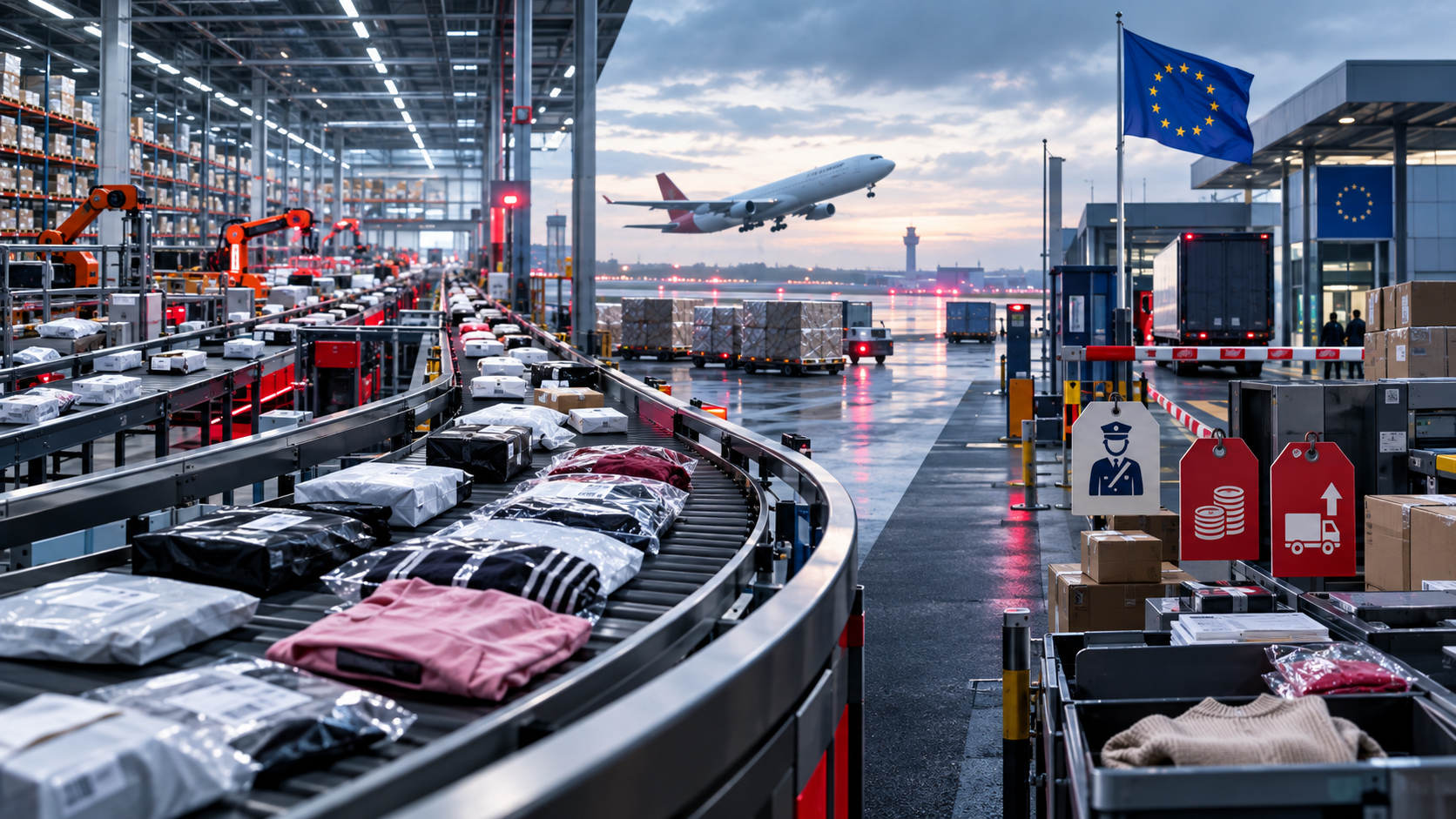
Shein in freefall: From billions to losses – The reasons behind Shein's profit decline – Creative image on the topic, created with AI: Xpert.Digital
Shein's fragile balance sheet: Can the company withstand the pressure?
Cost pressures and shrinking margins: Shein's fight for survival – Why the price miracle is crumbling
Shein, once a pioneer in global fashion retail, is facing a dramatic transformation. The company's boom, fueled by a combination of low prices, fast delivery, and a vast product range, is threatened by rising costs, new tariffs, and regulatory challenges. In the second quarter of 2026, the group reported a 67 percent drop in adjusted net income and a drastic decline in its net margin to 2.1 percent. The impact of new European tariffs and rising logistics costs is clearly evident: sales fell significantly in key markets such as Europe and the US. The question now is whether Shein can adapt its strategy to remain successful in a changing market environment. This article examines the key challenges the company must overcome to emerge stronger from the current crisis.
Shein's price miracle loses its magic
If a three-euro customs fee can shake a billion-dollar machine, then its moat was less deep than previously thought
Shein didn't transform the global fashion industry with better fabrics, established brands, or a dense network of stores. The company won with speed, data, an enormous selection, and a price level that traditional competitors could hardly undercut. From small, directly shipped orders, a global multi-billion dollar business emerged. However, the second quarter of 2026 revealed just how fragile this machine is when several favorable conditions disappear simultaneously.
Adjusted net income fell by 67 percent year-over-year to $228 million. The adjusted net margin plummeted from 6.2 percent to 2.1 percent. Revenue reached $11.08 billion, only 0.9 percent higher than the previous year. This meager growth masks a significant geographical shift: In Europe, revenue declined by 13.9 percent to $3.77 billion, and in the US by 6 percent to $2.5 billion. Growth in Latin America prevented a decline in group revenue but only partially offset the weakness in the key established markets.
These figures mark more than just a weak quarter. They reveal a structural conflict of objectives. Shein must pass on higher costs to customers, yet without destroying the price advantage upon which its reach, purchase frequency, and brand perception are based. The company must store more inventory in its sales regions, even though its original advantage lay precisely in centrally controlled, demand-driven production with limited stock levels. It must become less dependent on air freight, even though this is what enabled its speed and global product range in the first place. And it must establish higher-priced products and additional brands, even though many customers use the platform primarily for its extremely low prices.
The crucial question, therefore, is not whether Shein can absorb a single tariff. A corporation with more than eleven billion US dollars in quarterly revenue won't fail because of one isolated tariff. The decisive factor is whether it can absorb a multitude of smaller charges without creating a self-reinforcing cycle of higher prices, reduced advertising effectiveness, weaker volume, and increased unit costs. This is precisely the risk that becomes apparent in the second-quarter figures.
Profits are falling faster than revenue
A net margin of 2.1 percent means that for every $100 in revenue, only $2.10 remains as adjusted profit after expenses are accounted for. This buffer is slim for a retailer with global logistics, intensive advertising, numerous returns, and high regulatory exposure. Even relatively small changes in freight, customs duties, discounts, returns, or customer acquisition can consume a significant portion of the profit.
The decoupling of revenue and profit is particularly revealing. While revenue increased slightly, profit fell by two-thirds compared to the previous year. This points to a significant negative operating lever: the revenue received or generated is no longer producing nearly the same contribution to earnings as before. The group continues to move enormous volumes of goods, but each individual order is becoming less economically viable. If this situation persists, size will turn from an advantage into a disadvantage, because high volumes also trigger high transport, processing, and service costs.
The comparison with the previous quarter underscores the significance of the situation. In the first quarter of 2026, Shein reported a net loss of $99 million, compared to a profit of $395 million in the same period of the previous year. The return to profitability is therefore operationally significant, but should not be mistaken for a complete recovery. For the full year 2025, net income had already fallen by 38.7 percent to $2.06 billion, while revenue had increased by 8 percent to $41.85 billion. There, too, it was evident that revenue growth and earnings development were diverging.
For evaluating the business model, this development is more important than the absolute profit figure of a single quarter. A company can be very successful with low margins if its capital commitment is low, its inventory turnover is high, and its cost structure is stable. Problems arise when low margins coincide with rising external costs and declining demand. Shein then has to either raise prices, cut costs, or improve its revenue structure. However, each of these options alters the very mechanism that enabled its previous growth.
The old recipe for success was based on exceptionally favorable conditions
Shein's rise was based on a combination that long seemed like an almost unassailable competitive advantage. The company combined a digitized supply chain with continuous analysis of search, click, and purchase data. New designs could initially be tested in very small batches of approximately 100 to 200 units. If an item sold well, production was quickly ramped up; if demand was lacking, the small initial quantity limited inventory risk. This allowed for an enormous product range without having to immediately produce every item in traditional retail quantities.
This process reduced write-offs and unsold inventory. At the same time, it enabled Shein to translate trends into marketable products faster than many established fashion companies. The company was not just a retailer, but a data-driven coordination system between demand, design, suppliers, and logistics. The platform observed what customers were interested in, translated signals into small production orders, and quickly scaled successful items.
The second part of the model involved cross-border direct delivery. Inexpensive small shipments could be sent directly from China to end customers. This allowed Shein to eliminate traditional wholesale and branch structures in many cases. Duty-free allowances for low-value shipments in key markets reduced the tax burden. While air freight was more expensive than sea freight, it suited the logic of small batches, rapid response times, and global availability. The high relative freight costs were made manageable by cost-effective production, limited inventory losses, customs privileges, and large order volumes.
Aggressive digital marketing was also employed. Constant discounts, personalized recommendations, gamified elements, and a high frequency of new products created the impression that a new, affordable offer could be discovered at any time. The low price lowered the decision threshold. Customers didn't have to think twice when a dress cost five US dollars or a pair of jeans ten US dollars. Consequently, the economic strength lay not in a single factor, but in the interplay of low prices, rapid data utilization, small production batches, inexpensive imports, and intensive demand activation.
This interconnectedness also explains today's vulnerability. If several elements become more expensive simultaneously, the loss cannot simply be offset in one area. A higher selling price can dampen demand. Less advertising can reduce order frequency. Increased regional warehousing can shorten transport times, but ties up capital and increases inventory risk. This is precisely why the current pressure is more structural than a typical cost increase.
Air freight is going from being an accelerator to a margin risk
The conflict in the Middle East has driven up oil, kerosene, and freight costs. This is a critical issue for Shein. The company ships affordable fashion on a massive scale around the world by air. Air freight is therefore not just a mode of transport, but an integral part of its service promise. It combines centralized production with short delivery times and allows the company to cater to international trends without having to maintain extensive inventories everywhere.
Fulfillment costs rose by 18.1 percent in the second quarter. This increase significantly exceeded market expectations and occurred before the new European fees took full effect on July 1st. This is particularly relevant from an economic perspective. If the operating cost base grows sharply even before the next regulatory step, a subsequent normalization of individual freight rates may not be sufficient to regain the previous margin.
For extremely inexpensive items, an increase in logistics costs has a disproportionately large impact. An additional euro is a significant burden on a product priced at five euros, but easier to absorb for an item costing 100 euros. Shein's pricing structure therefore makes the company more sensitive to fixed costs per package or product category than retailers with higher average selling prices. The low average order value limits the ability to subtly distribute fees within the final price.
Air freight also creates a second risk: cost and sustainability pressures reinforce each other. The company's transport-related emissions rose by 13.7 percent in 2024 to 8.52 million tons of CO₂ equivalents. This was more than three times higher than the corresponding transport emissions of Zara's parent company, Inditex. Such figures are not just a reputational problem. They increase the likelihood that policymakers, consumers, and investors will scrutinize the model more critically and demand additional costs or reporting requirements.
Increased use of sea, rail, and road transport could reduce costs and emissions, but would also lengthen lead times. This necessitates earlier demand planning and larger regional inventories. As a result, Shein is shifting towards the classic retail model that the company originally aimed to surpass. The challenge is not only to transport more cheaply, but also to maintain speed, product range, and low capital commitment despite a less air freight-dependent structure.
Europe's new fees strike at the heart of the pricing architecture
Since July 1, 2026, the European Union has levied a temporary duty of three euros per goods category or tariff heading on low-value e-commerce imports up to 150 euros. The previous duty exemption for such small consignments has been abolished. While this may sound manageable at first, it fundamentally changes the calculations for very inexpensive goods. If an order contains items from five different categories, the charge can rise to 15 euros. From November 1, an additional processing fee will be charged for low-value imports to finance the control and administrative costs of the customs authorities.
The fees follow a logical economic policy logic. Traditional retailers import larger quantities of goods and bear regular customs duties, storage costs, and European distribution expenses. Direct sellers were able to circumvent some of these costs. The reform aims to level the playing field and simultaneously relieve customs authorities of the burden of processing billions of small shipments. However, for Shein, this eliminates an institutional cost advantage that has long supported the direct-shipping model.
The company reacted to the European levy even before it came into effect by increasing prices and reducing online advertising spending. The consequences became visible in the second quarter: European sales fell by 13.9 percent. This doesn't necessarily mean that every price increase automatically leads to an equally large drop in demand, as advertising activity was reduced and consumer sentiment may have changed. However, the combination of factors shows that demand in this segment is price-sensitive and highly dependent on activation.
The pressure intensifies when national measures are added. Since September 2026, France has levied tiered environmental levies on ultra-fast fashion products. The amount depends on factors such as the size of the product range, price, and repairability, and can reach up to 50 percent of the net sales price. At the end of March, Shein's product range comprised more than two million items; approximately 4,700 new clothing styles were added daily. A regulatory system that specifically impacts product range breadth and the frequency of new listings therefore targets two key elements of the platform model.
This doesn't simply make Europe more expensive. The market is changing the economic rules of the game. Costs are becoming more closely tied to the number of products, the shipping structure, and the environmental impact. Shein will have to consolidate its orders, store more goods locally, rethink its assortment strategy, or charge higher prices. None of these adjustments come without a price.
The United States was the warning, Europe is the stress test
In the United States, duty-free treatment for low-value shipments from China and Hong Kong ended in May 2025. Previously, goods valued up to $800 could generally be imported duty-free under the de minimis rule. After its abolition, products of Chinese origin were subject to significantly higher charges, depending on the product category and tariff structure. Shein began passing on a large portion of these additional costs through higher prices.
The result provides an indication of the business's price elasticity. In the first quarter of 2026, US sales fell by 14.3 percent year-on-year to US$2.04 billion. In the second quarter, the decline was still 6 percent, representing a relative improvement, but remaining negative. The US share of group sales had already fallen from 29.4 percent in 2023 to 22.5 percent in the first quarter of 2026. The previously largest growth driver thus lost its significance.
Europe is potentially even more critical for Shein. In the second quarter, the region accounted for roughly 34 percent of the group's revenue, compared to just under 23 percent in the US. A sustained double-digit decline in Europe cannot therefore be easily offset by Latin America or other growth markets. New markets can generate revenue, but their logistics, payment structures, customer acquisition costs, and average order values differ. Geographic diversification does not automatically replace lost profitability in established core regions.
Furthermore, US experience shows that price increases are not a neutral way of passing on costs. In the classic model, a company could raise prices and largely maintain its overall profit, provided customer volume and basket size remain stable. At Shein, the extremely low price is itself part of the product promise. If this promise is weakened, the company's competitive position vis-à-vis discounters, online marketplaces, and traditional fashion chains changes. The company then no longer competes solely on selection and speed, but must more strongly justify quality, trust, and brand value.
The parallel between the regions is therefore clear: where regulatory exemptions end, Shein's price advantage diminishes. The difference lies in the scope. Europe combines common customs reforms with national environmental levies and stricter platform rules. The stress test thus affects not only price, but also advertising, product range, product safety, recommendation algorithms, and sustainability.
Less advertising saves money and reduces demand
At first glance, cutting online advertising seems like a sensible response to declining margins. Marketing expenses can be reduced more quickly in the short term than supply contracts, warehouse space, or production costs. But for Shein, digital advertising isn't just a supplementary expense. It's part of the demand infrastructure. New products, discounts, and personalized recommendations need to be continuously displayed so that the high frequency of product visits translates into orders.
Less advertising, therefore, does not automatically improve profits. If the number of visitors, orders, or repeat purchases falls more sharply than marketing costs, the coverage of fixed costs deteriorates. Furthermore, a large portion of the product range has only short commercial windows. A trending item that doesn't receive timely attention can quickly lose relevance. The data-driven production model therefore requires not only demand information but also a sufficient amount of active demand.
The relationship between advertising and pricing is particularly delicate. Higher prices reduce the immediate incentive to buy, while less advertising reduces reach. Both measures together can be more effective than either one alone. Customers see fewer offers and simultaneously perceive the visible products as less exceptionally good value. This could potentially reduce not only order volume but also Shein's perception as the undisputed price leader.
At the same time, the company faces regulatory pressure to change certain forms of customer activation. Under the Digital Services Act, the European Commission is investigating, among other things, addictive design elements, reward systems, and the transparency of recommendation algorithms. France plans to largely ban advertising for ultra-fast fashion from 2027 and also limit marketing by influencers. Even if Shein were willing to increase its advertising spending, the available tools in key markets could become smaller.
For the future economy, this means Shein needs to generate more organic brand loyalty and less transaction-driven attention. A strong brand attracts customers even without constant discount signals. A pure bargain platform, on the other hand, has to repeatedly trigger the next purchase. Building this kind of loyalty takes time and requires a credible value proposition that goes beyond the lowest price.
🎯🎯🎯 Data-driven B2B industry hub as a quasi-in-house solution


The quasi-in-house solution: How Xpert.Digital closes operational gaps in B2B marketing and sales – Smart Content-Driven Business - Image: Xpert.Digital
Xpert.Digital is a data-driven B2B industry hub led by Konrad Wolfenstein . The company acts as an external, quasi-in-house solution for industrial partners, closing operational gaps in marketing, content, and sales – without requiring additional resources on the client side.
More information here:
The impact of European fees on Shein's business model
The European warehouse is both a solution and a strategic dismantling
Shein is significantly expanding its warehousing capacity in Europe. The logistics center near Wrocław, Poland, which opened at the end of 2025, will have 740,000 square meters of warehouse space at full capacity. An additional 66,000 square meters of leased space will be added in 2026. The center is equipped with robotic picking systems and automated sorting lines and is designed to support deliveries to more than 100 million European customers.
The logic is compelling. Larger quantities of goods can be imported into the European Union in one go and then distributed regionally. This allows for more sea or land transport, shortens the final delivery route, and facilitates returns. Packages from a European warehouse are less susceptible to individual fees for small cross-border shipments. Faster and more reliable deliveries can also increase customer satisfaction.
But regionalization comes at a price. A local warehouse requires pre-positioned inventory. The larger the product range and the shorter the expected delivery time, the more stock must be spread across numerous items. This increases tied-up capital, storage costs, and the risk of products being in the wrong location or not selling. Shein's original model mitigated this risk through small production batches and direct shipping upon confirmed demand. Regional inventory shifts some of the business back to forecasting.
This creates a difficult-to-resolve triangle. High local availability requires more inventory. Low inventory risk necessitates a narrower product selection or longer delivery times. Maximum product range requires either expensive direct delivery or very high warehouse complexity. Shein can improve all three objectives, but can hardly maximize them simultaneously. Automation and good data reduce the conflict of objectives, but do not eliminate it.
The European logistics center should therefore not be seen merely as an expansion. It is insurance against political and transport-related risks. At the same time, it is a visible sign that the old, almost entirely cross-border model is no longer sufficient. Shein is becoming more physical, more capital-intensive, and more regionally focused. This can make the company more resilient, but it also brings its cost structure somewhat closer to that of established competitors.
Higher prices can create margins and damage the brand
CEO and Chairman Yangtian Xu wants to shift the product mix towards higher price points. An increase in the average selling price makes it easier to absorb fixed fees, shipping costs, and returns. A surcharge of three euros is hardly manageable for a five-euro dress, but significantly less impactful for a 50-euro dress. From a purely financial perspective, the move is therefore plausible.
Economically, however, simply offering existing low-cost products at a higher price is not enough. Customers don't just judge the absolute price, but the relationship between price, quality, design, trust, and service. The higher the price rises, the more alternatives enter the relevant comparison. Shein then faces stiffer competition from Zara, H&M, Uniqlo, About You, Zalando, Amazon, regional brands, and brick-and-mortar retailers. These providers often have established reputations for quality, easier returns, physical stores, faster delivery, or long-standing brand trust.
The transition therefore demands a genuine upgrade. Higher-priced products require more reliable materials, better workmanship, more consistent sizing, more convincing product information, and lower perceived purchase uncertainty. Otherwise, an unfavorable middle ground emerges: no longer exceptionally cheap, but not yet credibly high-quality. Many retailers fail not because of a desire for higher margins, but because customers don't recognize the necessary added value.
Added to this is the risk of internal cannibalization. If higher-priced items are displayed alongside five-dollar dresses and permanent discounts in the same digital environment, the low-priced range can weaken its credibility. Conversely, significantly higher prices can confuse the core customer base. The platform must therefore arrange price tiers in a way that is understandable and trustworthy, without creating the impression of a generic department store.
A successful premiumization strategy would nevertheless be a significant lever. It could increase the average order value, reduce the relative burden of shipping costs, and create more room for quality assurance and brand communication. However, it will only work if Shein shifts its focus from the message of "more products for less money" to "suitable products with recognizable value." This is not simply a pricing measure, but a transformation of customer value.
A brand family promises higher margins, but increases complexity
Shein aims to evolve into a diverse collection of brands that cater to different needs, occasions, and price points. This could include proprietary brands, partnerships, and acquisitions. Strategically, this is an attempt to transform the platform from a highly price-driven single brand into a broader consumer ecosystem.
A brand architecture can address several problems simultaneously. Different brands allow for a clearer separation between entry-level, mid-range, and premium price segments. They can target specific audiences without every change negatively impacting the core brand. Acquisitions could also provide design expertise, brand awareness, or access to new customer groups. If Shein makes its data, production, and logistics infrastructure available to other brands, potentially higher-margin services emerge where not every revenue stream is tied to the sale of an extremely low-priced physical item.
However, brands cannot be scaled like additional product categories. A brand needs a distinctive promise, consistent quality, credible communication, and time. Too many brands can increase marketing costs and make it difficult to navigate. If they are perceived merely as labels for similar products, they do not generate any additional willingness to pay. Acquisitions also bring integration risks, potential write-offs, and cultural clashes.
Shein's technological infrastructure is both an advantage and a potential pitfall. Data can precisely measure demand, but brand value isn't solely derived from short-term click-through and sales rates. A strong brand sometimes invests in aesthetics, quality, and trust, even if the return isn't immediately apparent in the next week. This requires longer planning horizons than the previous approach of testing and quickly reproducing trend-driven items.
The brand strategy is therefore sensible, but demanding. It can free Shein from its dependence on the lowest price if the new offerings actually generate a higher willingness to pay. Simply offering more products under more names increases complexity and costs without sustainably growing margins. The difference between a brand family and a collection of labels lies in the clarity of the respective customer benefits.
Regulation is transforming from a marginal issue into a factor of production
The political response to cross-border low-cost trade is not a temporary anomaly. It serves several enduring interests. Customs authorities have to inspect billions of small shipments. European retailers demand a level playing field. Environmentalists criticize short product lifecycles, high shipment volumes, and air freight. Consumer advocates focus on product safety, manipulative design, and transparent recommendations. Industrial policymakers want to prevent domestic trade and production structures from being disadvantaged by regulatory asymmetries.
For Shein, this means that regulation will become an integral part of unit costs and product development. In the future, it will no longer be enough to produce a garment cheaply. The company must also reliably manage information on origin, safety, sustainability, and customs. It needs to know how a product category affects duties, whether a particular shipment combination generates additional fees, and which forms of advertising are permitted in a given country. Data expertise remains important, but its focus shifts from pure demand optimization to compliance and risk management.
This change could even strengthen large platforms over smaller direct sellers in the long run. Shein has the capital, technology, and volume to translate complex regulations into systems. Smaller sellers can suffer disproportionately from the same requirements. In the short term, however, the regulation hits Shein particularly hard because it eliminates advantages the company has exploited on an enormous scale. Size facilitates adaptation but also increases the absolute burden.
Added to this is the uncertainty. Companies can calculate known tariffs; changing national criteria, ongoing investigations, and potential advertising restrictions are more difficult to predict. Uncertainty increases the value of regional warehouses, diversified supply chains, and larger margin reserves. These reserves are precisely what is limited with a net margin of 2.1 percent.
Regulatory resilience thus becomes a competitive advantage. Companies that develop, bundle, and distribute products in a way that ensures their economic viability across multiple jurisdictions can gain market share. Shein's challenge lies in building this advantage without sacrificing the speed of its existing innovation engine.
Latin America buys time, but does not automatically replace the core markets
Growth in Latin America offset declines in Europe and the United States in the second quarter. This geographical diversification is valuable. It reduces immediate dependence on individual markets and demonstrates that Shein's pricing and product range can continue to generate international demand. For a global company, it makes sense to direct capital and marketing to where customer acquisition and growth remain attractive.
Simply shifting growth strategies won't solve the margin problem. New markets require localized payment methods, customer service, returns solutions, customs expertise, and often dedicated logistics partnerships. Exchange rate fluctuations and political risks can be higher. Furthermore, governments may later regulate successful import models, as the United States and Europe have done. An advantage based on a loophole in the customs system is scalable internationally, but not guaranteed in the long term.
The quality of growth is also crucial. An additional dollar in revenue isn't equally valuable everywhere. Key factors include contribution margin, repurchase rate, return rate, marketing costs, and capital tied up in business. If growth in new regions is solely driven by high discounts and expensive air freight, it can stabilize overall revenue without boosting profits. Shein therefore needs to be more transparent and internally manage which markets are actually generating free cash flow.
Latin America buys the company time to restructure in Europe and the US. This time is strategically valuable as long as it is used for regionalization, better products, more efficient transport, and a sustainable brand architecture. It would be less valuable if it were merely used to mask declining core markets with new, similarly low-margin volume.
The future Shein will therefore likely have a more geographically balanced presence, but will also need to grow more selectively. Not every market share makes sense if regulatory risks and delivery costs erode the profit contribution. The transition from a growth company to a publicly traded corporation increases the pressure to demonstrate revenue quality rather than mere reach.
The IPO has turned operational problems into valuation issues
Since its Hong Kong stock market debut on September 1, 2026, the share price had fallen by 27.3 percent compared to its issue price of HK$48.56 by the time the quarterly results were released. Following the profit slump, it came under further pressure. The reaction is understandable: investors evaluate not only current profits but also the expectation of future cash flows. When revenue growth slows and margins decline simultaneously, both are weaker.
Before an IPO, high growth rates could mask much of the strategic uncertainty. A private company can rely longer on the assumption that scalability, market share, and future options will justify today's investment. On the public capital market, quarterly figures, forecasts, and capital allocation are directly compared. An expensive logistics investment must then demonstrably lead to lower unit costs or improved service. An acquisition must create more value than it costs. Higher prices must improve margins without unduly impacting revenue and customer numbers.
The current decline in margins is also changing the valuation logic. A company with sustained double-digit growth can be attractive despite low margins if economies of scale promise higher returns later on. With virtually stagnant group sales and declining core markets, this hope diminishes. The market then demands evidence that profitability was not solely dependent on favorable tariffs, low freight rates, and aggressive advertising.
At the same time, it would be wrong to write off Shein as a failure. The company boasts enormous revenues, a well-known platform, powerful data and supply chain systems, and access to numerous international customers. It was profitable in the second quarter, and its expansion outside Europe and the US demonstrates remaining growth potential. The stock market correction, therefore, reflects less an immediate existential crisis than a reassessment of the quality and sustainability of its business model.
The burden of proof is now on management. They must demonstrate that regional warehouses, higher-priced products, and new brands are not merely defensive measures, but rather constitute a new, economically superior system. Individual initiatives are insufficient; they must collectively replace the lost margin.
Four key factors determine the next development phase
The first lever is logistics. Shein needs to combine direct shipping, regional warehouses, and alternative transport methods in such a way that fast-moving items remain readily available, while more predictable quantities are transported by sea, rail, or road. A stronger segmentation is conceivable: highly volatile trend products would initially remain in the flexible direct shipping model, while proven bestsellers would be stocked regionally. This would allow for differentiated optimization of speed and cost efficiency rather than a one-size-fits-all approach.
The second lever is the shopping cart. Fees per shipment or product category are easier to bear when orders are larger and better consolidated. Minimum order values, intelligent bundling, and incentives for fewer individual shipments could reduce logistics costs per item. However, such measures must not lead to opaque surcharges or artificial pressure to buy, as this would exacerbate regulatory and reputational risks.
The third lever is the product mix. Higher average selling prices are necessary, but should be justified by better quality, more reliable sizing, more detailed information, and clearly separated brand worlds. A blanket price increase weakens demand; a justifiable premium, on the other hand, can create a willingness to pay. Categories with lower return rates, higher product value, and less extreme trend dependency would be particularly attractive.
The fourth lever is marketing. Shein needs to build customer loyalty that isn't solely based on discounts, high advertising frequency, and gamified activation. Trust in quality, delivery, returns, and product safety can reduce reliance on paid reach. At the same time, the company should expand its technological infrastructure as a service for brands and retailers. Such revenue streams could generate higher margins because existing systems can be used multiple times without requiring the same physical movement of goods for each additional sale.
These levers are interdependent. A higher-quality product mix facilitates slower, cheaper transport because there is more margin. Regional warehouses improve service and can strengthen brand trust. Larger average order values reduce the relative cost burden. Better customer loyalty lessens the pressure to purchase every order at a high price. Therefore, the transformation can only succeed as a comprehensive system.
Why the model is damaged but not broken
Shein's previous competitive advantage is weakening because part of it didn't stem solely from entrepreneurial superiority. It also relied on political and logistical conditions: duty-free small shipments, relatively inexpensive air freight, and extensive opportunities for digital demand activation. These conditions are changing. The company can retain its data, supplier relationships, and technology, but it must redeploy them under less favorable cost and regulatory conditions.
The model isn't broken, however. Small production batches, rapid adjustments, and direct demand monitoring remain valuable. Traditional retailers continue to struggle with inaccurate forecasts, write-offs, and sluggish supply chains. Shein, therefore, possesses operational capabilities that can create advantages even in a more regionalized and heavily regulated system. The question isn't whether the core competency will disappear, but rather how much additional margin it will still generate after deducting the new costs.
The biggest risk would be an unclear strategic middle ground. If Shein simultaneously tries to be extremely cheap, a fast direct shipper, a regional warehouse operator, a premium provider, a marketplace, and a brand holding company, costs and complexity could grow faster than revenues. A convincing transformation requires clear decisions about which products will be shipped directly, which will be stored locally, and which brands will be built with their own independent quality promise.
It would be equally dangerous to defend revenue at all costs. With a margin of 2.1 percent, low-margin growth can destroy value if it incurs high logistics, advertising, and compliance costs. The company should therefore forgo some volume rather than permanently subsidizing orders with a negative contribution margin. This would negatively impact growth in the short term, but improve the company's financial performance in the long run.
Shein is therefore not in a typical cost-cutting phase, but rather in a maturation phase. The company must prove that it can grow profitably without exceptional tariff advantages, with less aggressive advertising, and under stricter environmental regulations. If it succeeds, a platform based on price arbitrage will transform into a resilient global retailer. If it fails, it will be left with a huge sales volume and insufficient profit.
The cheapest provider must become the most efficient
The figures for the second quarter of 2026 are a warning sign, but not yet a final verdict. The 67 percent drop in profits, the margin falling to 2.1 percent, and the significant revenue losses in Europe and the US show that the old balance is no longer sustainable. Higher freight costs, new tariffs, additional processing and environmental levies, and lower advertising expenses directly impact the factors on which Shein built its competitive advantage.
The planned response is fundamentally sound: more regional inventory, more efficient logistics, higher price points, and a broader brand architecture. However, every measure has a downside. Local warehouses increase capital tied up and inventory risks. Higher prices jeopardize price-sensitive demand. Additional brands increase complexity. Reduced air freight can lengthen delivery times. Success, therefore, depends not on a single, spectacular decision, but on disciplined operational execution.
Shein needs to redefine its competitive advantage. Previously, it essentially boiled down to: more choice, faster response to trends, and lower prices than competitors. Going forward, it must be: more accurately predicting demand, more intelligently managing supply chains, more reliable products, and more efficiently controlling regulatory costs. This is a more demanding advantage, but also a more sustainable one.
The provocative lesson of the quarter is this: The price miracle was partly a bill that customs systems, the environment, and logistics had long failed to fully account for. Now, more and more of these costs are hitting the company. Shein's future hinges on whether it pays this bill through genuine productivity or simply passes it on to customers, suppliers, and investors.
A mere price increase would be insufficient. A credible transformation requires better products, larger average order values, less emissions-intensive transportation, regionally differentiated inventory, and brands that generate their own willingness to pay. If Shein succeeds in this transformation, the company can become economically stronger despite lower growth rates. If not, the former symbol of digital commerce disruption will become a cautionary tale of how quickly a globally optimized low-price model loses its competitive edge once external costs can no longer be outsourced.
📈🚀 From visibility to trust 👀🤝 Your scalable path with Xpert.Digital


From visibility to trust: Your scalable path with Xpert.Digital - Image: Xpert.Digital
In industrial B2B, sustainable business relationships rarely emerge overnight. They develop step by step – through visibility, professional relevance, recurring touchpoints, and growing trust. Xpert.Digital's 4-stage model addresses precisely this: It offers a structured path that begins with a manageable entry point and can evolve into deeper collaboration in business development if needed.
Instead of relying on loud marketing promises, this model puts the relationship at the forefront. Companies start with clearly defined, easily calculable measures and then decide, based on their own experience, how far they want to expand the collaboration. A key factor for this undisturbed trust-building process: The platform completely avoids annoying advertising ads, so the editorial focus remains solely on the companies' expertise.
More information here:
Your global marketing and business development partner
☑️ Our business language is English or German
☑️ NEW: Correspondence in your native language!

Konrad Wolfenstein
I and my team are happy to be available to you as your personal advisor.
You can contact me by filling out the contact form here wolfenstein@xpert.digital:or simply call me at +49 7348 4088 965. My email address is
I'm looking forward to our joint project.