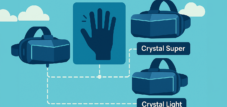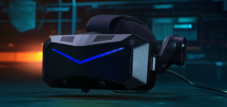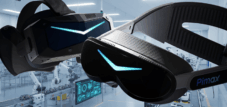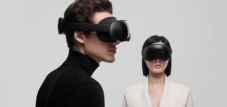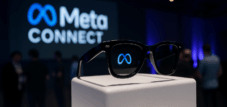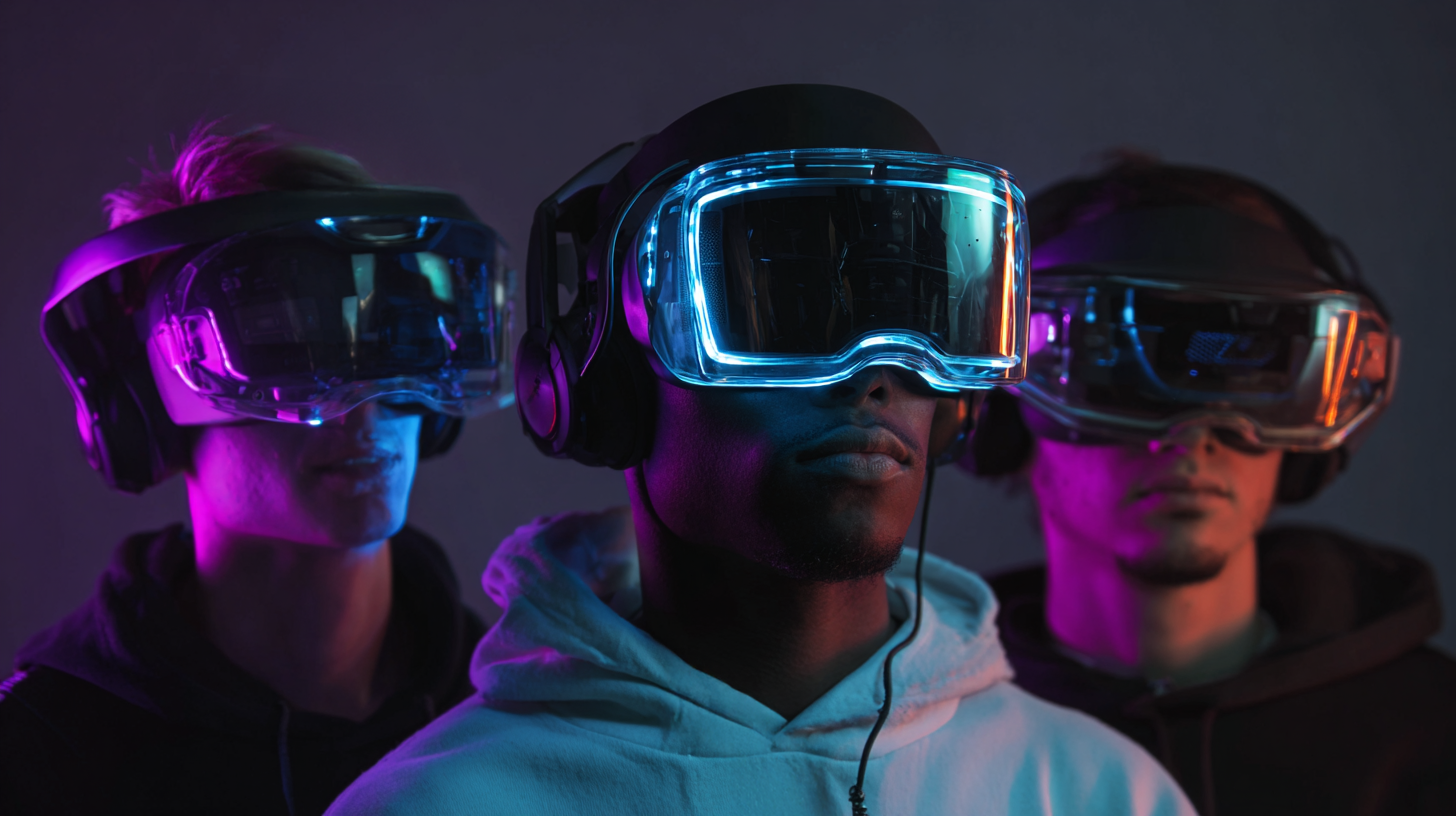
The next generation of VR and XR headsets – Creative image: Xpert.Digital
Against the cloud imperative: This European XR headset radically relies on open source and data privacy
PC VR poised for a mega-boom: Why experts predict market growth to $131 billion
The VR market in 2026 is divided: While Apple and Meta have a firm grip on the mass market with standalone headsets, a technological rebellion is forming in the high-end sector. At CES 2026, Pimax and Lynx demonstrated that enthusiasts and professionals no longer have to compromise, presenting a new generation of VR and XR hardware that pushes the boundaries of what is possible.
The approaches could hardly be more different: Pimax's Crystal Super features a globally unique modular concept that allows users to easily replace the headset's optical core – a radical blow against planned obsolescence. At the same time, with its feather-light Dream Air, the company addresses the biggest shortcoming of previous high-end headsets: comfort. Weighing less than 170 grams, Pimax promises an immersion that's barely noticeable on the head, without sacrificing the powerful performance of PC VR.
In parallel, the French company Lynx R2 positions itself as the "open" answer to the closed ecosystems of Silicon Valley. In an era where data is considered the new gold, Lynx focuses on radical transparency, open source, and complete offline functionality. With an impressive 126-degree field of view and a focus on repairability, the R2 targets a growing group of users and businesses demanding full control over their hardware and their privacy.
This article highlights the technological breakthroughs of this new generation of devices, analyzes why the PC VR market is poised for unprecedented growth despite the standalone trend, and clarifies for whom investing in these high-end systems is truly worthwhile. Whether it's uncompromising image quality, extreme portability, or maximum data security – the future of virtual reality has never been so diverse.
What new VR headsets did Pimax present at CES 2026?
At the Consumer Electronics Show 2026, Chinese virtual reality specialist Pimax presented two fundamentally different headset concepts, both tailored to the needs of PC VR enthusiasts. The Crystal Super is positioned as a modular flagship for users demanding uncompromising image quality, while the Dream Air is designed as an ultra-lightweight alternative that combines high-end specifications with unparalleled portability. This dual strategy underscores Pimax's clear focus on the wired PC VR market at a time when many competitors are increasingly relying on standalone solutions.
The PC VR market continues to experience remarkable growth. Analysts predict that the global PC VR device market will expand from $14 billion in 2026 to $131 billion by 2035, representing an average annual growth rate of 28.2 percent. Pimax is positioning itself as a technological leader in this expanding market segment, having consistently pushed the boundaries of visual display quality since its founding in 2014.
What makes the Pimax Crystal Super a special VR headset?
The Crystal Super revolutionizes the consumer VR market with a globally unique concept: the interchangeable optical engine. Users can switch between different display and lens technologies to precisely tailor the headset to their individual needs. This modularity is groundbreaking and significantly extends the device's lifespan, as future technological advancements can be integrated through simple upgrades without having to replace the entire headset.
The QLED version offers an ultra-sharp resolution of 3840 x 3840 pixels per eye, resulting in a total of 29.5 million pixels. For applications requiring perfect black levels and maximum contrast, a Micro-OLED variant is available. This utilizes 4K Sony panels per eye and theoretically enables infinite contrast, as individual pixels can be completely switched off. This technology particularly shines in night scenes in flight simulators or dark gaming environments.
Key technical features include advanced aspherical glass lenses that create a large, clear sweet spot, and dynamic foveated rendering via eye-tracking. The refresh rate varies between 72, 90, and 120 Hz depending on the selected display option. The ultra-wide field of view further enhances immersion. As a dedicated PC VR device, the Crystal Super guarantees uncompressed video signals and therefore maximum image clarity, making it the first choice for simulation enthusiasts who refuse to compromise on visual quality.
How does the Pimax Dream Air differ from conventional VR headsets?
The Dream Air addresses the most common criticism of high-end VR headsets: excessive weight and bulky design. Weighing in at under 170 grams for the premium model, it's among the lightest full-fledged VR headsets on the market. Despite its compact dimensions, Pimax hasn't compromised on top-notch specifications. The Dream Air utilizes the same high-quality optical design as the Crystal Super, including ConcaveView pancake lenses and 4K Micro-OLED panels.
The technical specifications include a resolution of 3840 by 3552 pixels per eye, inside-out 6DoF tracking, and integrated eye tracking for automatic IPD adjustment and dynamic foveated rendering. An active cooling system with two fans dissipates the heat from the high-resolution displays. The headset features a fully self-adjusting headband and integrated audio. Connection to the PC is via DisplayPort, enabling uncompressed image transmission without the visual artifacts that can occur with USB-C streaming solutions.
For price-conscious users, Pimax also announced the Dream Air SE, a more affordable version with lower-resolution panels. The SE version still offers Micro-OLED displays, Tobii eye-tracking for foveated rendering, and a field of view exceeding 90 degrees. Both the Dream Air and the SE version are available with either SLAM tracking (including controllers) or Lighthouse tracking (without controllers).
What are the prices and availability for Pimax headsets?
The Pimax Crystal Super starts at $1,799 for the QLED base model. Micro-OLED versions and special bundles cost correspondingly more. Originally, delivery was planned for late 2024 or early 2025. The Crystal Super represents an evolution of the established Crystal series and is primarily aimed at the professional and enthusiast markets.
The Dream Air represents a completely new product line for Pimax. The company is already accepting pre-orders, with the SLAM version priced at $2,199 and the Lighthouse version starting at $1,899. Customers only need to pay a non-refundable $1 reservation fee. Shipping is expected to begin in the third quarter of 2025.
The Dream Air SE is positioned at a significantly lower price point: The SLAM version with inside-out tracking and controllers costs $1,199, while the Lighthouse version without controllers is available for $899. This pricing makes the SE version accessible to a wider range of users without sacrificing essential premium features such as eye tracking and micro-OLED displays.
What is the Lynx R2 and how does it differ from other XR headsets?
The Lynx R2 represents a European alternative to the established XR headsets from Meta, Apple, and Samsung. With its new standalone mixed-reality headset, the French manufacturer Lynx pursues a fundamentally different approach, emphasizing openness, data privacy, and independence from closed ecosystems. This positioning is primarily aimed at industry, research, and professional users who require complete control over their hardware and data.
The R2's centerpiece is its exceptionally wide 126-degree horizontal field of view. This significantly surpasses the Lynx Vision Pro (approximately 100 degrees), the Galaxy XR (109 degrees), and the Quest 3 (110 degrees). This is made possible by aspherical pancake lenses, developed in collaboration with the lens experts at Hypervision. These lenses are also designed to provide distortion-free peripheral vision, an aspect that many manufacturers underestimate.
The pixel density in the center is over 24 pixels per degree, a value particularly relevant for medical and industrial applications as it minimizes the screen-door effect. The display is handled by two 2.3K LCDs. On paper, this places the Lynx-R2 behind the Galaxy XR at approximately 40 PPD and the Vision Pro at 34 PPD, but roughly on par with the Quest 3 at 25 PPD.
Which operating system does the Lynx R2 use and what advantages does that offer?
The original plan was for the headset to ship with Google's Android XR platform. However, Google surprisingly ended the collaboration at the end of 2025. Instead, Lynx is now using its own operating system called Lynx OS, an open-source version of Android 14 with full support for OpenXR 1.1.
The source code, as well as electronic circuit diagrams and blueprints, will be made publicly available. This openness represents a radical counter-proposal to the closed systems of Apple and Meta. Developers will gain direct access to camera and sensor data, which is deliberately restricted on the Meta and Apple platforms. This accessibility opens up entirely new possibilities for specialized applications in sensitive areas.
Lynx takes a unique approach, particularly regarding data privacy: The device functions entirely offline and is not dependent on cloud services or social media accounts. For sectors such as defense, healthcare, and industry, this could be a crucial differentiator. Companies and research institutions that process sensitive data can thus ensure that no information is transmitted to third parties.
What hardware features does the Lynx R2 offer?
Inside, Qualcomm's Snapdragon XR2 Gen 2 processor powers the device, which, according to Lynx, delivers 2.5 times the graphics performance and eight times faster AI processing compared to its predecessor, the R1. Two quiet fans ensure consistent cooling and prevent thermal throttling during extended use.
Four wide-angle cameras, a depth camera, and infrared LEDs are used for environmental sensing. In addition to room mapping and hand tracking, these enable advanced applications such as 3D scanning, Gaussian splatting, and object-based tracking. All functions are accessible via the OpenXR interface in engines such as Unity, Unreal, or StereoKit.
The proven flip-up design of its predecessor remains: users can flip the visor upwards to quickly switch between the real and digital environments. The battery is housed in the rear of the headband and also serves as a counterweight for improved comfort. Both the interpupillary distance and lens spacing are individually adjustable, even for users who wear glasses.
Lynx places particular emphasis on repairability: screw connections instead of adhesive, a replaceable battery, and official maintenance manuals are all part of the design. This approach stands in stark contrast to the throwaway mentality of many consumer electronics manufacturers and should be especially attractive to business customers who want to use and maintain their hardware for years.
When will the Lynx R2 be available and how much will it cost?
Unlike the R1, Lynx is foregoing pre-orders or crowdfunding for the R2. The device will only be available once it can actually be shipped. Lynx is aiming for the summer of 2026 to begin accepting orders. This conservative approach is intended to avoid the problems that many crowdfunding projects experience with delayed deliveries and disappointed backers.
The price is not yet officially known, but according to company founder Stan Larroque, it will be positioned in the mid-range segment between the Meta Quest 3 at around €550 and Samsung's Galaxy XR at around €1,800. This price positioning would make the R2 affordable for professional users and businesses without penetrating the mass consumer market, which has different requirements.
🗒️ Xpert.Digital: A pioneer in the field of Extended and Augmented Reality

Finding the right Metaverse agency, planning office, or consulting firm - Image: Xpert.Digital
🗒️ Finding the right Metaverse agency, planning office, or consulting firm – Search and search: Top Ten Tips for Consulting & Planning
More information here:
Why true high-end VR still needs a cable
Why does Pimax focus on wired PC VR instead of standalone headsets?
Pimax's decision to continue focusing on wired PC VR, while many competitors are opting for wireless standalone devices, is based on fundamental technical and target-group considerations. PC VR inherently offers significantly higher graphics quality than standalone solutions, as a powerful desktop gaming PC provides considerably more processing power than the processor and GPU in a standalone headset.
The resolutions of modern PC VR headsets like the Crystal Super, with its 29.5 million pixels, are practically unusable even for high-end standalone chips like the Snapdragon XR2 Gen 2. Especially for graphically demanding simulations like Microsoft Flight Simulator or racing simulations like iRacing, the processing power of a gaming PC is essential. These applications constitute Pimax's core target group and justify their focus on PC VR.
Furthermore, the wired DisplayPort connection enables uncompressed image transmission. Standalone headsets connected to a PC via streaming must compress the video signal, which leads to visual artifacts and increases latency. This is unacceptable for enthusiasts who demand maximum image quality. Pimax is deliberately targeting this premium segment with its strategy, even if it is smaller than the mass market for standalone VR.
The PC VR market also offers access to more extensive software libraries. Users are not limited to the app ecosystem of a single brand but can access platforms such as SteamVR, OpenXR, and others. This openness aligns with Pimax's philosophy of positioning itself as a technology pioneer for enthusiasts who demand complete control and maximum performance.
What does the field of view mean in VR headsets and why is it important?
The field of view (FOV) describes the extent of the virtual world visible through a VR headset at any given time. A wider field of view provides a more immersive experience and conveys the feeling of truly being in the virtual environment. The natural binocular field of view of humans is approximately 180 to 200 degrees horizontally without eye movement and up to 270 degrees with eye movement.
With a diagonal field of view of the 110 degrees typical for VR, the user experiences only slightly more than half of their natural field of vision. VR headset developers like Pimax have therefore specialized in offering headsets with a wider field of view. The Pimax 8KX, for example, achieves a diagonal field of view of 200 degrees, while the Crystal offers a field of view of 130 degrees.
A wider field of view offers several advantages: It enhances immersion through improved realism, as it better reflects the natural human field of vision. It also reduces the likelihood of motion sickness, which is often associated with narrower fields of view. In simulation applications, a wide field of view allows for the detection of peripheral details without having to move the head, which can provide a competitive advantage.
However, there is a direct correlation between field of view and angular resolution. Closely related to the field of view is pixel density, measured in PPD (pixels per degree). With a larger field of view, the pixels are more widely distributed across the viewing area, which, at the same resolution, results in a less sharp image. Humans can resolve approximately 60 pixels per degree on their retinas, which means that the higher the PPD value, the sharper details appear under the VR headset.
What role does data privacy play in XR headsets and how does Lynx address this issue?
XR devices not only collect traditional usage data, but also capture movements, gestures, gaze directions, and even emotional reactions. This intensive data collection is necessary to create immersive digital experiences, but it poses significant privacy risks. The line between public behavior and personal privacy is becoming blurred, and the data is often processed in real time, which creates risks of unauthorized reuse or manipulation by third parties.
Lynx addresses these concerns with a radical approach: The R2 functions entirely offline, without any reliance on cloud services or social media accounts. All data processing operations take place locally on the device, and users retain complete control over their information. Furthermore, the open-source nature of the operating system ensures complete transparency regarding which data is processed and how.
This data privacy philosophy is particularly relevant for companies operating in sensitive sectors such as defense, healthcare, or industrial research. In these sectors, data leaks or unauthorized access to sensor data can have serious consequences. Independence from cloud mandates and platform policies is therefore a crucial factor in their decision-making.
In general, for the data protection-compliant use of VR and AR headsets, transparent information for users about the type of personal data collected and the respective purpose of use is essential. Each processing purpose must be examined to determine whether a sufficient legal basis from the list in Article 6 of the GDPR applies. Especially when processing sensitive data, consent should be given preference. Lynx's approach of performing as many data processing operations as possible locally and minimizing data collection corresponds to the principle of "Data Protection by Design and by Default".
How do PC VR and standalone VR fundamentally differ?
PC VR and standalone VR represent two fundamental approaches to virtual reality, each with its own strengths and weaknesses. PC VR uses a powerful computer to enable the VR experience, with the headset essentially functioning as a high-quality monitor worn on the head. The computer's GPU handles the rendering of the images, allowing for smooth visuals even at extremely high resolutions.
The advantages of PC VR lie in the significantly higher graphics quality, more extensive customization options, and access to top games such as flight and racing simulations. Users are not limited to the app ecosystem of a single brand but can access various platforms. The disadvantages include the higher costs for the headset and gaming PC, the more complex setup, and the tethered connection, which restricts freedom of movement.
Standalone VR headsets like the MetaQuest 3 use a built-in processor and don't require a separate computer. Their biggest advantages are portability and ease of setup. These devices are cheaper because they don't require an expensive gaming PC, and the lack of cables offers maximum freedom of movement. The disadvantages include limited graphics performance compared to PC VR and being restricted to the manufacturer's ecosystem.
Some headsets, like the Pimax Crystal, combine both approaches, offering both standalone and PCVR modes. Users can switch between these modes and leverage the advantages of both, depending on the use case. These hybrid solutions may represent the future of VR hardware, even though they are technically more complex and expensive than purely standalone or PCVR devices.
What significance does VR training have for companies and what ROI is realistic?
VR training has established itself as a highly effective tool for employee development, delivering measurable improvements across various dimensions of profitability. Studies by PwC show that VR training achieves cost parity with face-to-face instruction for 375 learners, reaches the cost of e-learning for 1,950 learners, and becomes significantly more cost-efficient for 3,000 or more employees.
Boeing was able to reduce training time for assembly technicians by 75 percent. VR training also allows employees to be trained with four times greater focus than e-learning participants. Knowledge retention improves significantly: Immersive experiences create stronger neural connections and lead to better long-term retention of the learned material.
In the safety sector, organizations implementing VR safety training are seeing reductions in workplace accidents and injuries. Intel's electrical safety program using VR achieved a 300 percent return on investment over five years. VR allows employees to experience realistic hazards without actual risk, thereby automating responses and improving safety performance.
Cost savings extend across virtually every dimension: reduced travel expenses, eliminated facility costs, lower instructor fees, minimized equipment wear and tear, and reduced material consumption. Production facilities benefit from the ability to train employees on expensive machinery without having to shut down the equipment. In healthcare, VR eliminates the need for cadavers for training purposes.
Companies that invest in high-quality training programs generate 218 percent more revenue per employee and 24 percent higher profits than those that don't. VR training significantly compresses learning timelines compared to traditional methods, enabling employees to reach full productivity faster. This acceleration occurs because immersive learning engages multiple senses simultaneously and creates stronger neural pathways.
How is the VR market developing overall and what trends are emerging?
The global virtual reality market was estimated at US$20.83 billion in 2025 and is projected to grow from US$26.71 billion in 2026 to US$171.33 billion by 2034, representing an average annual growth rate of 26.20 percent. North America is expected to dominate with a market share of 35.60 percent in 2025, while the Asia-Pacific region is projected to experience the highest growth rate.
The hardware segment will dominate the global market share with 62.13 percent in 2026, as large companies increasingly invest in the technological development of VR hardware products. The consumer segment holds the largest market share at 32.48 percent in 2026 and is expected to experience the highest growth rate during the forecast period, as consumers use VR solutions in various areas such as virtual showrooms, gaming, and entertainment.
The European market for virtual reality in games is expected to grow at an average annual rate of 32.7 percent over the forecast period. The standalone head-mounted display segment is projected to experience the fastest growth due to its convenience, portability, and increasing affordability.
Despite strong growth in the standalone segment, PC VR remains indispensable for certain use cases. The trend is toward consolidation, with both approaches coexisting and serving different user groups. Standalone offers reach and predictable hardware, while PC VR provides performance and room for experimentation. This separation is not an ideological issue, but rather a practical differentiation based on use case and target audience.
Your global marketing and business development partner
☑️ Our business language is English or German
☑️ NEW: Correspondence in your native language!

Konrad Wolfenstein
I and my team are happy to be available to you as your personal advisor.
You can contact me by filling out the contact form here wolfenstein@xpert.digital:or simply call me at +49 7348 4088 965. My email address is
I'm looking forward to our joint project.
☑️ SME support in strategy, consulting, planning and implementation
☑️ Creation or realignment of the digital strategy and digitization
☑️ Expansion and optimization of international sales processes
☑️ Global & Digital B2B trading platforms
☑️ Pioneer Business Development / Marketing / PR / Trade Fairs
🎯🎯🎯 Benefit from Xpert.Digital's extensive, five-fold expertise in one comprehensive service package | BD, R&D, XR, PR & Digital Visibility Optimization


Benefit from Xpert.Digital's extensive, five-fold expertise in a comprehensive service package | R&D, XR, PR & Digital Visibility Optimization - Image: Xpert.Digital
Xpert.Digital possesses in-depth knowledge across various industries. This allows us to develop tailored strategies precisely aligned with the requirements and challenges of your specific market segment. By continuously analyzing market trends and monitoring industry developments, we can act proactively and offer innovative solutions. The combination of experience and expertise generates added value and provides our clients with a decisive competitive advantage.
More information here: