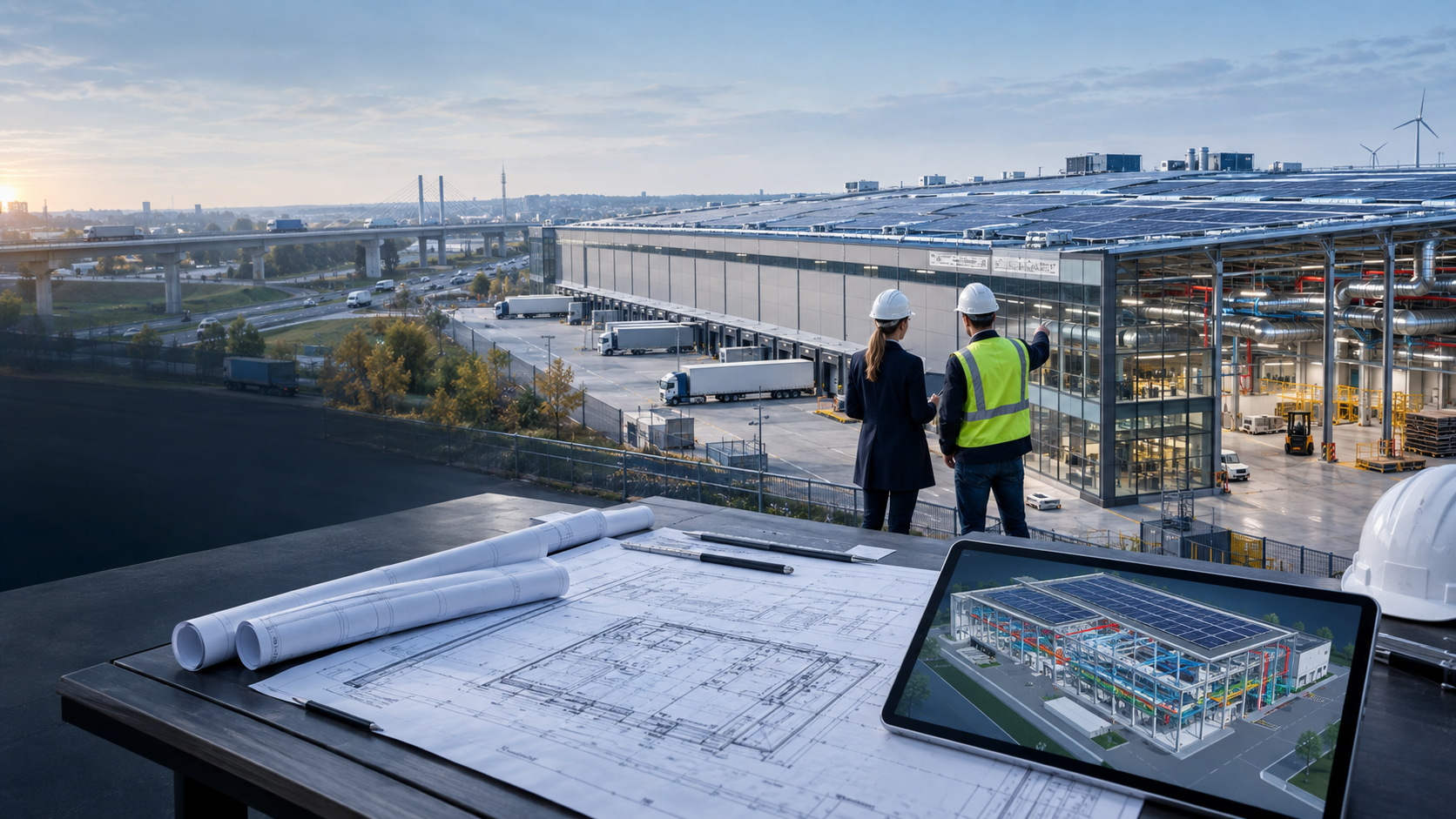
More than just warehouses: Why modern logistics properties are the new high-tech production facilities – Creative image on the topic, with AI: Xpert.Digital
Broken bridges, dilapidated schools: How a smart project pipeline can save our infrastructure
The hidden drivers of the construction revolution: Why good planning is now more important than new concrete
From AI to the renovation boom: This is how Germany's construction industry must now reinvent itself
Germany faces a monumental challenge: bridges are crumbling, schools are in dire need of renovation, the energy transition is stalling, and the economy demands state-of-the-art, automated logistics hubs. Yet, despite the availability of massive budgets in the billions from the federal, state, and local governments, the engine of infrastructure transformation repeatedly sputters. Why is this? The answer is surprising: Germany often doesn't lack money, construction capacity, or political will. What's missing is the crucial link between the initial idea and the actual construction work – the planning.
In public debate, planning services are all too often dismissed as a bothersome cost factor or bureaucratic red tape. But from an economic perspective, the planning sector is the true productive capital of our country. Those who skimp on early concepts, precise technical models, or digital building twins will later pay twice as much through construction delays, exploding costs, and inadequate usability.
The following article provides an in-depth analysis of why architecture and engineering firms are the real key to modernizing Germany. It examines how the market is splitting due to two completely different construction trends, how digitalization and artificial intelligence are revolutionizing the industry, and why a reliable project pipeline is our only chance to finally resolve the massive investment backlog.
Germany's planned economy as the key to infrastructure transformation
It's not the concrete that's lacking – Germany too often fails at planning before building
Germany faces a paradoxical situation. The need for modern buildings, efficient transport routes, resilient supply networks, and automated logistics centers is undeniable. At the same time, there is insufficient success in translating this need quickly into projects that are ready for construction, financially viable, and sustainably usable. At the heart of this contradiction lies a frequently underestimated sector: architectural and engineering firms, structural engineers, building services engineers, and specialists in civil engineering structures. Their services represent only a limited proportion of the total life-cycle costs of a property or infrastructure. However, they are crucial in determining whether investments worth billions remain economically, scheduling-wise, and technically manageable.
The central economic thesis is therefore this: Germany's infrastructure problem is not solely a lack of money, construction capacity, or political will. It is equally a problem of planning capacity, project organization, and institutional implementation capability. Additional investment funds only have an effect when political objectives are translated into robust needs assessments, approvable designs, coordinated specialist models, and feasible solutions. Without this translation process, more money primarily increases demand in an already strained market. The consequences are rising prices, overburdened offices, longer project durations, and a widening gap between announced and actually realized investments.
Planning is productive capital
Planning services are often treated as preparatory work in public debate. Economically, however, they represent a form of productive capital. Good planning reduces uncertainty, prevents poor decisions, and improves the usability of a building for decades. It integrates spatial requirements, load-bearing capacity, energy supply, fire protection, automation, permitting regulations, construction processes, and subsequent operation into a coherent system. Especially in complex logistics and infrastructure projects, the greatest economic leverage is generated long before the first construction work begins.
The quality of early decisions significantly influences later costs. Site layout, development, building volume, column grid, soil bearing capacity, utility routing, and energy requirements can still be modified relatively inexpensively at an early stage. If conflicting objectives are only identified during construction, costs increase disproportionately. Then, already contracted services must be adjusted, building components redesigned, permits supplemented, or schedules reconciled. A seemingly inexpensive plan can thus lead to a costly overall project.
Planning productivity should therefore not be confused with minimizing fees. The crucial factor is the relationship between planning resources used and life-cycle costs avoided. Additional effort for comparing options, simulations, or more precise inventories can be highly profitable if it saves space, reduces energy consumption, facilitates future modifications, or prevents operational disruptions. The planning sector is thus not merely a service sector, but a multiplier for the productivity of the entire construction, real estate, and infrastructure system.
Two construction booms in one country
The German construction market is not experiencing a uniform economic cycle. While traditional building construction, particularly new residential construction, suffered for years from high financing costs, weak demand, and reduced project margins, civil engineering performed considerably better. In 2025, real new orders for the construction industry rose by 6.8 percent. Nominal new orders reached €113 billion. Adjusted for inflation, annual revenue increased for the first time since 2020, amounting to €120.5 billion in nominal terms.
Behind these overall figures, however, lies a significant disparity. In 2025, building construction generated revenue of €57.4 billion, a real decline of 0.8 percent. Civil engineering, on the other hand, reached €61.7 billion, representing real growth of 5.8 percent. These differences are of great importance to planning offices. Offices heavily focused on privately financed residential construction or speculative commercial developments faced considerable pressure. In contrast, providers with expertise in transportation, network infrastructure, urban renewal, energy systems, and complex technical equipment benefited from more stable or increasing demand.
This also shifts the required skill set. In the weak new construction market, traditional building design is often no longer sufficient to secure occupancy rates and margins. Interdisciplinary services are needed that combine renovation during ongoing operations, energy optimization, fire protection, structural reinforcement, building services engineering, and digital as-built models. The market is moving from simply producing space to the technically demanding transformation of existing structures. This increases the value of experience, expertise in interfaces, and reliable project management.
The investment backlog is growing faster than the capacity for implementation
The perceived municipal investment backlog reached approximately €231.2 billion in 2026. Schools alone accounted for €68.9 billion, and roads and transport infrastructure for €53.7 billion. At the same time, municipalities planned capital investments of around €50 billion. These figures reveal a fundamental imbalance: even large annual budgets are insufficient to modernize existing infrastructure in the short term, especially since some funds are needed for ongoing replacement investments, rising costs, and projects already committed to specific projects.
Money is just one of several scarce resources. Many municipalities lack sufficient staff to professionally prepare projects, access funding, coordinate planning processes, and reach timely decisions. Added to this are limited capacities at planning offices, testing agencies, permitting authorities, and construction companies. When these bottlenecks occur simultaneously, the result is not a linear investment process, but a system of waiting lists. Projects block each other, decisions are postponed, and already completed documents become outdated.
A growing backlog of investments also increases the complexity of future measures. Neglected maintenance rarely leads only to a proportionally higher need for renovation. Damage can spread, technical systems lose their spare parts supply, legal requirements increase, and temporary repairs complicate a comprehensive solution later on. A manageable maintenance project can thus become a major overhaul. The economically sound solution, therefore, lies not only in larger investment packages, but in a continuous pipeline of predictable, standardized, and prioritized projects.
Architecture alone is no longer enough
Modern building projects are systems comprised of interconnected disciplines. Building design defines use, spatial organization, materials, and urban integration. Structural engineering ensures safety, spans, deformation control, and economical material use. Civil engineering encompasses bridges, retaining structures, drainage, traffic areas, and complex infrastructure development. Building services engineering integrates heating, cooling, ventilation, electricity, communication, safety technology, materials handling, and increasingly, local energy generation.
The economic challenge lies at the interfaces. A larger span can make logistics space more flexible, but at the same time increases the cost of the supporting structure and foundations. Higher technical density increases a building's efficiency, but requires more installation space and maintenance access. Photovoltaics, heat pumps, battery storage, charging infrastructure, and emergency power systems change load assumptions, grid connections, and fire protection concepts. Every isolated optimization can lead to additional costs or operational restrictions elsewhere.
Therefore, the value of integrated planning is growing. It doesn't begin with drawing individual components, but with a shared understanding of the operational model. Only when throughput, shift operations, product structure, degree of automation, personnel flow, energy profile, and expansion options are clarified can an economically viable building be developed. The most important planning achievement often lies in making conflicting requirements visible and manageable early on.
Logistics properties are becoming technical production equipment
A modern logistics property is not simply a warehouse. It is a production facility whose economic value arises from the interplay of location, building structure, technology, data, and processes. High floor loads, large spans, precise leveling, fire protection compartments, sprinkler systems, conveyor technology, and energy-intensive automation demand closely coordinated planning. For temperature-controlled goods, refrigeration systems, insulation concepts, airlocks, and redundancies are added to the mix. For hazardous materials, the requirements for containment, ventilation, and safety organization increase.
The degree of automation changes the logic of the building. Manual warehouses can be relatively tolerant of minor deviations. High-bay warehouses, automated guided vehicles (AGVs), robotics, and automated sorting systems require significantly tighter geometric and technical tolerances. Even slight errors in floor leveling, vibration, power quality, data supply, or temperature can impair system performance. Planning thus becomes a direct prerequisite for operational throughput.
At the same time, market cycles are shortening in many industries. Users want readily available space, while permits, grid connections, and construction have long lead times. This tension favors modular concepts, standardized structures, and prepared expansion areas. However, a logistics site cannot be completely standardized. Land, transport connections, soil conditions, neighborhood, labor market, and energy supply remain site-specific. Therefore, a platform strategy is not economically successful: Standardized core modules are combined with precise adaptation to the location and processes.
Transport links determine the value of a building
The value of a logistics building doesn't end at the property line. Access roads, intersections, bridges, rail connections, parking areas, and local roads determine whether a location actually achieves its planned performance. A highly automated warehouse with inadequate transport links creates congestion instead of productivity. Therefore, building design and civil engineering must be considered together.
The transition between private site development and public infrastructure is particularly critical. Differing responsibilities, budget cycles, and decision-making speeds can lead to a building being completed before the necessary external infrastructure is finished. Conversely, extensively developed infrastructure can remain unused if private investment fails to materialize. Good planning synchronizes these timelines and defines reliable intermediate stages.
In regions with high logistics density, a cumulative effect also arises. Individual projects may appear manageable in terms of traffic, but their combined impact can overload town centers, motorway junctions, or bridges. Traffic models should therefore consider not only individual properties but also regional growth assumptions. This initially increases the research effort but avoids costly revisions and acceptance problems.
Technical equipment becomes a cost driver and competitive advantage
The share of technical equipment in investment costs is increasing. Electrification, digitalization, decarbonization, and automation are shifting the focus from passive building structures to active system technology. In logistics centers, this affects not only classic building equipment but also charging parks, energy management, sensors, access control, fire alarm systems, data networks, and interfaces with conveyor and storage technology.
This development increases investment costs but can reduce operating costs and dependence on energy prices. Photovoltaics on large roof areas is an obvious component, but is rarely sufficient on its own for a comprehensive economic strategy. Generation profile, peak loads, grid capacity, storage, charging requirements, and potential flexibility marketing must be modeled together. A battery storage system can increase self-consumption, smooth peak loads, and improve security of supply. However, its economic viability depends heavily on the tariff structure, operating mode, and regulatory framework.
Therefore, technical planning must move from mere dimensioning to system optimization. The crucial factor is not whether each individual piece of technical equipment operates at maximum efficiency, but whether the overall system is reliable, maintainable, and economical. Over-engineering carries risks, just as under-engineering does. Complex systems can lead to higher maintenance costs, require specialized personnel, and be more difficult to manage in the event of malfunctions. The right solution is based on the actual operating profile and clearly defined consequences of failure.
Structural design between material price and flexibility
The structural design influences costs, construction time, resource consumption, and future adaptability. For halls and civil engineering structures, various construction methods are available, each with its own economic advantages. Steel allows for large spans and rapid assembly but is susceptible to price fluctuations and corrosion. Reinforced concrete offers robustness, fire protection, and high thermal mass, but entails greater dead loads and often longer construction processes. Wood and hybrid systems can offer ecological benefits but require careful consideration of moisture content, fire behavior, availability, and usability.
Cost-optimized structural design doesn't simply reduce material quantities. It coordinates grids, spans, component repetition, transport, assembly, and technical integration. Using fewer standardized component types can simplify manufacturing and the construction process. At the same time, optimization shouldn't be so restrictive that later changes in use become disproportionately expensive. A slightly more generous grid or a higher load-bearing capacity can increase the long-term value of the property.
For existing buildings, the task shifts from recalculating structural integrity to assessing the actual condition of the structure. Existing documentation is often incomplete, alterations are undocumented, and material properties are uncertain. Digital surveying, structural openings, laboratory tests, and monitoring reduce this uncertainty. While they incur upfront costs, they prevent blanket safety margins or unnecessary replacement construction. The economic value of sound diagnostics lies in reliably utilizing existing load-bearing reserves.
🎯🎯🎯 Data-driven B2B industry hub as a quasi-in-house solution


The quasi-in-house solution: How Xpert.Digital closes operational gaps in B2B marketing and sales – Smart Content-Driven Business - Image: Xpert.Digital
Xpert.Digital is a data-driven B2B industry hub led by Konrad Wolfenstein . The company acts as an external, quasi-in-house solution for industrial partners, closing operational gaps in marketing, content, and sales – without requiring additional resources on the client side.
More information here:
Why good planning is crucial
Construction prices remain a structural risk
The extreme price increases of the early 2020s have subsided, but cost levels remain high. Construction price indices for civil engineering and maintenance were significantly higher at the beginning of 2026 than the base year of 2021. In civil engineering, key sub-indices, depending on the type of structure, ranged between approximately 130 and 143 points, assuming 2021 is set at 100. This does not mean that every project has become exactly this much more expensive. However, it illustrates how much earlier cost estimates can lose their predictive value when planning and implementation phases are separated by several years.
This creates a twofold risk for building owners. First, an approved budget may no longer be sufficient once construction begins. Second, cost savings sought too late can impair the functionality and lifespan of the project. Reliable cost control therefore requires continuous market monitoring, clearly defined price levels, risk reserves, and alternative technical solutions. Costs must be understood as a range with uncertainties, not as a seemingly precise single figure.
Planners are simultaneously under pressure to promise cost certainty, even though significant influencing factors are beyond their control. These include material prices, energy prices, interest rates, delivery times, capacity bottlenecks, and changes made by the client. Professional planning doesn't eliminate this uncertainty; it makes it transparent and manageable. This involves comprehensible assumptions, regular forecast updates, and decisions about which risks should be avoided, transferred, accepted, or mitigated through reserves.
Skills shortage meets increasing complexity
The increasing number of available skilled workers is limiting how quickly investment programs can be implemented. According to the Federal Employment Agency's shortage analysis, construction planning, construction supervision, and architecture were among the sectors experiencing staffing problems in 2024. Despite the economic downturn, the combined unemployment rate for architects and civil engineers was only 3.3 percent in 2025, close to full employment. At the same time, the number of newly registered job openings for architects declined compared to the previous year. This combination of factors does not indicate a simple, widespread shortage of skilled workers, but rather a selective bottleneck based on specialization, region, and experience level.
There is a particular shortage of people who can combine technical expertise with project responsibility. A young team can efficiently handle modeling and calculations, but needs experienced personnel for permitting strategies, risk assessment, client consultation, and conflict resolution. The demographic shift exacerbates the problem because the retirement of specialists results not only in lost working hours but also in a wealth of experience. This knowledge is often inadequately documented and cannot be replaced by software in the short term.
The industry must therefore increase its productivity without compromising quality and control. Standardized processes, reusable component catalogs, automated inspections, and improved knowledge databases can reduce routine work. At the same time, clients must accept that good planning requires a realistic lead time. Constant acceleration, frequent change requests, and fragmented commissions do not lead to greater speed, but rather to interruptions, duplication of effort, and higher error rates.
Digitalization needs common rules
Building Information Modeling (BIM) promises a seamless digital flow of information from design through construction and operation to deconstruction. However, its practical benefits don't arise solely from a three-dimensional model. Structured data, clearly defined responsibilities, and binding exchange processes are crucial. Without common rules, each discipline-specific model may produce vivid images, but not necessarily reliable information.
An economically sound BIM concept begins with concrete use cases. Should the model detect collisions, determine quantities, simulate schedules, analyze energy consumption, or later support maintenance? Only from this can the necessary level of information, the model structure, and the verification processes be determined. If too much is modeled, effort and data volume increase without corresponding benefit. If too little is defined, the model remains a digital collection of drawings.
For public and private developers, data sovereignty is a strategic issue. Proprietary formats can create dependencies on individual software vendors and service providers. Open interfaces, clearly defined usage rights, and long-term readable data formats, on the other hand, increase competition and facilitate operator changes. Especially for infrastructure with service lives spanning several decades, the availability of essential information must not depend on the lifespan of a single software version.
Digital twins go beyond BIM. They connect the static model with real-time operational data from sensors, systems, and energy management. This allows for monitoring conditions, prioritizing maintenance, and optimizing operating strategies. The benefits are particularly high when data quality, measurement concepts, and responsibilities are planned from the outset. A digital twin built retroactively is often more expensive and incomplete because sensors, naming systems, and technical documentation are not aligned.
Artificial intelligence is changing value creation
Artificial intelligence will not replace planning offices in the short term, but it will change their task structure. It can search documents, prepare variants, highlight deviations from regulations, structure protocols, and analyze large amounts of data from inventories. Generative systems can also accelerate early design options. However, the responsibility for technical accuracy, permittability, and safety remains with qualified professionals.
The greatest productivity gains don't come from spectacular individual applications, but from combining many small improvements. Automatically consistent room books, machine-readable requirements, model-based quantities, and rule-based quality controls reduce media breaks. This frees up time for specialists to evaluate variants, communicate, and make complex decisions. Clean data and standardized processes are prerequisites. AI won't automatically improve a chaotic workflow; it can only make it chaotic more quickly.
At the same time, new liability and security issues arise. Training data can be faulty, outdated, or problematic in terms of copyright. Sensitive project information must not be allowed to enter external systems unchecked. Planning companies therefore need clear rules for permissible tools, data classes, human review, and documentation. The most economically powerful providers will not be those who most loudly promote AI, but rather those who reliably integrate it into auditable business processes.
Sustainability becomes a mathematical problem
Climate protection in the construction sector requires more than just energy-efficient building technology. A large part of the environmental impact arises from material extraction, manufacturing, transport, and construction. In load-bearing structures, concrete, steel, and foundations can significantly determine the amount of carbon stored. During operation, heating, cooling, lighting, conveying technology, and charging infrastructure are added to the mix. Therefore, economically sound planning considers the entire life cycle.
This can lead to conflicting objectives. Increased insulation reduces operating energy consumption but requires additional materials. Large glass surfaces improve daylighting but can also increase cooling loads. Lightweight construction saves material but may offer less thermal mass or robustness. The best solution is not determined by a single metric but by a transparent assessment of emissions, costs, usability, and adaptability.
Circular construction expands this perspective to include reuse and deconstruction. Building components that are detachably connected, documented, and separated by material purity are more likely to retain residual value. Digital material passports can secure information about origin, properties, and pollutants. However, established markets, reliable quality certifications, and scalable take-back systems are still lacking in many areas. Circularity is therefore not an automatic business model, but rather an investment in future options.
For logistics sites, land efficiency is particularly relevant. Sealing, rainwater management, biodiversity, and municipal acceptance increasingly influence permit approval. Multi-story logistics, compact development, or the use of brownfield industrial sites can reduce land consumption, but increase technical and financial requirements. This again highlights the strategic role of planning: it must translate ecological goals into a functioning operational and investment model.
Renovation becomes the leading market
Germany's existing building stock offers significant market potential, but its planning is more demanding than that of new construction. Existing buildings present challenges such as unknown structural elements, pollutants, ongoing occupancy, and limited space, all while meeting current safety and efficiency requirements. Every opening can reveal new information and alter previous assumptions. Therefore, planning must address uncertainty and organize decisions in stages.
A sensible process begins with an assessment of the existing structure and a clear definition of objectives. Not every building needs to be brought up to new construction standards, and not every old structure is worth preserving. The crucial factors are the intended long-term use, the realistic remaining lifespan, and which interventions will provide the greatest benefit. Options such as repair, partial renovation, conversion, expansion, and replacement construction should be compared according to the same life cycle criteria.
During ongoing operations, construction phase planning becomes particularly important. For logistics centers, administrative buildings, or technical infrastructure, downtime can incur higher costs than the actual construction work. While temporary solutions, relocations, night work, and redundant supply systems increase the project budget, they can still be economically beneficial. Therefore, construction costs and subsequent operating costs must be considered together.
Public clients need construction management expertise
Even a high-performing planning office cannot fully compensate for unclear goals and slow decision-making on the part of the client. Client competence means precisely defining requirements, assigning responsibilities, making timely decisions, and managing changes in a controlled manner. Without this competence, planning becomes a substitute for unclear policies, internal coordination, or operational strategy.
Public projects often suffer from shifting priorities, rigid budget constraints, and the separation of investment and operating costs. A cost-effective construction project can prove expensive in the long run if maintenance, energy, and personnel costs are not factored in. Conversely, a higher-quality solution is difficult to justify if savings only materialize in later fiscal years or within a different organizational unit. Therefore, a life-cycle approach requires not only improved calculation models but also appropriate budgeting and decision-making structures.
Standardization can ease the burden on building owners. Recurring room schedules, technical standards, and digital information requirements reduce the effort per project. However, they must not become rigid specifications that ignore local conditions. Good standards define goals, interfaces, and minimum quality standards, but allow for justified deviations. This creates a learning project pipeline instead of a series of isolated individual projects.
The question of fees is a question of productivity
Competition for planning services still too often focuses on price. This is understandable, as fees seem easily comparable, while planning quality is difficult to measure before a project begins. However, a low price can be achieved through inexperienced teams, limited scope of work, or numerous additional services later on. The perceived savings simply shift costs to the construction and operation phases.
A more economically sound evaluation methodology places greater emphasis on team quality, project experience, methodology, availability, and risk awareness. Especially with complex tasks, the most polished presentation should not be the deciding factor, but rather the ability to identify critical interfaces and develop realistic solutions. References are helpful but should not be judged solely on project size. What matters is whether a firm has successfully solved comparable technical, organizational, and operational problems.
Planning firms, for their part, need to learn to better demonstrate their value. Those who merely sell hours and drawings are more likely to be caught in price competition. Those who demonstrably reduce construction cost risks, increase permitting, improve operational processes, and provide lifecycle data offer strategic value. To achieve this, the industry needs better key performance indicators, systematic project follow-up, and a more open culture of learning from mistakes.
Medium-sized offices are facing consolidation
The German planning landscape is heavily dominated by medium-sized businesses. This fosters close relationships with clients, regional expertise, and a high degree of specialization. At the same time, small structures make it difficult to invest in software, cybersecurity, professional development, and standardized quality systems. Furthermore, large projects require substantial insurance coverage, upfront financing, and broad staffing.
The market is therefore likely to become further differentiated. Larger groups can bundle interdisciplinary services and scale them across regions. Highly specialized smaller firms will remain successful if they possess essential expertise and operate within robust networks. Providers without a clear specialization, who cannot leverage either size or particular expertise as an advantage, will come under pressure.
Cooperation is an alternative to complete takeover. Shared data platforms, framework partnerships, and established planning teams can create economies of scale without completely relinquishing local autonomy. This requires clear interfaces, uniform quality standards, and fair liability rules. Loosely structured working groups that form anew for each project achieve only limited efficiency.
Germany needs a predictable project pipeline
The greatest structural weakness lies in the fluctuating demand. Political programs create short-term spikes in demand, to which companies are expected to respond with hiring and investment. Delayed budgets or changes in funding conditions cause this demand to collapse just as quickly. This makes it risky for planning offices to build up capacity on a permanent basis. The economy loses time because personnel, processes, and project expertise have to be mobilized anew for each new program.
A multi-year, prioritized project pipeline would better synchronize supply and demand. It would need to transparently show which projects are planned, their stage of development, funding status, and anticipated start date. This wouldn't guarantee every single project, but it would provide a more reliable basis for personnel planning, training, and digitalization. Grouping similar projects together, for example, for schools, bridges, administrative buildings, or energy centers, would be particularly effective.
Prioritization is therefore unavoidable. The investment required significantly exceeds short-term implementation capacity. Projects should thus be ranked according to safety relevance, economic benefit, risk of deterioration, climate impact, and feasibility. Political visibility alone is not a sufficient criterion. An unspectacular replacement structure or a technical renovation can be more economically important than a prestigious new building.
From investment program to implementation policy
Germany possesses the necessary capital, technical expertise, and high-performing companies. The bottleneck increasingly lies in combining these resources. Successful infrastructure policy must therefore understand implementation as a discipline in its own right. It requires realistic timelines, well-prepared projects, strong clients, available planners, and swift yet legally sound decisions.
Acceleration should not be confused with omitting necessary checks. Incomplete planning merely shifts conflicts to later phases, where resolving them becomes more expensive. True acceleration arises from parallel processing, early coordination, clear standards, digital approval processes, and decisive project organizations. It reduces lead times and repetitions, not professional diligence.
This transformation opens up a large market for the planning sector. Infrastructure, renovation, decarbonization, logistics automation, and digitalization will ensure long-term demand. However, growth alone does not guarantee attractive margins. Companies must retain skilled workers, master technologies, manage liability risks, and consistently align their services with the client's economic benefit.
Better planning leads to faster and cheaper construction
The common juxtaposition of fast, inexpensive, and high-quality planning is misleading. Good planning can support all three goals if it begins early, involves sufficient decision-making, and considers the entire life cycle. Poor planning, on the other hand, only appears fast and cheap at the outset. Its costs become apparent later in the form of change orders, delays, operational problems, and premature modifications.
The crucial economic policy perspective is therefore this: planning capacity equals infrastructure capacity. Every additional euro spent on roads, schools, networks, or logistics centers requires qualified personnel and robust processes to translate it into a functioning structure. If these prerequisites are ignored, an investment program can partially transform into price increases and empty promises. If they are systematically developed, planning can become a lever for productivity, climate protection, and location quality.
Germany's infrastructure transformation will not be decided on the construction site, but months and years beforehand. It will hinge on needs assessment, reliable data, coordinated specialist models, and the ability to resolve conflicting objectives in a timely manner. Concrete, steel, and technology make a structure visible. However, its economic success is determined by the quality of the decisions made before any of it became visible.
📈🚀 From visibility to trust 👀🤝 Your scalable path with Xpert.Digital

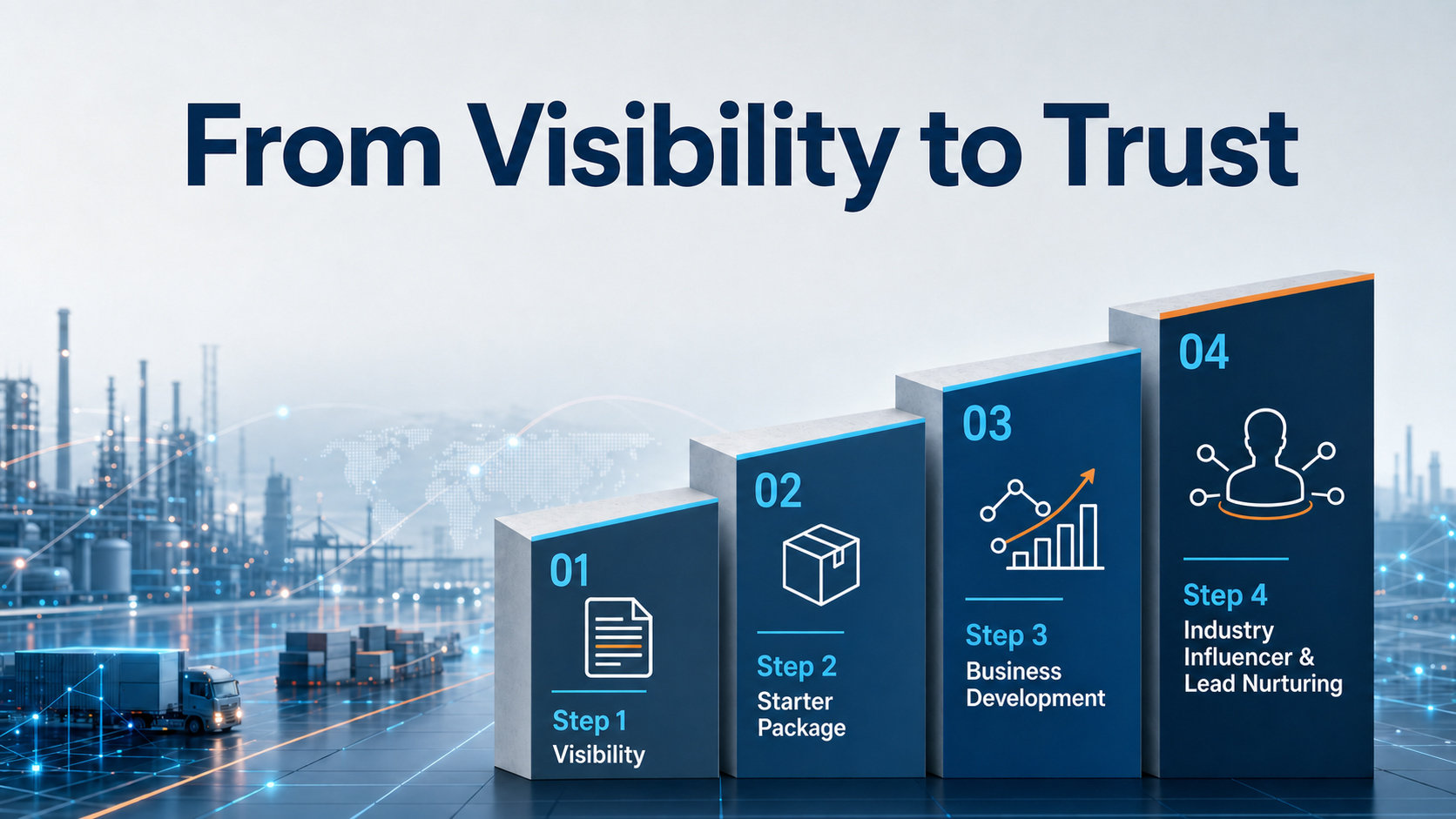
From visibility to trust: Your scalable path with Xpert.Digital - Image: Xpert.Digital
In industrial B2B, sustainable business relationships rarely emerge overnight. They develop step by step – through visibility, professional relevance, recurring touchpoints, and growing trust. Xpert.Digital's 4-stage model addresses precisely this: It offers a structured path that begins with a manageable entry point and can evolve into deeper collaboration in business development if needed.
Instead of relying on loud marketing promises, this model puts the relationship at the forefront. Companies start with clearly defined, easily calculable measures and then decide, based on their own experience, how far they want to expand the collaboration. A key factor for this undisturbed trust-building process: The platform completely avoids annoying advertising ads, so the editorial focus remains solely on the companies' expertise.
More information here:
Your global marketing and business development partner
☑️ Our business language is English or German
☑️ NEW: Correspondence in your native language!

Konrad Wolfenstein
I and my team are happy to be available to you as your personal advisor.
You can contact me by filling out the contact form here wolfenstein@xpert.digital:or simply call me at +49 7348 4088 965. My email address is
I'm looking forward to our joint project.