Germany's answer to US giants: What the new AI model "Soofi S" can really do – Image: Xpert.Digital
Small budget, big impact: How a German AI is currently beating the open-source competition
Moving away from US dependencies: Why the German economy is now looking at the AI "Soofi S"
Runs entirely on its own servers: This new German AI solves the biggest data privacy problem
Artificial intelligence has long since evolved from a mere technological trend into a tangible geopolitical power factor. While tech giants from the US and increasingly from China dominate the global market with ever more gigantic and resource-intensive models, concerns are growing in Europe about a dangerous technological dependency. With "Soofi S," a remarkable German consortium of research and industry partners has now presented a concrete answer to this challenge. With a comparatively modest €20 million in funding and a highly efficient architecture, this basic model aims to lay the foundation for Europe's digital sovereignty. But can a model with nearly 32 billion parameters even survive in the global race of giants? And does the project live up to the initial bold announcements? The following analysis examines the technical details of Soofi S, draws an honest comparison with its international competitors, and demonstrates why the model is intended less as a ChatGPT rival for end users and more as a tailored, data protection-compliant solution for European businesses.
Sovereign Intelligence from Munich: Soofi S and the German AI Approach: A Basic Model as a Test Case for Europe's Digital Self-Assertion
The starting point: Why a German AI model is even necessary
When the Soofi consortium presented the first results of its Soofi S base model on June 17, 2026, it was more than just a typical product announcement from the research sector. It was the provisional culmination of an industrial policy experiment that had been in preparation since November 2025 and was backed by approximately €20 million in funding from the German Federal Ministry for Economic Affairs and Energy. The true economic core of the initiative lies not in the technological race for ever-increasing parameter counts, but in a structural concern that has been circulating in European business circles for years. Those who do not control the fundamental AI models themselves relinquish key building blocks of future digital value chains to external actors whose business models, data protection standards, and geopolitical interests may not align with European objectives. This concern stems from the observation that virtually the entire commercial base model landscape is dominated by US providers such as OpenAI, Google, Anthropic and Meta, as well as increasingly Chinese competitors like DeepSeek, while European companies are essentially becoming users rather than creators of this technology.
The project is funded within the framework of the so-called 8ra umbrella initiative, at the heart of which lies the Important Project of Common European Interest on cloud infrastructures, or IPCEI-CIS for short. This European funding architecture aims to support the development of basic digital infrastructures across the continent, with Soofi representing one of the first visible AI-specific building blocks within this broader framework. From an economic policy perspective, it is noteworthy that the funding was deliberately not awarded to a single large corporation, but rather to a consortium of research institutions, universities, and smaller AI companies, coordinated by the German AI Association as the industry representative.
Who is behind the project and how the resources were pooled
Structure and financing of an unusual research consortium
The consortium comprises a remarkable range of academic and industrial stakeholders. Participating institutions include the Fraunhofer Institute for Intelligent Analysis and Information Systems, the Fraunhofer Institute for Integrated Circuits, the German Research Center for Artificial Intelligence, the Julius-Maximilians University of Würzburg with its CAIDAS competence center, Leibniz University Hannover through its L3S research center, the Technical University of Darmstadt with hessian.AI, the Berlin University of Applied Sciences, and the two companies Ellamind and Merantix Momentum. This structure reflects a pattern of industrial policy technology promotion typical for Germany: instead of subsidizing a single market-dominating company, knowledge is distributed across many institutions. While this complicates coordination, it simultaneously prevents the development of one-sided dependencies on a single private actor.
The financial framework is interesting in international comparison. The approximately €20 million in funding, which expires at the end of July 2026, seems almost modest compared to the sums that US providers spend on individual training runs. Reports indicate that individual training runs for large models could reach the €1 billion mark by 2027 – an amount that only a few financially powerful technology companies can manage. The fact that Soofi S can achieve a competitive result with a fraction of these resources is seen in the professional community as proof that technological sovereignty does not necessarily require gigantic amounts of capital, but can also be achieved through clever architectural decisions and focused data strategies.
Technical basics of the model in detail
Architecture, training data, and the role of efficiency
Soofi S is designed as a Mixture-of-Experts (MoE) model, with a total parameter count of approximately 31.6 billion. However, only about 3.2 billion of these parameters are actually activated per processed token. This difference between the total number of parameters and the number of active parameters is economically significant, as it largely determines operating costs in production. A company using such a model to analyze technical documentation or regulatory texts ultimately pays for computing power that more closely resembles a much smaller, denser model, while the quality of the results approaches that of a significantly larger model. The architecture itself follows a hybrid approach consisting of 23 Mamba 2/MoE layers and six classic attention layers with 128 routing experts. An open blueprint from Nvidia served as the starting point, and initially, no costly custom post-training was undertaken.
The training took place between November 2025 and May 2026 and spanned three phases, during which the proportion of German training data was deliberately increased from an initial 7.2 percent to 15.3 percent. A total of approximately 27 trillion tokens were processed, utilizing up to 512 Nvidia B200 graphics processors and resulting in a total GPU load of around 253,000 hours. The physical training environment, Deutsche Telekom's Industrial AI Cloud in Munich, is itself part of the sovereignty narrative, as it uses cooling water from Munich's Eisbach canal, thus signaling a certain degree of ecological modesty compared to far more energy-intensive US data centers. Besides German and English as the main languages, the model also has limited support for French, Italian and Spanish, with knowledge base dated to the end of 2025 and a context length of up to one million tokens targeted in the final training phase, while the stable throughput, according to the technical report, is between 4,000 and 256,000 tokens.
Performance comparison with international competitor models
Where Soofi S truly impresses and where limitations become apparent
The benchmark results published in July paint a nuanced picture. In comparative tests against sixteen other open models, Soofi S claims to lead the aggregated scores for German and English among fully open models, explicitly surpassing the American model Olmo 3 in the 32 billion parameter class and the Swiss model Apertus with 70 billion parameters. According to the available figures, Soofi S also maintains its lead over other European competitors such as the Spanish Alia with 40 billion parameters and the multilingual EuroLLM with 22 billion parameters. Particularly in programming tasks, as measured by benchmarks such as HumanEval and MBPP, the model achieves the best results among the open models in comparison.
At the same time, the results also reveal weaknesses. In tasks requiring broad, factual knowledge, such as those in the MMLU-Pro benchmark, as well as in advanced scientific logic, such as in the German GPQA Diamond test, Soofi S lags behind closed international frontier models, although it remains among the top performers within the group of open models. A relative weakness is also evident in German competitive mathematics and certain forms of factual questioning. This differentiation is economically significant because it demonstrates that Soofi S is not a universal replacement for the large, closed models of technology companies, but rather pursues a targeted positioning as the highest-performing fully open model of its size class, with a particular focus on the German language.
| Model | Origin | parameter | Special feature in comparison |
|---|---|---|---|
| Soofi S 30B-A3B | Germany | 31.6 billion (3.2 billion active) | Leading in open models in German and English, strong code values |
| Olmo 3 32B | USA | 32 billion. | Fully open, but surpassed according to Soofi benchmarks |
| Apertus 70B | Switzerland | 70 billion. | Larger, but inferior in aggregated tests |
| Alia 40B | Spain | 40 billion. | European model, weaker in comparison |
| EuroLLM 22B | European Consortium | 22 billion. | Multilingual, smaller size class |
A new dimension of digital transformation with 'Managed AI' (Artificial Intelligence) - Platform & B2B solution | Xpert Consulting

A new dimension of digital transformation with 'Managed AI' (Artificial Intelligence) – Platform & B2B solution | Xpert Consulting - Image: Xpert.Digital
Here you will learn how your company can implement customized AI solutions quickly, securely and without high entry barriers.
A managed AI platform is your all-inclusive, worry-free solution for artificial intelligence. Instead of dealing with complex technology, expensive infrastructure, and lengthy development processes, you receive a ready-made solution tailored to your needs from a specialized partner – often within just a few days.
The key advantages at a glance:
⚡ Rapid implementation: From idea to ready-to-use application in days, not months. We deliver practical solutions that create immediate added value.
🔒 Maximum data security: Your sensitive data stays with you. We guarantee secure and compliant processing without sharing data with third parties.
💸 No financial risk: You only pay for results. High upfront investments in hardware, software, or personnel are completely eliminated.
🎯 Focus on your core business: Concentrate on what you do best. We take care of the entire technical implementation, operation, and maintenance of your AI solution.
📈 Future-proof & scalable: Your AI grows with you. We ensure continuous optimization and scalability, and flexibly adapt the models to new requirements.
More information here:
From research project to industrial application: The potential of Soofi S
The current state of development since the announcement
What actually changed between June and July 2026
Since the initial announcement in mid-June, a great deal has indeed happened, significantly expanding upon the original press release. In mid-July, the complete Pretraining Tech Report was published, considered the project's first major milestone, revealing the technical details that had previously only been known in broad outline. This transformed the announcement into a verifiable technical reality – complete with published model weights, training and evaluation code, and a breakdown of the data sources used. According to the consortium's own assessment, the project thus meets the criteria of the Open Source AI Definition 1.0, and approximately 99 percent of the training process can be independently verified and reproduced.
However, closer inspection reveals a significant discrepancy between the public claim of complete openness and actual accessibility. The model provided on the Hugging Face platform is explicitly labeled as a beta preview and research artifact, not a final open release. Access is currently tied to registration, and the license is currently marked as user-defined, without the final license text being available yet. Fraunhofer itself confirms on its project website that the model is currently in a closed testing phase with selected industry partners and that free access for the general public remains deliberately restricted, with the announcement that broader access will follow in a few weeks. For companies wishing to use the model productively, this means that a concrete request with evidence of an application scenario is required before access is granted.
In addition to the basic model, further variants have since been announced, including an Instruct version optimized for assistant tasks and two specialized reasoning models internally named Isar and Rhine. For local operation on on-premises hardware, quantizations in GGUF and FP8 formats are already available, compatible with common tools such as llama.cpp or Ollama. This is particularly relevant for companies with strict data protection requirements that do not wish to use a cloud connection.
Classification of the original level of ambition
From the announcement of a hundred-billion-dollar model to pragmatic reality
One aspect often overlooked in public perception concerns the evolution of the original objective. When the project was first presented in November 2025, the plan was to develop an AI language model with approximately 100 billion parameters, from which highly specialized reasoning models for complex applications such as AI-controlled robotics would be derived. Deutsche Telekom also spoke in its own statements of a planned model with 100 billion parameters as a European answer to ChatGPT. The Soofi S that was actually presented, with around 30 billion total parameters, falls significantly short of this original scale, and the "S" in the model name explicitly stands for the smaller size class within a planned family of models.
This postponement can be interpreted in two ways from an economic perspective. On the one hand, it could be seen as a realistic adjustment to limited computing resources and funding within the originally set deadline of July 2026, which seems plausible given the relatively small funding amount of 20 million euros. On the other hand, it reveals a methodologically more astute approach than initially announced: publishing a smaller but highly efficient model first allows the consortium to gather practical experience early on before developing larger and more expensive models. The consortium's own statements point in this direction, as Soofi S is explicitly described as the first building block of a model family from which larger and more powerful successor models, as well as specialized variants for dialogue, reasoning, and agent applications, are to be developed.
Economic target groups and practical application scenarios
Who Soofi S is actually intended for
Unlike many popular chatbot applications, Soofi S deliberately targets not end consumers, but rather companies, industrial SMEs, public administrations, research institutions, and startups that want to develop their own AI applications based on their own data without becoming permanently tied to individual non-European providers. Specifically mentioned application areas include industrial processes, the analysis of extensive technical and regulatory documents, code generation, and agentic AI systems that can independently perform multi-step tasks. For regulated sectors such as finance, healthcare, or public administration, the ability to operate an AI model entirely on their own or European infrastructure is of considerable importance, as it makes it easier to address issues related to the General Data Protection Regulation (GDPR), auditability, and traceability than with closed, foreign models.
Particularly valuable for this application is the model's ability to process very long documents, which is relevant, for example, for analyzing technical manuals, regulatory requirements, or complex contracts. The consortium is already testing the model with industry partners in practical application scenarios to closely align its further development with actual business needs. This approach differs from a purely academic research project, as commercial applicability and market relevance are considered from the outset, although the consortium is explicitly still seeking additional industry partners for the next development phase, including in areas such as technical documentation, code generation, and agent applications.
Critical appraisal and open questions
Between justified pride and sober market reality
Public response to Soofi S has been predominantly positive, with particular emphasis on the cost-effectiveness achieved by a relatively small German consortium, which can compete with significantly larger international projects. At the same time, independent trade publications urge caution in assessing the actual maturity level. As long as the final license is not yet finalized and access remains restricted to a closed test phase with selected partners, the model is currently better suited for experimentation and evaluation than as a reliable foundation for productive business applications. This assessment aligns with the Fraunhofer Institute's own statement, which explicitly describes the current phase as a closed beta and intends to accept public feedback from the open-source community only after the completion of the ongoing test phase with industry partners.
From a broader economic perspective, the fundamental question arises whether a model of this scale can truly make a strategic difference for European digital sovereignty, or whether it will remain merely an important but limited signal. A single open 30-billion-parameter model—however powerful it may be within its peer group—cannot currently compete in absolute terms with the closed frontier models of the major American and Chinese providers, which operate with significantly higher investments and larger parameter counts. The real value of Soofi S, therefore, lies less in direct competition for the top spot in the global AI rankings, but rather in its demonstrated ability to create a competitive, fully transparent baseline model trained on European infrastructure, which can serve as a starting point for specialized, sovereign applications.
Outlook on the further development of the project
What to expect in the coming months
With the project's original funding period ending in late July 2026, the consortium is facing crucial decisions regarding its continuation. The release of a final version under a permissive license without access restrictions has already been announced, though the exact timing remains open. Larger models within the Soofi family are also in development, but the specific structure and timeline for these successor models have not yet been publicly disclosed. Given the initial ambition of a significantly larger model with approximately 100 billion parameters, it remains to be seen whether and in what form this objective will be pursued after the current funding phase ends. This will likely depend largely on the willingness of the Federal Ministry for Economic Affairs and Energy and potential private investors to provide further funding for a second project phase.
For companies considering using Soofi S, a two-pronged strategy is recommended at this stage: Technical evaluation of the model can begin now, particularly for organizations with specific needs for sovereign infrastructure and long-term document analysis. However, the final licensing terms should be clarified before actual production deployment. The coming weeks and months will show whether Soofi S successfully transitions from a high-profile research project to a widely used industrial infrastructure component, and whether the European AI landscape has thus gained a sustainable building block for its digital independence.
Your global marketing and business development partner
☑️ Our business language is English or German
☑️ NEW: Correspondence in your native language!

Konrad Wolfenstein
I and my team are happy to be available to you as your personal advisor.
You can contact me by filling out the contact form here wolfenstein@xpert.digital:or simply call me at +49 7348 4088 965. My email address is
I'm looking forward to our joint project.
☑️ SME support in strategy, consulting, planning and implementation
☑️ Creation or realignment of the digital strategy and digitization
☑️ Expansion and optimization of international sales processes
☑️ Global & Digital B2B trading platforms
☑️ Pioneer Business Development / Marketing / PR / Trade Fairs
📈🚀 From visibility to trust 👀🤝 Your scalable path with Xpert.Digital

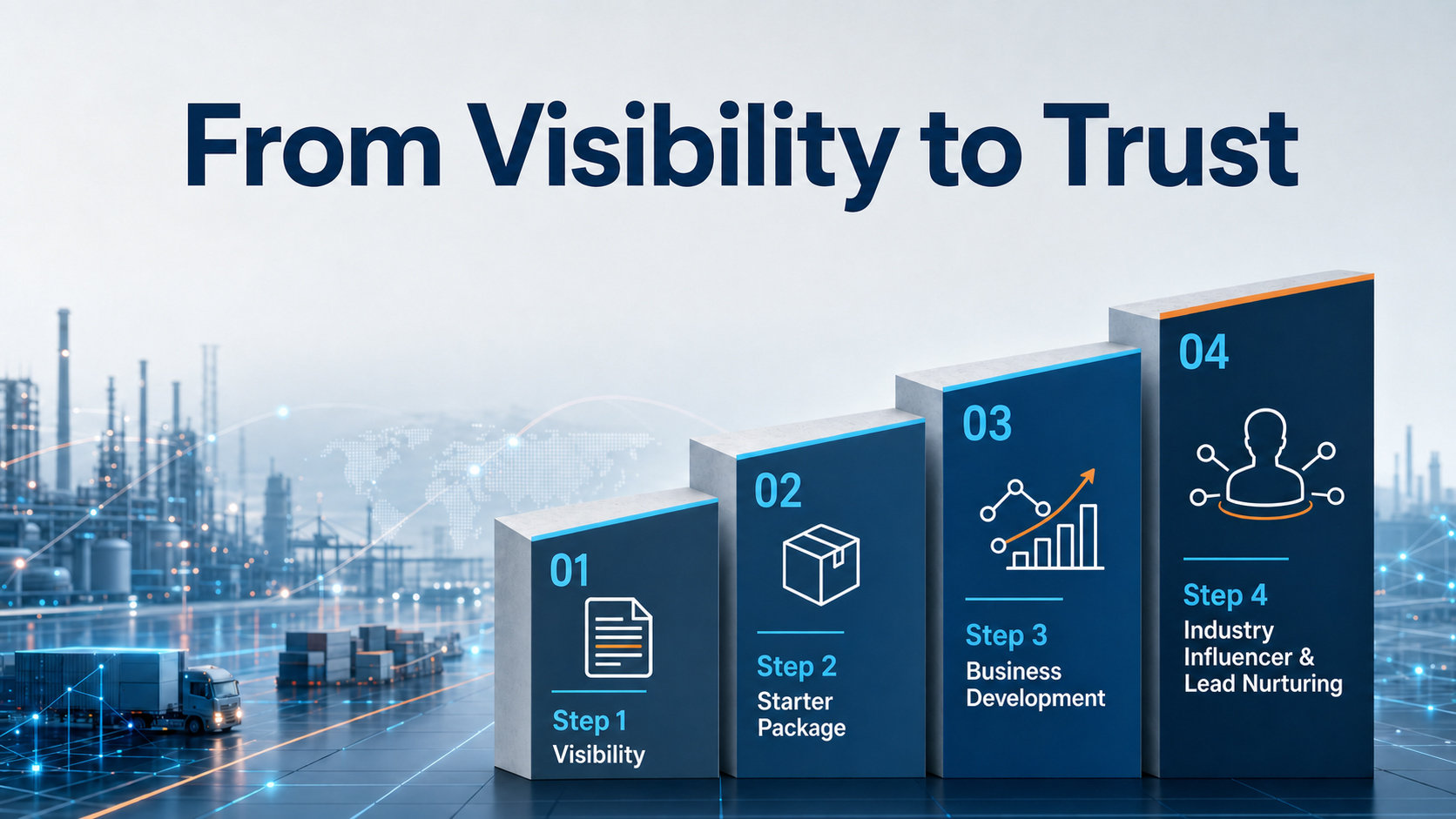
From visibility to trust: Your scalable path with Xpert.Digital - Image: Xpert.Digital
In industrial B2B, sustainable business relationships rarely emerge overnight. They develop step by step – through visibility, professional relevance, recurring touchpoints, and growing trust. Xpert.Digital's 4-stage model addresses precisely this: It offers a structured path that begins with a manageable entry point and can evolve into deeper collaboration in business development if needed.
Instead of relying on loud marketing promises, this model puts the relationship at the forefront. Companies start with clearly defined, easily calculable measures and then decide, based on their own experience, how far they want to expand the collaboration. A key factor for this undisturbed trust-building process: The platform completely avoids annoying advertising ads, so the editorial focus remains solely on the companies' expertise.
More information here: