

Published on: January 15, 2025 / Updated on: January 15, 2025 – Author: Konrad Wolfenstein
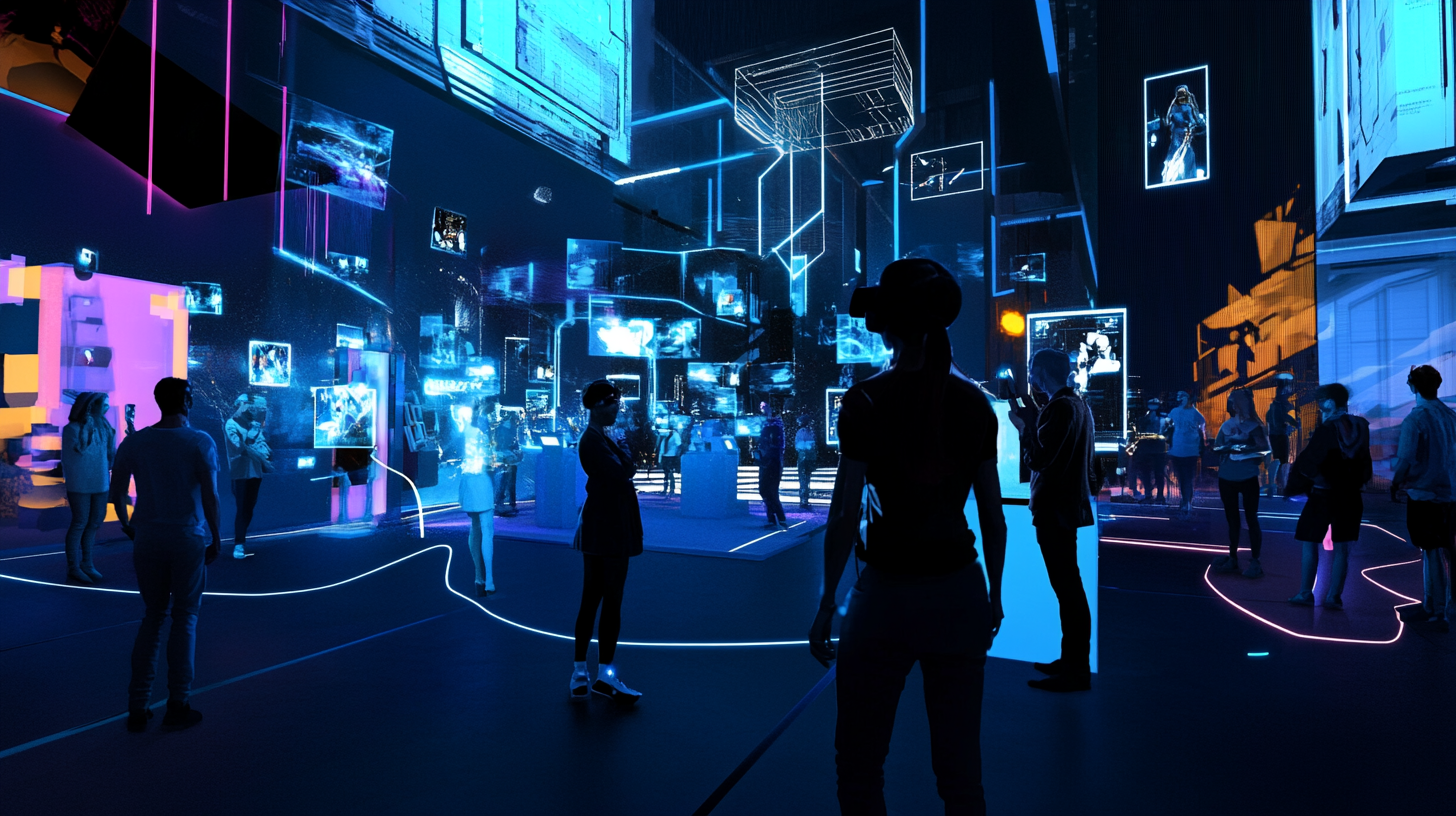
The Metaverse myth decoded: What's really behind it? And which platforms come closest to the Metaverse? – Image: Xpert.Digital
The Metaverse: A comprehensive analysis of current platforms and the definition of its core elements
The term “metaverse” has been circulating in the media landscape for some time now and is often touted as the next big revolution of the internet. After an initial, almost euphoric hype, the excitement has subsided somewhat, but the question remains: What exactly lies behind this frequently used term? And which of the currently existing platforms, such as Roblox, Minecraft, or Fortnite, can actually be considered manifestations of a metaverse? This article undertakes a detailed analysis of these popular platforms within the context of existing definitions. The aim is to identify the fundamental attributes that characterize a metaverse while simultaneously highlighting the current limitations and challenges in developing a comprehensive metaverse. It is crucial to understand that there is not “one” metaverse, but rather a multitude of different platforms and concepts, all claiming to be part of this emerging digital world.
The definition of the metaverse: A multifaceted perspective
To answer the question of whether the aforementioned platforms can be considered a metaverse, a precise definition of the term is first required. Different perspectives and findings exist on this topic, which must be taken into account.
The origins of the term can be traced back to 1992, when Neal Stephenson coined the word "metaverse" in his groundbreaking science fiction novel "Snow Crash." In Stephenson's visionary narrative, the metaverse is described as an immersive, virtual reality that serves as a successor to the internet. It is a digital space where people interact with each other through avatars, conduct business, and maintain social relationships.
A common definition, also found in online encyclopedias, describes the metaverse as a loosely defined term referring to virtual worlds. In these worlds, users, represented by customizable avatars, interact, usually in a three-dimensional environment. The focus is on establishing social and economic connections. It's not just about entertainment, but also about the opportunity to forge friendships, form communities, and even engage in economic activities.
Tech blogs and industry experts often define the metaverse as a holistic virtual world that exists parallel to the real world. This digital parallel world is characterized by the guarantee of digital property rights, the enabling of unique online identities, the networking of diverse environments, and the provision of immersive experiences. Many see it as the next evolutionary stage of the internet, essentially the "internet in 3D." A fascinating aspect in this context is the creation of "digital twins." These are digital copies of real-world objects, processes, or environments that can be simulated and analyzed within the metaverse. This opens up entirely new possibilities in areas such as product development, urban planning, and the simulation of complex systems.
Scientific publications often approach the topic of the metaverse with a focus on its technological foundations and potential societal impacts. Here, the metaverse is defined as a complex and interconnected network of ubiquitous virtual worlds that partially overlap with and augment the physical world. Users, embodied by their avatars, can interact with one another in these immersive, scalable, synchronous, and persistent environments, experiencing and consuming diverse content. An integrated economic system provides incentives for active participation and value creation within the metaverse. Decentralized technologies, particularly blockchains, play a crucial role in ensuring the security and transparency of economic activities within the metaverse. They enable, for example, the proof of digital ownership and the secure execution of transactions.
Related to this:
Analysis of current platforms in the context of the metaverse definition
Against the background of these diverse definitions, the aforementioned and other relevant platforms can now be examined more closely in order to assess their metaverse character.
Roblox
This platform offers a persistent virtual world where users are represented by avatars and can engage in social interactions. A key feature is its integrated economy with its own virtual currency, "Robux." Roblox thus fulfills many criteria of a metaverse, with a primary focus on gaming. Users can create their own games and experiences and explore worlds created by other users. The platform enables extensive social interaction and the trading of virtual goods, extending beyond mere gameplay.
Related to this:
Minecraft
Minecraft also enables persistent worlds, interaction through avatars, and diverse social interactions. Like Roblox, Minecraft fulfills many criteria of a metaverse, although the focus here is more on creative building and exploring the virtual environment. Minecraft's open world offers users almost unlimited possibilities for free design and collaborative creation of structures and complex systems.
Fortnite
While Fortnite offers avatars, extensive social interaction options, and regularly held virtual events, it tends to be viewed more as an online game with metaverse elements. The core of the experience lies in its action-packed gameplay, but the integration of social spaces and the hosting of virtual concerts or film screenings certainly lend the platform metaverse characteristics. It exemplifies how traditional games are increasingly incorporating elements that extend beyond pure gameplay.
The Sandbox
Unlike game-oriented platforms, The Sandbox places a strong emphasis on digital property rights and the trading of virtual goods stored as non-fungible tokens (NFTs) on the blockchain. This focus underscores the economic component of the metaverse. Users can acquire and develop virtual land, as well as create and monetize their own games and interactive experiences.
Decentraland
Decentraland goes a step further, presenting itself as a decidedly decentralized platform with a clear focus on digital property rights and community building. This platform fulfills many criteria of a comprehensive metaverse. Users can own virtual land, develop it according to their own vision, interact with other users, host events, and operate virtual businesses.
Related to this:
Horizon Worlds
Meta, the social VR platform from Facebook's parent company, focuses on interaction through avatars in immersive virtual environments. It's worth noting that in 2021, Meta invested immense sums—over $10 billion—in developing the Metaverse, yet incurred significant operating losses. More recently, starting in 2023, Meta has shifted its strategic focus somewhat from pure Metaverse development toward artificial intelligence. Horizon Worlds aims to enable social interaction within the Metaverse by allowing users to meet in virtual worlds, play games together, and create content.
This goes well with:
Somnium Space
This VR platform places particular emphasis on a persistent world and the guarantee of digital property rights. Somnium Space already fulfills many criteria of a metaverse, but is still under ongoing development. The platform offers an open world in which users can acquire virtual land and customize it to their liking.
Cryptovoxels
Cryptovoxels is another blockchain-based platform that focuses on digital property rights and the ownership of virtual land. Here, the economic component of the metaverse is clearly paramount. Users have the opportunity to buy, sell, and develop virtual land, forming a basis for virtual business models.
Axie Infinity
Axie Infinity is primarily a blockchain-based game distinguished by its NFT trading mechanic. It can be considered a "play-to-earn" game with metaverse elements. Users can collect and breed digital creatures and battle against each other, with trading these creatures being a core gameplay mechanic.
VRChat
VRChat is a social VR platform characterized by a wide variety of avatars and a strong focus on community building. This platform fulfills many criteria of a metaverse. Users can create their own avatars or choose from a vast library and interact with others in countless user-created virtual worlds.
Other relevant platforms
In addition to those already mentioned, there are numerous other platforms that can be considered metaverses or at least proto-metaverses.
Second Life
Often referred to as the “first metaverse,” Second Life integrated many aspects of social media into a three-dimensional world with avatars at an early stage. It offers a persistent virtual world where users can interact, create their own content, and even conduct business.
IMVU
IMVU is a social platform that focuses on avatars and the trading of virtual goods. Users can customize their avatars and purchase virtual clothing and accessories.
Sansar
Sansar is a platform that allows users to create their own virtual worlds and visit the worlds of others. It offers tools for designing immersive experiences.
High Fidelity
High Fidelity is an open-source platform for creating virtual worlds. The platform's openness allows for a high degree of flexibility and adaptability.
Upland
Upland is a metaverse platform focused on virtual land linked to real-world geographic locations. Users can buy, sell, and develop virtual properties.
Key attributes of a metaverse: A comprehensive view
From the different definitions and the analysis of the various platforms, essential attributes can be derived that constitute the core of a metaverse. These attributes can be divided into different categories.
Technical aspects
Persistent virtual world: A fundamental property is persistence. The virtual world exists continuously, independent of the presence of individual users. The state of objects and environments is saved and retained, even when users leave the world.
Immersive experience: A key goal of the Metaverse is to give users a sense of presence and immersion in the virtual world. Ideally, this is achieved through the use of Virtual Reality (VR) and Augmented Reality (AR) technologies, which enhance sensory perception and enable a more intense experience.
Interoperability: An ideal metaverse is characterized by interoperability. This means that users should ideally be able to seamlessly move their avatar and digital possessions between different metaverse platforms. This requires unified standards and protocols.
Scalability: The metaverse must be able to support a very large number of users and an immense amount of content simultaneously without suffering any performance degradation. This presents a significant technical challenge.
User Experience
Avatar-based interaction: In the Metaverse, users are represented by individually customizable avatars. These avatars allow users to interact, communicate, and express themselves in the virtual world.
accessibility
An inclusive metaverse should be accessible to users with varying technical skills and across different devices, from high-end VR headsets to conventional computers and smartphones.
Social and economic factors
Social interaction: The metaverse enables diverse forms of communication, collaboration, and community building. Users can make friends, participate in group activities, and share virtual experiences.
Economic activity: A functioning metaverse offers opportunities for trade, investment, and the acquisition of digital goods and services. This can include trading virtual clothing, artwork, land, or even access to exclusive experiences.
Digital property rights: A crucial feature is the guarantee of digital property rights. Users can own, buy, sell, and trade virtual goods and virtual land, ideally using technologies such as blockchain to securely and transparently document ownership.
Governance and Standardization: Setting the Course for the Future
Besides the technical, social, and economic aspects, governance and standardization also play a crucial role in the development of an open and functioning metaverse. Regarding governance, two competing visions can currently be identified:
- Open Metaverse: This vision aims for a decentralized, user-centric metaverse focused on interoperability and open standards. Control over the metaverse should not reside with individual companies, but be distributed as broadly as possible.
- Closed Metaverse: In contrast, the vision of a centralized metaverse controlled by individual companies and based on proprietary technologies is often limited. Interoperability with other platforms is frequently restricted in this model.
An open metaverse requires certain “ingredients” to realize its principles:
- Decentralization: Power and control over the metaverse should not be concentrated in individual organizations.
- User control over their own identity: Users should have control over their digital identities and data.
- Enforcement of property rights: Digital property rights must be reliably enforceable.
- Balancing incentives for users and developers: The system should be designed so that both users and developers benefit from their participation and contributions.
- Added value for users, not just for the platforms: The added value of the metaverse should primarily benefit the users and not just the platform operators.
- Transparency: The way the Metaverse works and the rules that apply there should be transparent.
- Interoperability and compatibility: Different metaverse platforms should be compatible with each other to allow a seamless transition between them.
An interesting approach to defining the metaverse is the so-called “Metaverse Code”, which formulates seven basic rules:
- There is only one metaverse: This rule implies the vision of a single, interconnected digital space.
- The metaverse is accessible to everyone: Access to the metaverse should not be restricted.
- Nobody controls the metaverse: This rule underlines the ideal of decentralization.
- The metaverse is open: The platform should be open to new ideas and developments.
- The metaverse is independent of hardware: access should not be limited to specific devices.
- The metaverse is a network: It is an interconnected system that links different elements together.
- The metaverse is the internet: This rule suggests that the metaverse can be considered an evolution of the internet.
The development of unified standards and protocols is essential to ensure interoperability between different metaverse platforms. However, numerous challenges exist, such as consistent naming conventions for objects and attributes, or ensuring unique attribute values across different systems.
Limits and challenges: The path to the complete metaverse
Although many of the analyzed platforms already exhibit remarkable metaverse elements, there are still significant limitations and challenges on the path to developing a fully realized metaverse.
- Technological hurdles: The development of immersive and interoperable VR/AR technologies is not yet complete. Further progress is needed in areas such as computing power, bandwidth, and the user-friendliness of the hardware.
- Standardization: The lack of uniform standards and protocols for interoperability between different platforms presents a major obstacle. Without these standards, the metaverse remains fragmented and not very user-friendly.
- Scalability: Supporting a potentially huge number of users and complex interactions simultaneously presents an enormous technical challenge, especially in terms of network infrastructure and server capacity.
- Ethical and social issues: The rapid development of the metaverse raises important ethical and social questions. These include the protection of privacy, the safety of users from abuse and harassment, and the fight against disinformation and harmful content. The increasing merging of the physical and virtual worlds also raises fundamental questions about identity, social behavior, and responsibility within the metaverse.
- Accessibility: The cost of VR/AR hardware and access to a fast and stable internet connection can limit participation in the metaverse and exacerbate the digital divide.
- Societal acceptance: Broad societal acceptance of the Metaverse is not yet guaranteed. A compelling value proposition and positive use cases are needed to inspire a broad segment of the population with the concept.
- Impact on the world of work: The metaverse has the potential to fundamentally change the world of work by enabling new forms of collaboration, learning, and communication. At the same time, however, new challenges arise regarding data protection, occupational safety, and the potential displacement of jobs through automation and virtual alternatives.
- Role of the public sector: The public sector is also playing an increasingly important role in shaping the metaverse. For example, the city of Seoul is developing its own metaverse platform to offer citizens virtual services in the areas of business, education, culture, and tourism.
- Market penetration: Studies show that the market penetration of the metaverse is still in its early stages in many industries. Many companies are only just beginning to gain experience with the opportunities and challenges of this technology.
A glimpse into the future of the internet
The analysis clearly shows that some of the platforms examined, such as Decentraland and VRChat, already fulfill many of the essential criteria of a metaverse. Other platforms, such as Roblox and Minecraft, do exhibit significant metaverse elements, but primarily focus on gaming and creative building, respectively.
The development of a complete metaverse that combines all the aforementioned attributes and offers a seamless, interoperable, and immersive experience is undoubtedly a long-term goal. Existing platforms provide valuable insight into the diverse possibilities of the metaverse while simultaneously driving the development of the necessary technologies and standards. It remains to be seen which platforms will ultimately prevail and how the metaverse will sustainably shape the future of the internet and society as a whole.
Numerous questions remain unanswered, the answers to which will significantly influence the further development of the Metaverse. What will the economic, social, and cultural impacts of the Metaverse be? What ethical and social challenges must be addressed to ensure a fair and safe environment? And how can we ensure that the Metaverse becomes an open, safe, and inclusive space for all people? The answers to these questions will decisively shape the contours of the digital future.
Related to this: