
The meeting room effect: Why in B2B it's not the best who wins, but the most well-known – Advantage through psychology in marketing – Image: Xpert.Digital
When excellence isn't enough: Why B2B decision-makers prefer to buy well-known brands rather than the best ones
The 95/5 rule: Almost everyone makes the biggest mistake in B2B marketing
No pitch, no order: How to get on the shortlist of B2B buyers without making a sale
In the B2B world, a persistent myth holds true: whoever offers the best product, the most attractive price, or the most innovative solution ultimately wins the contract. But the reality in boardrooms and conference rooms is quite different. Often, excellent providers fail not because of the competition or a lack of features, but because of their own lack of visibility. Before a pitch or objective evaluation even takes place, the human brain has already made an unconscious pre-selection. This article reveals the psychological and strategic mechanisms behind complex B2B purchasing decisions. Learn why mental availability is by far the most important lever in modern B2B marketing, what the ominous "dark funnel" is all about, and how you can ensure you're present in the minds of decision-makers precisely when the crucial question is asked in the meeting room.
When excellence alone is not enough – the bitter truth about B2B decisions
Somewhere in an office building, in a room with overly powerful air conditioning and three half-empty coffee cups on the table, your offer is being discussed. Or perhaps not. That's precisely the problem.
Three people are sitting together: a mid-sized business owner who has been the operational backbone of their company for years; an experienced decision-maker who approves budgets and initiates projects; and a marketing manager who is expected to bring fresh ideas. They are discussing whether a website relaunch is needed, whether a business coach is required, or whether a new software solution should be implemented. And then the crucial question arises: "Who do we hire for this?"
In this moment, psychology is at work. No rational market analysis, no objective quality comparison. What happens is what cognitive scientists describe as automated retrieval: A few names surface. They "pop" into consciousness – spontaneously, effortlessly, without conscious thought. All others simply do not exist in this moment.
This is the meeting room effect. And it determines who gets orders in B2B – and who goes away empty-handed, regardless of their actual capabilities.
Cognitive preselection: How brains make decisions before they realize it
The foundation of the meeting room effect lies deep in cognitive psychology. People process thousands of pieces of information daily, and the brain develops automated shortcuts as a protective mechanism. Research shows that only about 21 percent of people actually make their brand decisions at the moment of decision itself – for 64 percent of respondents, a clear mental pre-selection has already been made before the actual buying process even begins. The moment of purchase is therefore less a place of decision than an execution phase of a pre-structured choice.
In a B2B context, this means that when the buying committee meets and names suppliers, no rational market overview takes place. What happens is a mental query process – like a database search, only not in a table, but in associative structures. Those who are anchored there appear. Those who aren't anchored don't exist. Brands with high mental availability are selected significantly more often, even if competitors offer better prices, features, or deals – the decision isn't made more rationally, but with less friction.
This concept of mental availability originates from the Australian marketing scientist Byron Sharp and the Ehrenberg-Bass Institute. It describes the likelihood that a brand will be spontaneously remembered or associated with a product in relevant purchasing and need situations. In consumer marketing, this theory has revolutionized the industry. In B2B marketing, it is still criminally underestimated.
The 95/5 rule: The structural problem of every B2B supplier
Before you can fully grasp the strategic depth of the meeting room effect, you have to acknowledge an uncomfortable arithmetic reality: at any given time, 95 percent of your target audience is not ready to buy. Only five percent are actively engaged in a buying process – and even these five percent typically need months before they make a final decision.
This so-called 95/5 rule, developed by Professor John Dawes of the Ehrenberg-Bass Institute of Marketing Science, has fundamental consequences for budget allocation in B2B marketing. Companies that focus all their marketing energy on converting just five percent of potential customers—through performance campaigns, SEA budgets, lead forms, and demo requests—are fighting for a vanishingly small and already fiercely competitive segment. Meanwhile, the 95 percent who aren't buying today but will make a decision tomorrow, the day after, or in 18 months, are not being targeted during this time. And when their buying opportunity finally arrives, the company's name will be unknown at best, and nonexistent at worst.
What needs to be built up during this long period of non-purchase is mental presence. Tomorrow's decision-makers need to know the company exists today – and they need to associate it with the right things. If that doesn't happen, the company will be eliminated from the race before it even begins.
The Buying Committee: Six to ten people, all of whom want to be convinced
Another structural factor that amplifies the meeting room effect is the increasing complexity of B2B purchasing decisions. In modern B2B sales, investments are no longer decided by individuals – instead, buying committees typically consist of six to ten decision-makers. Purchasing, IT, operations management, production, legal, and controlling all sit at the table together, bringing different perspectives and needing to reach a consensus.
Gartner supplemented this finding with an additional insight: Each of these six to ten individuals independently researched four or five information sources, which now need to be compared within the group. This means there isn't one decision path, but dozens of parallel information pathways – and each of these pathways is a potential entry point for mental presence or a potential blind spot.
The consequences for vendors are dramatic: It's not enough to know the formal decision-maker or to be liked by the direct contact person. A vendor must be present in the minds of several people simultaneously – the CEO who approves the budget; the IT manager who defines the technical requirements; the purchasing manager who compares prices; and the end user who will later use the solution daily. Anyone who is only on the mental shortlist of one of these individuals risks not being mentioned at all during the consensus-building process in the meeting room.
The Dark Funnel: What Marketing Dashboards Don't Tell You
To understand the mechanisms behind the meeting room effect, one must understand the so-called dark funnel – that part of the B2B buying journey that systematically defies measurement. Forrester has consistently documented in several studies that 70 to 81 percent of the B2B buying journey is already complete before a potential buyer even speaks to a supplier's sales representative for the first time. Gartner adds that B2B buyers spend less than 20 percent of their total research time with supplier sales representatives.
What happens in these 70 to 80 percent of the buyer's journey? The real purchasing decisions take place in WhatsApp groups of the purchasing team, in Slack channels of industry communities, in LinkedIn direct conversations between professionals, and in private search sessions. Increasingly, they also occur in conversations with AI assistants, to whom decision-makers pose their research questions. None of these touchpoints appear in a CRM, in Google Analytics, or in a performance marketing dashboard. The dark funnel is structurally invisible to traditional attribution.
The consequences are serious: 73 percent of B2B buyers have already shortlisted suppliers before the sales team has even made contact. The race is often over before it officially begins. Those who aren't present during these invisible phases – through content, recommendations, or networks – have already lost at the crucial stage.
Brand as an economic factor: What McKinsey knows about B2B branding
The discussion about mental availability and brand presence is not a soft, immeasurable marketing topic. It has hard economic dimensions that are reflected in financial metrics. A McKinsey study of 1,000 purchasing decision-makers in Germany, the USA, and India arrives at a clear finding: Brand strength and communication quality, taken together, are just as crucial for buyers as product price – both factors each influence 27 percent of the purchase decision. The main reason for the brand's relevance: 42 percent of the surveyed buyers cited reduced risk as a key argument for a strong brand.
This finding is highly relevant from a psychological perspective. B2B decisions are high-risk situations. No one on the buying committee wants to be held personally liable for a wrong decision. A well-known brand, associated with competence and reliability, offers cognitive reassurance. You're not just buying a service, but also the internal legitimacy of the decision. If you choose a familiar, competent provider, you, as the decision-maker, are protected – even if the final outcome isn't optimal. If you choose an unknown provider, you bear the full personal risk.
Furthermore, McKinsey has measured a high correlation between brand strength and financial success: B2B companies with strong brands have, on average, a 20 percent higher EBIT margin than companies with weak brands. Mental availability is therefore not just a marketing gimmick, but a real competitive advantage that is directly reflected in the profit and loss statement.
Thought Leadership: How Knowledge Becomes Market Power
The most effective tool for systematically increasing mental availability in B2B is thought leadership – consistently positioning oneself as a knowledge leader and point of reference within one's own category. The annual B2B Thought Leadership Impact Report by Edelman and LinkedIn, published for the sixth time in 2024 and based on surveys of nearly 3,500 executives worldwide, provides remarkable data on this topic.
52 percent of decision-makers and 54 percent of C-suite executives spend an hour or more per week reading thought leadership content. At the same time, 73 percent of decision-makers say that thought leadership content provides them with a more trustworthy basis for assessing a vendor's competence than traditional marketing materials and product data sheets. This isn't a marginal preference—it's a fundamental shift in how B2B buyers evaluate credibility.
Furthermore, the Edelman report shows that 86 percent of respondents are more likely to invite vendors with strong thought leadership content to pitch. More than 70 percent of decision-makers say that such content is more important to them than traditional advertising. Thought leadership is therefore not just a nice addition to the marketing mix—it's the primary mechanism by which vendors are even noticed in the dark funnel before the buying process begins. Those who are perceived as a voice that provides guidance will be remembered. And those who are remembered make the shortlist.
The quality gap: Why most B2B content remains ineffective
If thought leadership is so powerful, why do so few companies use it effectively? The answer lies in a dramatic quality gap. While over half of the decision-makers surveyed read thought leadership content, only 15 percent rate what they read as truly good. This means that 85 percent of the B2B content produced leaves no positive impression – and therefore no lasting mental impact.
The causes of this quality gap are structural. First, many companies rely on generic AI mass production instead of genuine expertise and concrete perspectives. Second, there is a lack of strategic depth: content addresses topics superficially without offering a new perspective or taking a clear stance. Third, there is a lack of consistency – individual posts do not generate accumulating brand associations if they are not consistently repeated and expanded upon over time. Mental recall arises from recognition, not from a one-off conviction.
Another crucial factor is the distinction between volume and substance. True thought leaders aren't loudmouths constantly talking about themselves. They are voices trusted because they rethink a problem, because they make complex topics understandable, and because they advocate a reasoned stance. This kind of content triggers what behavioral scientists describe as epistemic trust: the conviction that the speaker actually knows what they're talking about and isn't just sounding strategic.
📈🚀 From visibility to trust 👀🤝 Your scalable path with Xpert.Digital

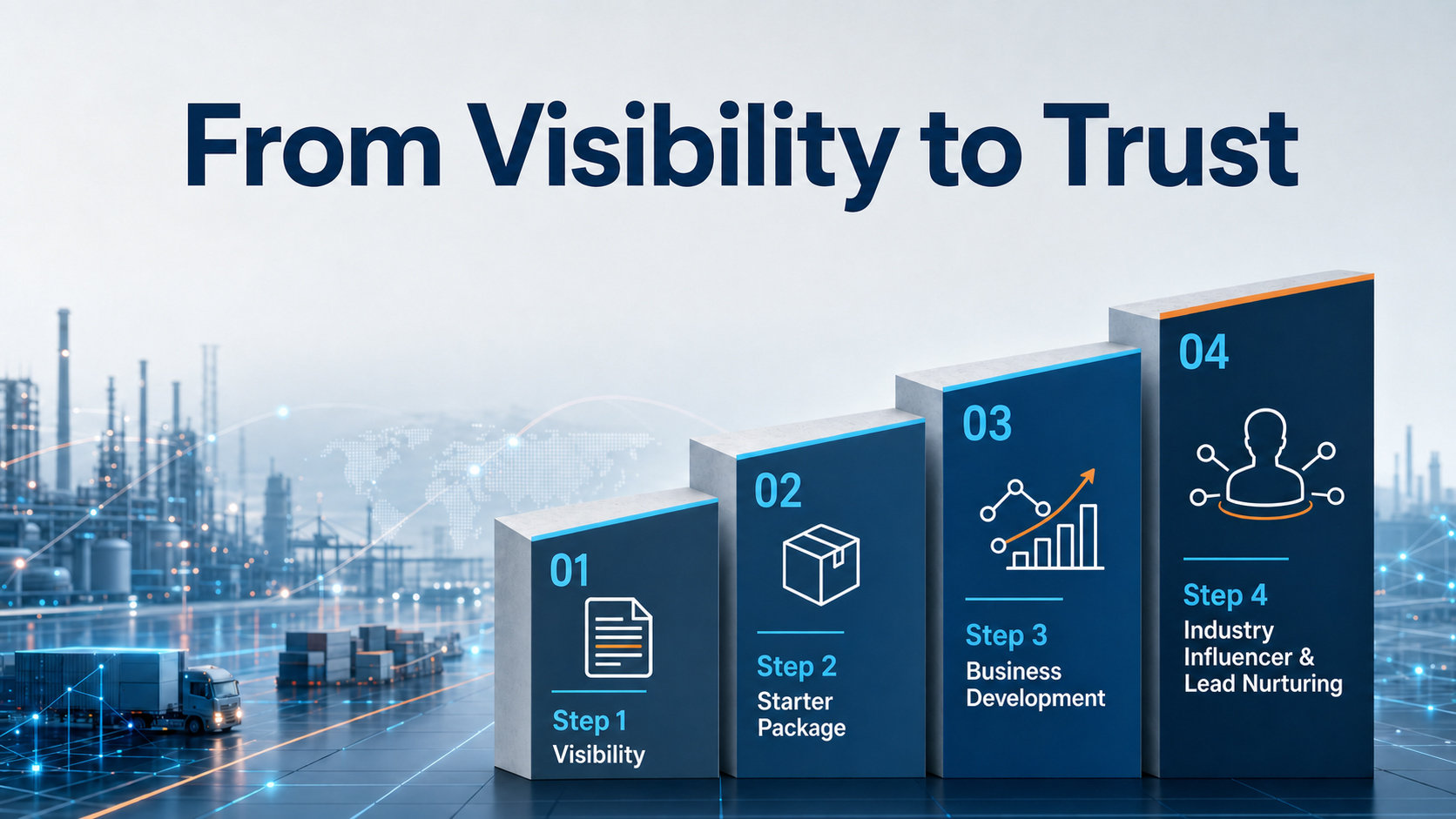
From visibility to trust: Your scalable path with Xpert.Digital - Image: Xpert.Digital
In industrial B2B, sustainable business relationships rarely emerge overnight. They develop step by step – through visibility, professional relevance, recurring touchpoints, and growing trust. Xpert.Digital's 4-stage model addresses precisely this: It offers a structured path that begins with a manageable entry point and can evolve into deeper collaboration in business development if needed.
Instead of relying on loud marketing promises, this model puts the relationship at the forefront. Companies start with clearly defined, easily calculable measures and then decide, based on their own experience, how far they want to expand the collaboration. A key factor for this undisturbed trust-building process: The platform completely avoids annoying advertising ads, so the editorial focus remains solely on the companies' expertise.
More information here:
Mental Market Share: Why you decide whether you'll win even before the pitch
Mental market share: The crucial metric that hardly anyone measures
In consumer marketing, the concept of mental market share has become established as a key performance indicator. It describes how many of the total associations within an industry are attributable to a particular brand – measured against the total number of associations in the respective product category. Studies show that mental market share has a significant predictive power for actual market share: the higher the mental market share, the more likely a purchase decision becomes.
Four key metrics determine this mental market share: First, mental reach – how many people have any association with the provider at all. Second, the spectrum of associations – how many different contexts and situations are linked to the provider. Third, the strength of the association – how intensely and quickly these connections are accessed. Fourth, the overall mental market share, indicating what proportion of all industry-relevant mental connections are attributable to a single provider.
In the B2B context, the range of associations is particularly critical. A supplier who is only thought of in a single context—for example, solely as a "website agency for small and medium-sized enterprises"—will not be remembered in meetings where other problem formulations are used. Conversely, a supplier associated with multiple category entry points—that is, with various needs that buyers experience—appears in significantly more decision-making situations. Byron Sharp and Jenni Romaniuk from the Ehrenberg-Bass Institute have shown that market leaders are not leaders because they dominate a single context, but because they are the first to be remembered in as many relevant situations as possible.
The shortlist economy: What is decided in the second to fourth places
When a buying committee is looking for a supplier, it typically goes through a two-stage filtering process: From a broad conceptual pool of potential suppliers – the so-called longlist – two to four candidates are shortlisted. Only on this shortlist does the actual, detailed evaluation then take place: demos, reference checks, tenders, and price negotiations.
The crucial economic truth of this shortlist economy is this: those not on the shortlist don't lose to a better provider. Those not on the shortlist lose without a pitch. Without a demo. Without the opportunity to prove themselves at all. The race is already over before the first official contact is even made. And the criteria for inclusion on this shortlist aren't primarily price, features, or proven excellence—but rather cognitive availability combined with the fundamental trust built up over time through consistent presence.
The Tacto report on the supplier shortlist describes the process precisely: Companies actively seek out suppliers they know, trust, and already have a positive association with before embarking on an in-depth review. Those unknown at this stage are not even included in the evaluation matrix – regardless of their objective suitability. This is not unfair. It is the natural logic of reducing cognitive load in complex decision-making processes.
The Psychology of Risk Avoidance: Why B2B Decision-Makers Don't Want to Be Heroes
To fully understand the meeting room effect, one must grasp the fundamental psychological structure of B2B decisions. Unlike B2C consumer decisions, which are often impulsive and have manageable personal consequences, the person making a purchase recommendation in a B2B context carries a considerable burden: they must internally justify why this supplier, and not an alternative, was chosen.
Robert Cialdini systematically described the psychological mechanisms at work in such situations. The social proof principle states that people orient themselves toward the behavior of others—those who see that other companies in their industry are already using a particular provider reduce their perceived risk. The authority principle explains why thought leadership works: people trust experts more than ordinary opinions. And the likeability principle explains why personal visibility—through expert articles, a LinkedIn presence, and speaking engagements—builds trust capital in the long run.
All these mechanisms converge on one central insight: customers don't just buy the best solution – they buy the solution they trust most. This trust isn't built spontaneously through a good sales pitch. It develops through repeated positive interactions, consistent demonstrations of competence, and the perception of the company as a reliable source of guidance within its category. And it develops exclusively in the period before the buying process begins – that is, in the 95 percent of the time when the target group is not ready to buy.
Consistency beats brilliance: The cumulative effect of mental presence
A common strategic error in B2B marketing is confusing visibility with attention. Companies invest in individual, highly expensive campaigns—a major trade fair, a virally planned white paper, a costly video—that generate short-term attention but leave no lasting mental impression. Mental availability works differently: it arises through cumulative effects.
Research on mental market share shows that mental availability is built in low-involvement, everyday situations – through casual visual contact, repeated consistent brand presence, and clear visual and semantic codes. This means that the sum of 50 moderately perceived but consistent contacts over 18 months builds more mental substance than a single, brilliant appearance. Brands that are remembered are not necessarily the loudest or most elaborate – they are the most reliable.
For B2B providers, this means specifically: LinkedIn posts published every Tuesday are more valuable than a grand annual presentation. A monthly podcast episode that consistently delves into a single perspective is more effective than a quarterly newsletter extravaganza. The sender must be clearly identifiable – studies show that 50 percent of respondents in B2B communication fail to attribute advertising messages to a specific provider. Brand, personality, and thought leadership must be so firmly established that the buying committee automatically produces the correct name the moment the problem is first mentioned.
Demand Generation vs. Lead Generation: The Strategic Decision
The implications of the meeting room effect lead to a fundamental strategic question that many B2B companies answer incorrectly: Should marketing be focused on lead generation or demand generation?
Lead generation targets the five percent of actively purchase-ready prospects – through forms, download offers, demo requests, and performance campaigns. This approach is measurable, scalable in the short term, and follows a clear logic within performance marketing. Its fundamental problem: It competes exclusively for prospects in the visible part of the funnel who have already made a mental decision. Those not on the shortlist of these prospects never even see their forms.
Demand generation, on the other hand, targets the 95 percent who are not yet ready to buy – through content, thought leadership, social selling, and brand building that creates long-term mental presence within the target group. This approach is harder to measure, slower, and requires patience. Its impact, however, is structural: it ensures that a company is on tomorrow's shortlists – even before the decision-makers sit down in the meeting room. The 70 to 80 percent of the buyer's journey that takes place in the dark funnel can only be influenced by demand generation – not by performance marketing.
Smart B2B marketers therefore invest in both areas, but in a ratio that reflects the 95/5 distribution of their target audience. A marketing budget that invests 80 percent in lead generation and 20 percent in brand building is structurally focused on the wrong group.
The Pitch Paradox: Why pitches in B2B are often already lost
One of the most uncomfortable conclusions from the meeting room effect concerns the pitch process itself. Many B2B vendors invest significant resources in optimizing their pitch materials, presentation skills, and proposal documents. This investment isn't worthless—but it's secondary.
If a supplier is invited to pitch, they already have a significant advantage, as they're on the shortlist. The question is why they were invited: either because they were spontaneously mentioned due to high availability, or because they were brought into the conversation through active sales pressure. The former is the more cost-effective, scalable, and sustainable approach. The latter is expensive, labor-intensive, and has a structurally limited reach.
The Edelman report shows that 86 percent of decision-makers are more likely to invite vendors with strong thought-leadership content to pitch. This is the true function of content and visibility in B2B: not just to win the pitch, but to get invited in the first place. The decision about who makes the shortlist is made in the meeting room – and it's based on mental availability, not on pitch quality.
Furthermore, the risk-avoidance logic remains dominant in the pitch process itself: 75 percent of decision-makers state that good thought leadership content increases their willingness to pay premium prices to a new provider. Trust, built through a consistent demonstration of competence before the pitch, therefore not only secures the invitation – it also creates the pricing flexibility.
Strategic implications: What suppliers need to do to appear in the meeting room
The analysis of the meeting room effect leads to a clear strategic action plan. First, the time perspective of marketing must be fundamentally changed: Mental availability is a 12- to 36-month project, not a quarterly goal. Providers who want to invest in their target group's perception today are sowing the seeds for decisions that will be made in one to three years.
Secondly, the measurement system needs to be expanded. Classic KPIs like cost per lead, MQL volume, and conversion rates only measure the visible, actively purchasing segment of the target group. They say nothing about how many decision-makers will be sitting in their meeting room a year from now and mentioning the provider's name. Complementary metrics—share of voice in relevant industry channels, search volume for brand terms, citation rate in trade publications, and spontaneous mentions in customer surveys—better reflect the truly decisive levels of impact.
Third, content strategy must be understood as a demonstration of competence, not as product marketing. The difference is fundamental: product marketing explains what a company does. A demonstration of competence proves how a company thinks. Those who reframe problems, reveal unexpected connections, and deliver concrete benefits without expecting anything in return build epistemic trust – the strongest form of trust in a B2B context.
Fourth, personality must be recognized as a branding vehicle. Thought leadership is most effective in the B2B context when it is linked to faces and names. The founder, the CEO, the CTO – individuals with a clear stance and consistent presence on key topics create a stronger mental footprint than anonymous corporate brands. LinkedIn is the critical channel here: it is where B2B decision-makers operate their professional dark funnel – they read, observe, and evaluate silently without reacting or becoming visible.
Whoever is in the right mind wins the contract
The meeting room effect is not a metaphor. It is the precise description of a psychological mechanism that occurs daily in thousands of companies and determines who gets contracts and who doesn't. It follows a clear cognitive logic: people make decisions based on mental retrieval processes, not on rational market analyses. Those who are anchored in the decision-makers' mental inventory appear. Those who are not anchored do not exist—regardless of their actual quality.
The economic dimension is clear: B2B companies with strong brands achieve 20 percent higher EBIT margins. 73 percent of purchasing decisions are made before the first sales contact. 86 percent of decision-makers are more likely to invite suppliers with strong thought leadership to pitch. Mental availability is therefore not just soft marketing – it is the most powerful competitive advantage a B2B supplier can build.
The practical conclusion is easy to formulate, but difficult to consistently implement: Those who wait until potential customers are actively searching, hoping to win through a good pitch, are playing a game that has already begun. Those who consistently invest in maintaining a mental presence with the right people – through content, attitude, and consistent visibility over months and years – win the game even before the first proposal is written. In the meeting room. Where names are readily available – or not.
Your global marketing and business development partner
☑️ Our business language is English or German
☑️ NEW: Correspondence in your native language!

Konrad Wolfenstein
I and my team are happy to be available to you as your personal advisor.
You can contact me by filling out the contact form here wolfenstein@xpert.digital:or simply call me at +49 7348 4088 965. My email address is
I'm looking forward to our joint project.
☑️ SME support in strategy, consulting, planning and implementation
☑️ Creation or realignment of the digital strategy and digitization
☑️ Expansion and optimization of international sales processes
☑️ Global & Digital B2B trading platforms
☑️ Pioneer Business Development / Marketing / PR / Trade Fairs
🎯🎯🎯 Data-driven B2B industry hub as a quasi-in-house solution

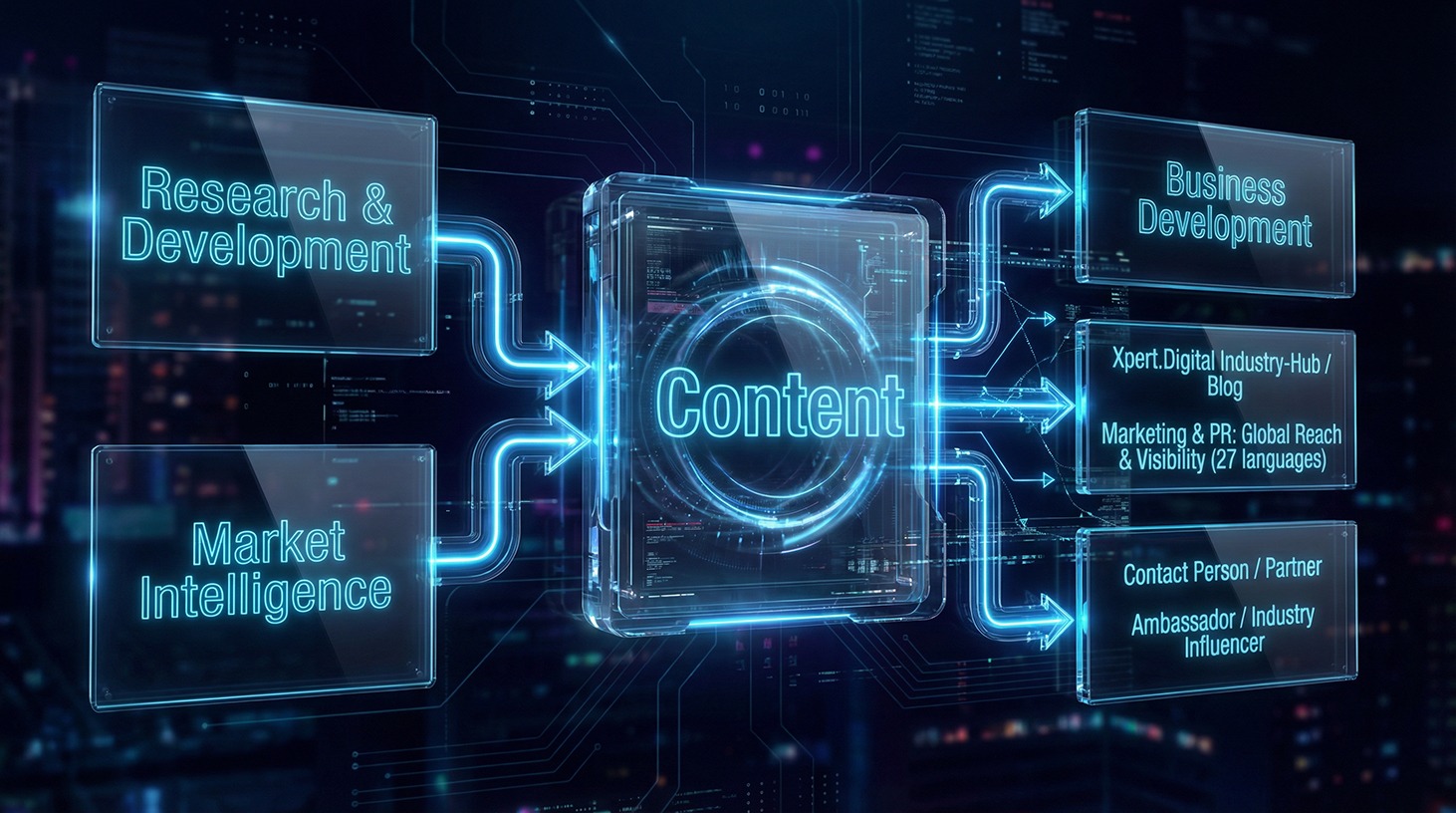
The quasi-in-house solution: How Xpert.Digital closes operational gaps in B2B marketing and sales – Smart Content-Driven Business - Image: Xpert.Digital
Xpert.Digital is a data-driven B2B industry hub led by Konrad Wolfenstein . The company acts as an external, quasi-in-house solution for industrial partners, closing operational gaps in marketing, content, and sales – without requiring additional resources on the client side.
More information here: