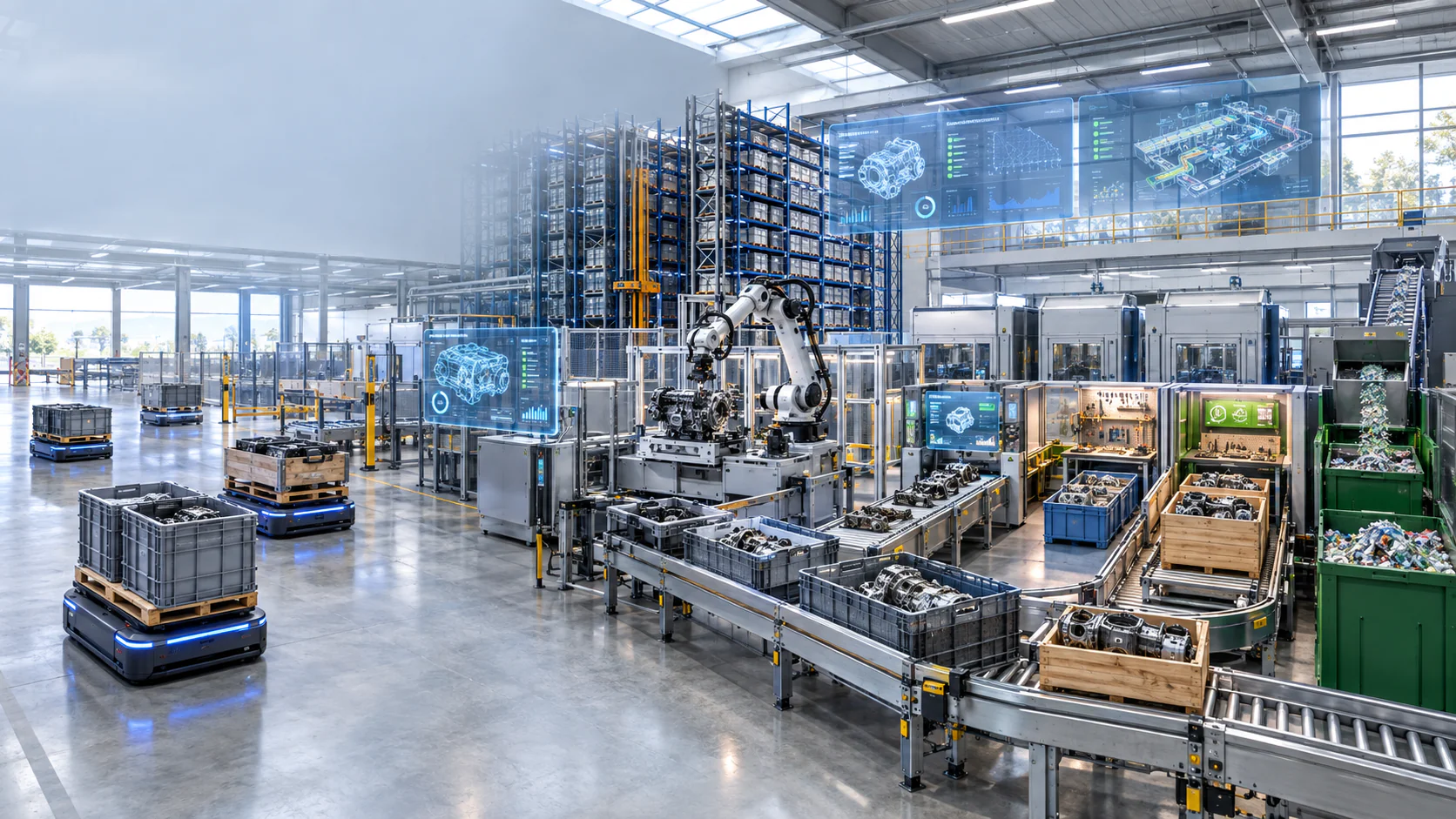
The downsides of the logistics boom: resident protests, fire hazards, and the environmental impact of high-bay warehouses – Creative image: Xpert.Digital
Residents vs. Logistics: Why high-bay warehouses often encounter resistance – and how we can change that.
The challenges and opportunities of high-bay warehouses: safety, environment and acceptance
The increasing prevalence of high-bay warehouses and pallet storage offers undeniable logistical advantages, but also presents significant challenges. These range from societal resistance and environmental concerns to fire risks and safety requirements. In this comprehensive article, we examine the key problem areas, innovative safety measures, and sustainable solutions that will shape the future of warehouse logistics.
Social resistance and environmental aspects
Protests against high-bay warehouses: Space conflicts and quality of life
The construction of high-bay warehouses often leads to protests from local residents, especially when the construction negatively impacts their quality of life. In many cases, residents feel disturbed by shadows cast by the warehouses, increased heat, or changes to the landscape.
A current example is the resistance against a planned corrugated cardboard factory in Leverkusen. Residents fear not only a decline in their quality of life, but also a potential increase in noise and additional traffic. Similar protests are taking place in Neuenstein, where a citizens' initiative has been formed against the construction of a high-bay warehouse, which is being rejected due to noise and land-use conflicts.
These cases highlight the need to communicate with the affected communities early on, to establish transparent planning processes, and to create acceptance through environmentally friendly concepts.
Fire risks and safety deficiencies
Danger from lithium batteries and pallet fires
High-bay warehouses pose significant fire risks, particularly due to the storage of lithium-ion batteries and flammable pallet structures. The following incidents underscore the urgent need for preventative measures:
- Isseroda: Three fires broke out within a short period of time at a photovoltaic company, causing damage exceeding €730,000. Investigations revealed that lithium-ion batteries ignited due to storage defects without any external influence.
- Löhne: A major fire was only prevented by the quick intervention of the fire brigade after burning pallets spread to an adjacent hall.
- Minden: The complete burning down of a pallet company underlines the high flammability of such storage structures.
Secondary risks: Toxic fumes and hydrofluoric acid formation
Besides the immediate risk of fire, there are significant risks from toxic reaction products. Contact between extinguishing water and lithium batteries can release hydrofluoric acid, which is highly toxic to humans and the environment. Similarly, exposure to smoke can lead to health problems and necessitate large-scale evacuations.
Suitable for:
Innovative security measures
Oxygen reduction to prevent fires
A promising approach to fire prevention is oxygen reduction in high-bay warehouses. Nitrogen-based inerting systems lower the oxygen content to 15%, drastically reducing flammability. This approach is already being used successfully in cold storage facilities, but requires airtight building structures.
Innovative pilot projects, such as the one in Friedrichsgabekoog, combine hydrogen-powered fuel cells for nitrogen production with emission-free electricity generation. This creates a sustainable solution that simultaneously improves fire safety and energy efficiency.
Updated guidelines and standards
The revised VDI 3564 establishes new safety standards for high-bay warehouses and requires:
- Automatic extinguishing systems using spray or foam technology
- Structural measures such as fire-resistant partition walls
- Close cooperation with authorities to develop individual fire protection concepts.
Suitable for:
Sustainability in high-bay warehouse planning
Environmentally friendly building materials and constructions
A key element of sustainable high-bay warehouses is the use of environmentally friendly building materials. An outstanding example is the Weleda high-bay warehouse, which was constructed using a timber-clay method. By using PEFC/FSC-certified timber sourced within a 60 km radius, 2,400 tons of CO2 were saved.
Other sustainable approaches include:
- Circular economy: Already in the planning phase, the entire life cycle of a building is analyzed in order to optimize deconstruction and material recycling.
Energy and resource efficiency
Modern high-bay warehouses rely on energy-efficient technologies:
- Automation systems with 3D robots reduce energy consumption by up to 40% through optimized walking paths and 24/7 operation without lighting.
- Photovoltaic systems on rooftops, such as the 5,000 m² solar roof at HIK, cover up to 30% of the electricity demand. Geothermal energy is used additionally for heating and cooling.
- Intelligent warehouse management systems (WMS) minimize excess inventory and shorten picking routes, resulting in a CO2 reduction of 15-25%.
Site planning and environmental impact assessment
An environmentally sound site selection takes into account:
- Traffic reduction: Integration into rail networks can save up to 20,000 truck journeys per year.
- Environmental impact assessments (EIAs) analyze the effects on air quality, soil sealing, and biodiversity. Studies show that 85% of projects are approved with compensatory measures such as green roofs.
Risk management and security concepts
Fire protection strategies
Modern high-bay warehouses rely on redundant safety concepts, including:
- Dry spray fire extinguishers and foam systems for immediate fire suppression
- Fire compartments every 1,200 m² according to VDI 3564 to contain fires
Hazardous material storage
Chemicals and flammable substances are stored separately according to UN-GHS classes. Special protective measures, such as spill containment trays with a capacity of 110% of the storage volume, prevent the release of hazardous substances.
The future of high-bay warehouses
The increasing demand for storage capacity makes it necessary to make high-bay warehouses safer, more sustainable, and more socially acceptable. This can be achieved through a combination of:
- Preventive safety standards (e.g. nitrogen inerting)
- Transparent communication with residents
- Sustainable technologies (e.g. photovoltaics, timber construction) can be achieved.
These measures can improve the CO2 footprint of new high-bay warehouses by up to 50% and increase space efficiency to 3,000 pallet spaces per hectare. At the same time, the early involvement of local residents and authorities remains essential to avoid conflicts of use and ensure public acceptance.
Xpert partner in warehouse planning and construction
High-bay warehouses: Between efficiency and challenges - background analysis
Maximum efficiency or risky strategy? The truth about pallet and high-bay warehouses
The increasing prevalence of high-bay warehouses and pallet storage facilities, which seems inevitable given the ever-growing global trade and the rising demands for efficient logistics, is a double-edged sword. On the one hand, they offer undeniable logistical advantages: they enable maximum utilization of available space, accelerate warehousing processes, and optimize product availability. On the other hand, they are associated with significant challenges that extend far beyond purely economic aspects and have profound implications for society, the environment, and safety.
Recent headlines highlight that public acceptance of these camp structures is not always guaranteed. Protests from local residents, environmental concerns, and the considerable fire risks that necessitate increased safety measures are just some of the facets of this complex issue. It is therefore essential to adopt a holistic approach that not only emphasizes the economic advantages but also considers the potential negative consequences and seeks ways to minimize or even completely avoid them.
Protests and social conflicts: When logistics meets resistance
The increasing density of residential areas and the resulting scarcity of space inevitably lead to conflicts in the planning and construction of new logistics centers. High-bay warehouses, which often occupy a considerable area and shape the landscape, are a particularly sensitive issue. Environmental concerns relating to noise pollution, air pollution, traffic volume, and the loss of green spaces are frequent triggers for protests and citizens' initiatives.
One example of this is the situation in Leverkusen, where residents are mobilizing against the construction of a planned corrugated cardboard factory. Their concerns are manifold: they foresee a decline in their quality of life due to the darkening of their homes, increased heat buildup in the summer months, and a rise in truck traffic. These fears are understandable, as high-bay warehouses, due to their height and size, can influence the microclimate in their surroundings. The reflection of sunlight off the warehouse walls can cause glare, while the sealing of surfaces impairs natural cooling through evaporation.
Similar conflicts can be observed in other locations as well. In Neuenstein, a citizens' initiative is campaigning against the construction of a high-bay warehouse, which they see as a burden on the community. Here, noise and land-use disputes are the main concerns. Residents fear that the operation of the warehouse, particularly the truck traffic, will lead to unacceptable noise pollution and that valuable agricultural land will be irretrievably lost.
These examples clearly demonstrate that the planning and construction of high-bay warehouses cannot be considered in isolation from the needs and interests of local residents. Transparent communication, early public involvement in the planning process, and consideration of environmental and quality-of-life aspects are essential to foster acceptance and avoid conflicts. It is important that those responsible not only emphasize the economic advantages of the project but also openly address potential negative impacts and outline concrete measures to minimize these impacts.
Fire risks and safety deficiencies: A ticking time bomb?
Besides the social conflicts, it is primarily the fire risks associated with storing large quantities of goods in confined spaces that are a cause for concern. In particular, the increasing storage of lithium batteries, used in electric vehicles, solar panels, and many other applications, has significantly raised the fire risk in recent years. Lithium batteries are known for their high energy density and their tendency to thermal runaway, an uncontrolled temperature increase that can lead to a fire.
Recent events speak volumes:
- Three fires broke out at a photovoltaic company in Isseroda, causing damage exceeding €730,000. The fires were caused by lithium-ion batteries that ignited spontaneously, presumably due to storage defects.
- In Löhne, a major fire, which spread from burning pallets to a hall, was only prevented by the quick intervention of the fire brigade.
- A pallet company in Minden burned down completely, highlighting the high flammability of such warehouses.
These examples illustrate that fires in high-bay warehouses can not only cause significant economic damage but also pose a danger to people and the environment. The release of toxic substances from the combustion of plastics and other materials can lead to substantial smoke pollution. Furthermore, the extinguishing water, often used in large quantities, can be contaminated with pollutants, leading to water and soil contamination. In the case of lithium battery fires, toxic hydrofluoric acid can also be produced, posing a particular hazard to emergency responders.
To minimize these risks, comprehensive fire protection measures are essential. These include both structural measures such as fire compartments and fire-resistant materials, as well as technical measures such as automatic extinguishing systems and smoke detectors. Furthermore, the careful storage of hazardous materials, especially lithium batteries, is crucial. This includes maintaining safety distances, using appropriate packaging, and training employees in handling these substances.
Innovative safety measures: Oxygen reduction as a prevention strategy
One particularly innovative and promising method for fire prevention is oxygen reduction. In this process, the oxygen content in the warehouse is lowered by supplying nitrogen to a level that significantly reduces the flammability of materials. At an oxygen content of approximately 15%, many flammable substances can no longer be ignited.
This technology is already used in deep-freeze warehouses, where it not only improves fire safety but also increases energy efficiency. However, oxygen reduction requires a tightly sealed building structure to minimize nitrogen loss and maintain the desired oxygen level.
A promising pilot project in Friedrichsgabekoog is using hydrogen-powered fuel cells to generate nitrogen. This technology offers the advantage of simultaneously generating electricity and operating emission-free. The nitrogen produced can then be used to reduce oxygen levels in the warehouse, resulting in a dual benefit: improved fire safety and a reduction in environmental impact.
Updated guidelines: VDI 3564 as a guideline for fire protection
To meet the increased fire protection requirements in high-bay warehouses, VDI 3564 has been revised. This guideline requires risk-based fire protection concepts that combine structural, technical, and organizational measures. These include, among other things, automatic extinguishing systems, smoke detectors, fire compartments, sprinkler systems, and close cooperation with the authorities.
VDI 3564 emphasizes that fire protection in high-bay warehouses must not be limited to fire suppression, but must also include fire prevention and damage limitation. This requires a comprehensive risk analysis that considers all potential fire causes and the possible consequences of a fire. Based on this analysis, appropriate fire protection measures can then be selected and implemented.
The need for balance: Sustainability as the key to acceptance
Recent examples show that expanding storage capacity can only succeed if preventive safety standards are adhered to, transparent communication with local residents is maintained, and sustainable technologies are used. Nitrogen inerting is just one example of a technology that both increases safety and reduces environmental impact.
At the same time, site planning must give greater consideration to environmental and quality-of-life aspects in order to avoid further conflicts. This means that when selecting a location for a high-bay warehouse, not only the logistical advantages but also the potential impacts on the environment and local residents must be taken into account. Early public involvement in the planning process, the implementation of environmental impact assessments, and the consideration of compensatory measures can help to avoid conflicts and increase the project's acceptance.
Environmental concerns in the planning of high-bay warehouses: A holistic strategy for greater sustainability
The planning and construction of high-bay warehouses is a complex process that takes a multitude of aspects into account. In addition to logistical and economic factors, environmental concerns are playing an increasingly important role. To address these concerns, a holistic strategy is required that combines structural, technological, and procedural measures.
Suitable for:
- Green intralogistics – for a sustainable supply chain
- Green cold chain: Strategies for more environmentally friendly refrigeration and deep-freeze storage in global logistics and industry
Sustainable building materials and construction: wood and regional resources as an alternative to concrete and steel
One way to reduce the environmental impact of constructing high-bay warehouses is to use sustainable building materials. Wood is a renewable resource that stores CO2 and thus makes a positive contribution to climate protection. Projects like the Weleda high-bay warehouse, built using a wood-clay construction method, demonstrate that wood can be an attractive alternative to concrete and steel in industrial construction.
The Weleda high-bay warehouse, with a footprint of 7,600 m², was constructed using PEFC/FSC-certified wood sourced within a 60 km radius. The use of wood resulted in savings of approximately 2,400 tons of CO2. This demonstrates that the use of wood in industrial construction can make a significant contribution to climate protection.
Besides wood, other regional resources such as clay, straw, or natural stone can also be used to reduce the environmental impact of constructing high-bay warehouses. Using regional resources has the advantage of shorter transport routes, thus reducing CO2 emissions.
Another important aspect is the circular economy. Life cycle analyses should be carried out as early as the planning phase to consider the entire life cycle of the building and identify opportunities for material recycling. This can help to reduce resource consumption and avoid waste.
Energy and resource efficiency: automation, renewable energies and process optimization
In addition to the use of sustainable building materials, energy and resource efficiency is also of crucial importance. A variety of technological and procedural solutions are available here:
automation
Fully automated systems with 3D robots can reduce energy consumption by up to 40%. This is because automated systems have optimized walking paths and can operate 24/7 without the need for lighting.
Renewable energy
Photovoltaic systems on rooftops can cover a significant portion of electricity demand. For example, the 5,000 m² of photovoltaic panels on the roof of the HIK high-bay warehouse cover up to 30% of the electricity needs. Geothermal systems can be used to supplement this for heating and cooling.
Warehouse management systems (WMS)
WMS minimize overstocking and shorten picking routes through real-time data. This can lead to a reduction in CO2 emissions of 15-25%.
Inerting technologies
Nitrogen-based fire protection systems reduce the oxygen content to 15%, thereby reducing fire risks for lithium batteries by 90%.
Site planning and environmental impact assessment (EIA): Integration into rail networks and consideration of environmental aspects
Site planning plays a crucial role in minimizing the environmental impact of high-bay warehouses. Good connections to the transport network, especially rail, can significantly reduce truck traffic and the associated emissions. For example, integrating the Feldschlösschen high-bay warehouse into the rail network with its own loading facility reduces truck journeys by 20,000 per year.
Furthermore, an environmental impact assessment (EIA) is essential to analyze and evaluate the project's potential environmental impacts. The EIA examines the effects on various environmental resources such as air, climate, soil, water, and biodiversity.
Various test parameters are considered in the environmental impact assessment (EIA) for high-bay warehouses. For the protected asset of air/climate, particulate matter emissions and cold air currents play a role. For soil/water, firewater retention and sealing are important. In the area of biodiversity, land use and light emissions are considered.
The results of the environmental impact assessment (EIA) can help optimize project planning and minimize environmental impact. In many cases, compensatory measures such as green roofs or the creation of compensatory areas are required to obtain project approval. Examples show that 85% of projects are approved with compensatory measures.
Risk management and safety: Redundant fire suppression systems and hazardous material storage
Comprehensive risk management is essential to ensure the safety of high-bay warehouses. This applies particularly to fire protection and the storage of hazardous materials.
Modern high-bay warehouses implement redundant fire suppression systems (dry spray extinguishers + foam systems) and fire compartments every 1,200 m² in accordance with VDI 3564. This ensures that a fire can be fought quickly and effectively.
When storing hazardous materials, the separation of chemicals according to UN-GHS classes in segregated areas with containment trays covering 110% of the storage volume is crucial. This prevents hazardous substances from leaking and polluting the environment in the event of an accident.
A sustainable future for high-bay warehouses
Implementing these measures will improve the CO2 footprint of new warehouses by up to 50% compared to conventional buildings, while simultaneously increasing space efficiency to 3,000 pallet spaces per hectare. Crucially, local residents and authorities must be involved early on to proactively resolve potential conflicts of use. Only in this way can a sustainable future for high-bay warehouses be guaranteed, one that meets economic, environmental, and social requirements. Public acceptance of these warehouse structures will depend significantly on minimizing potential negative impacts and transparently communicating the benefits to society. It is the responsibility of all stakeholders to pursue this path and shape a sustainable future for logistics.
Xpert.Plus warehouse optimization - high-bay warehouses such as pallet warehouses consulting and planning
We are there for you - advice - planning - implementation - project management
☑️ SME support in strategy, consulting, planning and implementation
☑️ Creation or realignment of the digital strategy and digitalization
☑️ Expansion and optimization of international sales processes
☑️ Global & Digital B2B trading platforms
☑️ Pioneer Business Development
I would be happy to serve as your personal advisor.
You can contact me by filling out the contact form below or simply call me on +49 89 89 674 804 (Munich) .
I'm looking forward to our joint project.
Xpert.Digital - Konrad Wolfenstein
Xpert.Digital is a hub for industry with a focus on digitalization, mechanical engineering, logistics/intralogistics and photovoltaics.
With our 360° business development solution, we support well-known companies from new business to after sales.
Market intelligence, smarketing, marketing automation, content development, PR, mail campaigns, personalized social media and lead nurturing are part of our digital tools.
You can find out more at: www.xpert.digital - www.xpert.solar - www.xpert.plus