Not Tesla or Waymo: The world's first autonomous car drove in Bavaria as early as 1987 – Creative image: Xpert.Digital
Germany's billion-dollar mistake: How we invented the self-driving car – and lost it to the USA
From the motorway to the museum: Why the German automotive industry missed its most ingenious breakthrough
Forgotten sensation: A Bavarian transporter could already do in the 80s what Tesla promises today
When we think of autonomous driving today, names like Tesla, Waymo, and Silicon Valley inevitably come to mind. But the true birth of the self-driving car lies not in California, but on a closed-off section of the autobahn in Bavaria. As early as 1987 – decades before tech giants pumped billions into the technology – German professor Ernst Dieter Dickmanns had a small van driving completely autonomously. Equipped with cameras and revolutionary software, his team achieved a technological sensation. But instead of transforming this enormous technological advantage into global market power, German industry let this once-in-a-century opportunity slip by. How could such a groundbreaking innovation have been shelved? This story is not only a fascinating look back at a forgotten German pioneering achievement. It is a pressing wake-up call and a lesson in managing success, a lack of courage to scale up, and the question of whether Germany has definitively lost its chance to keep pace with the mobility of the future.
The forgotten Silicon Valley of the Autobahn: How Germany invented autonomous driving – and then relinquished control
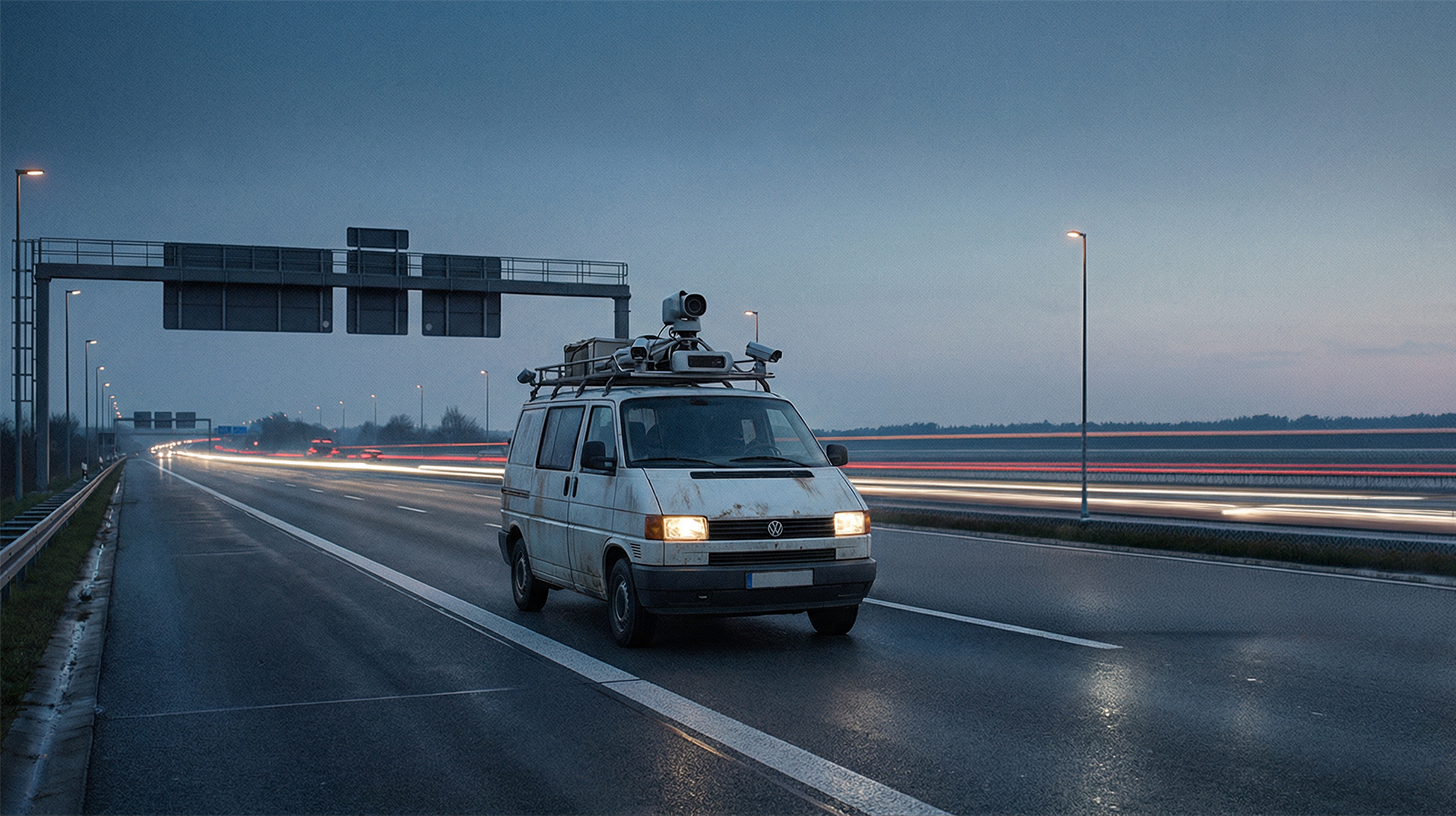
In 1987, on a Bavarian autobahn not yet open to public traffic, an unassuming small van equipped with cameras and computing technology rolled along. The vehicle steered itself, stayed in its lane, and reacted to other road users – all without GPS, maps, or lidar. The onboard computing power was only a fraction of what is found in today's mid-range cars. While names like Tesla and Waymo are now synonymous with autonomous driving, the actual foundation was laid decades earlier in Germany – largely unnoticed by the public, politicians, and the capital markets.
This pioneering achievement bears the name of a man almost unknown outside of specialist circles: Ernst Dieter Dickmanns, professor at the Bundeswehr University in Munich. His research demonstrated as early as the 1980s that autonomous mobility based on cameras and intelligent image processing was possible. Nevertheless, Germany failed to translate this lead into a lasting economic advantage. The history of autonomous driving is thus also a lesson in missed opportunities for innovation, flawed incentive systems, and an industry that didn't know what to do with groundbreaking research.
4D vision: The ingenious approach behind the first self-driving cars
At the heart of Dickmann's work is an approach he describes as "4D vision." While classical image processing analyzes individual images, his focus is on modeling space and time together. The vehicles continuously observe their surroundings, recognize objects, estimate their speed, and predict how the situation will develop. This dynamic approach makes it possible to make real-time decisions with comparatively less powerful computers—a necessity in an era when high-performance processors were extremely expensive and scarce.
The VaMoRs experimental vehicle, a five-ton light commercial vehicle, was equipped with cameras and sensors in the early 1980s and controlled by an onboard computer based on continuously analyzed image sequences. From 1987, VaMoRs could drive fully autonomously at speeds of up to 96 km/h on a specially designated section of highway. Later, S-Class vehicles from the VaMP project followed, which, thanks to multiple cameras, could "see" to the front and rear and, in their final development phase, could drive autonomously at speeds of up to 130 km/h. As early as 1994 and 1995, these cars, as part of the European PROMETHEUS program, drove hundreds to over a thousand kilometers in real highway traffic, performing lane changes and overtaking maneuvers, and driving autonomously for a high percentage of the time.
From an economic perspective, a remarkable finding emerges: the ratio of capital invested to technological maturity achieved is exceptionally high. With comparatively small budgets and a small team, the project reaches a level of maturity for which companies today invest tens of billions. The capital productivity of the research is enormous – but it is hardly used to secure lasting industrial policy or commercial advantages.
From visionary project to roadblock: Why the pioneering work fizzled out
The question arises as to why these spectacular demonstrations haven't led to Germany becoming the global leader in autonomous driving. Part of the answer lies in the structures of the automotive industry at the time and the role of public research. Projects like PROMETHEUS were designed for demonstration and knowledge acquisition, not for the development of scalable products and platforms. While individual technologies were incorporated into driver assistance systems after the programs' completion, no consistent industry model emerged that could transform the pioneering achievement into a sustainable business model.
In the 1990s and 2000s, the major German OEMs focused primarily on incremental improvements: ABS, ESP, adaptive cruise control, and later, emergency braking assistance. Many insights from the PROMETHEUS project and Dickmanns' research were incorporated into these systems, contributing to the impressive safety record of modern vehicles. However, the major leap to fully autonomous driving remained a vision, one that was effectively outlined for marketing purposes but not pursued with full commitment.
Institutional and cultural factors also play a role. German manufacturers think in terms of model cycles and vehicle platforms, less so in data-driven software platforms. Venture capital willing to build an independent software or autonomy company around this technology is scarce. So instead of developing the research into an independent, growth-oriented technology company, it is integrated into the existing supply chain system. The technological advantage becomes an invisible component of driver assistance systems – valuable, but not visible enough to carry its own global brand.
Our US expertise in business development, sales and marketing

Our US expertise in business development, sales and marketing - Image: Xpert.Digital
Industry focus areas: B2B, digitalization (from AI to XR), mechanical engineering, logistics, renewable energies and industry
More information here:
A thematic hub offering insights and expertise:
- Knowledge platform covering global and regional economies, innovation and industry-specific trends
- A collection of analyses, insights, and background information from our key areas of focus
- A place for expertise and information on current developments in business and technology
- A hub for companies seeking information on markets, digitalization, and industry innovations
Germany invented autonomous driving – why the USA is still leading today
How Silicon Valley turned technology into a narrative
While Germany maintains its lead, a different dynamic is developing in Silicon Valley. Companies like Waymo, emerging from the Google ecosystem, are positioning autonomous driving early on as a technological leap with massive scalable potential. The narrative is not "better driver assistance," but "robotaxis that will revolutionize entire markets." This makes the technology a magnet for capital, talent, and media attention.
Waymo raised $16 billion in a recent funding round and is valued at approximately $126 billion. Its robotaxis complete hundreds of thousands of paid rides weekly in several US cities, and the company possesses a vast amount of ride data that further solidifies its lead. Tesla is taking a different approach, relying almost exclusively on cameras and foregoing lidar, but also hopes to make autonomous capabilities the core of its business model and valuation.
This dynamic is not only technical, but above all economic and communicative. Autonomous driving is becoming a growth narrative that fascinates investors, media, and politicians alike. Data is being presented as a strategic resource, robotaxis as a lever for new business models with recurring revenues. In this logic, it matters less who managed the first highway drive, but rather who can scale globally and set standards today.
Liability, regulation and the idea of the “driving test for machines”
Another reason for the differing developments lies in the regulatory environment. Autonomous driving touches upon road traffic law, the Vienna Convention on Road Traffic, and national liability regimes. While Germany and the EU have taken steps in recent years to permit highly automated systems (up to SAE Level 3 and, in some areas, Level 4), they remain cautious and define narrow areas of application.
Under current legislation, Level 3 systems may be used in regular road traffic if type approval and precise operating limits are defined. However, the human driver remains responsible, must be ready to intervene, and cannot be completely absolved of liability. Level 4 systems are only permitted in clearly defined operating areas, such as shuttle services or specialized applications, and always under strict conditions.
The idea of considering the vehicle itself as a liable party breaks with this logic. Economically, such a model would mean a completely new allocation of risks. Insurers would have to assess the technical system, and manufacturers would have to provide evidence that their vehicles deliver reproducibly safe performance – similar to a driving test. This would require extensive certification, testing, and monitoring systems, including standardized scenario catalogs, simulations, and clear rules for software updates.
For industry, a rigorous testing regime could also be an opportunity to differentiate itself through safety standards. Those who can set global benchmarks with a tested, certified level of safety gain not only trust, but also market access and pricing power. Europe, in principle, has the opportunity to leverage its strength in standardization and regulation to define globally accepted standards for autonomous driving systems.
Germany's remaining chances in the race for autonomous mobility
Despite missed opportunities, Germany is not without potential. The country still possesses an exceptionally dense industrial base, broad expertise in vehicle manufacturing, sensor technology, safety engineering, and software for embedded systems. Many technologies used in driver assistance systems today originate directly or indirectly from the pioneering phase of Dickmanns and PROMETHEUS. In addition, it boasts strong research landscapes and highly specialized suppliers.
Particularly promising are application areas that do not aim to completely replace drivers in everyday traffic, but rather focus on clearly defined areas of operation. These include factory transport, autonomous shuttles on fixed routes, logistics hubs, port and terminal traffic, and specialized applications in public transport. In these scenarios, infrastructure, operating conditions, and responsibilities can be managed more effectively than in open mixed traffic. Germany could develop system solutions here that integrate vehicles, infrastructure, control centers, and safety concepts.
Economically, this opens up the opportunity to export not just vehicles, but complete mobility systems. Instead of competing globally against well-capitalized US and Chinese companies for robotaxis, Germany could score points in B2B segments where safety, reliability, and integration capabilities are more important than maximum scalability.
What needs to change in politics and business
To make these opportunities a reality, nostalgic celebration of past achievements is insufficient. A more deliberate innovation policy is needed, one that views projects like Dickmann's not as isolated exceptions, but as a blueprint for the systematic promotion of radical innovation. This includes research funding that strategically links pilot projects with scaling and commercialization strategies, instead of allowing them to end in the project phase.
At the regulatory level, clear, predictable frameworks are needed to facilitate testing grounds and defined areas of application for highly automated systems. Companies need legal certainty regarding liability, data usage, and software updates. At the same time, they must restructure their own organizations: moving away from purely hardware-based cycles toward flexible software and data platforms that enable continuous improvements and unlock new services.
From an economic perspective, the coming years will determine whether Germany reduces its role to autonomous assistance functions and component suppliers, or whether it succeeds in maintaining system leadership in selected segments. The pioneering achievements of Ernst Dieter Dickmanns demonstrate that technological excellence exists. The open question is whether policymakers, capital markets, and industry will draw the right strategic conclusions from this.
Your global marketing and business development partner
☑️ Our business language is English or German
☑️ NEW: Correspondence in your native language!

Konrad Wolfenstein
I and my team are happy to be available to you as your personal advisor.
You can contact me by filling out the contact form here wolfenstein@xpert.digital:or simply call me at +49 7348 4088 965. My email address is
I'm looking forward to our joint project.
☑️ SME support in strategy, consulting, planning and implementation
☑️ Creation or realignment of the digital strategy and digitization
☑️ Expansion and optimization of international sales processes
☑️ Global & Digital B2B trading platforms
☑️ Pioneer Business Development / Marketing / PR / Trade Fairs
🎯🎯🎯 Benefit from Xpert.Digital's extensive, five-fold expertise in one comprehensive service package | BD, R&D, XR, PR & Digital Visibility Optimization

Benefit from Xpert.Digital's extensive, five-fold expertise in a comprehensive service package | R&D, XR, PR & Digital Visibility Optimization - Image: Xpert.Digital
Xpert.Digital possesses in-depth knowledge across various industries. This allows us to develop tailored strategies precisely aligned with the requirements and challenges of your specific market segment. By continuously analyzing market trends and monitoring industry developments, we can act proactively and offer innovative solutions. The combination of experience and expertise generates added value and provides our clients with a decisive competitive advantage.
More information here: