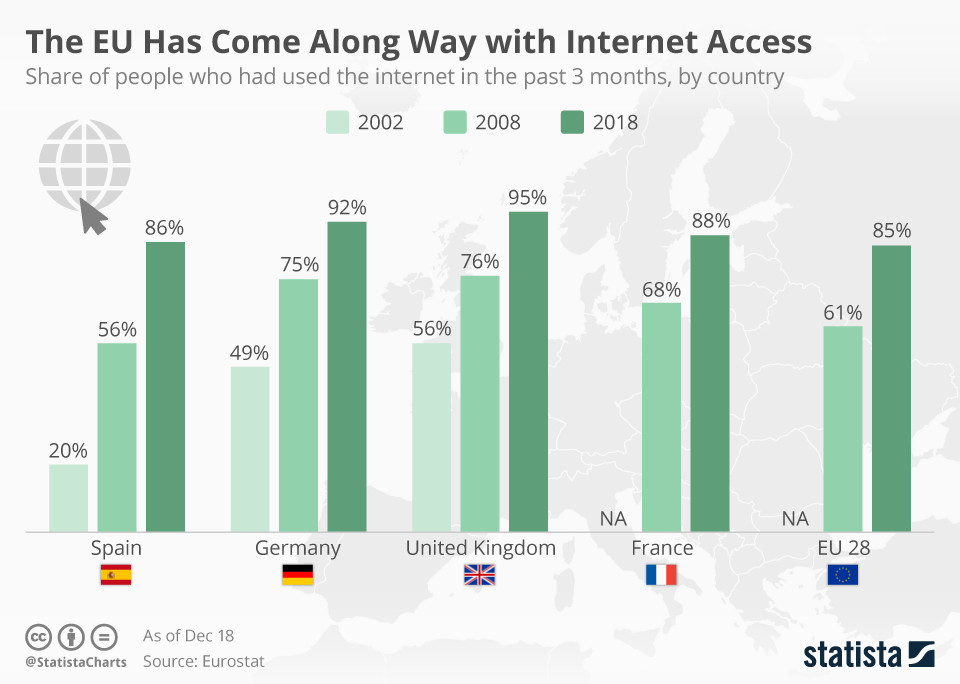
At the beginning of the 21st century, almost two decades ago, widespread gaps in internet access existed across Europe. According to Eurostat , in 2002 only 20 percent of Spaniards had used the internet in the previous three months. In Germany, about half of those surveyed had internet access within the same period, while around 56 percent of respondents in the United Kingdom had internet access.
By 2008, just six years later, a clear majority in Germany, France, Great Britain, and Spain had internet access, with usage rates in the previous quarter reaching around 60 to 70 percent. By 2018, all these countries had achieved near-universal internet use within the last three months, with Spain experiencing the highest growth among the selected countries between 2002 and 2018, recording a 66 percent increase in internet usage.
At the beginning of the 21st century, nearly 2 decades ago, country wide gaps in internet access became common and expansive in Europe. According to data from Eurostat, in 2002, only 20 percent of people in Spain had used the internet within the past 3 months. For Germany, about half of surveyed people had accessed the internet within that same time frame, while about 56 percent of respondents from the United Kingdom had accessed the internet.
In 2008, just six years later, a significant majority had accessed the internet in Germany, France, the United Kingdom, and Spain, with usage rates hovering around 60 to 70 percent within the past quarter. By 2018 all countries had achieved near-universal use within the past three months, with Spain showing the highest growth out of selected countries between 2002 and 2018, reporting a 66 percent jump in internet use.


Keep in touch