
The debt brake as a power struggle: Why the Bundesbank is questioning Friedrich Merz – Image: Xpert.Digital
A ticking time bomb in public finances: How the government is losing control
4.8 percent deficit by 2028: Bundesbank reveals the enormous billion-euro hole in the federal budget
No plan for the future: How Germany is knowingly heading towards the next constitutional crisis
The Bundesbank has identified a toxic mix: exploding interest payments that could double to €65 billion by 2029, rising social spending due to an aging population, and a €172 billion financing gap for which there is currently no plan. The diagnosis from Frankfurt is brutal: the government is relying on a "principle of hope" for economic growth while knowingly heading towards an unconstitutional breach of the debt brake.
Related to this:

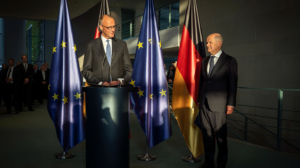
Unusually sharp criticism from Frankfurt: Bundesbank dismantles the government's growth bet
Karlsruhe threatens again: Why breaking the debt brake is becoming a matter of survival for Chancellor Merz
The Bundesbank's December monthly report is not just another academic paper. It is a political warning, couched in economic jargon. The Frankfurt-based central bank has issued an unusually sharp critique of the Merz government's fiscal policy – a rare phenomenon that signals the erosion of the technocratic elite's confidence in the federal government's ability to manage fiscal policy. This analysis examines why the Bundesbank has sounded its alarm now, just before Christmas, what this means for the coming years, and how it raises the fundamental question of power: Who actually still controls the German budget?
Shortly before Christmas, the Bundesbank sounded the alarm, directly challenging the fiscal policy of the Merz government. In its December monthly report, Germany's central bank projects that the government deficit will rise from its current level of around 2.5 percent to 4.8 percent in 2028. This figure is not merely an abstract percentage; it marks a historic turning point. The 4.8 percent deficit is as high as it was in the mid-1990s, immediately after the reunification of East and West Germany. Back then, Germany had slid into an existential crisis that required massive government spending. Today, this crisis justification lacks the emergency. Germany is not on the verge of collapse; it simply wants to reinvent itself.
The debt-to-GDP ratio would rise to 68 percent. In international comparison, this isn't yet catastrophic – France and Italy are significantly higher. But that's precisely the problem. This figure creates a false impression of normality where substantial problems are emerging. Above all, the Bundesbank is issuing a clear and unequivocal warning: According to current planning, the federal government would exceed the debt brake enshrined in the Basic Law (Germany's constitution) by 2028. And so far, there are no discernible measures to prevent this. This is the stark diagnosis, which is anything but academic.
As an observer and advisor to the government, the Bundesbank rarely contradicts it directly. Its role is traditionally discreet, sometimes advisory. All the more remarkable, then, is the clarity with which it argues this time. It is essentially saying: According to current plans, the federal government will exceed the debt brake's borrowing limit in 2028, and without any discernible countermeasures. No one in the government has a plan for the period after that. This transforms a purely budgetary issue into a power question – namely, whether the government still knows what it is doing.
The structural crisis: Why the deficits don't simply disappear
In its analysis, the Bundesbank precisely breaks down the reasons for this increase in the deficit. And this is where it gets interesting, because the Bundesbank makes it clear that this is not a cyclical weakness that will disappear with the next economic upswing. It is a structural, i.e., permanent, increase in spending. This is the crucial difference that many observers overlook.
The anticipated increase in the deficit stems from sustained additional expenditures. The primary source is rising social welfare payments. Germany is contributing ever more to the pension system. The population is aging, fewer people are working, and more are receiving pensions. This is an inherent structural problem that can only be slowed, not solved, by any reform. Added to this are expenditures on basic income, which by 2025 had already grown to approximately €52 billion annually, and including housing and heating costs, even to just over €42 billion. This represents one-twelfth of the total budget. If the federal government intends to reduce these benefits, it must expect massive social unrest. Friedrich Merz has advocated precisely this – a reform of basic income – but even this is not a quick fix for cost savings.
The second source is interest payments. The Bundesbank forecasts that annual interest payments will rise from around €30 billion currently to approximately €65 billion by 2029. That's a doubling. Every euro the government borrows becomes debt service in future years. This is a purely mechanical process. The higher the new debt, the higher the interest payments. And these interest payments reduce the fiscal leeway for other tasks—for infrastructure, for education, for investment. This is not an abstract economic problem. It is a question of redistribution between generations. Future generations will pay the interest on debt incurred today.
The third source of income tax relief is tax cuts enacted by the federal government. These cuts address the so-called "bracket creep" effect of income tax. This means that the income tax brackets are adjusted annually to prevent employees and the self-employed from automatically being pushed into higher tax brackets due to inflation. In 2025, the basic tax-free allowance was increased by €312 to €12,096, and by a further €252 in 2026. The tax brackets were shifted to the right by 2.6 percent (2025) and 2.0 percent (2026), respectively. This costs the treasury approximately €3.4 billion per year. While this is politically attractive – who wouldn't want employees to actually benefit from inflation-related wage increases? However, it does reduce government revenue.
The fourth source is the increase in transfer payments and social benefits. Through the coalition, the CSU pushed through an expansion of the mothers' pension, which is scheduled to take effect as early as January 1, 2027. This is not a minor regulatory adjustment, but a significant, ongoing expenditure. Such benefits are politically difficult to reverse. They create expectations, legal entitlements, and a voter base.
At the same time, revenues are growing more slowly than expenditures. Bracket creep is eroding tax revenues. While the government benefits from rising social security contributions, this effect only partially offsets the shortfall. Furthermore, economic growth forecasts for 2025 are only 0.2 percent, and for 2026, depending on the institution, between 0.6 and 1.2 percent. This is weak growth. And weak growth means weak tax revenues.
A clear austerity program is lacking, despite repeated warnings from economic experts like Veronika Grimm. The German government is spending billions on infrastructure and defense, counting on stronger growth, but there is no discernible austerity package that simultaneously curbs structural increases in spending. This is the fundamental flaw identified by the Bundesbank.
The critical turning point: What to do with the 172 billion euros?
A particularly critical gap exists in the financial plan. The German government has committed itself to taking on massive new debt by 2029. For 2026 alone, this amounts to over €180 billion in new borrowing. This is made possible by relaxing the debt brake for defense spending and creating a special fund for infrastructure. But what happens after that? A financing gap of €172 billion exists for the years 2027 to 2029. That is an enormous sum. In 2027 alone, it amounts to approximately €30 billion, and by 2028, it will have reached €60 billion.
How did this gap arise? In the summer of 2025, the German government passed an austerity package, the so-called investment program, which included tax breaks for businesses. But the states and municipalities have to be compensated for these tax revenue losses – a regulation agreed upon by the coalition itself. In addition, further social benefits were promised – most notably the early retirement pension for mothers. The interest payments on the increased debt also have to be taken into account. All of this combined leads to this enormous gap. And the Bundesbank has now concluded that the federal government would exceed the debt brake from 2028 onwards – and that no concrete measures to prevent this are currently apparent.
For a central bank, this is an unusually direct criticism. The German government is spending billions without showing how it intends to maintain control over the budget. This is not just a financial statement; it's a statement about the credibility of the government.
The Bundesbank expects that the additional spending could boost economic growth by a cumulative 1.3 percentage points between 2025 and 2028. However, these effects are delayed. An infrastructure project decided upon in 2026 will only begin to have an impact in 2027 or 2028. By then, the deficits will have already accumulated. This makes it difficult for the Merz government to gain time. Financial leeway is shrinking faster than new growth stimuli are taking effect. This is a classic macroeconomic timing problem. And it is virtually unsolvable unless the economy recovers much more strongly than currently anticipated.
The constitutional dimension: The threat from Karlsruhe
The conflict is thus predetermined. Either the government corrects its course in the next 12 to 18 months, cutting spending or increasing revenue. Or it risks that in the end, not the Bundesbank, but the Federal Constitutional Court will draw the line.
The Federal Constitutional Court has addressed the debt brake on several occasions in the past. The most famous ruling was in 2023, when the court reprimanded the governing coalition government. The federal government had not used COVID-19 relief funds in 2021, instead reallocating them to a special climate protection fund. The court ruled that this violated the debt brake. A relatively technical judgment, but one of great symbolic importance. The Constitutional Court signaled: The debt brake is non-negotiable. We will monitor compliance.
A particularly noteworthy legal development is that individual citizens could theoretically file a so-called debt constitutional complaint. This means that any taxpayer could argue that the federal government is violating their constitutional rights through its debt-related sins – specifically, the rights to democracy and future freedom. The Federal Constitutional Court has not explicitly ruled out this possibility so far. It is a weapon that has not yet been used, but it exists.
Essentially, the Bundesbank is saying this: We are warning you publicly so that everyone understands that the federal government itself is beginning to lose control. If the Federal Constitutional Court has to intervene in 2027 or 2028, it will be disastrous for the political legitimacy of the federal government. Chancellor Merz would then no longer be the architect of policy, but rather the reformer in a state of emergency.
The growth bet: A risky game with an uncertain outcome
Admittedly, the German government is deliberately pursuing a growth strategy. Friedrich Merz made his position clear during the general debate on the budget in September 2025. He explained that the government is consciously accepting higher expenditures in order to restore Germany's ability to act. This includes spending on defense, infrastructure, and economic relief. It's a strategic decision. Merz argues: If we invest, if we build up the armed forces, if we provide relief to businesses, then these investments will be profitable. Then the economy will grow more strongly. Then we can pay off the debt.
This isn't fundamentally wrong. The economic logic is compelling: when the state invests in infrastructure, these investments can later generate tax revenue. A car on a new highway uses less time and energy, thus increasing productivity. A company with a better power supply is more productive. A defense budget that makes Germany less dependent could reduce geopolitical risks. Theoretically plausible.
But empirically, this is a weak game. The ifo Institute expects government investment to contribute only about 0.3 percentage points to growth in 2026 and about 0.7 percentage points in 2027. That is significantly less than the multiplier optimists had hoped for. The Bundesbank itself is more skeptical and anticipates only 0.8 percentage points of additional growth in 2026 and 0.4 percentage points in 2027. This means that the government is spending hundreds of billions but receiving only weak economic effects in return. That is a low-return scenario.
Furthermore, Germany is an aging society with a shortage of skilled workers. Even if the infrastructure improves, there aren't enough workers to use it. Without massive immigration of qualified professionals and without educational reforms, the additional capital won't lead to increased productivity. It will simply be converted into higher wages, driving up inflation and prompting the central bank to raise interest rates. This is the stagflationary scenario that many economists fear.
Friedrich Merz is therefore making a classic growth bet. In the US under Donald Trump, this is currently working – the US is growing relatively quickly, financing massive defense spending, and inflation remains moderate. But Germany is structurally different. Labor markets are tighter, productivity is stagnating, and exports are under pressure. This is not the US. This is more like Europe in crisis.
Our EU and German expertise in business development, sales and marketing


Our EU and German expertise in business development, sales and marketing - Image: Xpert.Digital
Industry focus areas: B2B, digitalization (from AI to XR), mechanical engineering, logistics, renewable energies and industry
More information here:
A thematic hub offering insights and expertise:
- Knowledge platform covering global and regional economies, innovation and industry-specific trends
- A collection of analyses, insights, and background information from our key areas of focus
- A place for expertise and information on current developments in business and technology
- A hub for companies seeking information on markets, digitalization, and industry innovations
Bundesbank sounds the alarm: Is Germany knowingly heading towards a constitutional crisis?
Social unease: Who pays the price?
What the Bundesbank is also implicitly criticizing is the government's refusal to implement the necessary structural reforms to sustainably reduce deficits. Merz has clearly positioned himself against tax increases. The coalition agreement obligates him to do so. But without tax increases, only one option remains: spending cuts in the welfare state.
The German government plans to take on €98 billion in new debt in its core budget for 2026. This is a record high. Additional debt will come from special funds for defense and infrastructure. In total, over €180 billion in new debt will be incurred. This represents almost a third of the entire federal budget of €524.5 billion. Every third euro is debt.
The price for this will be paid in the form of interest payments and future austerity measures. If interest payments rise from €30 billion to €65 billion in 2029, that's €35 billion per year that cannot be spent on social programs, education, or infrastructure. These interest payments are unavoidable. They must be paid.
The government has announced plans to implement an austerity package. Finance Minister Lars Klingbeil has already prepared his coalition partners for difficult times ahead. Many of the promises made in the coalition agreement are unlikely to be realized. This includes cuts to social benefits, and potentially the elimination of subsidies and funding programs. The reform of the basic income is a first step. But if the funding gap reaches €172 billion, even deeper cuts will be necessary.
This leads to political conflicts. The SPD, part of the coalition, refuses to fundamentally curtail the welfare state. Finance Minister Klingbeil has contradicted Labor Minister Bärbel Bas, who rejects massive cuts. The unions and welfare organizations – all powerful actors resisting such measures – are also present. Friedrich Merz could find himself in a situation where he either takes his fiscal responsibility seriously and implements deep social cuts, or he ignores the debt brake and risks a challenge before the Federal Constitutional Court.
Related to this:
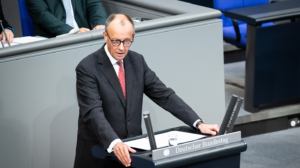
The political maneuver: The question of power
With its so open warning, issued just before Christmas, the Bundesbank is signaling something crucial. The fiscal policy conflicts of the coming year have already begun. 2026 will not be the year in which debt is discussed. 2026 will be the year in which it will be decided who ultimately enforces the budget rules in Germany.
Three scenarios are conceivable. The first: The federal government makes timely corrections. It adopts an ambitious austerity package, raises taxes if necessary (contrary to the coalition agreement), and implements more radical reforms to social benefits. It succeeds in not exceeding the debt brake in 2028. This would entail major domestic political conflicts, but from a constitutional perspective, it is the sound solution.
The second scenario: The federal government muddles through. It enacts minor austerity measures, a tax increase described as an "exception." It falls just short of adhering to the debt brake, exceeding it by 0.2 or 0.3 percentage points. It hopes this will be politically tolerated or that the Constitutional Court will be lenient. This is the most likely scenario.
The third scenario: The Federal Constitutional Court intervenes. In 2027 or 2028, Karlsruhe reprimands the federal government or declares parts of the budget unconstitutional. Merz is forced to freeze budget funds, and the political damage is considerable. This is the worst-case scenario for the legitimacy of the Merz government.
The Bundesbank is signaling that the era of free decisions is over. From now on, every option comes at a cost – either social conflict through austerity measures, constitutional conflict through breaches of the debt brake, or political damage through currency corrections. This is a question of power, because it concerns the ability of a democratic state to govern itself.
The international context and the critique of skepticism
However, there is also legitimate criticism of the Bundesbank's position. Some economists argue that the debt brake itself is the problem. It artificially limits the state's ability to act. If the state cannot invest in critical times, then it is self-destructive. The USA does not have such a strict debt brake and can invest massively. Germany, too, could, so the arguments go, have a "reformed" debt brake that separates investments from current expenditures.
In fact, the Bundesbank itself has put forward a reform proposal that operates in three stages. Stage 1 runs until 2029 with the existing limits. Stage 2, from 2029 to 2036, envisions a gradual reduction of the deficit. Stage 3, from 2036 onward, would then allow for a moderately relaxed rule that would encourage investment. But this proposal is not without controversy. Critics see it as merely "numbers manipulation" that ultimately prevents the debt level from decreasing.
The central counter-question, therefore, is: Wouldn't it be better to reform the debt brake altogether and then operate with greater fiscal flexibility? Germany has too much to invest – in infrastructure, in digitalization, in the energy transition, in defense. A debt brake that blocks all of this could ultimately harm Germany more than debt itself.
This is a genuine economic argument. And it carries considerable weight. But the Bundesbank is essentially saying: This is a political decision, not a technical one. If Germany wants to reform the debt brake, it must do so deliberately and transparently, with a two-thirds majority in both the Bundestag and Bundesrat. It cannot simply take on debt and then hope that the circumstances will work out later.
The Bundesbank is therefore not primarily criticizing the borrowing itself. It is criticizing the fact that the government is deliberately creating a situation in which it is exceeding constitutional limits without making this transparent. That is a crucial distinction.
The calm before the storm: Why 2026 is crucial
The Bundesbank has issued its warning now, at the end of 2025. This is a strategically calculated move. 2026 will be the crucial year for negotiations. The government will have to prepare a new budget for 2027. It will have to implement austerity measures. The SPD will protest against social welfare cuts. The business community will hope for an economic recovery. The Federal Constitutional Court is ready to intervene if the constitution is violated. And the Bundesbank has publicly acknowledged the seriousness of the situation.
In this context, the Bundesbank's warning is not simply a technical forecast. It is a call for accountability. It says: We see what you are planning. We see that you have no answer. And we will point this out to you if the constitution is violated.
This is the kind of institutional control that works in a constitutional democracy. Not through force or direct command, but through transparency, public criticism, and signaling limits. The Bundesbank cannot prevent the government from taking on debt. But it can make public that this is a constitutional issue.
Friedrich Merz will understand this. He is an intelligent politician and knows the limits of his power. When the Bundesbank says that the debt brake will be exceeded in 2028, it's not simply a prediction. It's a threat that the constitutional order will come under pressure. This will influence negotiations on austerity measures.
The deeper crisis: Structural growth weakness
But there's a deeper level to it. The Bundesbank isn't just warning about deficits. It's also warning about structural weakness in growth. Germany's growth is too weak. 0.2 percent in 2025, 0.6 to 1.2 percent in 2026 – that's not the rate of a wealthy country shaping its future. That's the rate of a country undergoing structural change, losing its competitiveness.
Why? Two decades ago, Germany had global competitive advantages. It excelled in mechanical engineering, automobiles, and chemicals. But the structural shift towards electric vehicles, digitalization, automation, and climate neutrality—this transformation has overwhelmed Germany. Established companies are too sluggish. The startup scene is weak. Bureaucracy is a hindrance. The infrastructure is crumbling. And the education system isn't producing enough talented people.
This cannot simply be solved with more debt. It requires structural reforms: deregulation, faster approval processes, better schools and universities, and immigration of skilled workers. Merz has recognized that these reforms are necessary. Hence the infrastructure investments, hence the defense budgets (to avoid dependence on the US), and hence the tax relief for businesses.
But this too will take time. An infrastructure project approved in 2026 will only contribute to value creation in 2030 or 2031. In the meantime, the debts must be repaid. Interest payments are rising. And if the reforms don't take effect quickly enough, the weak growth will become a chronic crisis.
The Bundesbank is therefore also indirectly warning of a dead end. You can't compensate for structural weaknesses in growth with ever-increasing debt. At some point, debt reaches its limits. Then the economy itself has to grow. And that requires not just money, but structural changes.
The decision crisis of 2026
The Bundesbank's December monthly report is therefore more than just an economic report. It's a political statement. The Bundesbank is saying: From now on, there will be no more cost-free decisions. Every additional euro the government spends will exacerbate the budget crisis from 2027 to 2029. Every euro it doesn't spend will hurt the economy. This is a classic dilemma with no easy solution.
What will 2026 bring? The government will likely try to take the path of least resistance. It will cancel or postpone some of its commitments. It will try to portray minor austerity measures as major reforms. It will hope that the economy will recover more strongly than expected. And it will postpone fiscal policy conflicts until the summer of 2026, when a new budget is negotiated.
But the Bundesbank has made it public that this doesn't work. You can't simply take on debt and hope that time will heal all wounds. Eventually, the bill has to be paid. Either now through austerity measures and reforms, or later through constitutional conflicts and political crises.
Friedrich Merz is in a difficult position. He took over the federal government with the intention of modernizing Germany. But the debt-to-GDP ratio, the interest burden, the structural weakness in growth – all these are problems that cannot simply be wished away. The Bundesbank is not issuing warnings out of malice. It is warning because it has recognized the limits of fiscal sustainability.
2026 will show whether the Merz government has an answer to this warning. If not, 2027 and 2028 will be turbulent. This is not alarmism. This is a sober analysis of constitutional and fiscal reality.
Your global marketing and business development partner
☑️ Our business language is English or German
☑️ NEW: Correspondence in your native language!

Konrad Wolfenstein
I and my team are happy to be available to you as your personal advisor.
You can contact me by filling out the contact form here wolfenstein@xpert.digital:or simply call me at +49 7348 4088 965. My email address is
I'm looking forward to our joint project.
☑️ SME support in strategy, consulting, planning and implementation
☑️ Creation or realignment of the digital strategy and digitization
☑️ Expansion and optimization of international sales processes
☑️ Global & Digital B2B trading platforms
☑️ Pioneer Business Development / Marketing / PR / Trade Fairs
🎯🎯🎯 Benefit from Xpert.Digital's extensive, five-fold expertise in one comprehensive service package | BD, R&D, XR, PR & Digital Visibility Optimization

Benefit from Xpert.Digital's extensive, five-fold expertise in a comprehensive service package | R&D, XR, PR & Digital Visibility Optimization - Image: Xpert.Digital
Xpert.Digital possesses in-depth knowledge across various industries. This allows us to develop tailored strategies precisely aligned with the requirements and challenges of your specific market segment. By continuously analyzing market trends and monitoring industry developments, we can act proactively and offer innovative solutions. The combination of experience and expertise generates added value and provides our clients with a decisive competitive advantage.
More information here: